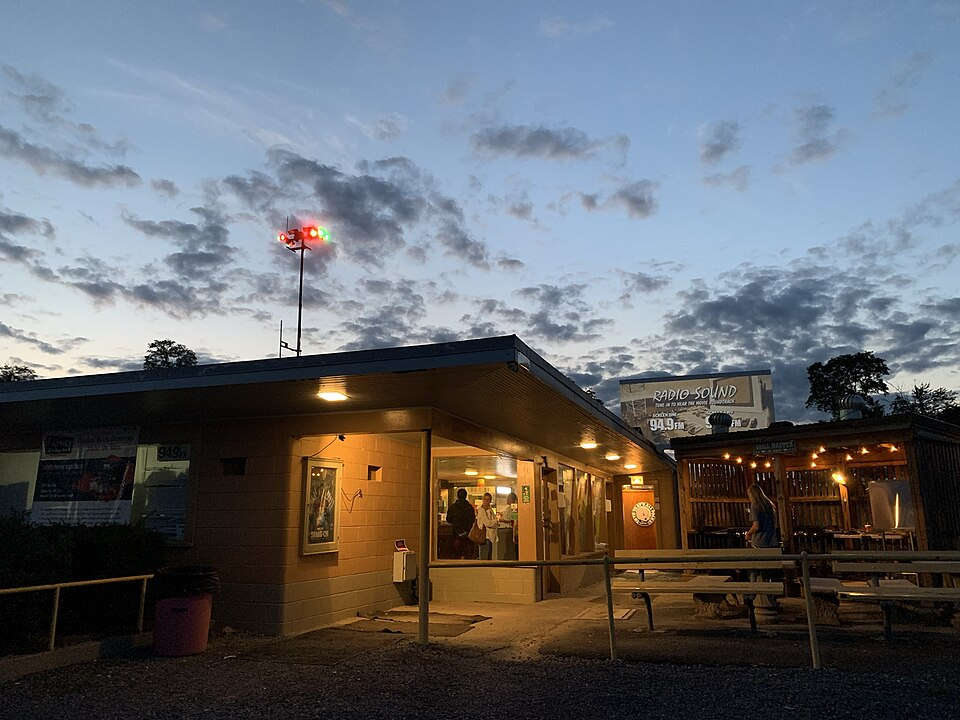
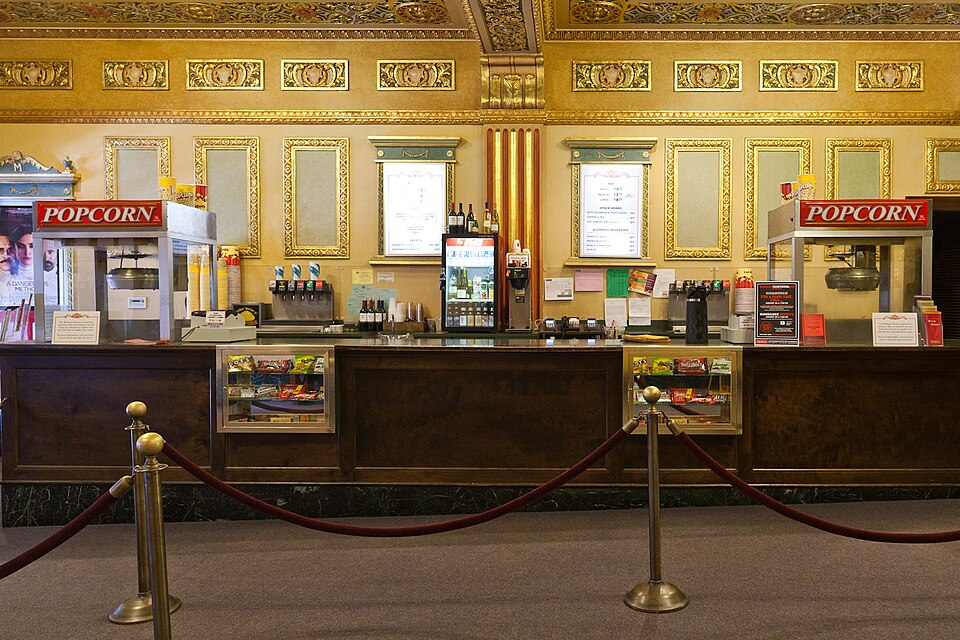
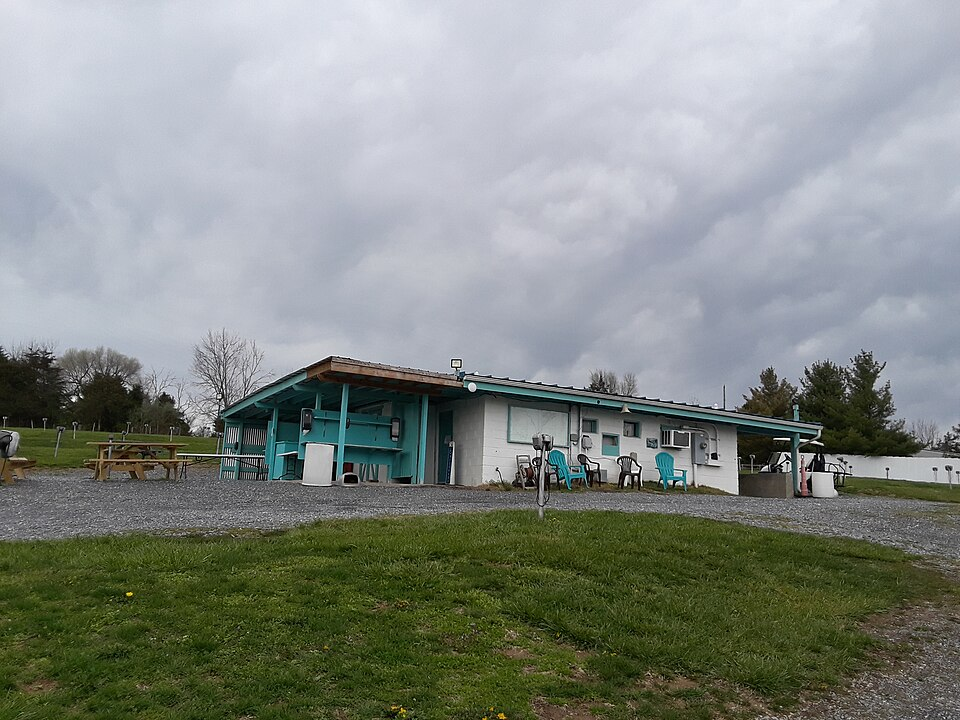
The drive-in snack bar is one of the most affectionately remembered food operations in American life, and almost none of that affection is about the food. It is about the intermission, the walk across the gravel in the dark, the lit window, and the smell carrying across the lot.
What was actually happening inside the building was a food service operation running with no handwashing sink, one basin for everything, an open fryer with no suppression over it, and a counter where the same hands took the money and scooped the popcorn. Most of the items below were closed off by the food code rather than by any ban on an ingredient, which is the less dramatic and far more comprehensive reason a 1965 snack bar could not reopen. Here are fifteen things that counter did, and what each of them ran into.
1. Popcorn popped in coconut oil and finished with an artificial butter flavouring
The characteristic smell of an American drive-in came from coconut oil in the kettle and a yellow flavouring poured over the top. Neither was butter and nobody claimed otherwise, though the sign above the counter usually said buttered.
Coconut oil is still used and the flavouring is still permitted in food. What changed is the labelling: chain food service in the United States has been required since 2018 to post calorie information under the menu labelling rule introduced by the Affordable Care Act, and cinema popcorn was one of the categories that drove the campaign for it.
The rule applies to operators above a location threshold, which exempts most surviving single-screen drive-ins. The point stands anyway, because the 1965 counter posted nothing at all and was not required to answer any question about what was in the tub.
Like our content? Follow us for more.
2. A topping made with partially hydrogenated oil
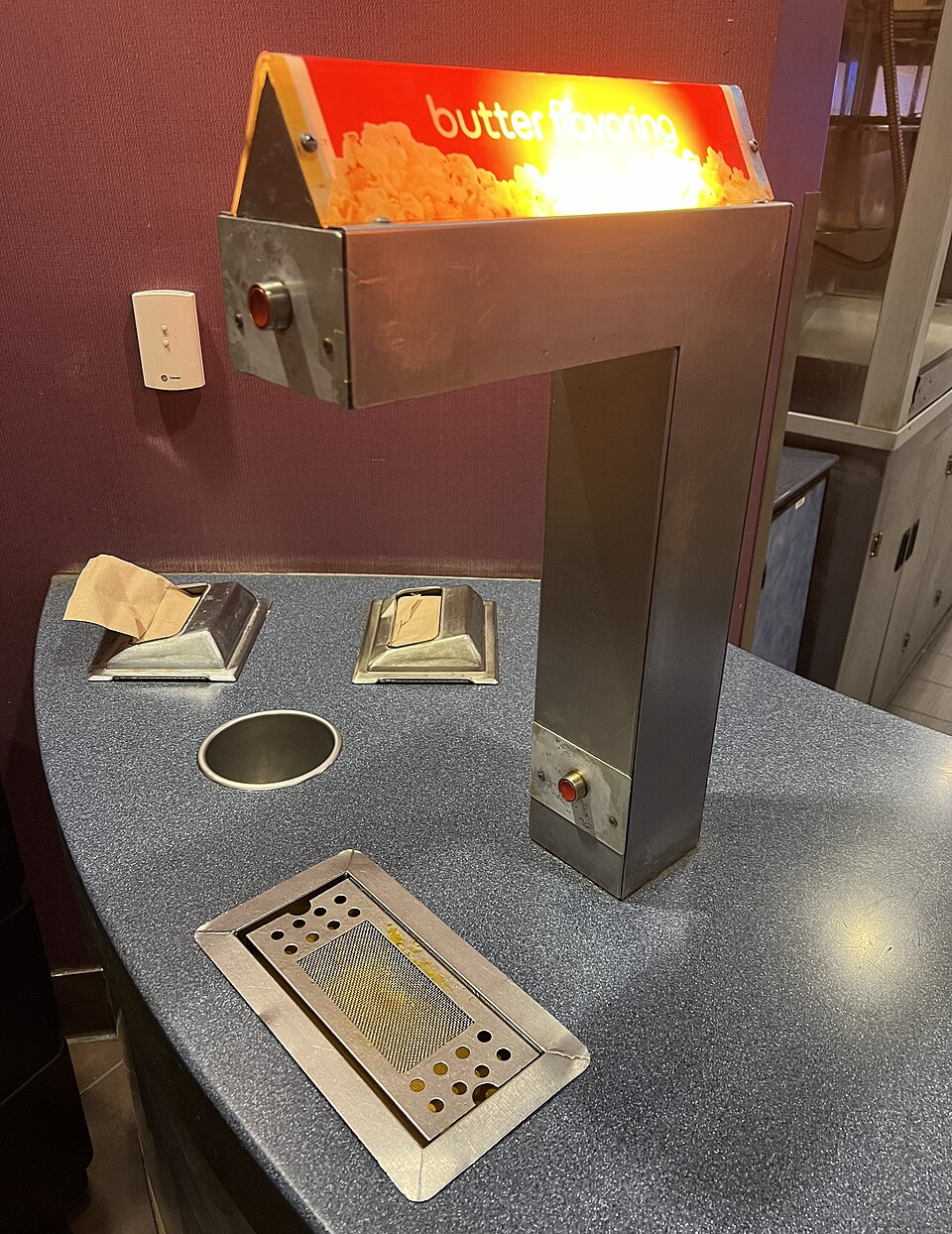
The pourable topping that came after the popping was built on partially hydrogenated vegetable oil, which gave it the right consistency at the right temperature, held up under a heat lamp all evening, and cost almost nothing.
The Food and Drug Administration determined in 2015 that partially hydrogenated oils were no longer generally recognised as safe, following the finding that industrial trans fat worsened cardiovascular risk markers more than the saturated fat it had replaced, and the ingredient left the American food supply by the end of the decade.
Reformulated toppings exist and do the same job. The original cannot be made, which means the smell and the mouthfeel that people remember from a 1965 drive-in are not reproducible even by an operator who wants to.
3. Popcorn held warm in an open case for the whole evening
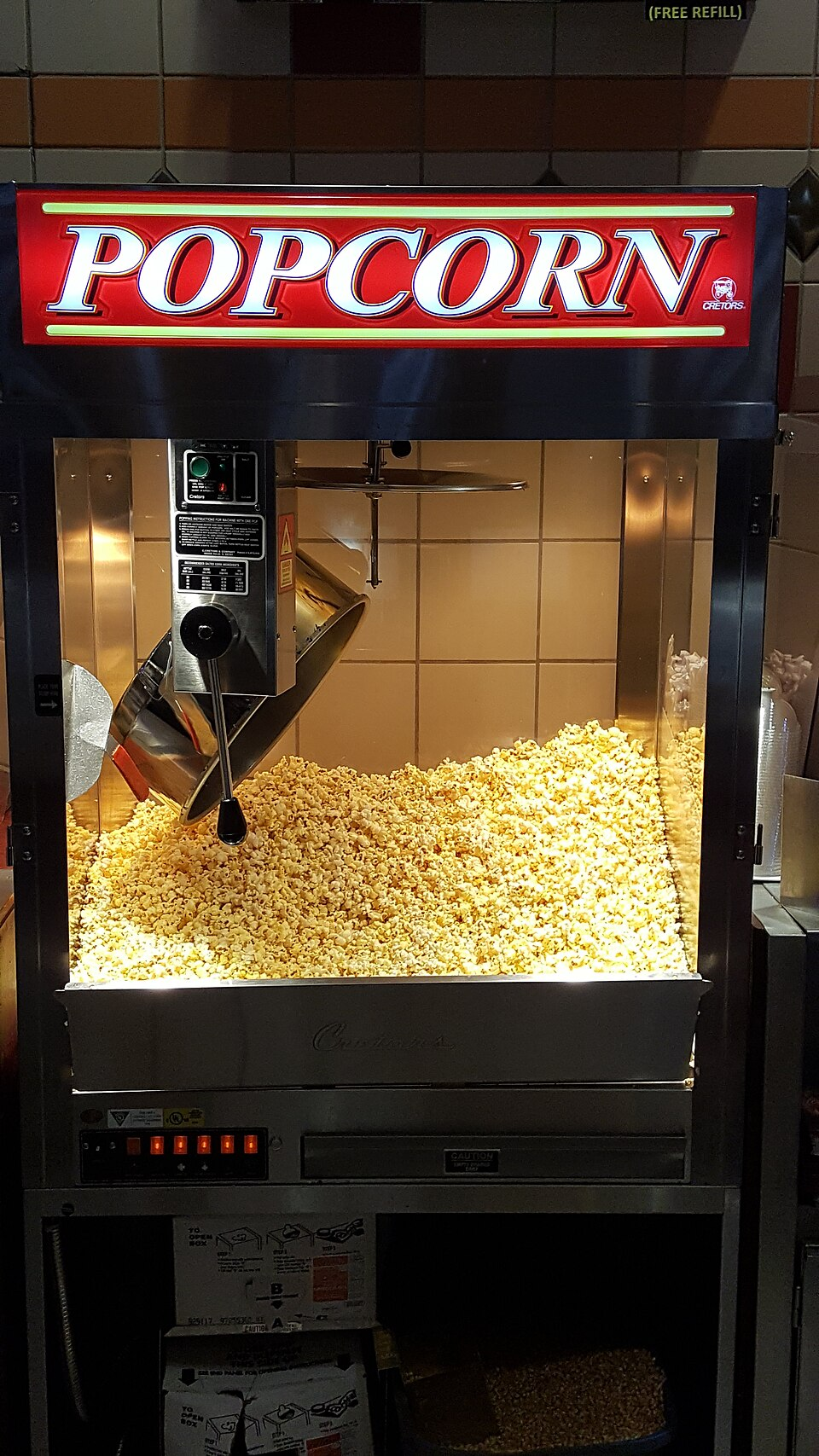
The glass case with a heat lamp was the centre of the operation. Popcorn popped at seven was still being sold at eleven, kept warm, scooped from the same bed, topped up from above as the evening went on.
Current American food codes require time or temperature control for held food, with recorded checks, and set limits on how long prepared food may be held. An open case topped up repeatedly across four hours without any record is not compliant.
Popcorn is among the lower-risk foods there is, which is why this practice survived so long without consequence. The requirement is written for the category rather than for the item, and the drive-in case fails it on documentation before it fails on anything else.
4. Sno-cone and slush syrups coloured with additives since delisted
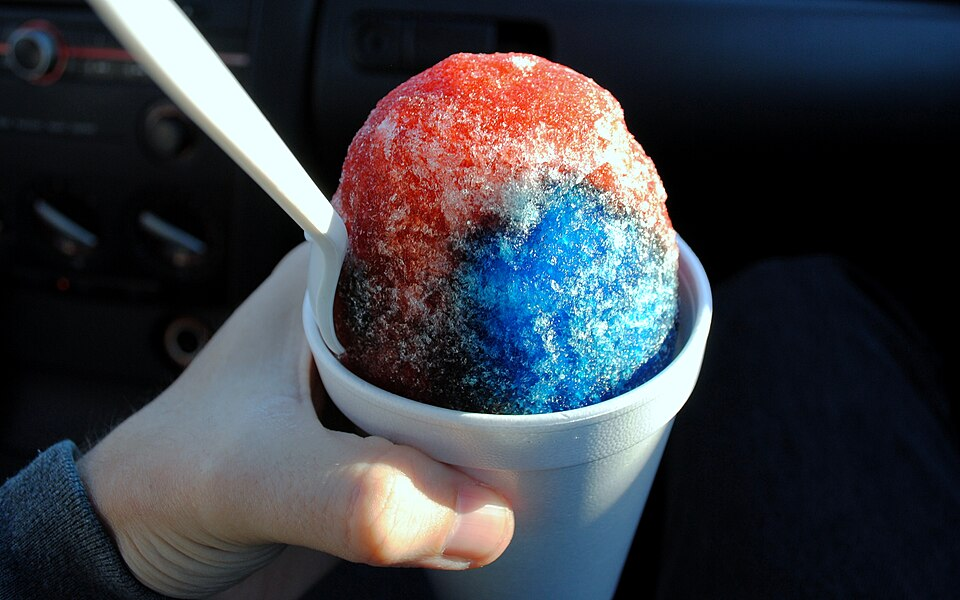
The syrups were the most vividly coloured thing in the building, and the colours came from a list of permitted additives that American regulators have substantially shortened since. Blue, green and the various reds were the whole appeal.
Red No. 2, in very wide use across American food, was banned by the Food and Drug Administration in 1976, and other additives permitted in 1965 have been delisted before and since. There has also been a recent voluntary wave of synthetic dye removal under consumer pressure.
A 1965 sno-cone would in several cases be illegal to serve on colour grounds alone. Modern versions made with plant-derived colours do not reach the same saturation, which is why photographs of the originals look artificially enhanced and are not.
5. Candy sold loose from open trays
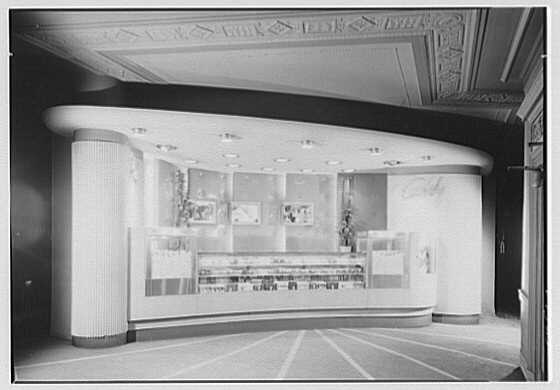
The counter had open trays and bins, and candy was scooped or picked out by hand into a paper bag. Children reached into them. Change was handled between scoops. The trays stayed out across the whole evening and were topped up rather than emptied.
Bulk food dispensing in the United States now requires covered containers with dispensing utensils or self-closing gravity dispensers, protected from customer contact, with cleaning schedules recorded. Open trays within reach of customers are not permissible.
The change is almost invisible in a modern store because the gravity-fed bulk dispenser looks like part of the furniture. It is a food code requirement rather than a merchandising choice, and it closed off the single most hand-contacted surface in the old snack bar.
6. Candy cigarettes, on the counter at a child’s eye level
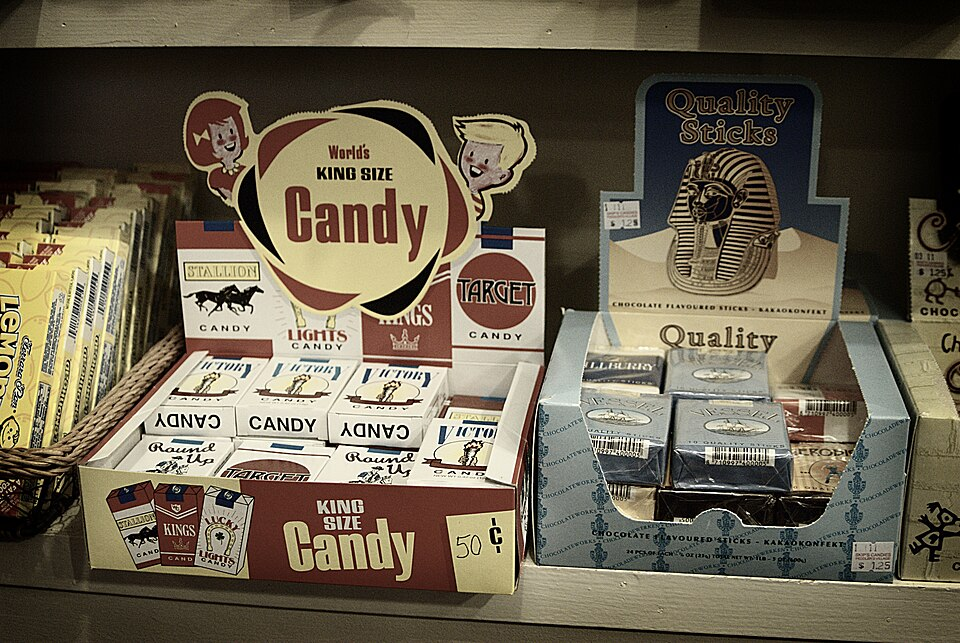
Sugar sticks with a red tip, sold in packets designed to look like cigarette packets, some of them using lettering and colours that deliberately echoed real brands. Children held them between two fingers, which was the entire point of the product.
No American federal ban was ever enacted, though several attempts were made and some states acted. What ended them commercially was the broader collapse of tobacco marketing to children, including the self-regulatory pressure that followed the 1998 state settlement with the tobacco industry.
Versions still exist, renamed and redesigned so they no longer resemble a packet. The 1965 product, with the brand-adjacent packaging and the painted tip, could not be put on an American counter now by any manufacturer that wanted to stay in business.
7. Soft drinks hand-mixed from syrup with no record of line cleaning
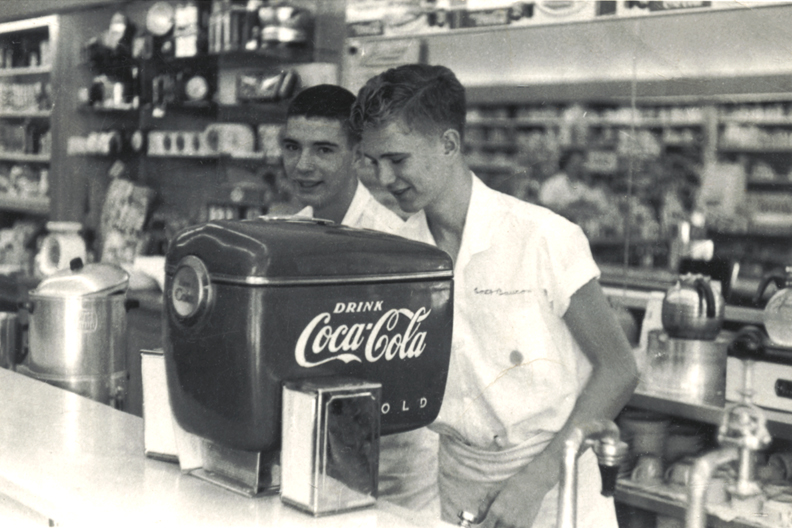
Drinks came from a syrup pump and a carbonated water tap, mixed by whoever was serving, in proportions that varied with how busy it was. The lines ran from bag-in-box or canisters in the back, and cleaning happened when somebody remembered.
Post-mix dispensing systems are now sealed and regulated, with backflow prevention protecting the water supply, specified line cleaning schedules and records, and equipment engineered so the operator cannot vary the mix.
The backflow requirement is the one that matters most and is least known. A carbonated beverage line connected to a potable supply without protection can push carbonated water back into the building’s plumbing, which was the hazard nobody at a 1965 snack bar had been told about.
8. Milkshakes, in operations using dairy that was not always pasteurised
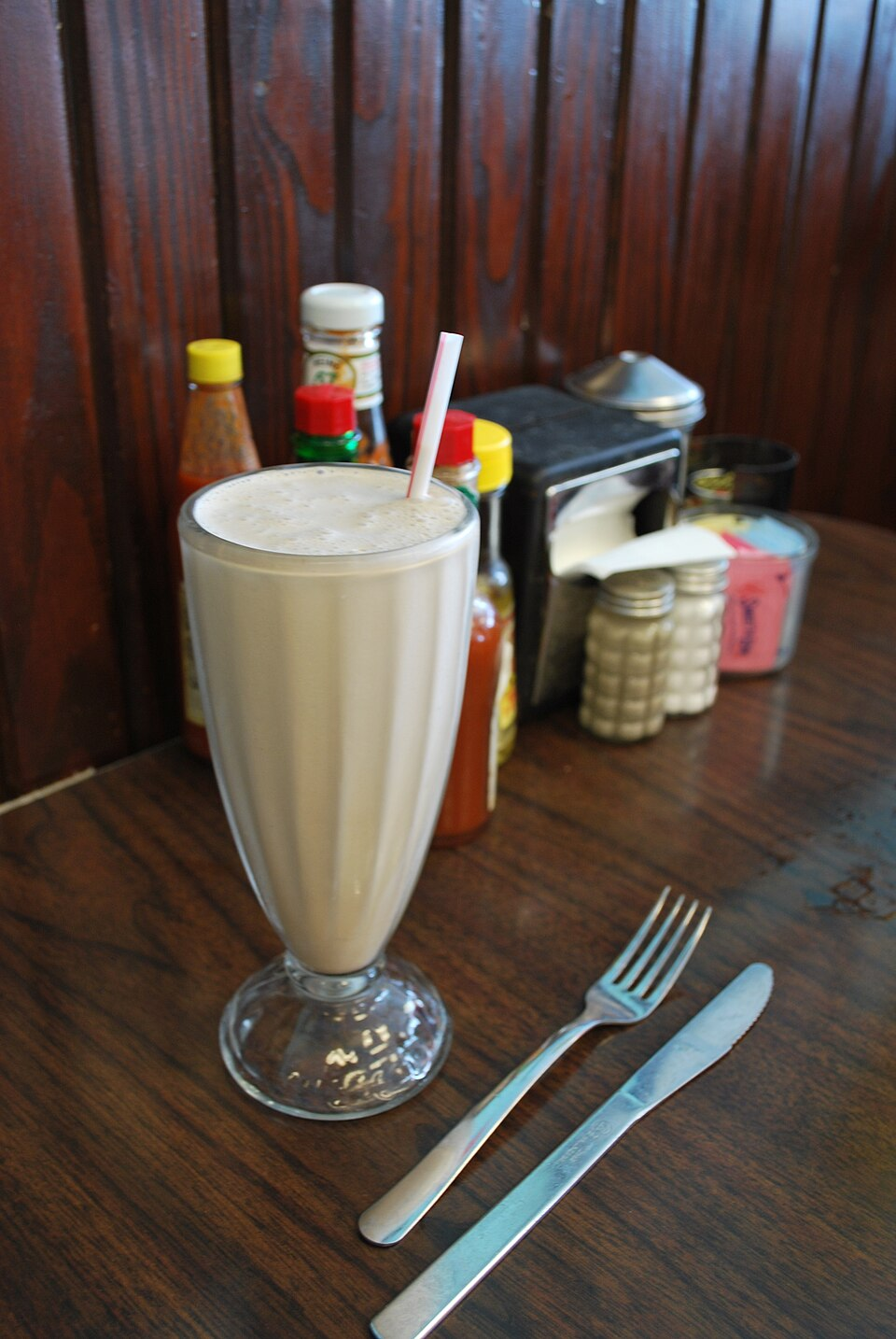
Shakes were a staple and were made with whatever dairy the operator could source cheaply, which in rural areas meant local supply. Pasteurisation was effectively universal in American city milk by the 1950s, and the margins at small roadside operations were thin.
Pasteurised dairy is now required throughout American food service, with sourcing documentation, and a shake mix is a food requiring continuous temperature control with recorded checks from delivery to service.
No claim is made here that any particular drive-in used unpasteurised dairy, because the records do not exist. The point is structural: in 1965 nothing in the system would have detected it, and the whole of the modern regime is built on being able to show where a product came from.
9. Ice cream novelties in an open chest freezer with no thermometer
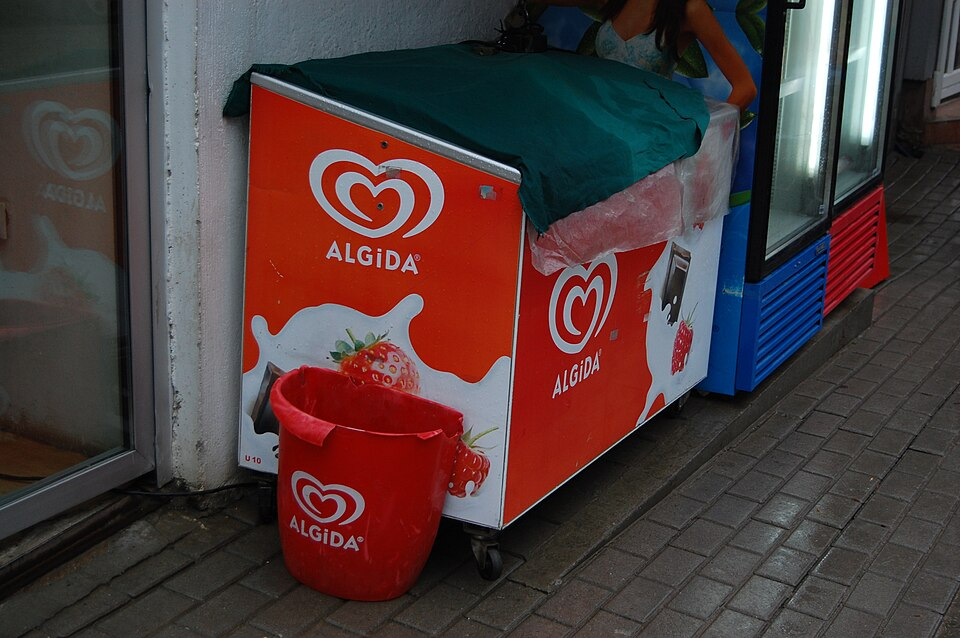
The freezer was a chest with a sliding lid or no lid at all, standing in a hot building in July, opened constantly, with nothing measuring its temperature and nobody logging anything.
Commercial freezers in American food service are now required to hold temperature with monitoring, and operators keep logs. A unit without a thermometer cannot demonstrate compliance, which is the operative problem rather than any particular reading.
Partial thawing and refreezing of a frozen dessert is both a food safety issue and the reason so many people remember drive-in ice cream as having an odd texture. That memory is accurate and it was telling them something.
10. A deep fryer with no suppression system over it
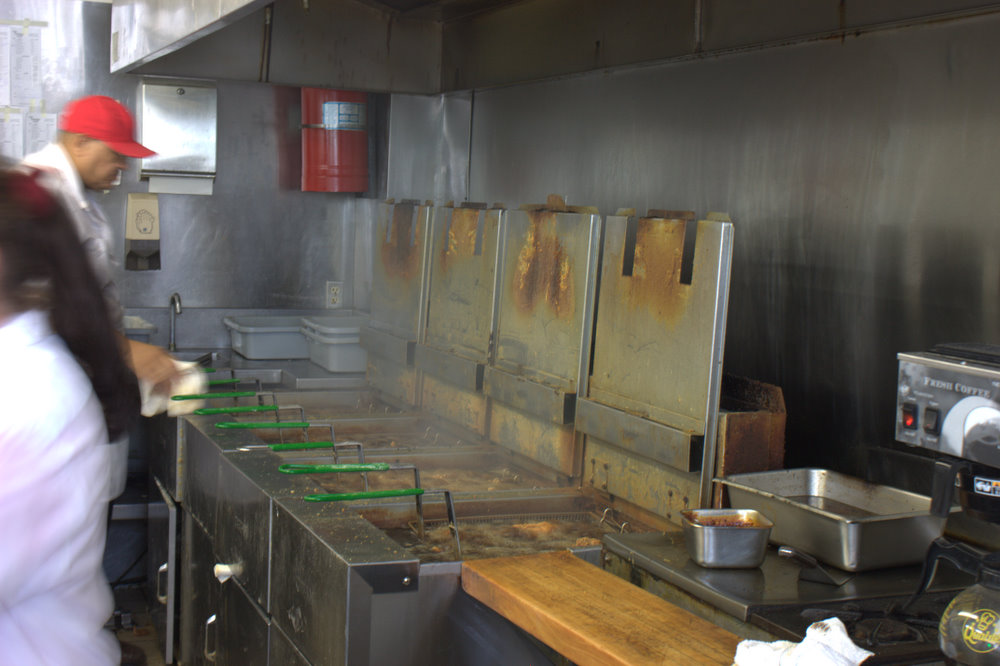
Fried food meant an open vat of hot oil under a hood, in a small wooden or cinder-block building, often with the popcorn kettle beside it and a paper-heavy counter in front. There was no automatic suppression and frequently no extinguisher rated for cooking oil.
American fire codes now require an automatic suppression system over commercial cooking equipment producing grease-laden vapours, with specified hood and duct construction, scheduled cleaning of the ductwork, and a correctly rated portable extinguisher.
A cooking oil fire cannot be dealt with by the methods that work on anything else, which is the specific reason for the specific system. The 1965 snack bar had the hazard, the fuel load and none of the equipment.
11. No handwashing sink in the building
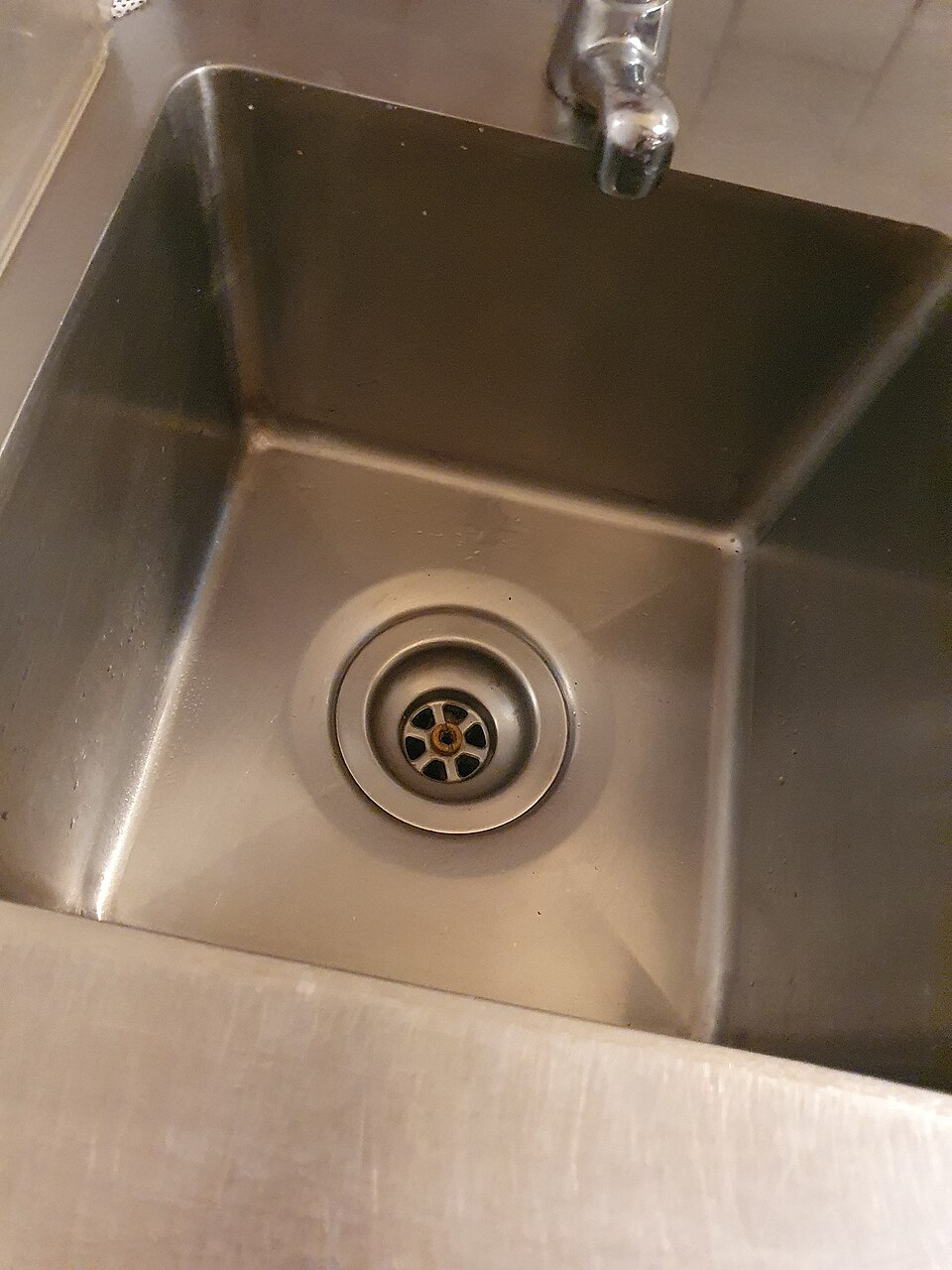
Many snack bars had a sink for washing up and nothing designated for hands, no soap dispenser, no paper towels and no hot water at the point of service. Staff wiped on an apron or on a cloth kept under the counter.
A dedicated handwashing sink accessible to the service area, supplied with hot water, soap and single-use drying, is a baseline requirement in every American food code, and its absence closes an operation immediately.
Of everything on this list, this is the one a modern inspector would find first and act on fastest. It is also the cheapest thing on the list to fix, which is a fair summary of how much of food safety regulation works.
12. One sink for the glasses, the scoops, the trays and the mop
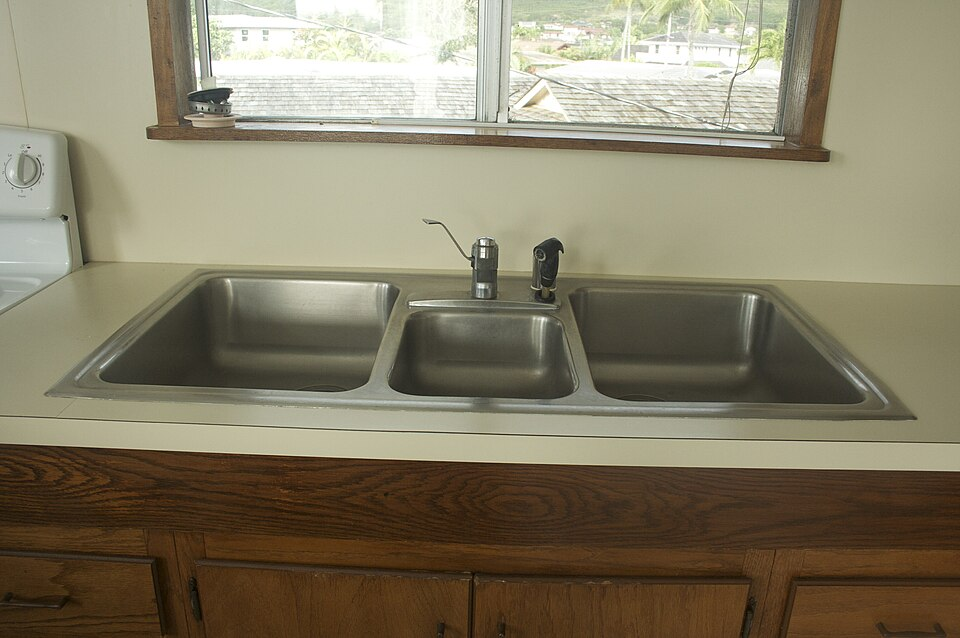
Washing happened in a single basin, with whatever water was in it, and the same sink took the dishes, the utensils, the popcorn scoop and at the end of the night the mop.
American food service requires a three-compartment arrangement for manual washing — wash, rinse, sanitise — or a machine achieving the equivalent, with sanitiser concentration checked and recorded, and a separate utility sink for cleaning equipment.
Nobody at the time regarded this as a compromise, because the alternative had not been invented. The three-compartment sink is one of the genuine public health inventions of the century and it looks like plumbing.
13. Money and food handled by the same two hands, all evening
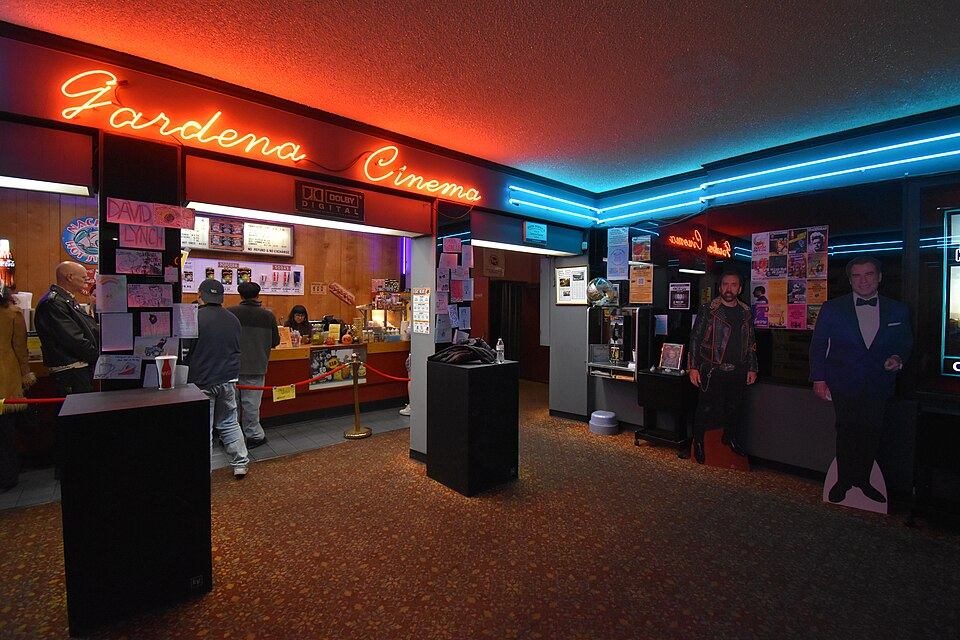
One person took the order, handled the cash, scooped the popcorn, poured the drink and made change, in a continuous cycle for several hours, with no gloves, no utensil discipline and no handwashing station to use between the two.
American food codes bar bare-hand contact with ready-to-eat food and specify utensils, deli tissue or gloves, together with handwashing requirements at defined moments including after handling money.
Currency is the dirtiest thing in a food premises and the 1965 snack bar put it in the same hands as the food continuously. It is not a dramatic hazard and it is a steady one, and closing it required a sink, a rule and somebody to check.
14. Cigarettes sold at the snack bar to whoever was standing there
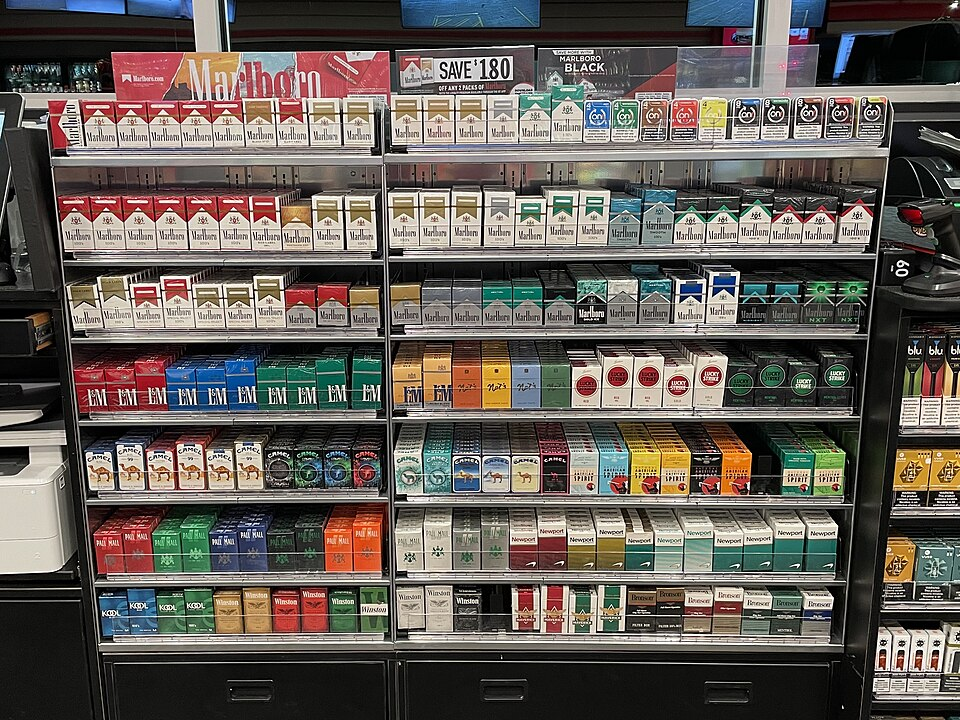
The snack counter sold tobacco alongside the candy, frequently from a rack behind the till at the same height as the confectionery, and age controls were weak to nonexistent. A child sent for a packet was an ordinary errand.
The federal minimum purchase age in the United States is now 21, with identification requirements, retailer compliance checks and penalties, and the display and placement of tobacco products is separately restricted.
That a cinema concession stand sold cigarettes and candy cigarettes from the same counter to the same children is the detail that most dates the whole operation. The domestic side of American smoking in this period is covered separately in this batch.
15. Nothing at all telling a customer what was in any of it
No nutrition information, no ingredient list, no allergen statement, no indication of what the topping was made from or what coloured the syrup. The menu board gave a name and a price and that was the whole of the disclosure.
American packaged food came under mandatory nutrition labelling in 1994 and allergen declaration in 2006, and chain food service came under calorie posting in 2018. Small independent operators remain outside most of it, which is why a drive-in snack bar is still the least documented food you can buy.
This is the honest closing note on the list. A surviving drive-in is not required to tell you much more today than it was in 1965. Everything else here was fixed by a code or a prohibition; this one was fixed only for the chains.
What the code actually changed
Three of the items here are ingredients that are now prohibited or delisted, and the other twelve are procedure. That ratio is the real story of American food safety in this period. Very little of it was about banning things people ate; nearly all of it was about sinks, thermometers, records and who was allowed to touch what.
That is also why it worked. An ingredient prohibition removes one hazard. A handwashing sink, a three-compartment wash line, a covered bulk dispenser, a temperature log and a rule against bare-hand contact between money and food remove whole classes of hazard at once, from every operator, permanently, for the price of some plumbing. The drive-in snack bar is a good place to see it because it had none of them and because the building was small enough that you can list everything missing.
The surviving American drive-ins are a small and devoted group, and the ones still operating run compliant modern snack bars behind the same painted signage. The building looks the same from the queue.
What you cannot get back is the smell, and the reason is item two. The topping that produced it was made with an ingredient that left the American food supply in 2018, and no reformulation has reproduced it. That is the one genuine loss on the list, and everything else on it was a sink.
Like our content? Follow us for more.