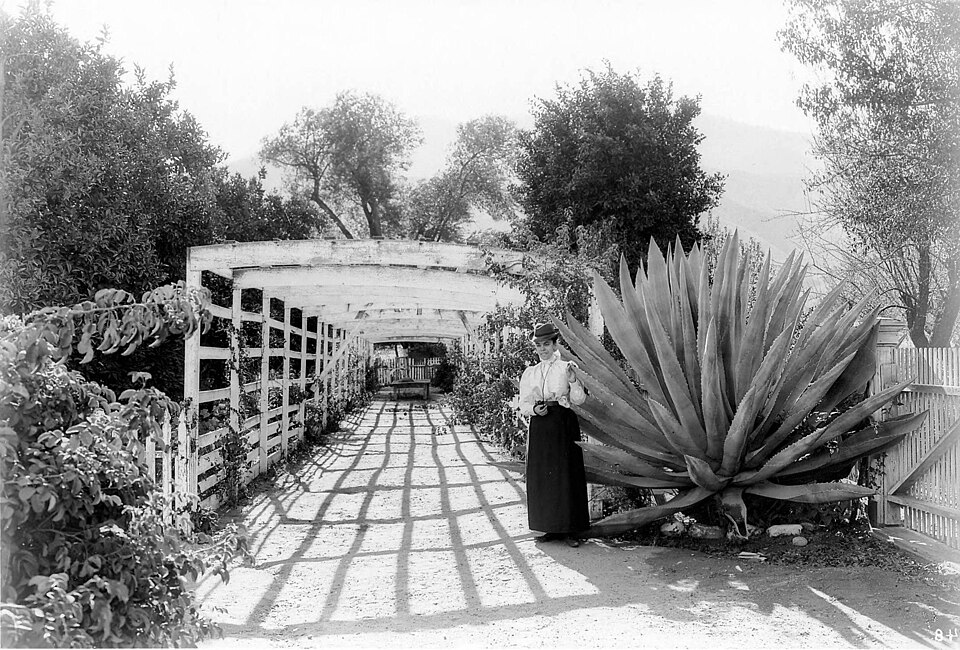
In 1964 a grape arbor was a built structure before it was a plant – posts set in the ground, an overhead frame, cross members or wire for the vine – constructed deliberately and expected to stand for decades.
It was sited so the shade fell where the household wanted to sit or work in summer, which in a house with no cooling was not a question of comfort but of whether the space was usable at all. And grape leaves are large and overlapping, so the shade is dense – while the vine is deciduous, which means it drops its leaves in autumn and lets the winter sun through.
People sat under it, worked under it, received visitors under it and sometimes slept under it. Here are fifteen things every family knew.
1. It Was a Structure First and a Vine Second
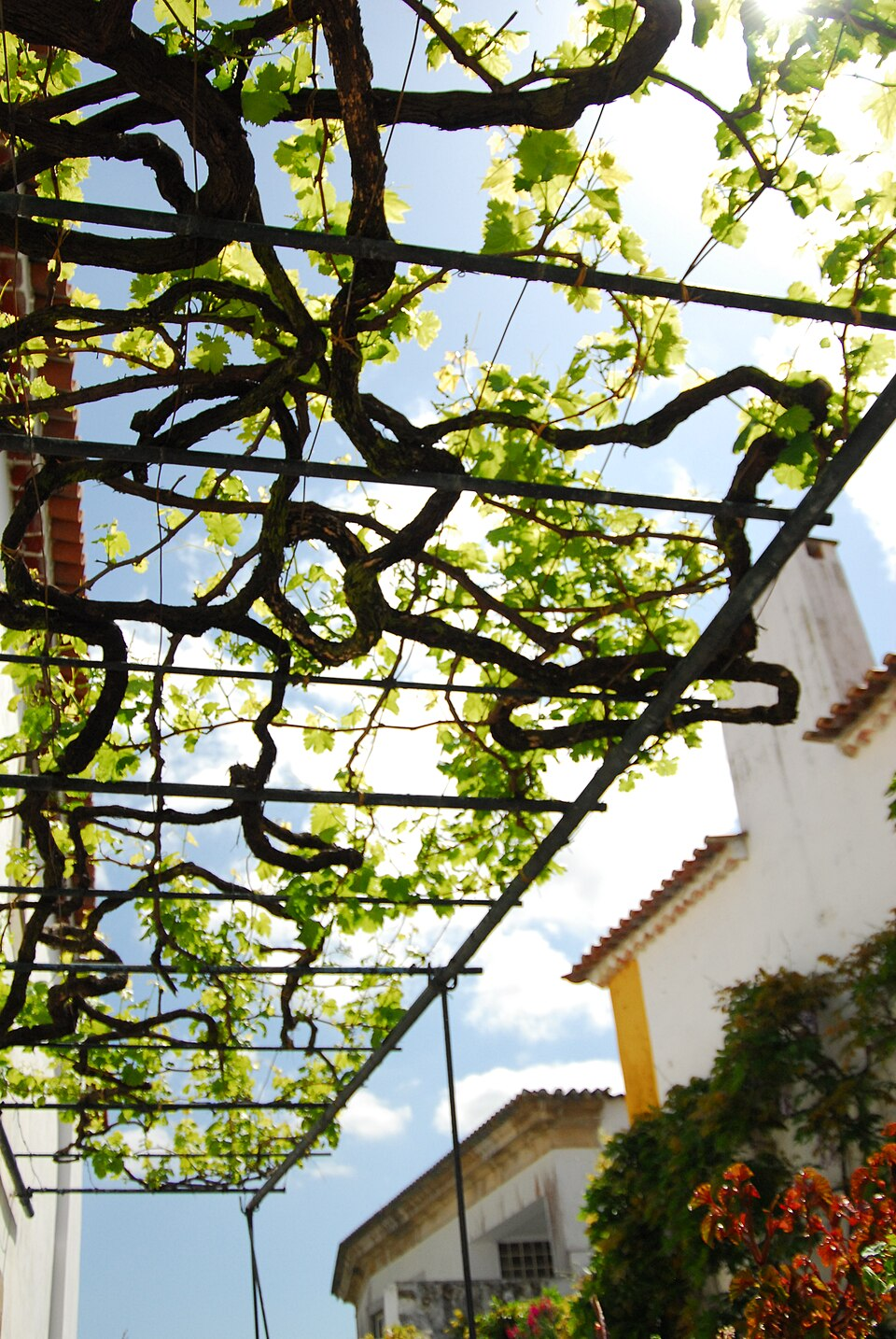
An arbor was a built thing – posts set in the ground, a frame overhead, cross members or wire for the vine to run on – constructed deliberately and expected to stand for decades.
Grapes are grown commercially on wire trellis systems, and household grape growing is uncommon enough that a built arbor is now a garden feature rather than a standard fixture.
Calling it an arbor rather than a vine matters, because the carpentry came first. Somebody dug post holes, set timbers and built an overhead frame before anything was planted, which is an investment of labour and material made on the assumption that the household would be there for a long time.
Like our content? Follow us for more.
2. It Was Sited to Make Shade Where It Was Wanted
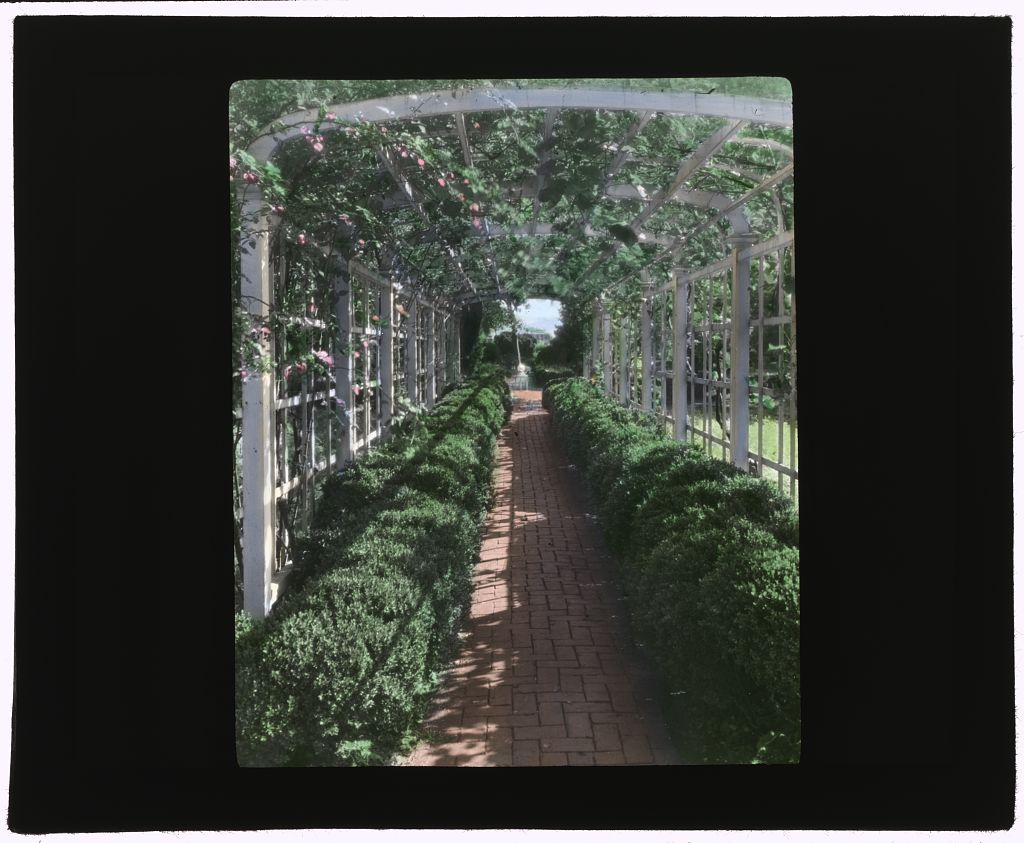
Arbors were built over a walk, beside a porch, outside a kitchen door or across a seating area – so that the shade fell exactly where the household wanted to sit or work in summer.
Patio umbrellas, awnings, pergolas bought as kits, and air conditioning, which has substantially removed the need for outdoor shade at all.
The siting is the part that reveals the thinking. An arbor is a shade structure that happens to produce fruit, placed with the sun’s path in mind, and in a house with no cooling the difference between sitting in shade and sitting in sun in August was not a matter of comfort but of whether the space was usable.
3. The Shade Was Dense and Arrived at the Right Time
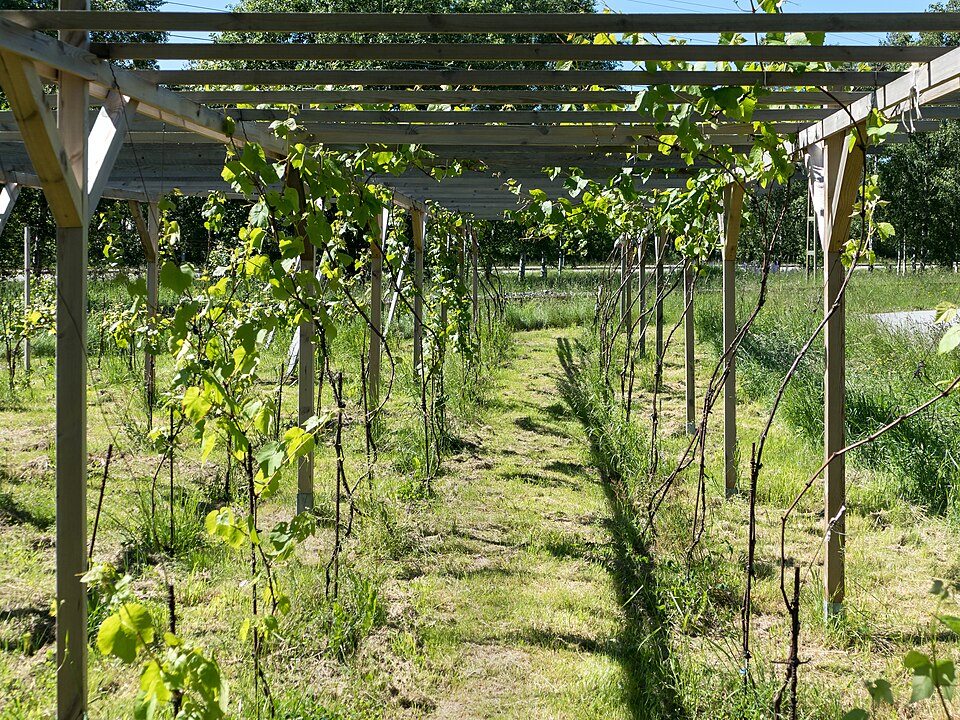
Grape leaves are large and overlap heavily, producing deep shade in full summer – and the vine is deciduous, so the leaves drop in autumn and let the winter sun through.
Fixed awnings and solid roofs, which shade in summer and also block the sun in winter when it is wanted.
That seasonal behaviour is the cleverest thing about the whole arrangement and it was certainly understood. A deciduous vine on a frame is a shading device that switches itself off in winter, which no fixed structure does – and a south-facing window under a bare arbor gets full sun in January.
4. The Vines Were Hardy American Varieties
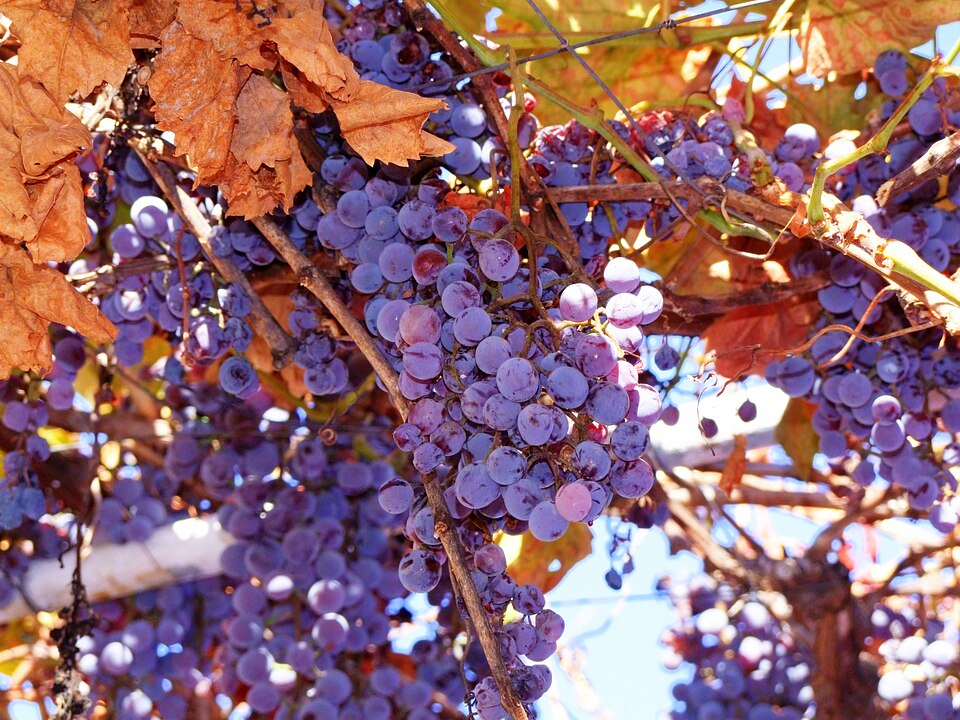
Household arbors were planted with tough American grape varieties that survived cold winters, resisted the diseases that destroy European vines in the eastern United States, and needed almost nothing from anybody.
The same varieties are still grown and sold, alongside a much larger range of table and wine grapes suited to particular regions.
Those varieties are the reason the arbor was practical for an ordinary household. A vine that requires spraying, protection and expert pruning is a project; a vine that will produce for forty years while being largely ignored is a fixture – and American varieties were selected precisely for being the second kind.
5. Pruning Was Severe and Nobody Enjoyed It
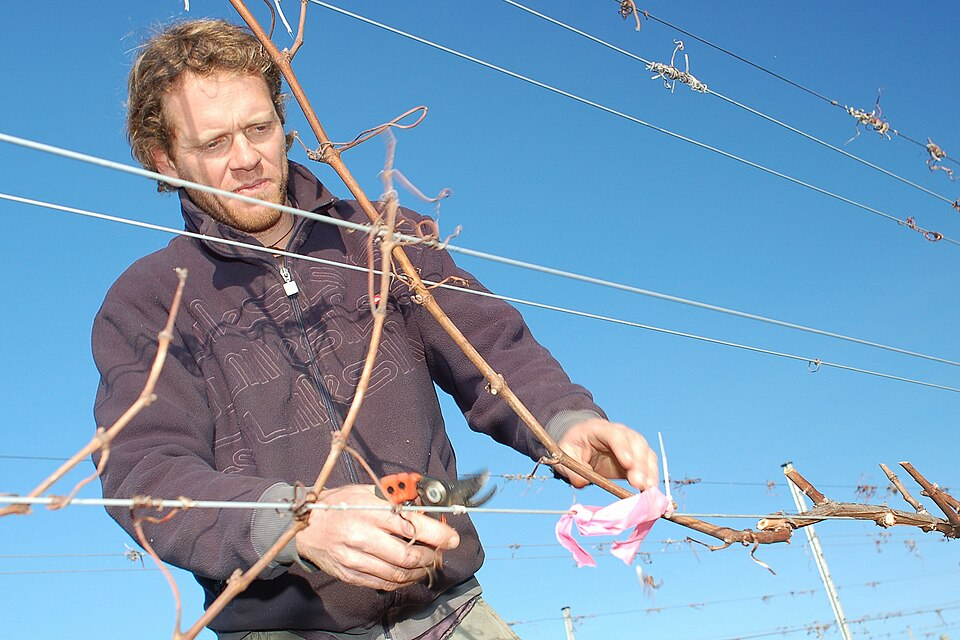
Grapes fruit on new growth, so a vine has to be cut back hard every winter – removing most of the previous year’s wood – and a household that did not do it got a tangle with very little fruit.
The same requirement, with much better information freely available and the same general reluctance to cut hard enough.
Hard pruning is counterintuitive and it is the single thing most household grape growers get wrong, then and now. Removing most of a healthy vine feels like damage, so people trim politely instead, and the result is an enormous leafy structure producing almost nothing.
6. The Fruit Was Used Rather Than Admired
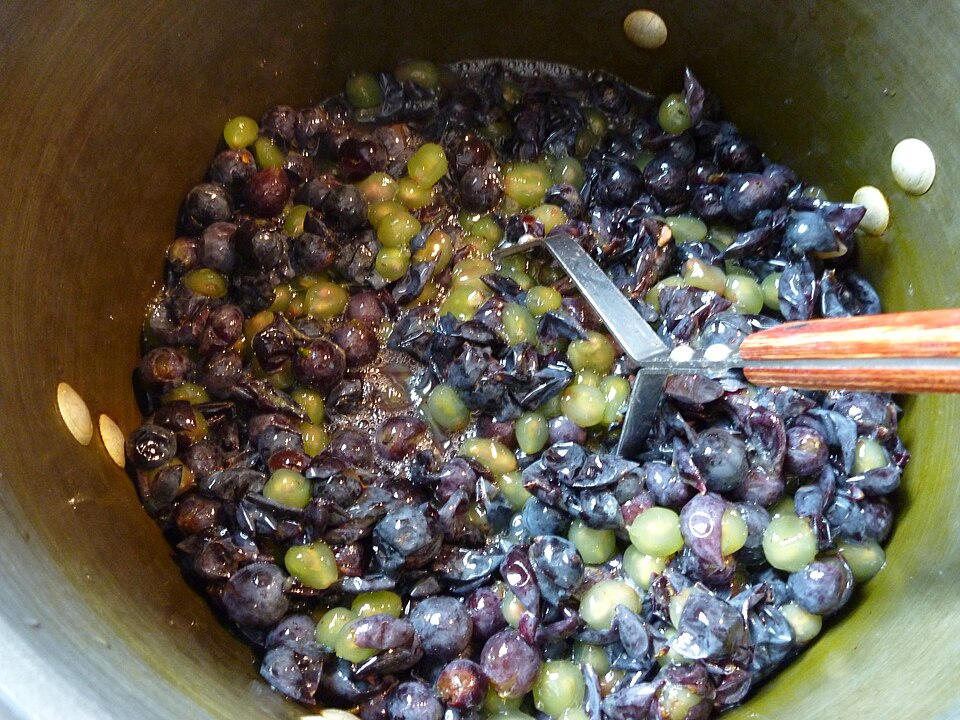
Grapes went into jelly, juice, butter, pies and preserves, with the characteristic strong flavour of American varieties being exactly what those products are supposed to taste of.
The same uses, with the fruit bought rather than grown and the products overwhelmingly purchased ready-made.
That flavour is worth noting because it is frequently misunderstood. The taste people associate with grape jelly, grape juice and grape candy is the taste of a particular American grape, which means the artificial flavour is imitating a real fruit rather than the reverse.
7. The Birds Took a Share and It Was Accepted

Birds ate a substantial portion of any household grape crop, and the usual response was to net a few vines, hang something shiny, or simply plant enough that it did not matter.
Netting, deterrents and the same general acceptance, with commercial operations managing it seriously.
Planting enough to lose some is the characteristic household solution to a problem a commercial grower cannot tolerate. A farm with a crop to sell counts its losses; a household with an arbor counts whether there is enough left for jelly.
8. The Arbor Was Furniture as Much as Horticulture
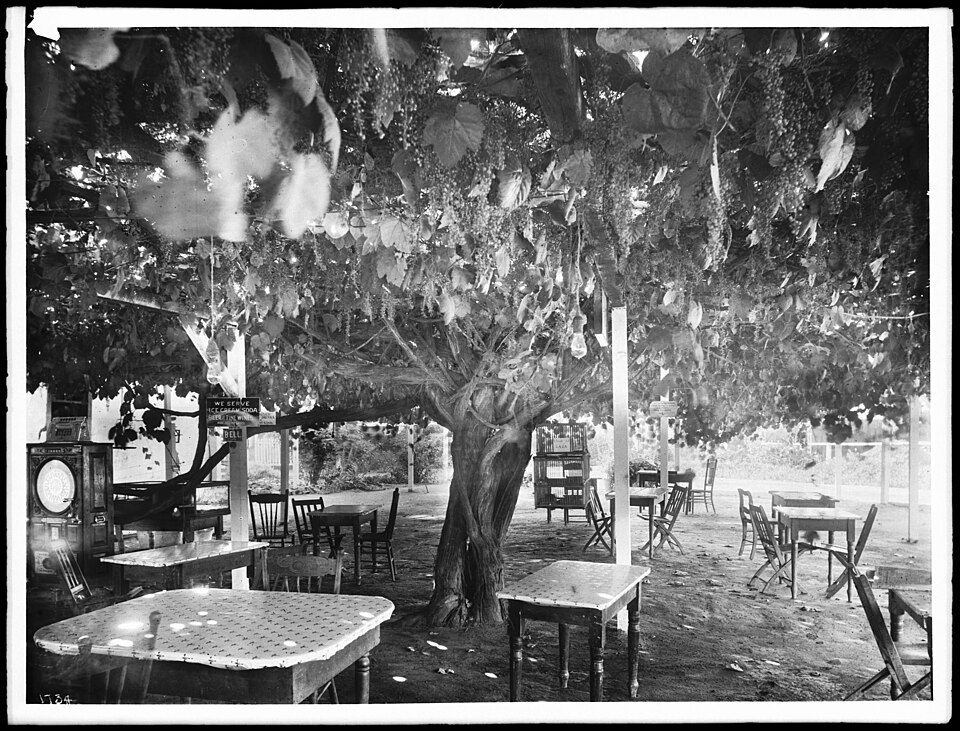
People sat under arbors. A bench, a swing, a table, a couple of chairs or a hammock went underneath, and in hot weather the space was used daily for sitting, shelling peas, preparing produce, visiting and sleeping.
Not applicable in most households, where outdoor living happens on a deck or patio with manufactured shade.
The arbor as a room is the function that has gone most completely. In a house with no cooling, a deeply shaded outdoor space with a breeze through it was genuinely the most comfortable place on the property in July, and the household moved into it.
9. Work Happened Under It

Shelling, shucking, snapping beans, hulling berries, peeling, cleaning fish and poultry, mending and sewing all happened under the arbor rather than in a hot kitchen.
Not applicable. The equivalent work happens indoors in air conditioning, where there is no reason to go outside.
That migration of work outdoors in summer is a pattern that runs through the whole of American domestic life before cooling, and the arbor is one of its clearest expressions. A household with a hot kitchen moved every task it could into the shade, which meant the shaded space had to be large enough to work in.
10. It Was Where Visitors Were Received
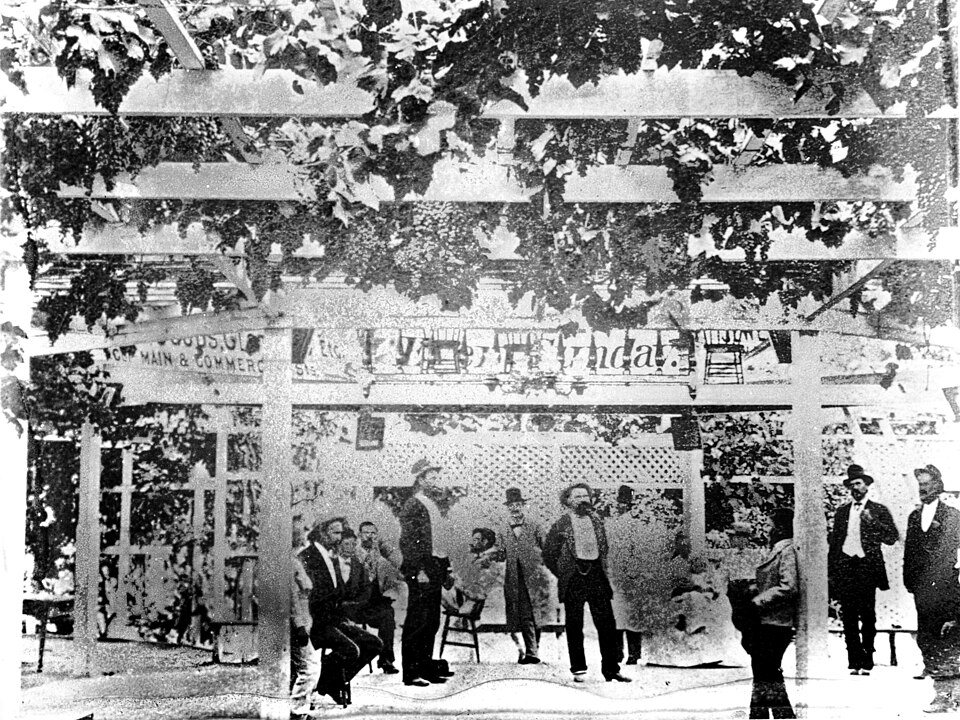
In hot weather, callers were entertained under the arbor rather than in the parlour, which was closed, airless and considerably less pleasant.
Not applicable, with visitors received indoors in cooled rooms.
Receiving somebody outdoors rather than in the best room is a reversal of the usual hierarchy, and it was done because the outdoor space was genuinely better. A formal parlour in August was a bad place to sit, and everybody involved knew the arbor was the superior offer.
11. It Marked the Property and Outlasted the Family
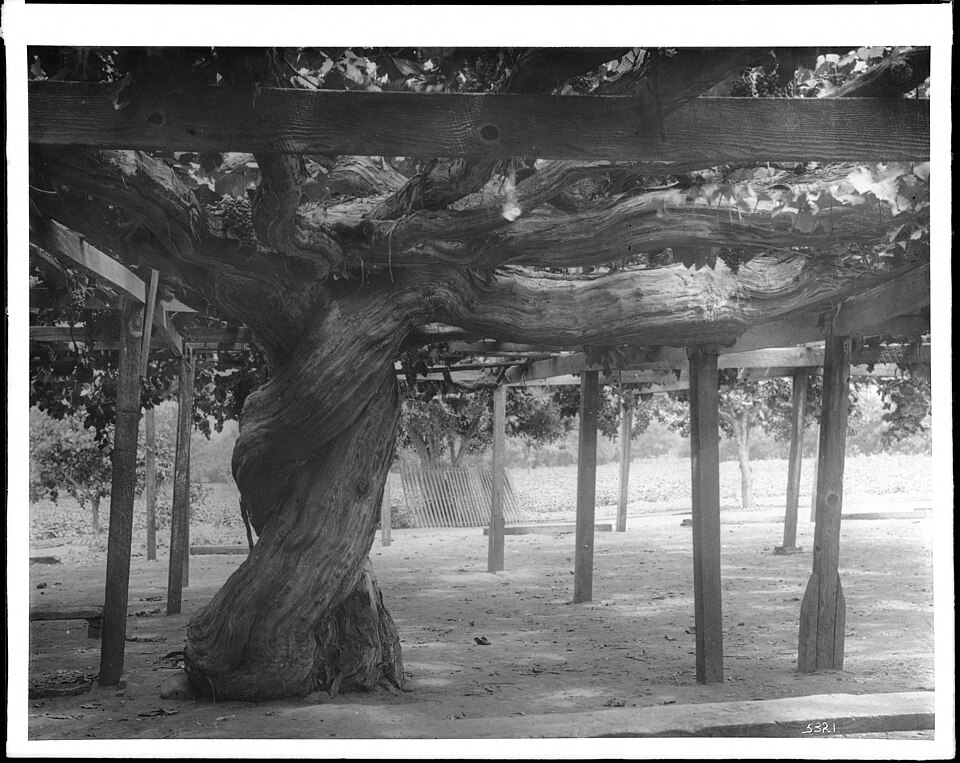
An arbor is a permanent built structure with a long-lived plant on it, which means it stayed when households changed and became a feature people navigated by – the place with the grape arbor.
Not applicable, and surviving arbors are generally derelict, with the vine persisting long after the frame has rotted.
The survival pattern is characteristic and slightly melancholy. The vine outlives the timber, so what you find on old American properties is a sprawling untended grape growing over whatever is left of a frame somebody built fifty years ago, frequently with no indication that it was ever a structure.
12. Air Conditioning Removed the Reason to Sit Outside
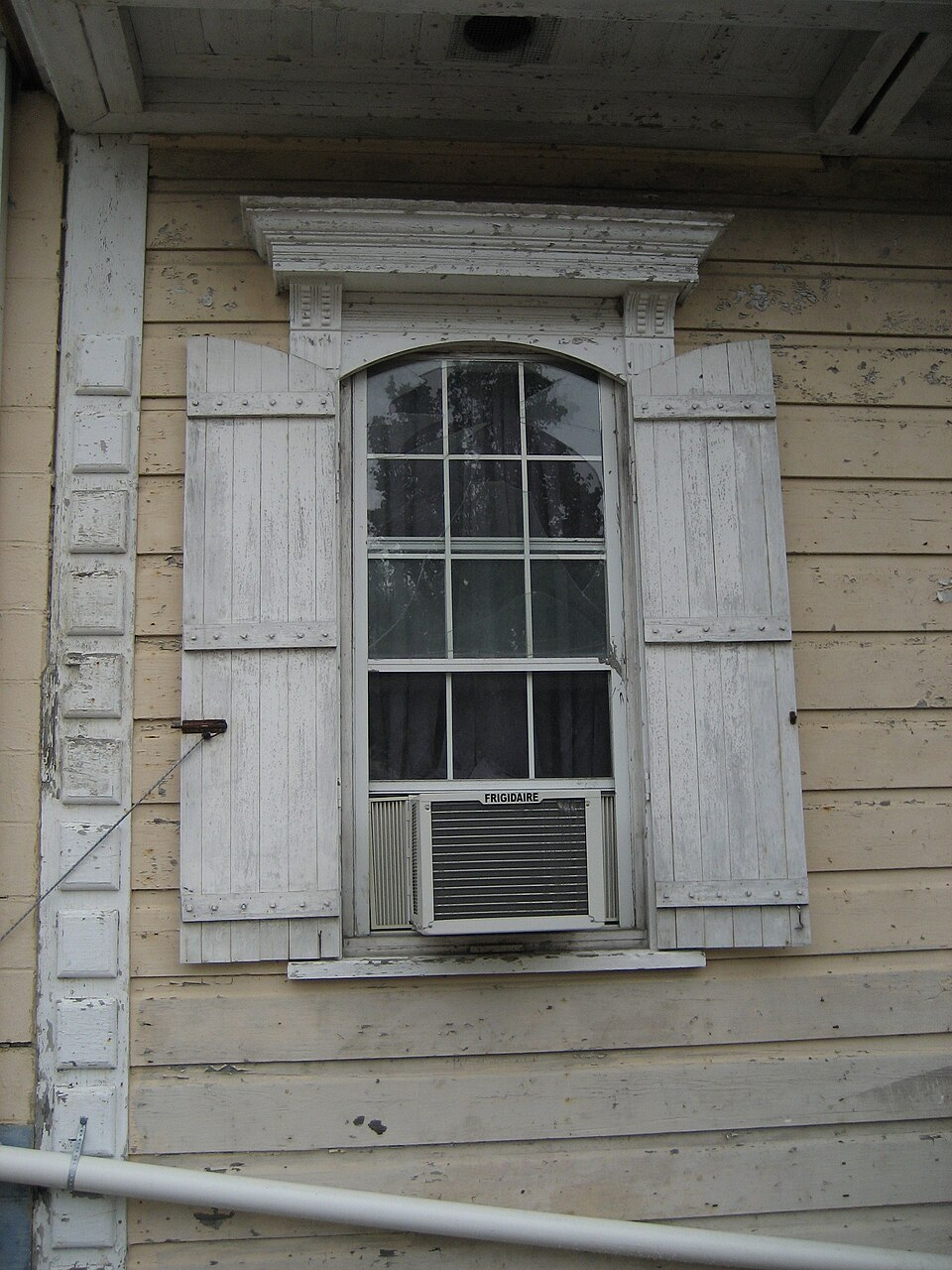
As mechanical cooling spread through American houses, the coolest and most comfortable place on the property stopped being a shaded spot outdoors and became the living room.
Essentially universal in the warmer parts of the country and widespread everywhere else.
That is the single largest cause here and it is not really about grapes at all. An arbor’s primary function was supplying the best available place to be in summer, and the moment a household could cool a room, the best available place moved indoors permanently.
13. The Patio and the Deck Replaced the Idea Commercially
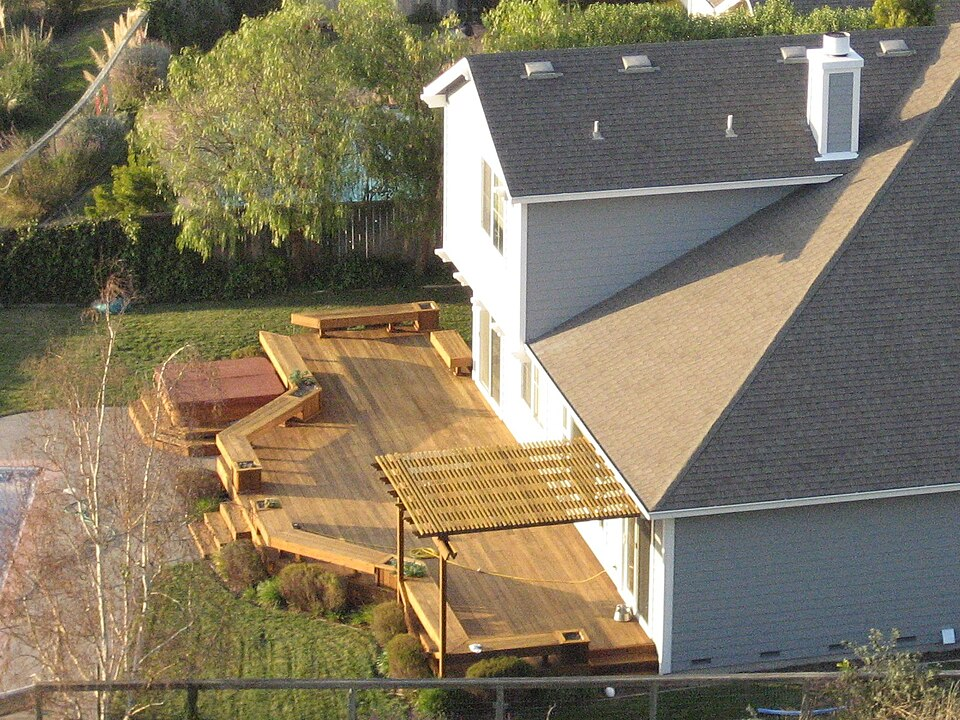
Outdoor living space became a manufactured product – a poured patio, a built deck, an umbrella, an awning, a purchased pergola – requiring no planting, no pruning and no decades of waiting.
Dominant. Outdoor space in American houses is now overwhelmingly built rather than grown.
A bought structure beats a grown one on every dimension except the two that matter here. It works immediately, it needs no maintenance beyond cleaning, and it does not drop fruit – and it also does not switch itself off in winter and does not produce anything.
14. Nobody Plants for Forty Years Any More
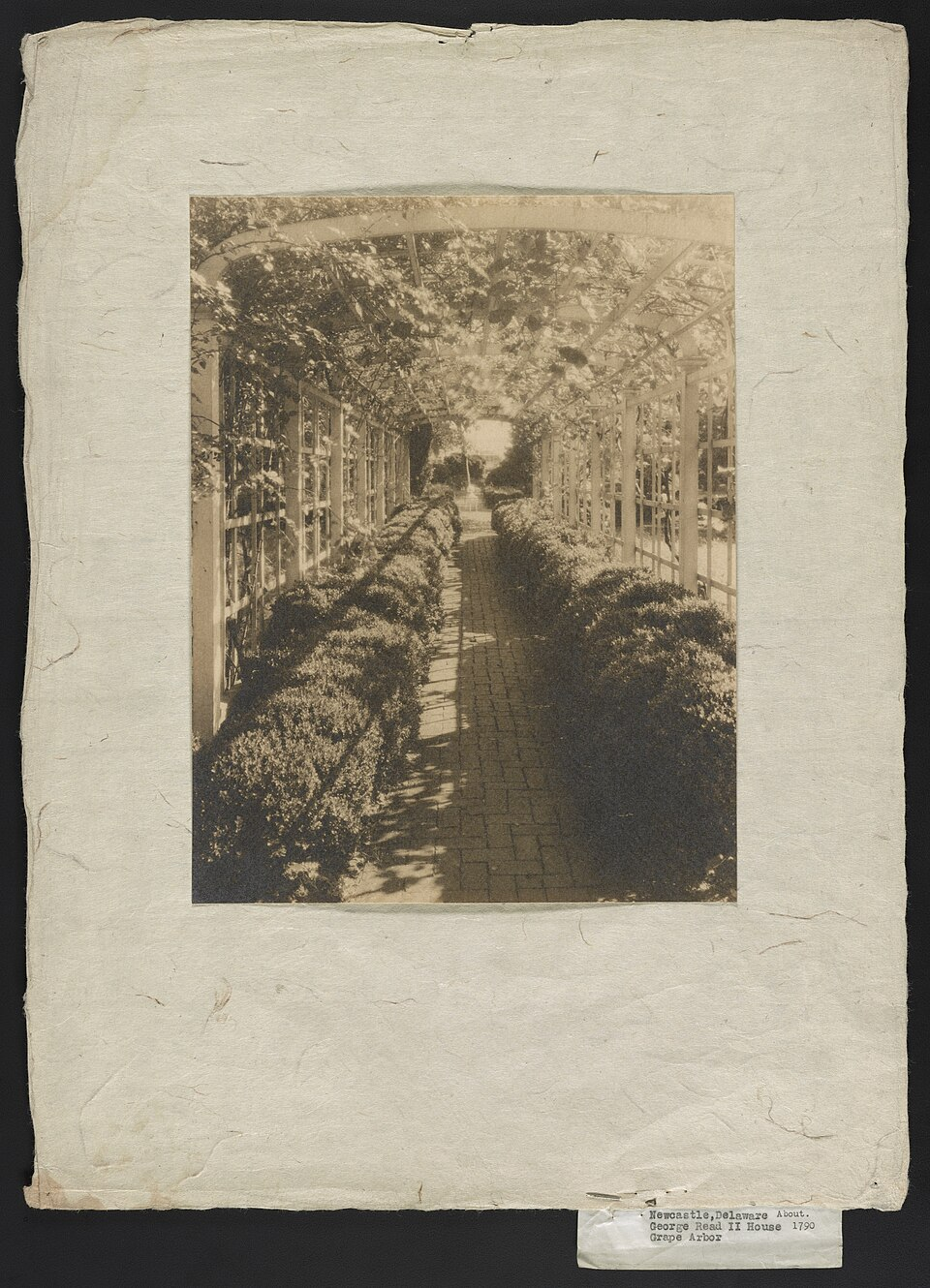
Building an arbor and planting a vine is an investment that pays nothing for several years and reaches full value after a decade, on the assumption that the household will still be there.
Americans move considerably more frequently than they did, which makes any improvement with a ten-year payback a questionable proposition for the person making it.
Mobility is the quiet cause and it applies to every slow-growing thing in a garden. A household that expects to move within five years has no rational reason to plant something that peaks in fifteen, which is why the long-horizon plantings in American yards are overwhelmingly inherited rather than installed.
15. Then the Best Room in the House Moved Indoors
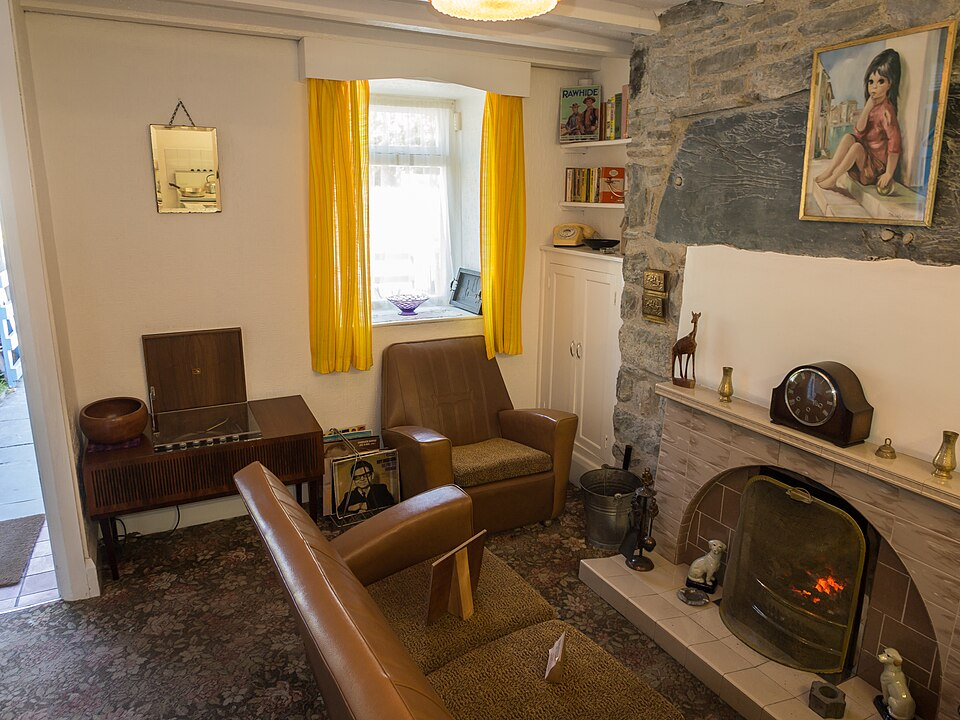
In 1964 a grape arbor was a built structure placed deliberately to put dense seasonal shade over a walk, a porch or a seating area – furnished, worked under, used to receive visitors, producing fruit for jelly and juice, and switching itself off every winter when the leaves dropped.
Outdoor shade is bought as a manufactured product if it is wanted at all, and air conditioning has made the coolest place in an American house its living room.
And what this really records is the end of a whole way of using a property in summer, with the arbor as its most complete physical expression. Before mechanical cooling, the inside of an American house in July was the worst place in the household’s possession. So everything moved outward: the cooking where possible, the preparation work, the sitting, the visiting, the eating and sometimes the sleeping, all of it relocating into whatever shade the property offered. That migration is the context in which an arbor makes sense. It was not a decorative garden feature and it was not primarily a fruit crop. It was the construction of a room – sited by the sun’s path, roofed with a plant chosen because its leaves are large and overlapping and because it drops them at exactly the right time, furnished with a bench and a table, and used daily for the three months when the house was unbearable. Air conditioning reversed that completely and permanently, and it is a straightforwardly good thing that it did. The coolest and most pleasant place on an American property is now the living room, which means there is no longer any reason to build a shaded outdoor room, which means there is no reason to spend a weekend setting posts and then wait eight years for a vine to cover them. What is left is the vine. Drive past old houses across a great deal of the country and you will see them – enormous, untended, sprawling over the wreckage of a frame that somebody built on purpose, in a particular place, for reasons nobody now has.
It Was a Room, and Air Conditioning Replaced It

The grape arbor gets filed as a garden feature and that is the wrong category entirely. It was a building, and understanding why requires understanding what an American house was like in July before mechanical cooling.
It was the worst place on the property.
A house in summer without cooling is hotter than the shade outside it, holds the heat overnight, traps the heat of cooking, and has limited air movement. So households did the obvious thing and moved outward. Cooking migrated to a summer kitchen or a porch where it could. Preparation work – shelling, shucking, snapping beans, hulling, peeling, cleaning poultry and fish – went outside. Sitting went outside. Visiting went outside. Eating frequently went outside. And in the worst weather, sleeping went outside too.
That migration is the context in which an arbor makes sense, and once you see it the arbor stops looking decorative and starts looking like construction, which is what it was.
Somebody dug post holes, set timbers and built an overhead frame – a weekend of real work, in materials that cost money – before anything was planted. It was sited with the sun’s path in mind, so the shade would fall over a walk, a porch, a kitchen door or a seating area. It was then roofed with a plant selected for the job: grape leaves are large and overlap heavily, which produces genuinely deep shade rather than the dappled sort.
And here is the part that is quietly brilliant. The vine is deciduous. It shades heavily in July and then drops every leaf in October, which means a south-facing window under a bare arbor gets full sun in January. It is a shading device that switches itself off for the winter, which no awning, roof or fixed pergola does – and the households that built them understood this perfectly well.
Underneath went a bench, a table, a swing or a hammock, and the space was used daily for three months.
The fruit was secondary and that is not a figure of speech. The varieties planted were tough American grapes chosen because they survive cold winters, resist the diseases that kill European vines in the eastern United States, and will produce for forty years while being largely ignored. The crop went into jelly, juice and preserves – and the strong flavour people associate with grape jelly and grape candy is the taste of that actual fruit, which means the artificial flavour imitates a real grape rather than the other way round. Birds took a share, and the household response was generally to plant enough that it did not matter.
Then air conditioning arrived and reversed the entire arrangement.
The coolest, most comfortable place on an American property is now the living room. Which means there is no longer any reason to construct a shaded outdoor room, which means no reason to spend a weekend setting posts and then wait eight years for a vine to cover them. Outdoor shade became a manufactured product instead – a patio, a deck, an umbrella, an awning, a pergola bought as a kit – all of which work immediately, require no pruning, and drop nothing on anybody. They also do not switch off in winter and do not produce fruit, which is a trade most people would make without hesitating.
Mobility finished it. An arbor pays nothing for several years and reaches full value after a decade, which only makes sense for a household that expects to still be there – and Americans move considerably more often than they did.
What survives is the vine, because the vine outlives the timber. Drive past old houses across a great deal of the country and they are there: enormous, untended, sprawling over the remains of a frame that somebody built on purpose, in a specific place, for reasons nobody now has.
If your grandparents had one, you shelled something under it and you remember how dark the shade was.
And the vine is probably still there, growing over nothing.
Like our content? Follow us for more.