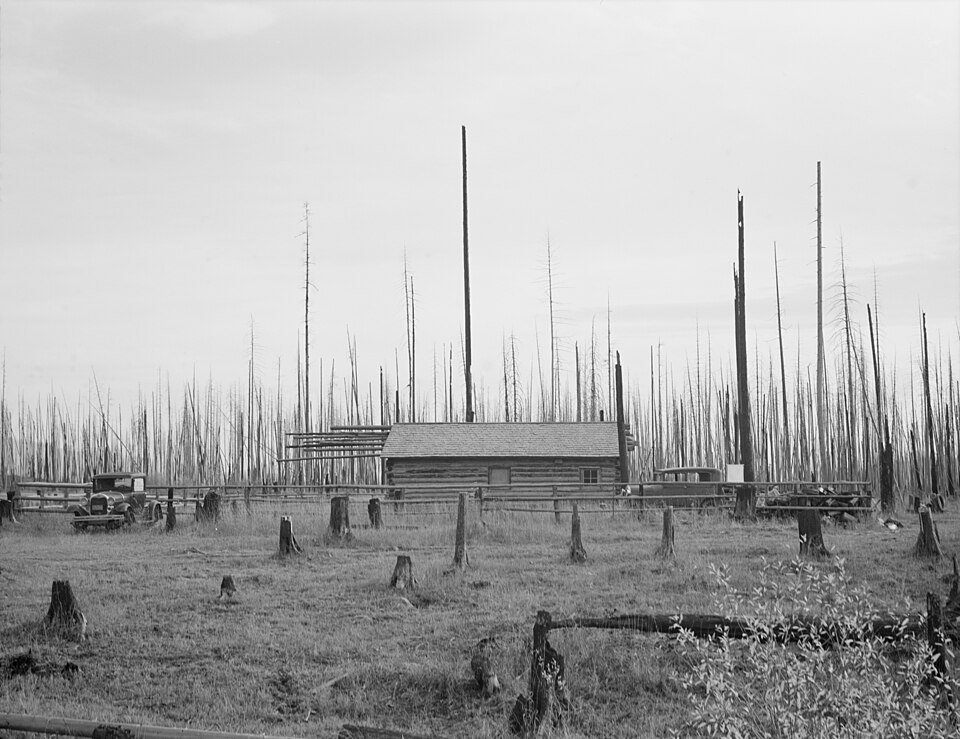
In 1964 clearing new ground was still something a determined American household might undertake – bringing woodland, brush or scrub into cultivation for the first time, over several years, by hand.
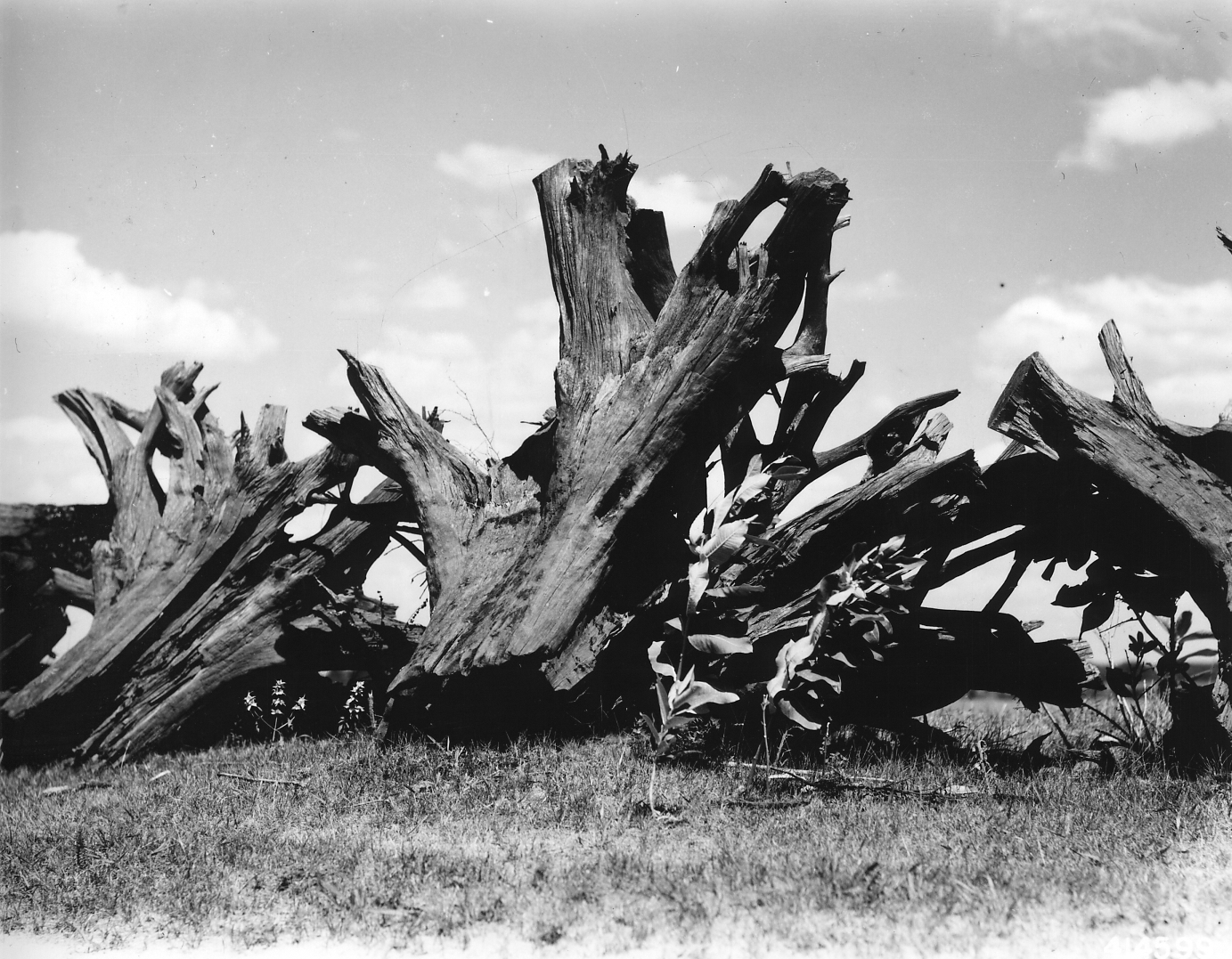
Felling the timber was the easy part. The stumps were the difficulty, because a root system can spread further than the branches did and a field cannot be ploughed around them, so every single one had to come out – pulled with a team, dug, burned, or deliberately left for years to rot. A field might carry hundreds.
And the reward was a permanently larger farm, which converted labour directly into land. Here are fifteen things every farm family knew.
1. New Ground Meant Land That Had Never Been Cropped
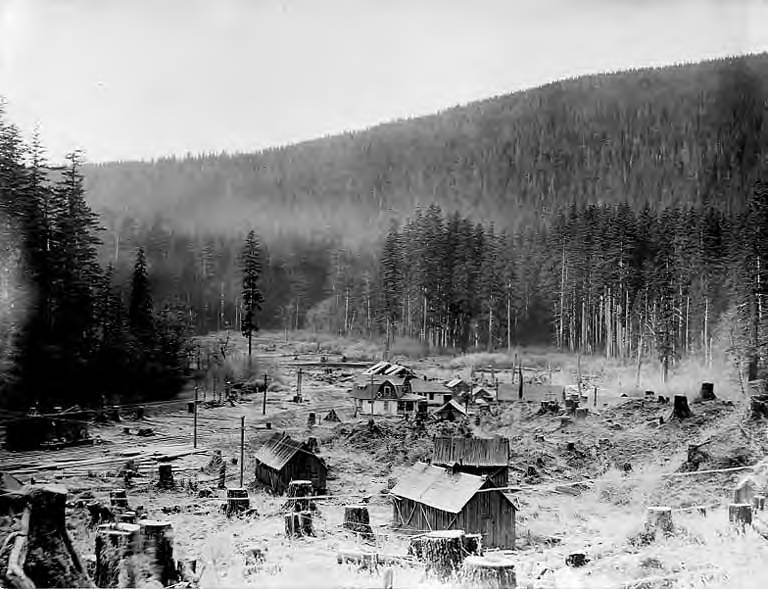
The phrase referred specifically to ground being brought into cultivation for the first time – woodland, brush, scrub or rough pasture that had never carried a crop and had to be converted before it could.
Essentially no new ground is being cleared for crops in the settled parts of the United States; the agricultural frontier closed and the movement has run the other way, with marginal land going out of cultivation.
That reversal is the thing to establish first. Clearing new ground was once a normal part of farming, performed by households expanding what they worked – and it stopped being normal not because it got harder but because there is nothing left to clear and no reason to want more.
Like our content? Follow us for more.
2. The Trees Came Down First and by Hand
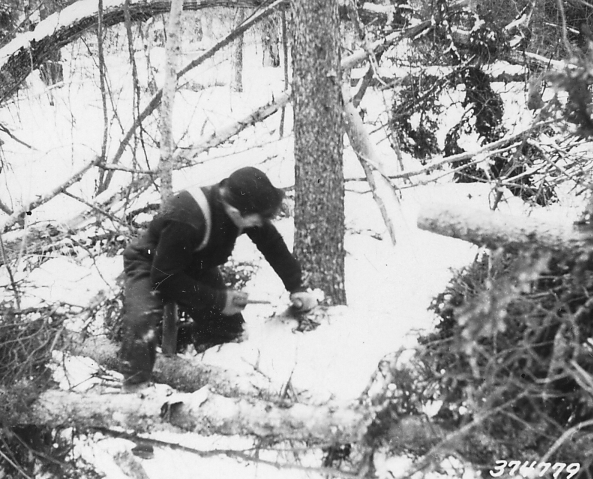
Standing timber was felled, limbed and cut up, with the usable wood taken for lumber, fence posts, firewood or sale, and the rest piled.
Mechanical clearing by heavy equipment where it happens at all, with the whole operation measured in hours rather than seasons.
Felling was the straightforward part and everybody knew it. A tree can be got down in an afternoon; what remains afterwards is the actual problem, and the problem is underground.
3. The Stumps Were the Entire Difficulty
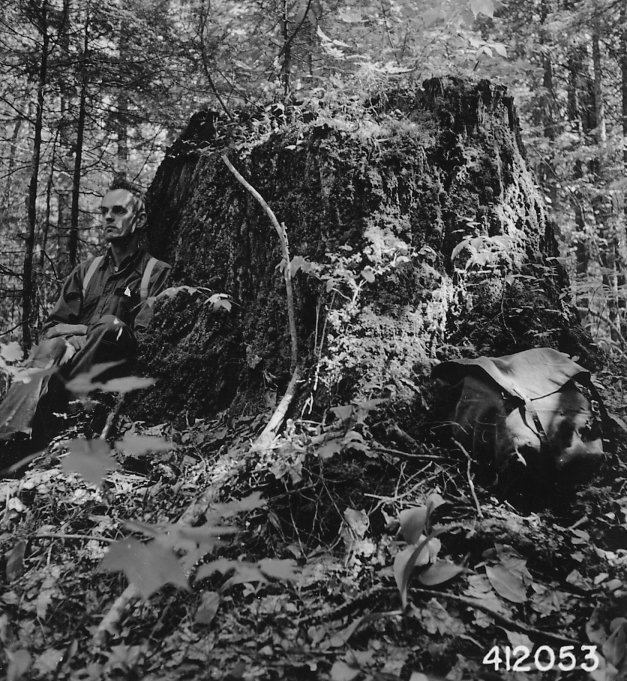
A felled tree leaves a stump anchored by a root system that may spread further than the branches did, and a field cannot be ploughed around stumps – so every single one had to come out.
Not applicable, and modern stump removal is done by grinding machines in minutes.
Stump removal is the reason clearing took years rather than weeks. A large stump with established roots is an enormously stubborn object, there is no way to see what you are dealing with, and a field might carry hundreds of them.
4. They Were Pulled, Burned, Dug and Rotted Out
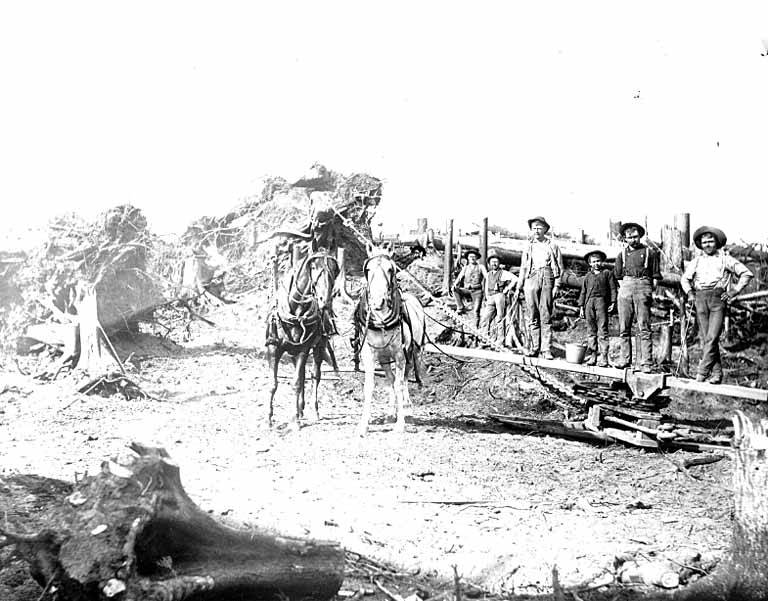
Households used every available method – chaining stumps to a team or a tractor and pulling, digging and cutting roots, burning them out slowly, or simply leaving them for years to rot until they could be broken up.
Grinding and mechanical extraction, which is faster, more complete and considerably safer.
The patience in that list is the part that is hard to credit now. Leaving a stump to rot is a method, deliberately chosen, in which the plan is to wait several years for biology to do the work – and a field in that condition was farmed around in the meantime.
5. Explosives Were Used and This Piece Says Nothing Further
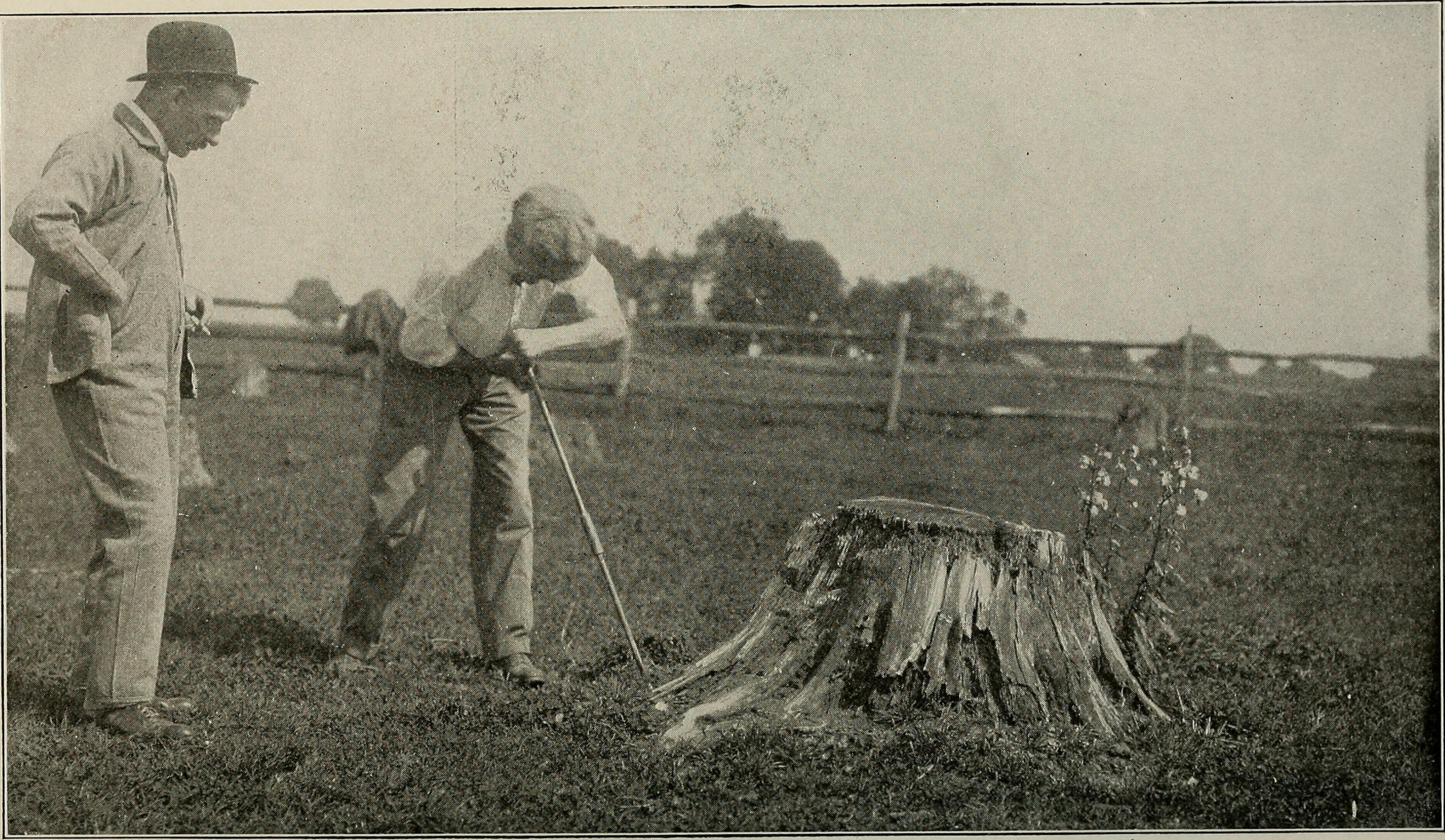
Stump removal with explosives was a recognised practice in American agriculture, promoted and sold for the purpose, and widely used.
Not applicable, and regulated comprehensively wherever explosives are handled.
This piece names the fact and gives absolutely nothing else – no material, no quantity, no placement, no method and no account of how any of it was done – because it concerns explosives, which are dangerous, criminal to misuse and governed by specific law. The historical point is simply that it happened and that it is one of the reasons the work was hazardous.
6. The Ground Was Full of Roots for Years Afterwards
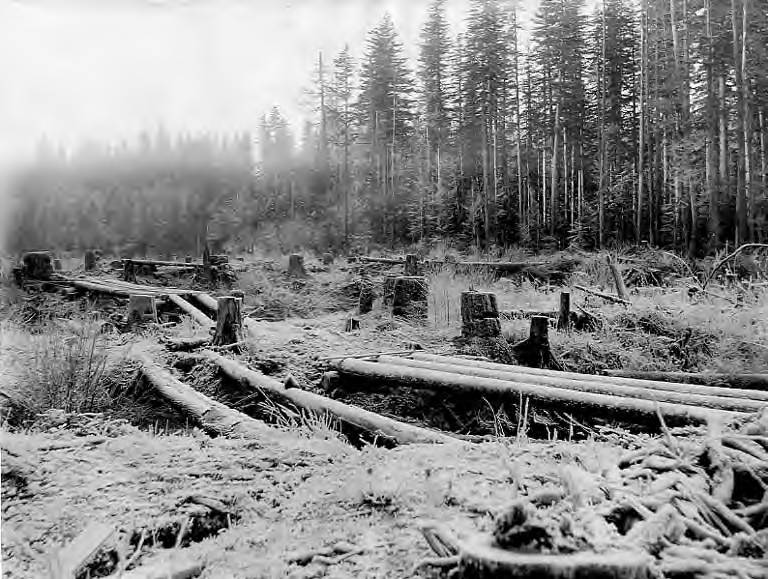
Even with stumps out, the soil remained full of root masses, buried wood and stones, which broke implements, caught ploughs and surfaced continuously for a decade.
Not applicable.
The long tail of the job is routinely forgotten. New ground was not finished when the stumps were gone; it was a difficult field for years, with something coming up every time it was worked, and a farmer who hit a buried root at speed broke equipment and occasionally himself.
7. The First Crops Were Chosen for the Conditions
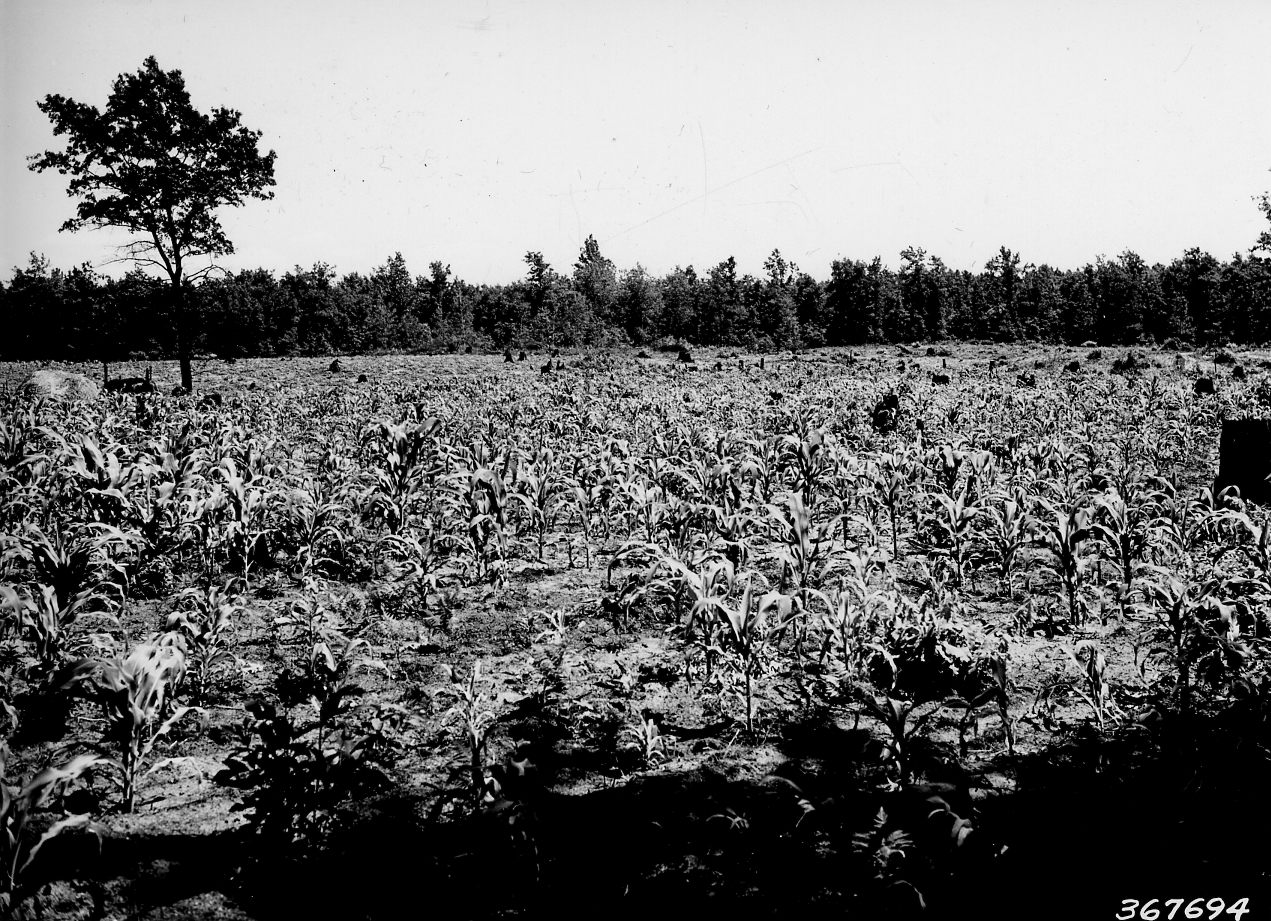
New ground was not planted to anything demanding. The first crops were ones that tolerated rough, uneven, partially cleared, root-filled ground and did not require fine cultivation.
Not applicable.
Matching the crop to the state of the ground is a sensible piece of judgement and it also meant the land’s value rose in stages. A field that could only carry a rough crop in its first year became capable of more as the roots rotted and the surface levelled, which is a multi-year investment with a visible return.
8. New Ground Was Famously Productive at First
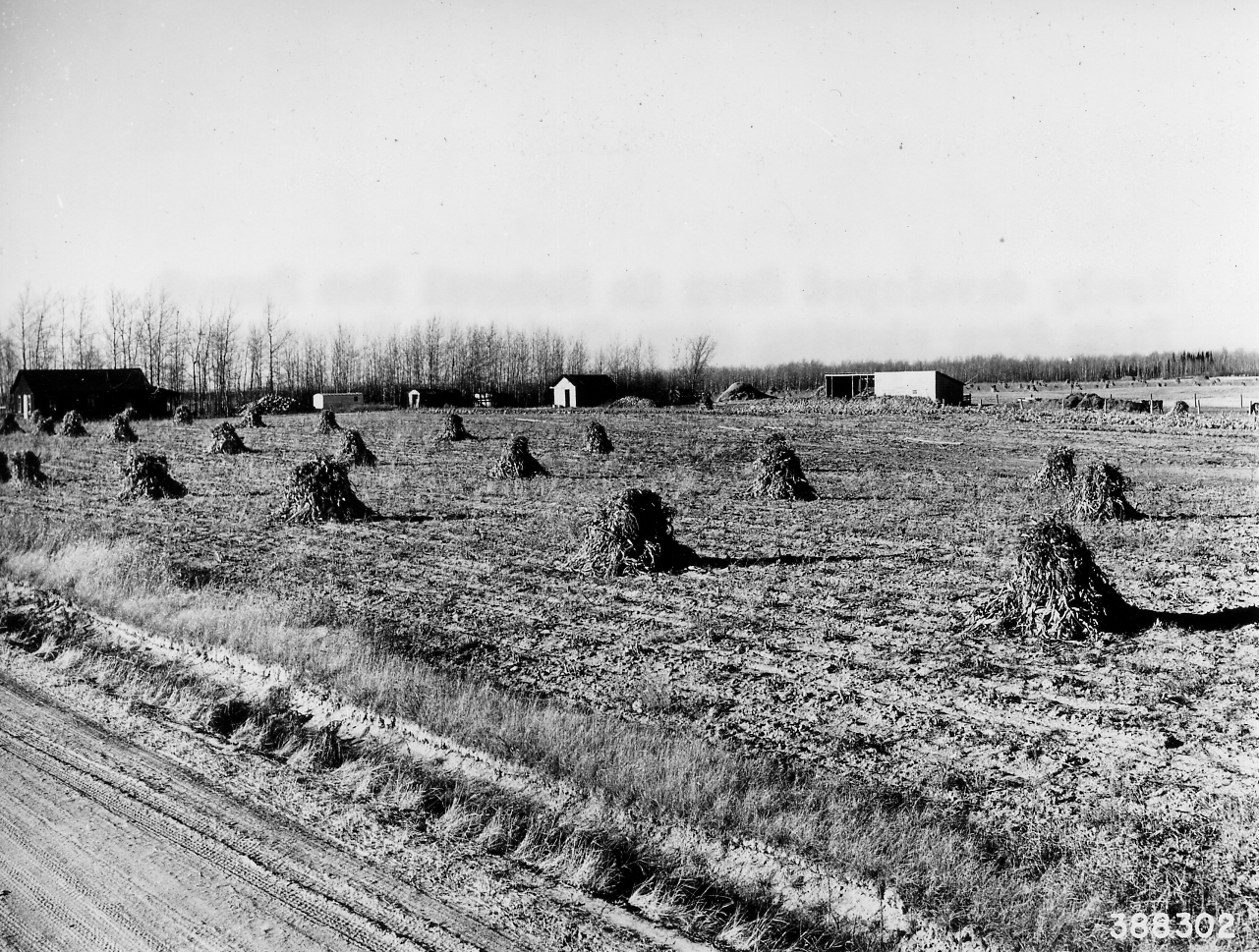
Freshly cleared land, carrying decades or centuries of accumulated leaf litter and organic matter, produced remarkably well for its first few years – and then declined.
Soil fertility is managed through testing, amendment and rotation rather than being inherited from a forest.
That initial burst is real and it explains a great deal about how American agriculture expanded. Clearing produced a few years of exceptional yields from accumulated natural fertility, and when that was exhausted the easiest response for a long period was to clear more – which is the logic that drove the frontier.
9. It Was Done With Neighbours
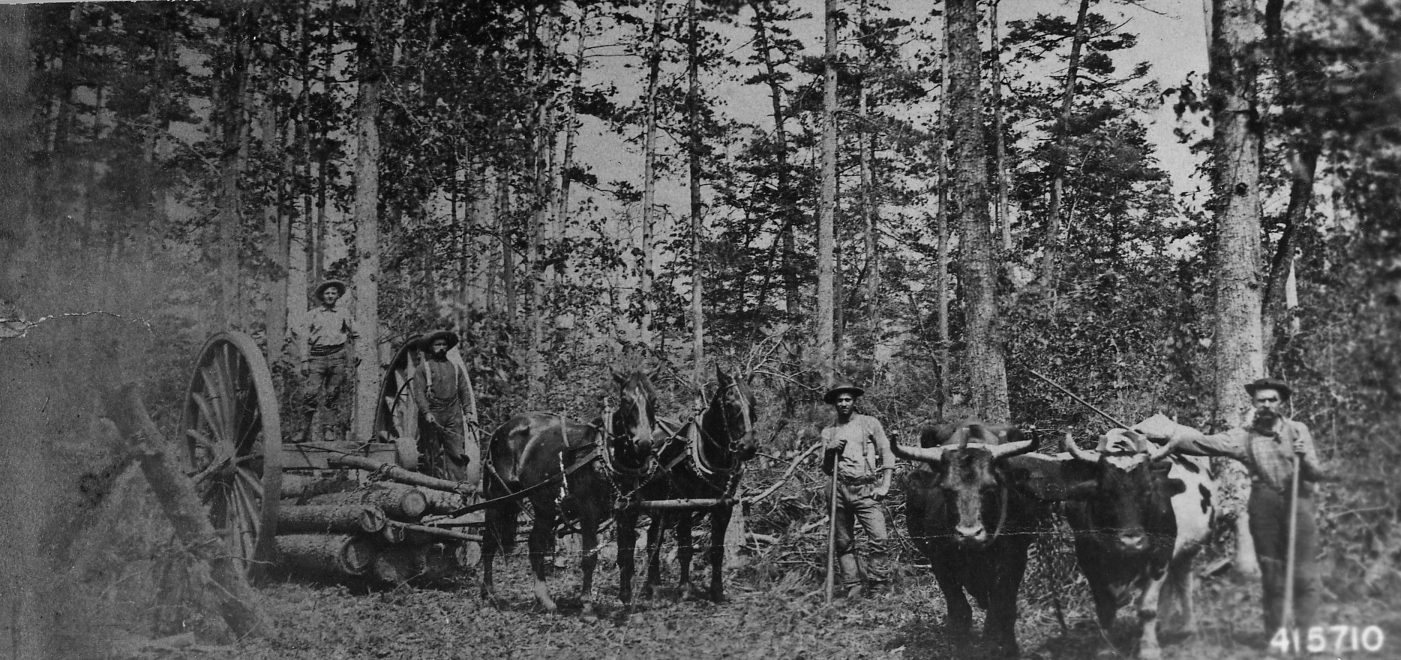
Clearing was heavy enough that households exchanged labour for it, with log rollings and clearing bees at which a neighbourhood turned out to help one family get a piece of ground into shape.
Not applicable. Clearing is a contractor’s job performed by machine.
The clearing bee belongs to the same family as every other rural labour exchange and had the same economics. Work that is impossible alone and manageable in a group gets done by a group, with the obligation recorded informally and settled when somebody else’s turn came.
10. The Fire Was Enormous and Lasted Days
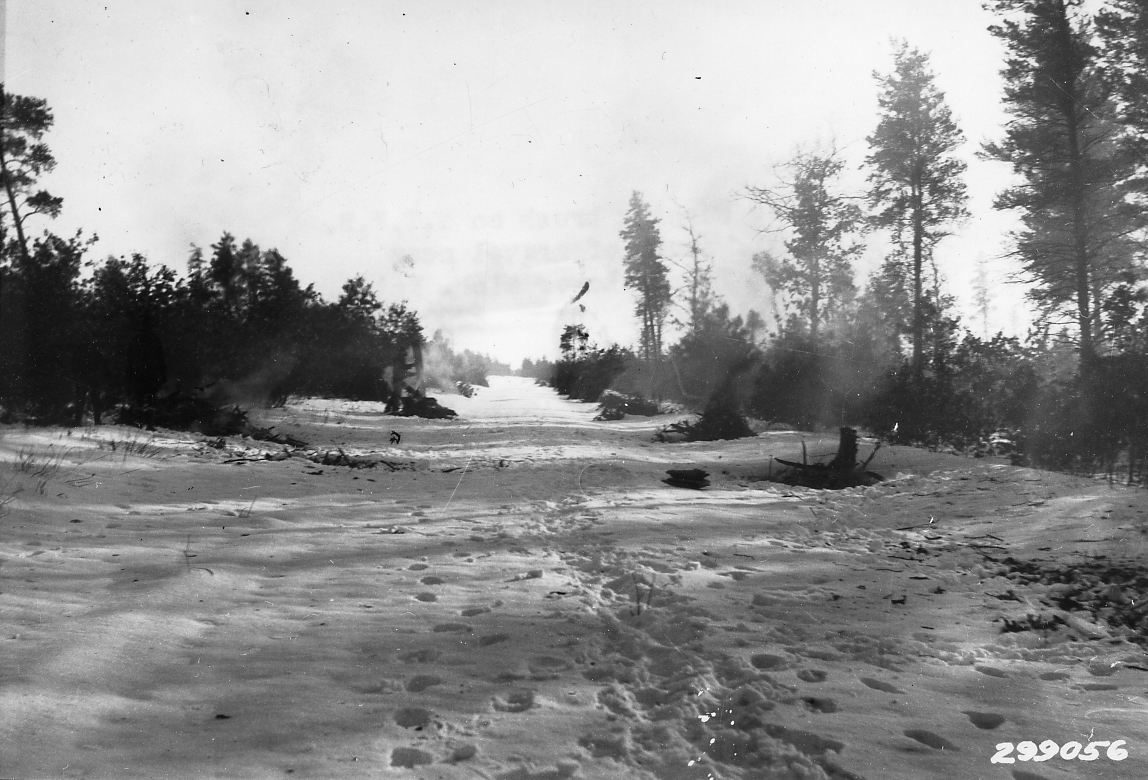
Brush, limbs, tops and unusable wood were piled and burned, in fires that were very large, that ran for days, and that were a recognised feature of the clearing season.
Open burning is restricted or prohibited in most American jurisdictions and requires permits where permitted at all.
This piece gives no method, timing, siting or guidance of any kind. Open burning is governed by specific local rules that differ enormously and change, and the only appropriate source for anybody considering it is the relevant authority.
11. Children Worked on It and It Was Dangerous
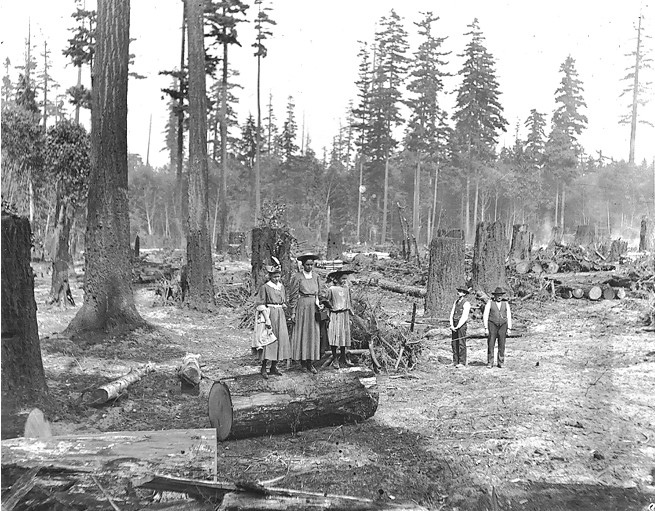
Clearing involved children in picking up brush, carrying, driving teams, tending fires and gathering stones, around felling, burning, heavy pulling and unstable loads.
Not applicable.
The hazards were obvious and accepted, which is worth stating rather than smoothing over. A clearing operation combines falling timber, fire, heavy loads under tension and equipment under strain, and children were present throughout.
12. Rocks Came Out and Became Walls and Piles
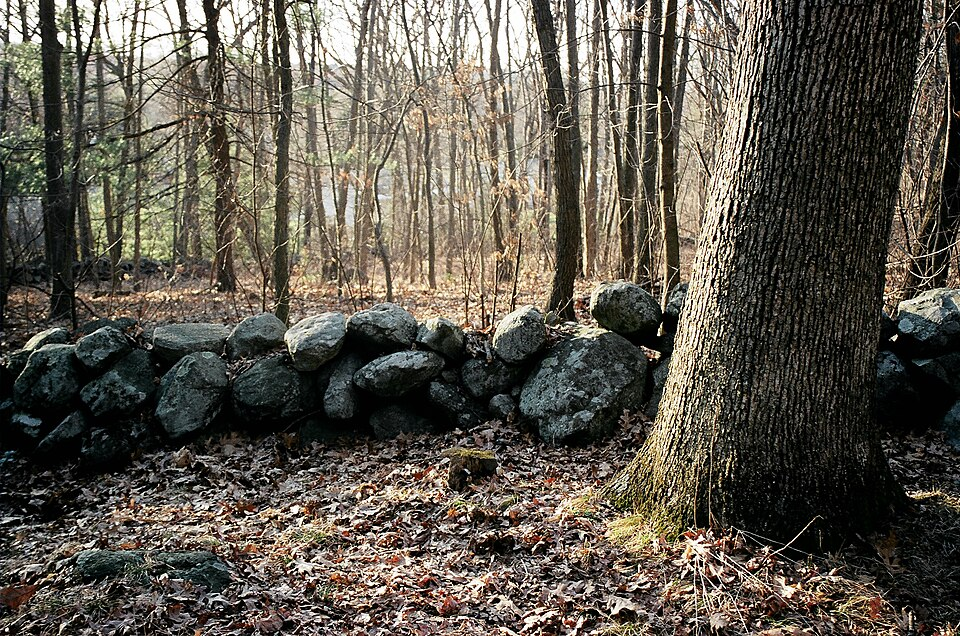
Stones turned up by clearing and by the first few ploughings had to be removed, and they went into walls, into piles at field corners, into foundations and into road fill.
Not applicable in the same way, with mechanical removal and disposal where new ground is worked.
The stone piles and walls at the edges of old American fields are the most visible surviving evidence of this entire process. Every stone in them was lifted by hand out of the ground in front of it, which is a quantity of labour that is difficult to contemplate standing next to one.
13. The Reward Was a Bigger Farm and Everybody Understood It
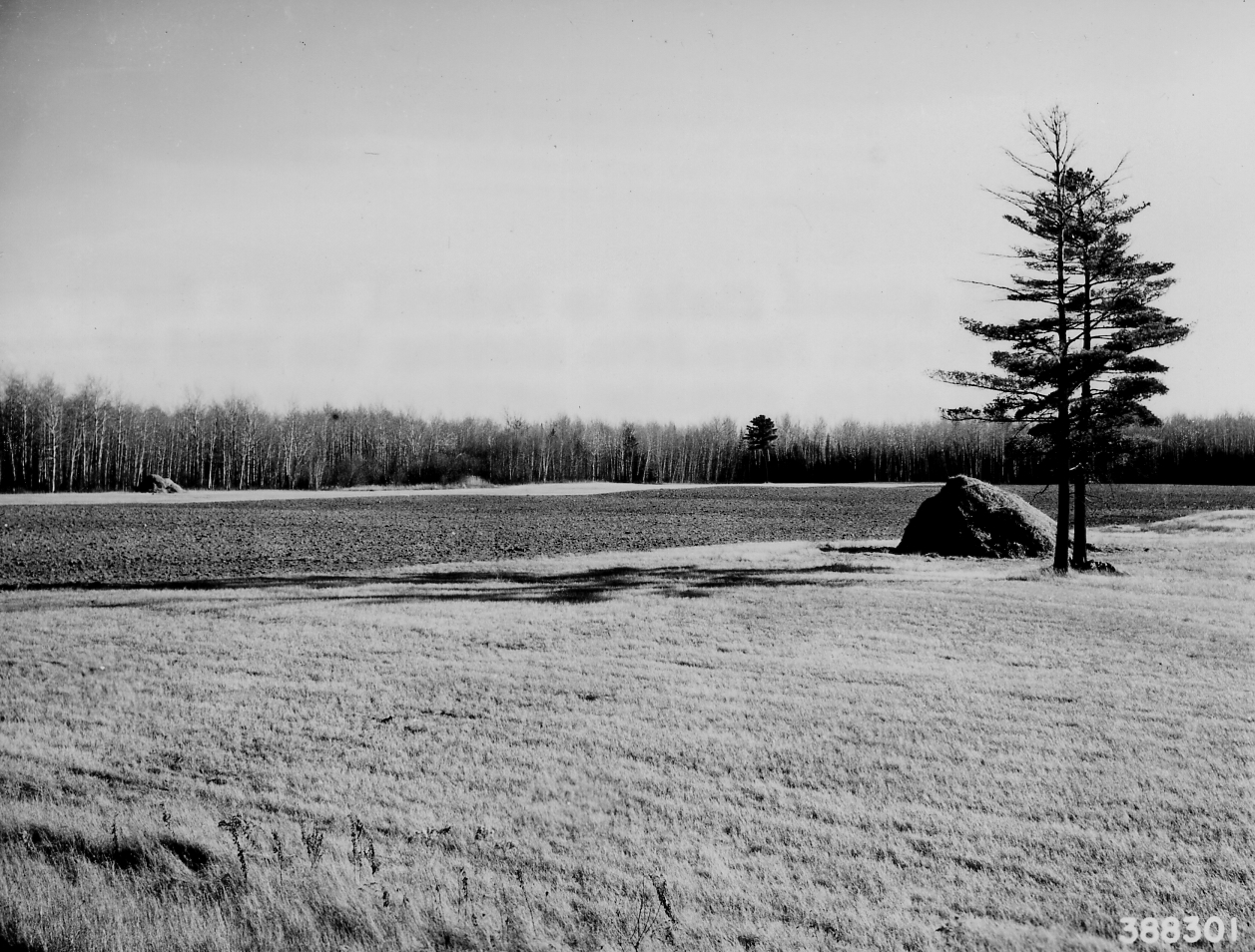
A household that cleared ten acres had a larger farm permanently, which meant more crop, more income, more security and more to leave to children – and that calculation was explicit.
Farm expansion happens by purchase or rental of existing cropland, which requires capital rather than labour.
That is the most important difference between then and now. Clearing converted labour directly into permanent productive capacity, which meant a household with no money but plenty of work in it could enlarge its holding – and no equivalent route exists today.
14. Then There Was Nothing Left Worth Clearing
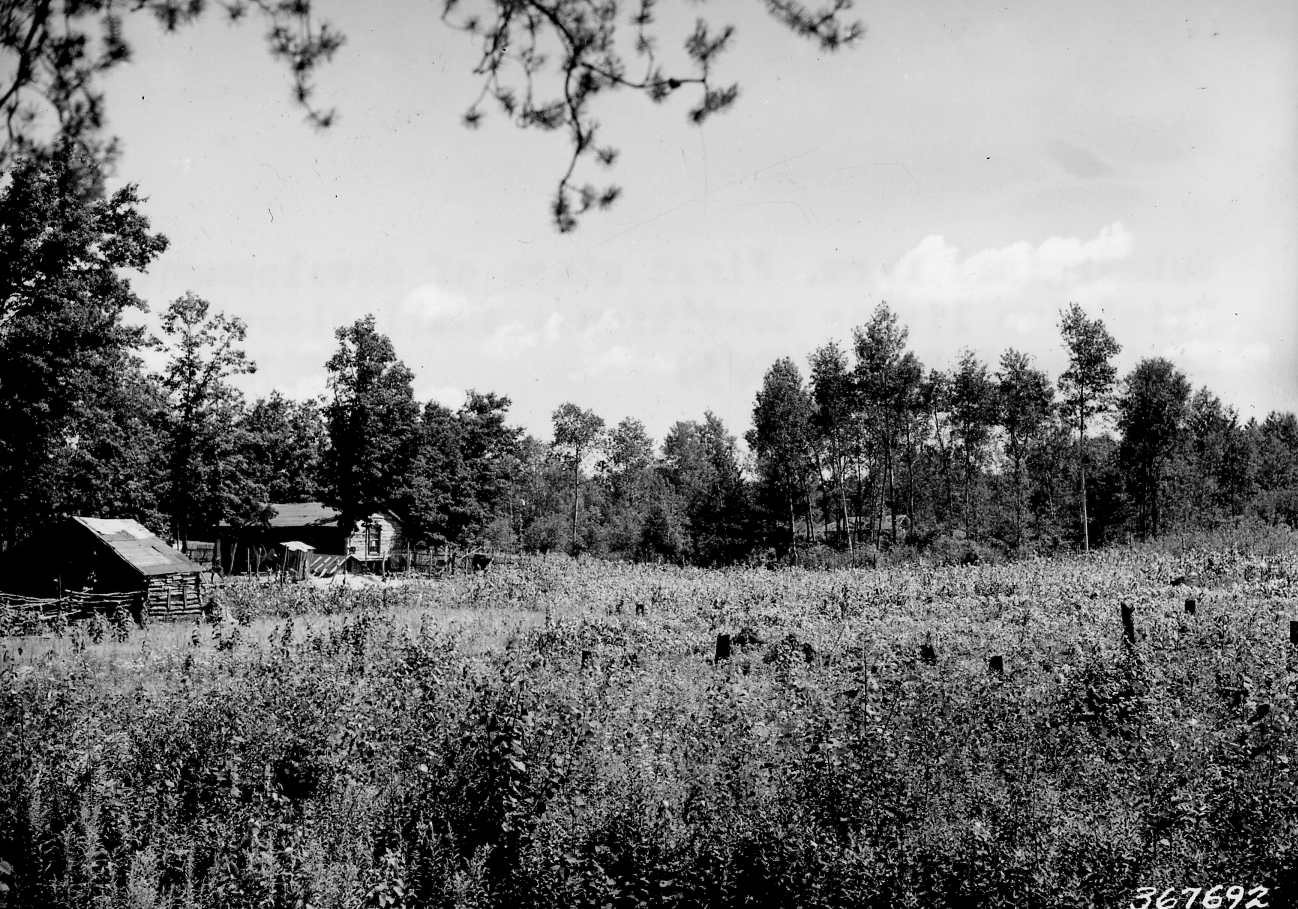
The land that remained uncleared by the later twentieth century was uncleared for reasons – too steep, too wet, too rocky, too thin, too small or legally protected – and clearing it would have cost more than it could ever return.
Marginal land has been going out of production rather than into it, with substantial areas returning to forest across the eastern United States.
That is the straightforward reason the practice ended. Every piece of ground that was worth the enormous labour of clearing had already been cleared, generations earlier, and what was left was left because the arithmetic did not work.
15. Then the Direction of Travel Reversed
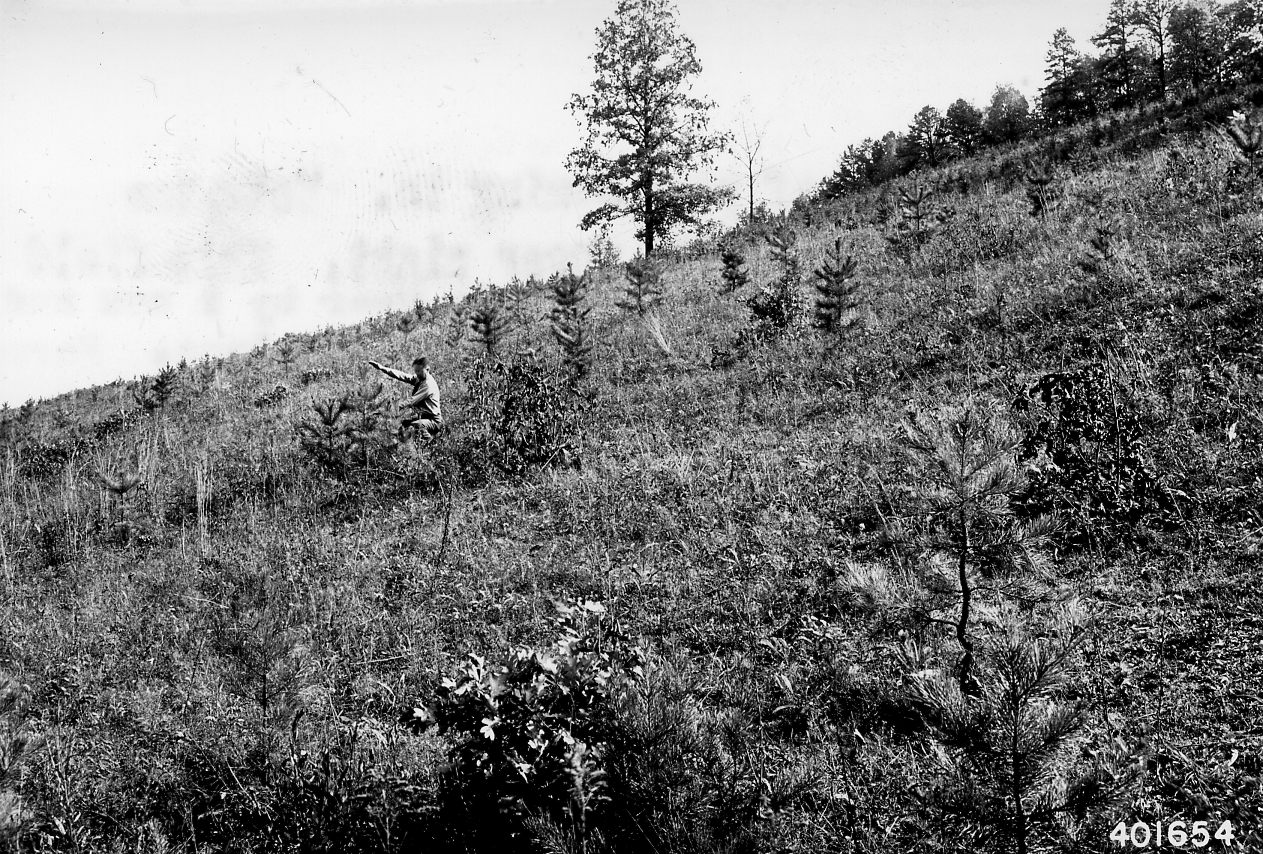
In 1964 clearing new ground was still a thing a determined American household might do – years of felling, stump pulling, burning, stone picking and farming around obstacles, in exchange for a permanently larger farm.
Land is going the other way. Marginal fields are reverting to woodland across large parts of the United States, forest cover in the eastern states has increased substantially from its historic low, and the labour-into-land conversion that clearing represented has no modern equivalent of any kind.
And what makes this worth recording is that it is the clean end of a specific American economic logic. For a very long time the standard answer to wanting more productive land was to make some – because labour was the resource a household had, land was what it wanted, and clearing converted one into the other at a known if punishing rate. A family with no capital and plenty of work in it could end up with a farm twice the size, permanently, and leave it to its children. That logic also had a visible cost, which is the second half of the story: new ground produced remarkably well for a few years on accumulated forest fertility and then declined, and for a long period the easiest response to that decline was to clear more. Both halves ended at once, and they ended for the same reason. Everything worth clearing had been cleared. What remained was steep, wet, rocky, thin, small or protected, and the arithmetic on it does not work at any wage. So the practice stopped, the direction reversed, and marginal fields across the eastern United States went back to trees – which means a great many Americans now live surrounded by woodland that their great-grandparents cleared by hand and that has quietly grown back over the stone walls they built out of it.
It Was Labour Converted Into Land, and Then the Land Ran Out
Clearing new ground is the clearest example in American agriculture of a logic that has completely disappeared, and the logic is worth setting out plainly because it explains an enormous amount about how the country was farmed.
A household’s two resources were labour and land. If it had labour and wanted land, it could make some. Not buy it – make it, by converting woodland, brush or scrub into a field through several years of extremely hard work, at a known if punishing exchange rate.
That is a genuinely unusual economic arrangement and it had real consequences. A family with no capital whatsoever but plenty of work in it could end up with a farm substantially larger than the one it started with, permanently, and leave the result to its children. There was a route from effort to ownership that did not pass through money at any point.
The work itself was as bad as it sounds. Timber felled, limbed and cut up by hand. Stumps – the real problem – removed by chaining to a team and pulling, by digging and cutting roots, by burning them out slowly, or by the deliberate strategy of leaving them several years to rot while farming around them. Brush and tops burned in fires that ran for days. Stones picked out by hand through the first several ploughings and stacked into the walls and piles that still edge old American fields. Roots and buried wood surfacing for a decade afterwards, breaking implements. Children present throughout, around falling timber, fire and heavy loads under tension.
It was also done with neighbours, through log rollings and clearing bees, on the same labour-exchange basis as every other job too big for one household.
And there was a reward beyond the acreage, which is the second half of the story. Freshly cleared land carries decades or centuries of accumulated leaf litter and organic matter, and it produces remarkably well for its first few years. Then it declines.
That decline mattered enormously, because for a very long period the easiest response to it was to clear more. Which is the engine of the whole frontier logic: clear, farm the inherited fertility, watch it fall off, clear again. It worked for as long as there was something to clear.
Both halves of the arrangement ended at the same time and for the same reason.
Everything worth clearing had been cleared. The ground that remained uncleared by the later twentieth century was uncleared because it was too steep, too wet, too rocky, too thin, too small or legally protected – and the arithmetic on that land does not work at any wage, with any equipment. There is no remaining stock of land that repays several years of heavy labour.
So the practice stopped, and then the direction of travel reversed entirely. Marginal fields across large parts of the United States have gone out of cultivation and back to woodland. Forest cover across the eastern states has increased substantially from its historic low, which is one of the genuinely surprising facts about American land use and almost the opposite of what most people assume.
Which produces an odd situation that a great many Americans are living in without noticing. The woods behind the house were cleared, by hand, by somebody’s great-grandparents – who felled the timber, pulled the stumps, burned the brush and stacked the stones into a wall at the edge.
And the trees have grown back over the wall.
If your family cleared ground, there is a stone wall somewhere that your people built out of what came up in the field.
And the field is trees now, and the wall is still there under them.
Like our content? Follow us for more.