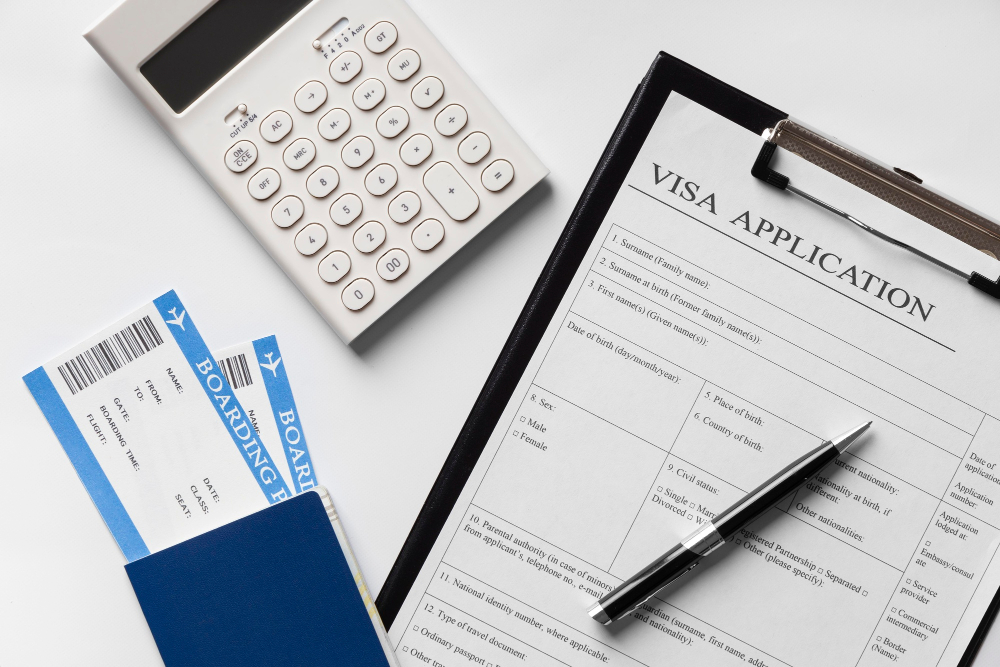
Most visa difficulties are not refusals. They are a four-month wait for an appointment, a resubmission because a translation was the wrong kind, or a decision that arrives after the trip it was for.
And most avoidable refusals come from two things an applicant controls completely: a financial history that raises a question nobody answered, and a form that does not quite agree with the documents behind it. Here are fifteen things that decide how it goes.
1. The appointment is usually the bottleneck, not the decision

For a great many countries the decision itself takes days or a couple of weeks, while getting an appointment to submit the application can take considerably longer, and in busy seasons the first available slot is months away.
This is a capacity constraint rather than a policy one, and it varies by location rather than by country: the same visa from the same state may have a two-week wait at one centre and a four-month wait at another.
Check appointment availability before you book anything else, and check it at every centre you are entitled to use rather than the nearest one.
Like our content? Follow us for more.
2. Appointments are released on a schedule that is not published

Slots appear in batches, at intervals the operator does not announce, and are taken quickly. Travellers refresh for days, and a secondary market of alerting services and agents has grown up around the scarcity.
The official position everywhere is that appointments are free to book and that no payment to a third party improves access. Paid services that merely watch the official calendar are selling convenience rather than priority.
Book through the official route only, and treat anybody offering guaranteed or expedited appointments for a fee as a reason for caution rather than relief.
3. Biometrics are frequently a separate appointment

Many systems require fingerprints and a photograph to be captured at a designated centre, which is a distinct appointment from the submission of the application and sometimes at a different location.
Previously captured biometrics are reused within a validity period in some systems, which can remove the appointment entirely for a repeat applicant, and that is worth checking because it is rarely volunteered.
Establish whether biometrics are required, whether they are a separate appointment, and whether yours are still within a reuse period, before you plan the timings.
4. The decision is made on the documents, not on the conversation

Where an interview happens it is usually short and is largely a check that the applicant is who the file says they are and that the account is consistent. The assessment itself is made from the papers by somebody the applicant does not meet.
That is the opposite of how applicants prepare. Effort spent rehearsing answers is misplaced relative to effort spent making the documentary file complete, internally consistent and easy for a stranger to follow in a few minutes.
Assemble the file as if it will be read by somebody with no context and limited time, because that is exactly what happens.
5. Financial evidence is about pattern rather than balance
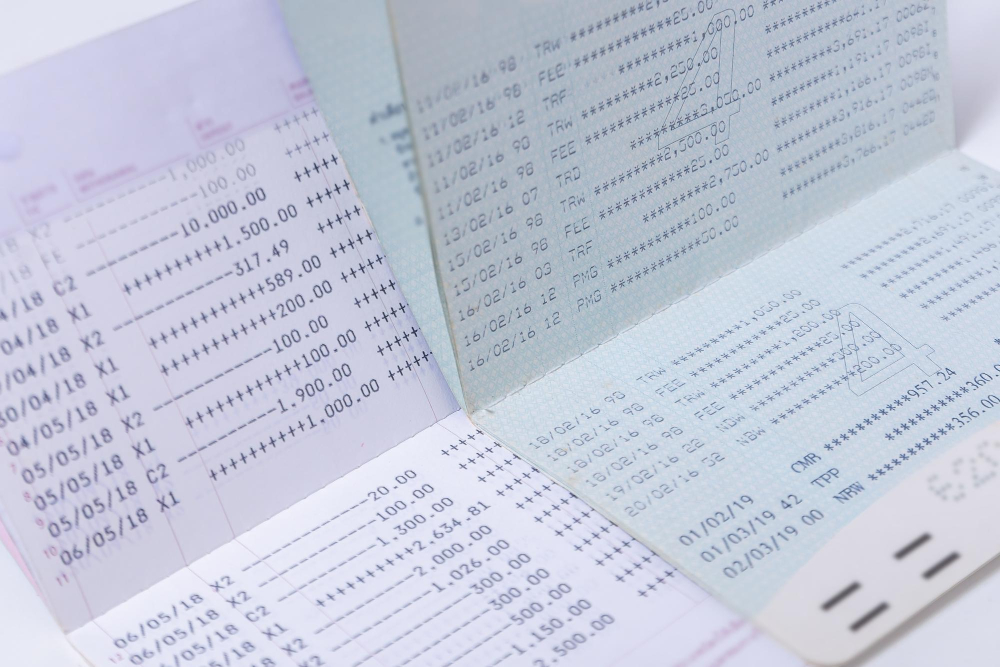
A healthy closing balance proves less than a consistent history. Assessors look at regular income, how long funds have been held, whether a sum appeared recently, and whether the money is the applicant’s own.
A large deposit shortly before an application invites a question about its source, and an unexplained one is a common reason for refusal. Where funds are provided by somebody else, that relationship and that person’s own position generally has to be documented too.
Provide statements covering the full period asked for rather than a snapshot, and explain anything unusual in the covering material rather than leaving it to be noticed.
6. The real question is almost always whether you will leave

For visitor visas the central assessment is whether the applicant intends to return, and almost every document requested is evidence bearing on that: employment, property, family, study, business and previous compliance.
This is why applicants with strong ties are approved quickly and why those without them — the young, the unemployed, the recently graduated, the self-employed without records — face more scrutiny regardless of their actual intentions.
Document your ties specifically rather than generally: a letter confirming employment and approved leave dates says more than a payslip, and a return booking says very little on its own.
7. A previous refusal is on your record and must be declared

Refusals are recorded, are shared between some countries, and are asked about on most application forms, including by countries other than the one that refused. The question is usually about any refusal, ever, anywhere.
Failing to declare one is a false declaration, which is treated far more seriously than the original refusal and can produce a long-term bar. A declared refusal with an explanation is an ordinary thing that applications overcome routinely.
Declare every refusal you have ever had, on every form that asks, and address it briefly in the covering material. The non-declaration is the problem, not the refusal.
8. Travel history does real work
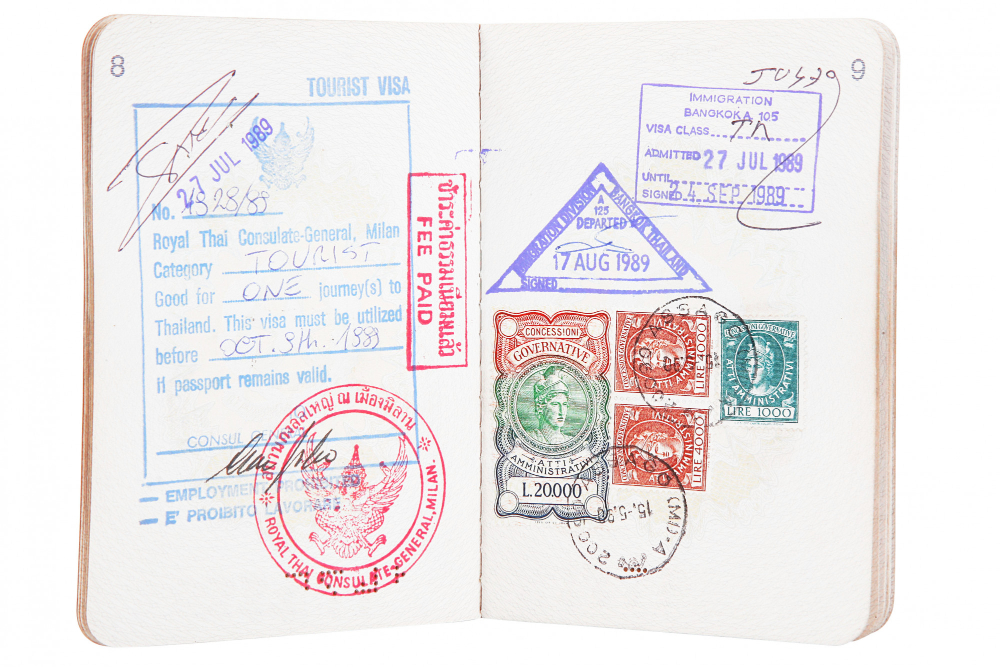
A record of previous visits to comparable countries, complied with and documented, is among the strongest positive factors available, which is why applicants are often advised to build a history before applying for the harder destinations.
The flip side is that an absence of travel history is not a negative in itself but removes the easiest reassurance, which means the rest of the file has to carry more weight.
If you have previous visas and stamps in an expired passport, carry it and reference it, because the history is otherwise invisible.
9. Inconsistency between the form and the documents is fatal

Dates that do not match, a job title that differs between the form and the employer’s letter, an address that appears in two versions, a purpose described differently in two places — each of these reads as a reason to look harder.
Most such discrepancies are honest errors, and they are nonetheless among the most common reasons an application is refused, because an assessor cannot distinguish an error from a misrepresentation on the paper in front of them.
Read the completed form against every document before submitting, line by line, and make them agree exactly. This is the single highest-value hour in the whole process.
10. Translations and certification requirements are specific

Documents not in an accepted language generally require translation, and the requirements differ: some systems accept any competent translation with a translator’s statement, others require a sworn or certified translator, and some require legalisation of the original.
Getting this wrong means a resubmission and another appointment, which is the expensive failure rather than a refusal. The requirements are published and are rarely summarised accurately by third parties.
Read the destination’s own stated translation requirement and follow it exactly, including the format of the translator’s statement.
11. Processing time and appointment wait are two different clocks

Published processing times run from the date of submission, not from the date of application, so a traveller reading a two-week processing time and a three-month appointment wait is looking at a fourteen-week timeline.
Processing times are also averages with a long tail, and a minority of applications are referred for further checks that add weeks or months with no explanation and no way to expedite.
Plan on the sum of both clocks plus a margin, and do not book non-refundable travel until the passport is back in your hand.
12. Priority services buy processing speed and nothing else
Where a country offers an expedited service for a fee, it generally moves the application up the queue for a decision. It does not improve the chance of success, does not guarantee a timeframe, and does not help an application that is referred for checks.
Some services also offer document scanning, courier return and lounge handling, which are conveniences. The distinction between a convenience and an actual priority on the decision is not always clear in the marketing.
Buy priority if the timing matters and you can afford it, and understand that it is insurance against the queue rather than against refusal.
13. A refusal often comes with reasons and rarely with an appeal

Most visitor visa refusals state a reason by reference to the rules, in standard wording, and most carry no right of appeal. The remedy is a fresh application rather than a challenge.
Some categories do carry appeal or administrative review rights, with short deadlines, and the refusal notice says which. Those deadlines are measured in days and are missed by applicants who assume there is nothing to be done.
Read the refusal notice carefully for any review right and its deadline, and if there is one and the matter is important, take proper advice immediately rather than reapplying blindly.
14. Reapplying works, but only if something has changed

An identical application submitted again is likely to be refused again. A successful reapplication addresses the stated reason with new evidence: better documentation of ties, a clearer financial history, an explanation of the point that was not understood.
There is generally no waiting period, so a well-prepared reapplication can be submitted at once, and there is no limit on the number of attempts. Each one is assessed on its own file.
Work from the refusal’s stated reason rather than from a theory about what went wrong, and change the file rather than resubmitting it.
15. And the sequence that makes this manageable

In order: check appointment availability at every centre you may use, before anything else. Establish whether biometrics are separate and whether yours can be reused. Read the destination’s own document list and translation rules from its own site. Assemble the file. Then read the form against every document until they agree exactly.
Then plan the calendar as appointment wait plus processing time plus a margin, declare every previous refusal, and do not commit to non-refundable travel until the passport is physically back.
The honest summary: the appointment rather than the decision is usually the constraint, the assessment is made from the documents by somebody you never meet, the central question for a visitor visa is whether you will return and almost every document requested bears on it, a recent unexplained deposit and an inconsistency between the form and the papers are the two most common avoidable refusals, and failing to declare a previous refusal is treated far more seriously than the refusal itself. Anything turning on your own circumstances is a matter for the destination’s published rules or a qualified adviser rather than for an article.
What the assessment is actually doing

For a visitor visa the central question is whether the applicant will return, and once you see that, the document list stops looking arbitrary. Employment, property, family, study, business and previous compliance are all evidence on that single point, which is why applicants with strong ties are approved quickly and why the young, the unemployed, the recently graduated and the self-employed without records face more scrutiny regardless of their actual intentions.
The assessment is documentary. Somebody the applicant never meets reads the file in a few minutes, and anything that requires interpretation counts against it. Hence the two most common avoidable refusals: a sum that appeared in an account shortly before the application with no explanation of where it came from, and a discrepancy between the form and the supporting papers — a date, a job title, an address in two versions. Nearly all such discrepancies are honest errors and an assessor cannot tell them apart from misrepresentation on paper.
The third thing to understand is the calendar, because it has two clocks. Published processing times run from submission, not from application, so a two-week processing time behind a three-month appointment wait is a fourteen-week timeline, and a minority of applications are referred for further checks that add weeks with no explanation and no way to expedite. Priority services move a decision up the queue and do nothing for either the outcome or a referred case.
Do these in order. Check appointment availability at every centre you are entitled to use, before booking anything else, because the wait differs by location rather than by country. Establish whether biometrics are a separate appointment and whether yours are still within a reuse period. Read the destination’s own document list and translation requirements from its own site rather than a summary. Assemble the file. Then spend an hour reading the completed form against every document until they agree exactly — that is the highest-value hour in the process.
Declare every refusal you have ever had, anywhere, on every form that asks, and address it briefly. The non-declaration is treated far more seriously than the refusal and can produce a long-term bar; a declared refusal is something applications overcome routinely.
And do not commit to non-refundable travel until the passport is physically back in your hand.
Anything turning on your own circumstances belongs with the destination’s published rules or a qualified adviser rather than with an article.
Like our content? Follow us for more.