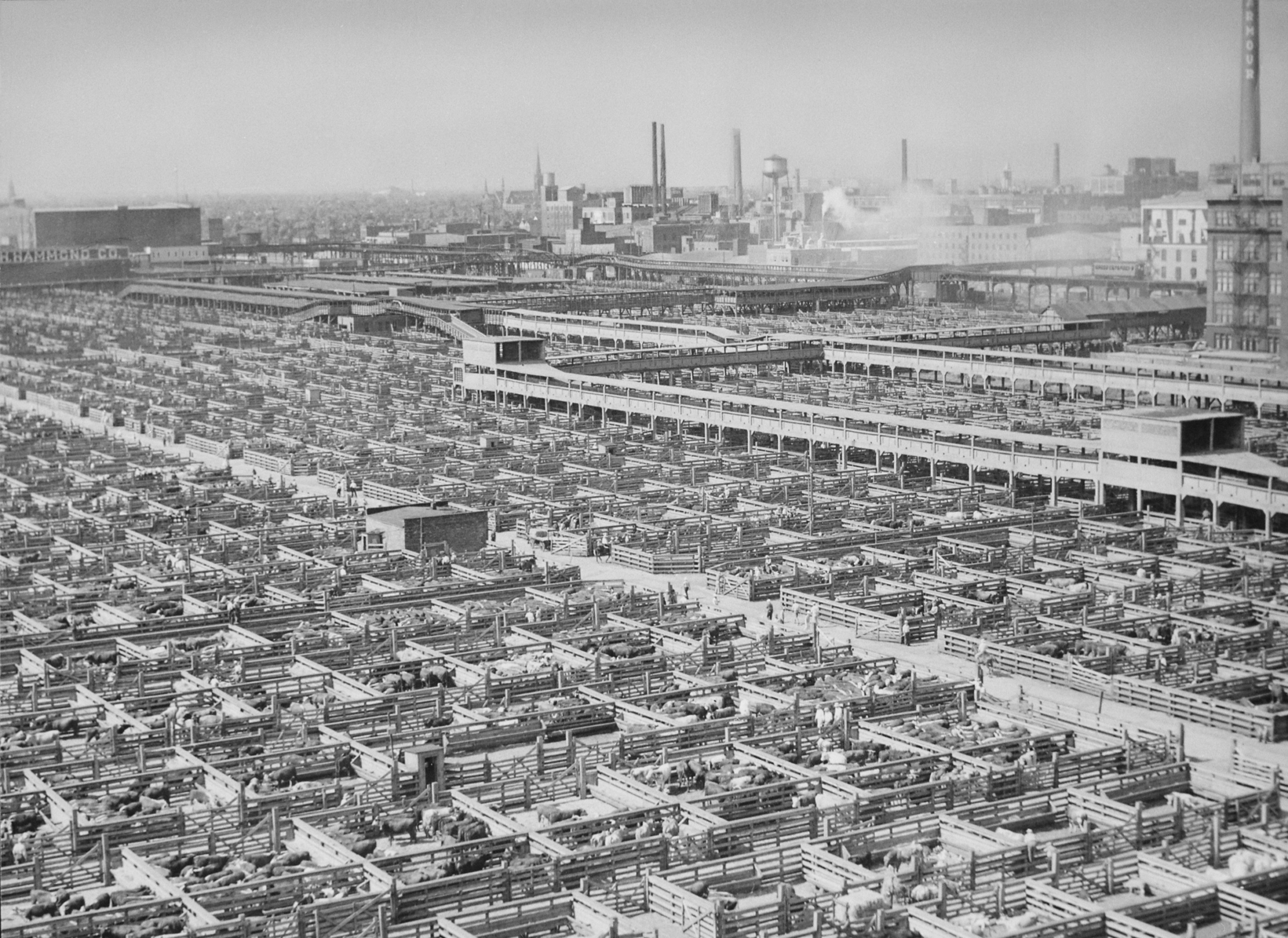
In 1955 the great terminal stockyards were among the biggest industrial operations anywhere – hundreds of acres of timber pens inside a city, with their own railway sidings, exchange building, hotel, bank and fire brigade.
Animals arrived by rail, waited in open pens in whatever the weather did, were valued by a man’s eye from a catwalk, and were sold on a handshake. The smell reached the whole city and the runoff went into the river.
Here are fifteen things that were ordinary at the stockyards in 1955, and what each one became.
1. The Yards Covered Hundreds of Acres in the Middle of a City

A major stockyard was a city within a city – miles of wooden pens, elevated catwalks, its own hotel, bank, exchange building, newspaper, fire brigade and railway sidings, handling enormous numbers of animals a day right inside the urban area.
Decentralisation took it apart. Refrigerated road transport, slaughter plants built out in the countryside near where animals are raised, and direct selling between producer and processor removed the reason to bring livestock into a city at all. The great yards closed through the 1960s and 1970s, and the land became industrial estates, housing and in places a preserved gate standing on its own.
Like our content? Follow us for more.
2. Everything Arrived and Left by Rail
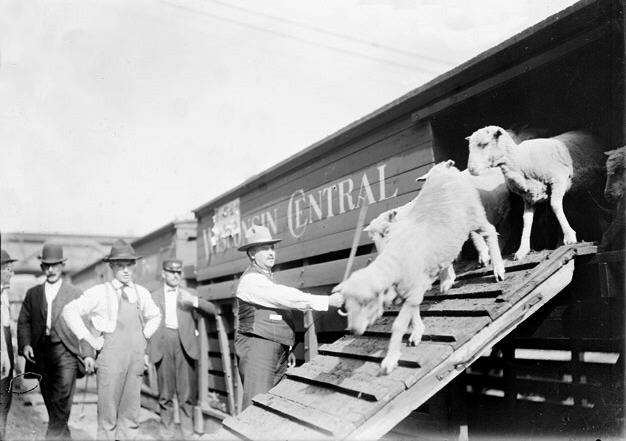
Livestock came in by rail in wooden stock cars, unloaded onto chutes, and the yards were laid out around the tracks. Federal law required animals to be rested, fed and watered after a set period in transit, which is part of why the yards existed where they did.
The twenty-eight hour law requiring rest stops in rail transport dates from the nineteenth century and is one of the oldest animal welfare statutes anywhere. Road transport replaced rail almost entirely, and regulation followed it with journey time, loading density, ventilation and rest requirements. The stock car is gone and so is the layout that depended on it.
3. Buying and Selling Was Done by Handshake on a Catwalk
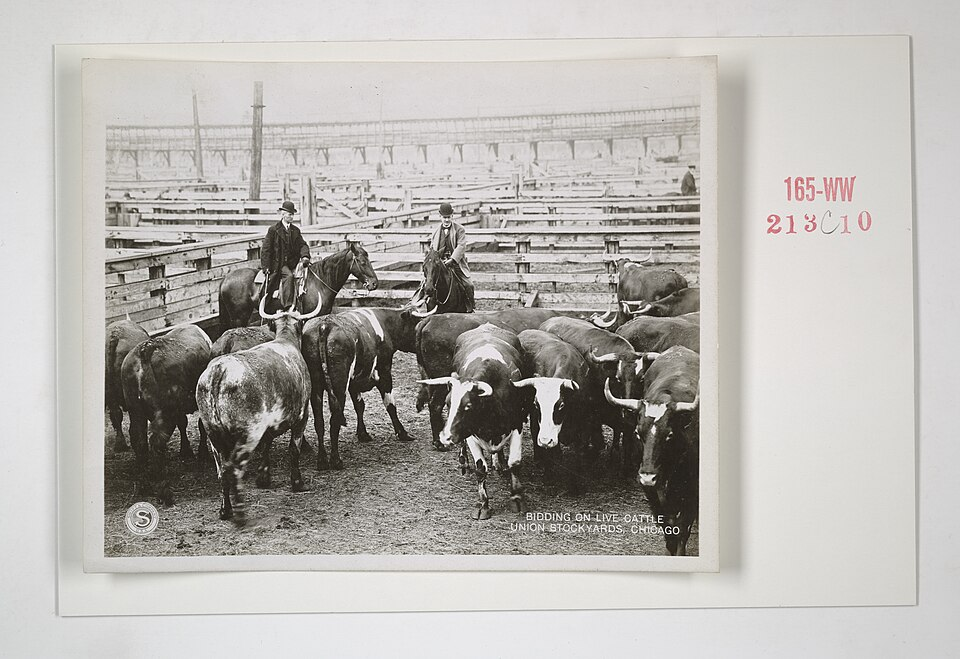
Commission men walked the catwalks above the pens with buyers, judged animals by eye, and agreed deals verbally. A man’s assessment of weight, condition and yield was the whole of the valuation, and the deal was binding on a word.
Grading standards, scales at the point of sale, carcass-based pricing that pays on measured yield after slaughter, and electronic auction systems replaced the eye and the handshake. Carcass grading in particular shifted the risk – a producer is now paid for what the animal actually produced rather than for what somebody guessed looking at it in a pen.
4. The Smell Reached the Whole City and Nobody Could Do Anything About It
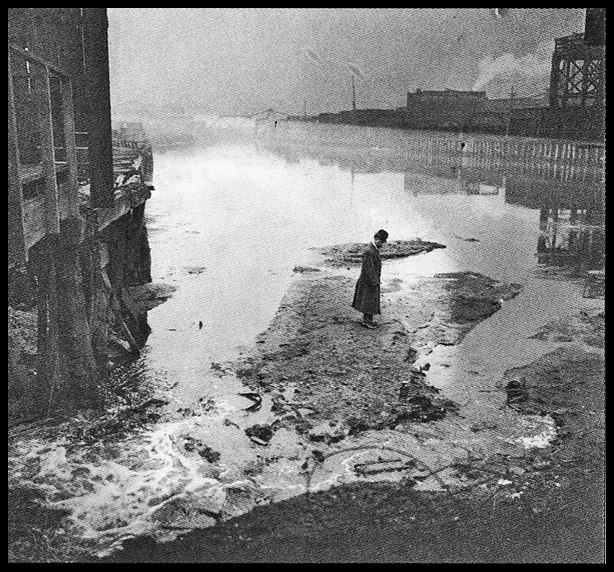
Hundreds of acres of pens produced an odour that residents described as inescapable for miles depending on the wind, along with flies in enormous numbers and runoff that went into whatever watercourse was nearest.
Air and water quality regulation from the 1970s onward made operations of that kind in an urban area impossible, and modern facilities are sited away from populations with managed effluent, covered storage and treatment. The runoff is the part that gets least attention and did the most damage – the rivers below the great yards were among the most polluted watercourses in their countries.
5. The Work Was Done on Foot Among Animals That Could Kill You
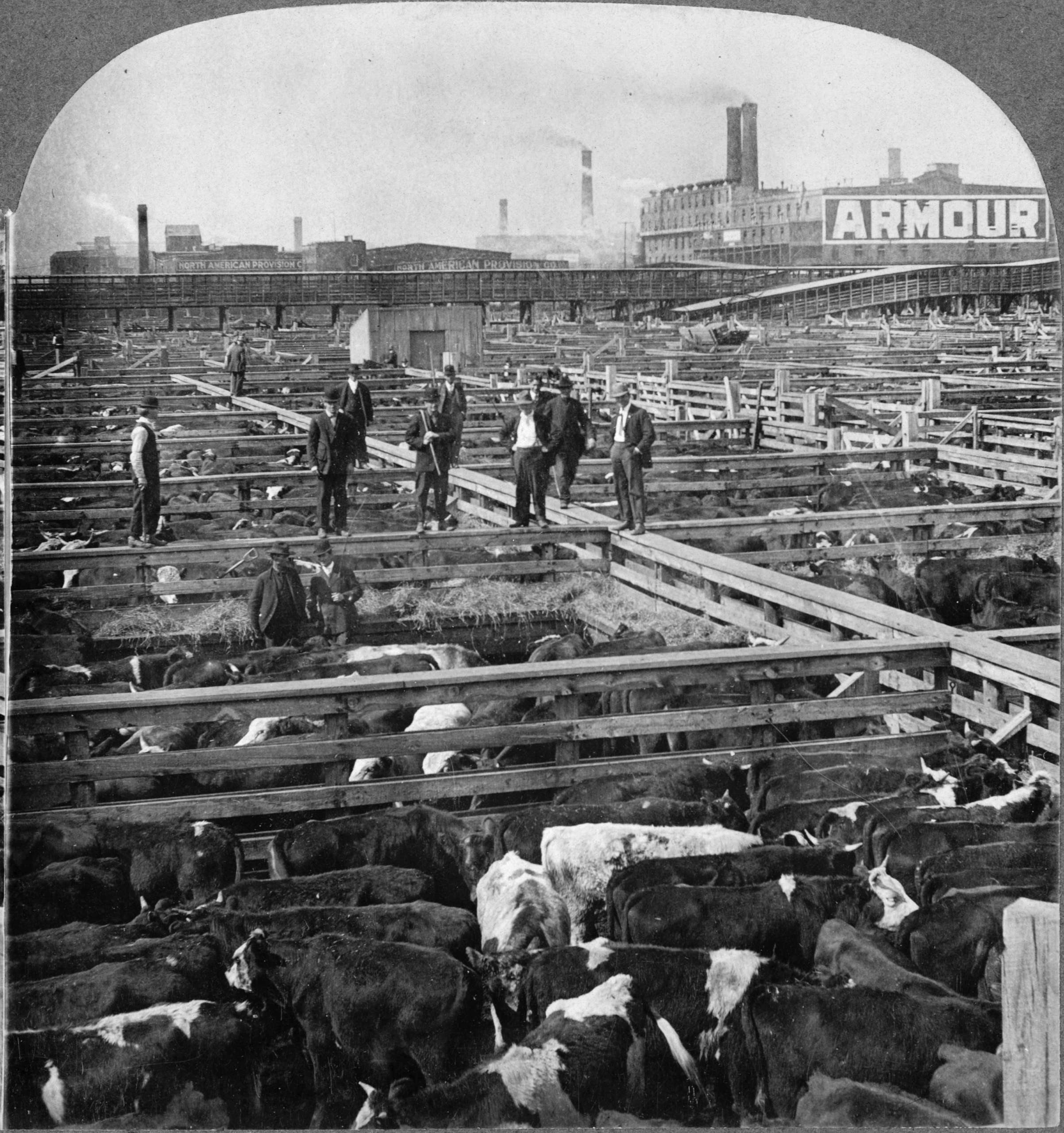
Drovers moved cattle and hogs through alleys and gates on foot with sticks and dogs, working in among animals weighing several times what they did, on wet footing, in confined spaces with limited escape.
Handling facilities are now designed around animal behaviour – curved races that use the animals’ tendency to return the way they came, solid sides to remove visual distractions, non-slip flooring, and man-gates so a handler is never in a space without an exit. That design work, much of it developed from the 1970s onward, improved both safety and the animals’ experience at the same time, which is unusual.
6. Injuries to Workers Were Constant and Largely Unrecorded
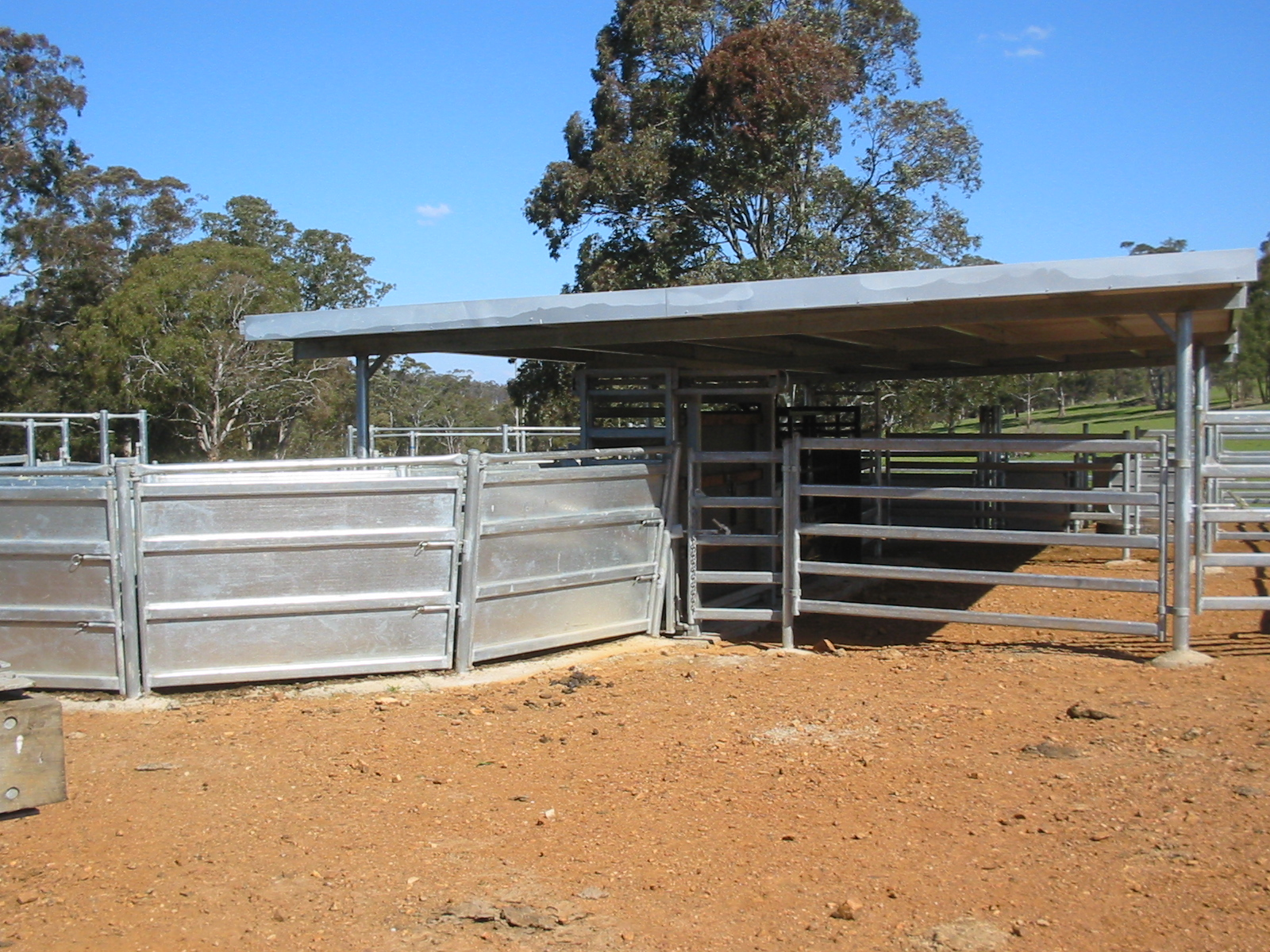
Crushing against gates, being knocked down, kicks, falls on wet concrete, and the cumulative damage of the lifting and the cold. Meatpacking and stockyard work had injury rates among the worst of any industry and the record-keeping was poor enough that the figures understated it.
Occupational safety regulation, recordkeeping requirements, guarding, handling design and ergonomic attention changed the picture substantially. Meat processing nonetheless remains among the more hazardous industries by injury rate in most countries that measure it, particularly for repetitive strain on the line, which is a current issue rather than a historical one.
7. Immigrant Labour Did the Work and the Industry Was Built On It
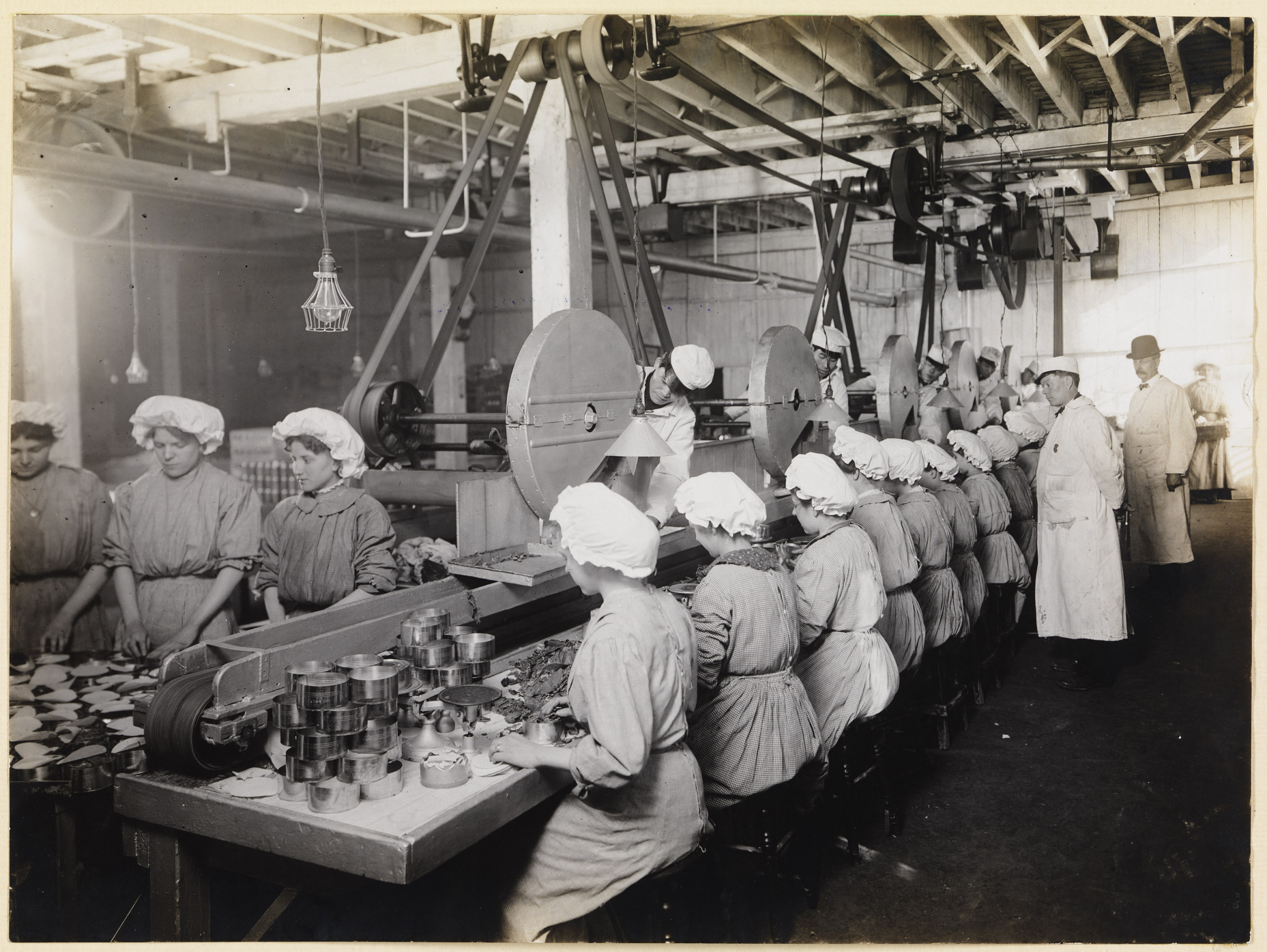
The yards and the packing houses around them were staffed overwhelmingly by successive waves of immigrant labour, working long hours at low pay in conditions that were the subject of public scandal and campaigning journalism decades before 1955.
Union organising through the middle of the century raised wages and conditions substantially in the packing sector, and then the industry’s relocation out of the cities from the 1960s onward broke much of that union strength and reset wages downward. The workforce in meat processing remains heavily immigrant and the conditions remain a live subject, which is the honest position rather than a historical one.
8. Pens Were Wooden and the Whole Place Was a Fire Risk
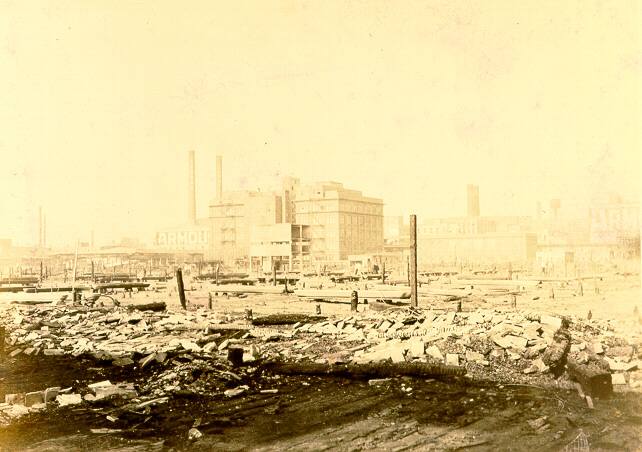
Miles of timber pens, wooden catwalks, hay, bedding and feed, in a dense area with railway locomotives in it. The great yards had their own fire brigades because they needed them, and several suffered catastrophic fires.
Modern facilities use steel and concrete, are far smaller, and are covered by building and fire codes that would not permit the old construction. The yard fire is a recurring event in the history of every major stockyard city, and in more than one case a fire was what finally ended operations that were already in decline.
9. Animals Waited in the Open in Whatever the Weather Did
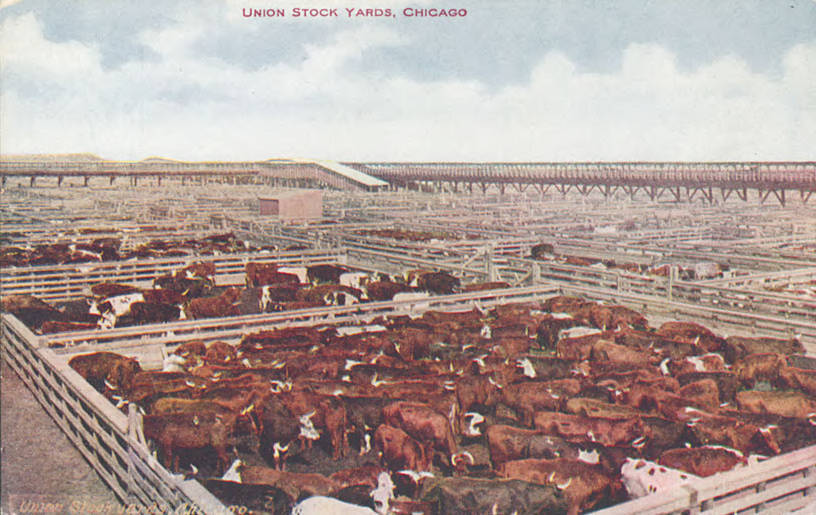
Pens were open, with limited shelter, and animals stood in them for hours or days through heat, cold, rain and snow depending on when they arrived and when they sold.
Shelter, shade, water provision, flooring, space allowances and maximum holding times are now specified in welfare regulation and in the assurance schemes that processors require. Lairage – the holding of animals before slaughter – is one of the more closely specified parts of the whole chain, because condition at that point affects both welfare and meat quality, which is a rare case of the two arguments pointing the same way.
10. Nobody Was Watching What Happened to the Animals
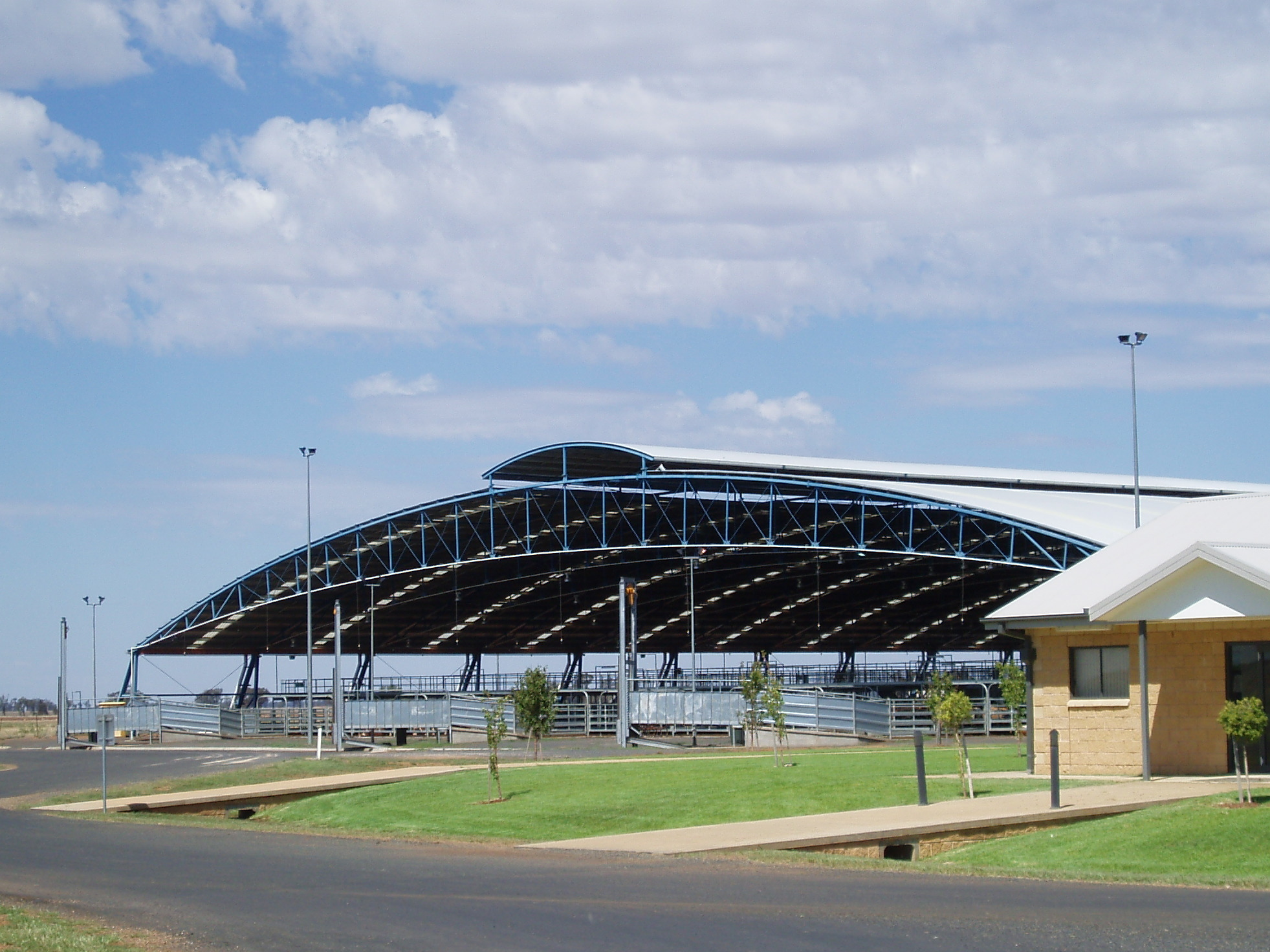
Beyond the rail transport law, oversight of how livestock were handled at the yards was minimal. Practices varied by operator and by individual, and there was no inspection regime directed at handling.
Humane slaughter legislation, inspection, mandatory stunning, video monitoring in many plants, and third-party audit schemes attached to supply contracts have built a framework that did not exist. Enforcement and the adequacy of the standards are genuinely argued about and the argument is not settled – stating that oversight now exists is not the same as saying the problem is solved.
11. The Exchange Building Set Prices for the Whole Region
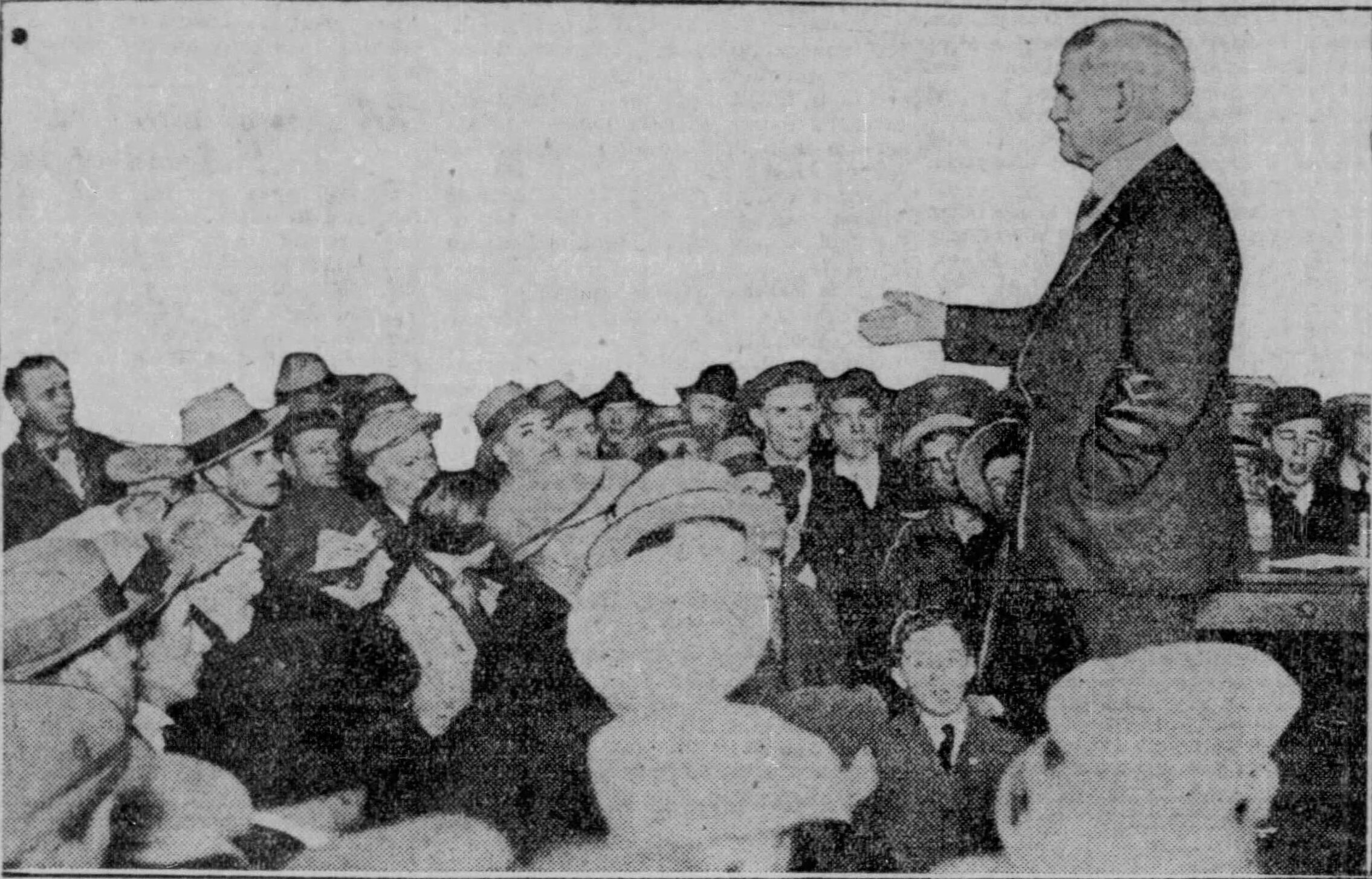
Prices discovered on the yard floor were telegraphed out and became the reference for farmers hundreds of miles away who had never been there. A handful of terminal markets effectively priced the national herd.
Futures markets, published reported prices, electronic auctions and direct contracting distributed price discovery and made it far more transparent. The concentration of buying power into a small number of large processors is now the central competition concern in the sector, which is a different shape of the same underlying problem – fewer buyers, less bargaining power for the producer.
12. The Yard Was a Tourist Attraction and Schools Visited It
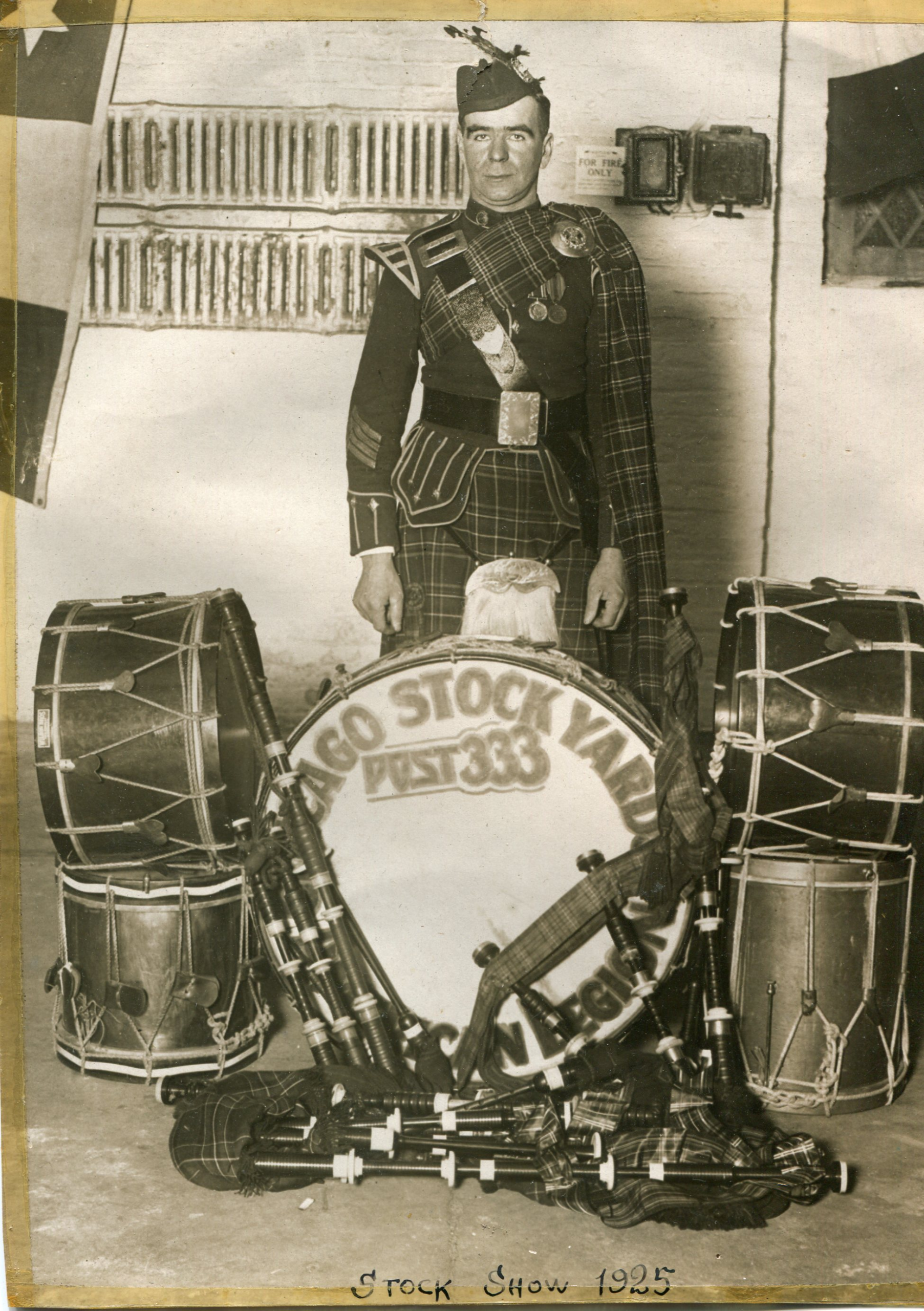
Visitors came to watch from the catwalks, the yards ran observation galleries, and school parties were taken round. It was a point of civic pride and featured on postcards.
Slaughter and live handling are now substantially closed to public view, for biosecurity, safety and commercial reasons. Whether that is appropriate is one of the more interesting arguments in food policy – a public that cannot see how its food is produced is also a public that cannot form a view about it, and several producers have responded with cameras, open days and online transparency precisely for that reason.
13. A Small Farmer Could Load Up and Drive In
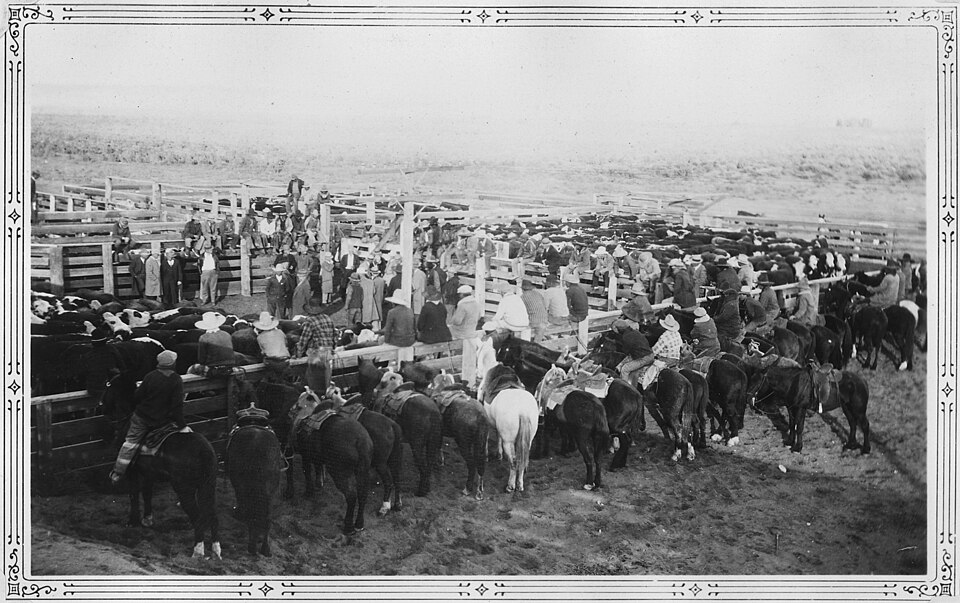
An individual producer with a few animals could bring them to the terminal market, have them sold by a commission man, and go home with a cheque. The yards were open to anybody with stock.
Direct contracting and vertical integration have made that route far narrower. A small producer now generally sells into a contract or through a local auction rather than to a terminal market, and in some sectors independent production has almost disappeared in favour of growing under contract to an integrator. The disappearance of the open market is the single biggest structural change for the small farmer.
14. Nobody Thought the Yards Would Ever Close
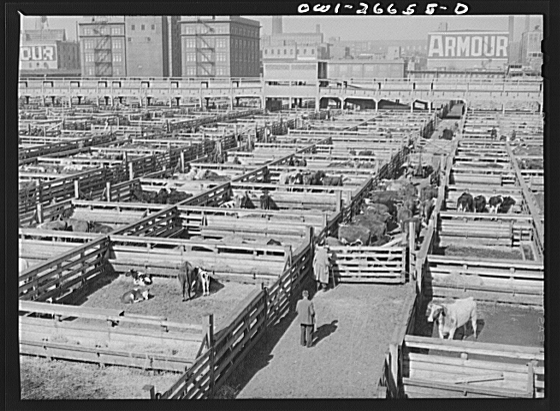
In 1955 the great terminal stockyards were among the largest industrial operations in their countries, employing enormous numbers of people, central to their cities’ identity and economy.
They closed almost completely within about twenty-five years. Refrigerated trucking meant a carcass could travel instead of a live animal, which is cheaper, better for the meat and better for the animal. Once that was true there was no reason to move livestock into a city, and the entire apparatus – the pens, the rail, the exchange, the hotel, the commission men – became unnecessary at once.
15. What Is Left Is a Gate and a Street Name
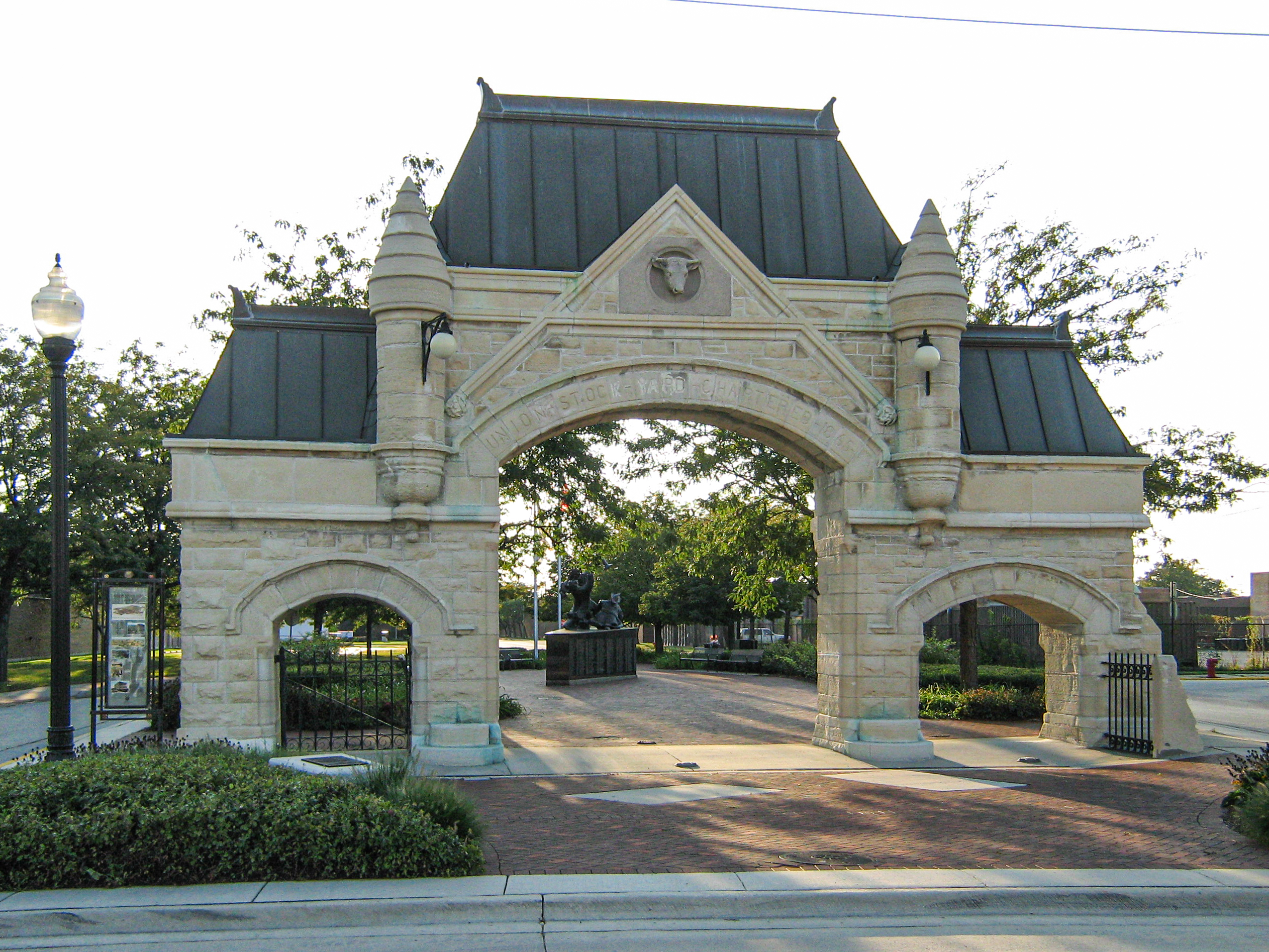
The sites were enormous and the clearances were comprehensive. In most of the cities concerned there is now a preserved gateway, a surviving exchange building converted to offices, a few street names, and a district that people still refer to by the name of something that has not been there for fifty years.
That is the standard ending for the subjects in this series, and the stockyards are the largest-scale example of it. An industry that defined a city, employed tens of thousands, and was on the postcards, removed to the countryside inside a generation because a refrigerated lorry could do something a railway wagon could not.
One Invention Closed All of Them
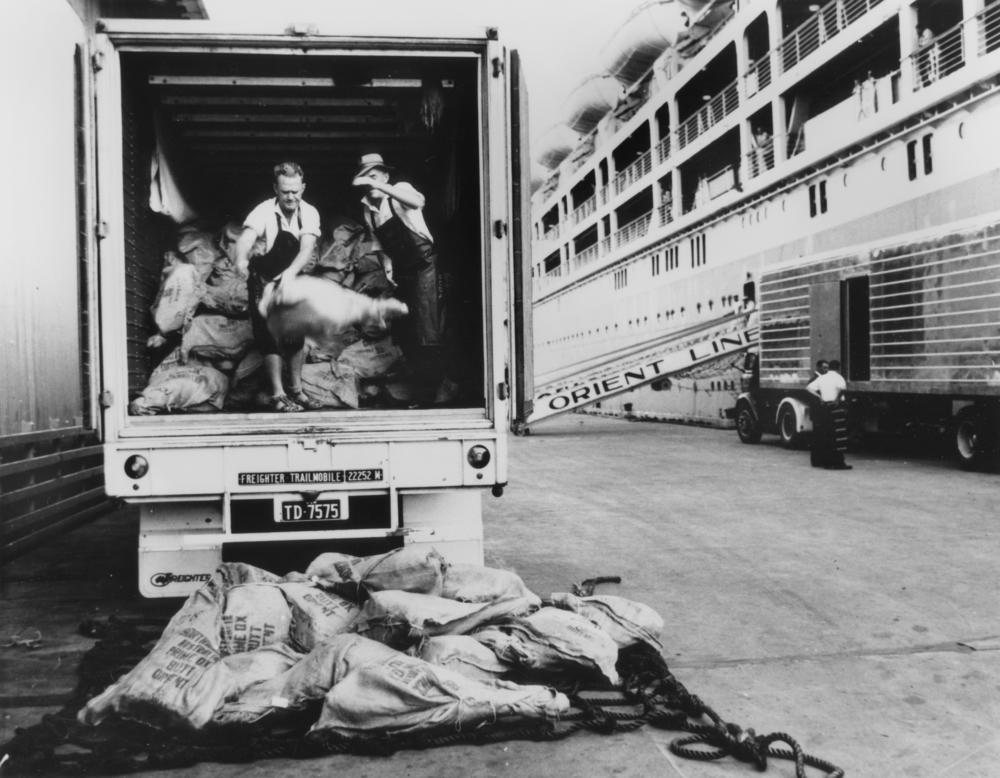
The stockyards did not decline. They were made unnecessary, quite suddenly, by refrigerated road transport.
The entire logic of a terminal stockyard is that a live animal can travel and a carcass cannot. If meat will not survive the journey, then the animal has to be brought to the city and killed close to where it will be eaten – which means railways into the middle of town, pens to hold the arrivals, a market to price them, and a packing district beside it.
Reliable refrigeration and road haulage inverted that. Once a chilled carcass can be driven several hundred miles, it is far cheaper to build the plant out in the country near where the animals are raised, kill there, and transport meat rather than livestock. The animals travel less, which is better for them and for the meat. The plant is cheaper to build and run. The city gets its land back.
Everything else on this list – the pens, the catwalks, the commission men, the exchange, the smell, the rail layout, the open market for a small producer – existed only to serve a constraint that stopped existing.
Which is why the ending was so complete. There was nothing to reform and nothing to modernise. The reason for the place had gone, and within about twenty-five years so had the place.
If you grew up in one of those cities, somebody in your family worked there and everybody knew which way the wind had to be blowing.
Which city, and is anything of the yards still standing?
Like our content? Follow us for more.