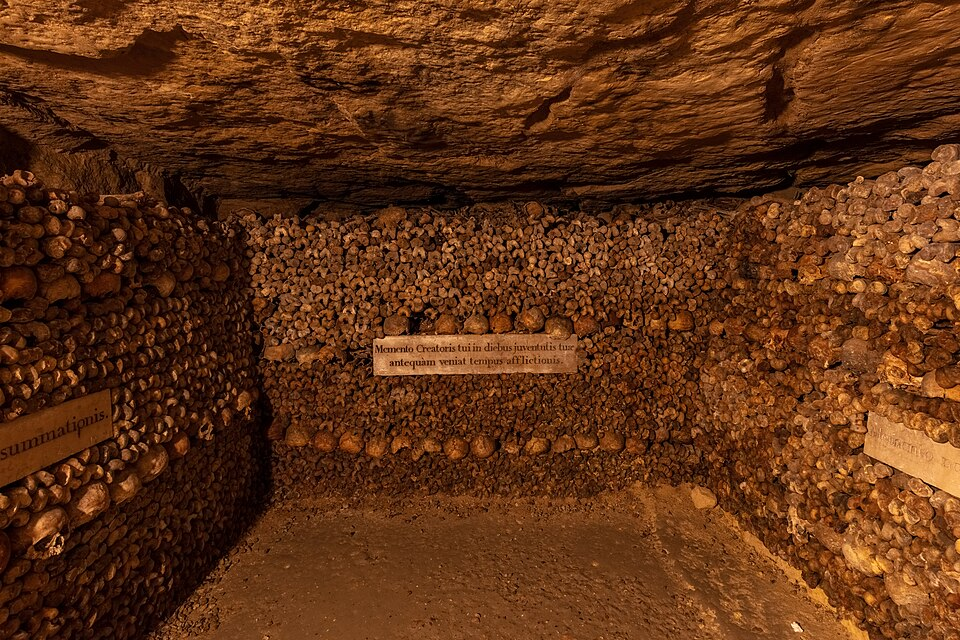
High above ground, Paris is the City of Light, all grand boulevards, golden monuments, and sidewalk cafés. But descend a narrow spiral staircase in an unassuming corner of the city, and you enter a different world entirely: a cold, silent labyrinth where the walls are built from human bones. Stacked twenty meters below the streets are the skulls and remains of roughly six million people, arranged into eerie patterns across miles of old quarry tunnels. This is the Catacombs of Paris, the largest ossuary in Europe and one of the most haunting places you can visit anywhere. Here’s the strange, fascinating story of how it came to be, what it’s like to walk through, and the hidden underworld that still lies mostly off-limits beneath the French capital.
A note: the Catacombs are a real resting place for millions of people, treated by the city as a site of remembrance as much as a tourist attraction. This piece approaches it with that respect in mind. Here’s the history beneath your feet.
A City With a Burial Crisis
The story begins not underground, but with a very practical problem above it. By the late eighteenth century, Paris was running out of room to bury its dead. For centuries, Parisians had been interred in cemeteries and beneath churches in the city center, and the most notorious of these, the Saints-Innocents cemetery, had become catastrophically overcrowded. Bodies had piled up far beyond capacity, and the consequences were grim: the overflowing ground created serious public-health hazards, foul odors permeated nearby neighborhoods, and in some cases decomposing remains reportedly broke through into the cellars of adjacent buildings. Something had to be done. The city needed a new, out-of-sight place to put the accumulated dead of generations, and the solution lay in the vast network of empty quarry tunnels beneath the city.
Like our content? Follow us for more.
From Quarry to Ossuary
Those tunnels were the key. For centuries, the limestone that built Paris had been mined from beneath it, leaving behind a sprawling underground maze of abandoned quarries, some dating back to Roman and medieval times. In the 1780s, authorities decided to repurpose these tunnels as a giant underground ossuary. Under the oversight of officials including the quarry inspector Charles-Axel Guillaumot, the transfer of remains began around 1785 and 1786. To avoid upsetting the public, much of the work was done discreetly, with bones moved through the city at night in shrouded carts and accompanied by priests. The grim relocation was a massive undertaking that unfolded over many years, emptying cemetery after cemetery and carrying centuries of Parisian dead down into the cool darkness of the old quarries.
“Stop, This Is the Empire of the Dead”
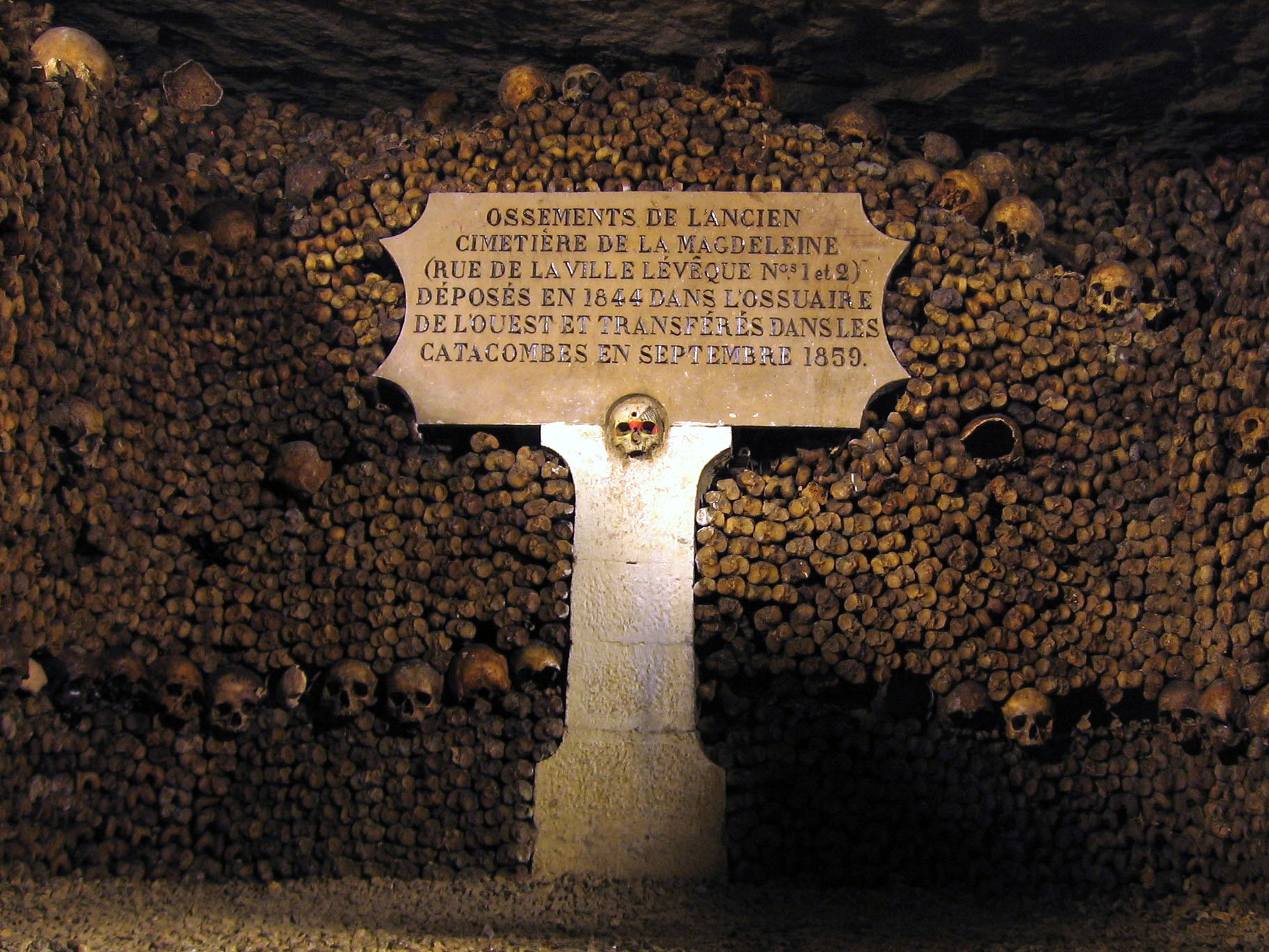
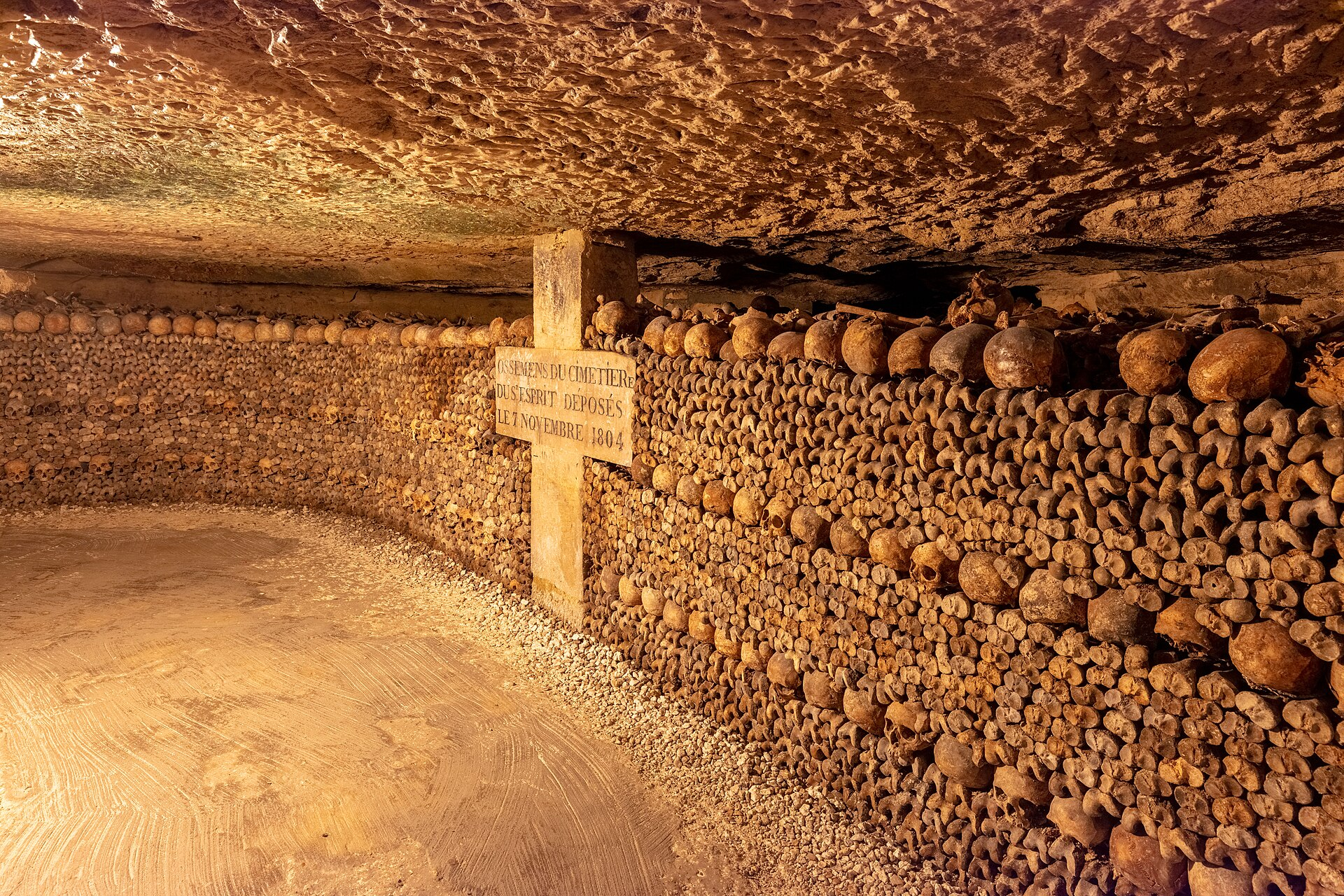
The process didn’t happen all at once. The transfers were interrupted by the French Revolution, then resumed around 1800 and continued on and off until roughly 1860, as Paris underwent sweeping urban changes throughout the nineteenth century. During the Revolution, some of the dead were even buried directly in the catacombs. By the time the work was finished, the bones of an estimated six million people, some dating back more than a thousand years, had been laid to rest beneath the city. The site earned a fittingly ominous nickname: the Empire of the Dead. Carved above the entrance to the ossuary is a famous inscription warning visitors, in French, to halt, for this is the empire of death, a phrase that has greeted the curious and the brave for generations.
Walls Built From Bones
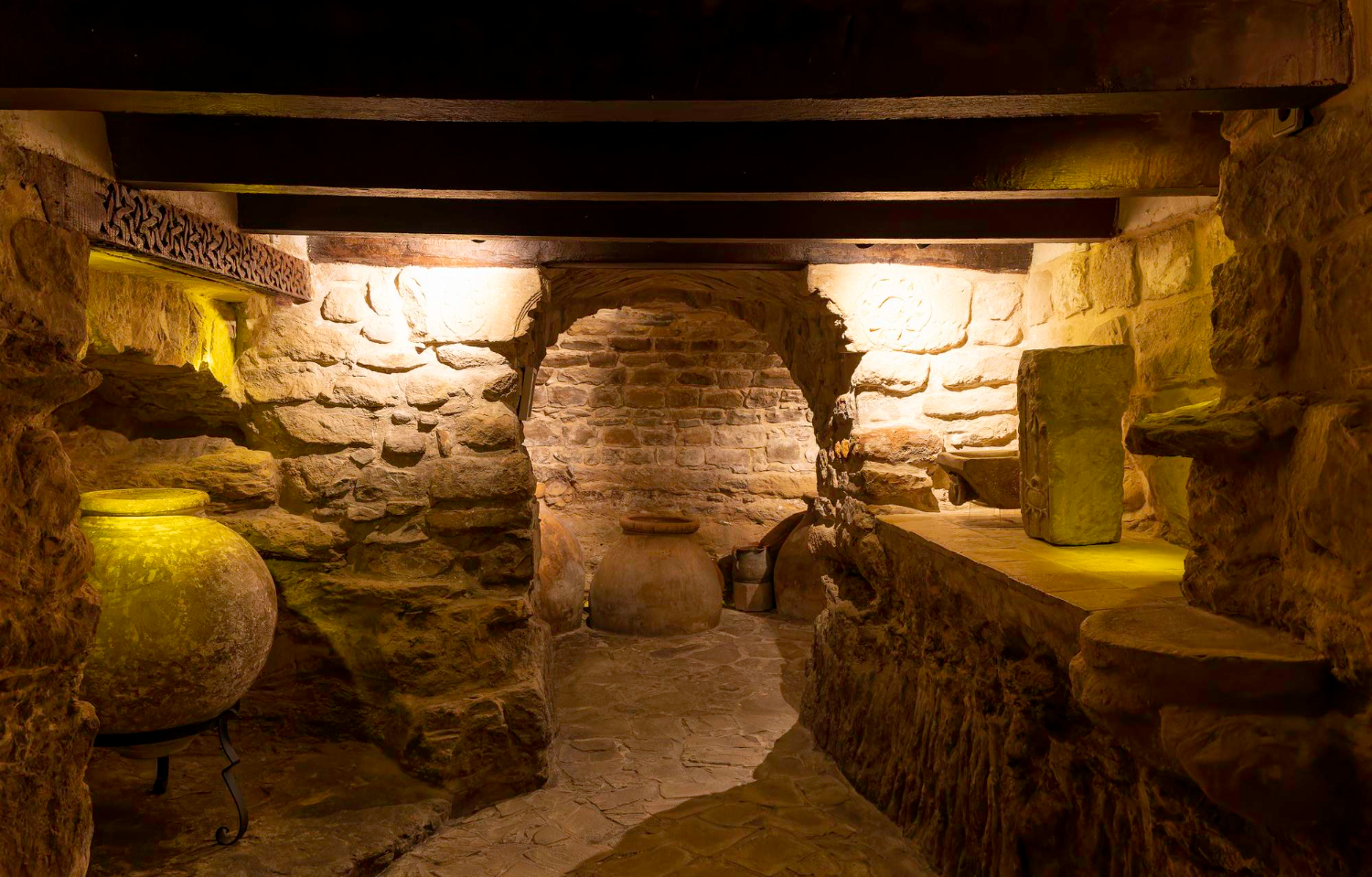
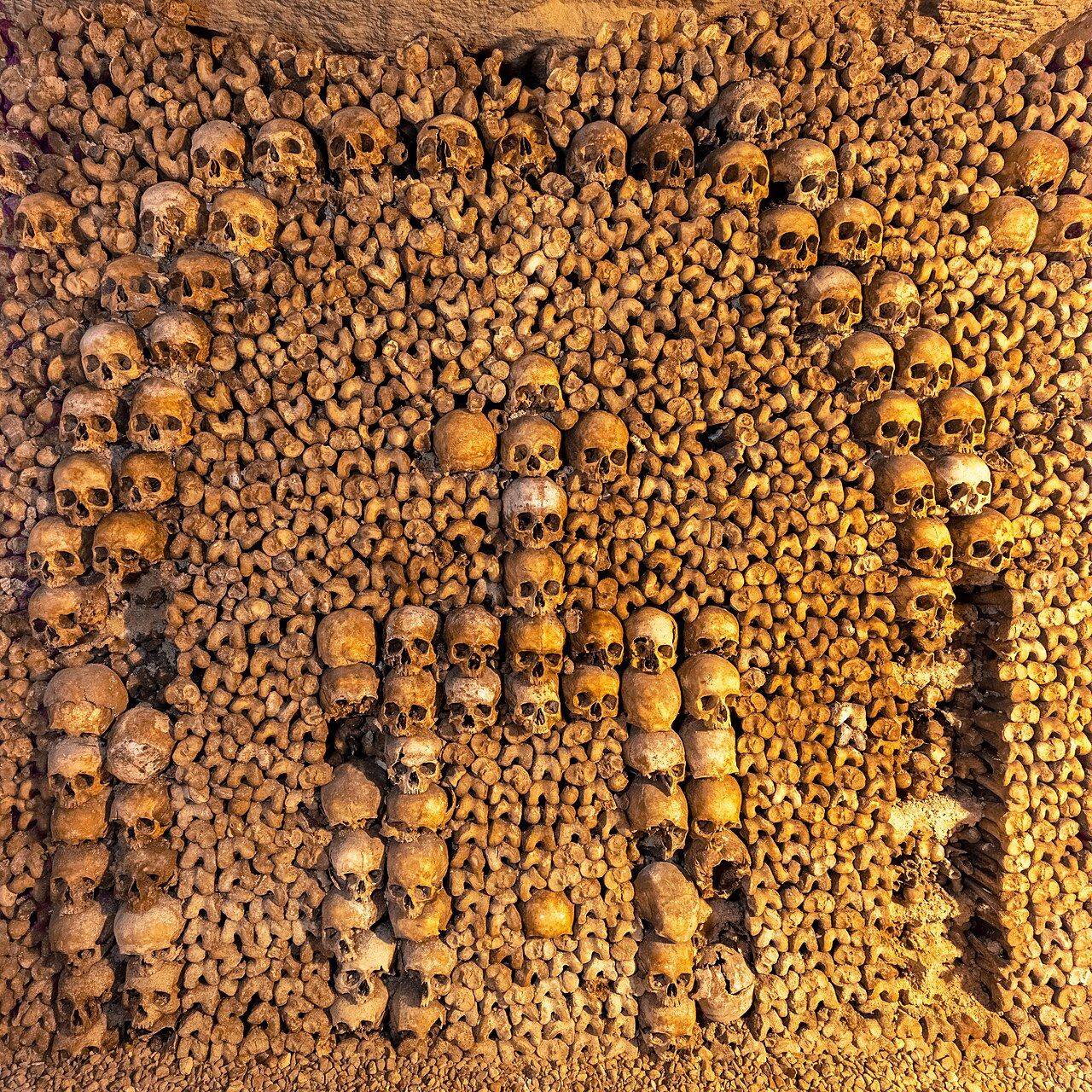
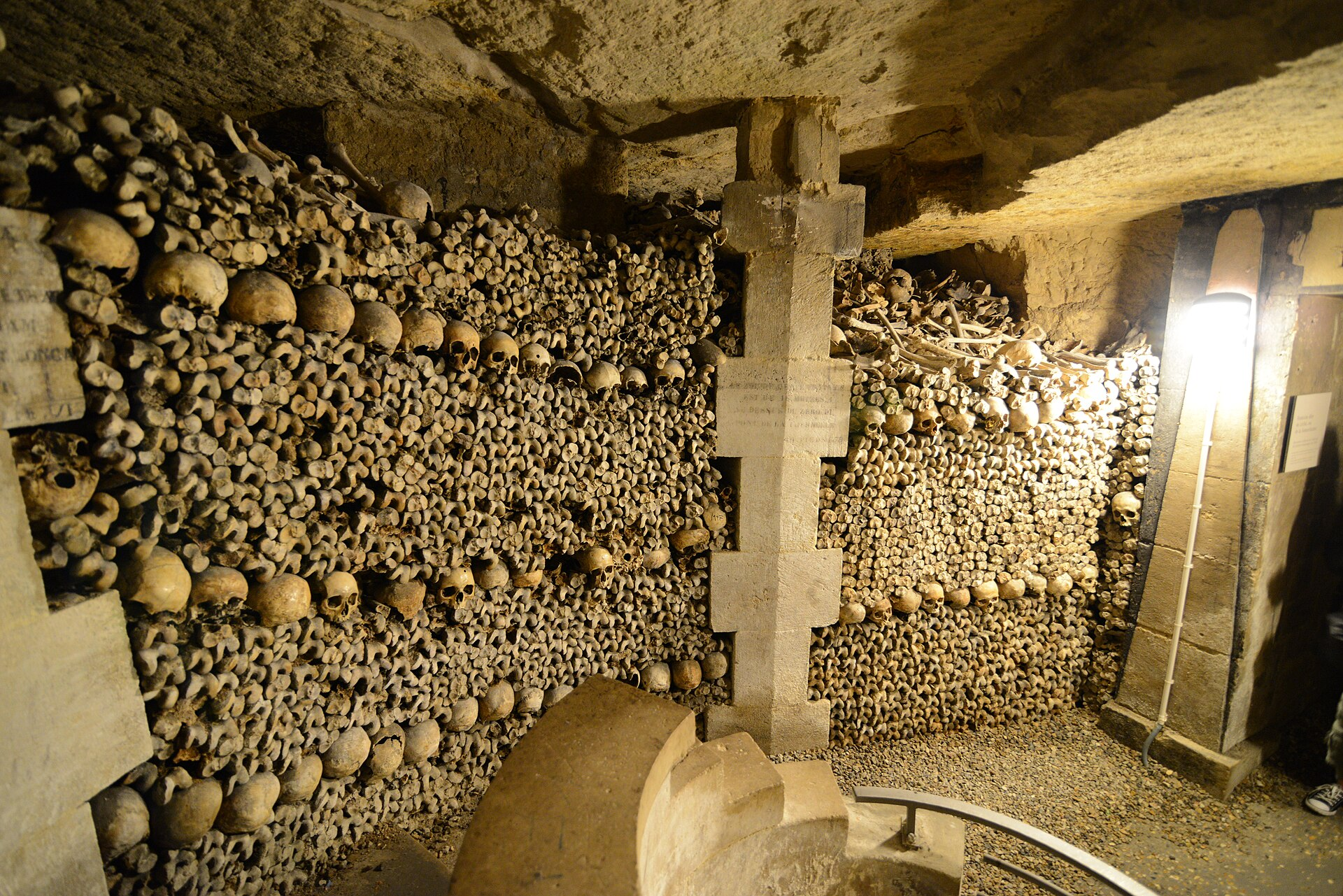
What makes the Catacombs so unforgettable isn’t just the scale, but the staging. Rather than being dumped haphazardly, the bones were arranged into deliberate, almost artistic patterns. Skulls and long leg bones were stacked and fitted together to form walls, archways, and decorative motifs lining the tunnels, with rows of empty eye sockets staring out at anyone who passes. The effect is solemn and surreal in equal measure. There are no individual headstones or markers; nobles and paupers from different centuries lie together, indistinguishable from one another. Some historians note a profound idea in this arrangement: in the Catacombs, everyone is finally equal, the powerful and the poor reduced to the same anonymous bones, sharing the same dark corridors for eternity.
What It’s Like to Visit Today
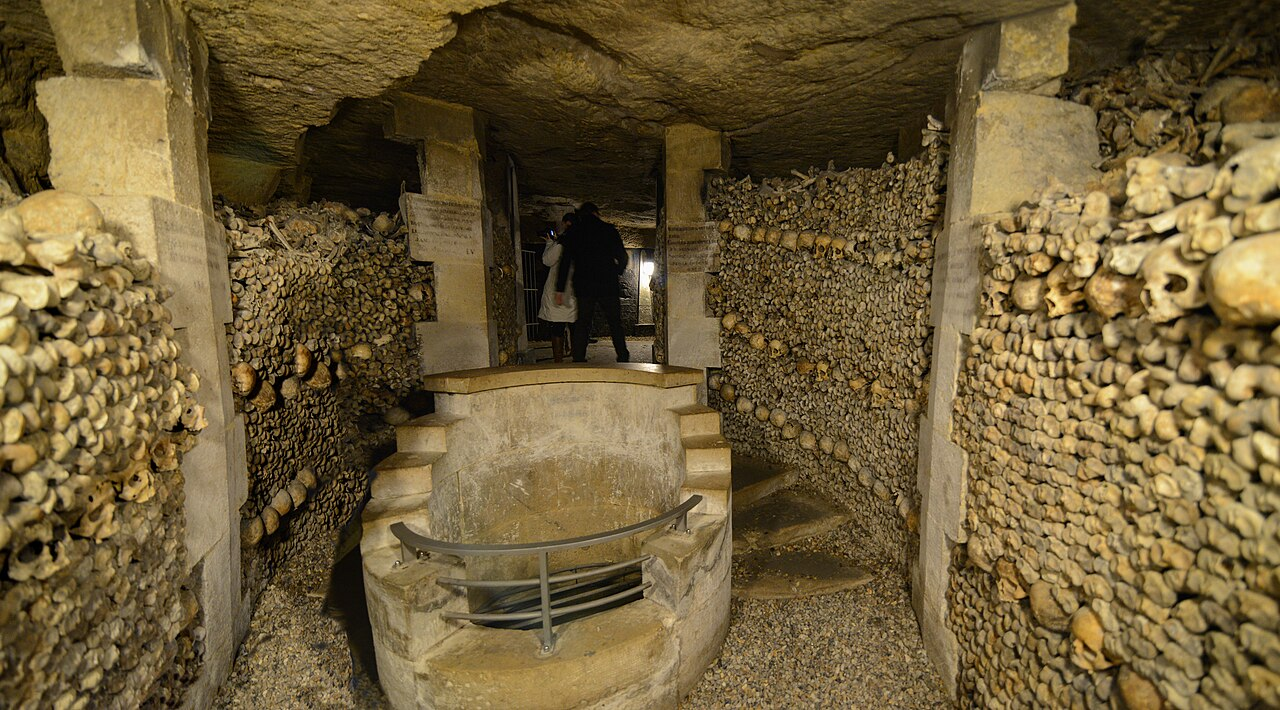
A small portion of this underworld is open to the public, and visiting is a genuinely otherworldly experience. The official entrance sits near Place Denfert-Rochereau in the 14th arrondissement, where visitors descend a long, tight spiral staircase deep below street level. The accessible route covers only a sliver of the full network, roughly a mile or so, and takes around forty-five minutes to walk. Down in the cool, dim tunnels, the temperature is constant and the silence is heavy, broken only by footsteps and dripping water. You walk single-file past the walls of carefully stacked bones, the air close and still. It is hushed, atmospheric, and undeniably eerie, a stark, moving contrast to the bright, lively streets just a few stories above your head.
The Vast Network Off-Limits
Here’s what surprises many people: the part open to tourists is only a tiny fraction of what lies below. The full quarry network beneath Paris stretches for an estimated hundreds of kilometers of tunnels, the vast majority of which is closed to the public and illegal to enter. The official ossuary tour represents well under one percent of the total labyrinth. Beyond the lit, sanctioned corridors lies a dark, mostly mapped-only-by-enthusiasts maze of forgotten passages, flooded galleries, and hidden chambers winding beneath neighborhoods, parks, and buildings. Exploring these forbidden sections without authorization is against the law, and the city employs special police to patrol the tunnels and hand out fines. Yet for a certain kind of adventurer, the off-limits network exerts an irresistible pull.
The Cataphiles of the Underground
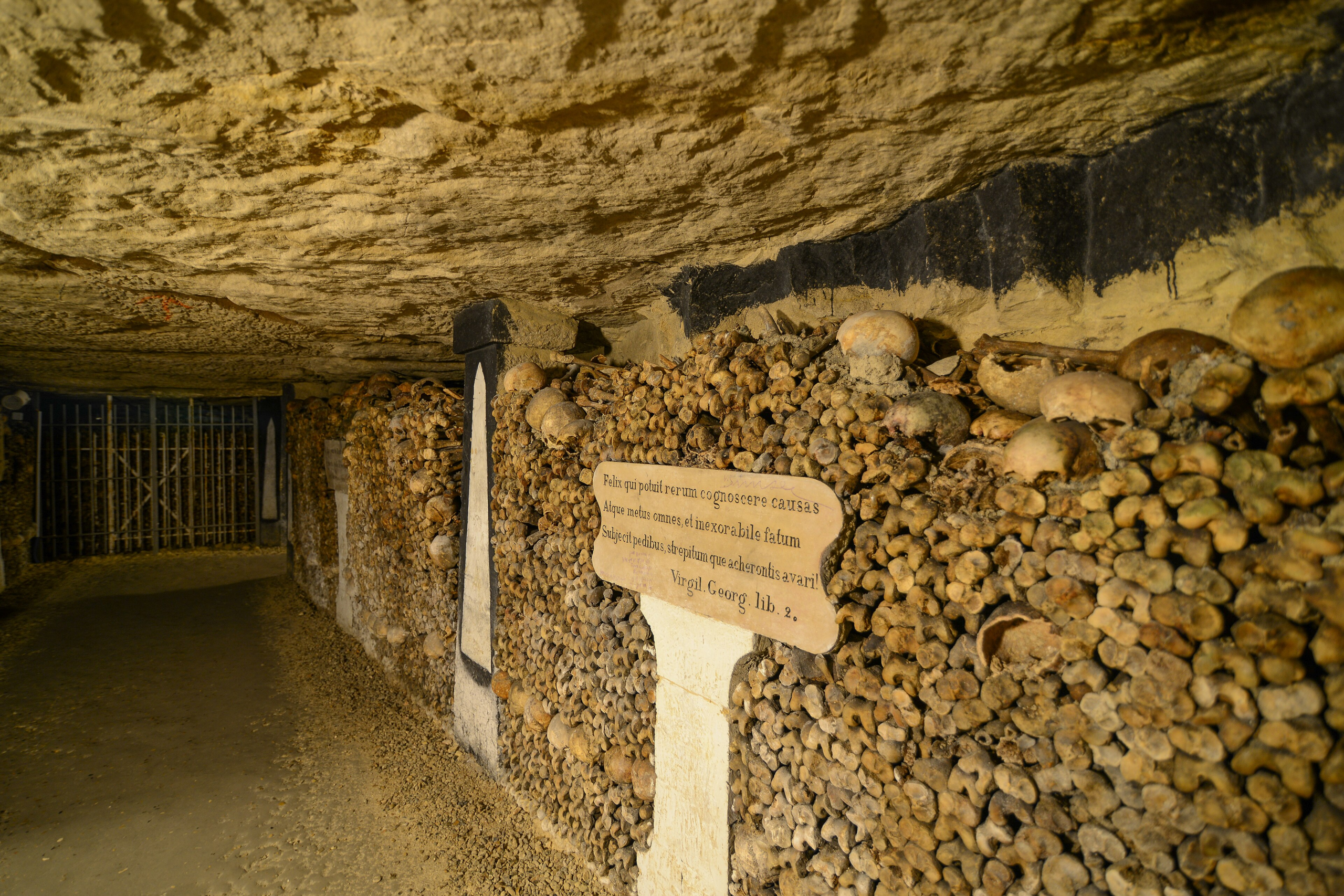
Those adventurers have a name: cataphiles. For decades, this dedicated subculture of urban explorers has slipped into the unauthorized tunnels through secret entrances, navigating the pitch-black maze by memory and map. Down in the depths, cataphiles have reportedly created their own hidden world, gathering in chambers, leaving artwork, and even holding clandestine parties far below the streets. For them, the underground offers a kind of escape and freedom impossible on the surface, an alternate reality beneath the city. It is, however, genuinely dangerous: the tunnels are easy to get lost in, prone to flooding, and unforgiving of mistakes. The most famous cautionary tale is that of a man who entered the tunnels in the 1790s and never found his way out; his remains were discovered years later.
A Dark History Etched in Stone
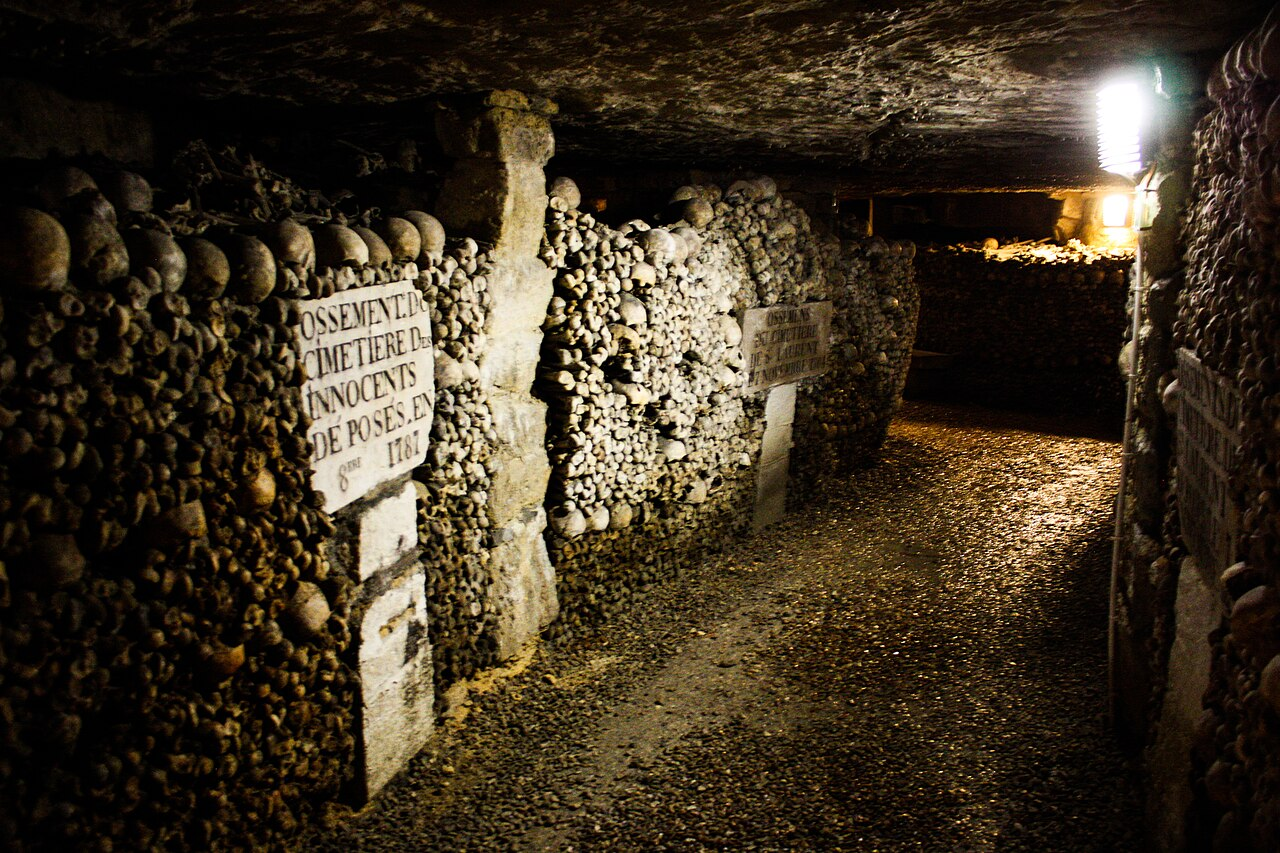
The Catacombs have witnessed more than just the quiet accumulation of bones. Over the centuries, the tunnels have served various unexpected purposes, from a hiding place for smugglers to, during the twentieth century’s wars, a refuge and even a base of operations for some. The ossuary became a source of macabre fascination almost from the start, drawing curious visitors, including royalty and nobility, who came to stroll its grim corridors. In modern times, the Catacombs have become a fixture of popular culture, serving as an atmospheric backdrop for films, television, and video games drawn to their inherently spooky, claustrophobic setting. Few places so directly connect a living, busy city to the long sweep of its history, and to the millions of lives that came before.
A Reminder Beneath the City of Light
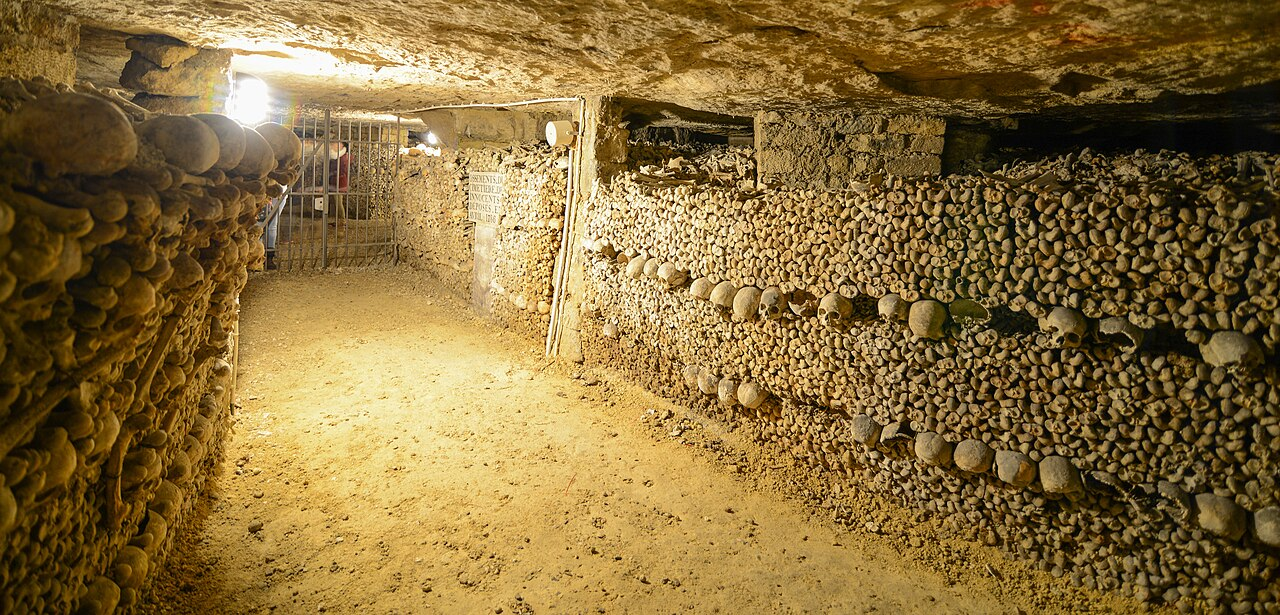
What lingers after a visit isn’t just the spectacle of the bones, but what they represent. The Catacombs are a monument to the city’s forgotten dead and a stark reminder of how Paris grew, changed, and dealt with the hard realities of urban life over the centuries. They stand as a quiet counterpoint to the glittering city above, a place where the romance of Paris gives way to something far older and more sobering. For visitors willing to descend into the cool darkness, the Empire of the Dead offers an experience like no other: humbling, haunting, and unforgettable. Beneath the cafés and boulevards of the City of Light lies a city of the dead, and it has stories to tell to anyone who dares to listen.
Planning a Visit
For those intrigued enough to go, a few practical notes. The Catacombs are a popular attraction, so booking timed tickets in advance is strongly recommended to avoid long lines, and the site has expanded its hours at certain times of year, occasionally even opening into the evening around Halloween for an extra-eerie experience. The descent involves many stairs and the tunnels are cool and damp, so comfortable shoes and a light layer are wise. It is not recommended for those with mobility issues or claustrophobia, and the experience, while not gory, is genuinely solemn given what it is. Visited with the right mindset, it’s one of the most memorable and thought-provoking things you can do in Paris, far from the usual tourist trail.
Like our content? Follow us for more.