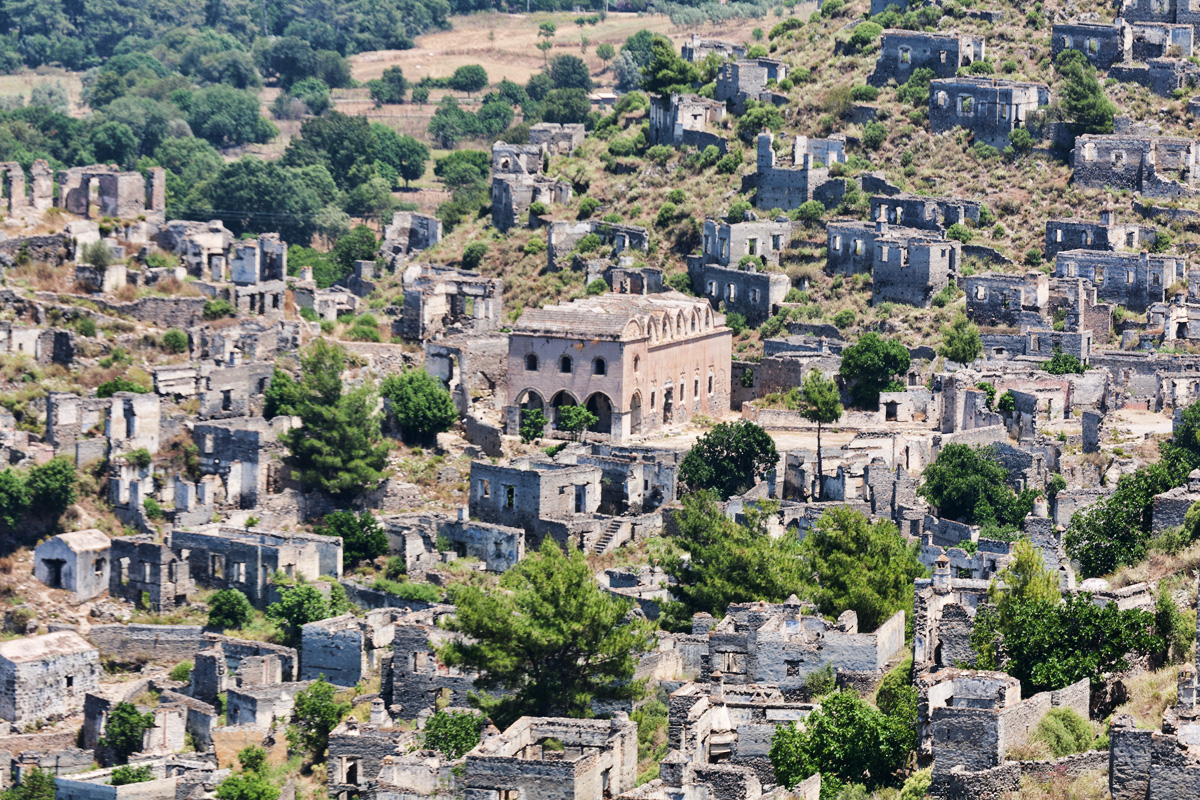
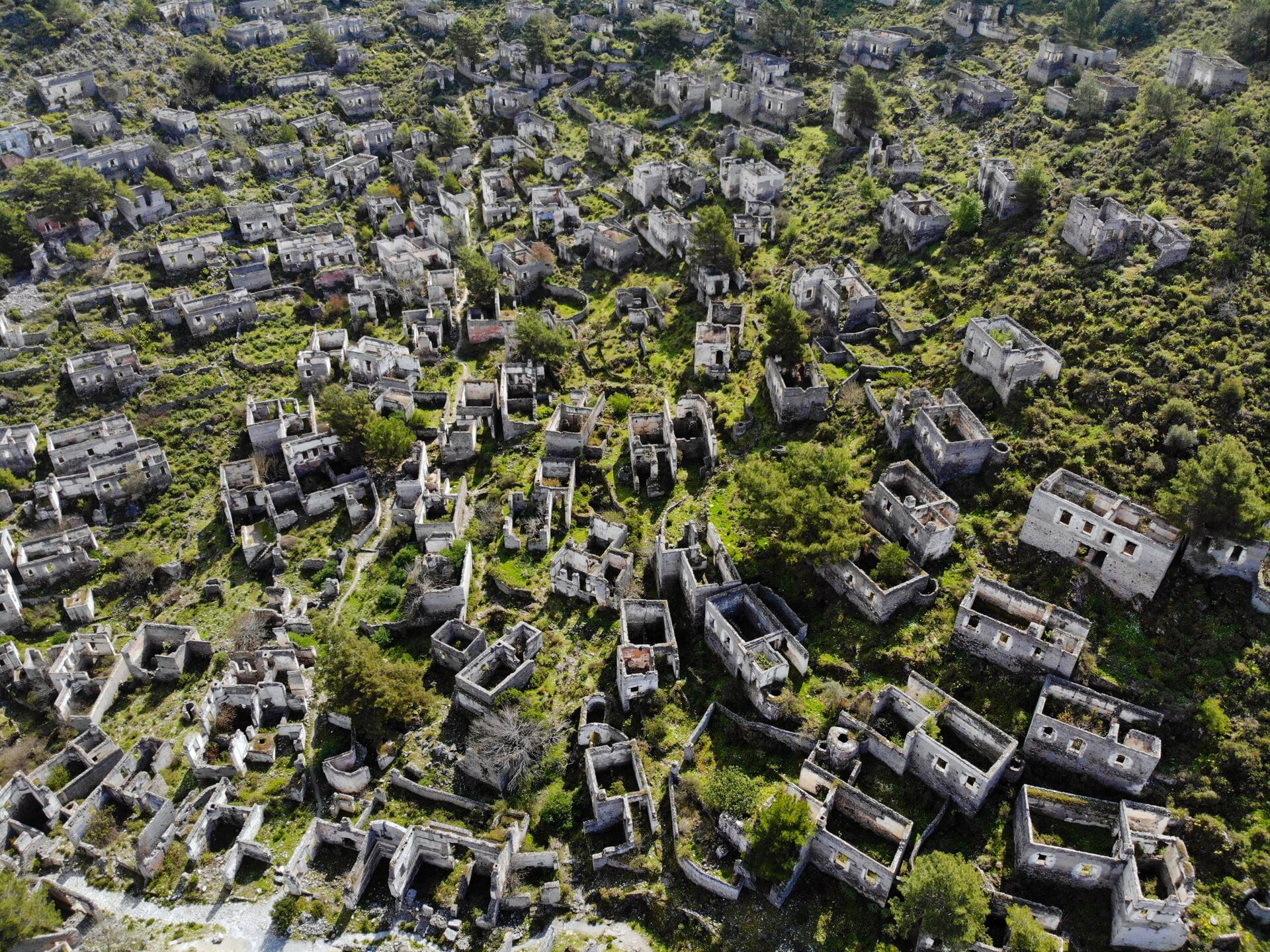
On a quiet hillside near the Turkish resort town of Fethiye, hundreds of roofless stone houses climb the slope in silent rows, their windows empty, their gardens long overgrown. Kayaköy, once known by its Greek name Livissi, was a thriving community for centuries before a single treaty, signed a continent away, emptied it in a matter of months. It remains one of the most evocative and poignant abandoned places in the Mediterranean.
A Village Built by Two Communities
For generations, the village that became known as Kayaköy was home to a Greek Orthodox Christian population living alongside Muslim Turkish neighbors in the surrounding region, a coexistence reflected in shared markets and, according to many local accounts, genuinely cordial relations between the two communities. At its height, the settlement was home to more than 6,000 people, supported by stonemasonry, olive cultivation, and winemaking. More than twenty churches and chapels were built across the village and surrounding plain over the centuries, a sign of how long and how deeply rooted the community had become.
Like our content? Follow us for more.
The Collapse of an Empire and a Forced Exchange
The outbreak of World War I and the subsequent collapse of the Ottoman Empire brought severe hardship to Christian communities across Anatolia, including the residents of Livissi, who endured persecution and forced displacement during and after the war. The Greco-Turkish War that followed ended in Greek defeat in 1922, and the two nations, seeking to prevent further ethnic violence, signed the Treaty of Lausanne in 1923, which mandated a sweeping, compulsory population exchange: Greek Orthodox Christians remaining in Turkey were required to relocate to Greece, while Muslims living in Greece were required to relocate to Turkey. The exchange displaced roughly 1.5 million people in total, and it brought the centuries-old Greek presence in the village to an end.
A Village No One Would Resettle
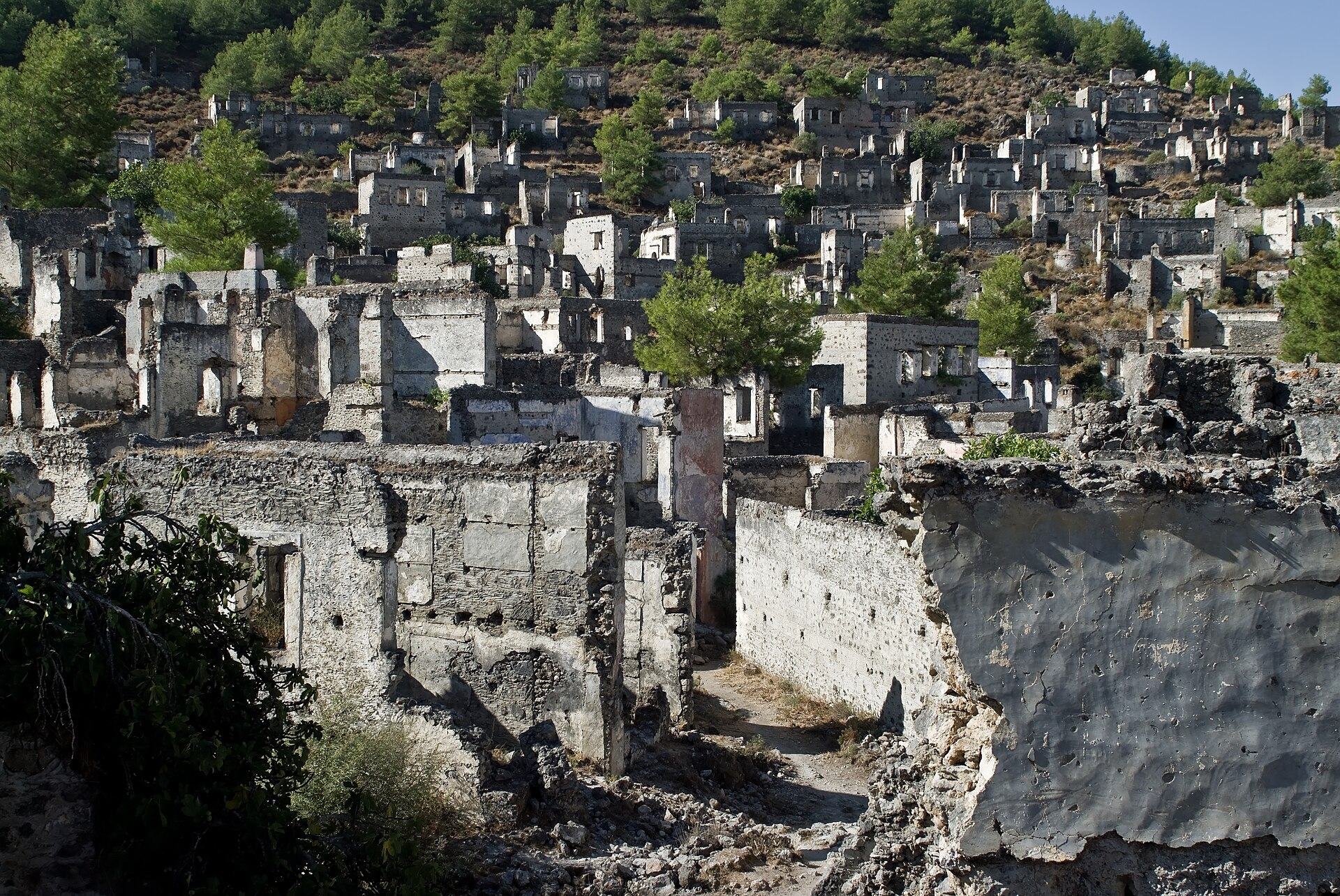
Under the terms of the exchange, incoming Turkish Muslim families from Greece were meant to resettle the newly vacated Greek villages across Anatolia, and many did exactly that elsewhere. Kayaköy, however, was largely passed over. According to local accounts, its remote, hillside location made it a less practical place to settle, and the village was left standing empty rather than repopulated. Whatever the precise reasons, the result was the same: a fully built village, its stone houses and churches intact, simply stood abandoned on its hillside as decades passed.
Weathered by Wind and Time, Not Demolition
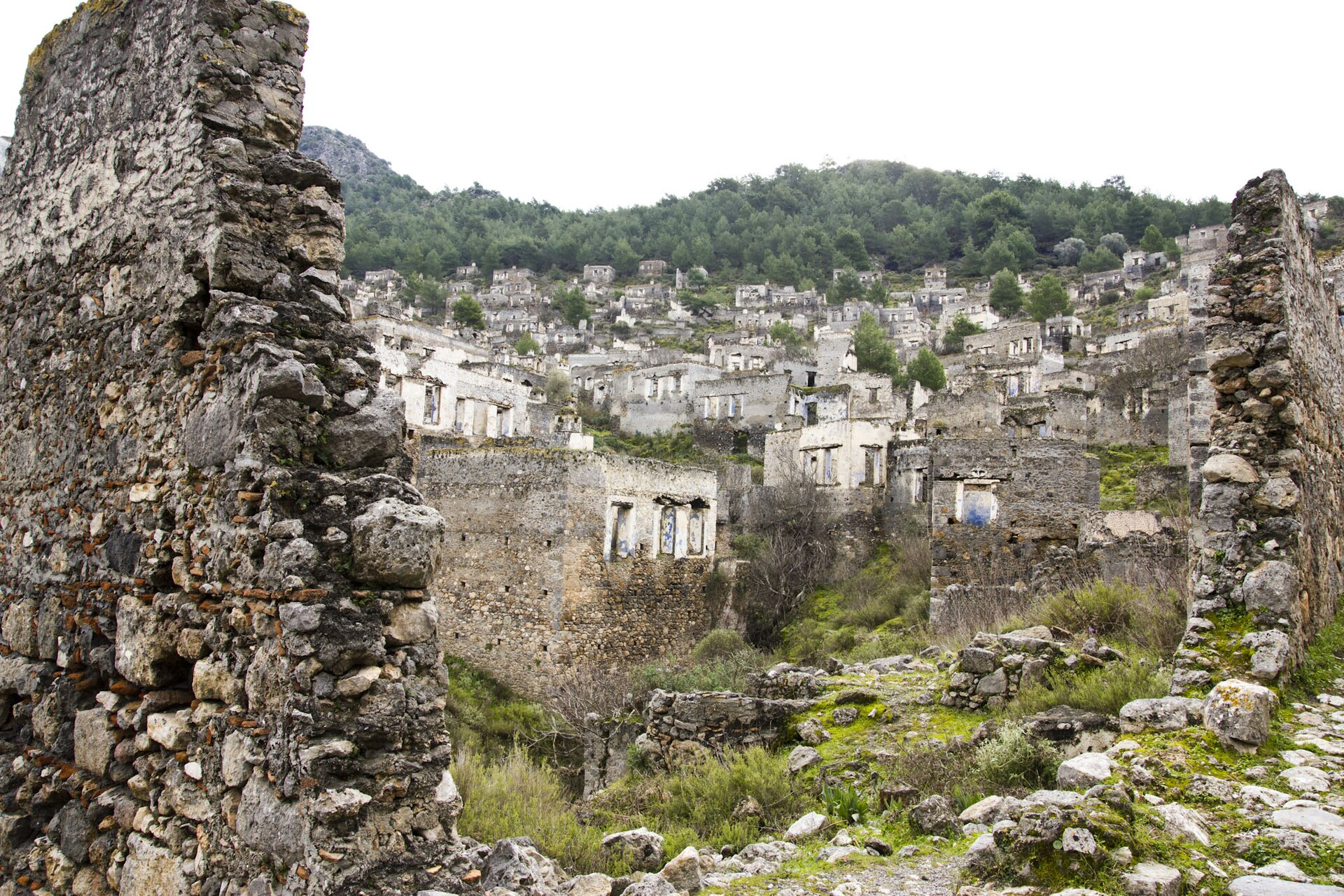
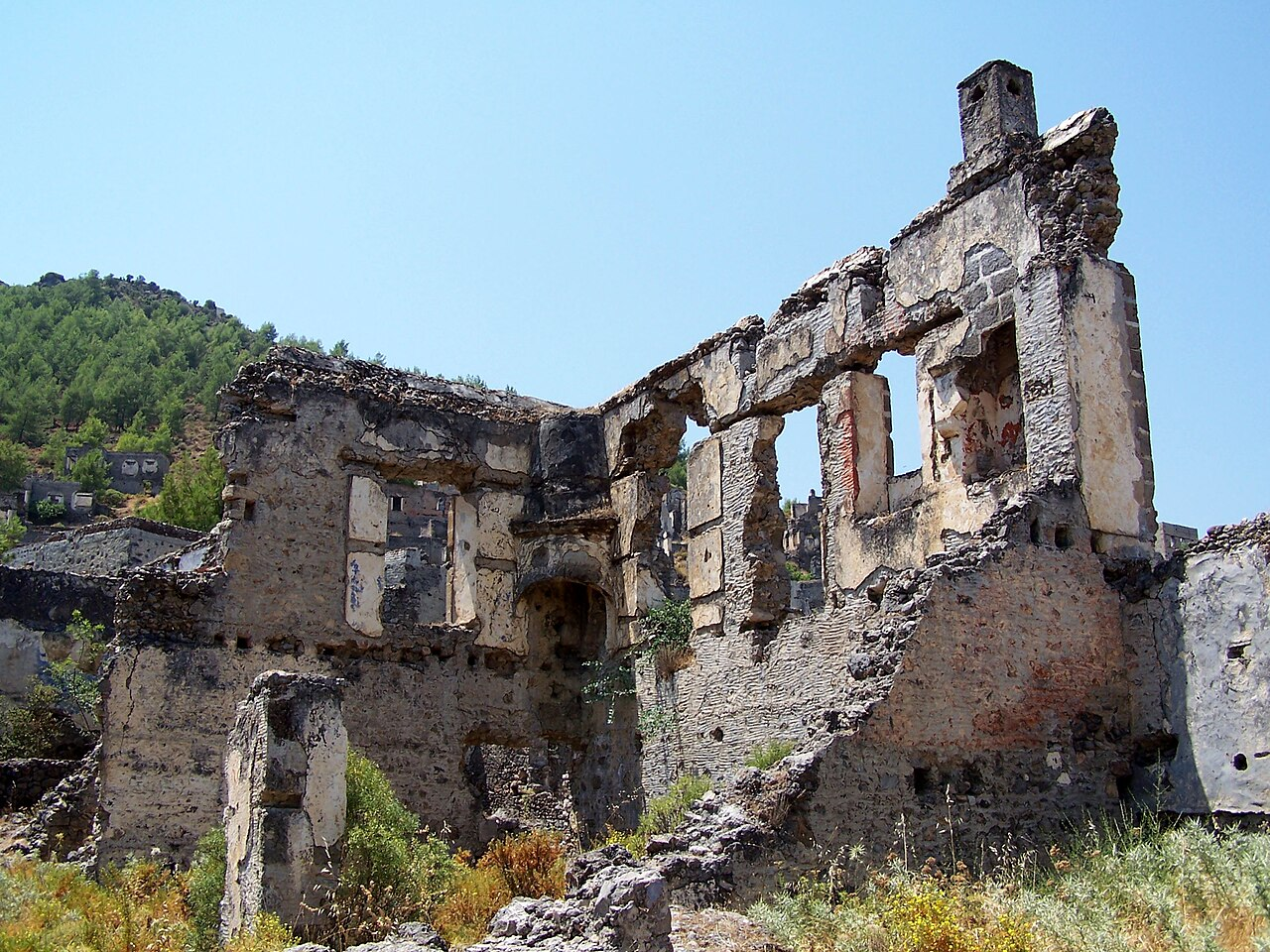
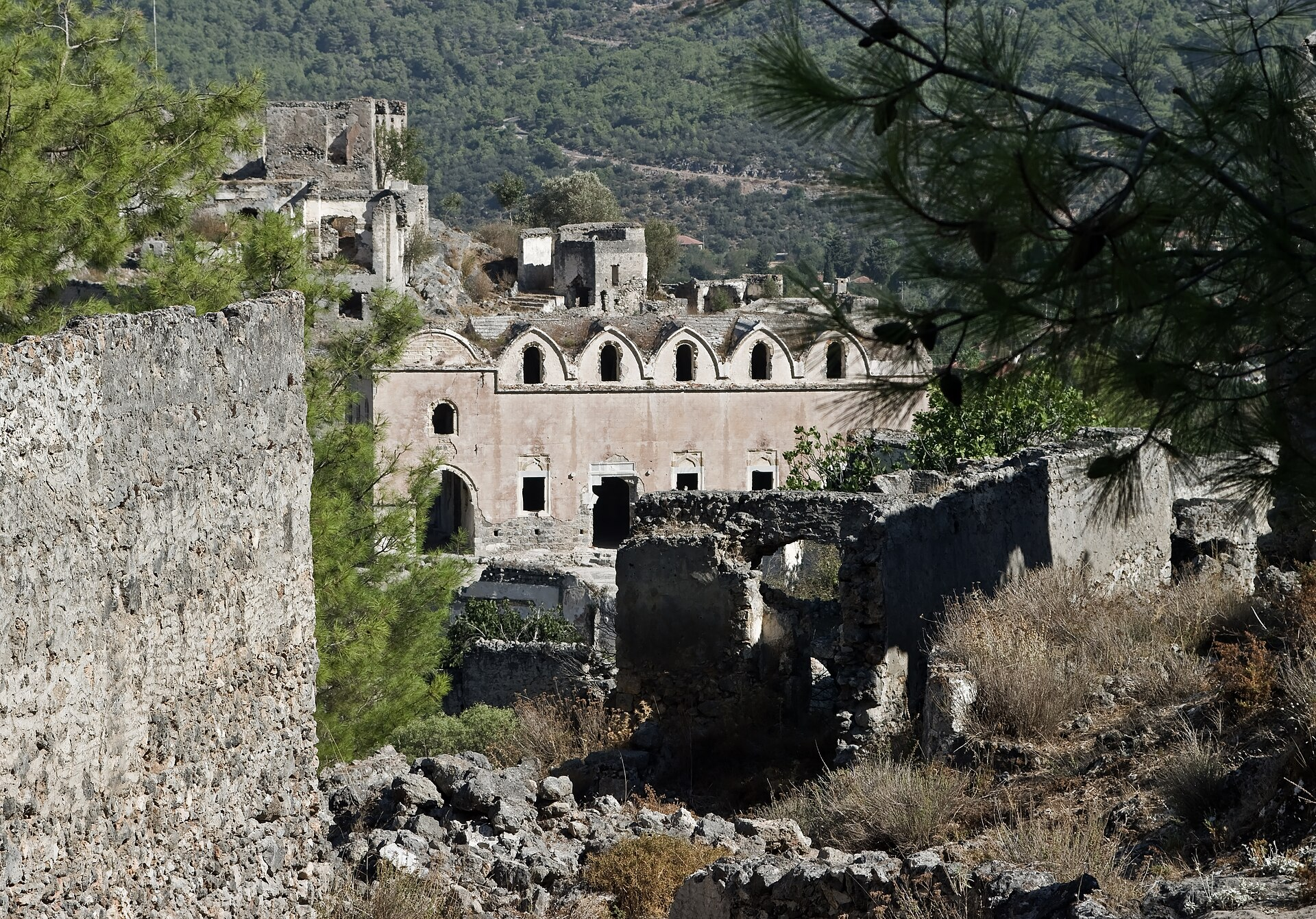
Unlike many abandoned settlements lost to fire, war, or deliberate demolition, Kayaköy’s houses were left to the slower processes of nature. Decades of harsh winters and strong Aegean winds gradually stripped away roofs and plasterwork, leaving stone walls and empty window frames that today give the village an appearance far older than its actual age. A 1957 earthquake caused further damage to already-weakening structures. The two largest churches, known locally as the upper and lower churches, still stand in ruined but recognizable form, their faded frescoes and vaulted ceilings offering glimpses of the devotional life once centered there.
Recognition as a Place of Peace
In recognition of its unique history and the broader tragedy the population exchange represented, UNESCO adopted Kayaköy as a World Friendship and Peace Village, and Turkey’s Ministry of Culture granted the site protected museum status. The designation reflects an effort to honor Kayaköy’s layered history honestly, as both a monument to a lost community and a reminder of the human cost of the forced migrations that reshaped the eastern Mediterranean in the early twentieth century.
Visiting the Village Today
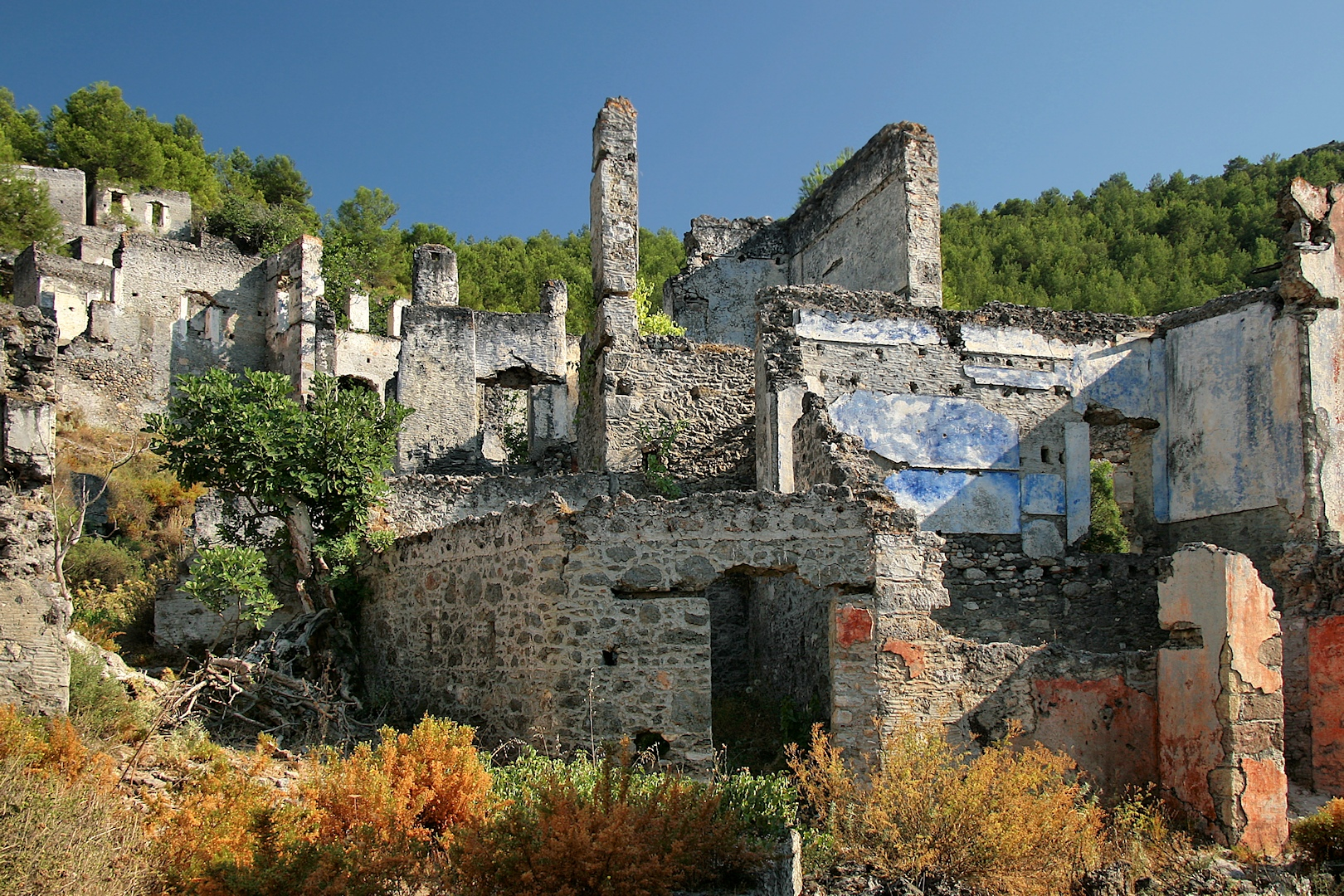
Kayaköy is easily reached by a short minibus ride or a scenic hike from Fethiye, and a modest entry fee grants access to wander freely among the roughly 500 ruined homes and the two main churches. A small on-site museum provides historical context for visitors. The village has also drawn artists and filmmakers over the years, and a handful of restored buildings near its edge now house small guesthouses, workshops, and cafés, a gentle, respectful revival that coexists alongside the preserved ruins rather than replacing them. The surrounding pine forests and olive groves make the approach to the village nearly as memorable as the site itself.
A Quiet Monument to a Lost Coexistence
Kayaköy endures as a uniquely powerful place to reflect on a chapter of history that reshaped an entire region, the sudden, enforced unraveling of a community that had coexisted peacefully for generations. Walking its empty streets today, past churches with no congregation and homes with no families, offers travelers a rare, tangible connection to the human consequences of a treaty signed far away. For those drawn to places where history feels genuinely present, Kayaköy remains one of the Mediterranean’s most understated, powerful destinations.
Like our content? Follow us for more.