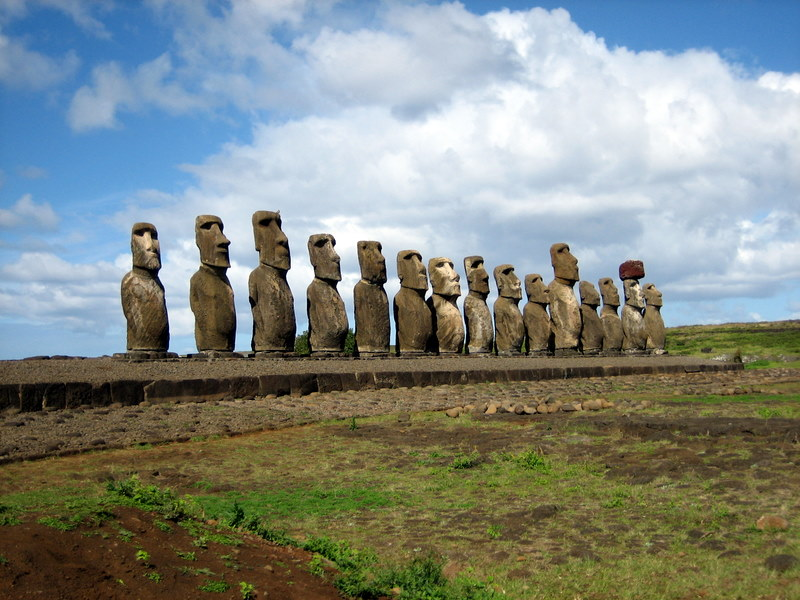
Easter Island — Rapa Nui to its Indigenous people — is one of the most remote inhabited places on Earth, a speck of volcanic land in the vast Pacific, thousands of miles from any continent. And scattered across it stand nearly a thousand of the most famous statues in the world: the moai, enormous carved stone figures with heavy brows and long faces, some standing many meters tall and weighing dozens of tons. For as long as outsiders have known about them, the moai have posed a single nagging question: how on earth did the islanders move them?
The statues were carved at a quarry and then somehow transported, sometimes for miles, to platforms around the island’s coast. The people who did this had no wheels, no metal tools, no cranes, and no large draft animals — nothing that seems remotely adequate to shift a 70-ton block of stone across rough volcanic ground. The puzzle was so hard that it drew explanations ranging from the ingenious to the absurd, including the perennial suggestion that aliens must have helped. But the answer, it turns out, may have been sitting in plain sight the whole time, in the oral traditions of the Rapa Nui people themselves, who always insisted the statues simply walked. Recent science suggests they were right.
The Puzzle of the Moai
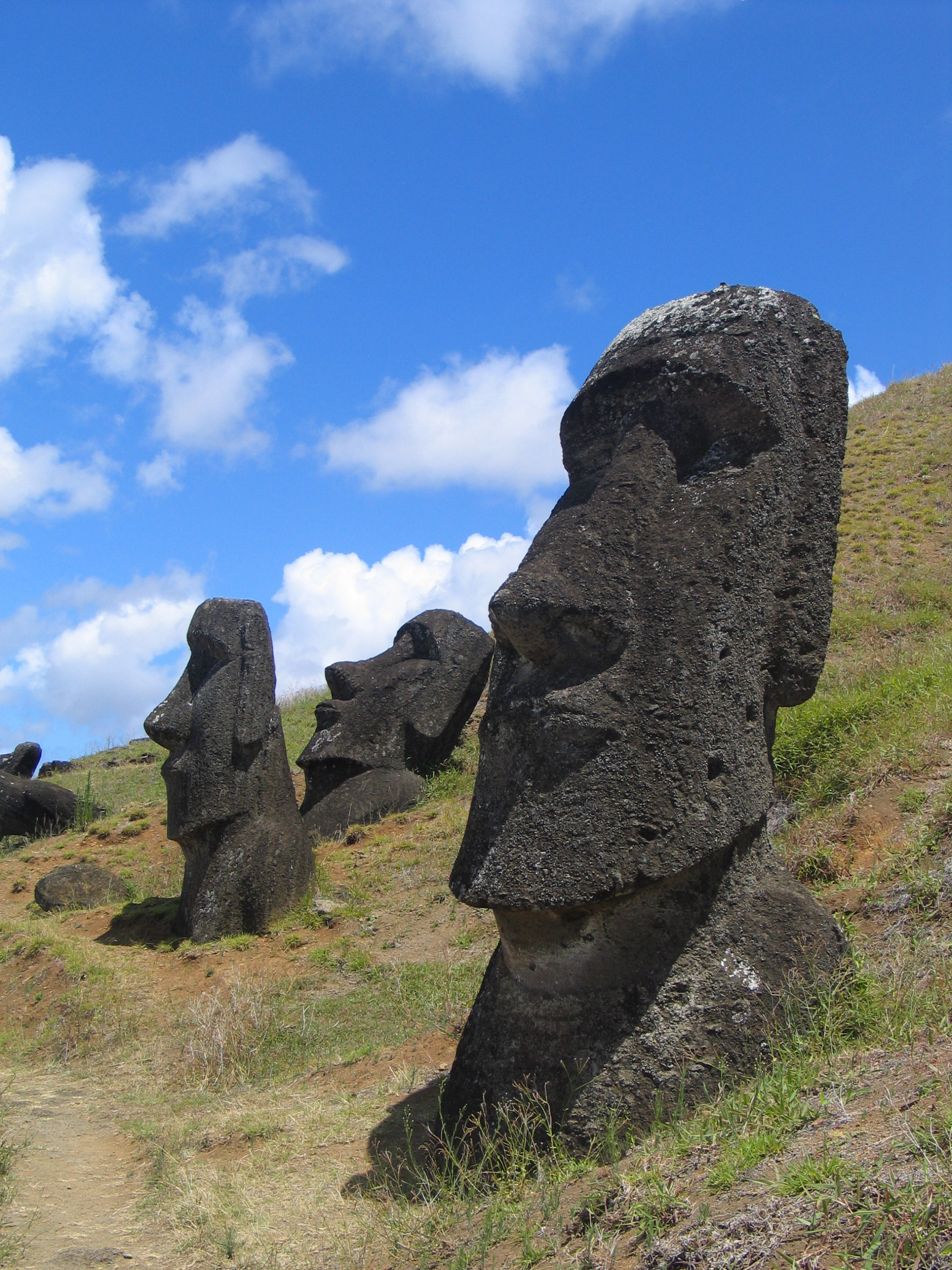
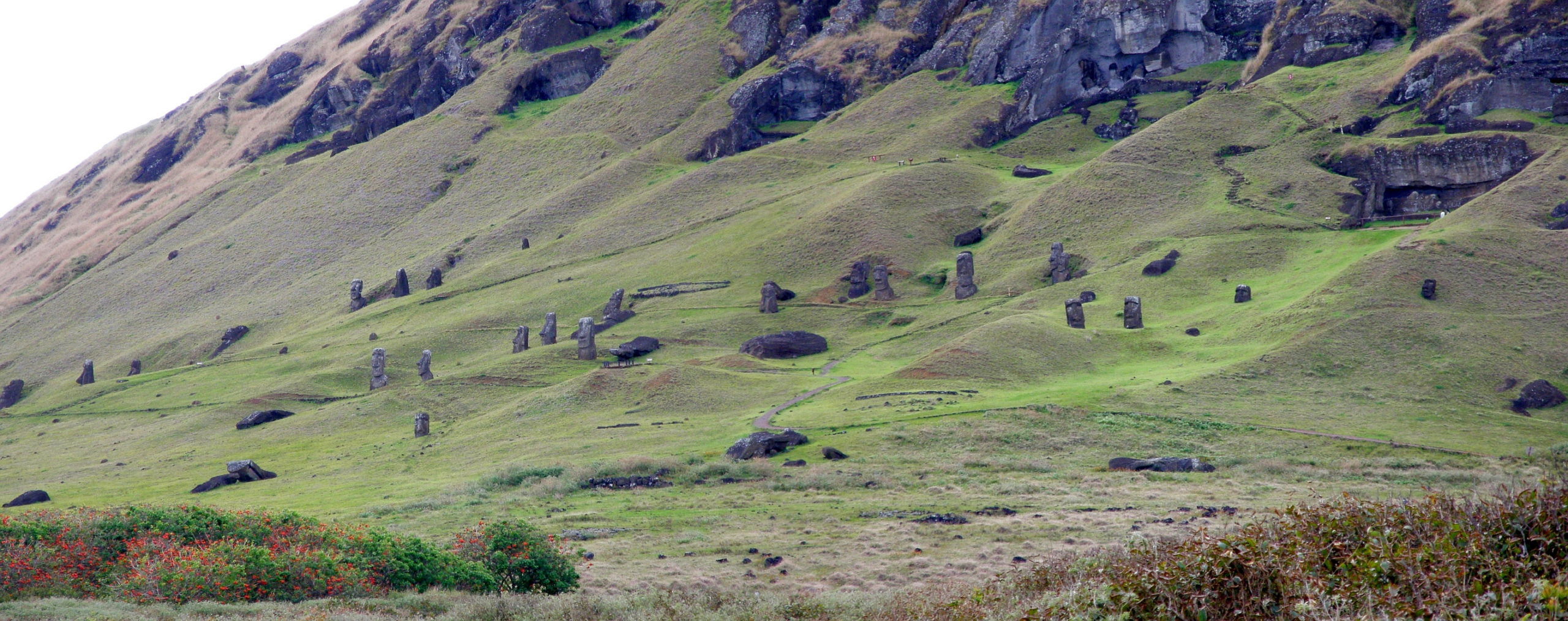
To grasp why the moai are such a profound puzzle, consider the numbers. There are close to a thousand of these statues on the island. They were carved from volcanic rock at a single quarry, Rano Raraku, and then moved to locations all around Rapa Nui, some of them many kilometers away. The largest that were successfully erected weigh dozens of tons; the very biggest ever carved, never moved, would have weighed far more.
Now consider what the islanders had to work with. Rapa Nui is small and, for much of its history, was not richly forested. The Rapa Nui people had no knowledge of the wheel, no metal, no pulleys or cranes, and no large animals like oxen or horses to provide muscle. By every intuition of modern engineering, moving hundreds of multi-ton statues across such an island should have been impossible, or at least should have required vast numbers of people and enormous resources. This apparent impossibility is what made the moai a magnet for outlandish theories, and what made the mystery of their transport one of archaeology’s great debates for decades.
Like our content? Follow us for more.
The Old Theories
For much of the twentieth century, the prevailing scientific assumption was that the statues had been moved lying down. The idea was that the islanders laid each moai flat on its back or front, probably on a wooden sledge or over rolling logs, and then dragged it across the island using ropes and large teams of people.
This horizontal-transport theory had a certain logic, but it also had serious problems. Moving a multi-ton statue lying down over log rollers or a sledge would have required enormous quantities of timber and very large workforces, straining the resources of a small island society. It also, controversially, fed into a particular narrative about Rapa Nui: the idea that the islanders deforested their home partly by cutting down all their trees to move statues, contributing to an ecological and societal collapse. That “ecocide” story became famous, but it has been increasingly challenged by researchers, and the question of how the statues moved is bound up in that larger reassessment. Notably, the horizontal-transport theory never had strong archaeological support — the physical evidence on the ground didn’t clearly fit it, which left room for a very different idea.
The Islanders’ Answer: They Walked
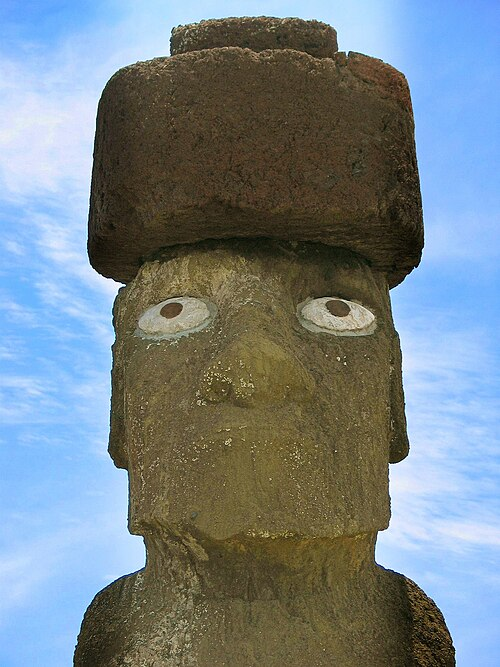
The Rapa Nui people’s own tradition had always held that the moai “walked” from the quarry to their platforms — that they moved themselves, upright, under some kind of spiritual or practical power. For a long time, Western researchers treated this as mere folklore, a poetic myth rather than a literal engineering description. But a pair of archaeologists decided to take it seriously and test whether it could be literally true.
Terry Hunt and Carl Lipo, American researchers who have studied Rapa Nui for years, proposed that the statues were moved upright, “walking” via a rocking motion. The idea is that a team of people with ropes attached to the top of a standing statue could rock it from side to side, and with each rock, edge it forward — the same way you might “walk” a heavy refrigerator across a kitchen floor by tilting and pivoting it on its corners, alternating side to side. Rather than fighting gravity by lifting or dragging the full weight, this method uses the statue’s own mass and balance to inch it along while it stays upright the entire time. It sounds almost too simple, but the researchers set out to prove it could actually work.
Proving the Statues Could Walk
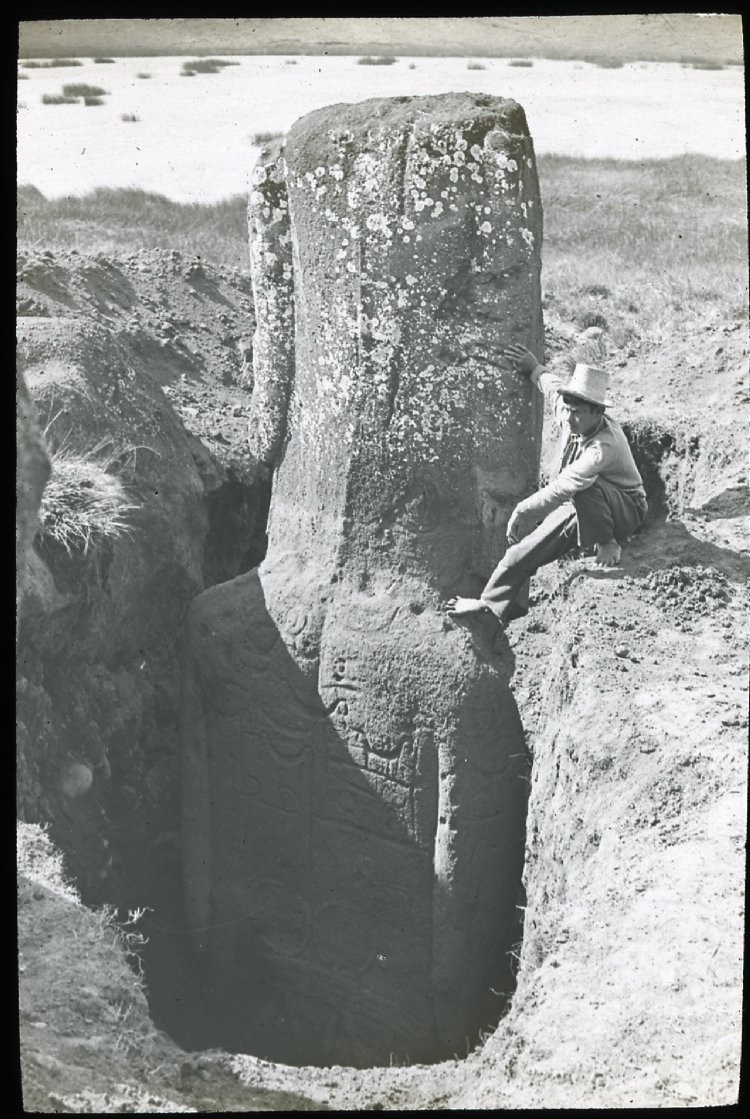
The evidence for the walking theory comes from two directions: hands-on experiment and analysis of the statues themselves. In experiments, Hunt, Lipo, and their teams built full-size replica moai and showed that a surprisingly small group of people could indeed “walk” them. In one widely reported demonstration, a team of just 18 people, using three ropes, was able to move a nearly four-and-a-half-ton replica statue about a hundred meters in roughly 40 minutes, rocking it forward in a controlled, waddling motion. As one of the researchers put it, once you get the statue rocking, it isn’t hard to keep it going — people can pull with one arm; the difficult part is starting the motion.
Even more compelling is what the statues themselves reveal. Research published in 2025, building on the earlier experiments, involved analyzing the shapes of hundreds of moai, and it found that the statues apparently designed to be moved along the island’s ancient roads share distinctive features perfectly suited to walking: a wide, D-shaped base and a forward lean. These features would make a statue tip and rock exactly as the walking method requires, and they differ from the moai that were finished and installed on platforms, which stand upright and stable. In other words, the moai in transit were engineered to walk — shaped with a built-in forward tilt and a rounded base, then re-carved into their final upright form once they reached their destination. The researchers also point to the island’s specially constructed roads and to statues abandoned along them, apparently having fallen during transport, as further evidence. The walking hypothesis now has experimental proof, physical evidence from the statues’ design, and the island’s own roads all pointing the same way.
Not Everyone Is Fully Convinced
As with any bold claim in archaeology, the walking theory has its critics, and it’s worth being honest that it isn’t universally accepted as the final word. Some researchers caution that demonstrating the moai could have been walked is not the same as proving definitively that they always were, and that the distinctive features of the “road moai” might have other explanations, such as differences in how statues were finished or ceremonial variations.
The researchers behind the walking hypothesis counter that their critics have yet to offer a better explanation that accounts for all the evidence — the statue shapes, the roads, the abandoned moai, the successful experiments, and the islanders’ own testimony. What’s clear is that the walking theory has steadily gained ground and now stands as the leading explanation, a striking reversal from the days when it was dismissed as folklore. It’s a lovely example of science coming around to what the people who actually built the things had been saying all along, and a reminder to take Indigenous oral traditions seriously as potential records of real events and knowledge.
Seeing the Moai Today
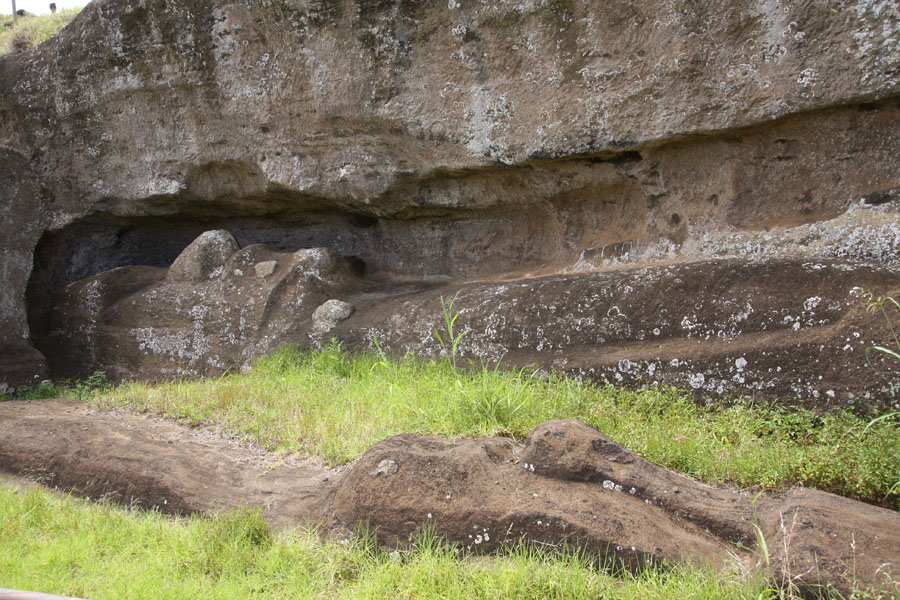
For travelers, Easter Island remains one of the most extraordinary and remote destinations on Earth, reachable by a long flight and rewarding the effort with a landscape unlike anywhere else. The moai stand in various states around the island — some re-erected on their ceremonial platforms, gazing inland; some still lying where they fell centuries ago; and, most hauntingly, dozens still attached to the bedrock at the Rano Raraku quarry, half-carved, frozen mid-creation, as if the carvers simply put down their tools one day and never came back.
Walking among them, especially at the quarry, is a profound experience, made richer by understanding the true story of how they moved. It’s now possible to look at a moai and picture not a statue dragged on its back by hundreds of laborers, but a towering figure rocking and waddling its way across the island upright, guided by a small team hauling on ropes, “walking” to its final home exactly as the Rapa Nui always said. The mystery that launched a thousand wild theories turns out to have a solution that is both scientifically sound and steadily wonderful — and that vindicates the knowledge of the people who carved these giants in the first place.
Like our content? Follow us for more.