Walk into any grocery store today and you’ll find pineapples piled up cheaply in the produce section, an ordinary and affordable fruit that most people don’t think twice about. It’s almost impossible to imagine, then, that for a stretch of history the pineapple was among the most coveted luxury objects in the Western world — a fruit so rare, so expensive, and so laden with prestige that owning one announced your wealth and status more loudly than almost anything else you could put on your table.
In the seventeenth and eighteenth centuries, particularly in Britain and its colonies, the pineapple reigned as the ultimate symbol of luxury, hospitality, and social standing. A single fruit could cost a small fortune, the equivalent of thousands of dollars today, and it was treated accordingly: displayed rather than eaten, revered as a centerpiece, carved into architecture, and coveted by everyone from monarchs to social climbers. The pineapple craze produced one of history’s more delightful absurdities — a rental market for fruit — and left its mark in stone monuments and decorative motifs that survive to this day. Here is the strange and wonderful story of how a tropical fruit became the apex status symbol of an age.
A Fruit From a New World

The pineapple is native to South America, where it had been cultivated and enjoyed for a very long time before Europeans ever encountered it. That first encounter came at the end of the fifteenth century, when Christopher Columbus and his crew came across the fruit during their voyages to the New World and brought it back to Europe. For Europeans, it was an astonishing novelty — a fruit unlike anything they had ever seen, with its armored, geometric exterior, its dramatic spiky crown, and a flavor that amazed those lucky enough to taste it, often described as impossibly sweet and fragrant, like a combination of the finest known flavors all at once.
From the beginning, then, the pineapple carried an aura of the exotic and the marvelous. It came from a distant, newly discovered part of the world; it looked like nothing else; and it tasted extraordinary. But the very things that made it desirable also made it nearly impossible to obtain. The pineapple grows in warm, tropical climates, and it does not travel or keep well. Getting a ripe, edible pineapple from South America or the Caribbean all the way to a table in England or continental Europe, across weeks of sea voyage, was an enormous challenge, and most fruit spoiled along the way. Scarcity, novelty, and difficulty combined to send the pineapple’s value soaring, and to plant the seeds of its transformation from mere fruit into precious status symbol.
Like our content? Follow us for more.
Worth a Small Fortune

Just how expensive was a pineapple at the height of its prestige? The figures are truly startling. Historical accounts and modern estimates suggest that a single pineapple, at the peak of the craze, could cost the equivalent of several thousand dollars in today’s money — one widely cited estimate puts it around the equivalent of many thousands of dollars, a sum comparable to a serious luxury purchase. For that price, you got one piece of fruit.
This extraordinary cost was driven by the pineapple’s rarity and the difficulty of obtaining it. Because they couldn’t easily be grown in cold European climates and were so hard to import intact, ripe pineapples were vanishingly scarce, and scarcity plus intense demand equals staggering prices. The result was that pineapples became strictly the preserve of the very wealthy — the aristocracy, royalty, and the richest merchants — because only they could possibly afford such an indulgence. Owning a pineapple, or better yet displaying one, became an unmistakable signal of enormous wealth, instantly recognizable to anyone who saw it. In an age acutely conscious of social rank and eager for visible ways to display it, the pineapple was a perfect status symbol: rare, exotic, ruinously expensive, and impossible to fake. To have a pineapple was to broadcast, in the most conspicuous way imaginable, that you were among the elite.
Too Precious to Eat
Here is where the pineapple’s story turns really delightful. Given how much a pineapple cost, the wealthy who acquired them frequently did not eat them. Instead, they displayed them. A pineapple was treated as a decorative object, a centerpiece to be shown off at dinner parties and social gatherings, positioned prominently so that every guest could see and admire it and, by extension, admire the wealth and taste of the host who had procured it.
The pineapple thus became the ultimate hospitality accessory. To place a pineapple at the center of your table was to make a lavish statement about your generosity, your status, and your ability to provide the very best for your guests. And because the fruit was so valuable, the same pineapple might be displayed again and again, kept as a centerpiece through multiple occasions until it finally began to rot, at which point it might, at last, be eaten — a rare treat reserved for the moment when the fruit could no longer serve its decorative purpose. The idea of buying an expensive fruit specifically not to eat it, but to display it as a symbol of status, captures perfectly the extravagance and social theater of the era. The pineapple wasn’t food; it was a prop in the performance of wealth.
You Could Actually Rent One
If displaying a pineapple you owned was the ultimate flex, there was a solution for those who couldn’t quite afford to buy one outright — and it is perhaps the most wonderful detail in the entire history of the fruit. In the height of the pineapple craze, an enterprising rental market emerged, in which people could rent a pineapple for a special occasion.
The way it worked was straightforward and gloriously absurd. A person of more modest means who wanted to impress guests at a party could pay a fee to rent a pineapple for the evening. They would take the rented fruit to their gathering, display it proudly as a centerpiece to suggest they could afford such a luxury, and then return it afterward — uneaten, of course, since it was going back to the merchant to be rented out again or eventually sold to someone wealthy enough to actually consume it. A single prized pineapple might therefore make the rounds of numerous parties, rented out night after night, carried from gathering to gathering as a borrowed badge of status, before it was finally eaten by whoever paid the full price. The pineapple rental market is a perfect emblem of an age obsessed with visible status: people were willing to pay simply to appear, for one evening, wealthy enough to own a fruit.
Pineapples in Stone
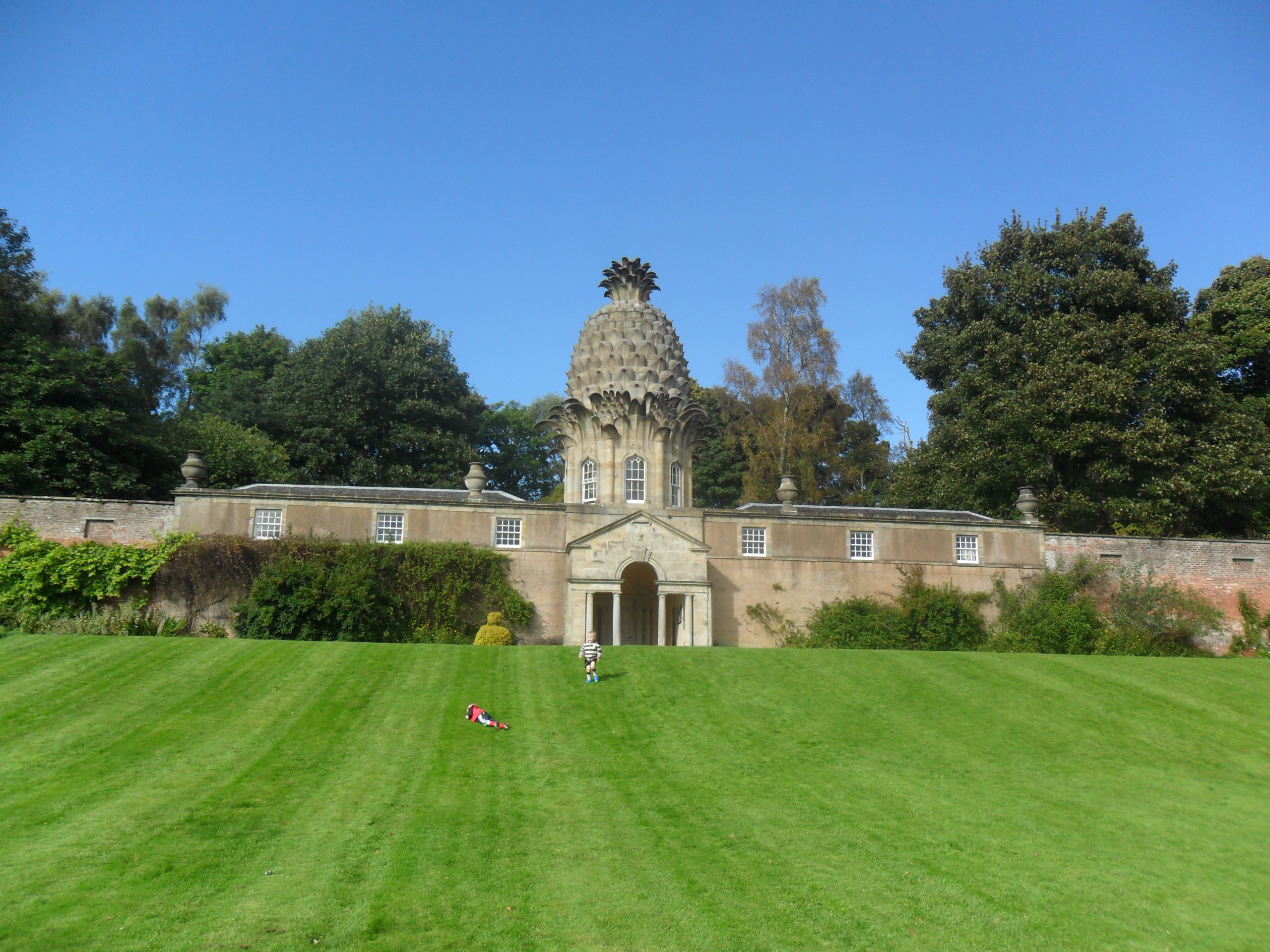
The pineapple’s status as a symbol of wealth and hospitality was so powerful that it escaped the dining table entirely and embedded itself in art, decoration, and architecture, where its influence can still be seen today. Because the pineapple represented welcome, luxury, and generosity, its distinctive shape became a popular decorative motif, carved and sculpted into all manner of things.
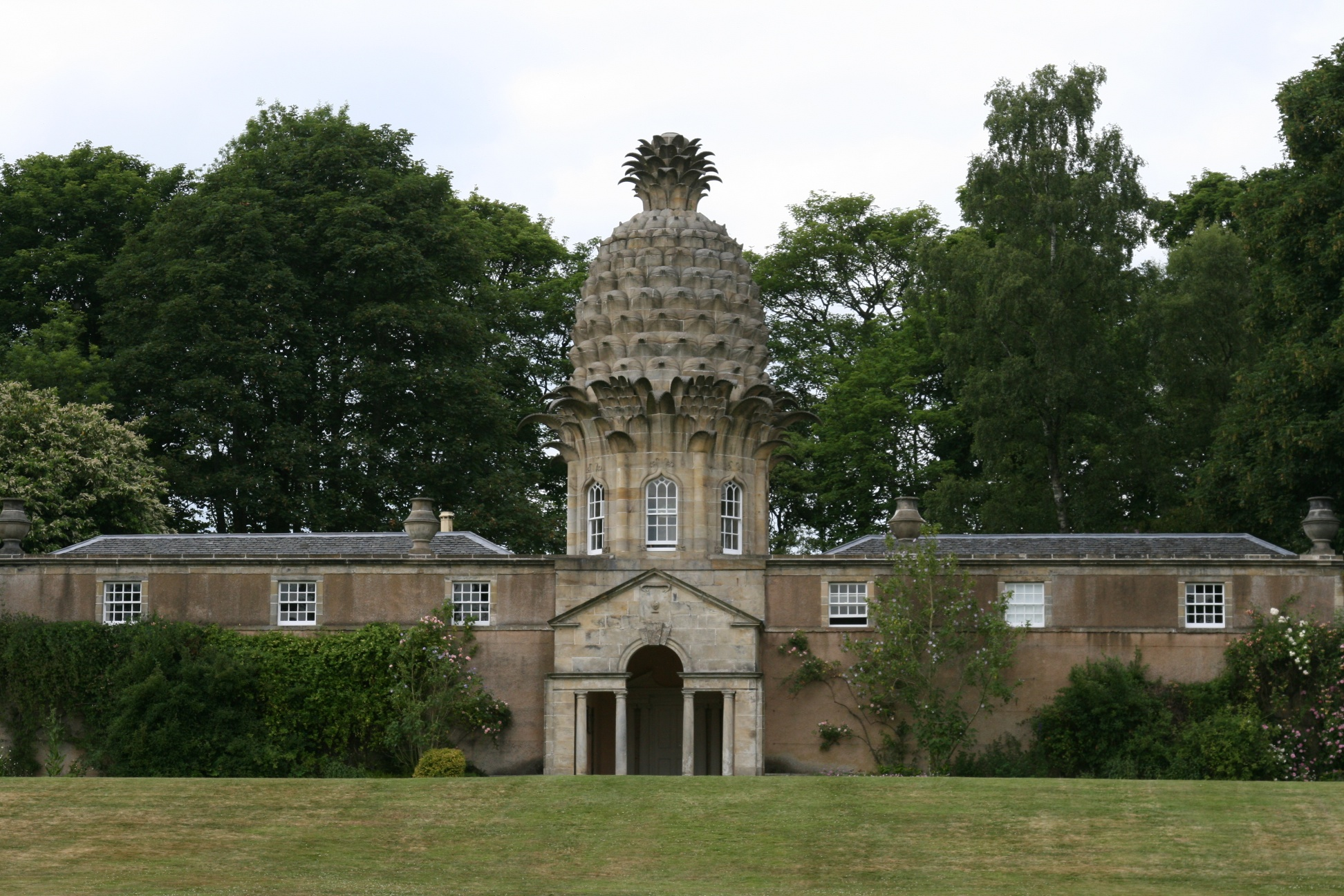
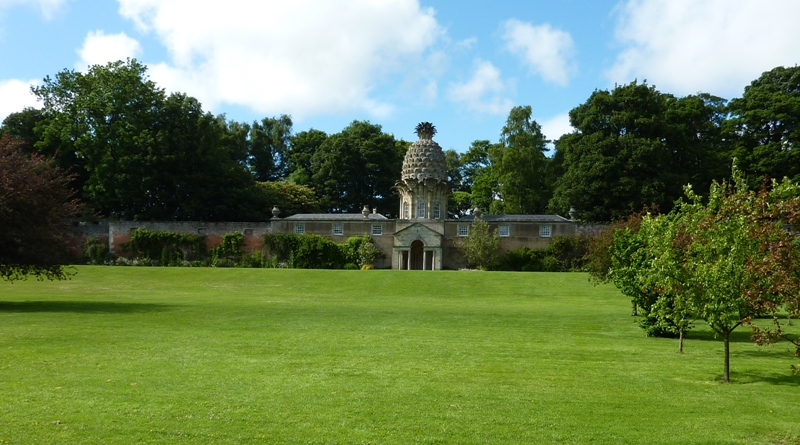
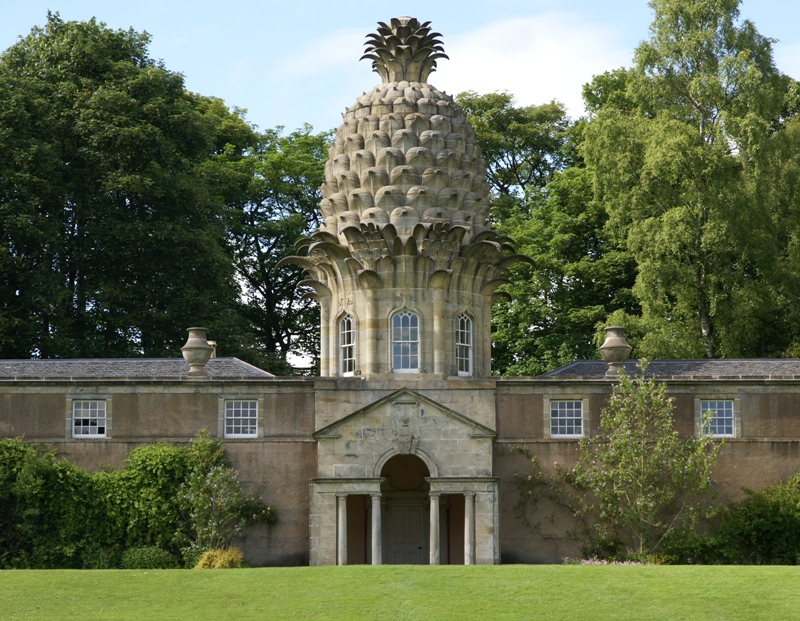
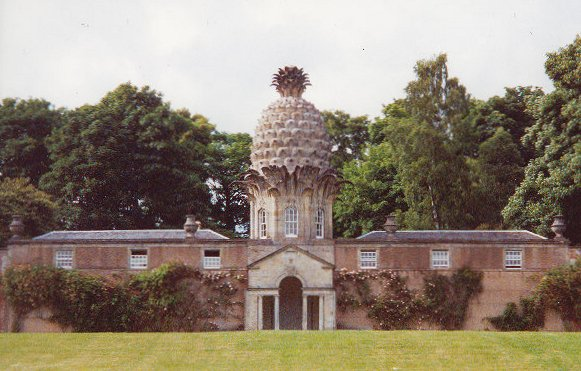
Pineapple shapes appeared as finials atop gateposts and buildings, carved into furniture, worked into architectural details, and used as ornaments in fine homes, all as a way of invoking the fruit’s associations with hospitality and status. The most spectacular surviving example is a remarkable building in Scotland, often called the Dunmore Pineapple, an eighteenth-century garden folly crowned with an enormous, elaborately carved stone pineapple — a whimsical architectural monument to the era’s obsession, built simply because its wealthy owner could. Other grand houses incorporated pineapple motifs into their design, and the symbol spread widely enough that the pineapple became, and to some extent remains, a recognized emblem of welcome and hospitality, still seen today in decorative touches on everything from doorways to home furnishings. The next time you notice a pineapple-shaped ornament, you’re seeing a faint echo of the centuries when this fruit was worth a fortune.
From Luxury to Everyday
So how did the pineapple fall from its lofty perch to become the humble supermarket staple we know today? The answer lies in the same forces that had made it precious in the first place: scarcity and difficulty. Over time, both were overcome. Wealthy enthusiasts in Europe developed elaborate heated greenhouses, sometimes called “pineries,” in which, at great expense, they learned to cultivate pineapples on home soil, gradually increasing the supply. But the honestly transformative changes came later, with the advance of technology and global trade.
The development of faster steamship transport made it possible to bring ripe pineapples from the tropics to distant markets before they spoiled, and the later rise of large-scale commercial pineapple plantations in places with ideal growing climates, combined with the invention of canning, flooded the market with affordable pineapple. As supply increased and transport improved, the fruit that had once cost a small fortune became cheaper and cheaper, until it was within reach of ordinary people, and finally a commonplace item found in every grocery store. The pineapple’s journey from unattainable luxury to everyday fruit is, in miniature, the story of how global trade and technology have transformed our relationship with food, turning yesterday’s impossible extravagances into today’s ordinary pleasures. The pineapple that once announced you were among the wealthiest people in the land now sits in a bin for a couple of dollars, and hardly anyone remembers that it was ever anything more.
The Fruit That Ruled an Age
The story of the pineapple is one of history’s most charming reminders that the value we place on things is often a matter of circumstance rather than any fixed worth. The very same fruit — sweet, spiky, and unchanged in its nature — was once a treasure worth thousands and is now a bargain-bin commonplace, and the difference lies entirely in how rare and hard to obtain it happened to be at a given moment in history.
For a couple of centuries, though, the pineapple plainly ruled as the king of status symbols, coveted by monarchs, displayed by aristocrats, rented by strivers, carved into stone, and treated with a reverence that seems almost comical today. It’s a wonderful little window into the social world of the seventeenth and eighteenth centuries, an age of conspicuous display in which a single piece of tropical fruit could carry the full weight of a person’s aspirations to wealth and standing. So the next time you slice into a cheap, ordinary pineapple, spare a thought for its glory days — when this fruit was a fortune on a plate, too precious to eat, and grand enough to build a monument around.
Like our content? Follow us for more.