

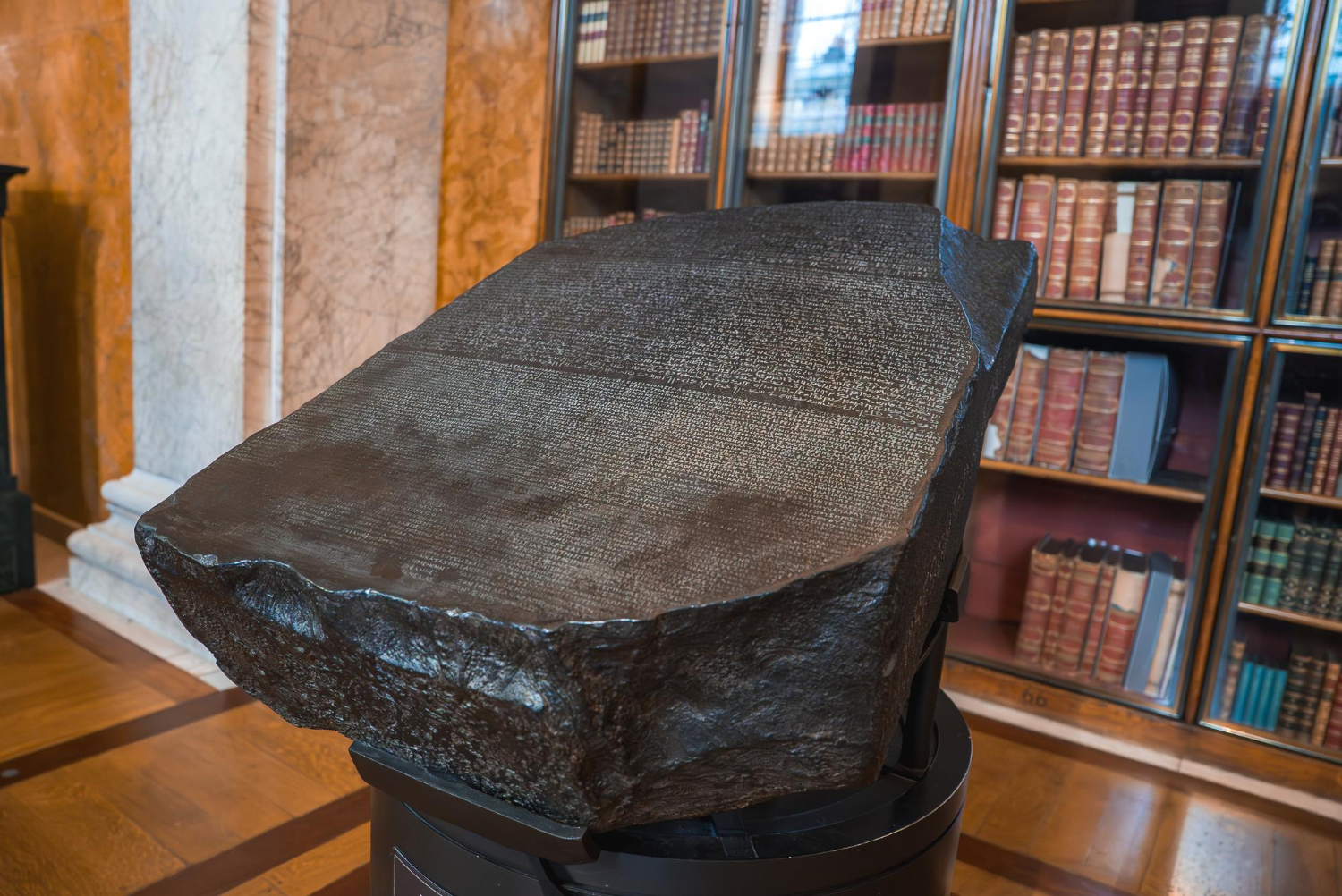
For most of recorded history, ancient Egypt was legible only in fragments. Its monuments, tombs and papyri were covered in writing, and the knowledge of how to read that writing had been lost for something like fourteen centuries.
That is a strange situation to sit with. An enormous civilisation, thoroughly documented by its own people, standing in plain sight, with everything it wrote about itself sealed behind a script nobody could decode.
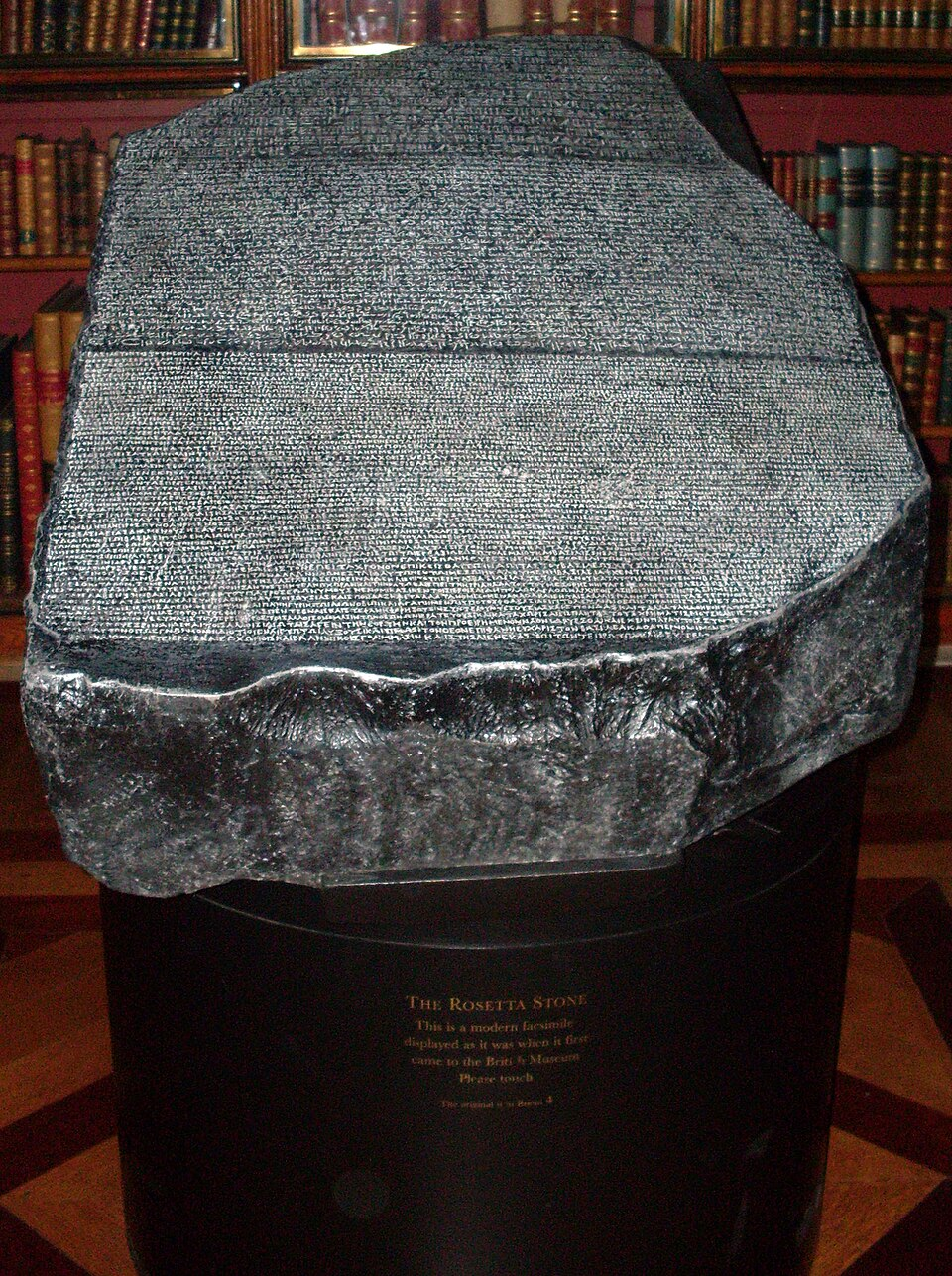
The object that changed this was not beautiful and its contents were not dramatic. It is a broken fragment of a stone slab bearing an administrative decree about a Ptolemaic king, of a type that was mass-produced and distributed around the country.
What made it decisive was structural rather than literary: the same text, in three scripts, one of which could already be read. Here is how that unlocked a language.
Found by Accident
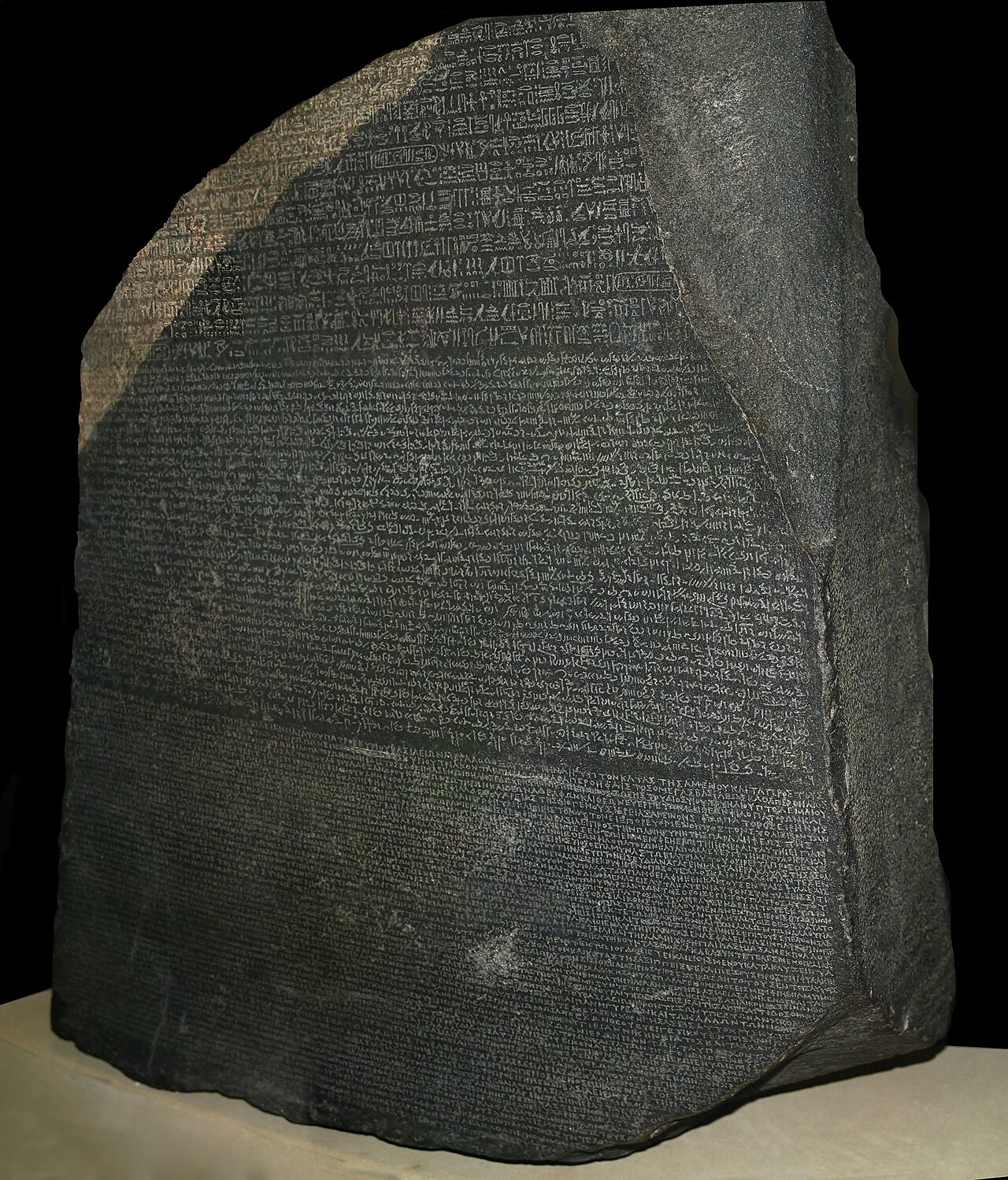
The stone was found in July 1799 by French soldiers during Napoleon’s campaign in Egypt, near the town of Rosetta, known in Arabic as el-Rashid. It is a fragment of a stela made of dark granodiorite.
Whoever found it recognised immediately that the three scripts mattered and saved it from being used as building material.
The French understood the implication at once: if this was the same text rendered three times, they were holding a key. Lithographic copies and plaster casts began circulating among European museums and scholars, which turned out to be important.
The stone itself did not stay French for long. British forces defeated the French in Egypt in 1801, and under the terms of the Capitulation of Alexandria the antiquities were surrendered. The stone was shipped to London and has been on public display at the British Museum almost continuously since 1802, where it is the most-visited object in the collection.
Like our content? Follow us for more.
What It Actually Says
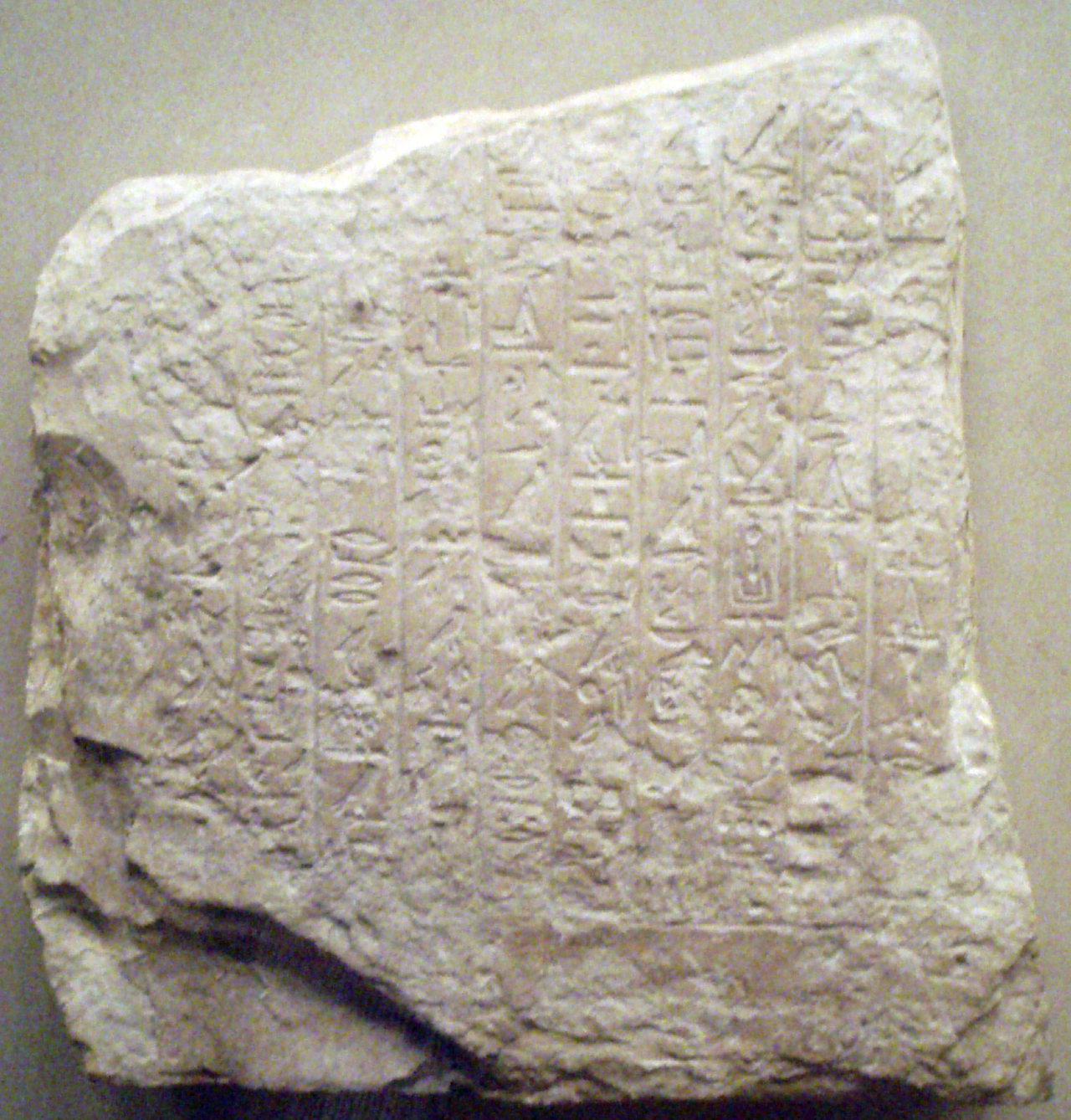
The content is worth knowing precisely because it is so unremarkable.
On 27 March 196 BCE, a synod of priests from around Egypt met at Memphis to mark the coronation of Ptolemy V Epiphanes, which had taken place the previous day. The resulting royal edict established honours and a cult for the king, and it was inscribed on stelae circulated throughout the country.
Memphis had by then been economically eclipsed by Alexandria, but it remained the symbolic link to the pharaonic past, which is why the ceremony happened there.
So the text is bureaucratic: a priestly decree honouring a Hellenistic ruler. Its significance lies entirely in its trilingual form.
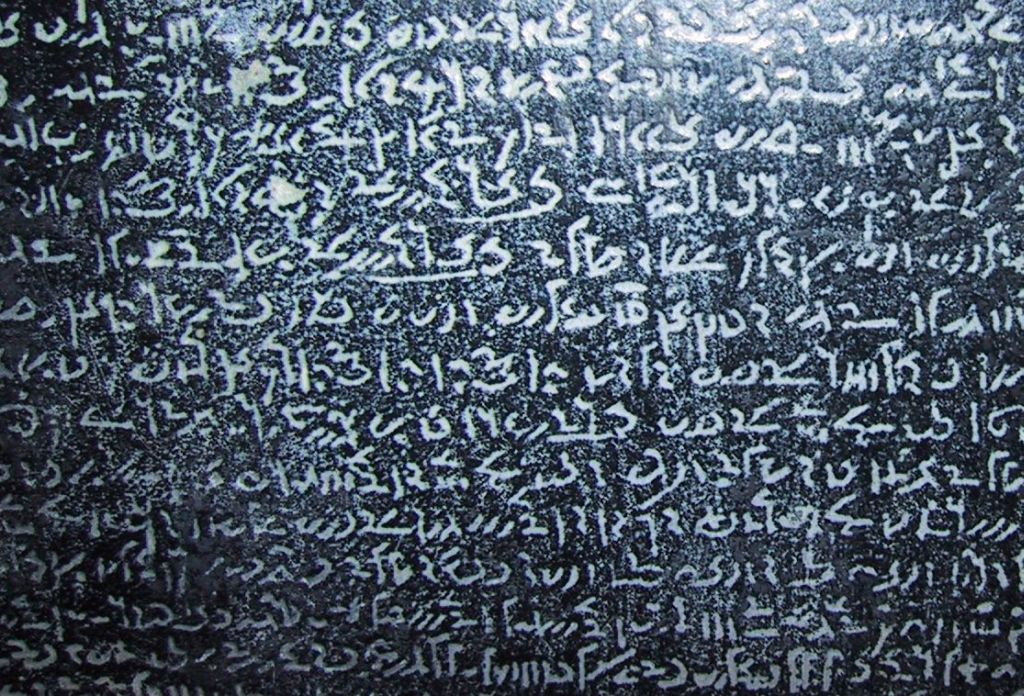
The three scripts, from top to bottom, are hieroglyphs, Demotic — a simplified cursive script used for everyday Egyptian writing in later periods — and ancient Greek. The Ptolemies were a Greek-speaking dynasty ruling Egypt, which is why an Egyptian priestly decree was also issued in Greek.
Because scholars could read the Greek, they knew what the other two sections said. The problem was working out which signs corresponded to what.
One important caveat: the stone is a fragment. Sections of the original slab are missing, so none of the three texts is complete.
Thomas Young Gets Partway
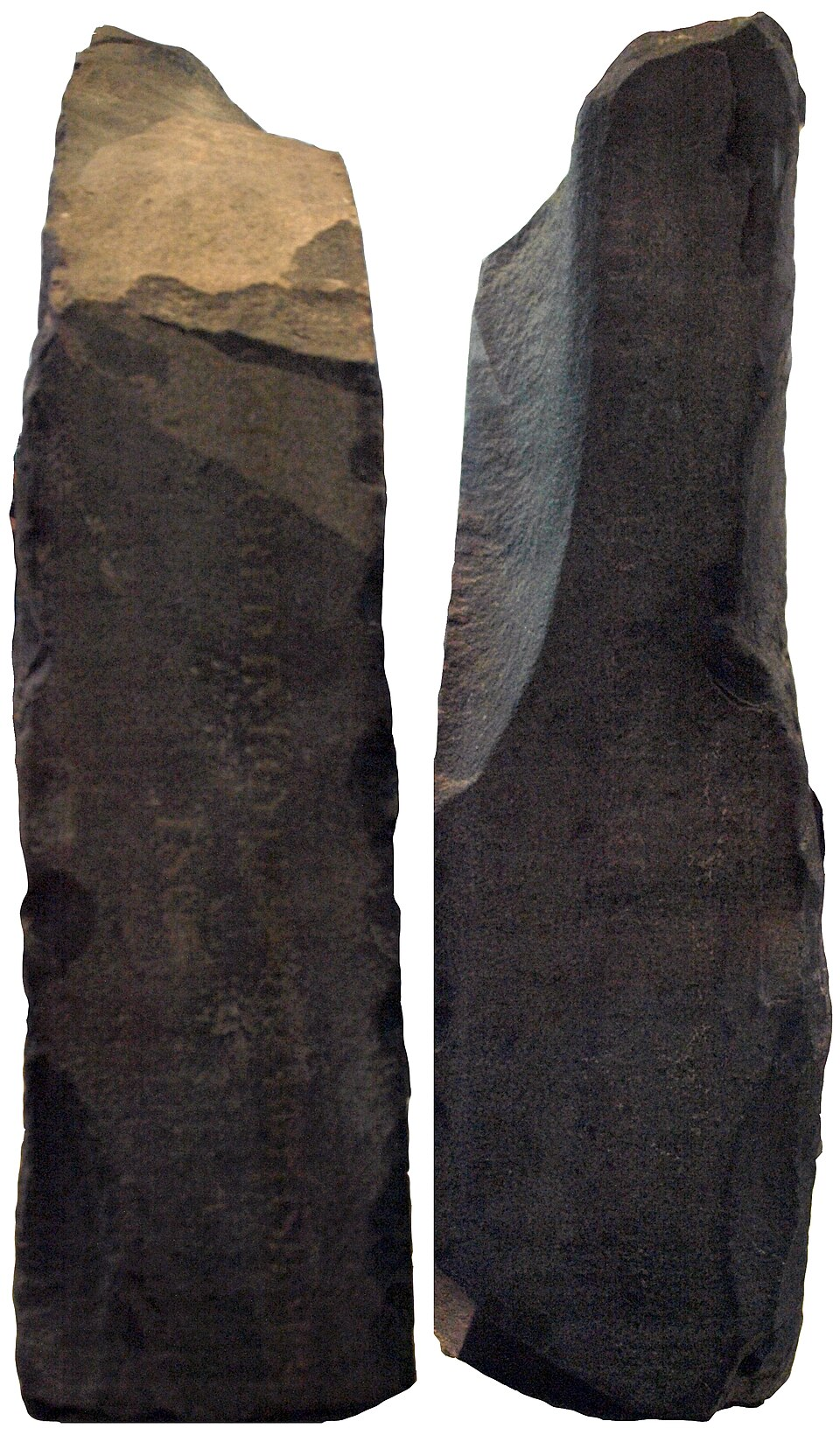
The first real progress came from the English polymath Thomas Young, and his contribution is truly significant even though he did not finish the job.
Young focused on the cartouches — the oval outlines drawn around certain groups of hieroglyphs. Since the Greek text repeatedly named Ptolemy, he reasoned that the cartouches on the stone must contain that name.
Examining them, he identified several identical cartouches and others that began the same way with extra signs appended, which he suggested indicated a title such as “Ptolemy the Great.” He then worked out, through trial and error, which symbols spelled the individual sounds of the name.
This was a real breakthrough. Young had demonstrated that at least some hieroglyphs represented sounds rather than ideas — overturning centuries of assumption that the script was purely symbolic picture-writing. He published his findings in the Encyclopaedia Britannica in 1819 and also made substantial progress on the Demotic text.
Then he stopped, and the reason is instructive. Young treated the phonetic principle as an exception applying only to foreign names such as Ptolemy, which were Greek and had to be spelled out somehow. He could not accept that Egyptians wrote their own native words phonetically too.
That single assumption blocked him. He had the correct method and applied it to too narrow a category.
Champollion and the Coptic Advantage
Jean-François Champollion, a French scholar who had been fixated on ancient Egypt since childhood, took the method further, and he had one decisive advantage.
Champollion had learned Coptic — the last surviving form of the Egyptian language, written in Greek letters and still used liturgically by the Coptic Christian Church.
That mattered enormously. Knowing Coptic meant he knew what the ancient language actually sounded like. Where Young could deduce that a sign represented some sound, Champollion could recognise the resulting words as Egyptian.
He compared the Ptolemy cartouche from the Rosetta Stone with a Cleopatra cartouche from another monument, working out phonetic values by matching shared sounds between the two names. He then applied this to further Greek and Roman royal names, assigning one sound per sign.
The decisive moment came with an inscription from the temple of Abu Simbel containing a royal name that was not Greek or Roman but Egyptian. Reading it phonetically produced a recognisable Egyptian name — which proved the phonetic principle applied to native words, exactly the step Young had refused.
Champollion announced his decipherment on 27 September 1822. He established that hieroglyphs were neither purely symbolic nor purely phonetic but a mixed system, combining signs representing sounds with signs representing ideas.
Credit, and the Argument About It
The Young-Champollion relationship became one of the more famous rivalries in scholarship, and it is worth handling fairly.
Young made the essential first move: recognising cartouches as royal names and establishing that some hieroglyphs are phonetic. Champollion built on that method, added Coptic knowledge Young lacked, and made the conceptual leap that Young could not.
Both facts are true simultaneously. The dispute over priority ran in their lifetimes and has been relitigated ever since, generally along national lines, which should tell you something about how much of it is really about the evidence.
The practical answer is that Champollion cracked the system. Young got partway and stopped at a wrong assumption, having supplied the tool that let someone else finish.
Champollion did not live long to enjoy it, dying in 1832, ten years after his announcement.
The Scripts Themselves

Understanding why the decipherment was so hard requires knowing what hieroglyphic writing actually is, and the answer explains centuries of failure.
For a very long time European scholars assumed hieroglyphs were symbolic — that each picture stood for an idea, and that reading them meant decoding a system of mystical emblems. Enormous effort went into interpretations along those lines, all of it wasted.
The system is in fact mixed. Some signs are phonetic, representing sounds, in some cases single consonants and in others groups of two or three. Some are logographic, standing for whole words. And some are determinatives — signs placed at the end of a word that are not pronounced at all, indicating what category the word belongs to.
That combination is why partial insights kept stalling. Recognising that some signs were phonetic, as Young did, was correct but insufficient. Recognising that some were symbolic was also correct and equally insufficient. The system only makes sense once you accept that both are true simultaneously and that a fourth class of signs is silent.
Demotic, the middle script, is a cursive derivative of the same tradition, developed for everyday administrative writing, which is why it looks nothing like the pictorial signs above it while encoding the same language.
What It Opened
The consequence was not that scholars could now read one decree about Ptolemy V. It was that everything became readable.
Every temple inscription, tomb wall, papyrus, stela and ostracon that had been decorative and mute became a document. Egyptian civilisation could be studied through its own words rather than through what Greek and Roman writers had said about it, or what nineteenth-century Europeans guessed.
That is a rare kind of event. Most historical research adds evidence incrementally. This added an entire civilisation’s written record at once.
It is worth ending on the estimate the first scholars made. They looked at a slab with the same text in three scripts, one of which they could read, and concluded it would take a fortnight. Twenty years later, after two of the more capable minds of the period had worked on it in competition, a schoolteacher who happened to have learned a liturgical language finally worked out that the Egyptians had been spelling their own words all along.
The stone is still in the British Museum, still the most-visited thing in it, and most visitors give it about ninety seconds.
Like our content? Follow us for more.
