

There is a description of this process that everybody learns and that understates it substantially.
The description is that a tadpole grows legs, loses its tail and becomes a frog — a sequence of additions and subtractions, as though the animal were being modified.
What actually happens is closer to demolition and reconstruction. The tail is not shed; it is absorbed and its material reused. The gut is not extended; it is shortened dramatically and rebuilt for a completely different diet. The breathing apparatus is replaced. The skull and mouthparts are reorganised. The skin changes. Even the way the eyes work is altered.
That is an unusual amount of change for one animal to undergo within its own lifetime, and the reason it happens is that the young and the adult are solving entirely different problems.
There is a terminology point worth adding. The word amphibian means living two lives, which is a description of exactly this arrangement rather than a loose label – the name records the very feature this article is about.
Two Animals, One Life
The division of labour is the explanation for the whole arrangement.
The larva lives in water, cannot leave it, and eats abundant plant and microbial material, which is nutritionally poor and requires a long gut to extract anything from.
The adult lives largely on land, breathes air, moves by jumping or walking, and eats animal prey, which is nutritionally rich and needs a short gut.
Those two ways of living have almost no requirements in common, and an animal built for one is badly built for the other.
Rather than compromise, this lineage does both in sequence, which means the young and the adults do not compete with each other for food or space at all.
That separation is a real advantage. A pond can support an enormous number of larvae feeding on material the adults cannot use, while the adults disperse across land and eat something entirely different.
Like our content? Follow us for more.
What Actually Changes
The scale of the rebuild is worth listing, because each item is a substantial change in itself.
Limbs develop, with the hind pair appearing first and the front pair developing beneath the skin before emerging.
The tail is reabsorbed, with its tissue broken down and the material recovered and reused elsewhere in the body rather than being discarded.
The gut shortens dramatically, from a long coil suited to extracting little from a great deal, to a short tube suited to processing concentrated food.
Gills are lost and lungs take over, with the animal increasingly needing to reach the surface during the transition.
The mouth and skull are reorganised entirely, from a small rasping arrangement to a wide mouth with a very different jaw and, in many species, a tongue mechanism for catching prey.
The eyes migrate to the top of the head and gain the ability to work in air, which requires different optics from working in water.
And the skin changes in structure, becoming capable of the gas exchange and water regulation that a land animal needs.
There is a numbers point worth adding. A single clutch can contain a very large number of eggs, of which a small fraction reach adulthood – which is the strategy of producing many and protecting none.
The losses happen mostly at the egg and larval stages.
The Dangerous Gap
The transition has a cost that explains a good deal of the animal’s behaviour.
For a period, the mouth and digestive system are both being rebuilt, and the animal cannot feed.
It lives on the material recovered from its own tail during that time, which is part of why the tail is absorbed rather than simply dropped.
During the same period it is a poor swimmer, because the tail is shrinking, and a poor walker, because the legs are new.
That combination — unable to eat, unable to move well, still tied to water but increasingly needing air — is the most vulnerable stage in the whole life cycle.
Which is why the transition is completed as quickly as conditions allow, and why the animals leave the water in large numbers at once when they do.
There is a variation point worth adding. Not every species follows the full aquatic-larva route: some hatch as miniature adults, some carry eggs or young on the body, and some complete the whole sequence inside the egg.
The familiar version is one strategy among several.
What Controls It
The mechanism is chemical and it is unusually well understood.
The whole sequence is driven by hormones, and the concentration of the key one determines both when the process starts and how fast it runs.
That means the timing is not fixed. The process can be accelerated or delayed by conditions — temperature, food availability, crowding and, critically, whether the water is drying out.
Larvae in a pond that is shrinking can transform earlier and at a smaller size, trading adult size for the chance of completing at all.
Larvae in cold conditions may not complete in a single season and can remain as larvae over winter, reaching a considerable size before transforming the following year.
That flexibility is a substantial advantage in habitats that are unreliable, which describes most of the shallow water these animals breed in.
There is a hearing point worth adding. Calling is the main way these animals find each other in the breeding season, and the sound is produced by moving air between the lungs and the mouth rather than by breathing it out – which is why a calling animal can continue almost indefinitely.
Each species has its own call, which is how the animals themselves tell one another apart at a crowded breeding site.
Why Their Skin Matters So Much
One feature of the adult deserves separate treatment because it governs everything about where they can live.
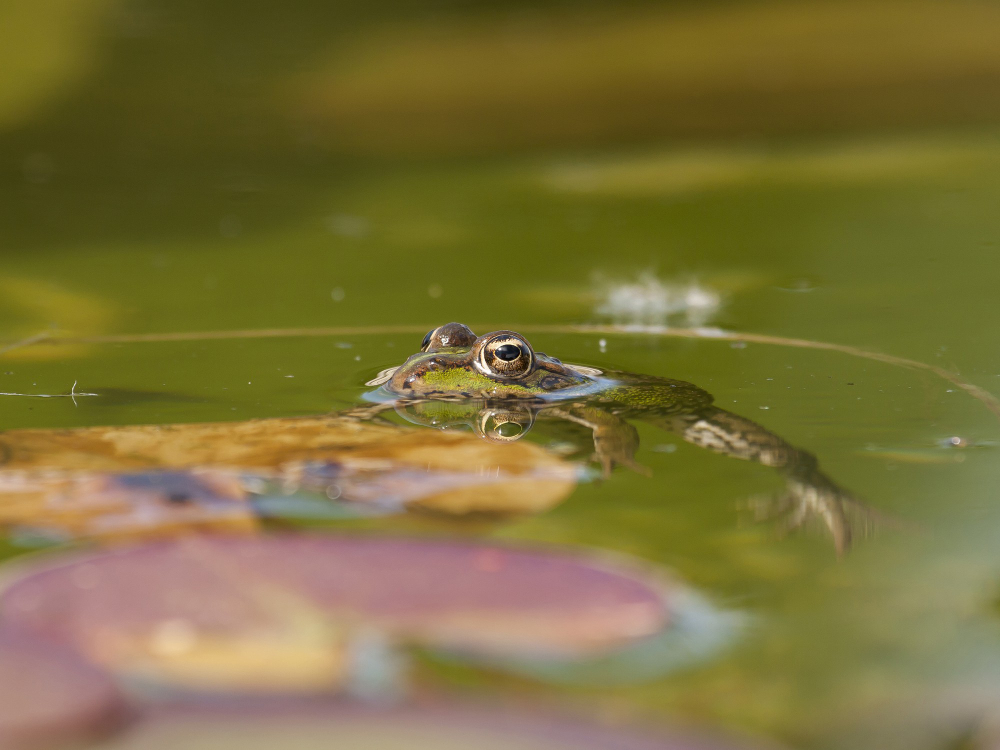
The skin is permeable, and a substantial proportion of gas exchange happens through it rather than through the lungs.
That means the animal must keep its skin moist to breathe properly, which restricts it to damp conditions and to being active mainly at night or in wet weather.
Permeable skin also means that whatever is in the water or on the ground can pass into the animal readily, which makes them unusually sensitive to conditions in their environment.
That sensitivity is why their presence and abundance are frequently used as an indicator of local conditions, and why declines in populations have attracted so much scientific attention.
The mechanism underlying those declines is an active research area with several contributing factors identified, and the picture differs substantially between regions and species.
Why They Return to Water
The breeding requirement explains a great deal of what people notice about these animals.
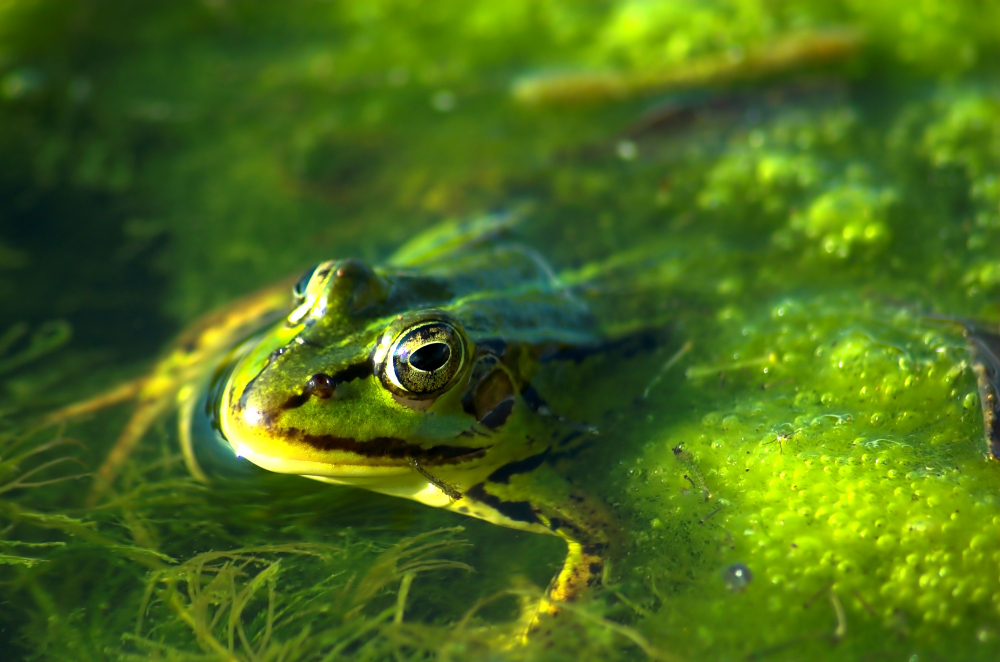
Eggs are laid without a protective shell, which means they must be kept wet or they dry out and fail — so breeding is tied to water in a way that nothing about the adult’s daily life requires.
That produces a seasonal migration. Adults that have spent the year dispersed across land converge on water to breed, frequently in large numbers and over a short period.
Many return to the same water they emerged from, which means a population is tied to particular ponds rather than to a general area, and the loss of one water body can remove breeding for a wide surrounding area.
The timing is triggered by conditions rather than by a date, with temperature and rainfall both involved, which is why the event can be early one year and late the next.
Those migrations frequently cross roads, which is why organised efforts to help animals across are a familiar sight in some places at certain times of year.
And because the adults are dispersed and only gather to breed, the breeding sites are where they are counted, which is why almost everything known about their numbers comes from surveys of water rather than of land.
Why the Life Cycle Is Worth Knowing
The general point concerns how much change a single organism can accommodate.
Most animals grow larger while staying fundamentally the same shape, with the adult a scaled-up version of the young.
This lineage does something else: it runs two different body plans in sequence, using the same individual, with a period of reconstruction between them.
That is possible because the instructions for both are present from the start, and the switch between them is triggered rather than assembled from scratch.
It is also a reminder that the familiar version of a natural process is frequently the simplified one. Legs appear and a tail disappears, which is true and is a small part of what is happening.
The rest is an animal taking itself apart in a pond, living on what it recovers, and walking out as something built for an entirely different world.
Which is worth remembering when anything in nature is summarised in a sentence. The short version is not wrong, it is simply the outline – and the detail underneath it is almost always stranger than the summary suggests.
Like our content? Follow us for more.
