There is a habit of describing sea organisms using land vocabulary, and it causes a persistent misunderstanding about seaweed.
The words used — root, stem, leaf — describe a land plant, which stands in one place, draws water and minerals from soil through roots, and transports them upward through internal plumbing to leaves that make food from light.
A seaweed does none of that. It is an alga rather than a plant in the strict sense, it has no internal transport system of that kind, and it does not extract anything from the surface it is attached to.
Everything it needs is dissolved in the water touching it, so it absorbs directly across its entire surface. The gripping base exists solely to stop it being washed away — which is the single biggest challenge it faces.
Why Holding On Is the Whole Problem
The forces involved on a shore are enormous and constant.
Waves striking a rocky coast impose loads that rise steeply with water speed, and a seaweed exposed on an open shore experiences that repeatedly, from changing directions, indefinitely.
The response is not rigidity. A stiff organism would be snapped; instead seaweeds are flexible, and they lie flat along the direction of flow when the water moves, presenting very little resistance.
Many are also slippery, which reduces the force further, and many are tough in tension while being easy to bend — a combination that lets them stretch and flex rather than break.
The anchor itself is a mass of branching structures that grip irregularities in the rock, spreading load over many points rather than concentrating it at one.
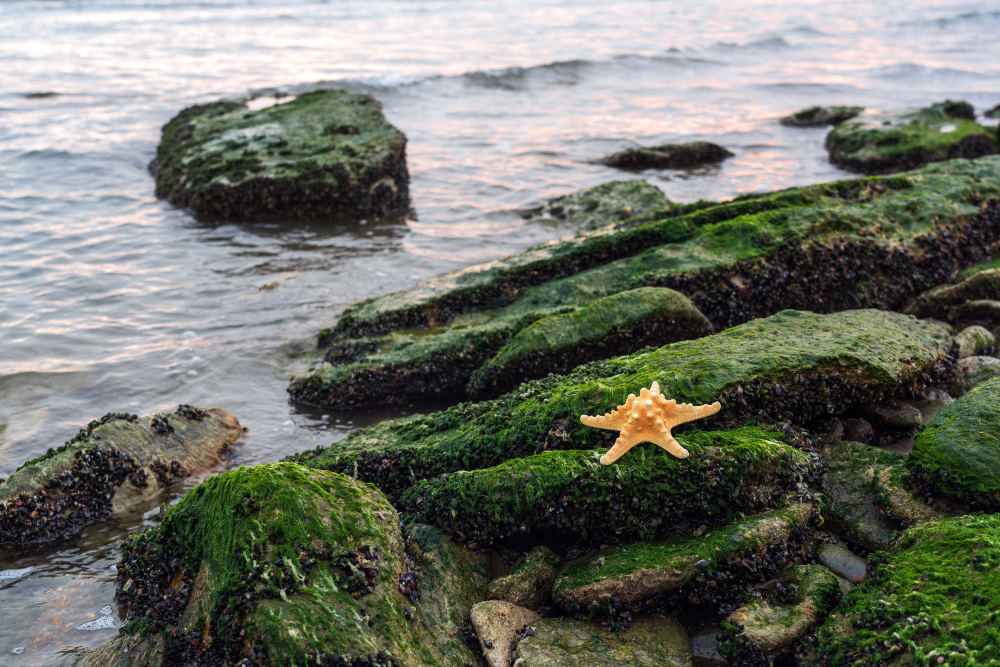
Failure, when it comes, is frequently the rock giving way rather than the anchor, which is why storm-cast seaweed on a beach is often still attached to a stone.
There is a size point worth adding. Seaweeds range from films barely visible on rock to organisms tens of metres long, which is an enormous span for a group with no internal support structure.
Only the water makes the largest ones possible, since nothing that size could hold itself up in air.
Like our content? Follow us for more.
Why They Grow in Bands
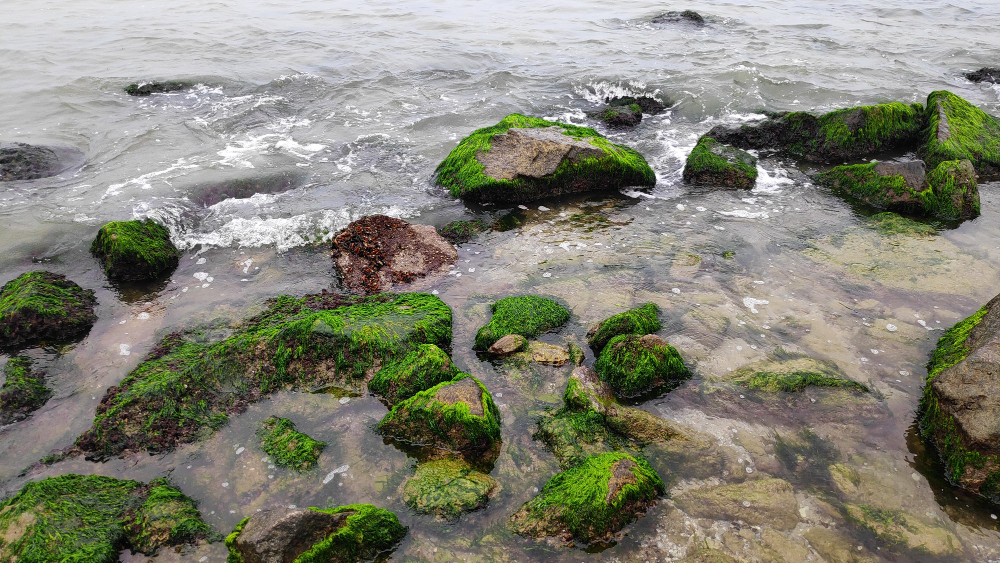
The zonation on a rocky shore is one of the clearest patterns in nature and it has two causes.
The upper limit of any species is generally set by how much exposure to air it can tolerate — drying, heat, cold and rain all act on an organism stranded between tides.
The lower limit is generally set by competition and by being eaten, since conditions lower down are easier and more organisms can live there, so the space is contested.
That produces distinct horizontal bands, each dominated by whatever tolerates that degree of exposure and can hold its place against whatever lives below.
The bands shift with exposure. On a sheltered shore they are compressed; on a wave-battered one they are stretched upward, because spray keeps higher rock damp and extends the habitable range.
So the pattern on any shore is a readable record of both the tides and the wave energy, and two shores a short distance apart can look entirely different for that reason.
There is a growth point worth adding. Many seaweeds grow from a region near the base rather than from the tip, which means the oldest tissue is at the far end and damage to the tip does not stop growth.
That arrangement suits an organism whose ends are constantly being torn by water and grazed by animals.
How They Stay Up and Get Light
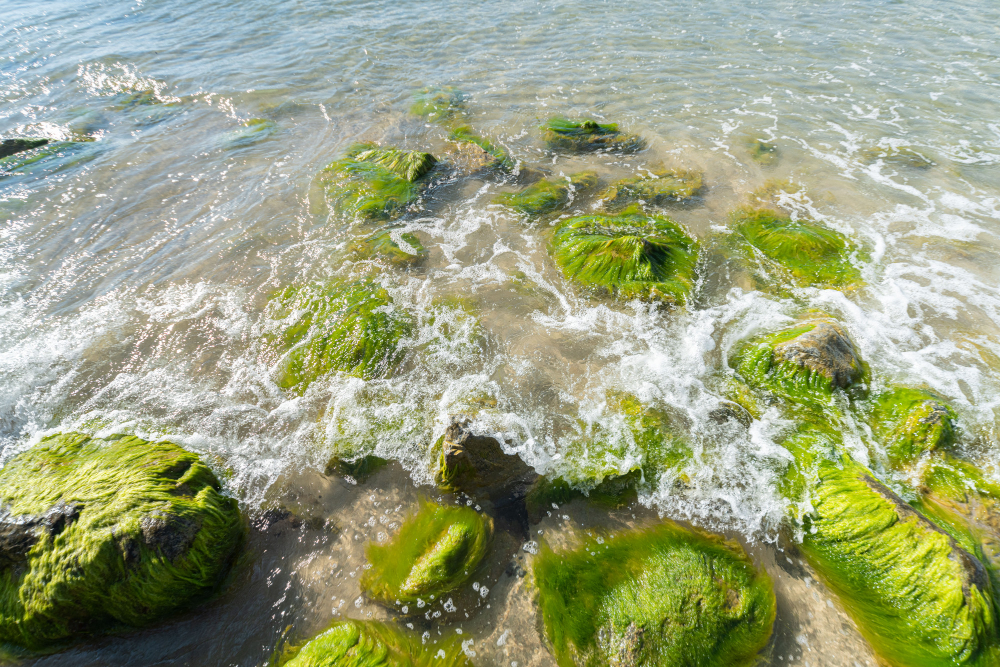
Reaching light in water requires solutions a land plant never needs.
Light falls off rapidly with depth, and different wavelengths are absorbed at different rates, so the colour of available light changes as well as its quantity.
Seaweeds contain different combinations of pigments, and the ones living deeper frequently carry additional pigments that capture the wavelengths still available there — which is part of why they are green, brown or red rather than uniformly green.
Many species carry gas-filled floats that lift the organism toward the surface when submerged, holding the photosynthetic surfaces up in the light rather than lying on the bottom.
The largest species form dense stands reaching from the seabed to the surface, and within those the competition for light is severe, with fast growth toward the top being the way to win it.
Several of the largest are among the fastest-growing organisms anywhere, which is what that competition demands.
What a Seaweed Bed Does
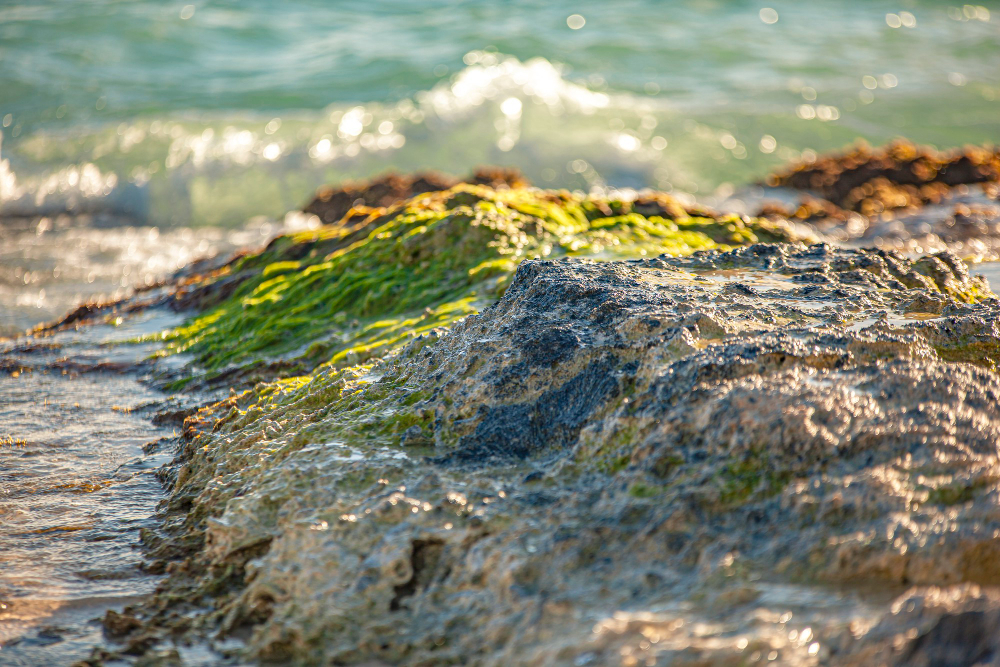
The ecological function extends well beyond the organisms themselves.
A dense stand slows water movement substantially, which shelters the seabed beneath and allows finer material and smaller organisms to persist where they otherwise could not.
It provides physical structure in three dimensions on what would be a flat surface, creating an enormous amount of surface area for other organisms to attach to and spaces for animals to shelter in.
It is eaten directly by some animals and, more importantly, breaks down into fragments that feed a far larger range of organisms, including in places well away from where it grew.
Detached seaweed washing ashore transfers that material onto beaches and into the strandline, where it feeds another set of organisms entirely and stabilises drifting sand.
And the beds act as nursery habitat for animals that spend their adult lives elsewhere, which is why their extent matters well beyond their own boundaries.
What People Have Done With It
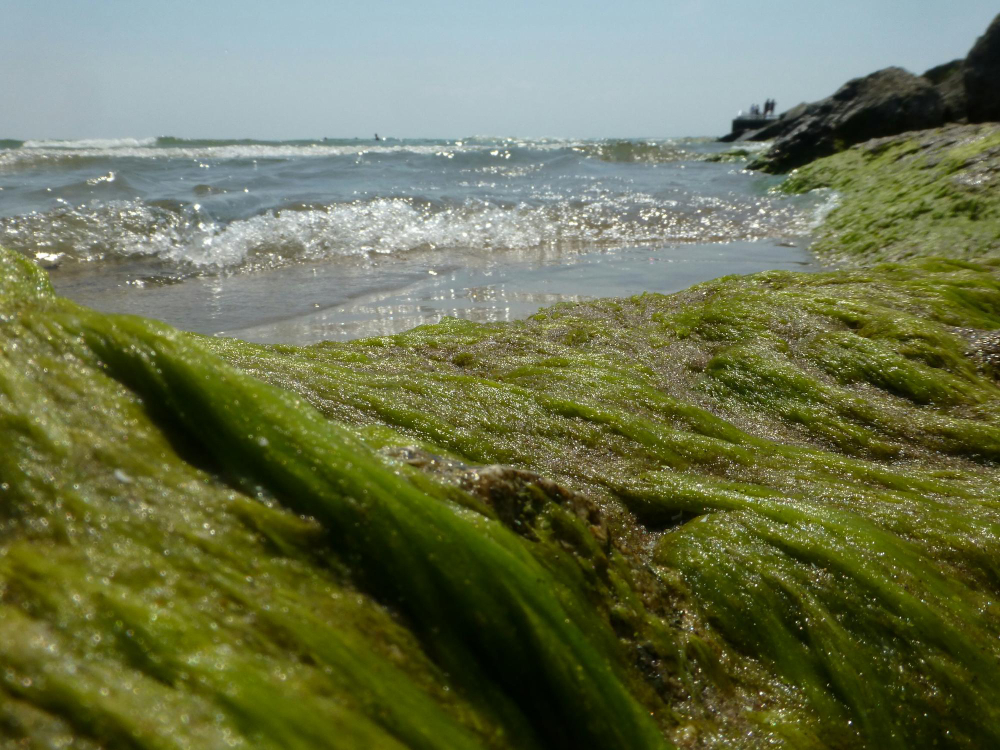
The uses are varied and mostly unglamorous.
It has been gathered as a fertiliser for a very long time, spread directly on fields near the coast, where its mineral content and its bulk both help.
It was burned to produce ash used in glass and soap manufacture, which supported a substantial coastal industry in some places for a period.
Certain species are eaten, with long traditions in several parts of the world, and others are used to produce gelling and thickening substances that appear in an enormous range of manufactured products.
It has been used as animal fodder, as packing material, and as insulation, chosen simply because it was abundant, free and required no processing.
And cultivation at scale has grown substantially in recent decades, which is a food and materials industry rather than a matter of gathering what washes up.
What Happens at Low Tide
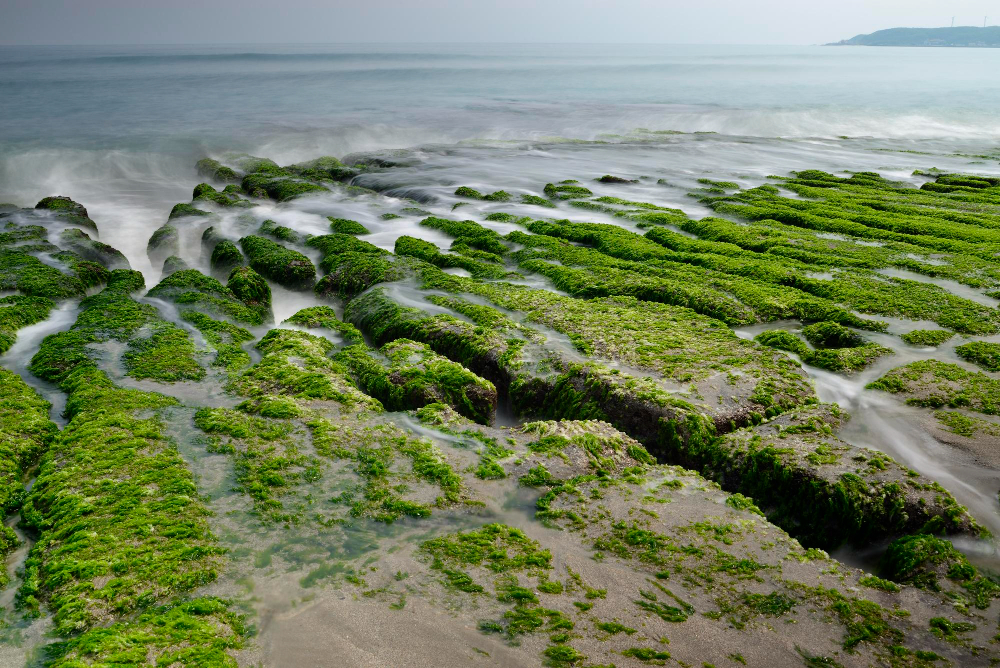
The period out of water is the defining challenge for anything on a shore, and the responses are specific.
An exposed seaweed loses water rapidly, and some species tolerate losing a very large proportion of their water content and recover completely when the tide returns.
That tolerance is unusual. Most organisms are killed by that degree of drying, and the ability to shut down and restart is what allows life high on a shore at all.
Mucilage on the surface slows water loss and keeps the organism slippery, which is why exposed seaweed feels the way it does and why it is so hazardous to walk on.
Lying flat when the water leaves reduces exposed surface area and traps moisture underneath, so a bed of seaweed protects itself and shelters the animals beneath it.
That sheltering effect is substantial. The temperature and humidity under a mat of seaweed at low tide are far steadier than on bare rock a short distance away, which is why so much shore life is found there and not elsewhere.
And the same organisms are subjected to full sunlight, rain, temperature swings and being submerged in salt water twice a day — a range of conditions that very few organisms anywhere have to tolerate.
Why the Name Is Wrong
The closing point returns to the vocabulary.
Calling these organisms weeds implies something unwanted growing where it should not, which is the opposite of the case.
They are the primary producers of rocky coasts, the physical structure of one of the more productive habitats there is, and the base of a food web that extends well inland via the strandline.
The land vocabulary misleads in the same way: describing an anchor as a root suggests feeding, describing a blade as a leaf suggests specialisation, and neither is accurate.
What is actually there is a very old lineage of organisms that solved the problem of living in moving water by abandoning the division of labour that land plants depend on — every part doing every job, held on at the bottom and flexible everywhere else.
Which is a reasonable thing to consider standing on a rock at low tide with a mass of it underfoot. None of it is rooted, none of it is a weed, and the slippery stuff making walking difficult is the reason almost everything else on that shore is there.
Which is a reasonable correction to make about a whole category of organism. The land vocabulary was applied to the sea by people who knew land, and the result is a set of names that describe the wrong thing about almost everything they were attached to.
Like our content? Follow us for more.