

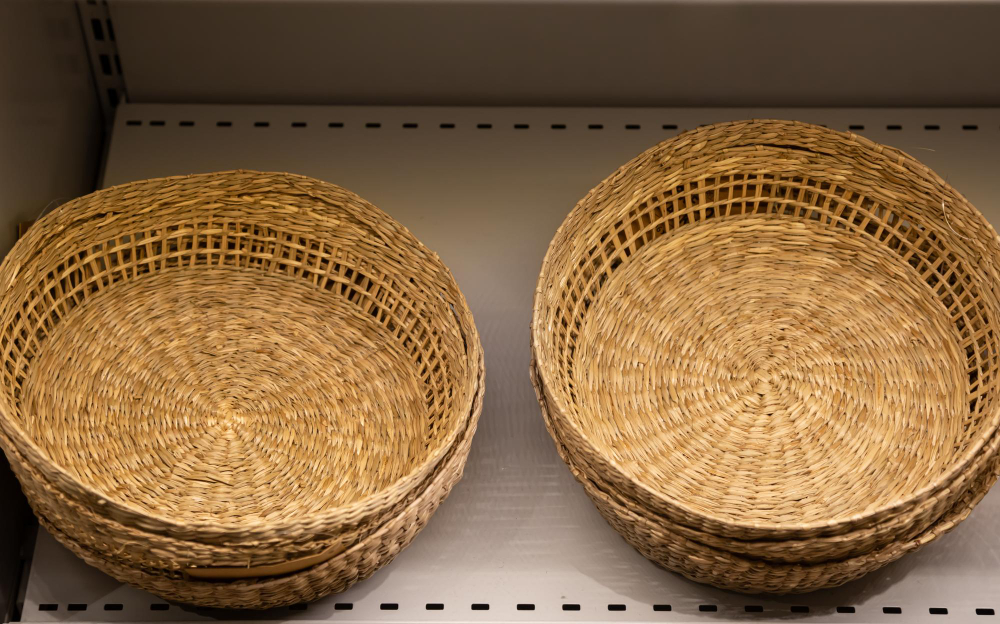
There is a category of object assembled entirely without fixings, and basketry is the oldest and most widespread example.
Almost everything else made of many parts is held together by something added — a nail, a stitch, a peg, an adhesive, a weld. Remove the fixing and the object falls apart.
A basket has none. It is made of rods that pass over and under each other, and it holds together because each rod is bent out of its natural straightness and is prevented from springing back by the rods it crosses.
That means the material is under permanent load, the structure is in a state of balanced tension, and the whole thing stays together through geometry rather than attachment.
Why the Material Has to Be Green
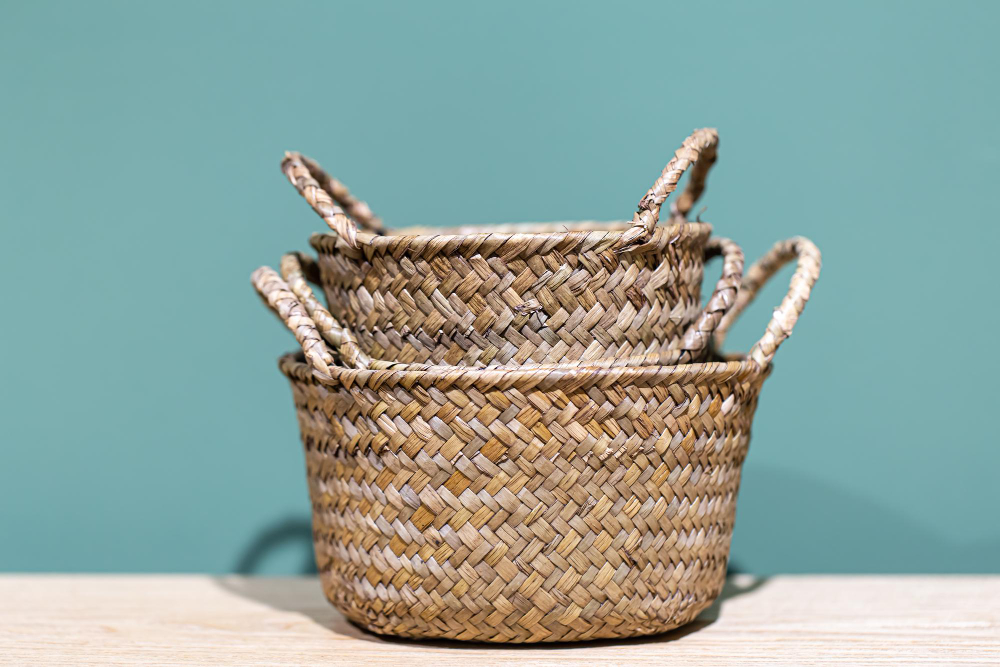
The requirement that governs everything is that the rods must bend without breaking.
Freshly cut rods contain a great deal of water, which makes the fibres flexible and allows them to be bent tightly without the outside fibres tearing apart.
Dried rods are brittle and snap, which is why stored material is soaked before use — sometimes for days — to restore enough flexibility to work it.
Once woven and allowed to dry, the rods shrink slightly and stiffen, which tightens the whole structure and locks everything in place.
That is why a new basket loosens slightly in the first days and then becomes rigid: it is drying into its final shape while under tension.
It also explains why the material is grown deliberately. Rods need to be long, straight, even in thickness and free of side shoots, which is not how anything grows naturally — it is the result of cutting the plant back hard every year so that it responds by throwing up a mass of straight new growth.
Like our content? Follow us for more.
How the Structure Is Built
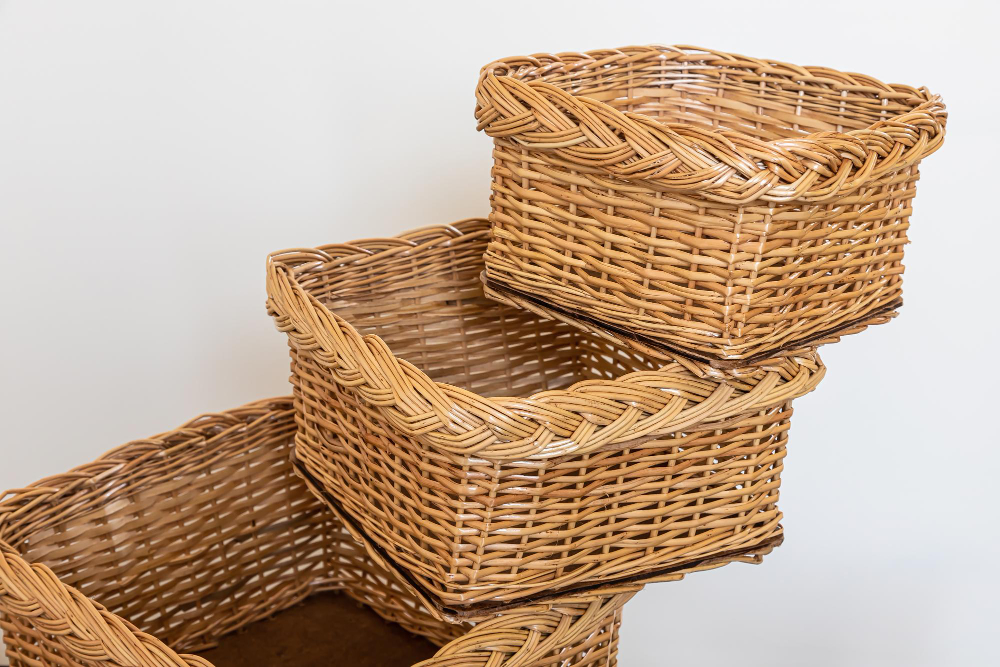
The sequence has a logic and each stage solves a different problem.
The base is made first, with rods laid across each other at right angles and the weave started through the crossing point, which locks the arrangement together.
At the edge of the base, the vertical rods are bent sharply upward — a stage that decides the whole shape of the basket and that requires the sharpest bend in the whole process.
Those uprights are then held in position while the weaving rods are worked around them in various patterns, each pattern giving a different combination of strength, density and appearance.
Weaving tightly at the bottom and loosely higher up produces a wider top; consistent tension produces straight sides; and deliberately varying it produces curves.
Finally the tops of the uprights are bent over and woven into each other to form the rim, which is what stops the entire structure unravelling and which takes the most handling in use.
There is a seasonal point worth adding. Rods are cut in the dormant season, when the plant has dropped its leaves and the wood is at its most consistent, which means the whole craft is tied to a harvest at one time of year.
Material cut at the wrong time is weaker and less predictable.
Why the Rim Is the Hard Part
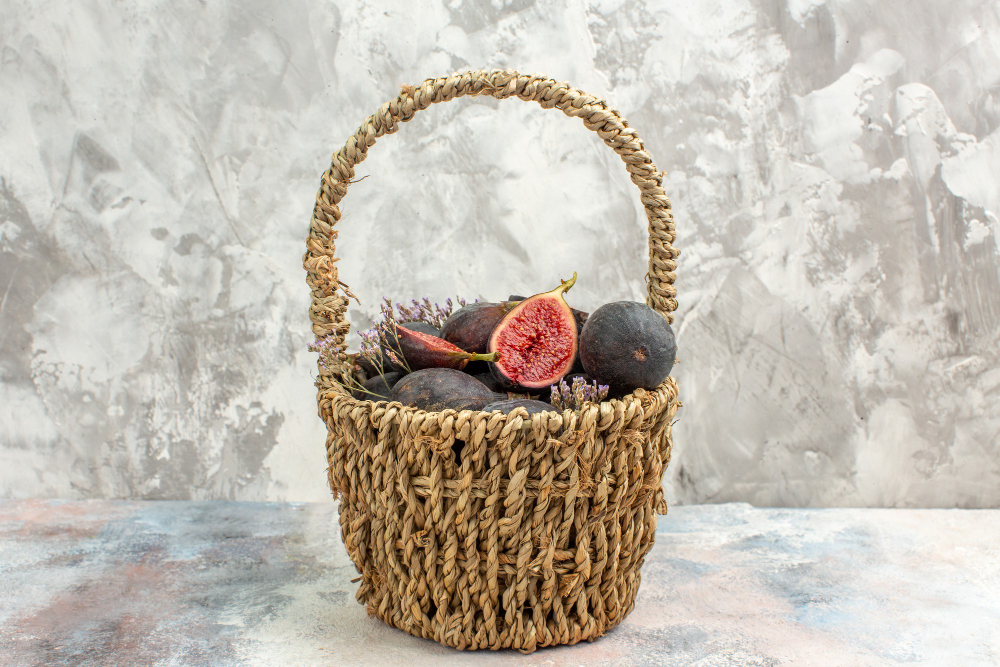
The finishing edge carries a disproportionate amount of the work.
Every upright has to be bent, threaded and tucked while the rest are held in place, and the last few have to be woven into the first ones, which have already been fixed.
That closing of the circle is the awkward part of every woven structure, and it is where the difference between a skilled maker and a beginner is most visible.
The rim also takes almost all the wear, since a basket is lifted, set down, dragged and stacked by its edge.
And it holds the whole thing together, because a failed rim releases the uprights and the structure comes apart from the top down.
That is why rims are frequently reinforced, doubled or bound, and why a basket with a damaged rim is generally beyond economical repair while one with a hole in the side is not.
There is a colour point worth adding. Rods can be used with the bark left on, stripped, or boiled before stripping, and each treatment produces a different colour – which is why patterned baskets are made without any dye at all.
Different Shapes for Different Loads
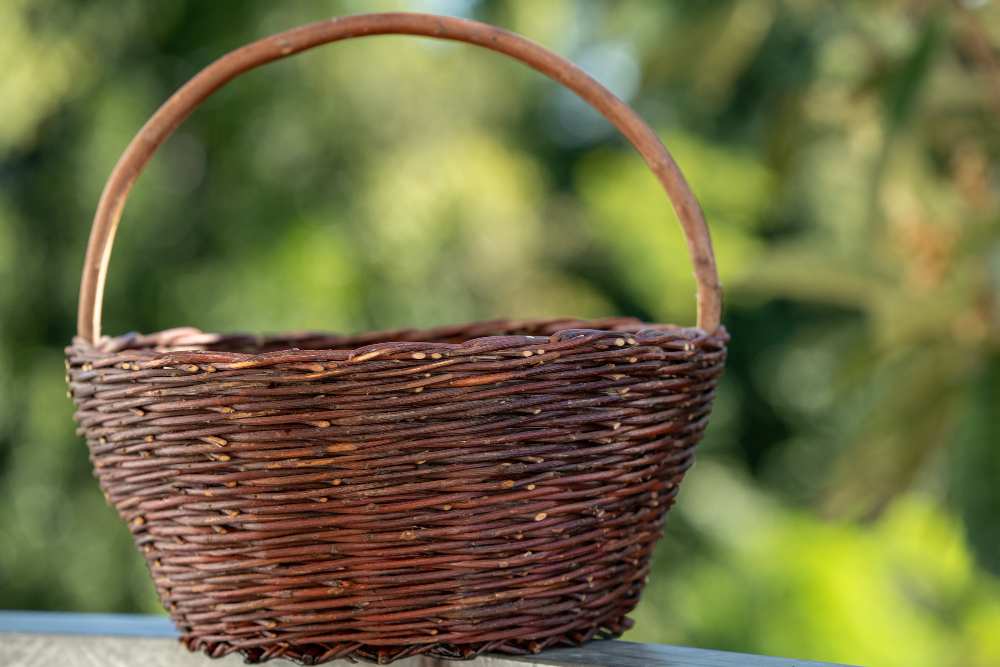
The form follows the job, and the variation is systematic.
A basket for carrying heavy dense material is deep, narrow and tightly woven, because the load is concentrated and the sides must resist bulging.
A basket for bulky light material is wide and open, with a more open weave, because it needs volume rather than strength and the weight saved matters.
A basket that must be carried on the back has a flat side, so that it sits against the body rather than tipping away from it.
One designed to be emptied quickly has a shape that allows contents to slide out, and one designed to drain has gaps and a raised base.
Handles are either woven in from the start or added as a separate bow, and where a handle joins is a point of concentrated stress that determines how long the basket lasts.
That is why regional basket forms differ so much: each one is a solution to carrying a particular thing, over particular ground, by people working in a particular way.
There is a sound point worth noting. A basket in use creaks audibly as the rods move against each other under load, which is the structure redistributing tension rather than anything failing.
Why Baskets Disappeared and Where They Did Not
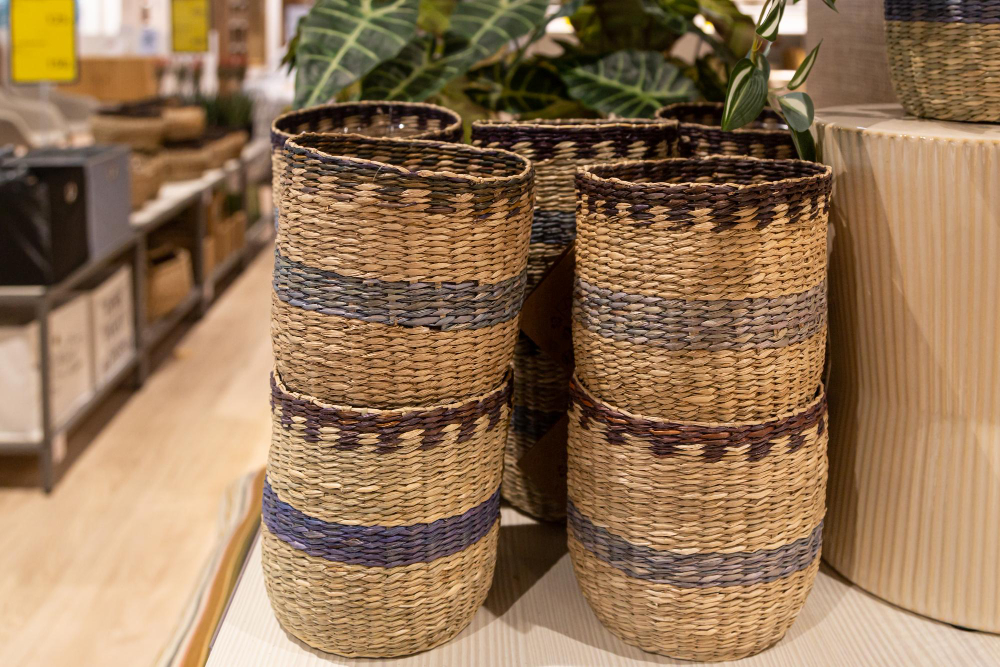
The displacement was rapid and it is not complete.
Manufactured containers — sacks, boxes, crates, moulded plastic — are cheaper, lighter, stackable, waterproof and produced to exact dimensions, which suits transport and storage systems built around standard sizes.
A basket is none of those things. It is handmade, takes hours, varies slightly, and costs accordingly.
What a basket still does better is deform without breaking, breathe, dry out after getting wet, and last for decades of rough use — and where those matter, versions of it persist.
It also has an advantage nothing else offers: it can be made from a material that grows back every year, by one person, with a knife, in a place with no supply chain.
That is why the craft survived in the places it did, and why it reappears wherever manufactured containers are hard to get.
Why Nothing Is the Same Twice
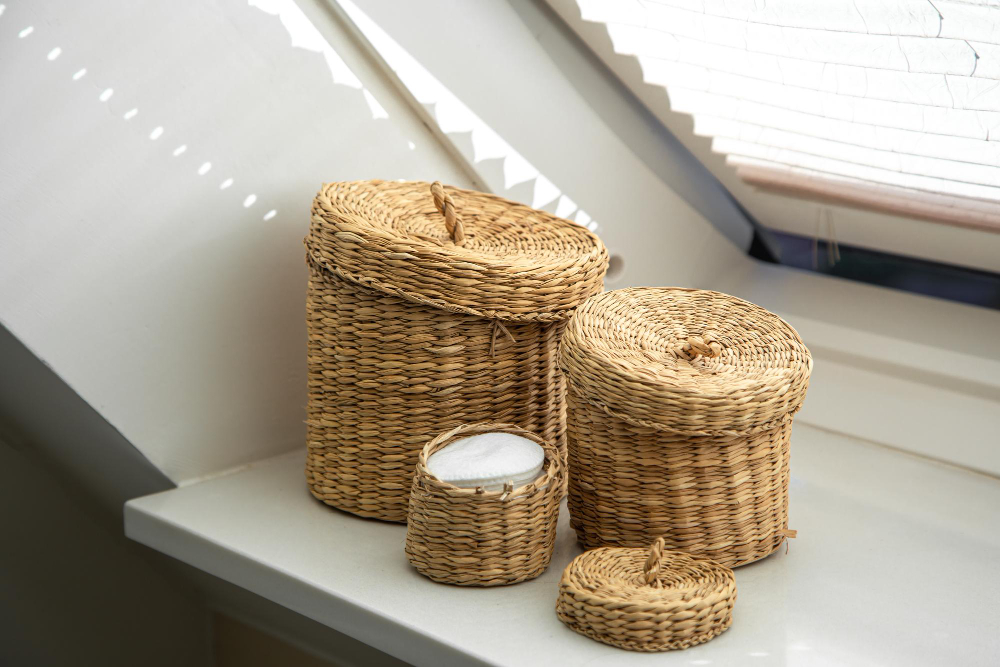
A consequence of hand-working natural material is that variation is built in.
Every rod differs in thickness, straightness and stiffness, so the maker is continuously adjusting – putting thicker rods where more strength is needed and thinner ones where the weave must be tight.
That adjustment cannot be specified in advance, because it depends on what the material does when it is bent, which is discovered during the work.
A basket is therefore a record of a particular batch of material as much as of a particular design, and two made to the same pattern will differ visibly.
Machine-made containers are identical by definition, which is exactly what suits packing, stacking and automated handling.
And it is why a handmade basket is recognisable at a glance: the small irregularities that a machine would eliminate are the evidence that somebody responded to each rod as it came.
That variation also makes repair possible in a way it is not for a moulded object. A broken rod can be replaced by weaving a new one into the same path, because there is nothing holding it but the rods around it.
What the Material Wants
A closing observation about the relationship between the craft and the plant.
The plants used are cut back hard and respond by producing exactly what the maker needs: long straight flexible rods with no side branches.
That response is the plant reacting to damage, and the craft is built entirely on provoking it deliberately and then harvesting the result annually.
A cut stump can continue producing for a very long time, sometimes for generations, which means the material supply is effectively permanent so long as the cutting continues.
Stop cutting and the plant grows into something entirely different and useless for the purpose, which is why abandoned growing grounds are recognisable and why restarting them takes years.
So the whole thing — the annual crop, the flexible rods, the tension-locked structure, the object with no fixings in it — rests on the fact that certain plants respond to being cut by growing back straighter than they otherwise would.
Which is an unusually direct relationship between a craft and a plant. Most materials are extracted and processed; this one is provoked, harvested and woven, and the whole thing depends on a response the plant makes for its own reasons entirely.
Like our content? Follow us for more.

