There is a useful question to ask about any traditional material: what problem does the processing solve, and what happens if you skip it?
For leather the answer is unusually stark. Skip the processing and you have a material that is either rotting or rigid, with no intermediate state available, which makes raw hide close to useless for anything that needs to last and bend.
The processing that fixes that is chemically interesting, historically enormous as an industry, and almost entirely invisible in the finished object — which is a leather item that has been made flexible and rot-proof by a set of operations that took months and stank.
What Is Actually Wrong With Raw Hide
The problem is structural and understanding it explains everything that follows.
Skin is largely a network of protein fibres, arranged in an interwoven three-dimensional structure, held apart and lubricated by water.
Wet, that structure is flexible and strong — which is what skin is for — and it is also food. Bacteria and enzymes break the protein down rapidly, which is decomposition.
Dried, the fibres lose the water separating them, come into contact and adhere to one another, and the whole network locks solid. The result is hard, brittle and cracks when bent, and rewetting does not undo it.
So the material is useful only in a condition it cannot maintain, and preserving it requires stopping the decomposition without allowing the fibres to stick together.
That is the whole of what tanning does, and every method is an approach to those two requirements simultaneously.
Like our content? Follow us for more.
The Preparation Nobody Mentions
A substantial part of the process happens before any tanning and is generally omitted from accounts.
Hides arrive with hair, flesh, fat and dirt, all of which must be removed, and each requires a different operation.
Soaking rehydrates a hide that has been dried for transport and begins loosening what is attached to it.
Hair removal was achieved by treatment that attacks the hair roots, traditionally using alkaline substances and in some traditions by allowing a controlled degree of decomposition — which is one of several stages responsible for the reputation of the premises.
Fleshing removes the tissue on the inner surface mechanically, by scraping over a curved beam, which is skilled physical work.
And the hide is then treated to remove the alkaline residues and to open the fibre structure so that the tanning agent can penetrate, since a tanning agent that cannot reach the interior produces a hide tanned only on the surface.
That preparation sequence is the majority of the labour and essentially all of the unpleasantness.
What Tanning Chemically Does
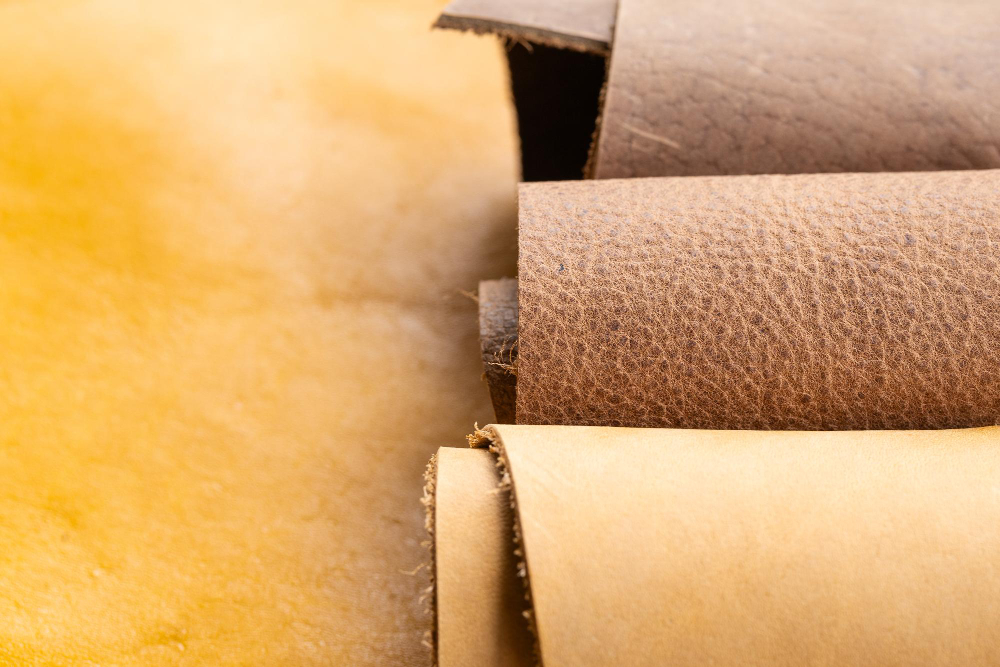
The mechanism is worth stating because it explains the durability of the result.
Tanning agents bond to the protein fibres and link them to one another in a way that changes the structure permanently.
Those bonds do two things at once. They prevent the fibres from sticking together on drying, which is what preserves flexibility, and they make the protein unrecognisable to the enzymes that would otherwise break it down, which is what prevents rot.
That is why the effect is permanent and why tanned leather is a truly different material from the hide it was made from, rather than a preserved version of it.
It also explains why tanned leather can be wetted and dried repeatedly without reverting, and why it eventually fails through wear and chemical degradation over very long periods rather than through decomposition.
The Vegetable Method and Its Timescale
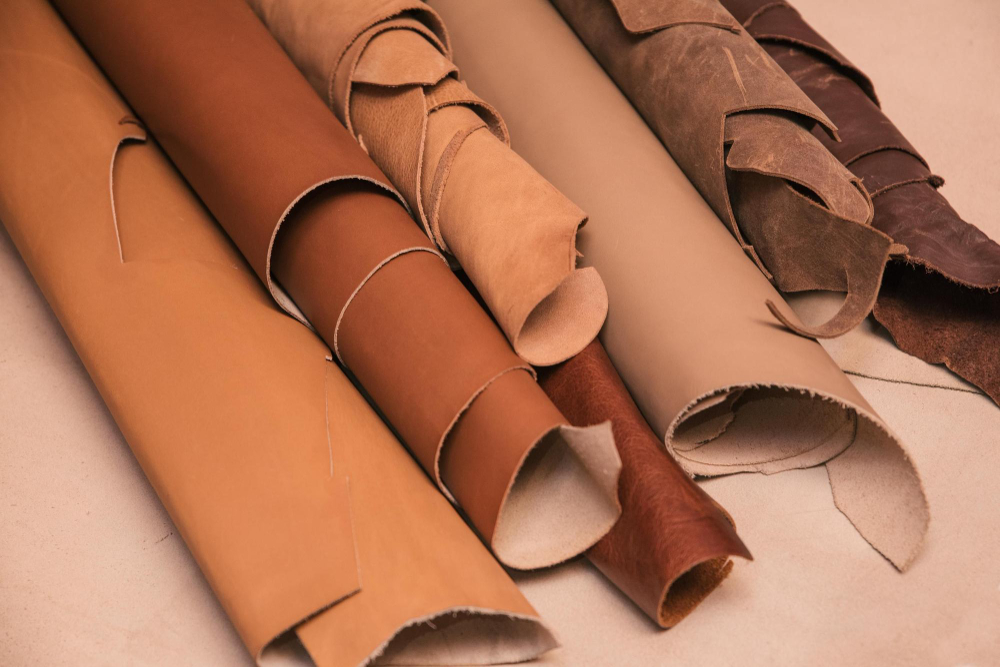
The traditional approach used plant material and took a remarkably long time.
Certain barks, woods, leaves and fruits contain compounds that bind to protein in the required way, and those were extracted into water to produce a liquor.
Hides were moved through a sequence of pits containing progressively stronger liquor, because starting with a strong solution tans the surface and seals it, preventing penetration to the interior.
That sequence took months, in some cases more than a year, with hides moved, repositioned and the liquor replenished throughout.
The material requirement was enormous. Producing leather at scale consumed large quantities of bark, which had to be harvested, transported and ground — and that demand shaped woodland management, since bark for tanning was a crop with its own harvesting season and its own trade.
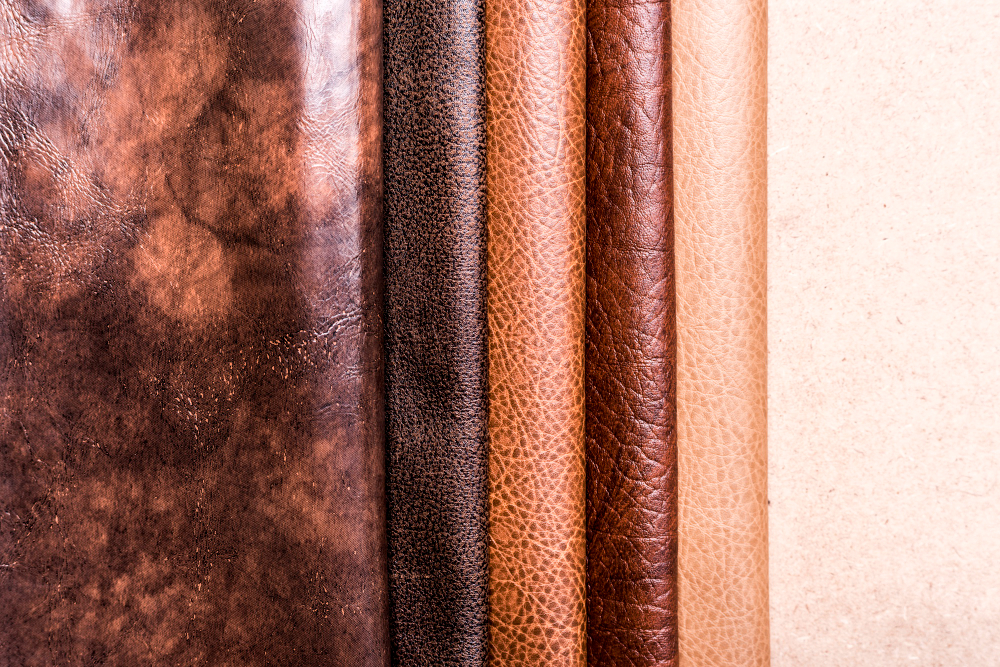
The result is a firm leather that holds a shape, takes tooling, and is still preferred where those properties matter.
There is a water-content point worth adding. A tanned hide must be dried carefully, because drying too fast causes the outer layers to set before the interior has released its moisture, producing a hard shell around a softer core.
Controlled drying is therefore a stage in its own right rather than something that happens afterwards.
The Faster Method
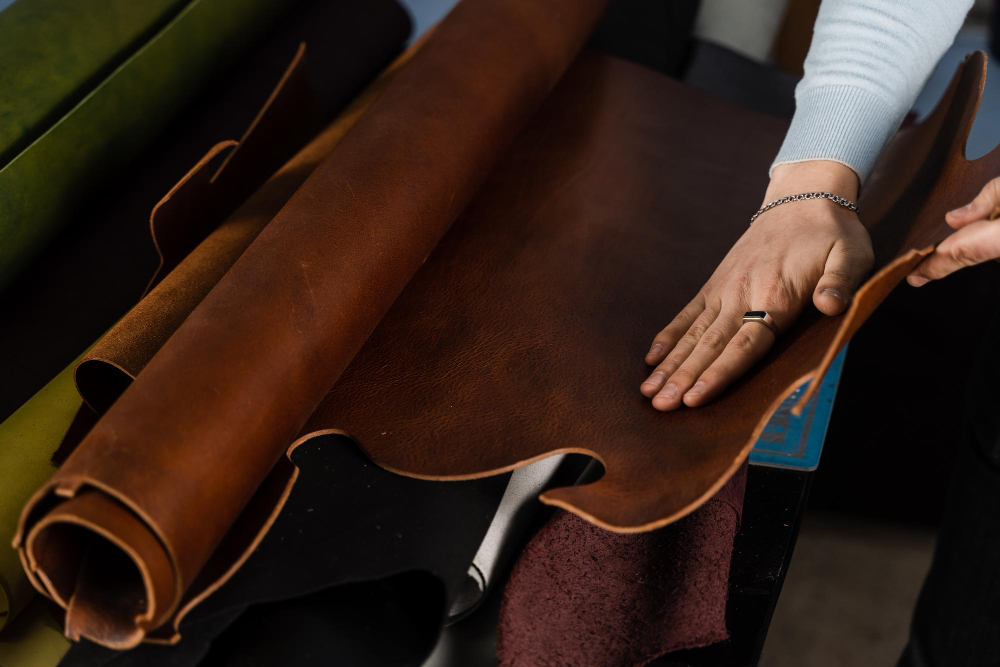
The alternative that displaced it for most purposes works on a different chemical principle and takes a day rather than a year.
Mineral tanning uses metal salts that bond to the protein far more rapidly, producing a tanned hide in a fraction of the time.
The result is different rather than merely faster. It is softer, more flexible, more resistant to heat and water, and holds dye differently — which makes it suited to entirely different products.
That speed transformed the industry economically, since capital tied up in hides for a year is a substantial cost that largely disappears when the process takes a day.
It also changed where tanning happened and at what scale, because a process measured in hours can be industrialised in ways a process measured in seasons cannot.
Both methods remain in use, for different products, which is the usual outcome when two processes produce really different materials rather than one being better.
There is a preparation detail worth adding. Hides are frequently salted immediately after removal, because they must survive transport to a tannery that may be a considerable distance away and would otherwise decompose en route.
That salting is a holding measure rather than a preservation method, and it has to be reversed by soaking before anything else can begin.
What Happens After Tanning
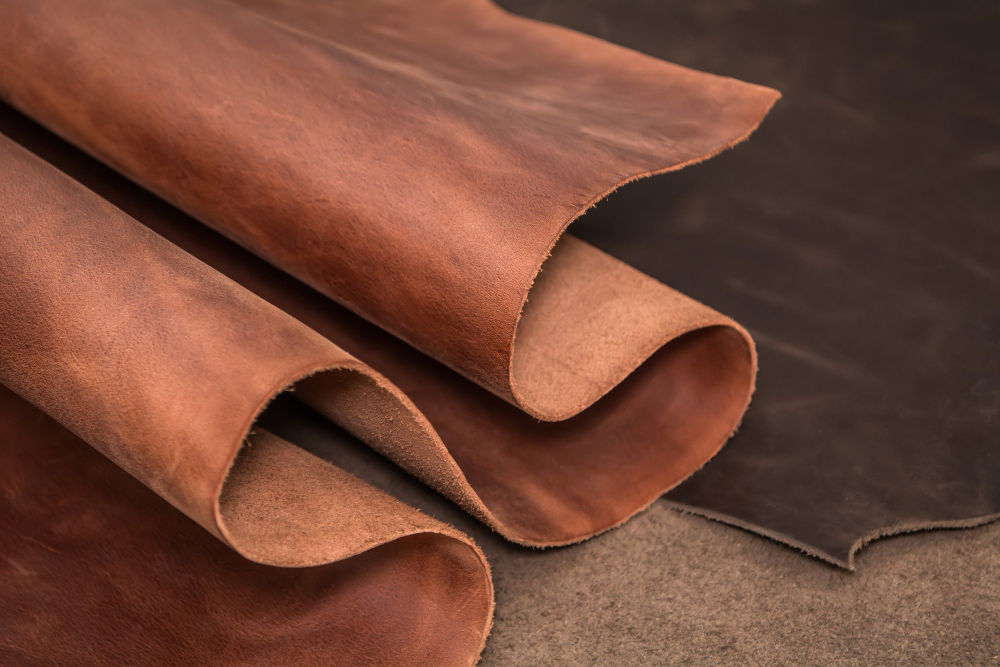
The processing does not end when the hide is tanned, and the finishing stages determine what the material is actually like.
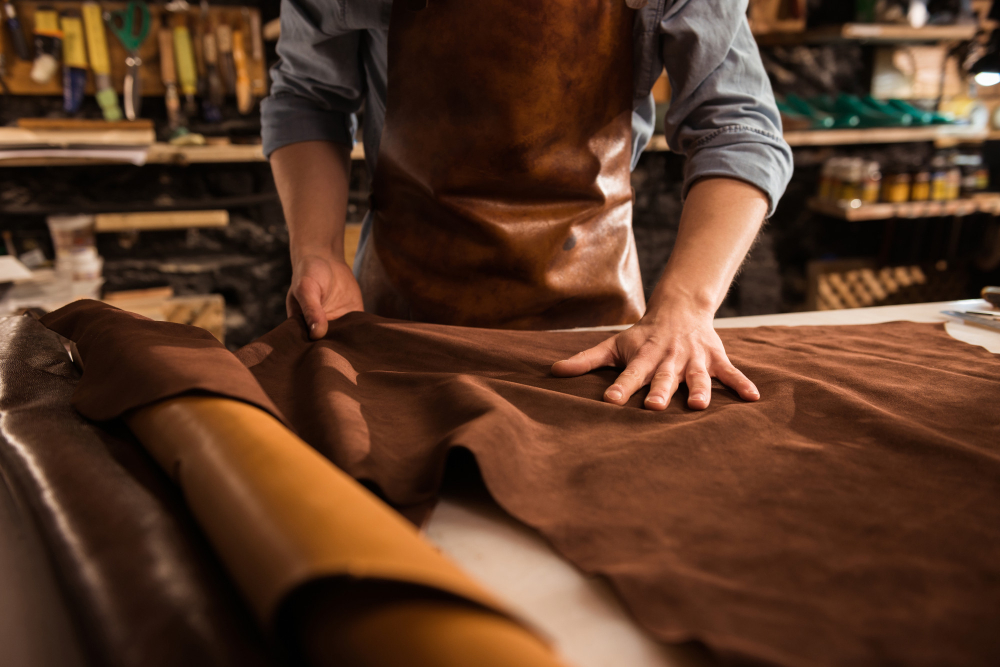
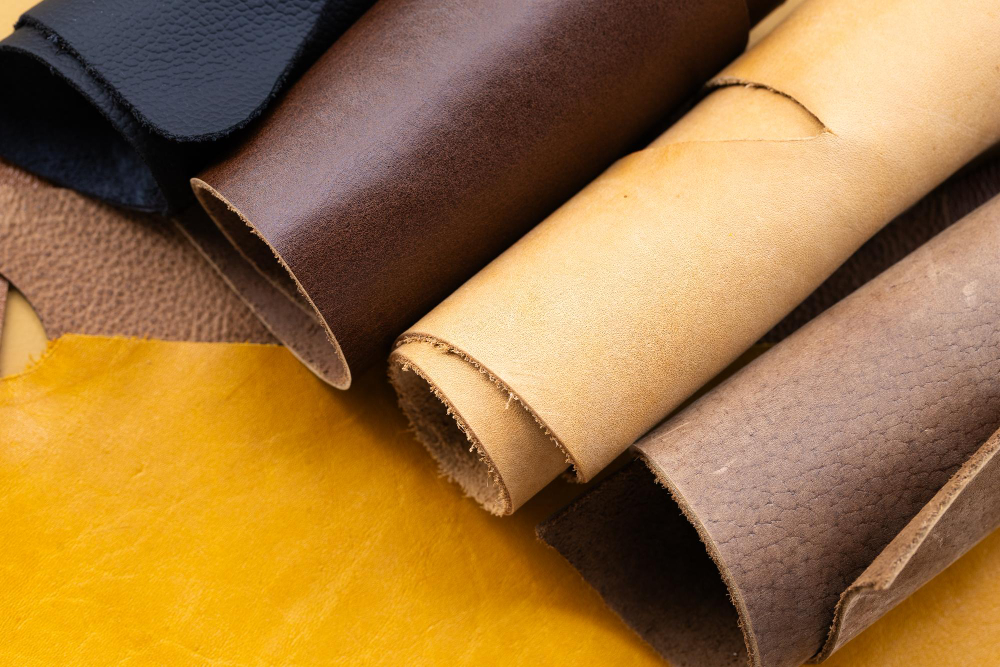
A tanned hide is still uneven in thickness, so it is split and shaved to a consistent depth — which produces two materials from one hide, since the layer beneath the surface has different properties from the outer layer and is used for different things.
The outer surface is the one with the original grain pattern, is the strongest and densest part, and is what is meant when leather is described as full grain.
Colouring is done by immersion rather than surface application in most cases, which means the colour penetrates and wear does not reveal a different colour beneath.
Fats and oils are worked in, which is what determines suppleness — a tanned hide without that treatment is stiff, and the quantity and type introduced set how soft, how water-resistant and how durable the result will be.
Mechanical treatments follow: stretching, softening by flexing, pressing, buffing, and in some cases embossing a pattern onto the surface.
And finishing coatings may be applied, which protect the surface and change the appearance, and which are also what allows a lower-grade hide with surface defects to be presented as an even material.
That last stage is why two pieces of leather can look similar and behave entirely differently, and why the description of how a leather was finished tells you more about it than what animal it came from.
Why Tanneries Were Always Over There
The siting is the part that appears in every town history and is worth explaining properly.
The process requires enormous quantities of water, both for the operations and for washing between them, which means a tannery must be on a watercourse.
It produces waste that is organic, alkaline or acidic depending on the stage, and loaded with removed material — which went into that watercourse, meaning a tannery had to be downstream of anything that mattered.
The preparation stages produce powerful and actually unpleasant smells, which meant downwind as well as downstream.
And the premises required space for pits, for storage of bark or chemicals, and for hides at various stages, which is a substantial footprint.
The combination placed tanneries at the edge of settlements, on the water, on the downwind side — which is why so many towns have a district named for the trade, invariably on the river, invariably on the side nobody built the good houses on.
Which is a reasonable record of what the process cost. An industry that produced a material everybody used was placed where nobody would choose to be, and the towns that grew around it kept the name and lost the reason.
Those districts are frequently now central, because the town grew around them, and the name survives attached to an area that has not smelled of anything in a century.
Like our content? Follow us for more.