Every city keeps a story that outsiders refuse to believe until they look it up. Boston’s is the one about the molasses.
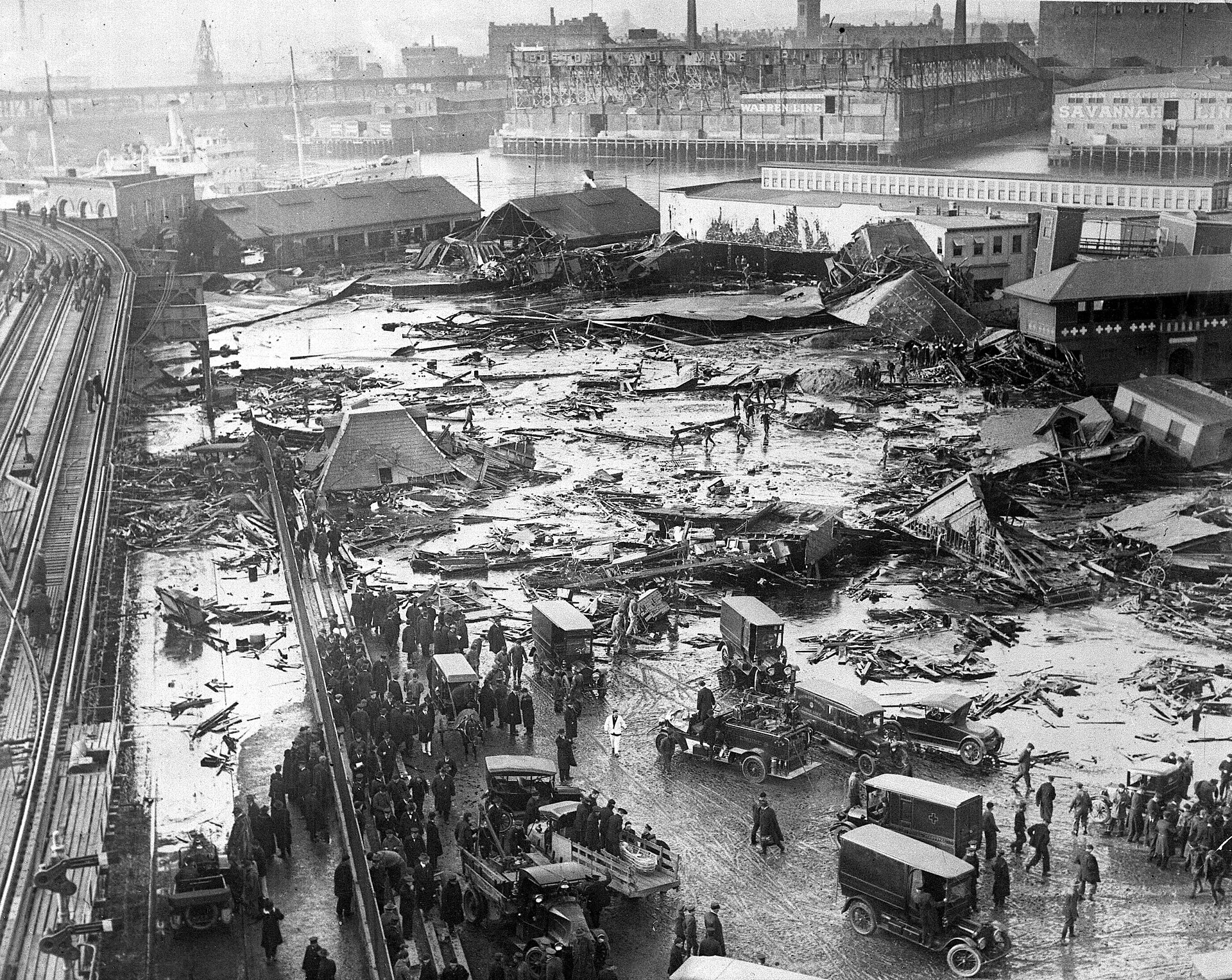
It goes like this: on an unseasonably warm January lunchtime in 1919, the residents of the crowded North End heard a sound like a machine gun — rivets shearing from steel — followed by a low rumble, and then a two-story-tall brown wave came around the corner of Commercial Street. It moved faster than a person could run. It flattened freight sheds, snapped the girders of the elevated railway, lifted a firehouse off its footings, and swept horses, wagons, and pedestrians through the streets of one of America’s densest neighborhoods. When it finally stopped, 21 people were dead, 150 were injured, and a working waterfront looked, in the words of the newspapers, as if a tidal wave had struck it. First reports literally could not name the substance; wire stories groped for comparisons before settling on the impossible truth.
Every word of that is documented. And the story behind the wave — why a tank of syrup stood five stories tall over a tenement district, why it failed, and what the disaster did to American law — is even better than the legend.
Why Boston Had a 2.3-Million-Gallon Tank of Molasses
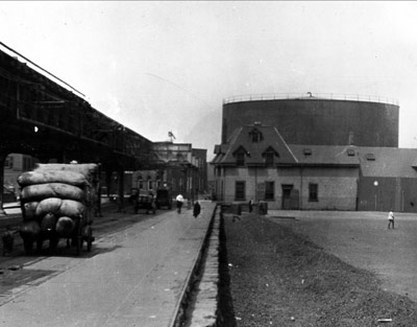
The first surprise is that the molasses wasn’t for gingerbread. In 1919, molasses was industrial feedstock: fermented and distilled, it produced ethanol used in munitions manufacturing — a commodity of intense wartime value, and Boston’s harbor made it a natural transfer point between the Caribbean trade and inland distilleries. The tank on Commercial Street belonged to the Purity Distilling Company, a subsidiary of United States Industrial Alcohol, and it existed to receive shiploads of molasses from the Caribbean, holding them for transfer to the company’s distillery. Fifty feet tall, ninety feet across, capacity 2.3 million gallons — enough, someone later calculated, to fill more than three Olympic swimming pools with syrup heavier than seawater: a five-story steel silo, wedged between the harbor, the elevated railway, and one of the most crowded immigrant neighborhoods in the country — home to the Italian-American families whose descendants still populate the North End’s famous streets today.
The second surprise is how predictable the failure was. The tank had been built in a wartime hurry in 1915, tested with only a few inches of water before being filled with millions of gallons, and it had leaked from the beginning — visibly enough that neighborhood children collected dripping molasses in cans, and audibly enough that it groaned when full. The company’s response to complaints about the leaks has entered the annals of corporate infamy: the tank was repainted from blue to brown, the better to hide them.
Like our content? Follow us for more.
Ninety Seconds That Rewrote a Neighborhood
January 15, 1919 supplied the final ingredients. A fresh shipment had topped the tank nearly to capacity, and the weather had swung from bitter cold to an odd mildness — conditions later analysis would flag as raising the internal pressure of the fermenting load. At about 12:30 p.m., the steel gave way all at once.
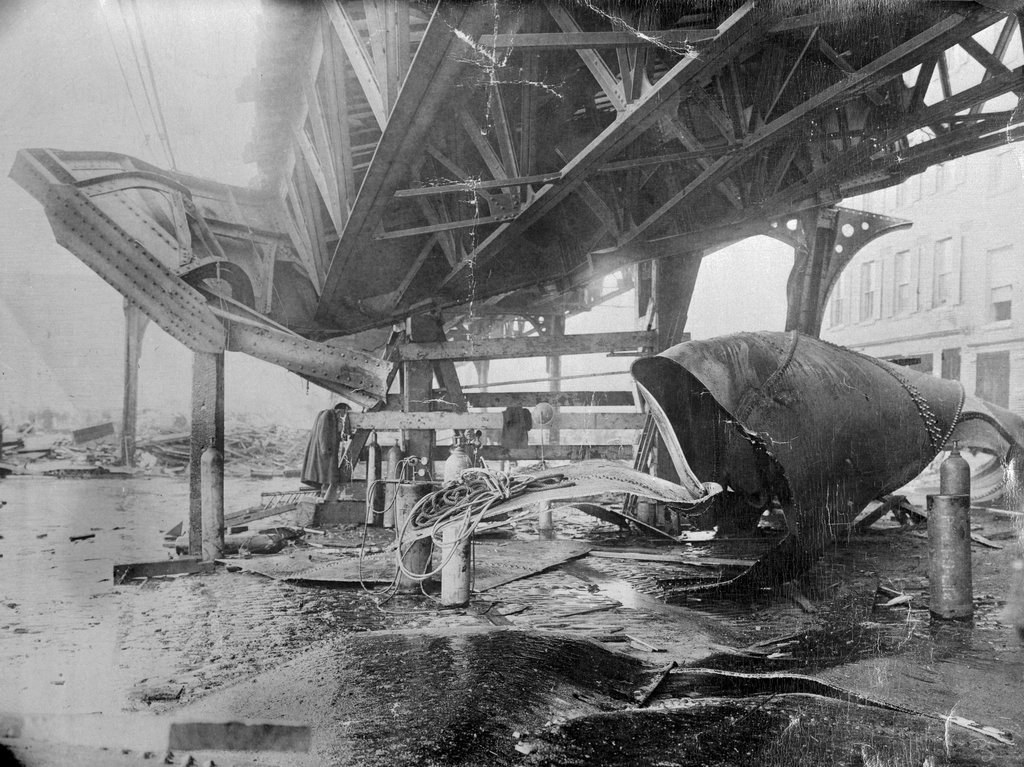
What physics did next is why engineers still study the event. Molasses is not water; it’s a dense, viscous fluid, and 26 million pounds of it released at once behaved like a slow explosion followed by a fast trap. The initial wave — witnesses and analysts put it between 15 and 25 feet high, moving around 35 miles per hour — struck with the force of moving concrete, doing its worst damage in the first minute: the elevated railway’s girders buckled moments after a streetcar had passed, buildings nearest the tank were sheared away, and a section of steel from the tank itself was thrown across the street with force enough to knock out the El’s supports.
The Rescue in the Syrup
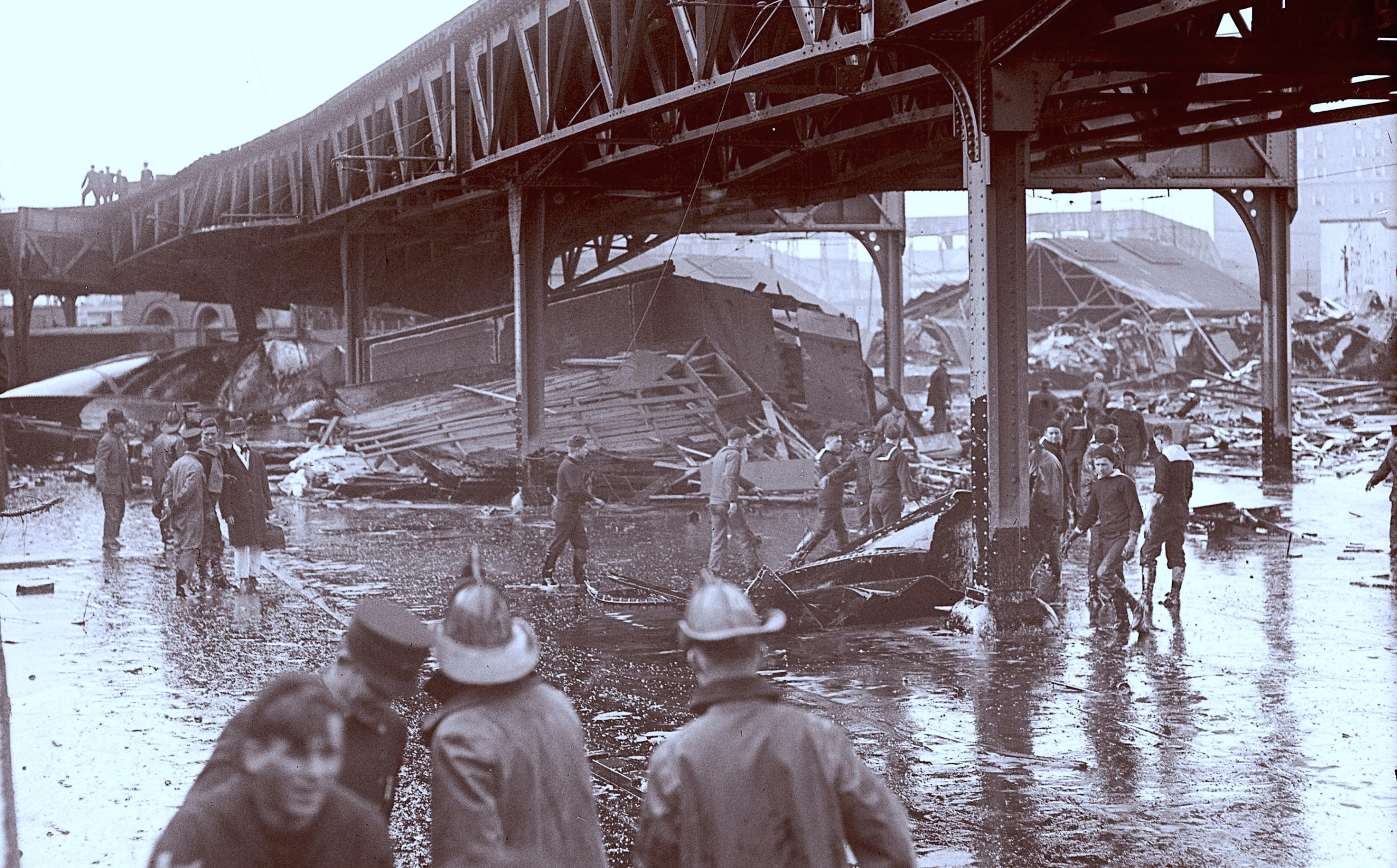
Then the wave stopped being fast and became something worse: deep, cold, and adhesive. As the molasses spread and chilled in the January air, it thickened, and rescue turned into a nightmare specific to this disaster alone — every step slowed, every grip fouled, victims and rescuers alike fighting a medium that resisted all of it. Sailors from a training ship docked nearby were among the first in, wading waist-deep; police, Red Cross crews, and neighbors worked into the night. Twenty-one people died, from teamsters and city workers to children who had been gathering firewood near the tank, and the search for the last victims took days; the toll would have run higher still had the wave struck an hour later, when the El would have been crowded and the lunch whistles would have filled the streets. The neighborhood itself was glazed brown for weeks; cleanup crews pumped saltwater from fireboats to cut the syrup — fresh water only pushed it around — and Boston Harbor ran brown into the spring. Everything the rescuers touched traveled: molasses tracked through streetcars, onto pay phones, into homes across the city, until greater Boston was, for a season, very literally stuck with the disaster.
The Lawsuit That Changed What Companies Owe the Public
What lifts the Molasses Flood from strange tragedy to historical landmark is what happened in the courtroom. The victims’ families and property owners brought one of the largest class-action-style proceedings the country had yet seen against U.S. Industrial Alcohol — and the company’s defense was a theory fitted to its era’s anxieties: anarchists, it claimed, had bombed the tank. Italian anarchist cells were active and feared in 1919 Boston, the neighborhood was Italian, and the company pressed the sabotage theory through years of hearings.
The court-appointed auditor heard roughly a thousand witnesses and buried the bomb theory under the tank’s own record: the hurried construction, the skipped testing, the walls later shown to be too thin and of insufficiently robust steel, the years of leaks, the paint. In 1925 the company was found responsible and paid settlements — modest sums by modern standards, enormous as precedent. The Molasses Flood became a foundational case in the movement that produced modern building codes and engineering-certification requirements: in its aftermath, Boston and then jurisdictions across the country began requiring that major structures be signed off by licensed engineers, with calculations on file, before construction. Every stamped blueprint in America carries a little of that 1919 syrup on it.
For decades afterward, the flood survived mostly as neighborhood memory and a line in trivia books — an event so odd that history filed it under curiosities rather than catastrophes. That changed as researchers took it seriously: a widely read modern account reconstructed the disaster hour by hour from the court records, engineering analyses revisited the tank with contemporary tools (confirming walls roughly half as thick as sound practice demanded, of steel too brittle for the job), and Boston began marking the anniversary each January with readings of the victims’ names near the site, a small ceremony that has grown steadily as the story’s audience has. The dead — laborers, teamsters, a firefighter, city workers, two ten-year-olds — have shifted, a century on, from footnote to properly mourned neighbors, which is the correction the strange story always owed its casualties.
What’s There Now — and the Legend of Warm Days
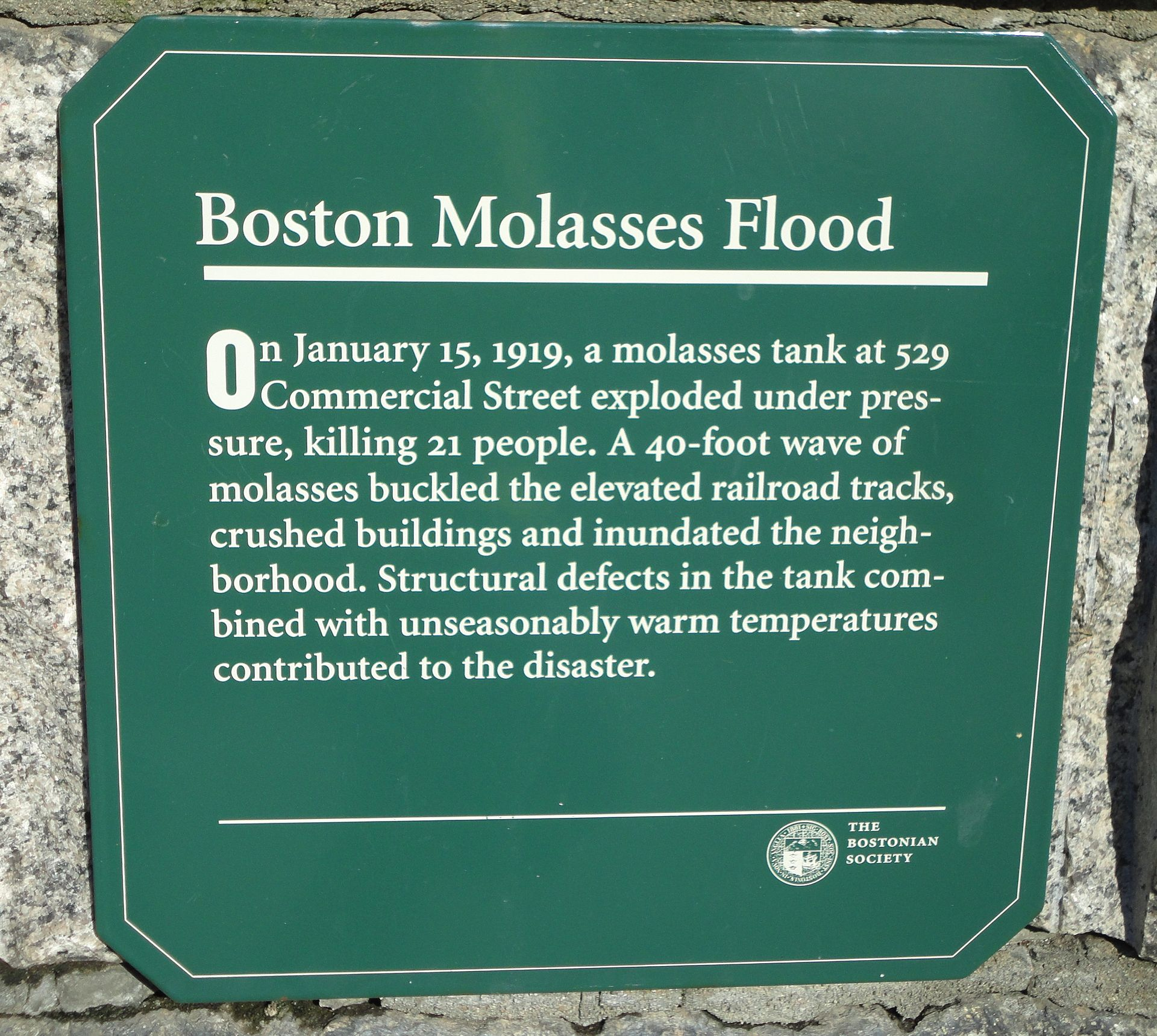
Visit the site today and you’ll need to know the story to find it. The tank stood at what is now Langone Park, along the North End’s Commercial Street waterfront — bocce courts, ballfields, and harbor views on the exact footprint of the disaster — marked by a modest plaque at the park’s edge that understates events with true New England restraint. The stop folds into any North End walk with no detour at all: the Freedom Trail runs a block inland, the Old North Church of Paul Revere fame is minutes away, and the neighborhood’s cannoli-and-espresso main streets are the same ones the wave crossed, which makes the pairing of pastry and plaque a peculiarly Boston afternoon.
And then there’s the legend locals hand every visitor at the plaque: that on hot summer days, the North End still smells faintly of molasses. Chemists are skeptical, a century of harbor and asphalt having intervened; North Enders are serene on the point and decline to argue. It’s the right ending for the story — a disaster so improbable that its ghost is a scent, in a neighborhood that rebuilt on top of it and kept the recipe of its own history: one part tragedy, one part engineering lesson, and one part tale that sounds invented and never was — told best, as Boston tells it, standing at the water where the tank stood, with a cannoli in hand and the harbor running clean and blue.
Like our content? Follow us for more.