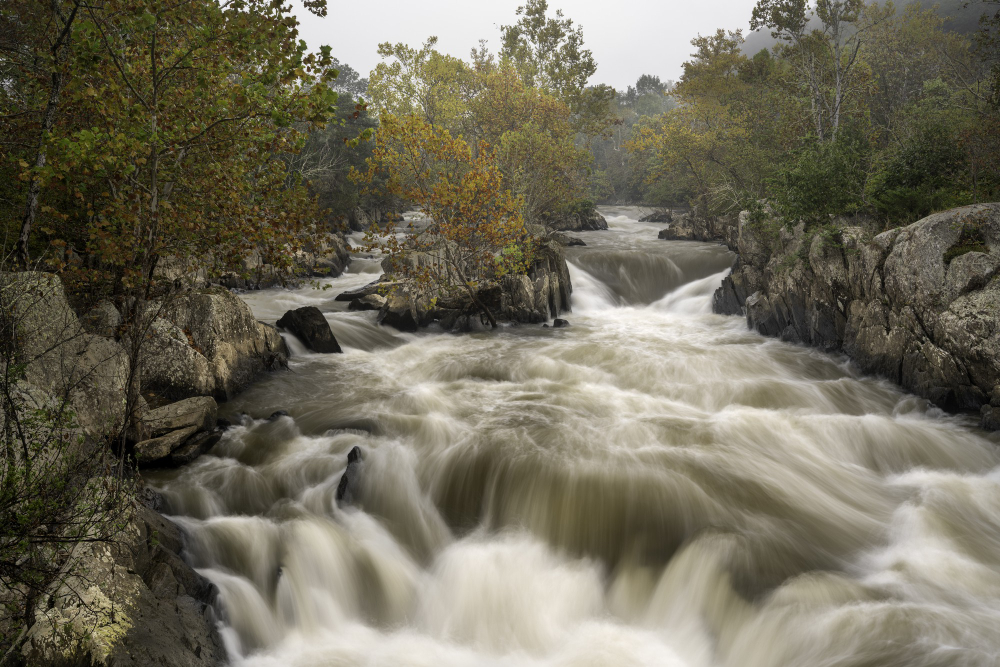
There is a structure that appears on rivers everywhere, that most people cannot name correctly, and that does something quite different from what it appears to do.
A weir looks like a small dam. Water is higher on one side and lower on the other, there is a wall between them, and the obvious inference is that it is holding water back.
It is not. A weir passes the entire flow of the river continuously — every drop that arrives goes over it. What it changes is the level upstream and the way the water arrives downstream, and it does that without storing anything.
That difference is the whole subject, and it explains why weirs exist, what they were for, and why they are truly hazardous in a way that is not visible.
What Raising the Level Achieves
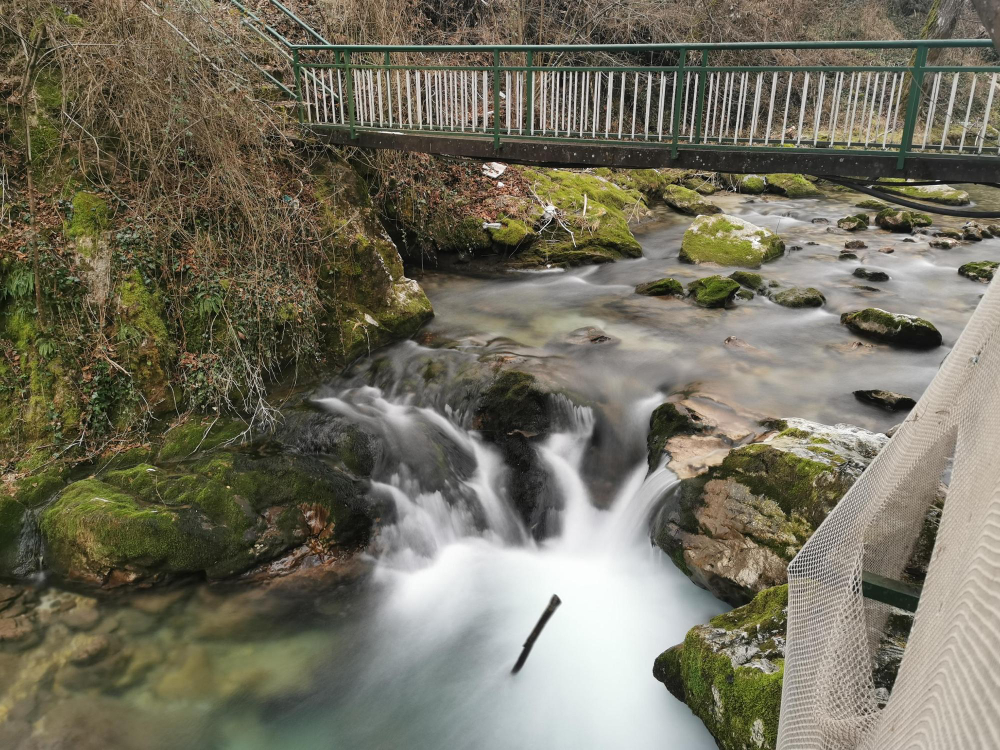
The purpose is worth setting out because a great many weirs no longer serve it and remain in place.
Raising the upstream level deepens the river above the weir, which creates a stretch of slower, deeper water where there was shallower, faster water.
That deepening was the point for navigation. A river too shallow to carry boats can be made deep enough by a series of weirs, each creating a deep pound above it, with a lock alongside to move vessels between levels.
It was also the point for power. A weir creates a head of water — a height difference that can be used to drive a wheel or turbine — by concentrating the river’s fall at one location rather than letting it spread along a length of channel.
And it was the point for supply. A raised level allows water to be drawn off into a channel running at a useful height, for a mill, for irrigation, for a water supply or to fill a moat or a pond.
Those three purposes account for the overwhelming majority of weirs that exist, and in most cases the purpose ended long before the structure did.
Like our content? Follow us for more.
Why the Shape Matters
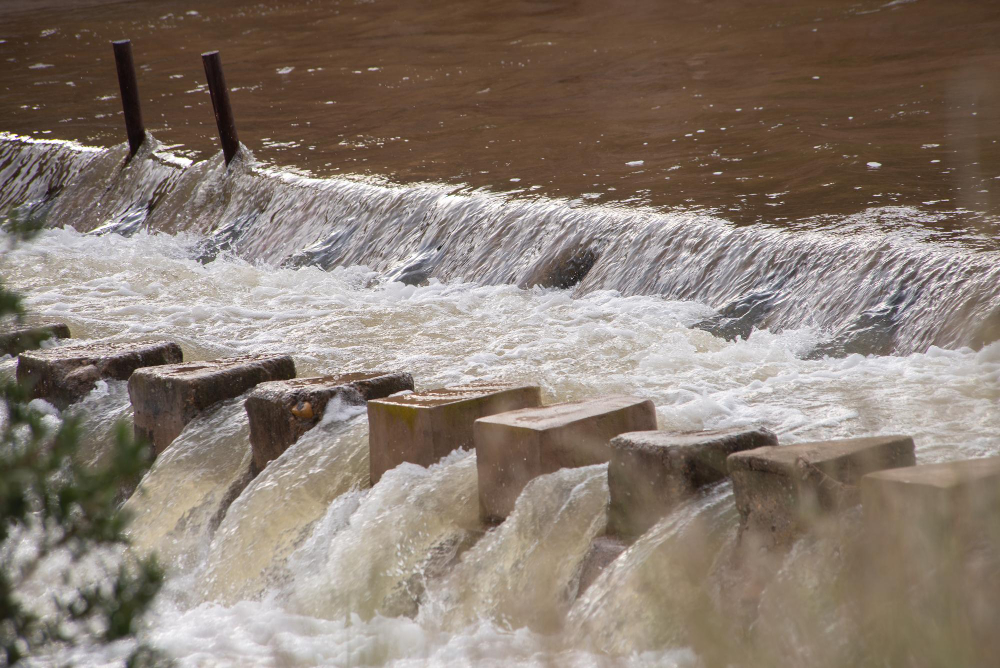
The profile of a weir is a design decision and different shapes do different things.
A sharp crest produces a jet of water that separates cleanly from the structure and falls freely, with air behind it. That gives a predictable relationship between the depth of water passing over and the volume flowing, which is why such shapes are used where the flow needs to be measured.
A broad crest supports the water across a flat surface before it falls, which passes more water for a given upstream level and is more robust.
A curved profile shaped to follow the natural path of falling water reduces the pressure fluctuations against the structure, which matters for larger installations.
And a sloping downstream face lets water run down rather than fall, which changes what happens at the bottom entirely.
That last distinction is the one that matters most, and not for reasons of efficiency.
The Hazard That Is Invisible
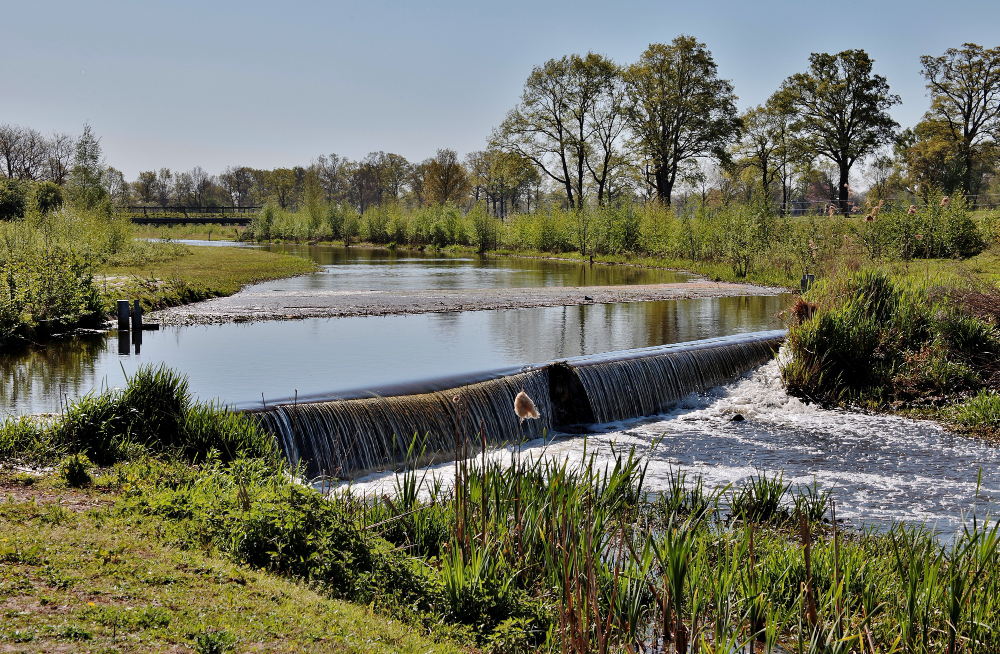
This is the part that needs stating plainly, because the danger is real and is not apparent from the surface.
Where water falls vertically or nearly so onto the river below, it plunges downward and then rolls back toward the structure along the surface, forming a circulating current that runs continuously across the full width of the weir.
From above and from the bank, that looks like a line of white water and nothing more. The surface may appear calm a short distance downstream.
Anything floating that enters that circulation is carried back toward the wall, pushed down, carried out along the bottom and returned to the surface to begin again — and the recirculation is extremely difficult to escape because the water is aerated and provides very little buoyancy or purchase.
That hazard exists at weirs of almost any size, including very low ones, and it is present continuously rather than only in flood.
The structures involved frequently look trivial — a step of half a metre across a quiet river — and the hazard is not proportional to the height.
Weirs are consequently a subject where the sensible response is distance: not swimming, wading, paddling or boating near one above or below, and treating any barrier, sign or boom as marking something real rather than cautious.
The Other Structures in the River
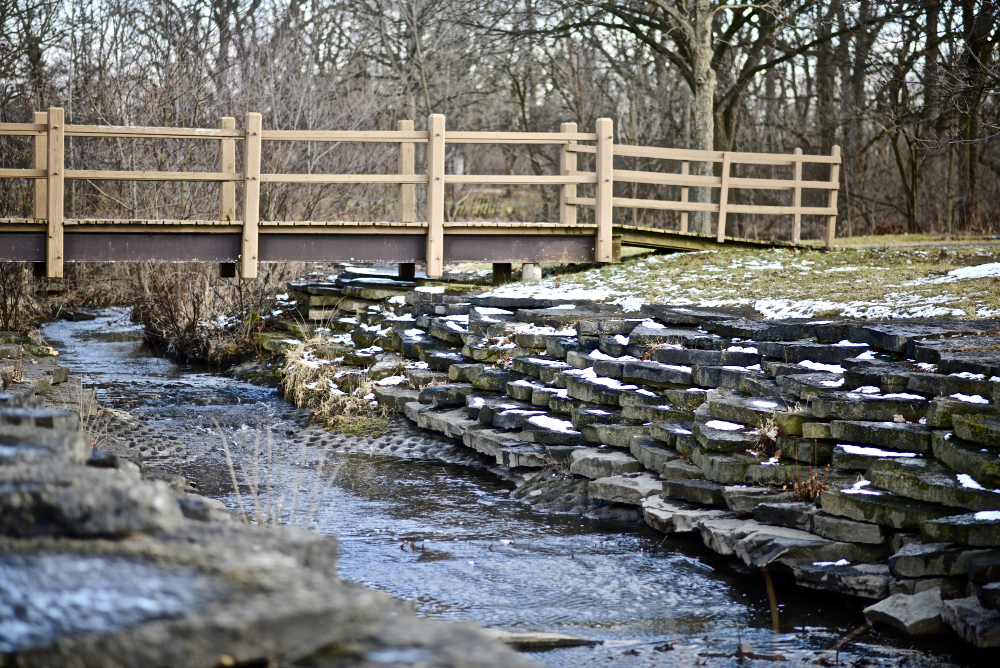
Several related structures appear alongside weirs and are frequently confused with them, which is worth clearing up.
A sluice is a controllable opening, with a gate that can be raised or lowered to pass more or less water — so where a weir has a fixed crest and no adjustment, a sluice is the adjustable version.
Many weirs incorporate one, which allows the level to be lowered for maintenance, allows extra flow to be passed in high water, and allows the offtake to be regulated.
A lock is a chamber with gates at both ends, which raises or lowers a vessel between two levels, and it sits alongside a weir rather than being part of it — the weir maintains the difference and the lock crosses it.
A fish pass is a route around or through the structure at a gradient a fish can ascend, which may be a series of small pools, a sloping channel, or a bypass around the whole thing.
A gauging station is a structure whose crest is shaped precisely so that the depth of water passing over it indicates the flow, which converts the weir into an instrument.
And a flood-control structure may look like a weir and functions differently, being designed to pass ordinary flow without effect and to hold back or divert water only above a threshold.
Reading which of those is present, and in what combination, tells you most of what a particular structure was for — and a great many weirs carry several of them, added at different times, recording successive changes in what the river was expected to do.
Why They Are Being Removed
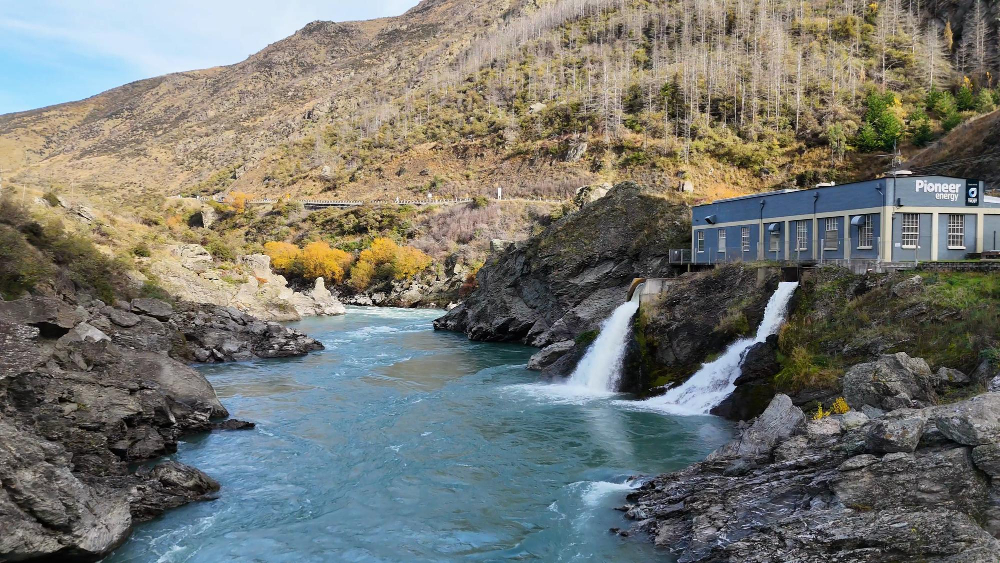
A substantial change is underway and the reasoning is worth explaining.
A weir is a barrier to anything moving up a river. Fish migrating upstream to spawn cannot pass a vertical drop, which fragments a river system into disconnected sections and cuts populations off from the habitat they need.
Structures to address that exist — arrangements of pools that allow fish to ascend in stages, or channels bypassing the weir at a manageable gradient — and they work with varying success depending on species and design.
Weirs also trap sediment above them, which starves the channel below of material it would otherwise carry, and they convert a length of flowing river into something more like a pond, which changes what lives there.
Where the original purpose has gone, removing the structure restores the river to a continuous channel, and a considerable number of redundant weirs have been taken out for that reason.
That is not universal. Some are retained for flood management, some for heritage reasons, some because removal would destabilise banks or expose contaminated sediment, and some because the level they maintain is now relied on by something else.
There is a maintenance point worth noting. A weir is subject to constant flow and to whatever the river carries, which erodes the crest, undermines the base and accumulates debris against the upstream face.
That means every weir requires attention indefinitely, and a structure whose purpose ended is one that nobody has a reason to maintain – which is a substantial part of why removal becomes the eventual answer.
Reading One in the Landscape
The practical part is what a weir tells you about the place it is in.
A weir with a lock alongside was built for navigation, and the size of the lock indicates what was expected to use it.
A weir with a channel leading off above it was built for supply or power, and following that channel generally leads to the site of a mill, whether or not anything remains.
A weir with a measuring structure — a precise crest shape, a gauge, a small building — is there to quantify flow rather than to use it.
A weir in a town, with a substantial drop and no other features, is frequently the oldest structure on the river, because the fall it uses is the reason the settlement is there at all.
And a weir with a fish pass added later, visibly different in construction from the rest, records both the original purpose and the change in priorities that followed.
Which makes them unusually legible. A structure that passes all the water and stores none, built to change a level for a reason that has generally ended, standing in the river doing what it has always done because removing it costs more than leaving it — and carrying, invisibly, the most serious hazard on most rivers.
That combination is worth carrying to any river. The structure that looks like the least interesting thing in the landscape is doing more, and is more dangerous, than anything else in sight.
Like our content? Follow us for more.