

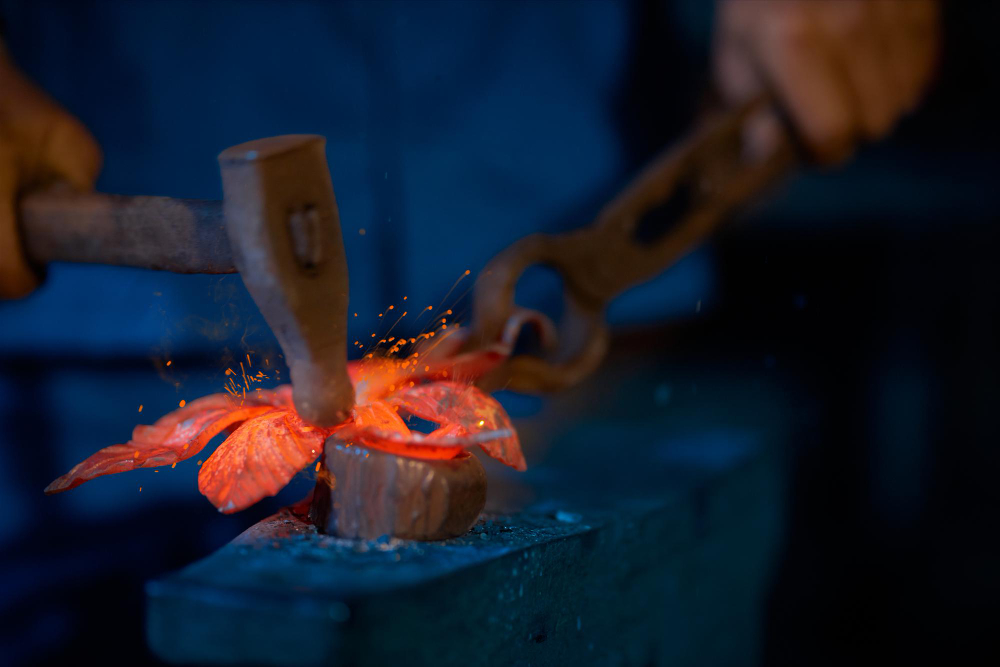
There is a way of making things that works from the inside out, and it produces shapes no other method can.
Almost every other approach is subtractive or formative: material is cut away, bent, beaten or joined until it becomes the object.
Casting is neither. The object is defined by the space around it — a void in a block of material — and the metal simply takes whatever shape the void has.
That means complexity costs nothing. A complicated shape and a simple one take the same time to pour, which is why casting is used for anything with curves, undercuts, internal passages or fine detail that would be prohibitive to cut.
Why Sand Works at All
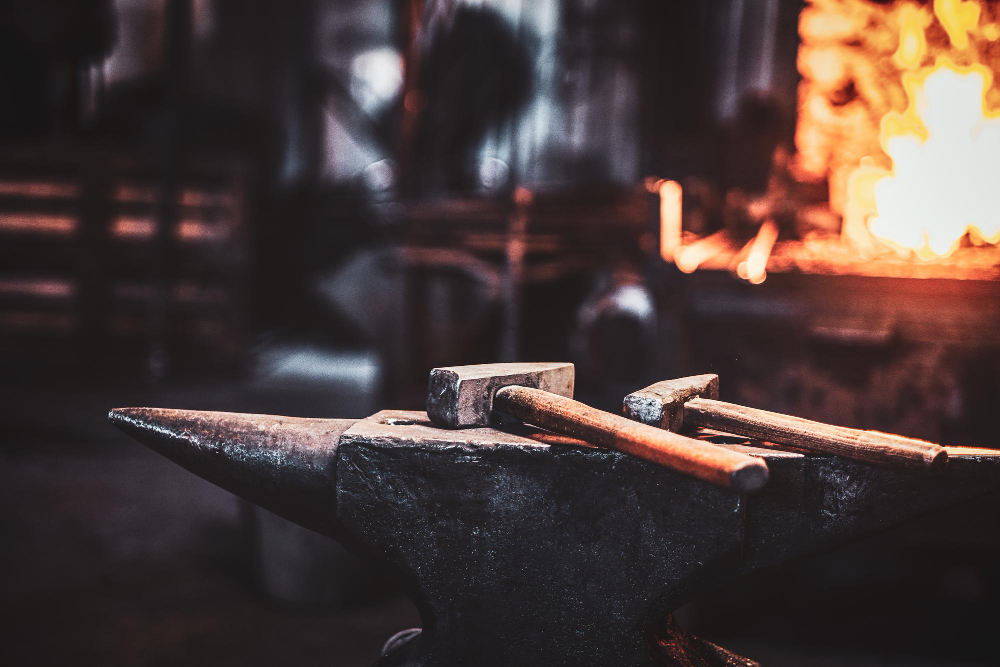
The mould material seems improbable and its properties are exactly right.
Sand bonded with a small amount of clay and water packs into a solid mass that holds a shape precisely, yet can be broken apart by hand afterwards.
It tolerates the temperature of molten metal without burning, melting or reacting, which almost nothing cheap does.
Critically, it is permeable. Pouring metal into a sealed cavity would trap air and gas with nowhere to go, and the casting would be riddled with voids — but gas escapes through the spaces between the sand grains.
It is also reusable. Broken-up mould material is reconditioned and used again, which means the consumable cost of each mould is very low.
That combination — holds detail, survives heat, lets gas out, costs almost nothing, and is reusable — is why sand remained the standard for so long despite the mould being destroyed every time.
There is a reuse point worth adding. A pattern survives the process and is stored, so the same one produces castings for years or decades, which is why patterns were catalogued and why old pattern stores are archives of everything a foundry ever made.
Like our content? Follow us for more.
The Pattern and Why It Is Not the Right Size
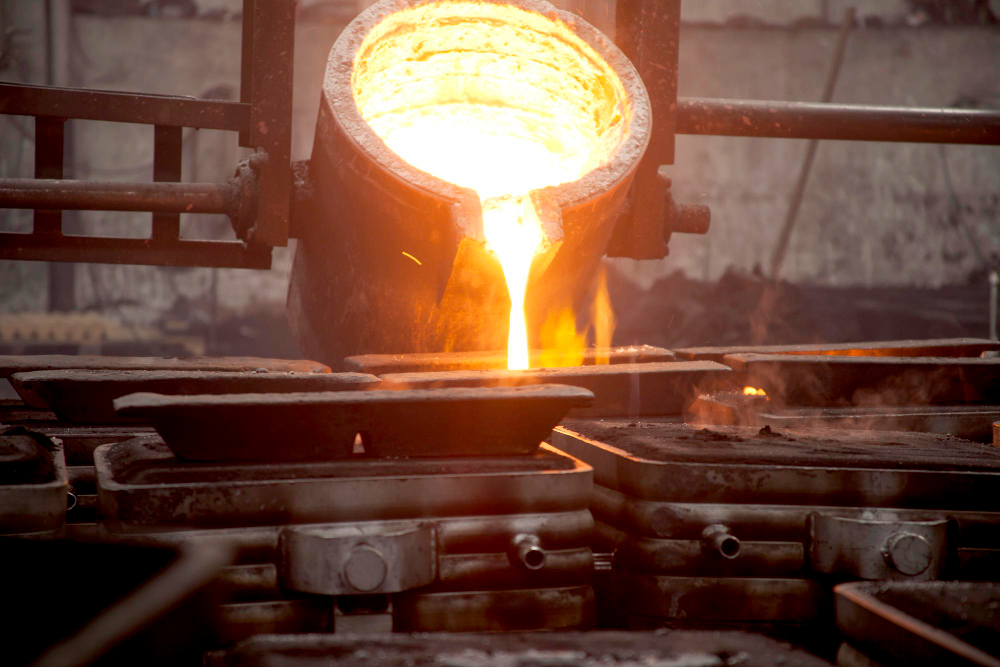
The object used to make the cavity is subtly wrong on purpose.
Metal shrinks as it cools and solidifies, so a casting comes out smaller than the cavity it filled — which means the pattern has to be made slightly oversize by an allowance that depends on the metal.
Patterns also carry a slight taper on every vertical face, because a pattern with parallel sides cannot be withdrawn from packed sand without dragging the edges of the cavity with it.
Extra material is added where the object will need machining afterwards, since a cast surface is rarely accurate enough for anything that has to fit precisely.
And the pattern is frequently made in two halves that separate along a chosen line, because the mould is made in two boxes and the division has to fall somewhere sensible.
That is why patternmaking was a separate and highly skilled trade: the pattern is not a copy of the object but a deliberately distorted version of it, and getting the distortions right determines whether the casting is usable.
There is a finishing point worth adding. Castings emerge with a rough surface carrying the texture of the sand, and any face that must be flat, round or dimensionally accurate is machined afterwards – which is why cast components have a mixture of rough and bright surfaces.
Hollow Objects and the Problem They Create
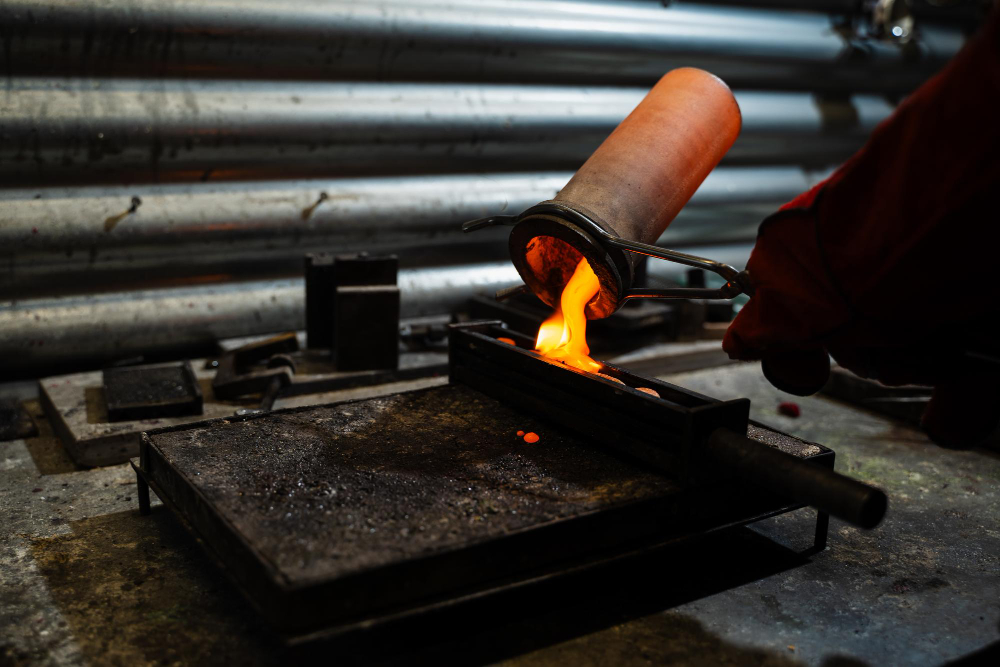
Making something hollow requires an additional piece and introduces the main difficulty.
A separate shaped piece of bonded sand, called a core, is placed inside the cavity to occupy the space that will be hollow, and the metal flows around it.
The core has to be supported so that it does not float or shift when surrounded by liquid metal, which is denser than it is.
It also has to be removable afterwards, which means it must break down and be shaken out through whatever openings the casting has.
Anything with internal passages — pipes, engine parts, valve bodies — depends on cores, and the complexity of the cores frequently exceeds the complexity of the outer shape.
That is where most casting defects originate, because a core that shifts produces a wall thin on one side and thick on the other, which may not be visible until the object fails.
There is a scale point worth adding. The same principle produces objects weighing a few grams and objects weighing many tonnes, with the difference being handling equipment rather than method – a very large mould is made in a pit in the floor rather than in boxes.
Why the Pouring Is Designed
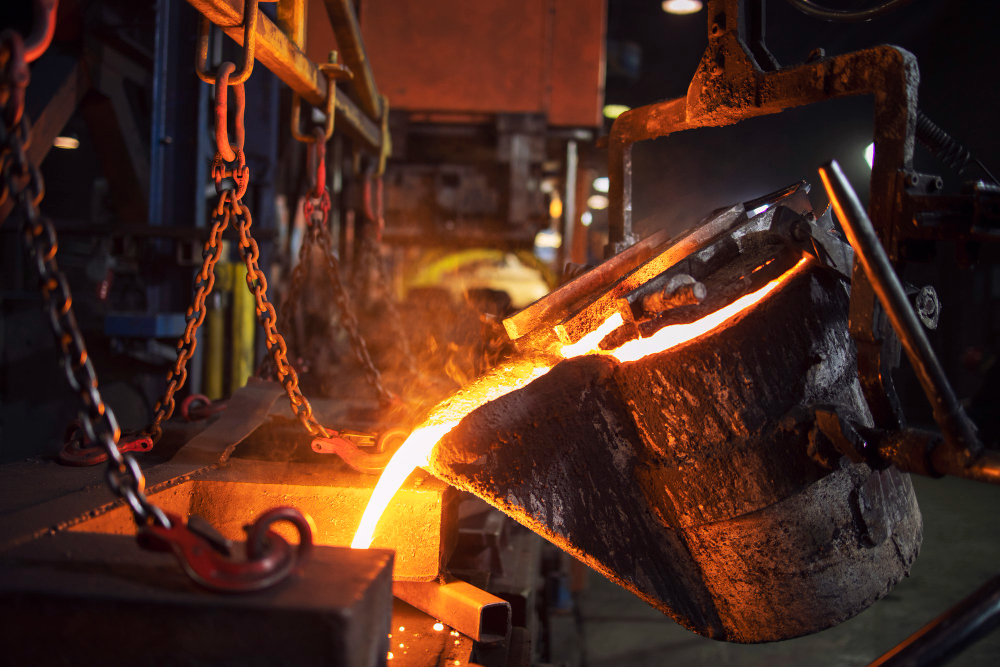
The route the metal takes into the mould is engineered as carefully as the shape.
Metal is poured into a channel and travels through passages that distribute it around the cavity, which are cut into the sand alongside the object.
Those passages are shaped to slow the metal and keep the flow smooth, because turbulent metal draws in gas and oxide, which end up in the casting as defects.
Additional reservoirs of metal are placed so that they stay liquid longest and feed the casting as it shrinks, since metal solidifying without a supply of more metal leaves a cavity inside itself.
Getting that wrong produces a casting that looks perfect and contains a hole in the thickest section, which is where the stress is usually highest.
All of that channelling solidifies too, and is cut off afterwards and remelted — which means a substantial proportion of the metal poured is not part of the finished object at all.
The Other Methods
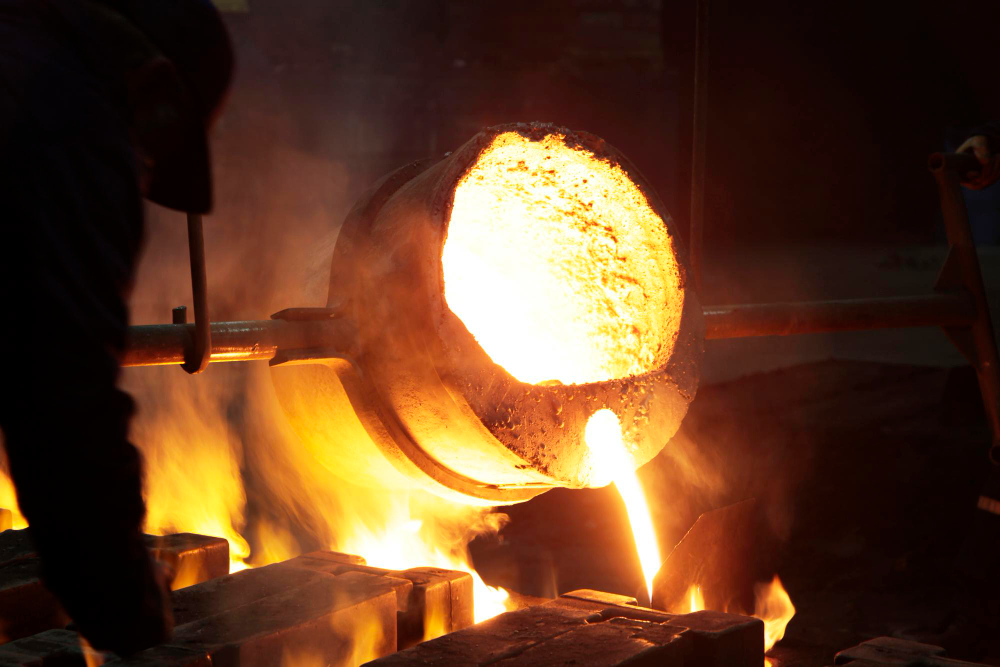
Several approaches replace sand where the requirements differ.
A reusable metal mould gives far better surface finish and dimensional accuracy, and can be used thousands of times, which suits high volumes and rules out anything with awkward undercuts.
A pattern made of wax, coated in a ceramic shell and then melted out, leaves a cavity with no division line and extraordinary detail, at the cost of a slow process and a pattern destroyed each time.
Forcing metal into a metal mould under pressure fills thin sections that would otherwise freeze before filling, which is how small complex parts are produced at speed.
And continuous casting pours metal through a cooled opening to produce an endless bar rather than discrete objects, which is how most raw stock is made.
Each is a different balance between tooling cost, volume, detail and the shapes that are possible.
What Goes Wrong
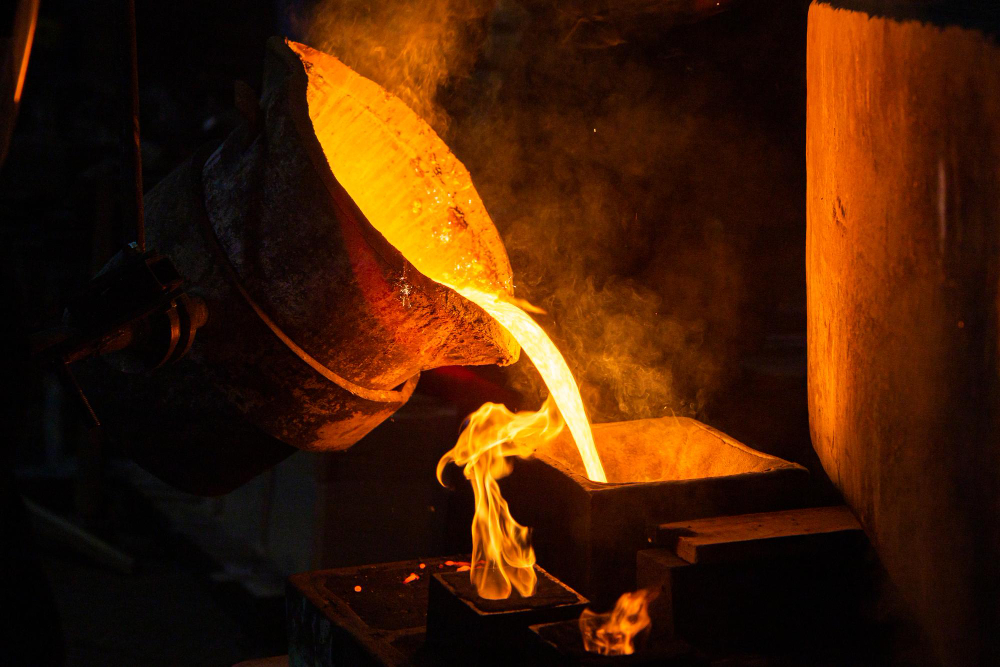
The characteristic defects are worth knowing because each one points back to a specific stage.
Gas trapped in the metal or the mould leaves rounded holes distributed through the casting, which indicates that the mould was not permeable enough or that the metal carried dissolved gas.
Shrinkage leaves jagged cavities in the last part to solidify, usually in the thickest section, and indicates that the feeding arrangement failed to supply metal as the casting contracted.
Sand washed loose by the flowing metal ends up embedded in the surface or within the casting, which indicates that the mould was not strong enough or that the metal arrived too fast.
Metal that solidifies before filling the mould leaves a section incomplete, which indicates that the metal was too cool, the section too thin, or the route too long.
A casting split along a line indicates that different parts contracted at different rates and tore themselves apart while still weak.
And a shifted core produces uneven walls, which frequently cannot be seen at all until the part is machined or fails in service.
That is why casting inspection matters so much: several of these defects are entirely internal, and a casting that looks perfect can contain a cavity exactly where the stress will be highest.
Why It Is Still Everywhere
The persistence of an ancient process in modern manufacturing is worth accounting for.
Casting produces shapes that cannot be made any other way without assembling several pieces, and an object made in one piece has no joints to fail.
It uses material efficiently, since the metal goes where it is needed rather than being cut away from a larger block.
It scales from one-off to enormous production, and the same principle works for objects weighing grams and objects weighing many tonnes.
And the fundamental method has not changed. The pattern, the sand, the cavity, the pour and the breaking out are the same steps that have been used for thousands of years, with better control at every stage.
Which is a reasonable thing to consider looking at almost any complicated metal object. Somewhere behind it is a wooden shape that was slightly the wrong size on purpose, pressed into damp sand, taken out again, and filled with something glowing.
And that inversion is what makes the process worth understanding. Everything else is made by removing material until the object appears; casting makes the space first and lets the metal find out what shape it is.
Like our content? Follow us for more.
