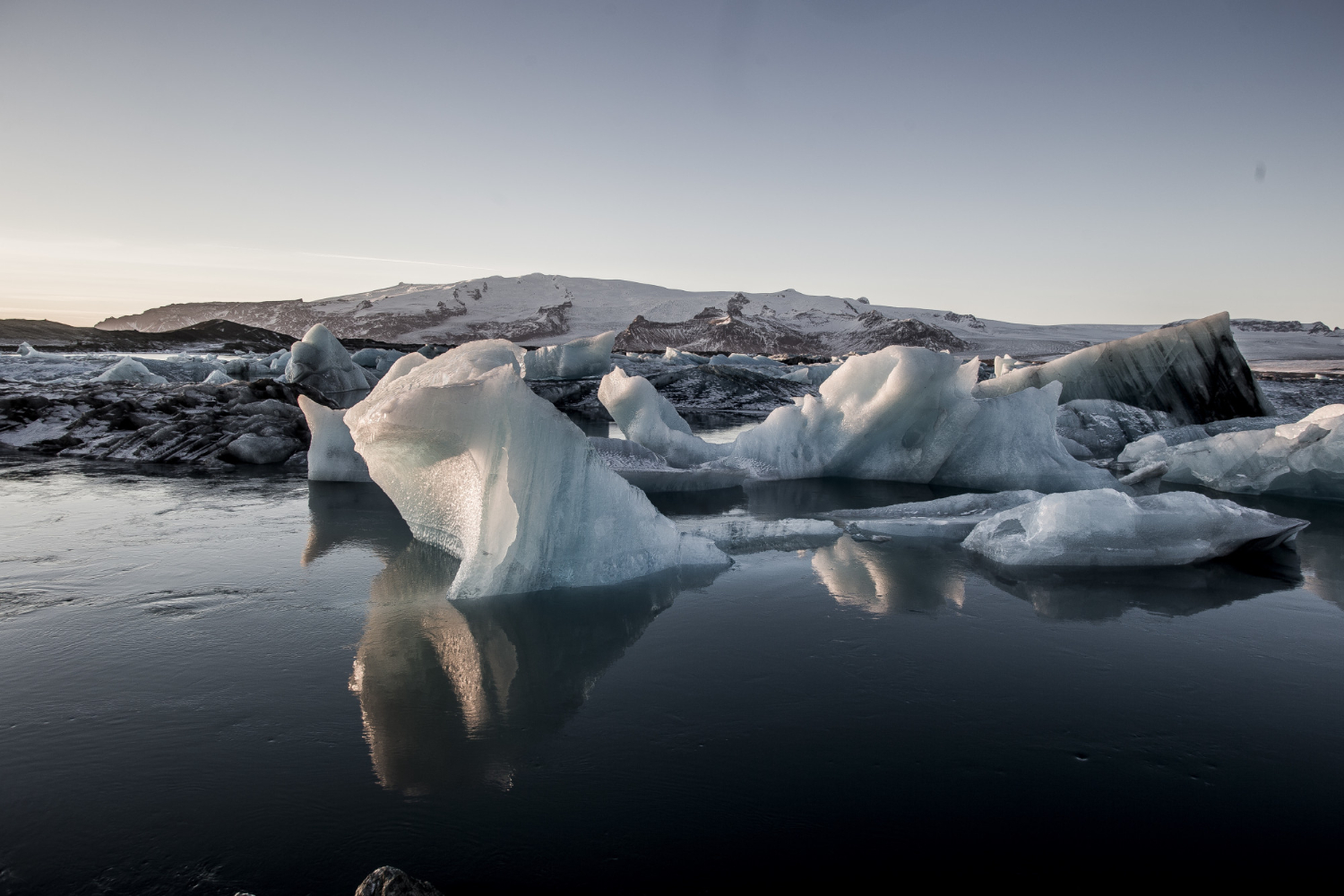
Ice cubes float. This is so ordinary that it takes a moment to see anything strange in it.
Consider what floating means. An object floats when it is less dense than the fluid it sits in — when the same volume weighs less. So a floating ice cube is telling you that frozen water is less dense than liquid water.
That is unusual to the point of being almost unique among common substances. Cooling a material slows its molecules, they pack more closely, and the solid is denser than the liquid. Freeze molten metal and the solid sinks. Freeze most organic liquids and the same happens. Water does the reverse, and the consequences are substantially larger than a drink staying cold.
Here is why it happens and what it changes.
Why Everything Else Contracts
Start with the normal case, because the exception only makes sense against it.
In a liquid, molecules move past one another with no fixed arrangement, taking up whatever space their motion requires. Remove energy and they slow, move less, and settle closer together. The material contracts.
Continue and the substance freezes: molecules lock into a fixed arrangement, generally packed efficiently, because an efficient packing is the lowest-energy arrangement available.
Efficient packing means more molecules per unit volume, which means the solid is denser than the liquid. That is why solids normally sink in their own melt.
Water does this too, down to a point. Cool water from warm and it contracts as expected, becoming denser as the temperature falls — until it reaches about four degrees Celsius. Then it stops, and below that temperature it starts expanding again on the way to freezing.
That reversal at four degrees is the anomaly, and everything else follows from it.
Like our content? Follow us for more.
The Shape of the Molecule
The cause is the geometry of the water molecule and the specific way water molecules attach to one another.
A water molecule is bent rather than straight: an oxygen atom with two hydrogens attached at an angle. The oxygen holds the shared electrons more tightly, giving it a slight negative charge while the hydrogen ends carry a slight positive one.
Those opposite charges attract, so the hydrogen of one molecule is drawn to the oxygen of another. This attraction is called hydrogen bonding, and it is much stronger than the forces holding most comparable liquids together, which is why water has a high boiling point for its size.
In liquid water these bonds constantly form, break and reform, and molecules can slide past one another and pack fairly closely.
When water freezes, the bonds stop breaking. Each molecule locks into position with a fixed number of neighbours, held at the specific angles the molecular geometry dictates.
That arrangement is an open hexagonal lattice with substantial gaps in it. Crucially, it is a less efficient use of space than the jostling liquid — the molecules are held apart at fixed distances rather than allowed to settle closer.
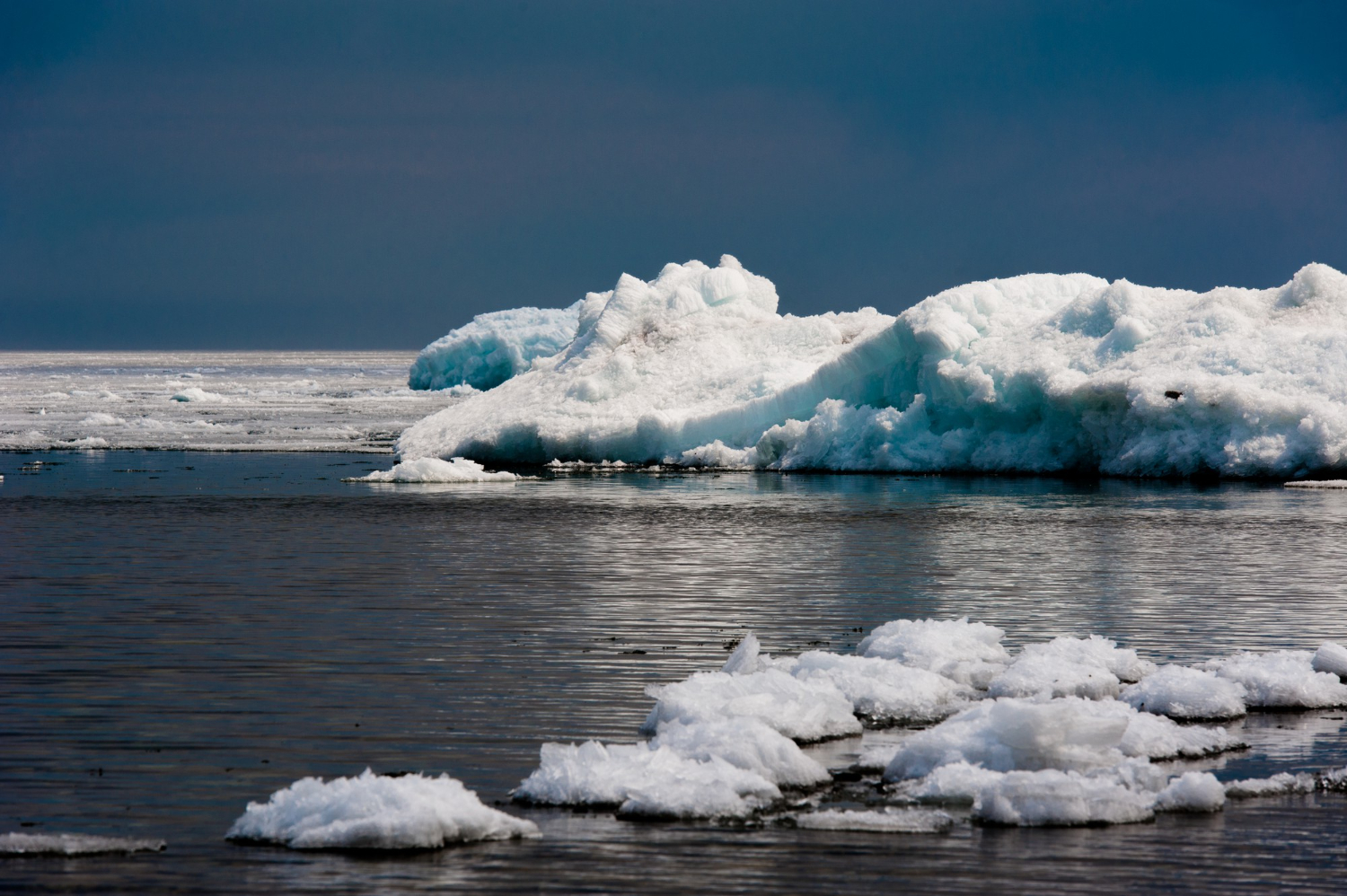
So ice occupies more volume than the water it came from. Roughly speaking, water expands by something in the region of nine percent on freezing, which is why a bottle of water left in a freezer splits.
The four-degree point is where these two effects cross over. Above it, cooling packs molecules closer and density rises. Below it, hydrogen bonding starts organising molecules into the open arrangement faster than contraction can compensate, and density falls.
What This Does to a Lake
The consequences at scale are where this stops being a curiosity.
Consider a lake in autumn. Surface water cools, becomes denser, and sinks. Warmer water rises to replace it, cools, and sinks in turn. The lake circulates, mixing oxygen from the surface down and nutrients from the bottom up.
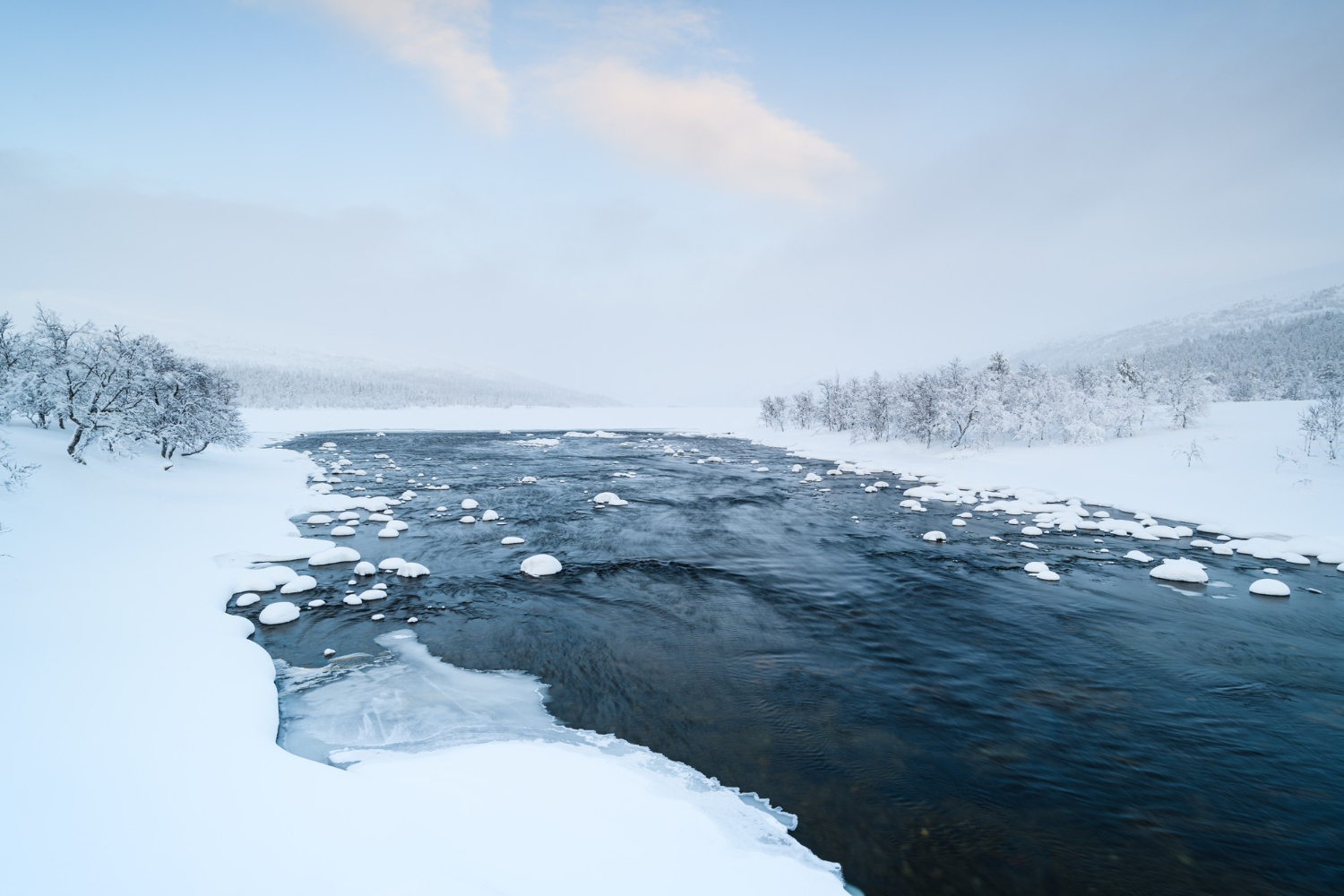
That continues until the whole body reaches about four degrees, at which point the surface water becomes less dense as it cools further and stops sinking. It stays on top, cools to freezing, and forms ice.
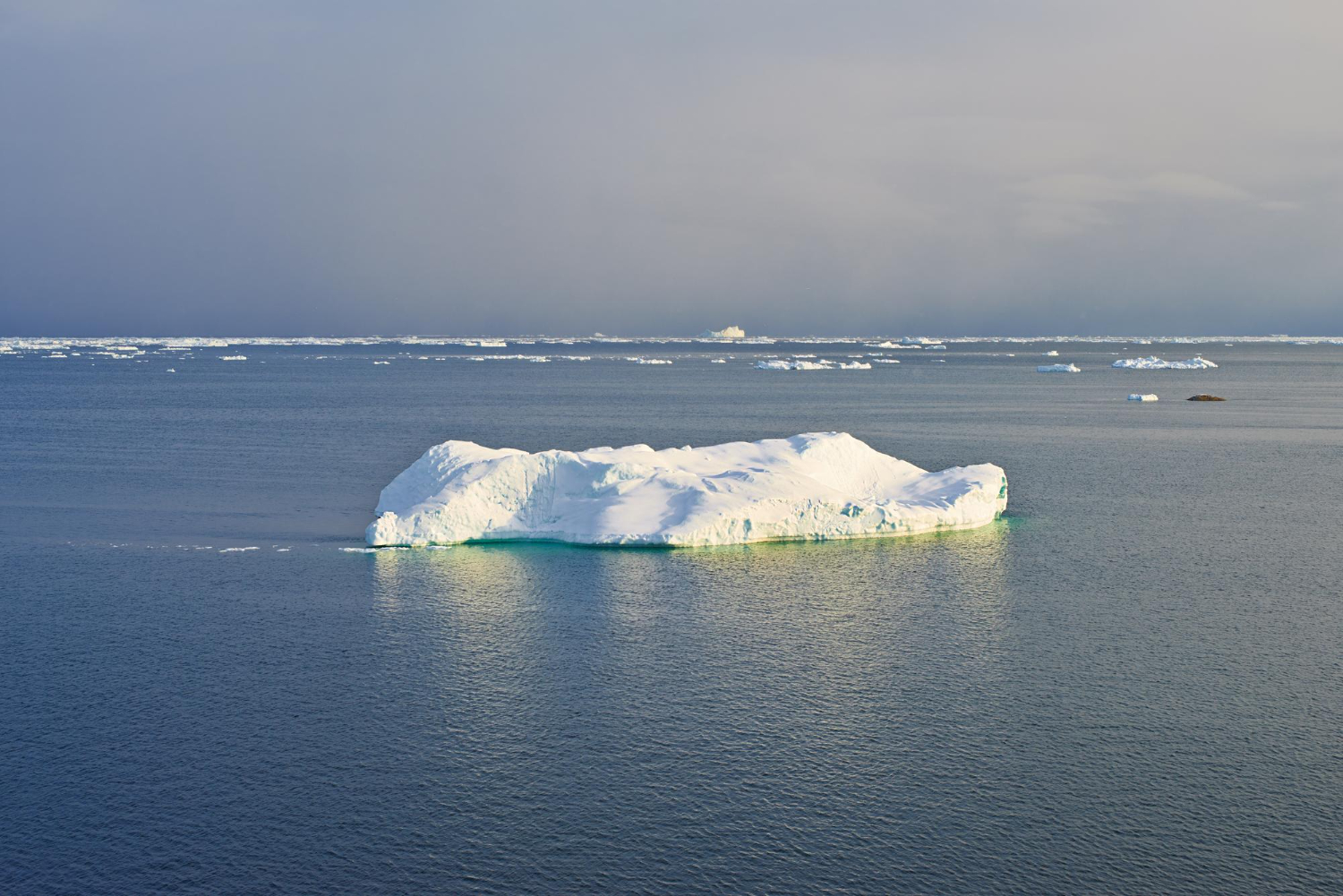
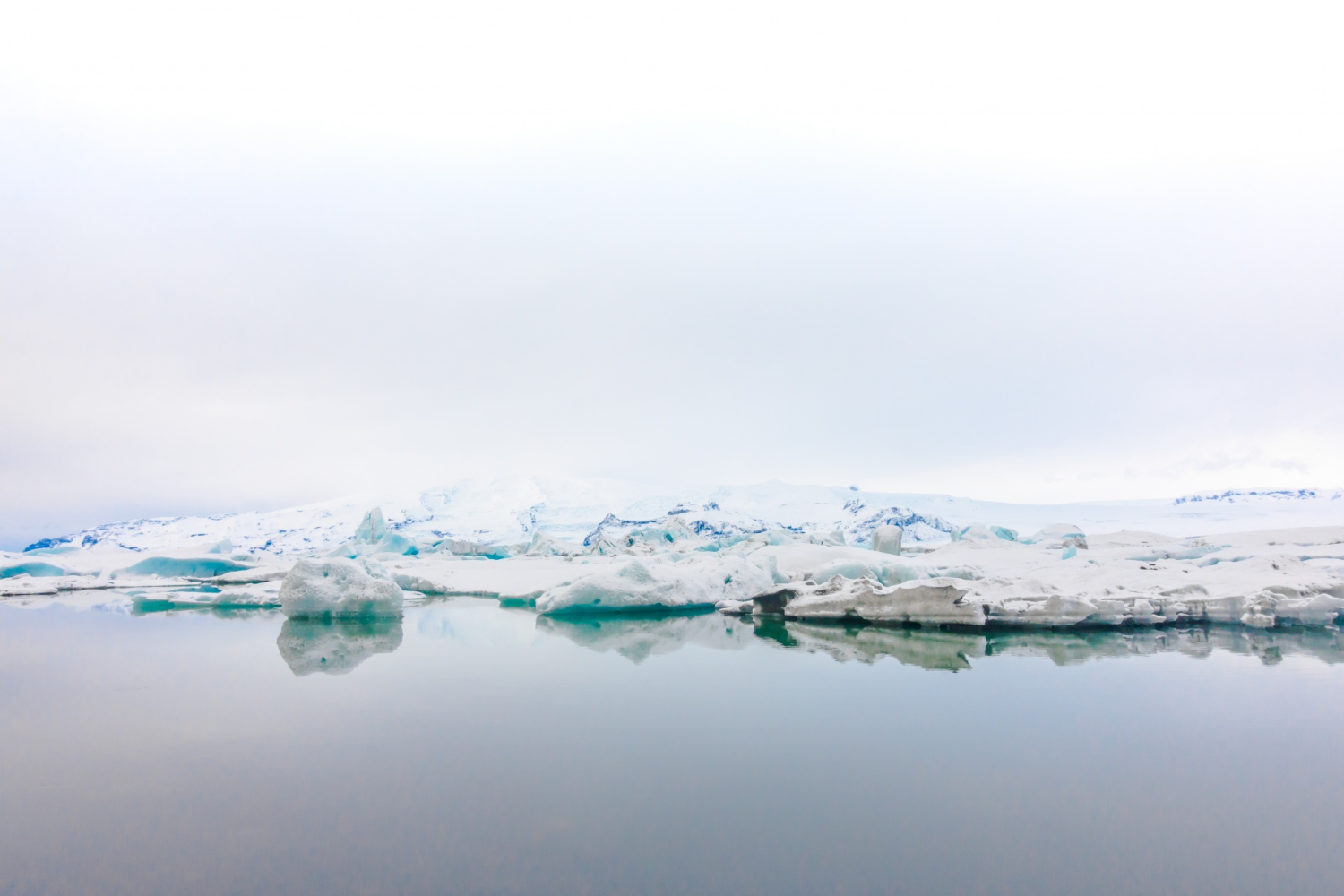
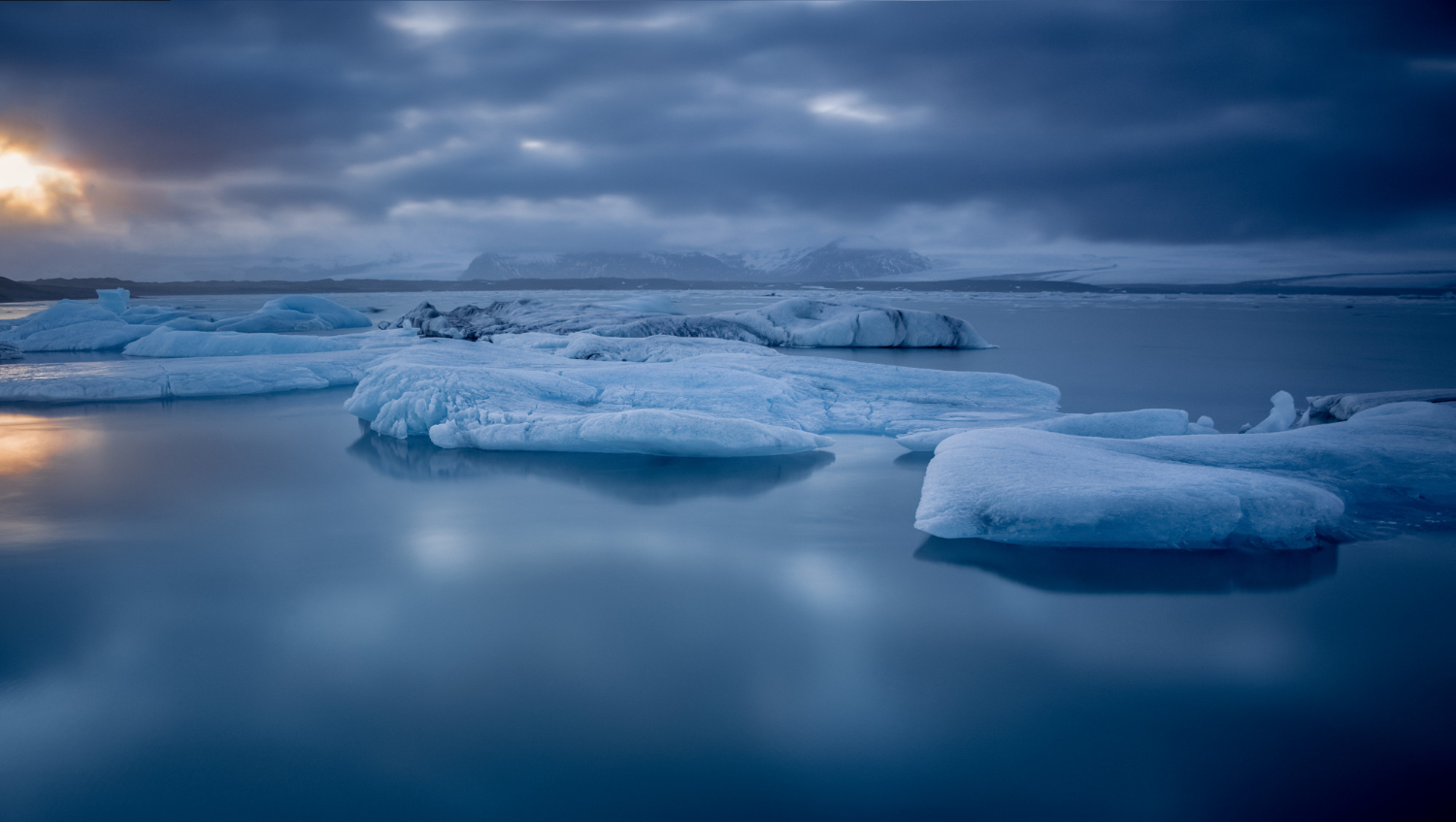
The ice then floats, and it floats on water that is at roughly four degrees rather than at freezing. The ice layer insulates what is beneath, slowing further heat loss.
The result is that deep lakes generally do not freeze solid. There is liquid water below the ice, at a temperature fish and other organisms can survive.
Now run the alternative. If ice sank, it would accumulate at the bottom where no sunlight reaches and where summer warmth arrives slowly if at all. Each winter would add a layer, and in cold climates a great deal of that ice would persist through summer. Lakes and rivers would fill progressively with ice from below.
That is a substantially different planet. The habitability of fresh water in cold climates, and a good deal of ocean behaviour, depends on this one reversal.
The Same Property Breaks Things
The expansion is not universally benign, and the destructive version is more familiar than the helpful one.
Water that gets into a crack in rock and then freezes expands with considerable force, widening the crack. Thaw, refill, refreeze, and the crack widens again. Repeated over seasons this splits rock apart, and it is one of the principal mechanisms of physical weathering — a major reason mountains erode and why potholes appear in roads after a cold spell.
The same process burst the pipe. Water in a pipe freezes, expands, and the pipe cannot accommodate the extra volume.
There is a biological version too. A cell containing water that freezes has ice crystals expanding inside it, and the mechanical damage is why freezing is destructive to most living tissue — and why the organisms that tolerate freezing have evolved specific chemistry to manage it.
So the property that keeps lakes habitable is the same one that splits mountains, bursts pipes and damages cells. It is one behaviour with entirely different consequences depending on where it happens.
Water Is Odd in Several Other Ways
The density anomaly is the best known of a set of unusual properties, and they share a cause.
Water has an unusually high heat capacity, meaning it takes a lot of energy to change its temperature. That is why oceans moderate climate, why coastal areas have milder temperature swings than inland ones, and why water is used as a coolant.
It has a high surface tension, which is why droplets form beads and why some insects can stand on a pond.
It has an unusually high boiling point for a molecule of its size — comparable molecules of similar mass are gases at room temperature. Without hydrogen bonding, water would boil far below the temperatures found on most of the Earth’s surface.
And it dissolves an exceptional range of substances, which is why it is central to essentially all biological chemistry.
Every one of these traces back to the same feature: a bent, charge-separated molecule that forms strong directional bonds with its neighbours.
Ice Is Not Only One Thing
A detail that surprises people: the ice in your glass is one of a number of forms water can take as a solid, and the others behave differently.
Under ordinary conditions water freezes into the open hexagonal lattice described above, which is the low-density arrangement responsible for floating. This is the only form that occurs naturally in any quantity at the Earth’s surface.
Apply substantial pressure, however, and the molecules can be forced into other arrangements entirely, and a number of distinct crystalline forms of ice have been produced and characterised in laboratories. Several of them are denser than liquid water, because the pressure overcomes the structural spacing that hydrogen bonding would otherwise impose.
Some of these forms are thought to exist inside icy moons and planets, where the pressures at depth are far beyond anything at the surface of the Earth.
There is also amorphous ice, formed when water is cooled so rapidly that the molecules cannot organise into any lattice at all, which is relevant to how water behaves in space and in some biological preservation contexts.
None of this affects an ice cube. But it clarifies what the anomaly actually is: floating ice is not a property of frozen water in general. It is a property of the specific arrangement water adopts at ordinary pressures, which happens to be the one that exists everywhere anyone lives.
An Exception Worth Noticing
There is something worth appreciating about how much rests on this.
Water is not unusual because it is common. It is unusual in the technical sense — it breaks a general rule about how matter behaves, for a specific structural reason, and it does so at exactly the temperatures found across most of the Earth’s surface.
Had the molecule been straight rather than bent, the hydrogen bonding would not produce an open lattice, ice would sink, and the behaviour of every cold body of water on the planet would be different.
Which means the next time an ice cube floats to the top of a glass, the thing you are watching is a substance failing to do what almost everything else does — and a small demonstration of why the fresh water in cold parts of the world does not turn into a solid block every winter.
Like our content? Follow us for more.