It Does Not Catch Anything
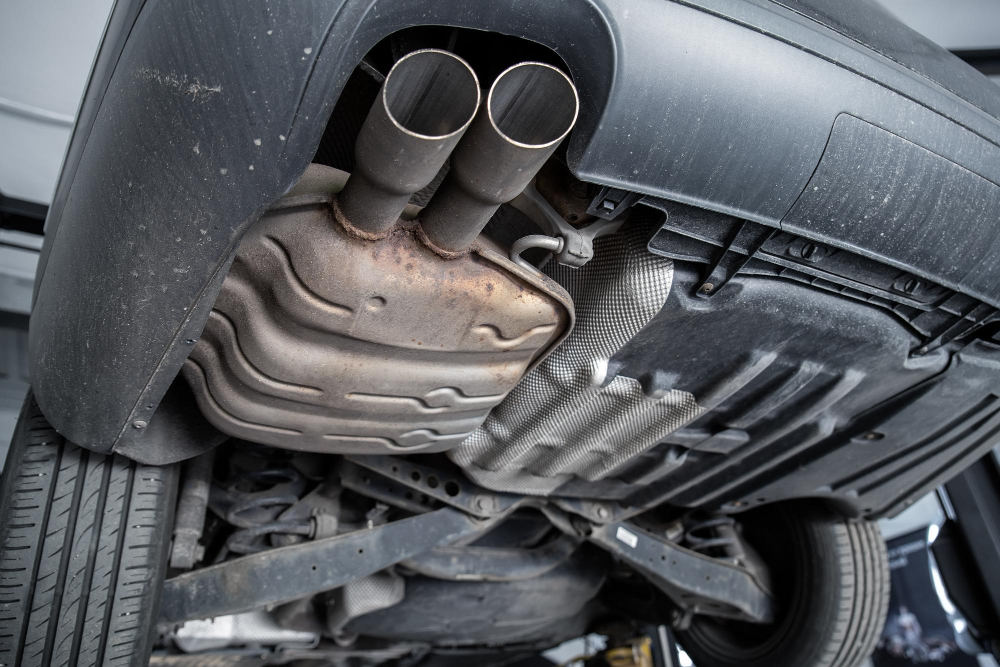
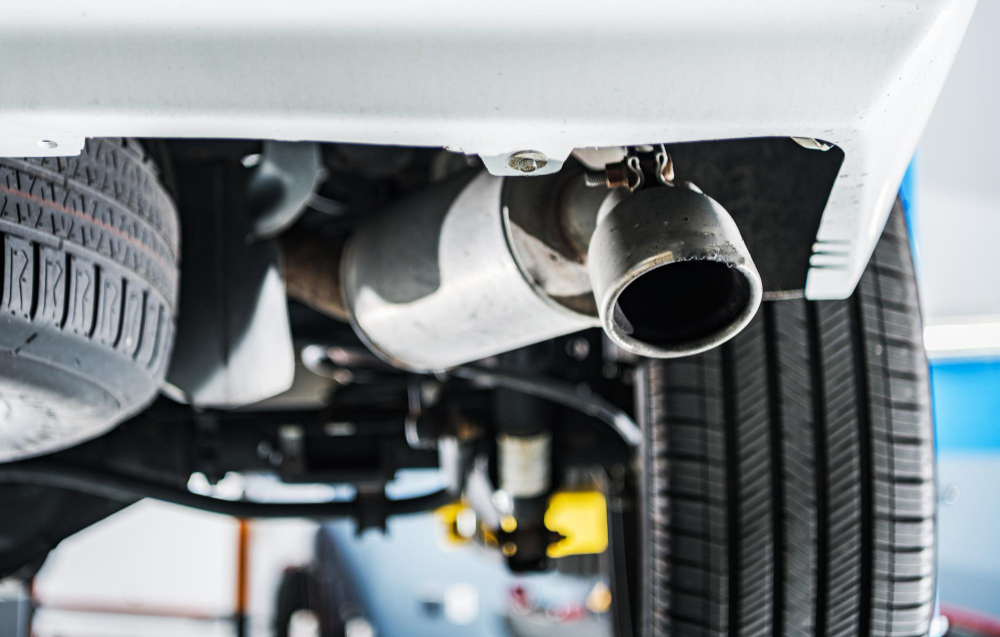
The name does not help and the shape does not help. It is a metal box in an exhaust pipe, the pipe is dirty, and the obvious conclusion is that it traps something.
It traps nothing. Gas goes in and the same quantity of gas comes out, atom for atom. Nothing accumulates inside, nothing is removed, and the device does not fill up or need emptying. If it worked by catching things it would have to be cleaned, and nobody has ever cleaned one.
What it does instead is rearrange. The harmful molecules going in are taken apart and reassembled into different molecules, which leave. The carbon, oxygen, nitrogen and hydrogen that arrived all leave as well, just bonded to different partners.
This is a altogether different category of device from anything that sieves, strains or absorbs, and the distinction matters because it explains every one of the device’s peculiarities: why it has to get hot, why it needs the engine running within a narrow band, why a single tankful of the wrong fuel can destroy it permanently, and why it does nothing at all about the gas everybody now worries about most.
Like our content? Follow us for more.
What a Catalyst Is Doing
A chemical reaction that is possible is not necessarily a reaction that happens. Many reactions that would release energy and reach a more stable arrangement simply do not proceed at ordinary temperatures, because getting there requires passing through an intermediate state that costs energy to reach. That cost is a barrier, and if the molecules do not have enough energy to climb it, nothing occurs.
Heat is one way over the barrier: make the molecules move fast enough and enough of them will make it. The other way is to lower the barrier, and that is what a catalyst does.
A catalyst provides a surface on which the molecules can be held in a favourable position and partially pulled apart, so that the rearrangement proceeds through a sequence of cheaper steps rather than one expensive one. The catalyst is not consumed, does not appear in the result, and is unchanged at the end. It simply makes an available route cheap enough to use.
In the exhaust, the reactions involved are all thermodynamically favourable. Carbon monoxide would rather be carbon dioxide. Unburnt fuel would rather be carbon dioxide and water. Nitrogen oxides would rather be nitrogen and oxygen. None of them proceeds usefully fast in a pipe without help, and the catalyst is the help.
Three Reactions, Two of Them Opposed
This is where it becomes interesting, because the device is asked to do two contradictory things simultaneously.
Two of the jobs are oxidation. Carbon monoxide needs oxygen added to it to become carbon dioxide, and unburnt hydrocarbons need oxygen added to become carbon dioxide and water. Both of those want oxygen to be available.
The third job is reduction. Nitrogen oxides, formed when the heat of combustion forces nitrogen and oxygen from the air to combine, need oxygen taken away so that the nitrogen is released as harmless nitrogen gas. That wants oxygen to be scarce.
One gas stream cannot be both oxygen-rich and oxygen-poor. The three-way converter, which is what almost every petrol car has, works only within a very narrow window where the exhaust composition is poised almost exactly at the point where there was just enough oxygen to burn the fuel and no more. Slightly rich and the oxidation reactions falter; slightly lean and the reduction reaction collapses.
That window is extremely narrow, on the order of a per cent or so either side of the ideal. No engine can be set up to sit in it by mechanical adjustment alone, which is why the converter arrived together with something else entirely.
Which Is Why Cars Needed an Oxygen Sensor

The converter is the reason modern engines are controlled the way they are, and this is the part of the story that is usually left out.
To stay inside that narrow window, the engine has to measure the oxygen left in its own exhaust and adjust the fuel accordingly, continuously, many times a second. A sensor in the exhaust stream generates a voltage that swings sharply as the mixture crosses the ideal point, and the engine’s control system responds by trimming the fuel the other way.
The result is that the mixture does not sit at the ideal value. It oscillates rapidly across it, spending its time slightly rich and slightly lean in alternation, averaging out at the target. The converter is tolerant of that oscillation and in fact benefits from it, because the coating can store a small amount of oxygen during the lean swings and release it during the rich ones, smoothing the supply for the oxidation reactions.
So the device is not passive. It is one component of a closed control loop that includes a chemical sensor, a computer and the fuel system, and the whole arrangement exists because the chemistry demands a precision that mechanical fuelling could never deliver. Electronic engine management was not adopted for performance or economy in the first instance. It was adopted because the converter would not work without it.
A Tennis Court Inside a Shoebox
Catalysis happens on a surface, so the amount of reaction possible depends almost entirely on how much surface the gas can touch. A solid block of the metal would present almost none of itself, and would be absurdly expensive.
The solution has two layers. First, a ceramic block extruded into a honeycomb of hundreds of parallel square channels per square inch of cross-section, with walls thin enough that the open area is most of the face. Gas passes along the channels rather than through the walls, which is why it offers so little resistance to flow.
Second, and more important, the channel walls are coated with a layer of a high-surface-area oxide, a rough porous material riddled with pores at the scale of nanometres. This coating multiplies the effective area enormously. The internal surface area of a single converter, counted properly, runs to something in the order of the area of a tennis court, and by some accountings considerably more.
Only then are the precious metals applied, dispersed across that surface as particles so small that a few grams can cover all of it. The metal is not a layer in any everyday sense. It is a scattering of tiny islands, and the design goal is to use as little as possible while keeping the islands separated, because particles that merge together present less surface and the device loses effectiveness.
That is the whole trick. A small quantity of very expensive metal is made to behave as though there were a great deal of it, by being spread across an absurd amount of area.
The Metals, and Why They Were Chosen
Three metals do almost all of the work, and they are among the rarest and most expensive in commercial use. Two are good at the oxidation reactions; one is exceptionally good at the reduction reaction and has essentially no substitute.
They were not chosen for cost. They were chosen because they catalyse these particular reactions at temperatures achievable in an exhaust, because they survive an environment that would destroy almost anything, and because they are chemically stable enough not to be consumed or corroded over a hundred thousand miles of hot, chemically aggressive gas.
The price of these metals is set by a small number of mines, a difficult extraction process, and the fact that demand from this one application is a very large share of total world consumption. The quantities per vehicle are small, measured in grams, and the value is nevertheless significant.
Which is why converters are stolen. A unit can be cut out from underneath a vehicle very quickly by somebody who knows where to cut, and the metal content is worth enough to make it worthwhile. Recovery rates from recycling are high and the trade in scrap units is substantial. It is an unusual case of a component being stolen not for its function but for its material, and it is a direct consequence of the design decision to use very small amounts of very valuable metal rather than large amounts of anything cheaper.
Why It Does Nothing for the First Minute
A catalyst lowers the barrier; it does not remove it. The reactions still need a working temperature, and until the device reaches it, almost nothing happens.
A converter from cold passes the exhaust through essentially untreated. The temperature required is several hundred degrees, and reaching it depends on hot exhaust gas heating the ceramic, which takes a measurable time. During that period the vehicle’s emissions are far higher than at any other point in its operation.
This is the single largest remaining weakness of the system, and a great deal of engineering effort goes into shortening it: positioning the converter closer to the engine so it heats faster, using thinner-walled substrates with less mass to warm up, deliberately running the engine inefficiently for a short period to produce hotter exhaust, and in some designs heating the substrate electrically.
It also means that a pattern of short journeys is the worst possible use of the device, because a proportion of every trip is spent with the converter below working temperature and the proportion grows as the journey shortens. A long motorway run and a sequence of five-minute errands totalling the same distance are not remotely equivalent in what comes out of the pipe.
The converter is also harmed by sustained overheating from the opposite direction. Running too hot, which happens when unburnt fuel reaches it and burns inside, can melt the ceramic honeycomb and merge the metal particles together, destroying the surface area the whole design depends on.
What Kills It, and What It Cannot Fix
Certain substances bind to the active metal and do not let go, occupying the sites where the reaction would otherwise happen. The metal is still present and is permanently unavailable. This is called poisoning and it is cumulative and irreversible.
Lead is the classic poison, and this is the reason behind a sequence of events that is usually remembered the wrong way round. Leaded petrol had to be eliminated before converters could be fitted, not because of the health effects of lead in the air, though those were the larger reason in the end, but because a single tank of leaded fuel would ruin a converter outright. The fuel change was a precondition for the technology.
Other substances degrade it more slowly, including certain compounds present in engine oil and in fuel. An engine burning oil will shorten a converter’s life.
And then the limitation that matters most now. The converter is extremely good at the three things it was designed for, and it does nothing whatsoever about carbon dioxide. Carbon dioxide is the intended product of the reactions it catalyses. Every one of the three conversions either produces carbon dioxide or leaves it untouched, and the better the device works, the more completely the carbon in the fuel ends up as carbon dioxide.
That is not a flaw in the design. It is the design. The converter was built to address the gases that cause immediate local harm, and it does that extremely well. The quantity of carbon dioxide leaving a vehicle is set by how much fuel is burnt, and no device in the exhaust can change it. That is a different problem with a different answer, and the converter was never part of it.
Like our content? Follow us for more.