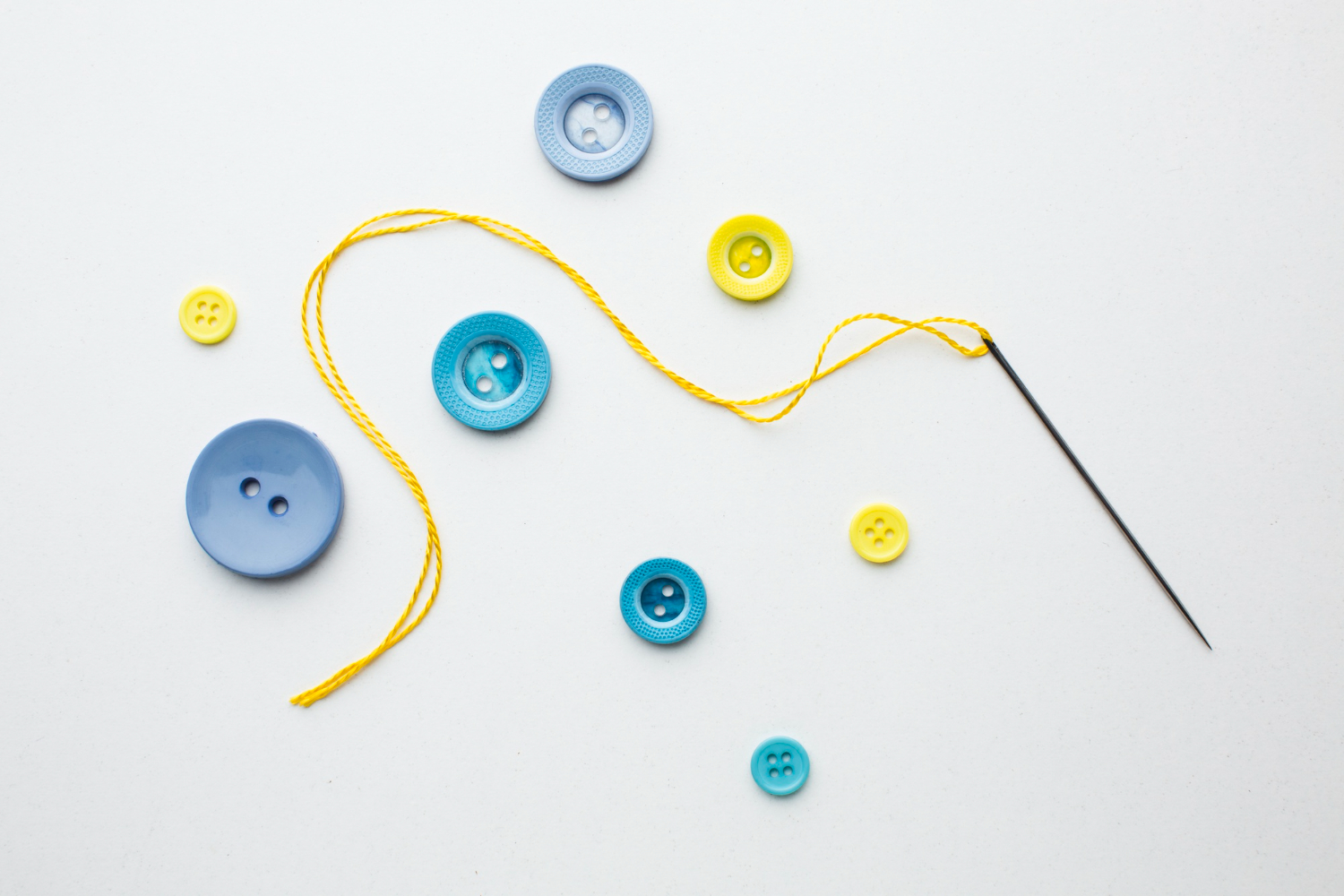
There is a useful test of how hard something is to make: look at what people did before they had it.
Before metal needles, sewing was done with points made of bone, thorn or wood, and the thread was frequently not carried through a hole at all — it was tied on, or the point was pushed through and the thread drawn after it separately.
That works and it is slow, and it limits what can be sewn, because a thick point makes a large hole and the thread has to follow behind rather than being pulled through with it.
A metal needle with an eye does something better: one object makes the hole and fills it with the thread in a single movement. The difficulty was making it.
Why the Eye Is So Hard
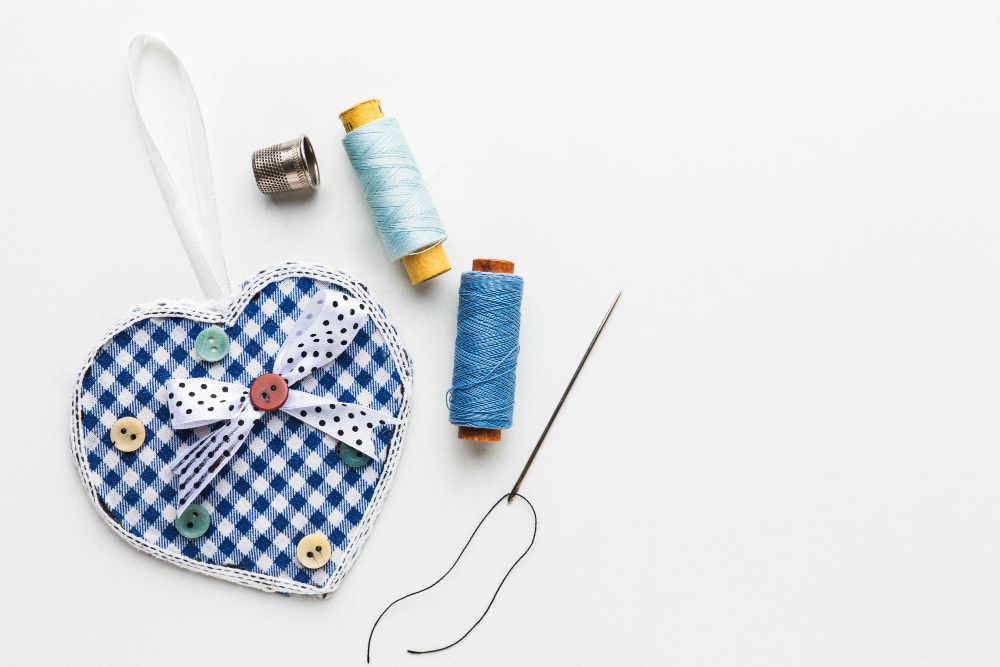
The problem is a combination of scale and stress.
The eye must be large enough to pass the thread and small enough to keep the needle narrow, because a bulge at the eye makes a hole bigger than the thread that follows and every stitch becomes loose.
Producing a hole through something that thin means removing a substantial proportion of the material at that point, which weakens it exactly where the pulling force is applied.
The inside of the hole must be smooth. Any roughness abrades the thread with every stitch, and a thread cut halfway through a seam ruins the work.
And it must be done identically many thousands of times, because a needle is a low-value object and the process has to be fast to be worth doing at all.
That set of constraints — small, strong, smooth, repeatable and cheap — is why the eye rather than the point was the bottleneck.
Like our content? Follow us for more.
How It Was Actually Done
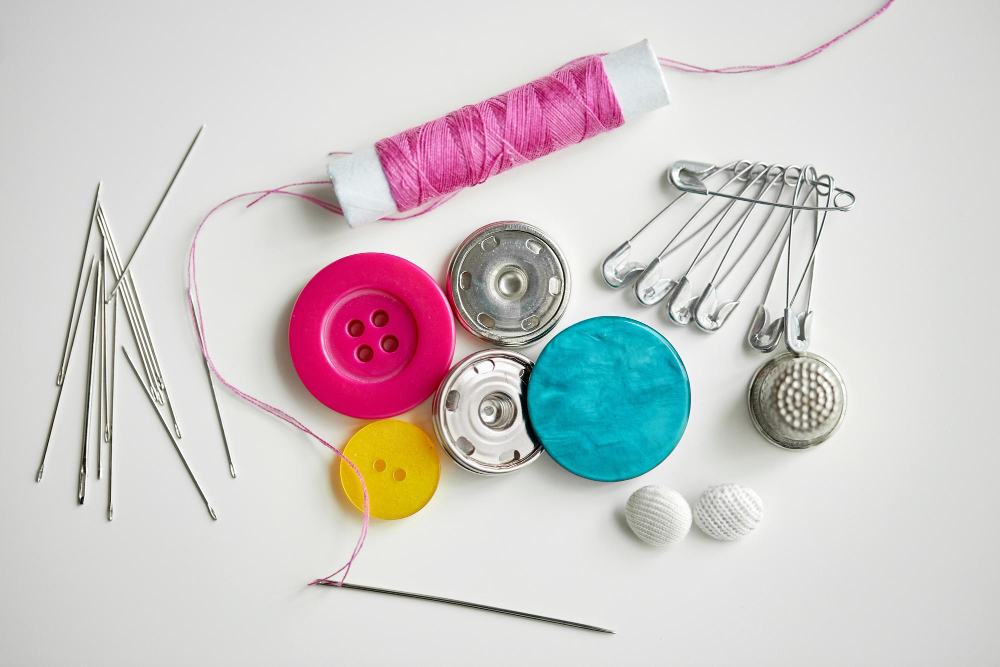
The traditional sequence explains why needles came from specific places.
Wire was cut into lengths of twice a needle, and each length was pointed at both ends, so that each piece would eventually become two needles.
The middle was flattened and the eyes were punched through, two at a time, and the piece was then separated into two needles.
The eyes were smoothed by drawing a fine wire through a group of needles strung together and working them against each other, which rounded the inside of every eye at once.
The needles were then hardened by heating and quenching, which makes them stiff enough to pierce fabric, and tempered so that they bend slightly rather than snapping.
Finally they were polished, in a process that involved rolling large quantities together with abrasive for a very long time, which is what produced the smooth surface that lets a needle pass through cloth easily.
Each of those stages was a separate specialism, and needle districts developed where the whole sequence could be carried out in one place.
There is a finishing point worth adding. The final polish determines how easily a needle passes through cloth, and a needle that drags is frequently not blunt but simply rough – a distinction that matters because one can be corrected and the other cannot.
Why Hardening Matters So Much
The heat treatment determines whether the needle works at all.
A soft needle bends permanently the first time it meets resistance, and a needle that has taken a set is useless because it no longer follows the direction it is pushed.
A needle hardened too far is brittle and snaps, which is worse, because it breaks inside the work and the broken piece is difficult to find.
The target is a needle that flexes elastically under load and returns straight, which is a narrow specification achieved by careful control of heating and cooling.
That is also why needles vary by purpose: a needle for heavy material is thicker and harder, one for fine material is thinner and more flexible, and one for leather has a cutting point rather than a round one.
And it is why a needle that has been bent and straightened is never as good again — the treatment that made it springy has been disturbed at that point.
There is a sizing point worth adding. Needles are numbered, and the numbering runs backwards, so a higher number means a finer needle – a convention that catches out everybody encountering it for the first time.
The Point Is Not Always a Point
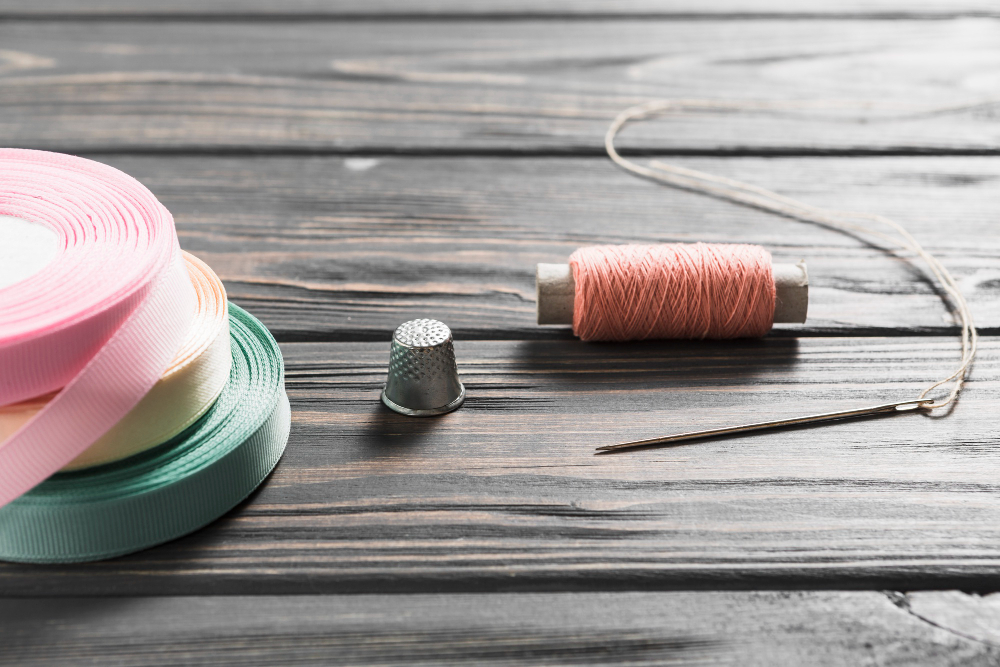
The tip is designed for what it has to pass through, and the differences are functional.
A round tapered point pushes the threads of a woven fabric apart without cutting them, which is what is wanted for most sewing, since cutting the threads weakens the cloth.
A blunter, rounded point is used for knitted material, because knitting is made of loops and a sharp point pierces the yarn itself rather than passing between the loops.
A cutting point with edges is used for leather and other dense materials, where nothing can be pushed aside and a slit has to be made.
The length and thickness are matched to the work as well, because a long needle carries more stitches per pass and a short one is more controllable for detailed work.
That variation is why a needle case contains a dozen apparently similar objects, and why using the wrong one produces work that looks subtly wrong without anybody being able to say why.
There is a storage point worth adding. Needles rust, and a rusted needle drags and stains the work, which is why they were kept in cases, stuck into fabric or stored with something absorbent rather than loose in a tin.
Why the Industry Mattered
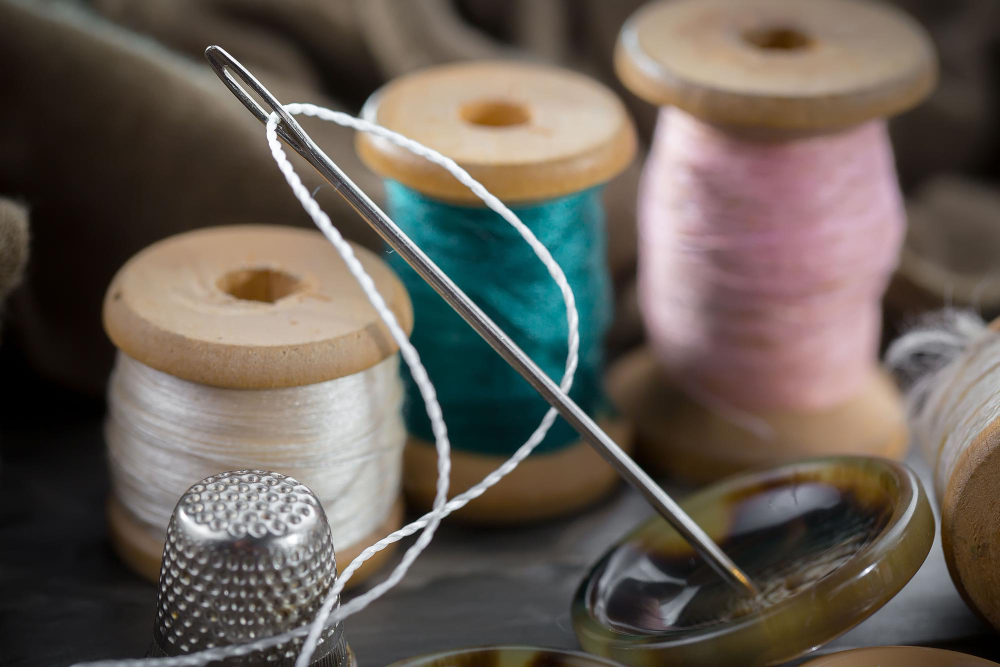
The economics of such a small object are surprising.
Needles were valuable enough to be traded over long distances, given as gifts and listed in inventories, because the skill required to make a good one was scarce.
Whole districts specialised in them, with the various stages divided between workshops and households, and the trade supported a considerable population.
The work was also notoriously unhealthy, particularly the pointing and polishing stages, which generated fine dust in enclosed spaces — an occupational history that is documented and that this article does not attempt to cover.
Mechanisation took over the whole sequence during industrialisation, at which point needles became cheap and the districts declined or converted to other production.
That transition is why a needle now costs almost nothing and why nobody thinks about where it came from.
Pins Are a Different Problem
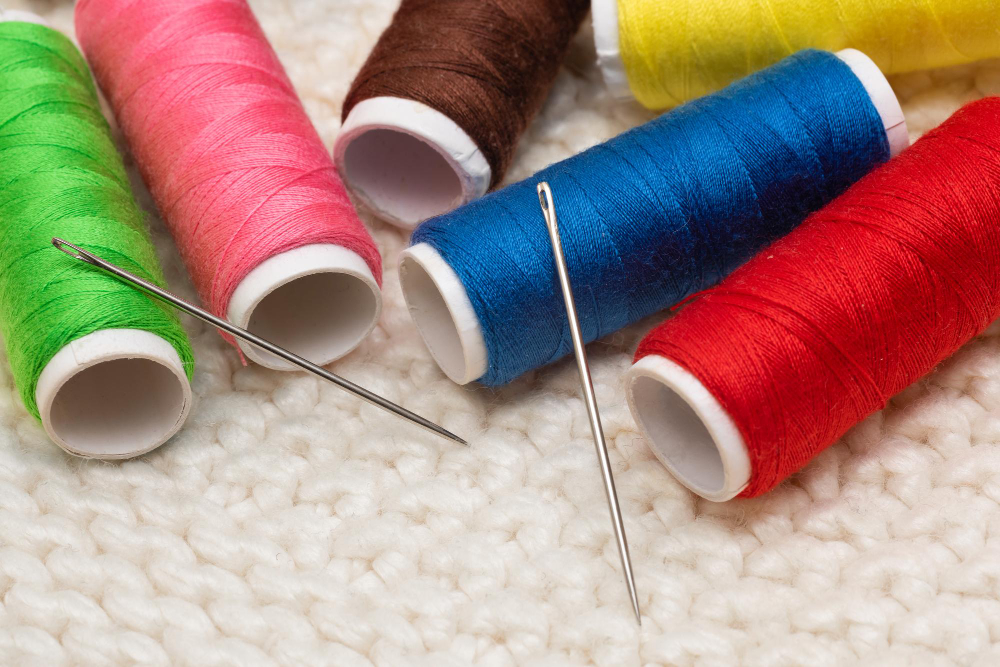
The related object solves an easier version of the same task and reveals what the difficulty actually was.
A pin has a point and no eye, which removes the piercing operation entirely and leaves only the pointing and the head.
That made pins far simpler to manufacture, and mechanised pin-making arrived earlier and became an example used to explain how dividing a job into stages transforms output.
The head is the interesting part. A wire with a plain end pulls straight through cloth, so something has to be added at the top – originally a separate small piece of wound wire fixed on, and later a head formed by flattening the wire itself.
Pins also do a different job. They hold temporarily, are removed rather than left, and are expected to be lost in quantity, which is why they were made by the hundred and needles individually.
That difference in purpose is why the two objects, which look almost identical to anybody glancing at a sewing box, were made by different processes in different places by different trades.
And it is why a pin is disposable and a needle was not: one is a temporary fastening and the other is a tool.
What the Object Represents
The general point is about invisible difficulty.
A sewing needle is among the simplest objects anybody handles: a small piece of metal with a point and a hole.
It also required metallurgy, wire drawing, precision piercing, heat treatment and polishing, organised into a sequence, in order to exist at all — and for most of history it was accordingly expensive.
The measure of a technology is frequently not what it looks like but what had to exist before it could be made, and by that measure the needle is a substantially more advanced object than most things sitting beside it in a drawer.
Which is worth remembering the next time one is lost in a carpet. That is not a trivial object that has gone missing; it is the end product of about six separate trades, and for most of human history losing one would have mattered.
Which is a useful correction to how simplicity is judged. The objects that look least impressive are frequently the ones that took longest to get right, and the clearest evidence is how much they used to cost.
Like our content? Follow us for more.