

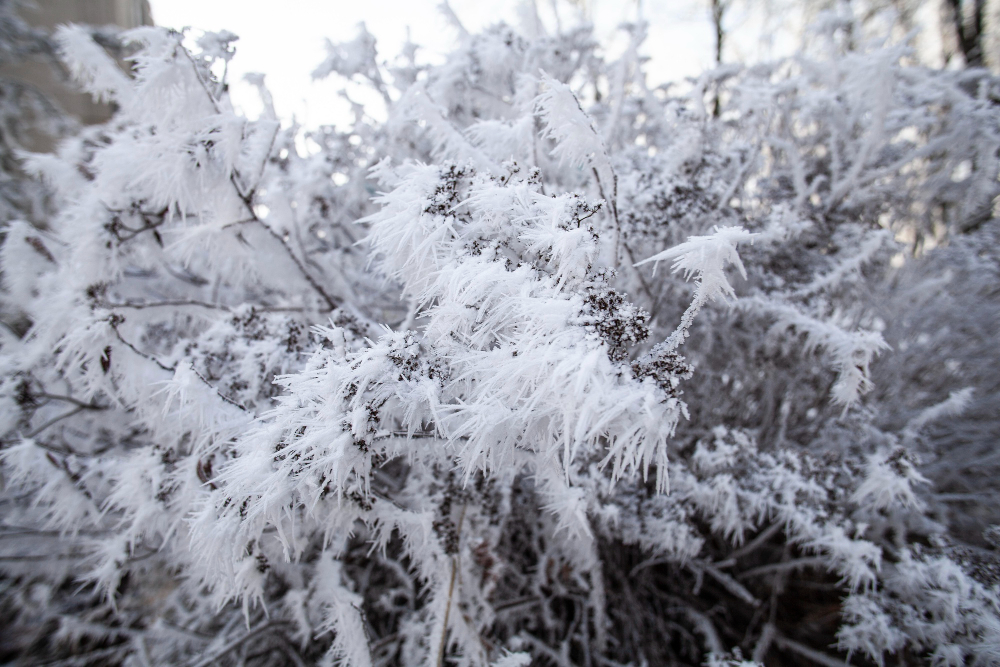
Two facts explain most of this: freezing requires a starting point, and water vapour can turn directly to ice without becoming liquid first. Here are twelve consequences.
1. Freezing Needs Somewhere to Start
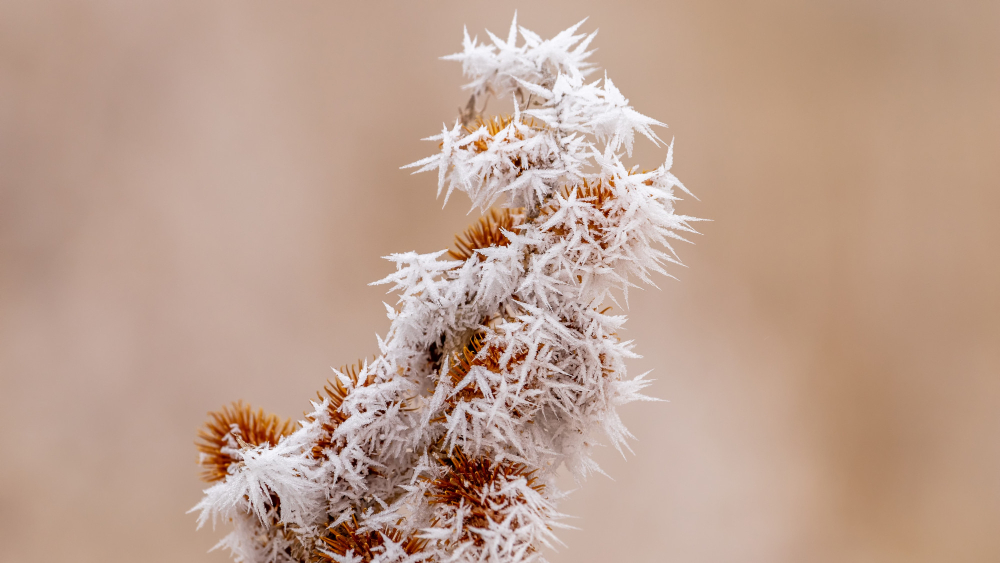
Ice forms around a nucleus – a particle, an imperfection, an existing crystal – and without one, water can cool well below zero and remain liquid.
It is waiting rather than resisting. Nucleation is the requirement that makes freezing unpredictable.
Like our content? Follow us for more.
2. Which Is Why It Can Freeze Suddenly
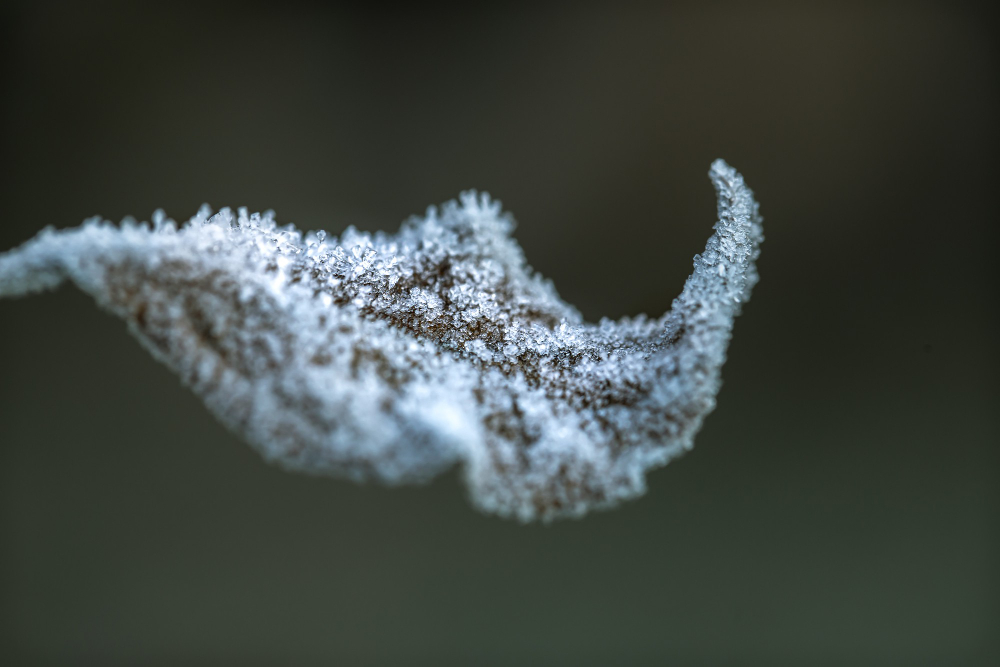
Supercooled water freezes almost instantly once anything provides a starting point, propagating through the whole volume in seconds.
A knock or a particle triggers it. Sudden propagation is what supercooling sets up.
3. Frost Is Not Frozen Dew
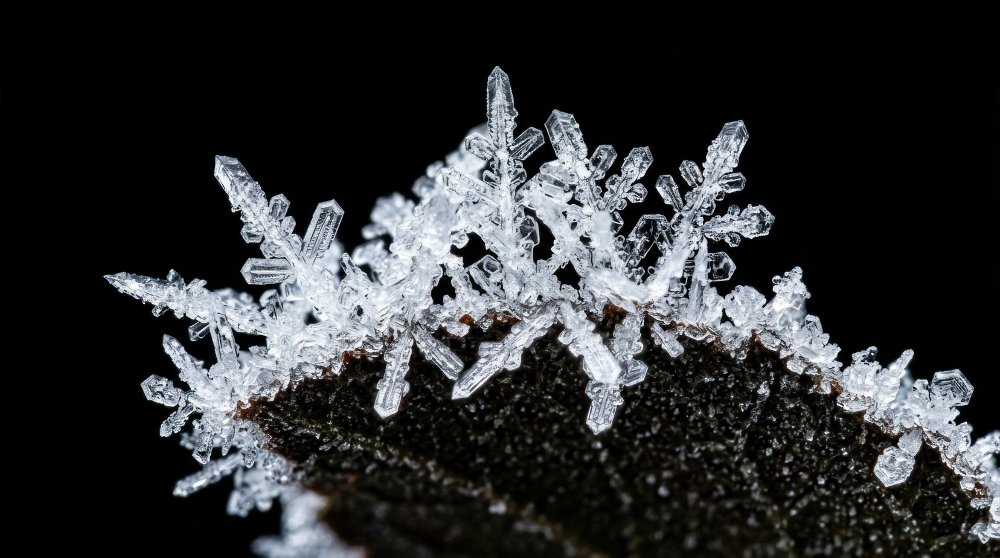
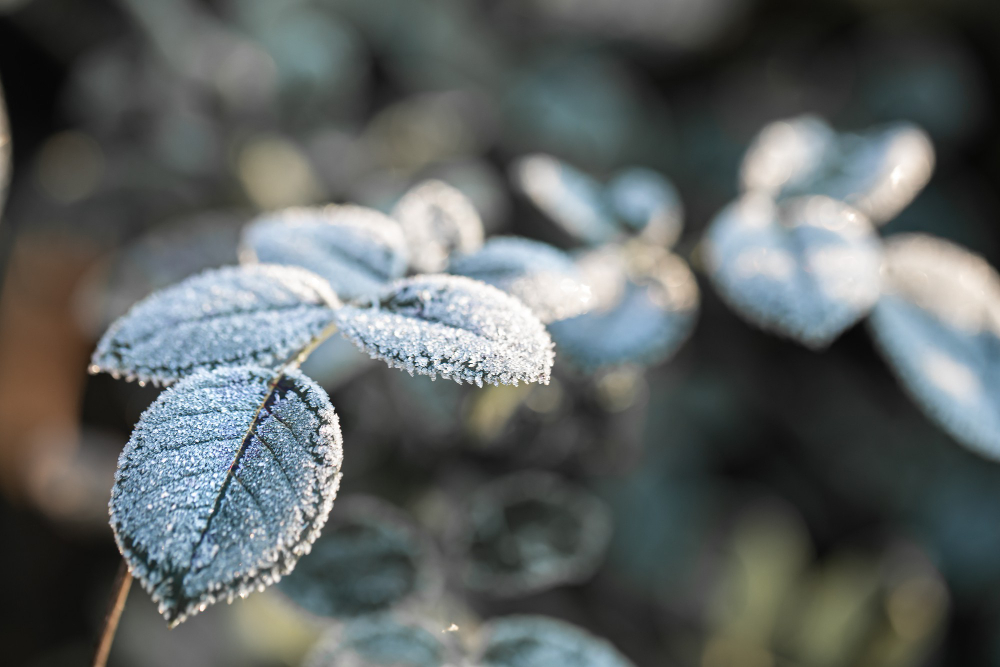
Frost forms when water vapour turns directly into ice on a surface without ever being liquid – which is a different process from a droplet freezing.
Nothing was ever wet. Direct deposition is the fact that explains the crystal shapes.
4. It Appears Where Heat Has Escaped
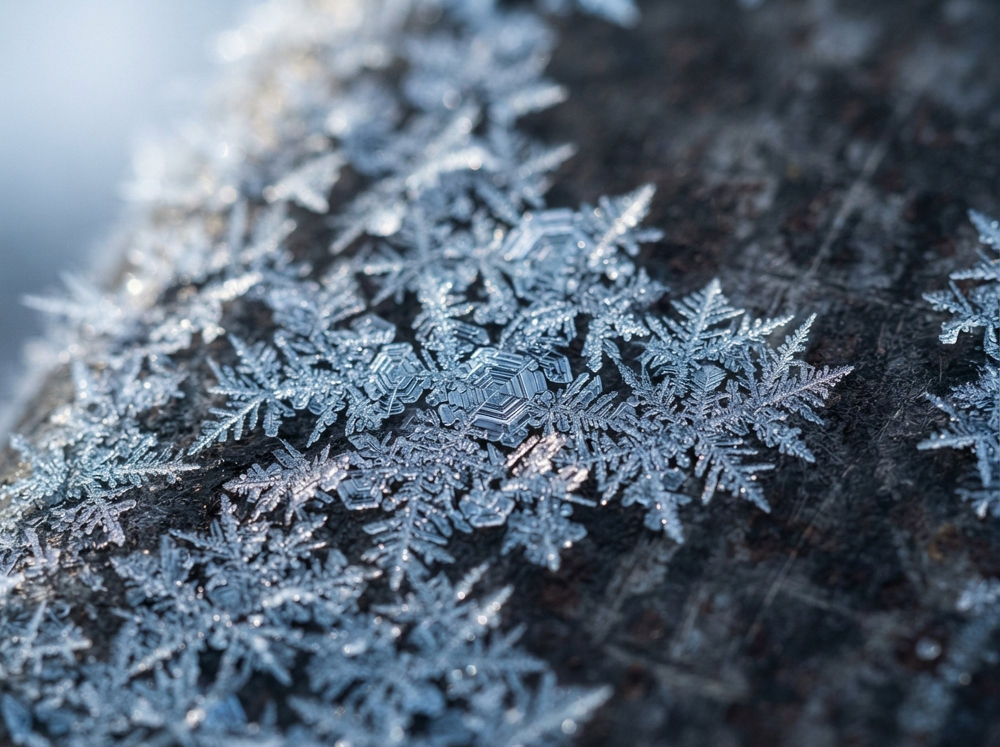
Surfaces that radiate their heat to a clear sky cool below the surrounding air, which is why frost forms on car roofs, grass and open ground while sheltered surfaces stay clear.
It follows the view of the sky. Radiative cooling is what selects which surfaces frost.
5. Under a Tree Stays Clear
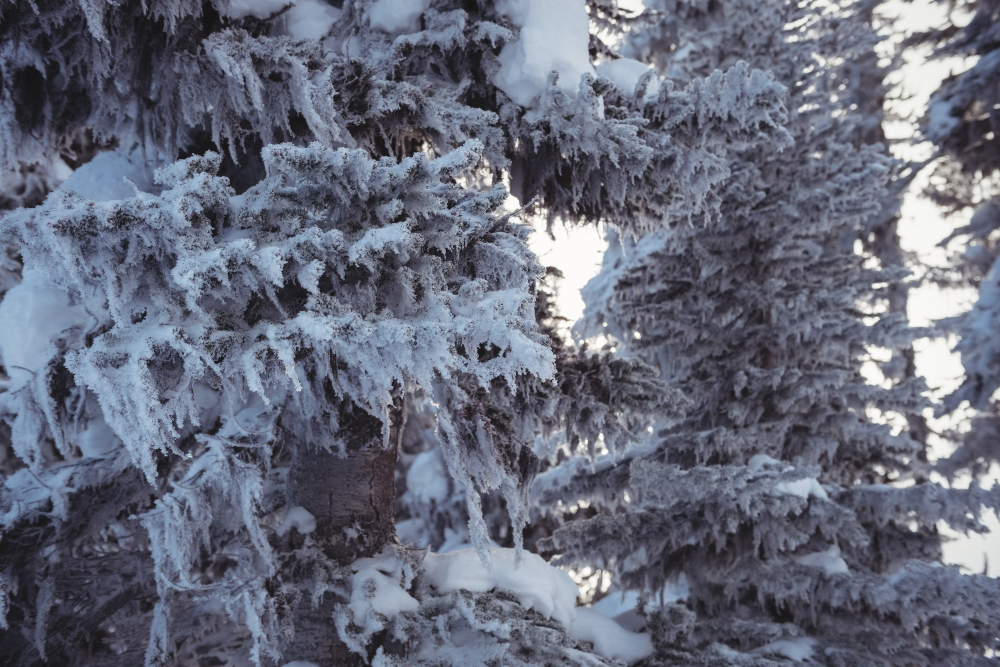
Anything overhead blocks the view of the cold sky and radiates back downward, which keeps surfaces beneath warmer – producing the frost-free patches under trees and eaves.
The pattern is a map of what is above. Sky exposure is why frost is patchy.
6. Dew Forms Instead Where It Is Warmer
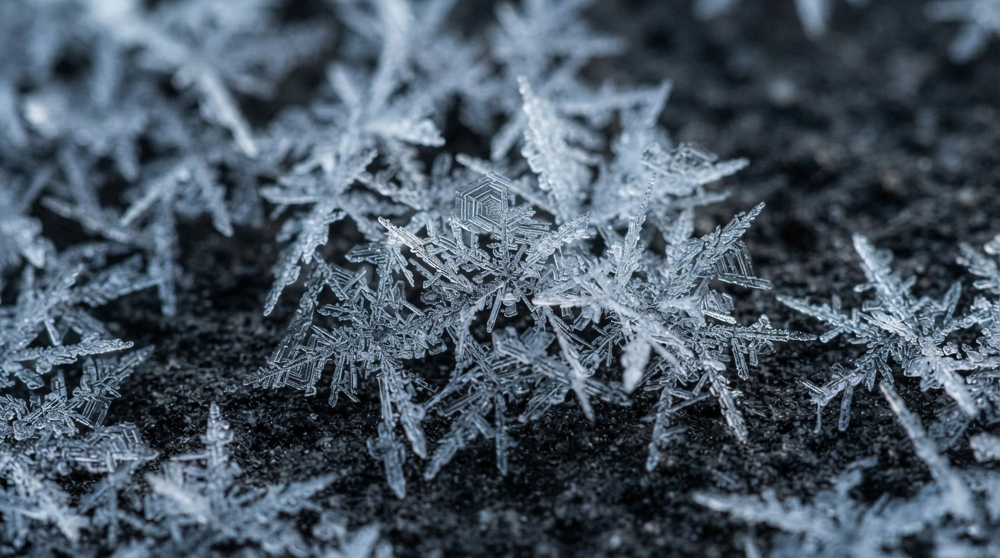
If the surface is cool enough for vapour to condense but above freezing, the result is liquid droplets – so dew and frost are the same process at different temperatures.
One threshold separates them. Surface temperature is the only variable deciding which appears.
7. Feathery Frost and Granular Frost Are Different Things
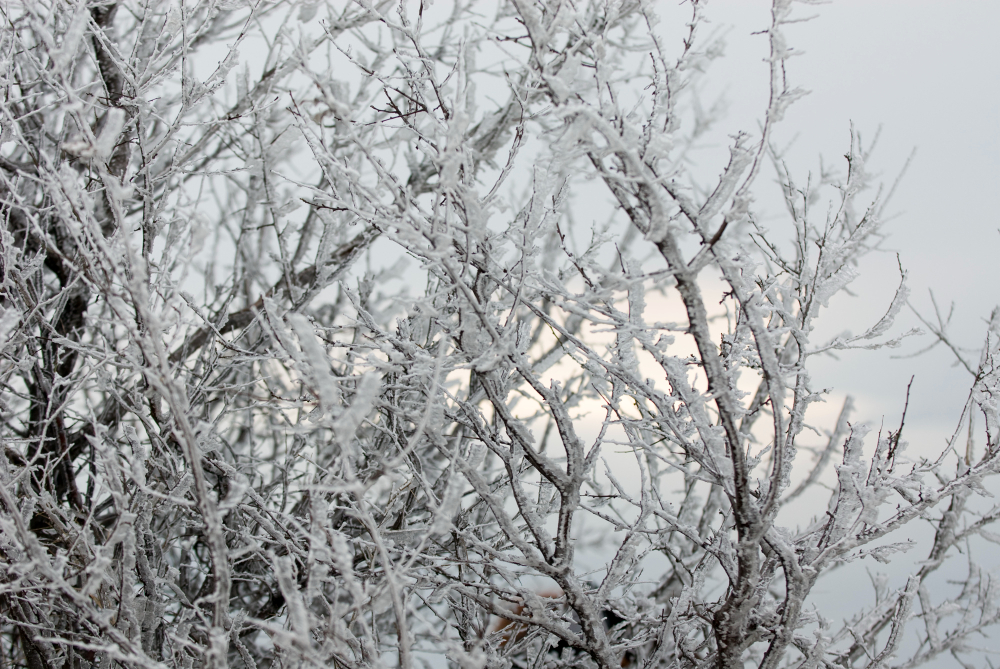
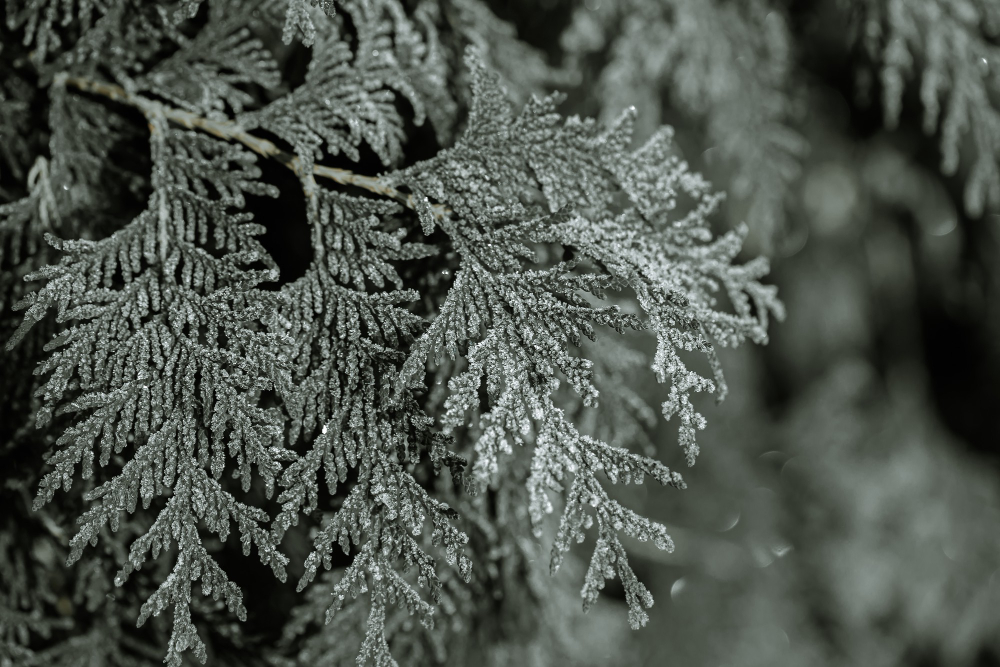
Frost grown from vapour produces delicate branching crystals; supercooled droplets freezing on contact produce a rough opaque coating instead.
They look nothing alike and form differently. Deposition versus impact is the distinction between the two.
8. Freezing Water Pushes Outward
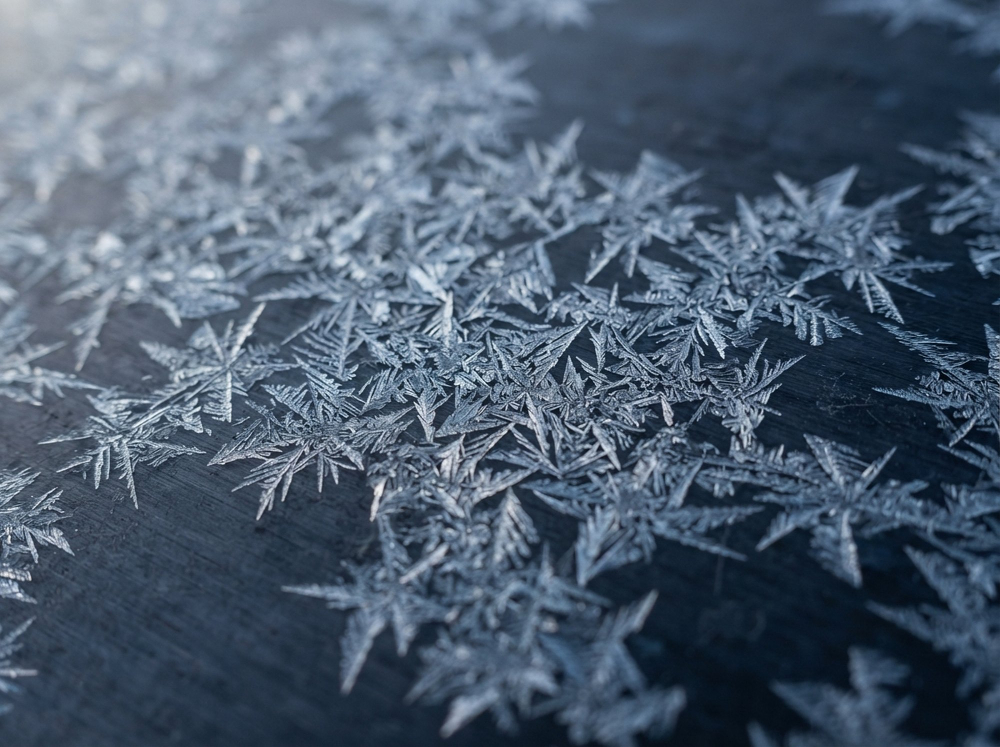
Water expands as it freezes rather than contracting, which is why it splits pipes, cracks containers and breaks rock apart along cracks it has seeped into.
Almost nothing else does this. Expansion on freezing is why ice is destructive.
9. Black Ice Is Just Thin and Clear
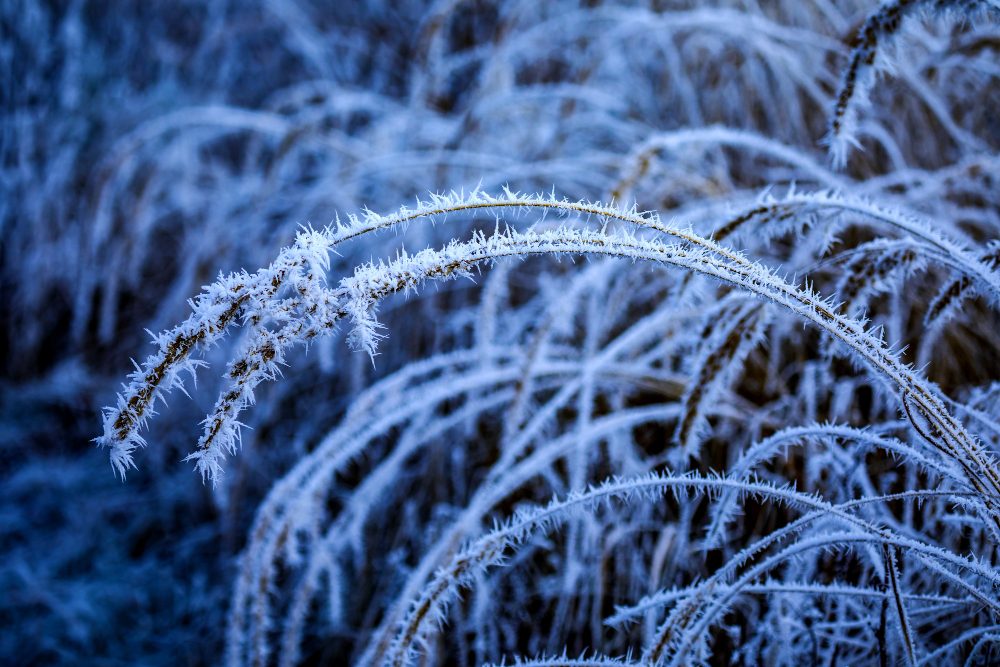
A thin transparent layer over a dark surface shows the colour beneath rather than itself, which makes it effectively invisible while being extremely slippery.
Nothing about it is dark. Transparency over a dark surface is the whole of the phenomenon.
10. Icicles Are Built by Repeated Freezing
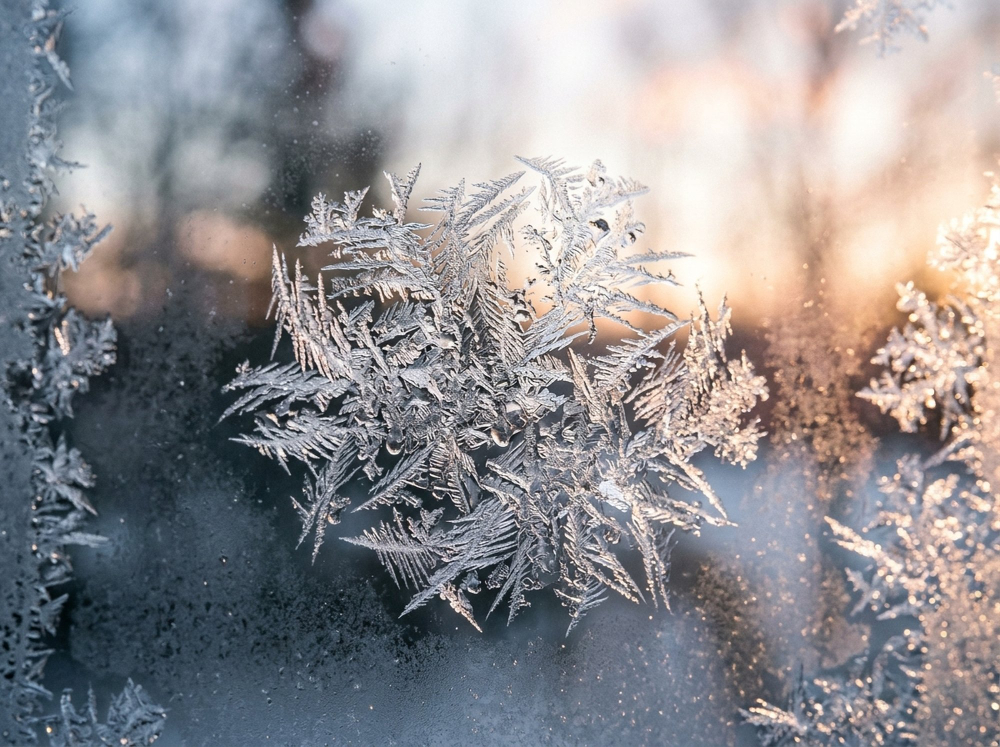
Water running down a surface freezes progressively at the tip while more flows over the outside, which lengthens and thickens it in layers.
It requires melting and freezing at once. Alternating conditions are what an icicle records.
11. Salt Water Freezes Differently
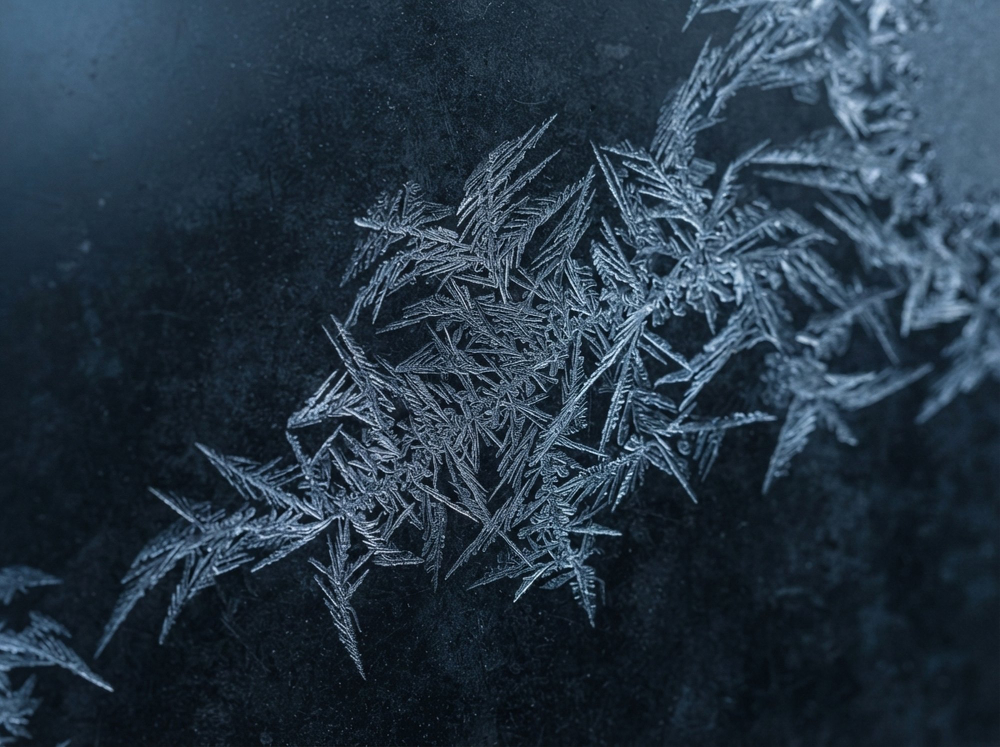
As sea water freezes, salt is excluded from the forming ice and concentrates in the remaining liquid, which lowers its freezing point further.
The ice itself is far less salty than the water. Salt exclusion is why sea ice behaves unlike lake ice.
12. Snow Crystal Shape Records the Conditions
The form a crystal takes – plate, column, branched star – is determined by the temperature and humidity where it grew, which is why shapes vary between snowfalls.
It is a record of where it formed. Growth conditions are what the shape actually encodes.
Needing Somewhere to Start and Skipping the Liquid
Freezing that waits for a nucleus, vapour becoming ice without ever being water, surfaces cooling by radiating to the sky and ice that expands rather than shrinking.
One necessary note: the ninth item describes something truly hazardous, and nothing above is guidance for dealing with it. Ice on surfaces and on any body of water is a serious matter, conditions vary enormously and cannot be judged by appearance, and the appropriate sources are current local warnings rather than an article about crystal formation.
Like our content? Follow us for more.
