

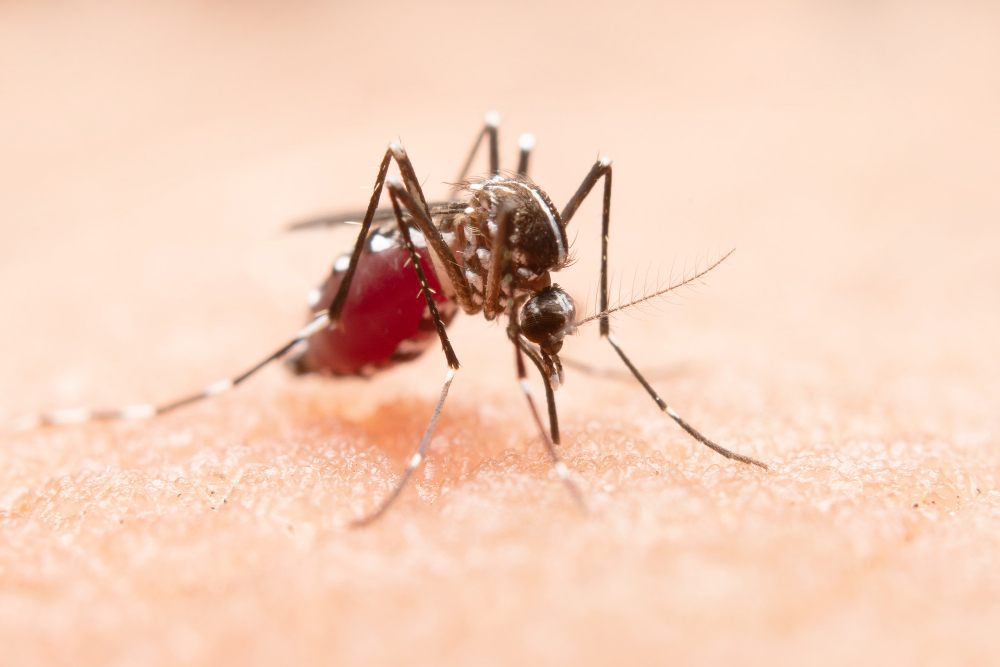
The intuitive model of a mosquito bite is that something sharp went into you and the hole is now irritated. Almost none of that is right. There is no single sharp thing, the hole is not the problem, and the itch is not caused by the mosquito at all. It is caused by you, in response to a substance the insect deliberately put into your skin to keep you from noticing it in the first place.
It Is Not a Needle. It Is Six Tools
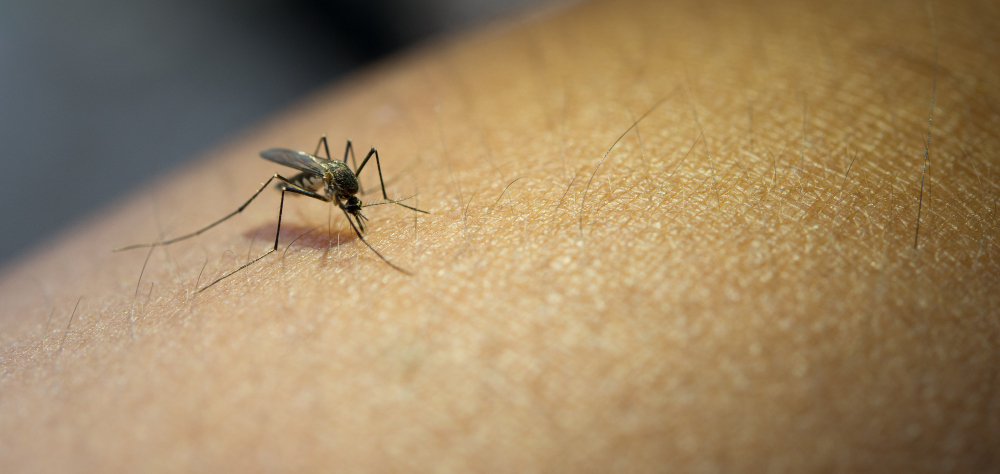
The thin dark line pointing down from a mosquito’s head looks like a single spike. It is a sheath, and inside it are six separate structures that work together.
Two of them are serrated, like extremely fine saw blades, and they cut rather than pierce. Two more hold the opening apart. One is the tube that draws blood up. The last is the tube that pushes saliva down.
The sheath itself does not enter the skin. It buckles backwards as the insect presses in, folding up like a bent drinking straw while the working parts go through.
The serrated design matters. A smooth point has to push tissue aside, which produces pressure that nerve endings detect. Sawing through with fine teeth generates far less force, and this is one of several reasons the feeding itself is usually imperceptible. Engineers working on painless injection have studied this arrangement directly.
The insect is also not simply jabbing and hoping. Once in, the probing structure bends and searches, sometimes for a minute or more, hunting for a blood vessel. Many attempts fail, and the mosquito withdraws and starts again elsewhere.
Like our content? Follow us for more.
The Saliva Is the Whole Problem
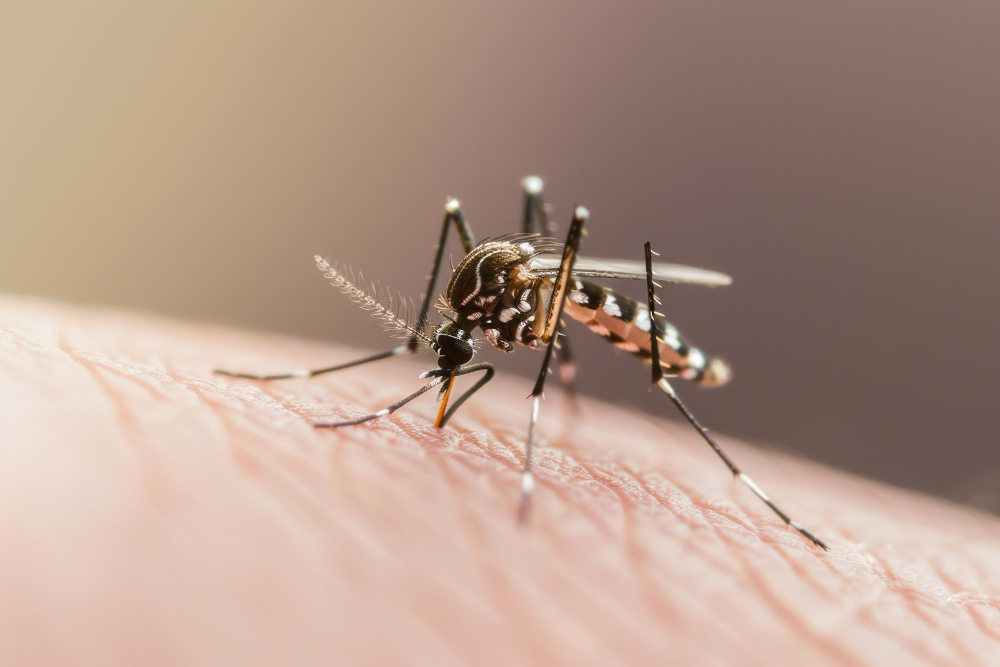
Blood is designed to stop flowing the moment a vessel is breached. That is a problem for an animal trying to drink it through a tube narrower than a hair, and the mosquito’s solution is chemical.
As soon as feeding begins, saliva is pumped down the delivery tube into the wound. It contains a mixture of compounds, and their jobs are complementary: some prevent clotting, some stop platelets clumping together, and some dilate the local blood vessels so more blood arrives at the puncture. The net effect is to keep the tap open long enough to finish.
Some of those compounds also appear to blunt the immediate sensation, which is consistent with what people report. A mosquito that is discovered mid-meal is usually discovered visually, not because anything was felt.
So the saliva exists to make the feeding fast, reliable and unnoticed. It succeeds, and then it becomes the reason you spend the next four days scratching.
Your Immune System Does the Rest
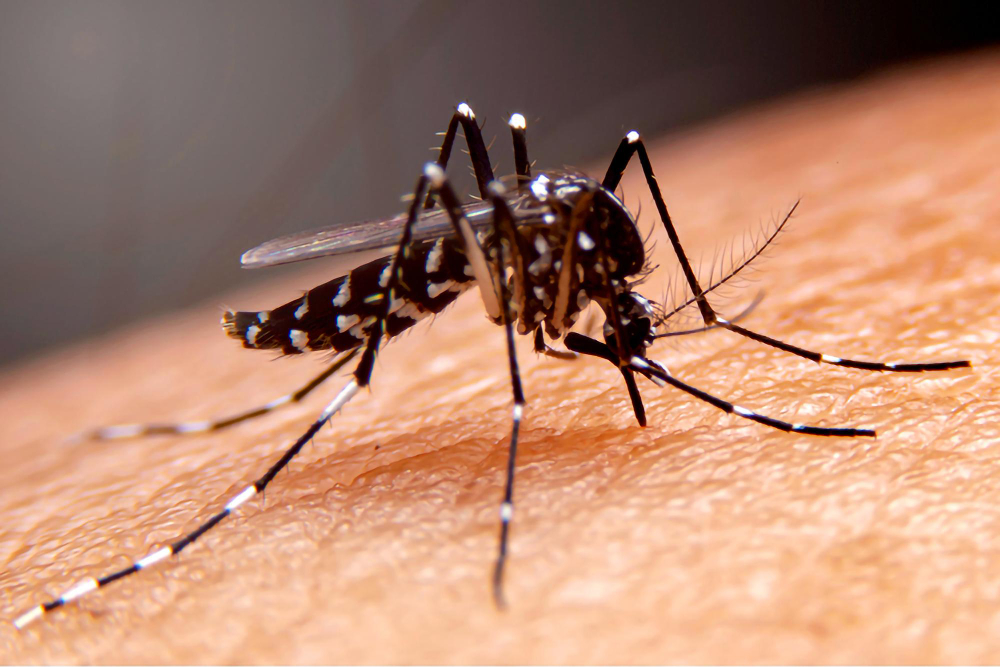
The proteins in mosquito saliva are foreign, and your immune system treats them accordingly.
Mast cells in the skin recognise them and release histamine, along with other signalling compounds. Histamine makes nearby small blood vessels leak fluid into the surrounding tissue, which produces the raised pale bump, and dilates them, which produces the red flare around it. It also acts directly on nerve fibres, and it is that action which produces itch rather than pain.
This is why the reaction is delayed. The bite happened instantly; the swelling takes minutes, and the itch frequently peaks a day later. The delay is the immune response ramping up, not the injury developing.
The practical consequence is that a mosquito bite is closer to a small, localised allergic reaction than to a wound. Antihistamine products work on bites for exactly the reason they work on other allergic responses: they are targeting histamine, which is the actual cause. This is a description of the mechanism rather than a recommendation, and anything beyond ordinary itching is a matter for a pharmacist or a doctor.
Which Explains Why Some People Barely React
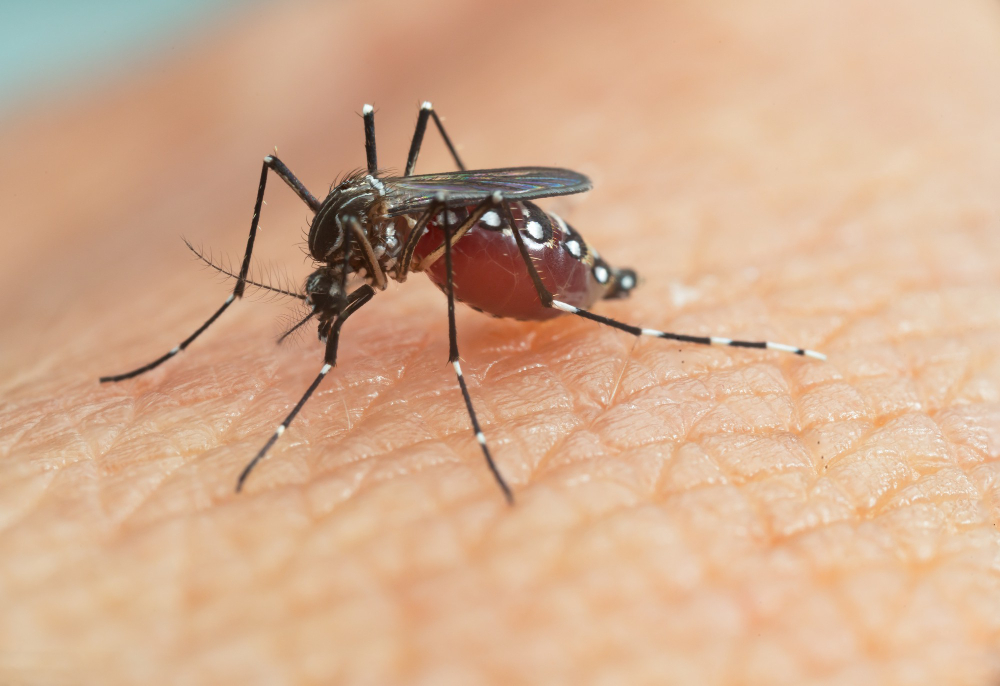
The variation between individuals is large and it has a straightforward explanation once the mechanism is clear. The size of the reaction depends on the immune response, not on how much blood was taken or how deep the insect went.
People who have had very little exposure often react strongly, because the proteins are unfamiliar. People with sustained, repeated exposure over years frequently react less, and some stop producing a visible bump almost entirely, because the immune system has become desensitised to a substance it now encounters constantly and treats as unremarkable.
Children typically react more than adults for the same reason, and visitors to a region typically react more than residents. It is the same process as any other tolerance developing through repetition.
The reverse also occurs. A minority of people develop unusually large local reactions, and the cause is again immunological rather than anything about the bite itself.
Only the Females Bite, and Not for Food
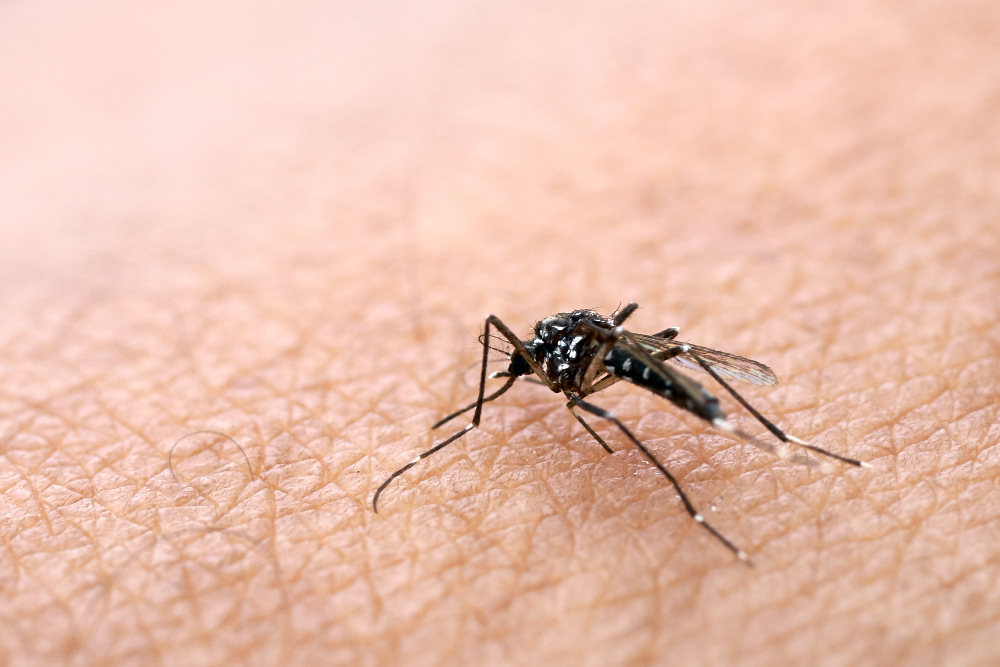
Male mosquitoes do not bite anything. They feed on nectar and plant sugars, as do females. Blood is not the mosquito’s food.
Blood is a resource for egg production. A female needs protein and iron to develop a batch of eggs, and that is what the meal is for. She may feed several times across her life, producing a batch after each.
This is why mosquito activity tracks breeding and standing water so closely, and why the animal is aggressive about obtaining something it does not personally live on.
How They Find You, and Why It Is Not About Blood Type
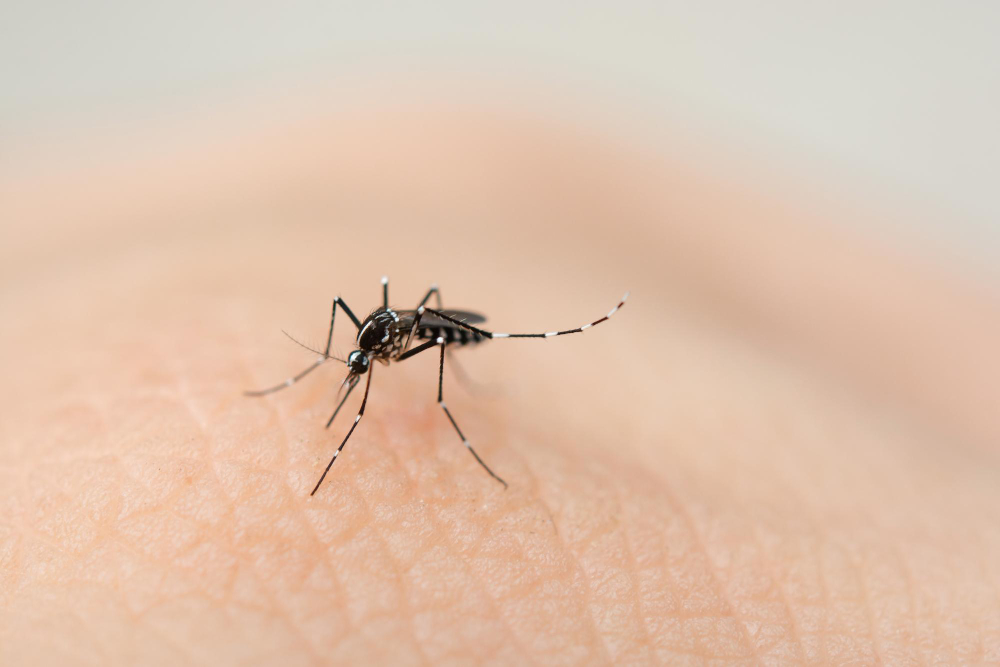
Mosquitoes locate hosts in stages, and the sequence explains why some people in a room are targeted more than others.
At distance, the primary cue is carbon dioxide. Exhaled breath produces a plume that a mosquito can detect and track from many metres away. This alone accounts for a good deal of the variation between individuals, since larger people and people breathing harder emit more.
Closer in, body odour takes over. Skin produces a complex mixture of compounds, much of it generated by resident skin bacteria, and mosquitoes respond strongly to particular components. The composition varies between people and is influenced by genetics, and studies using identical and non-identical twins suggest a substantial heritable component to attractiveness.
Closer still, heat and moisture guide the final approach, which is why the ankles and feet are common targets and why a warm, damp person coming in from exercise is conspicuous.
All of which means the common claim about blood type is the least well-supported part of the story. Some studies have reported differences by blood group and others have not, and the effect, if it exists, is small compared with carbon dioxide output and skin chemistry. It is a good example of a tidy explanation outperforming a messy accurate one.
The best-established individual factor, awkwardly, is beer consumption, which several studies have found increases attractiveness to mosquitoes without anyone establishing a satisfying reason why.
The Bump Has a Timetable, and It Is the Immune System’s
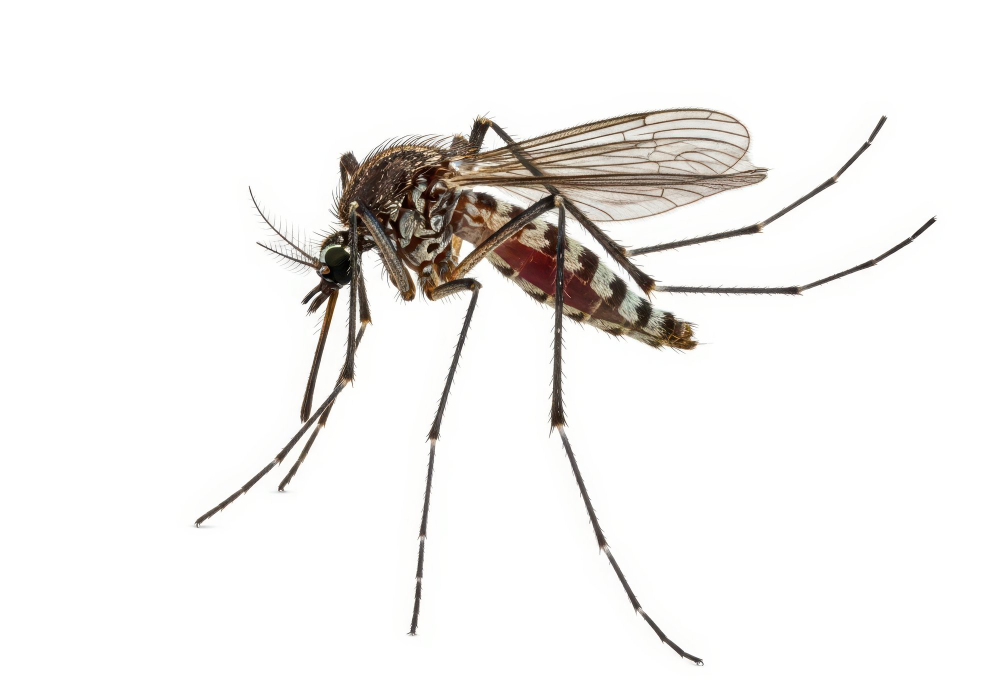
A mosquito bite runs to a schedule that has nothing to do with healing, because there is essentially nothing to heal. Watch it and you are watching an immune response begin, peak and be dismantled.
Nothing visible happens for the first few minutes, while the insect is still there or has just left. The raised pale weal appears within five to twenty minutes as histamine makes local vessels leak fluid into the tissue, and the red flare spreads around it as those vessels dilate. That is the immediate phase, and in many people it subsides within an hour.
Then, frequently, it comes back. A second, slower reaction develops over the following day, producing a firmer, warmer, longer-lasting swelling that is often larger than the first one and itches far more. This delayed phase involves different immune cells arriving at the site rather than the mast cells that fired initially, and it is why a bite can look unremarkable at bedtime and be the main event by the following afternoon.
After that it simply winds down. The fluid is reabsorbed, the vessels return to normal, the cells disperse, and the itch fades over several days. No tissue was lost and no repair was required. The mosquito’s puncture closed within moments of it leaving; everything that followed was a reaction to a few micrograms of protein, and it outlasted the insect that delivered it by a factor of several thousand.
A Bite Is Mostly a Conversation With Yourself
Set aside the serious business of the diseases some mosquito species transmit, which is a separate subject and by far the most important thing about the animal, and an ordinary bite is a curious object.
A mosquito arrived, sawed a very small opening with tools you cannot see without magnification, injected a mixture designed to keep your blood flowing and your attention elsewhere, drank for a minute or two, and left. The physical damage is trivial and would heal without you ever knowing.
Everything you actually experience – the bump, the heat, the itch that outlasts the insect by several days – is your own body objecting to the chemistry that was left behind. The mosquito has been gone since before you noticed anything.
There is something worth appreciating in the design, even while you are scratching. The insect needed to open a blood vessel in an animal thousands of times its size, keep the blood liquid against a clotting system built specifically to prevent that, and finish before being detected by a creature that could end the transaction instantly. It solved all three with a folding sheath, six microscopic tools and a few micrograms of chemistry, and the only reason you know it happened at all is that your immune system kept the receipt.
Like our content? Follow us for more.
