

The intuitive picture is that an infection generates heat, the way a fire in a room raises the room’s temperature. It does not work like that. The heat is produced by you, deliberately, in response to a decision taken somewhere in the base of your brain, and the whole sequence of feeling cold, then hot, then drenched is that decision being implemented and then reversed.
The Body Has a Target Temperature
Human temperature is regulated the way a heated building is regulated. There is a target value, there is a sensor comparing the actual value to it, and there are systems that switch on when the two do not match.
The controller sits in the hypothalamus, at the base of the brain, and it takes readings from the skin, from deep tissue and from the blood passing through it. When the body is below target it acts to gain heat: blood vessels in the skin narrow so less warmth is lost, hairs stand up, and muscles begin shivering, which is contraction purely to generate heat rather than movement. When the body is above target it acts to lose heat: those vessels widen and sweating begins.
That target is normally held remarkably steady, within a fraction of a degree, and it moves slightly through the day – lowest in the early hours, highest in the late afternoon. The often-quoted figure of 37 degrees comes from a nineteenth-century study, and more recent large datasets put the average slightly lower, with a good deal of individual variation. Anybody’s normal is their own.
Fever is not a failure of this system. It is the system being given a different number.
Like our content? Follow us for more.
What Moves the Number
When the immune system encounters something it recognises as an invader, cells release signalling molecules. Some of those reach the brain, and the hypothalamus responds by producing a compound that raises the target.
That is the whole mechanism. Nothing has broken and nothing is overheating. The set point has been moved upward, and every system that maintains temperature now regards the body’s current, perfectly normal temperature as too cold.
So they all switch on at once. Skin vessels constrict, which is why someone with a rising fever looks pale and feels cold to the touch while their core temperature is climbing. Shivering starts, sometimes violently, because shivering is the body’s fastest way of making heat. Behaviour changes too: the person wants blankets, wants to curl up, wants to be warm, and those urges are the controller recruiting the rest of the body into the effort.
This is the part that gives the game away. A person shivering under a blanket with a temperature of thirty-nine degrees is not being heated by an infection. They are actively manufacturing heat, against a room that is not cold, because their brain has told them they are freezing.
The importance of that one compound is visible in how fever is treated. The common fever-reducing drugs work by blocking its production, which lowers the set point back down rather than cooling the body directly. Nothing is being chilled; the target is being moved, and the body then sheds the excess by itself.
Why the Chill Is Followed by the Sweat
Once the body reaches the new elevated target, the shivering stops and the sense of cold goes with it. The person now feels hot, because they are hot, and the temperature is being held steady at the new value.
Then the infection is dealt with or the treatment takes effect, the signalling stops, and the set point drops back to normal. At that instant the body is well above target, and everything reverses.
Skin vessels dilate, the person flushes, and sweating begins in earnest. This is the drenching sweat familiar from any fever breaking, and it is not the illness leaving the body. It is the cooling system running at full output to shed a couple of degrees of heat the body no longer wants.
The sequence is therefore diagnostic of the mechanism. Cold first, because the target went up. Hot in the middle, because the target was reached. Soaked at the end, because the target came down. A passive heating process would produce none of that.
The Reason It Exists
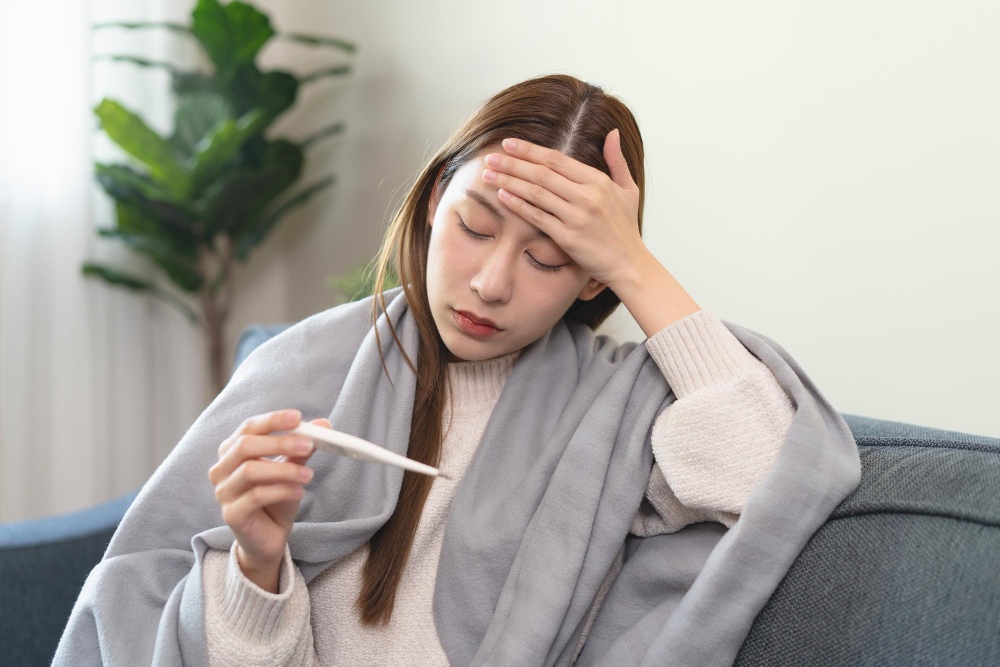
An elevated temperature is metabolically expensive – the body’s energy consumption rises measurably – and it makes the person feel awful. A costly, unpleasant response that has been conserved across an enormous range of animals is unlikely to be pointless.
Fever is very old. Reptiles, amphibians, fish and insects do not generate heat internally, but when infected many of them move to warmer places and hold themselves at a higher temperature, which is called behavioural fever. The same response, achieved by relocating rather than by shivering, appears throughout the animal kingdom. Something is being bought.
Several things appear to be. Many bacteria and viruses replicate less efficiently at higher temperatures, since their own enzymes have an optimum and human body temperature already sits near the upper end of it. Several parts of the immune response run faster when warm: immune cells move and multiply more quickly, and some defensive processes are directly temperature-sensitive. And iron, which many bacteria need, is sequestered away during the response, so the environment becomes less hospitable in more than one way at once.
The evidence that fever helps is reasonably strong in animal studies, where blocking it can worsen outcomes for some infections. In humans the picture is less clear-cut, partly because fever is uncomfortable and it is not straightforward to study leaving it untreated. The honest position is that fever is clearly a defence, and how much difference any individual fever makes is not settled.
The Limits of the Set Point Story
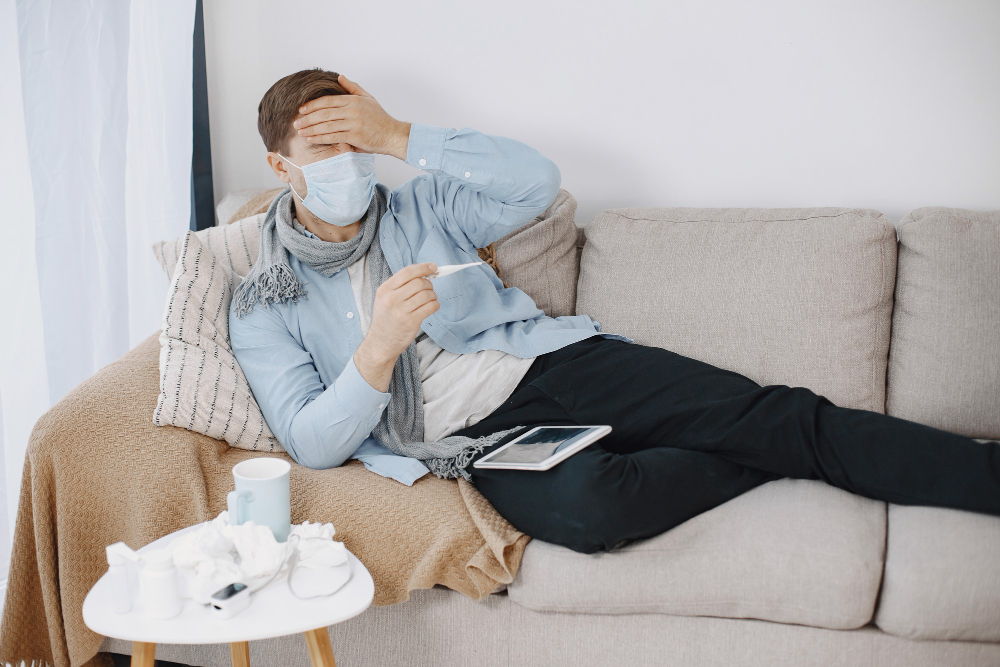
Two things need separating, because conflating them causes real confusion.
A fever is a regulated rise: the target moved and the body reached it deliberately. The body is still in control, and the temperature is being held at a value it chose.
Overheating is different. In heat illness, the target has not moved. The body is trying to stay at its normal temperature and failing, because it cannot shed heat as fast as it is gaining it from exertion or from the environment. Temperature rises because regulation has been overwhelmed, not because it is doing something.
Those are opposite situations that look similar on a thermometer, and they behave differently. A fever generally plateaus, because a controller is holding it somewhere. Overheating does not plateau; it keeps climbing until something changes, which is why it is dangerous in a way that ordinary fever is not.
This piece is a description of the physiology and not medical advice. Fever in an infant, a very high or persistent temperature, a fever with other serious symptoms, and any suspected heat illness are all matters for a doctor rather than an article, and anybody unsure about a temperature should ask one.
Why the Aches and the Tiredness Come With It
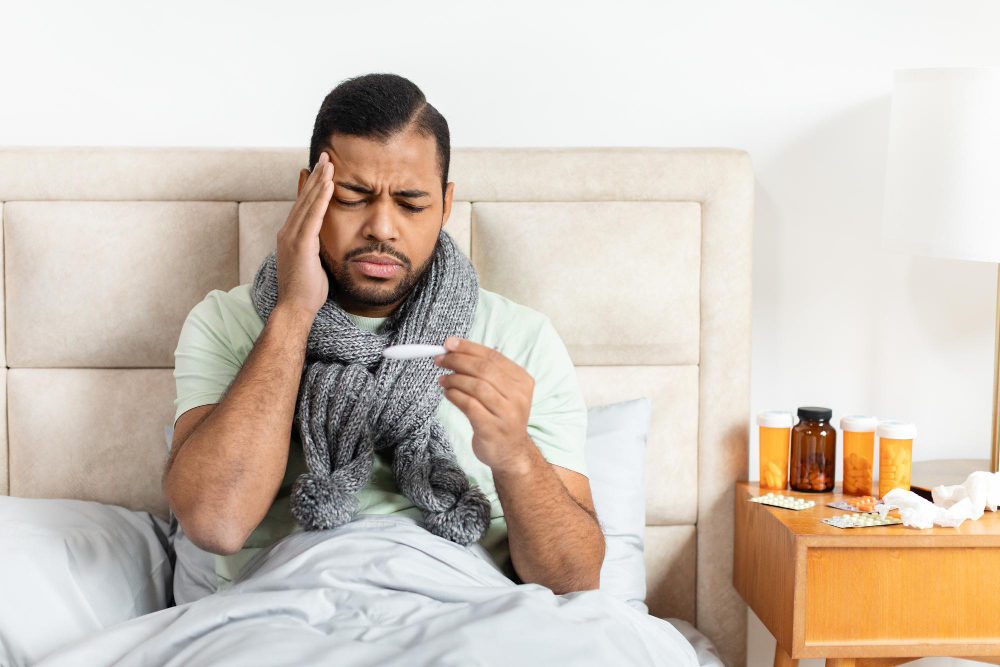
The other symptoms of feeling ill are usually attributed to the fever, and mostly they are siblings of it rather than consequences.
The same immune signalling molecules that raise the temperature also act on the brain to produce a coordinated package: loss of appetite, loss of interest, withdrawal, aching, sleepiness. Researchers call it sickness behaviour, and the argument is that it is as purposeful as the fever – an animal that stops foraging, stops socialising and lies still is conserving energy for the immune response and, incidentally, not spreading anything.
That is why illness feels so uniform regardless of what caused it. The specific pathogen varies enormously; the set of sensations does not, because they are produced by your own signalling rather than by the organism.
The muscle aches have a more direct explanation too. Some of the same compounds sensitise pain receptors, which is why ordinary movement hurts during a fever and stops hurting when it resolves, without anything having happened to the muscle.
Where the Temperature Is Measured Changes the Answer
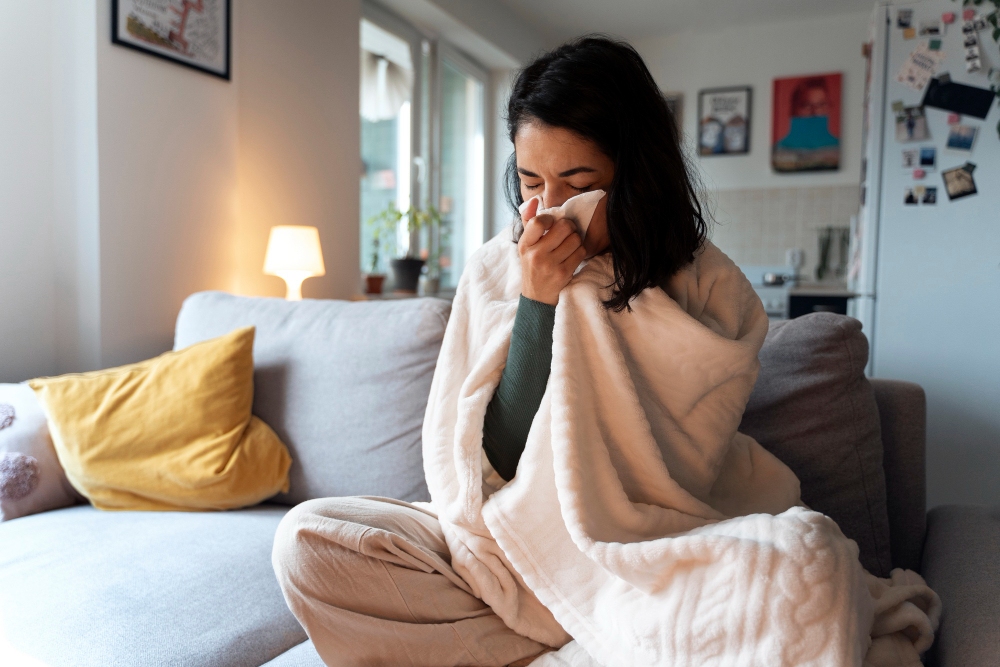
One practical consequence of all this is that a fever does not have a single value, because different parts of the body are at different temperatures by design.
The regulated quantity is core temperature – the deep body, where the organs are. That is what the hypothalamus is controlling and what the set point refers to. Everywhere else is a compromise between the core and the outside.
Skin is the extreme case. Skin temperature is not being held anywhere in particular; it is deliberately allowed to swing, because varying it is how the body controls heat loss. During the chill phase of a fever, skin is markedly cooler than usual while the core is climbing, which is precisely the opposite of what it feels like it should be doing.
This is why measurements from different sites do not agree, and why they disagree by different amounts at different stages of a fever. A reading taken under the arm sits below core; a reading in the mouth sits closer but is affected by breathing and by anything recently drunk; a reading in the ear is estimating from a surface near the blood supply to the brain; and forehead devices are reading skin, which is the least regulated site of all.
None of which makes any of them wrong. They are measuring different things, and the gap between them is not error so much as anatomy. It does mean that comparing a reading from one method against a threshold quoted for another is meaningless, and it is a large part of why two people can take a temperature ten minutes apart and reasonably disagree about it.
A Response, Not a Symptom
The useful shift is from thinking of fever as damage to thinking of it as output.
Something arrived. Your immune system identified it, sent a chemical message to your brain, and your brain moved its temperature target upward by a degree or two. Your blood vessels closed, your muscles began shivering, and you went and found a blanket. You held yourself at the new temperature until the threat was handled, then the target dropped and you sweated the difference off.
At no point was anything heating you. You did all of it, and you did it on purpose, using the same equipment you use on a cold morning – which is the reason the first hour of a fever feels exactly like standing outside in winter while a thermometer says otherwise.
Like our content? Follow us for more.
