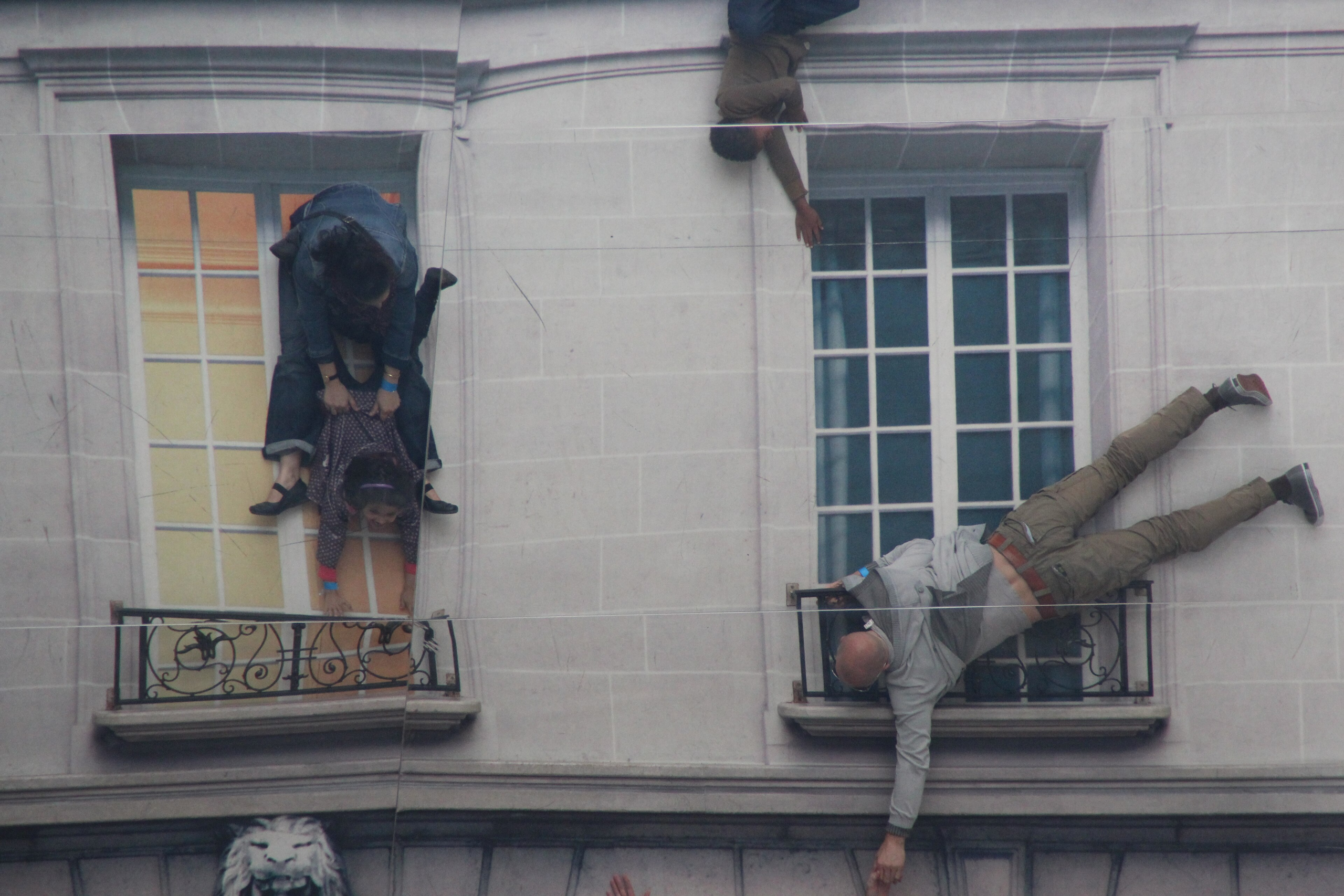
The list of five senses is about two and a half thousand years old and it was never complete. The one left out is the one you are using most heavily right now, to hold your head up, to keep your fingers on whatever you are holding, and to know without looking that your legs are crossed. It has a name, proprioception, and the reason it is invisible is that it works perfectly.
The Receptors Are Inside the Machinery
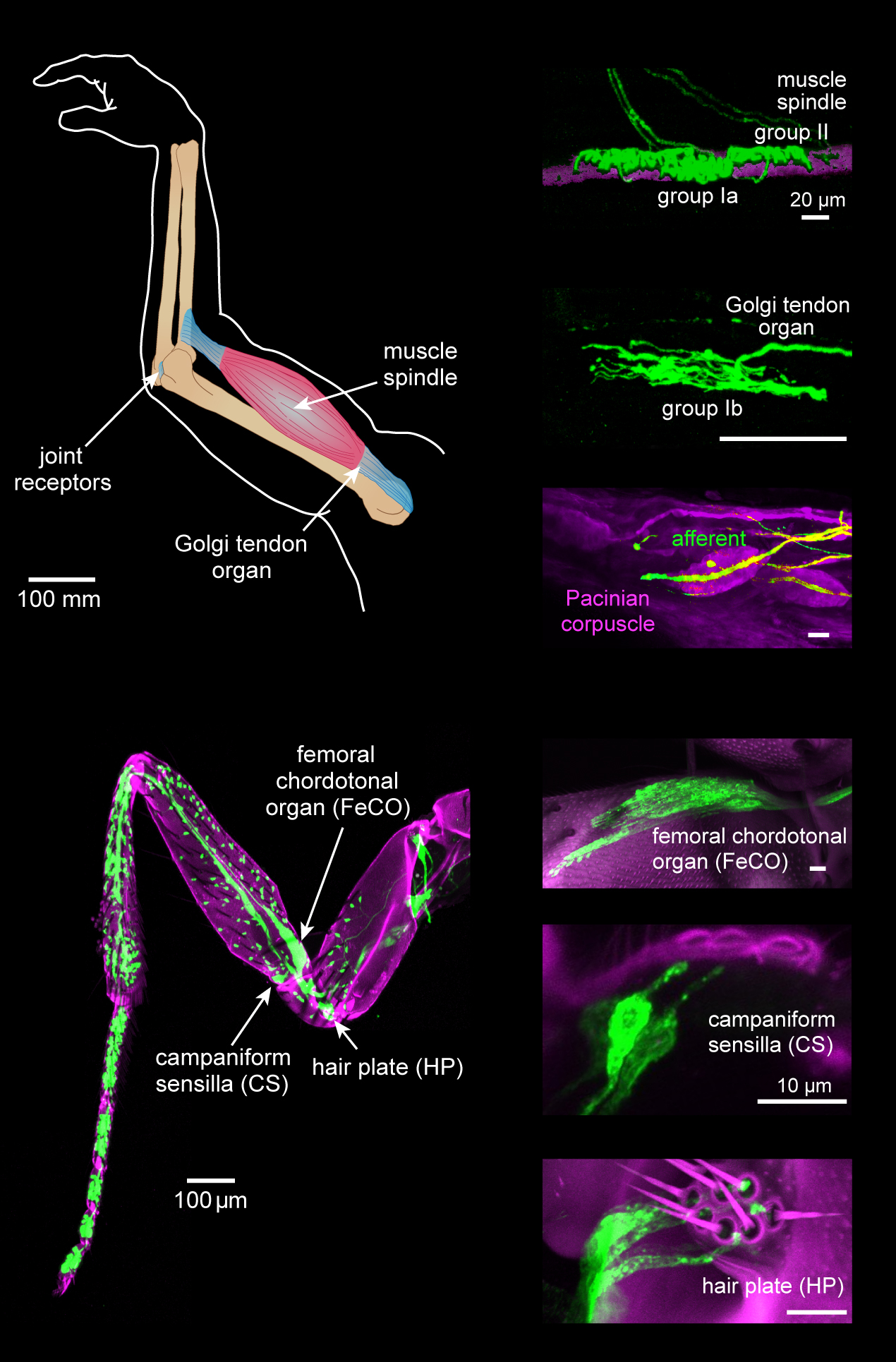
Sight has eyes and hearing has ears, both obvious organs in obvious places. Proprioception has no organ. Its sensors are distributed through the moving parts themselves.
Muscle spindles are the main ones. They are small sensory structures embedded among the muscle fibres, arranged in parallel with them, and they report length and rate of change of length. Stretch the muscle and they fire; stretch it faster and they fire harder. Every skeletal muscle in the body is full of them, and muscles that need fine control – the small muscles of the hand and neck – have far more per unit of tissue than the large ones.
Tendon organs sit at the junction between muscle and tendon, in series with the fibres rather than alongside them, and they report force rather than length. Between the two, the brain can know both how far a muscle is stretched and how hard it is pulling.
Joint capsules and ligaments carry receptors of their own, reporting angle and particularly the extremes of movement. Skin contributes too, since the stretching of skin over a joint is itself information about the joint’s position.
So there are thousands of separate sensors, in every limb, reporting continuously. The brain integrates all of it into a single model of where the body currently is, and that model is what you consult when you reach for something without looking.
Like our content? Follow us for more.
You Can Demonstrate It in Ten Seconds
The ordinary tests are so easy that it is strange the sense is not better known.
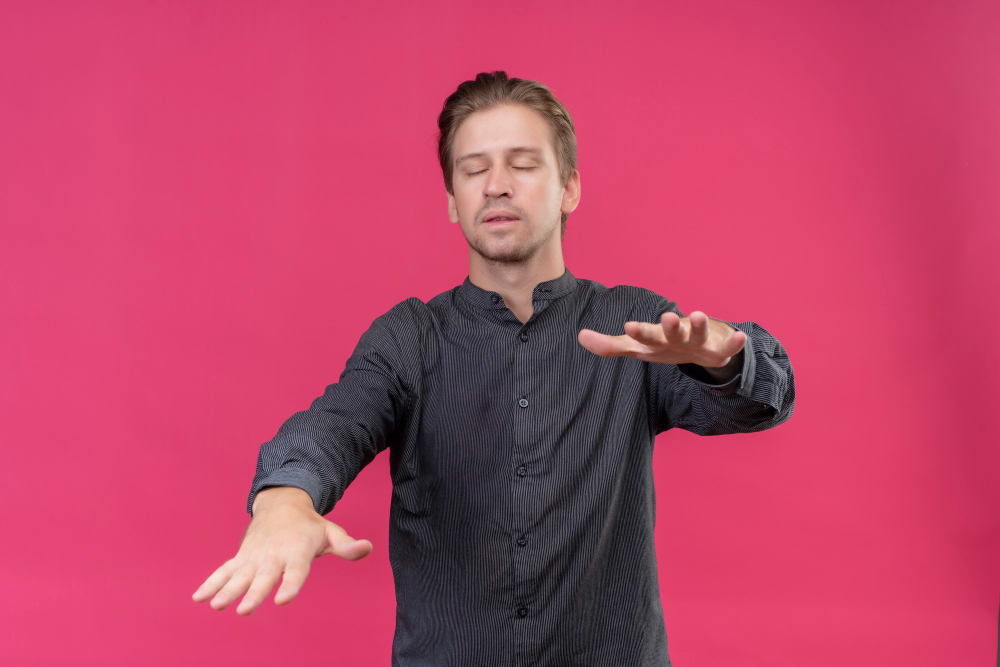
Close your eyes and hold your arms out, then bring your index fingers together in front of you. They meet, or come very close. Nothing saw them do it.
With your eyes shut, have somebody move your hand to a position, then move it back and try to return it to the same place. Most people are accurate to within a centimetre or two.
Close your eyes and walk across a familiar room. You will manage several steps with the stride length and foot placement you would use with your eyes open, because the walking is not being guided visually at all.
Or notice the everyday version: you can type, drive, play an instrument, climb stairs and eat without watching your hands or feet. All of that is proprioception plus practice. Vision is checking occasionally rather than steering.
It Is Also Doing the Reflexes
The system is not purely informational. Some of it acts without involving the brain at all.
The stretch reflex is the clearest case. Tap the tendon below the knee and the leg kicks, which is the classic demonstration. What happened is that the tap stretched the muscle, the spindles fired, the signal travelled to the spinal cord, and a motor signal came straight back out to contract the muscle. The brain was not consulted; it finds out afterwards.
That loop is running constantly at a level nobody notices, and it is what keeps you upright. Standing still is not static. You are continuously falling very slightly in one direction and being corrected, dozens of times a minute, by reflexes that detect the stretch as you lean and pull you back. The reason standing feels effortless is that none of it reaches awareness.
It also protects joints. If a limb is suddenly loaded or twisted, the reflex response begins in a fraction of the time any conscious reaction would take, which is why the body often resists a stumble before the person knows they have stumbled.
What Happens Without It

The clearest evidence for how much work proprioception does comes from the very small number of people who have lost it, usually through rare nerve damage that destroys the large sensory fibres while leaving motor nerves and pain and temperature sensation intact.
The effect is not numbness. Their muscles work and they can feel pain and temperature normally. What they have lost is the report on where they are.
The consequences are severe and initially total. Without the incoming information, they cannot stand, cannot walk, cannot hold a posture and cannot control a limb, because movement requires knowing the starting position and none of it is arriving. Several documented cases describe the person being unable to locate their own limbs at all in the dark.
What happens next is the remarkable part. Some have partially retrained themselves to substitute vision – watching their hands to place them, watching their feet to walk, consciously computing what the sense used to supply automatically. It works, slowly, and it requires unbroken visual attention. Turn the lights off and the ability disappears immediately.
That trade is the measure of the sense. A person can function without sight, using hearing and touch and proprioception, and many do so with great competence. A person without proprioception is dependent on sight for movements that most people make without thought, and only while looking.
This is a description of documented cases rather than any suggestion about a condition; anything of this kind is a matter for a doctor.
It Degrades, Which Explains a Lot
Proprioception is not fixed and it declines with age, which accounts for something usually attributed to other causes.
Balance in older people is frequently discussed in terms of muscle strength and inner-ear function. Both matter, and so does the accuracy of the positional information arriving from the legs and feet. As that degrades, corrections become later and larger, and the margin for recovering from a small stumble narrows.
This is also why balance can be trained. Standing on one leg, on uneven surfaces or with eyes closed forces the system to work with less help from vision, and the improvement is measurable. The sense responds to practice in the same way strength does.
It is temporarily degraded too. Alcohol impairs it, which is part of why intoxication affects coordination and why standing on one leg is a field sobriety test. Cold reduces sensitivity, which is why numb fingers become clumsy out of proportion to their loss of strength. Fatigue impairs it, and so does inflammation in a joint, which is one reason a swollen ankle feels unreliable even once it is strong enough to stand on.
And it can be fooled. A vibrating device applied to a tendon makes the spindles fire as though the muscle were being stretched, and the person feels the limb moving when it is stationary – sometimes into positions the joint could not physically adopt. The sense is a construction from sensor data, and feed it the wrong data and it constructs the wrong answer.
The Brain Is Predicting, Not Just Receiving
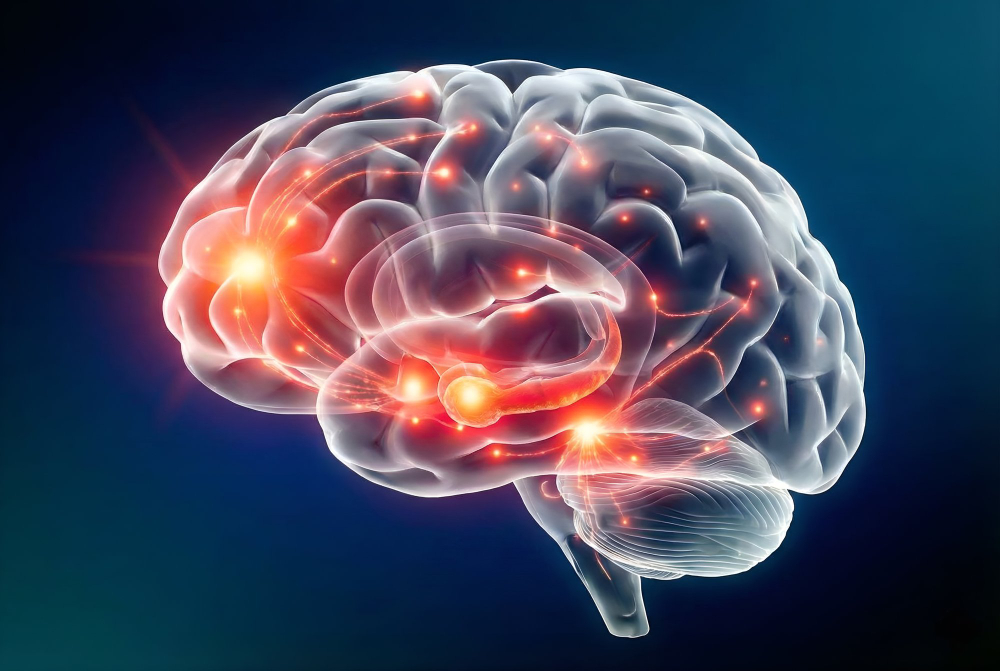
The description so far makes proprioception sound like a measurement system reporting upward. It is more interesting than that, because the brain is not waiting for the reports.
Nerve signals take time. A message from the foot reaches the brain tens of milliseconds after the event, and a motor command takes a comparable time to get back. A system that worked purely by measuring and then responding would always be acting on where the body was rather than where it is, which for anything fast would be useless.
So the brain runs a forward model. When it issues a movement command, it simultaneously generates a prediction of what the sensors should report if that movement goes as intended. The incoming signals are then compared against the prediction, and what matters is the difference. If they match, nothing needs attention. If they do not, something unexpected has happened and a correction is generated.
This is why you notice a missed step instantly and do not notice the thousands of ordinary ones. The ordinary steps matched the prediction and were effectively filtered out; the missed one produced a mismatch.
It also explains something odd about weight. A held object feels heavier when somebody else puts it into your hand than when you pick it up yourself, because in the second case your brain predicted the load and discounted it. Predicted consequences of your own actions are systematically dulled, which is a general principle of how the brain handles its own output.
And it is why the tendon-vibration illusion works at all. Feed the system afferent signals that do not match any command it issued, and it has no choice but to conclude that the limb is moving on its own.
Why It Never Made the List
The obvious question is how a sense this important was left off a list for two and a half millennia.
The answer is that the original list was built from organs. Eyes, ears, nose, tongue and skin are visible, localised and easy to associate with a kind of experience. Proprioception has no organ to find, and its sensors were not identified until the nineteenth century.
The deeper reason is that it does not feel like a sense. Sight delivers pictures, hearing delivers sound, and each is experienced as information arriving from outside. Proprioception delivers no sensation at all when it is working; it delivers a fact. You do not feel your arm’s position the way you see a colour – you simply know it, without any accompanying experience to notice. A channel that produces knowledge without sensation is easy to miss.
It was named only in the early twentieth century, and it is now generally counted alongside several other senses the classical list omitted: balance from the inner ear, the sense of internal bodily state, and the separate detection of temperature and of tissue damage.
Which is the thing worth taking from it. You have been running a high-bandwidth positional tracking system continuously since before you were born, it is the reason you can stand up in the dark, and the only reason you have never noticed it is that it has never once failed.
Like our content? Follow us for more.