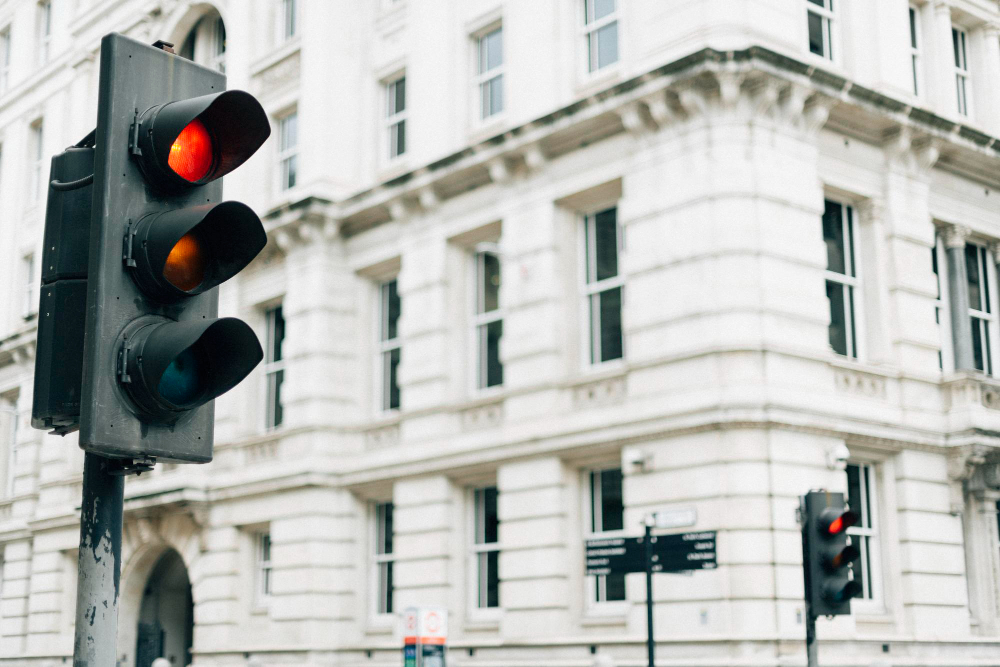
A traffic light looks like the simplest control system in existence: three lamps, one at a time, in a fixed order. Almost everything about it is a compromise between constraints that cannot all be satisfied, and the amber light in particular exists to paper over a geometric problem that has no clean solution. Once you know what it is for, the timing of every junction you drive through starts to look like a series of decisions somebody made about you.
The Dilemma Zone
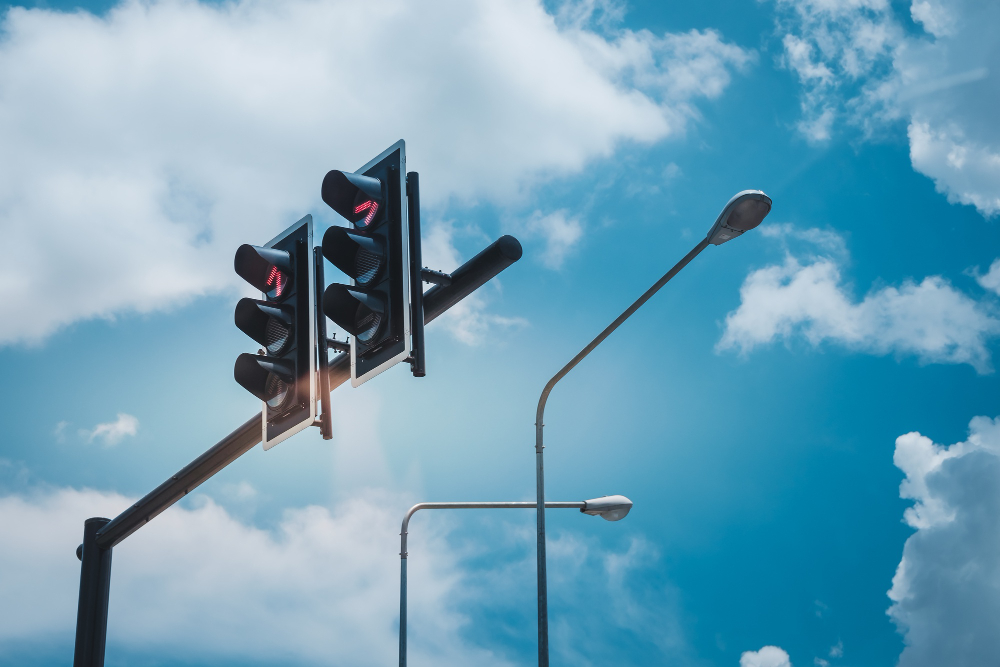
Consider a driver approaching a junction at a steady speed when the light changes to amber.
If they are very close, they cannot stop in the distance remaining, but they can clear the junction easily. If they are far away, they can stop comfortably. Both of those are fine.
The problem is the region in between, where the distance needed to stop is greater than the distance remaining, and the time needed to cross the junction is greater than the time remaining. In that zone, neither available action works. The driver cannot legally and safely stop, and cannot legally clear the junction either.
This is not a failure of anybody’s driving. It is arithmetic. Stopping distance grows roughly with the square of speed, while the distance covered during the amber grows only in proportion to speed, so the two do not scale together and a gap opens between them.
The amber phase exists to shrink that zone. Give drivers a few seconds of warning and the region where neither action is possible narrows considerably. Make the amber long enough and, for a particular approach speed, it closes entirely.
Like our content? Follow us for more.
For One Speed, Not All of Them
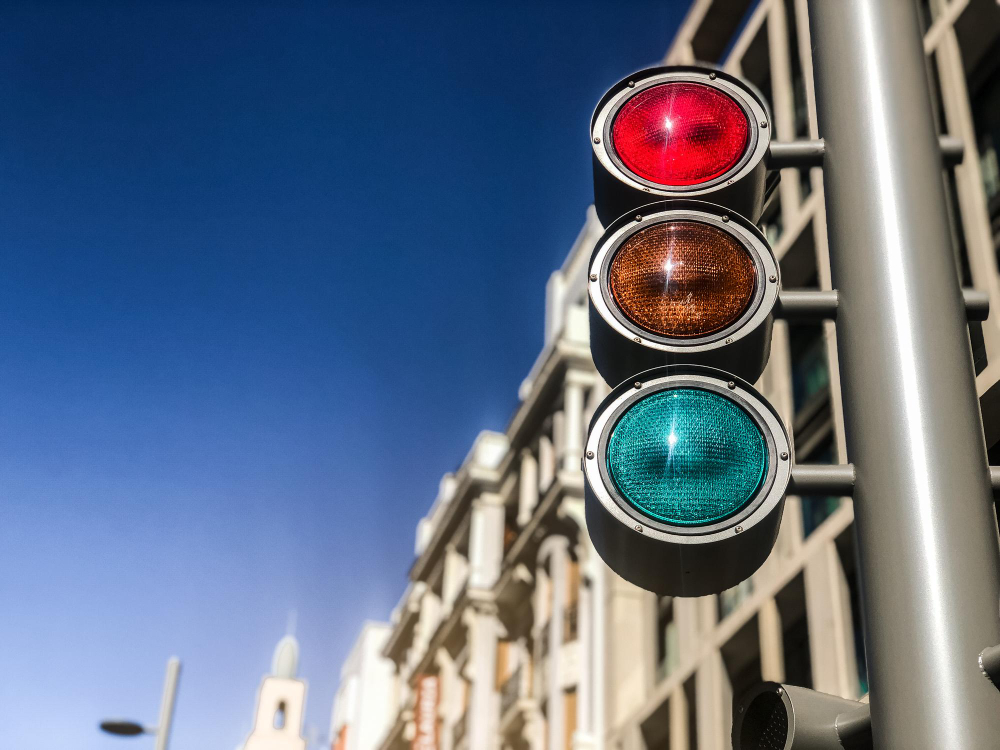
The standard method for setting amber duration accounts for the driver’s reaction time, the deceleration they can reasonably achieve, the speed they are travelling, and the gradient of the road. Put those together and there is a duration that eliminates the dilemma zone.
The catch is the speed term. Traffic does not travel at one speed. A signal timed for the posted limit leaves a dilemma zone for anybody travelling faster, and gives a longer-than-necessary amber to anybody travelling slower.
So every amber is a choice about which drivers to accommodate, and the choice cannot satisfy everyone. Engineers generally time for a percentile of observed approach speeds rather than the posted limit, precisely because the population is what matters rather than the sign.
The consequence of getting it wrong is measurable in both directions. Too short and drivers are caught in the zone, which produces both collisions and violations from people who had no good option. Too long and drivers learn that amber means there is time, which defeats the purpose. There is a body of evidence that lengthening an inadequate amber reduces both red-light running and collisions substantially, and that shortening an adequate one does the opposite.
The Phase Nobody Notices
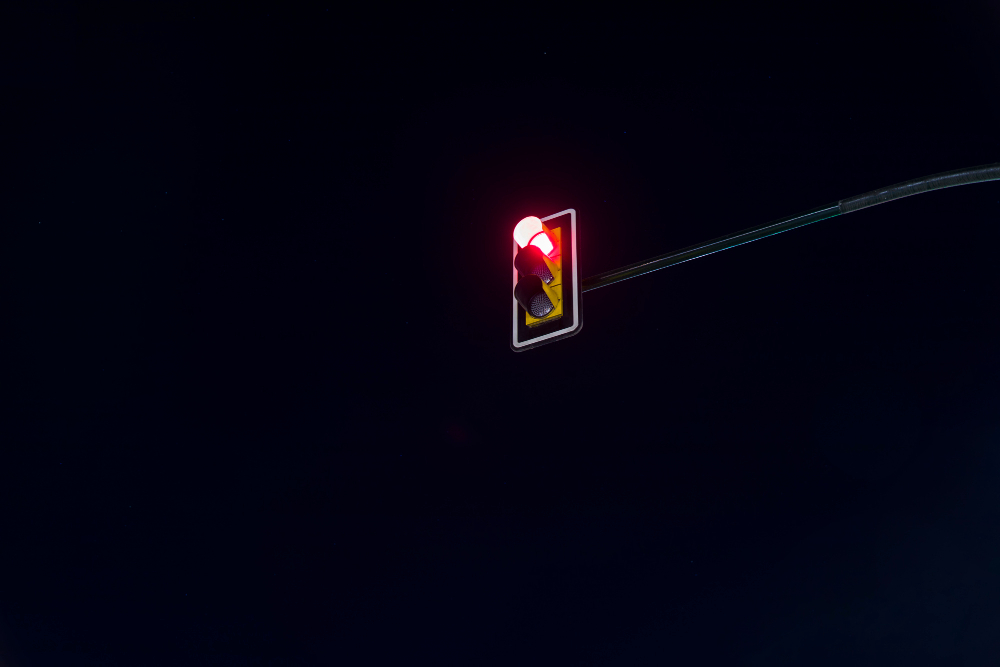
After the amber ends there is usually a short period when every direction has a red light at once. It is deliberate, it is called the all-red interval, and it is doing something specific.
The amber protects the driver deciding whether to stop. The all-red protects the vehicle that is already inside the junction when the light turns red. It provides time for that vehicle to clear before conflicting traffic is released, and its length depends on the physical width of the junction and the length of the vehicles expected to use it.
This is why a small crossroads has a barely perceptible all-red and a wide multi-lane junction has a noticeably long one. The interval is measuring the junction rather than the drivers.
Together, the amber and the all-red are called the change interval, and it is the part of a signal cycle that does no useful work. Every second spent on it is a second in which nothing is moving, so there is constant pressure to keep it short, pulling directly against the safety argument for making it long. That tension is the central design problem of the whole device.
Why Some Lights Seem to Know You Are There
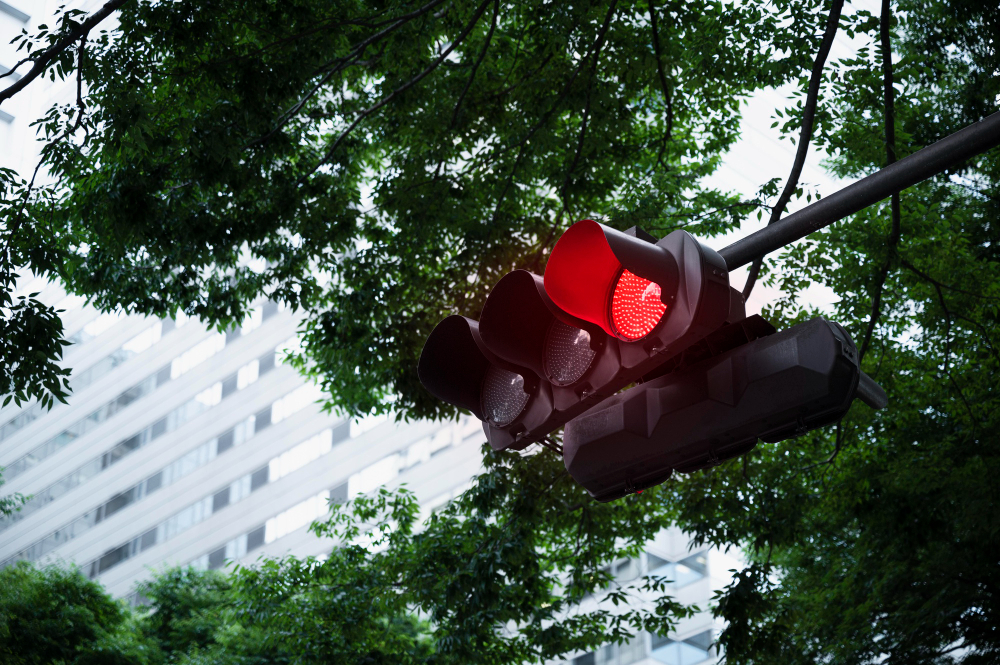
Most signals are not on a fixed timer, and the sensing is usually invisible.
The commonest detector is a loop of wire buried in the road surface, visible as a rectangular or diamond-shaped cut in the tarmac near the stop line. A current runs through it, and a large metal object sitting above changes its electrical properties enough to register. It is detecting metal rather than weight, which is why a bicycle sometimes fails to trigger one and why positioning matters.
Other systems use cameras or radar above the signal head. Either way, the controller is being told which approaches have vehicles waiting and roughly how many.
The controller then allocates green time accordingly, within limits. It has a minimum green for each direction, because a phase too short to clear anybody is worse than useless, and a maximum, because no direction can be starved indefinitely.
This is why an empty junction late at night sometimes changes for you almost immediately, and why arriving a second after the sensor was polled can mean waiting through a full cycle for nothing.
The Green Wave, and Why It Only Works One Way
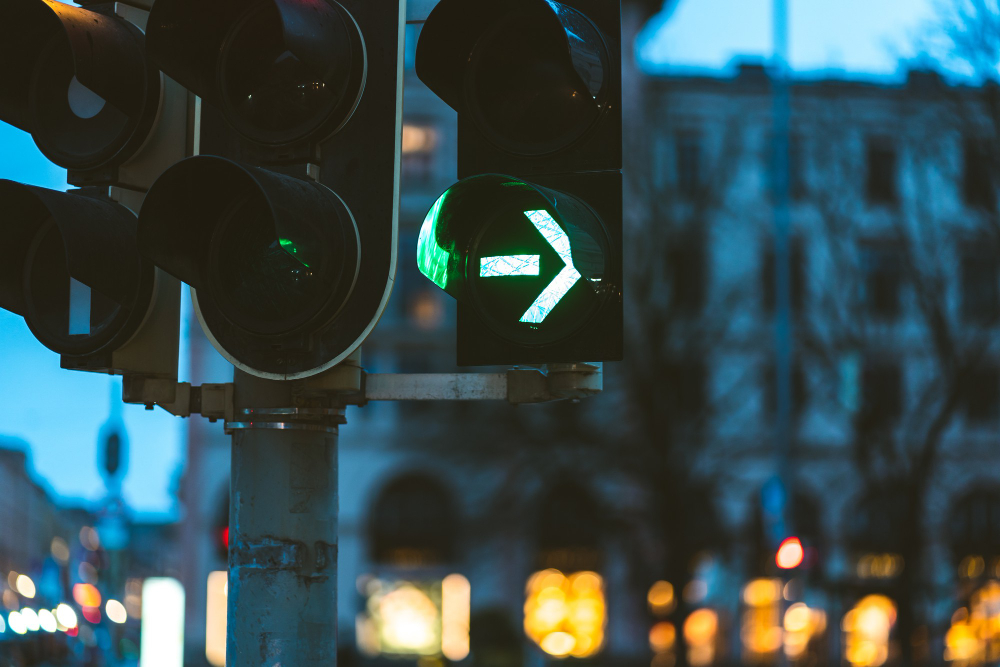
Signals along a route are often coordinated so that a vehicle travelling at a particular speed meets a succession of greens. Driving it at that speed feels like the system is cooperating.
The coordination works by offsetting each signal’s cycle start by the travel time from the previous one. Hold the design speed and you arrive as each one turns green.
Two things limit it. The first is that it is tuned for a speed, so travelling faster breaks it as thoroughly as travelling slower – which makes progression a quiet speed-management tool as much as a capacity one.
The second is direction. Coordinating perfectly in both directions along a two-way road is generally impossible unless the spacing between signals happens to suit the cycle length, because the offsets required for one direction conflict with those required for the other. Most coordinated routes therefore favour the heavier flow, often reversing which direction is favoured between morning and evening.
So a route that feels well timed on the way in and obstructive on the way home is usually working exactly as designed.
Why the Order and the Positions Are Fixed
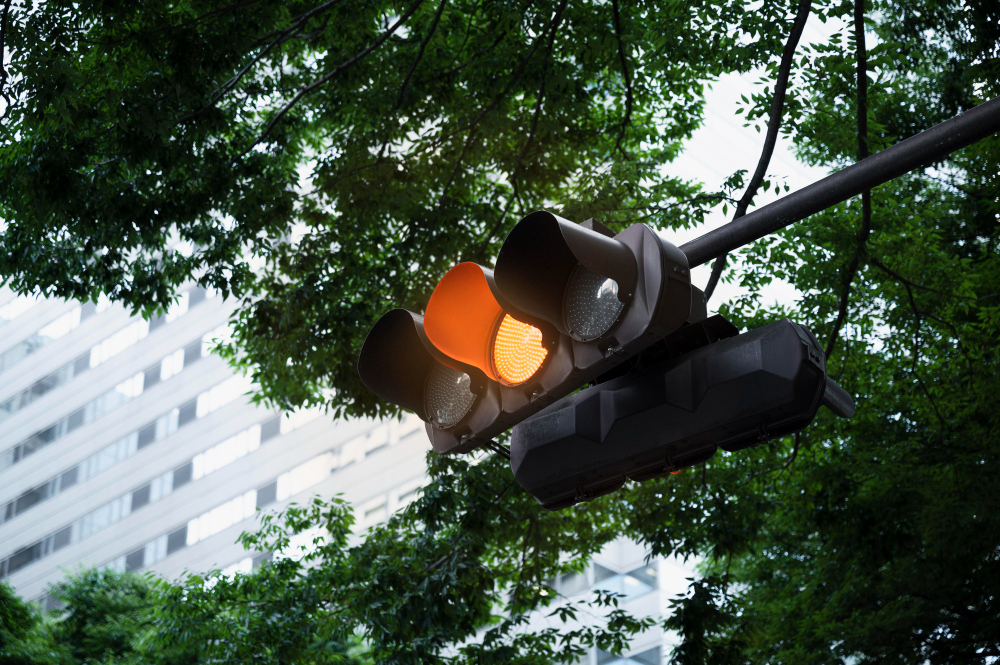
Two features of a signal head are not about traffic flow at all.
The vertical arrangement is standardised with red at the top, which matters for anybody who cannot reliably distinguish the colours. Red-green colour vision deficiency is common enough that position carries the message independently of colour, and putting red at the top means the highest lamp always means stop. Horizontally mounted heads place red on the side nearest the approaching traffic for the same reason.
The colours themselves are inherited rather than chosen. Railway signalling established red for danger long before road signals existed, and early road signals borrowed the convention directly, including the use of green for proceed – which replaced an earlier railway use of white, abandoned after cases where a broken red lens showed as white and was read as clear.
Amber was the later addition, and its introduction is the point at which the device stopped being a simple two-state indicator and became a system that had to reason about the physics of a moving vehicle.
The Pedestrian Phase Is a Separate Calculation Entirely
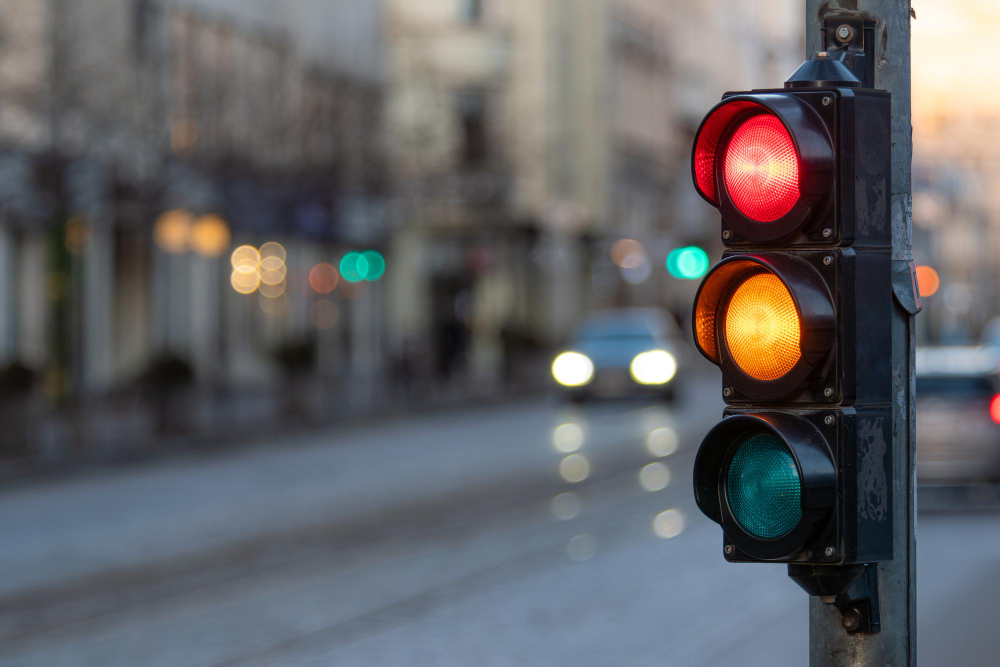
Everything above concerns vehicles. The crossing phase is computed differently, and the difference is instructive.
A vehicle clears a junction in a time set by its speed, which is high and reasonably predictable. A person crosses at a walking pace, which is much slower and varies enormously between individuals. So the crossing interval cannot be timed for an average; it has to accommodate the slower end of the distribution or it fails for exactly the people least able to cope with failing.
The interval is therefore built in two parts. There is a period during which it is permissible to start crossing, and then a longer clearance period during which nobody should begin but anybody already in the road can finish. The flashing or counting-down display that most systems use marks the boundary between the two, and it is frequently misread as meaning hurry rather than do not start.
The assumed walking speed used in that calculation has been revised downward in several countries as populations have aged, which lengthens every crossing phase on every affected signal and takes capacity away from vehicles. It is one of the clearest cases of the change interval trade-off being settled explicitly in favour of safety over throughput.
Push buttons complicate it further. At many signals the button really does register a demand and brings the crossing phase forward within the cycle. At others, particularly where a crossing phase runs every cycle regardless, pressing it changes nothing about the timing, and its function is to trigger the audible and tactile indications for anybody who needs them. Both kinds look identical from the pavement, which is why the folklore about buttons that do nothing is simultaneously wrong and, in specific cases, right.
A Device Built Around an Unsolvable Gap
The traffic light is worth appreciating as an engineering object because of how little of it is arbitrary.
The amber is a fudge for a gap between stopping distance and crossing time that cannot be closed for all speeds at once. The all-red is measuring the width of the road. The minimum green is protecting the phase from being pointless and the maximum green is protecting the other directions. The coordination is tuned to a speed and a direction, and favours one of each. The lamp order is protecting people who cannot see the difference between two of the lamps.
And all of it is running against a clock, because every second of safety margin is a second of capacity lost.
Which is worth remembering at the moment an amber catches you in the wrong place. Somebody chose that duration, for a speed that may not have been yours, knowing that the zone they were shrinking could not be eliminated – only moved.
Like our content? Follow us for more.