The oldest living things in northern Europe, and the age is unknowable. Here are twelve.
1. The Oldest Ones Are Older Than Anything Else Alive Nearby
The most ancient yews in northern Europe are generally accepted to be at least two thousand years old, and credible arguments have been made for several of them being far older than that.
Which makes them the oldest living organisms in a region whose other trees rarely exceed a few hundred years. A yew that was already large when a Roman road was built nearby is not a romantic exaggeration; several such trees are standing, in ordinary places, with no indication that they are approaching any limit.
Like our content? Follow us for more.
2. And Nobody Can Say How Old, Because the Record Rots Away
The reason the ages are arguments rather than facts is that a yew destroys its own evidence. The wood at the centre of the trunk decays and disappears, leaving a hollow shell.
So there is no continuous sequence of annual growth to count. Whatever the innermost wood could have told anybody about the tree’s youth went long ago, and what remains is an outer cylinder of comparatively recent growth. Every age given for an ancient yew is an estimate derived from girth, growth rate and circumstance, and the estimates disagree with each other by centuries.
3. It Hollows Out and Then Becomes Several Trees
As the centre goes, the shell frequently splits, and what was one trunk becomes a ring of separate-looking stems standing in a circle with a gap in the middle.
At which point the thing stops behaving like a tree in any ordinary sense. The separate stems may each continue growing for centuries, and a visitor sees what appears to be a small group of yews when they are looking at the surviving fragments of one. It is also why so many ancient yews can be walked into, and why people have historically used the insides of them as shelters, meeting places and in a few cases rooms.
4. Every Part of It Is Poisonous Except One
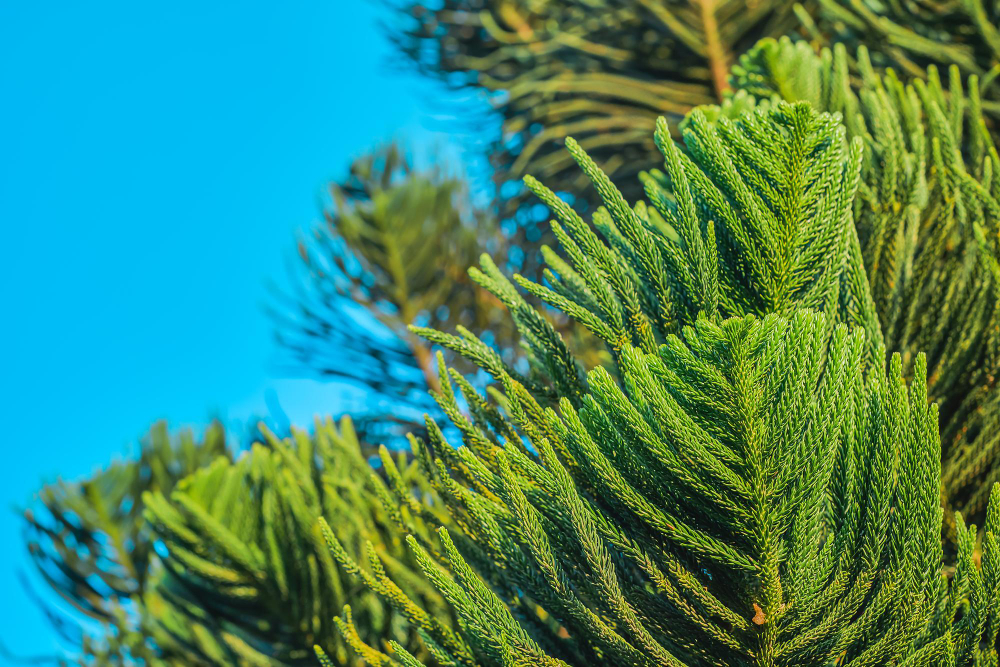
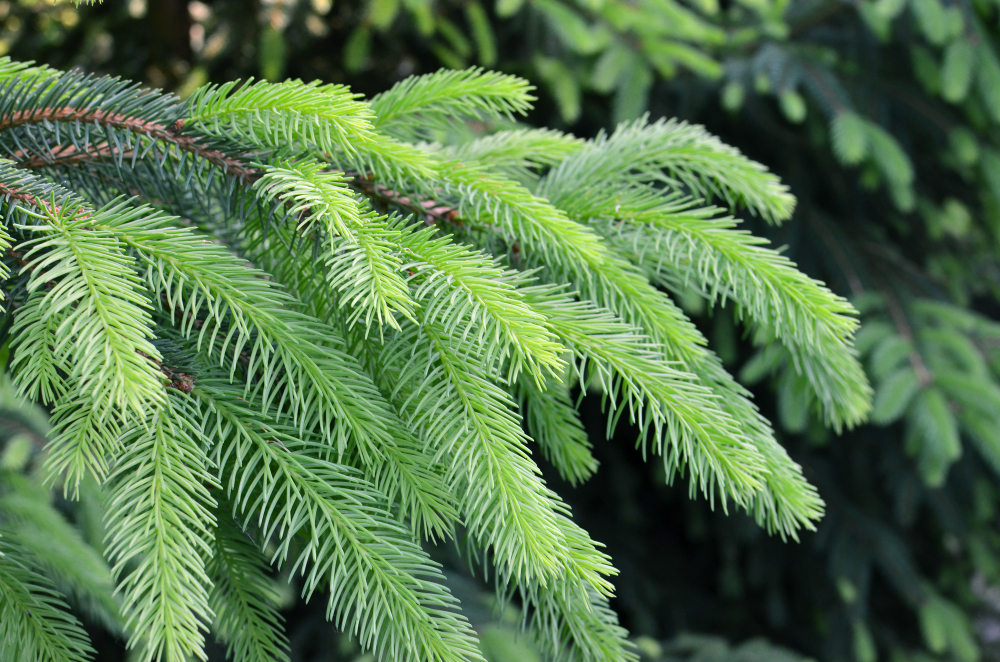
The yew is among the most comprehensively toxic plants in temperate Europe. The foliage, the bark, the wood and the seed all contain compounds that are dangerous in small quantities, and the foliage remains toxic after it is cut and dried.
There is exactly one exception, and it is the part that looks most like food. Nothing in this item is medical information, nothing in this piece says what any quantity would do to anybody, and no reader should take anything here as guidance about anything.
5. The Red Part Is Not a Berry and the Seed Inside It Is the Dangerous Bit
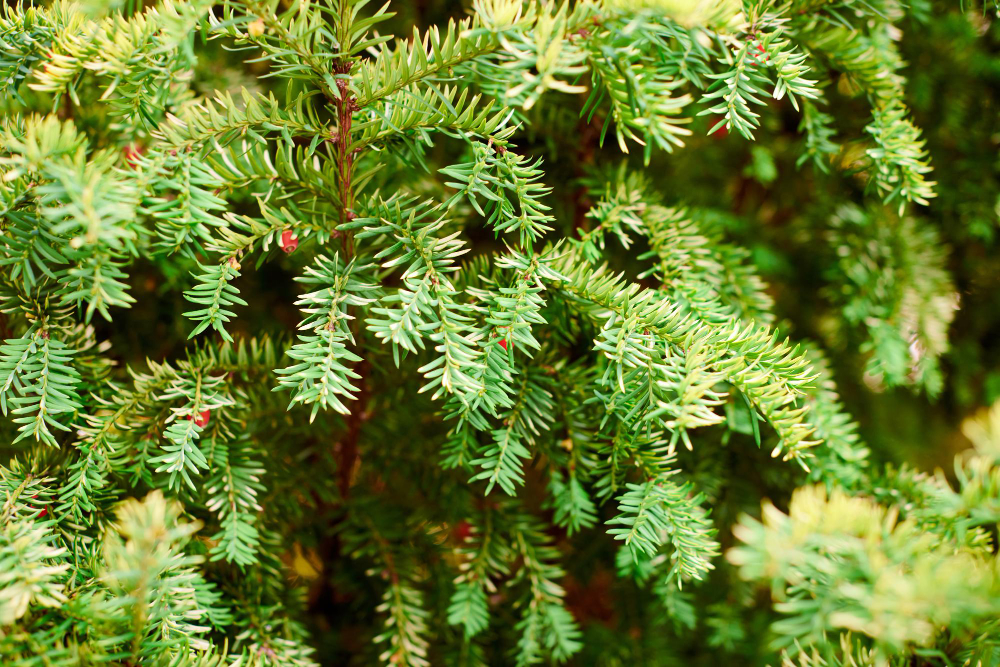
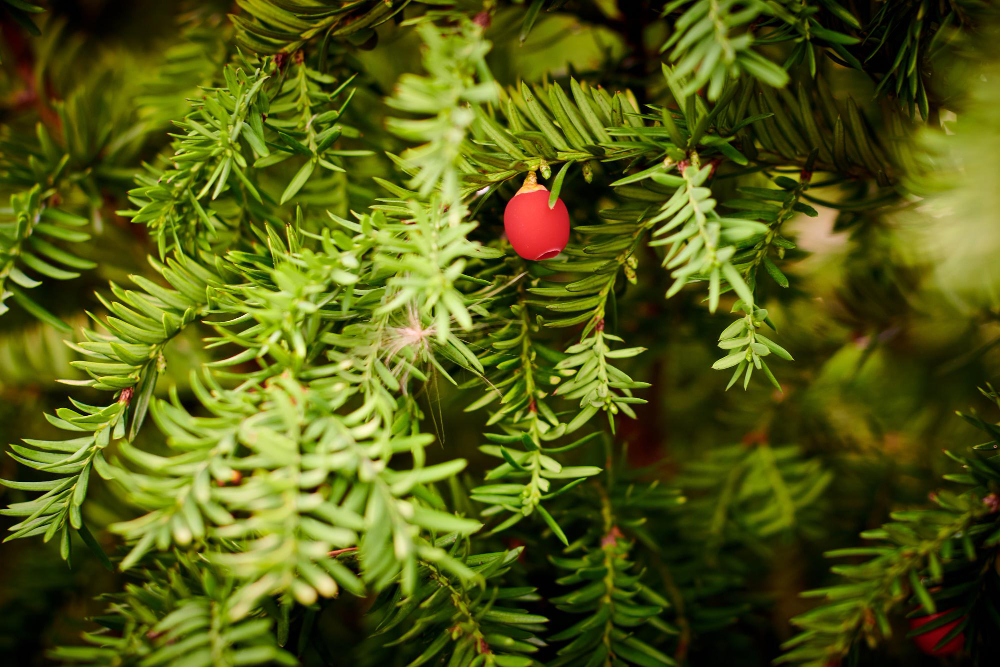
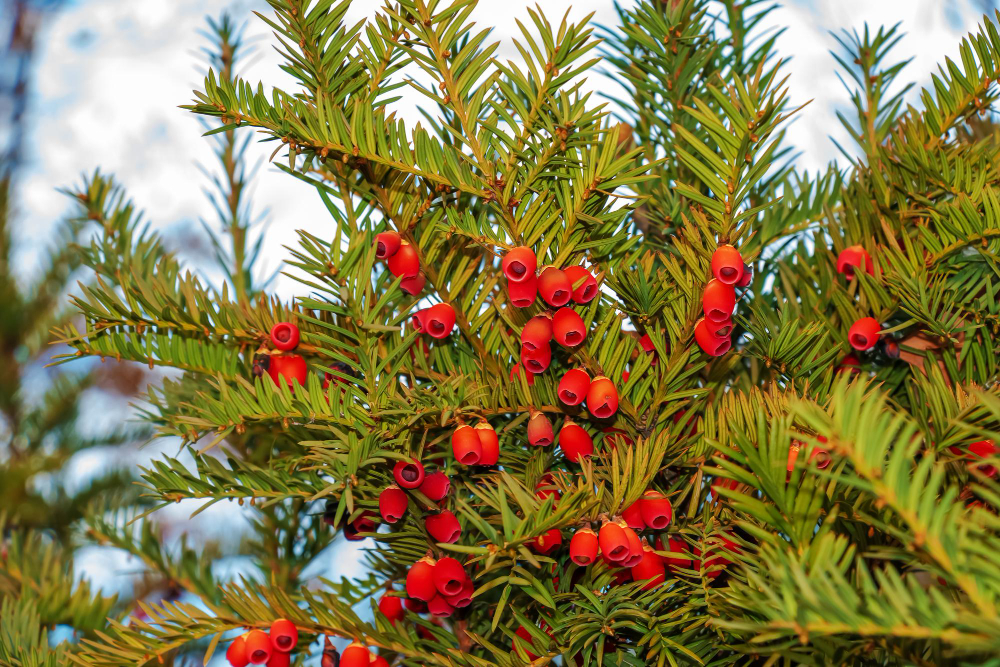
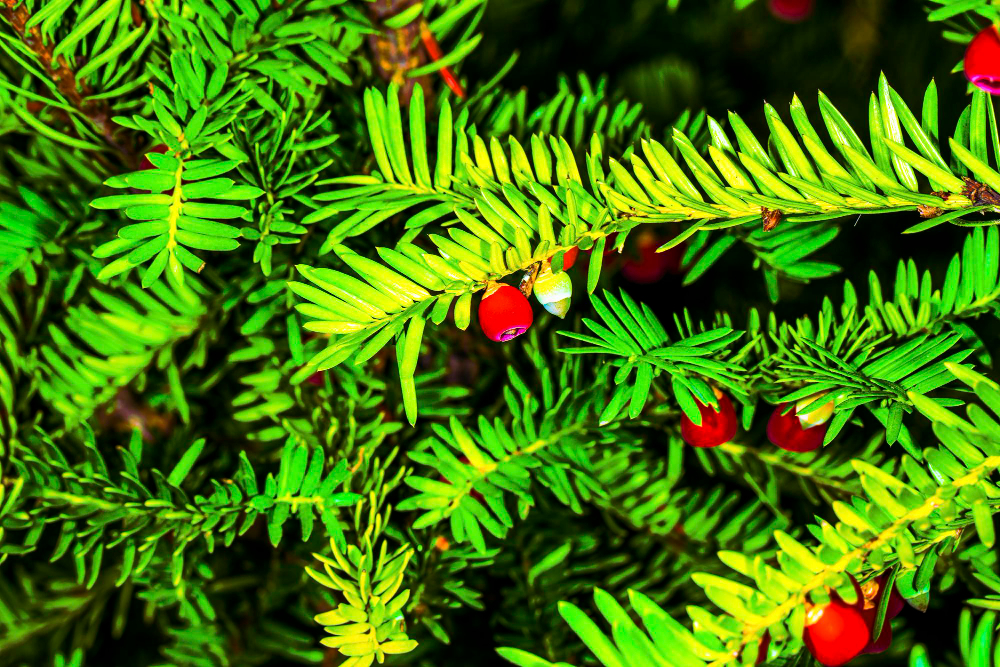
The little scarlet cup is not a fruit in the botanical sense – a yew is a conifer and does not produce fruit. It is a fleshy structure that grows up around the seed and leaves the end open, which is why there is always a dark seed visible in the middle of it.
And the division is sharp: the red flesh is the one non-toxic part of the entire tree, while the seed sitting in the middle of it is highly toxic. It is an arrangement that looks almost designed to catch something out, and in a sense it is.
6. Which Is Exactly Why Birds Eat Them and Are Unaffected
Birds take the whole thing, strip or digest the flesh, and pass the seed through intact without ever breaking it. The hard coat does not open in a bird’s gut, so the toxin inside is never released.
So the plant has arranged a reward and a penalty on the same object. An animal that swallows it whole and passes the seed gets a meal and performs a service; an animal that chews gets the toxin. The flesh exists to be eaten and the seed exists to survive being eaten, and the only thing separating them is whether the consumer crushes it.
7. It Will Regrow From Almost Anything
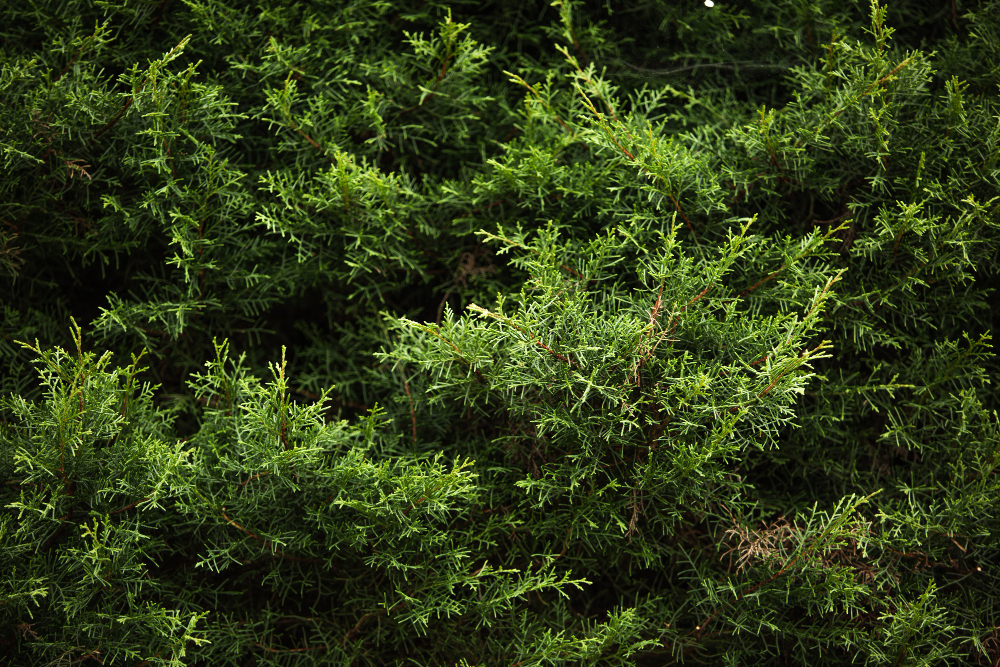
Cut a yew down to a stump and it comes back. Cut the top out and it sprouts from the trunk. Let a low branch rest on the ground and it will root where it touches and start a new stem.
None of that is normal for a conifer. The great majority of needle-bearing trees have very limited capacity to regenerate from old wood, which is why a hard-pruned conifer hedge usually stays brown where it was cut. Yew is the conspicuous exception, and it is why yew hedging can be cut back to bare stumps and recover, and why topiary works on it.
8. Which Is Part of Why It Lives So Long
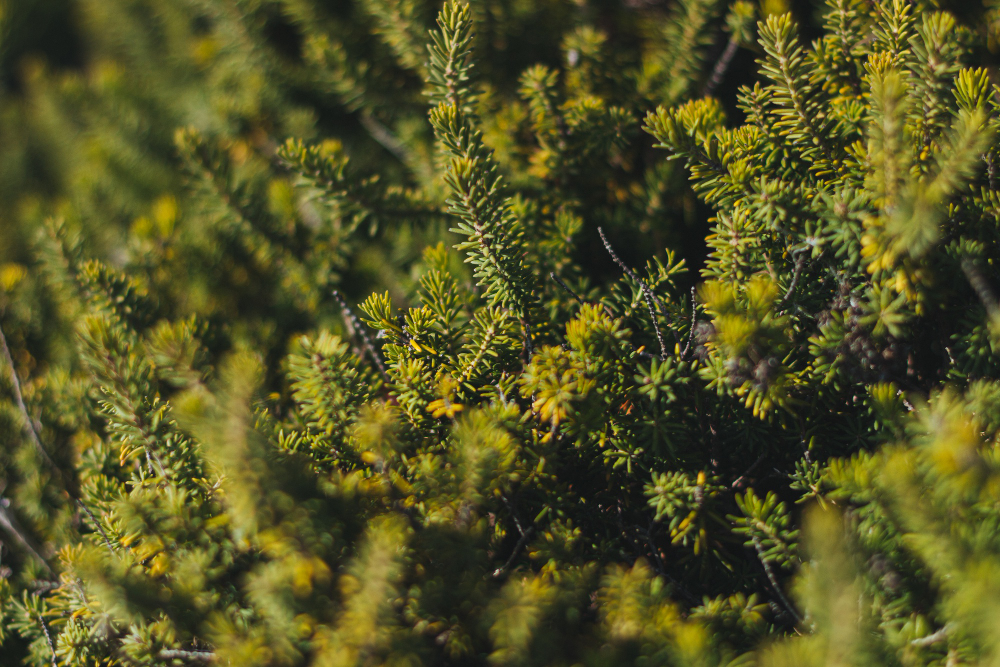
The regeneration is not a side issue – it is a substantial part of the explanation for the ages in the first item.
A tree that can replace its own crown, root from a drooping branch and continue from fragments of a split trunk is not depending on any single structure surviving. Damage that would end most trees is, for a yew, a change of configuration. The organism persists while the individual parts are repeatedly replaced, which is a different strategy from simply being durable, and it is why the question of how old one is becomes hard to define as well as hard to measure.
9. It Was the Longbow Wood, and the Demand Stripped Half a Continent
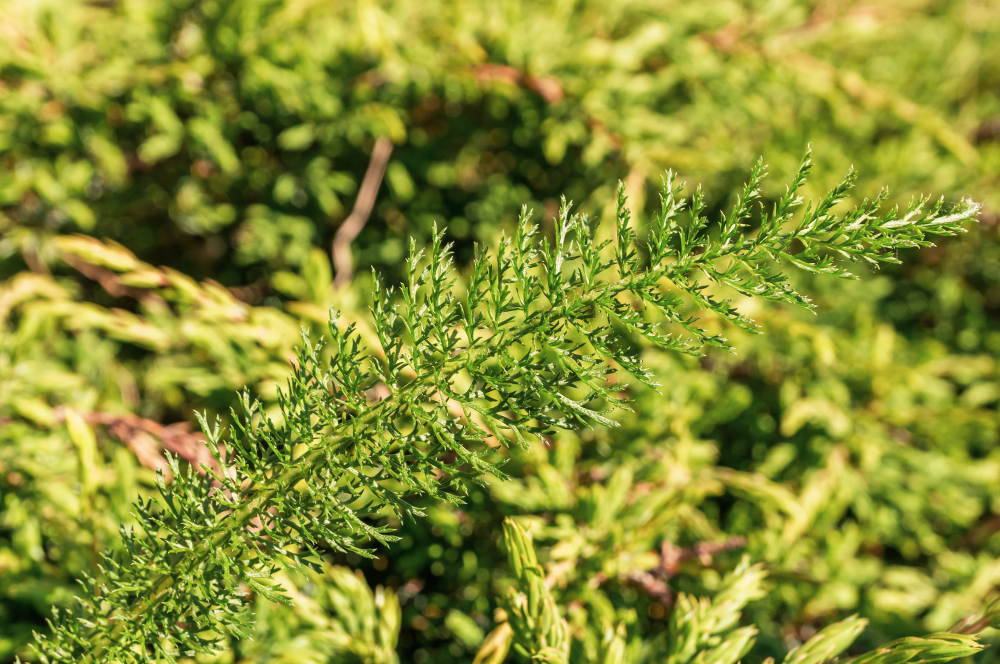
Yew was the material for the medieval war bow, for a specific mechanical reason: a stave cut to include both the hard outer wood and the softer wood beneath gets compression resistance and tension resistance in one piece, from one tree, without any gluing.
The scale of the demand that followed is not widely appreciated. Domestic supply was inadequate, imports were required by statute, staves were brought in by the hundreds of thousands, and yew populations across large parts of central and southern Europe were depleted to an extent from which some have never recovered. A military technology consumed a species across a continent, and the shortage is visible in the distribution of the tree today.
10. It Casts the Deepest Shade of Any Tree in Its Range
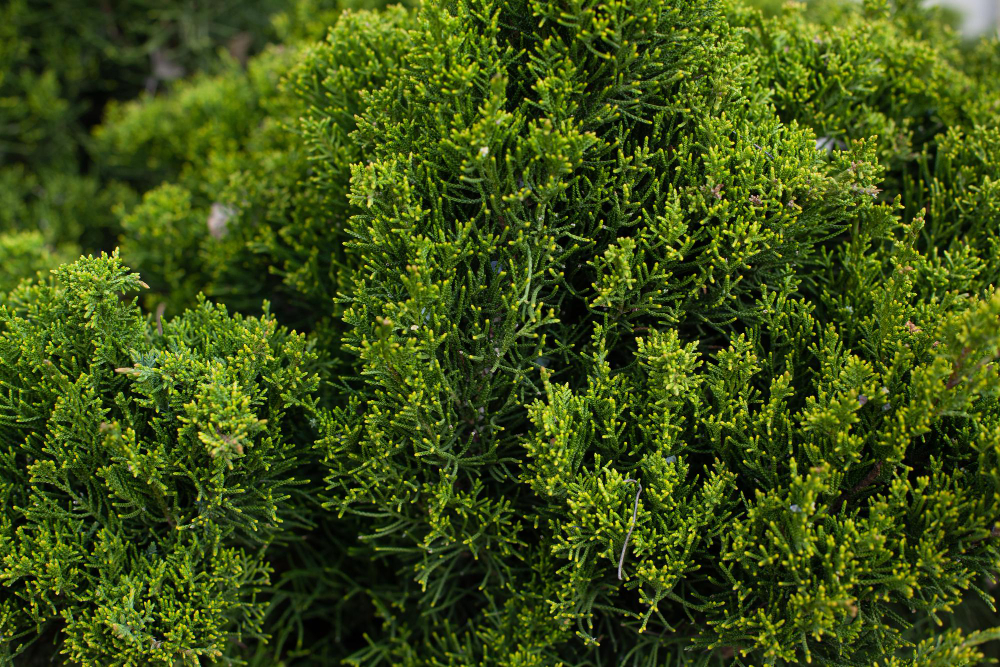
Stand under a mature yew and the drop in light is startling. Evergreen, extremely dense, with needles arranged to intercept almost everything, it produces a darkness no deciduous tree approaches even in midsummer.
The consequence is a bare floor. Almost nothing grows beneath an established yew, and the ground under one is characteristically dry, dark and empty. The tree is not poisoning the soil to achieve this, whatever is sometimes said; it is simply taking all the light.
11. A Churchyard Yew Is Frequently Older Than the Church
The association is well known and the usual assumption about it is backwards. People take the tree to be an old feature of an old churchyard. In a large number of cases the tree was there first, by a considerable margin.
Where the tree is demonstrably older than the earliest part of the building, the site was being used for something before the church was built on it, and the tree is the oldest thing present by centuries. That is as far as the evidence goes, and the more elaborate claims built on top of it are not established. This piece is about the tree rather than the churchyard, and the point here is simply the order of events.
12. One of the Most Important Cancer Drugs Came Out of It
The last item is the one that reverses everything above. A group of compounds found in yew turned out to interfere with cell division in a highly specific way, and that became the basis of a major class of drugs.
The original source was the bark of a yew species, extracted in quantities that made the supply immediately unsustainable – a single course required an enormous amount of bark and killed the tree – and the problem was eventually solved by semi-synthetic production from renewable plant material rather than by felling. Which leaves a tree that is poisonous in almost every part, was stripped across a continent to make weapons, and then provided one of the significant pharmaceutical discoveries of the twentieth century. No part of this item is medical information and nothing in it should be read as any sort of guidance.
A Tree That Outlives Its Own Evidence
Ages of two thousand years and more that cannot be verified because the centre rots away, a hollow shell splitting into separate stems, toxicity in every part but the one that looks like food, a seed that survives being eaten precisely because it must not be chewed, and regrowth from stumps that almost no other conifer manages.
The fifth and sixth items together are the arrangement worth pausing on. The red cup is the only non-toxic part of the entire tree, and the seed sitting in the open middle of it is one of the most toxic. A bird swallows the whole thing, digests the flesh and passes the seed intact because the hard coat never opens – so it gets a meal and the tree gets its seed carried somewhere. Anything that chews instead gets the poison. The reward and the penalty are on the same object, and the only thing that decides which you get is whether you crush it.
Like our content? Follow us for more.