

This is one of the stranger problems in biology, and it went unsolved for a long time because every intuitive answer fails. The roots are not pushing hard enough. There is no pump anywhere in the structure. And the obvious mechanism, sucking, is ruled out by physics before you start. The answer that survives requires water to behave in a way that sounds impossible.
Why Sucking Cannot Work
Start with the ceiling, because it is absolute.
When you drink through a straw you are not pulling the liquid up. You are lowering the pressure at the top, and atmospheric pressure pushing down on the surface below drives the liquid into the space. The lifting is done by the air, not by you.
That sets a maximum. Atmospheric pressure can support a column of water about ten metres tall, and no better. Reduce the pressure at the top all the way to a vacuum and the column still stops at ten metres, because that is the weight of water the atmosphere can balance. This is not an engineering limitation to be improved on; it is the number.
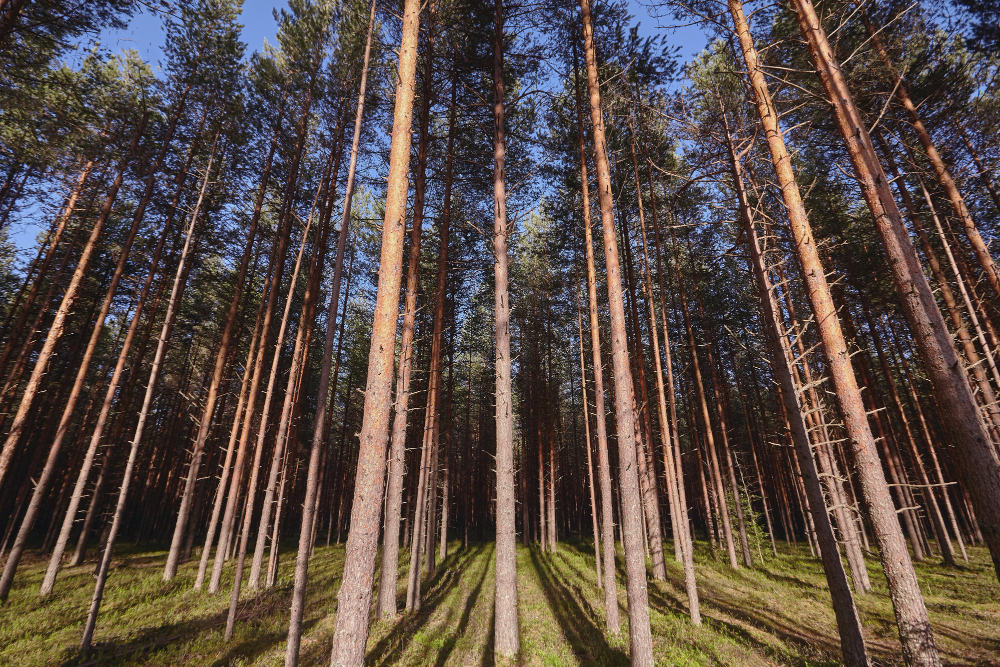
So a tree taller than about ten metres cannot be running on suction, and most trees are. A coast redwood exceeding a hundred metres is ten times past the limit.
Like our content? Follow us for more.
Root Pressure Is Real and Nowhere Near Enough
Roots do actively push. They move mineral ions into the root tissue using energy, water follows osmotically, and this generates a positive pressure that pushes sap upward.
You can see it. Cut a stem near the ground in spring and sap wells out under its own pressure. Droplets forced out of leaf margins overnight are the same effect. And it is the basis of maple syrup production, where sap flows from a tapped trunk because of pressure changes as the tree freezes and thaws.
But the numbers do not reach. Root pressure can lift water a few metres at most, it is strongest at night and in spring when the tree is barely transpiring, and in a tall tree during active growth it is often absent altogether.
It is a supporting mechanism. It refills things, it clears blockages, it matters in short plants. It is not what gets water to a canopy a hundred metres up.
The Actual Mechanism Starts at the Leaf
The driving force is not at the bottom of the tree. It is at the top, and it is evaporation.
A leaf is full of wet cell surfaces exposed to air inside it, and water evaporates from those surfaces and diffuses out through pores in the leaf. This is transpiration, and the quantities are large – a mature tree may move hundreds of litres on a hot day.
As water evaporates from a wet surface, the remaining water is drawn into the tiny spaces between the cell wall fibres, and the curved surfaces that form there generate an enormous negative pressure. The tighter the curve, the greater the pull, and in the microscopic pores of a cell wall the curvature is very tight indeed.
That pull is transmitted downward. And the reason it can be transmitted, rather than simply causing the water to separate, is the part that makes the whole thing work.
Water Is Under Tension, Like a Rope
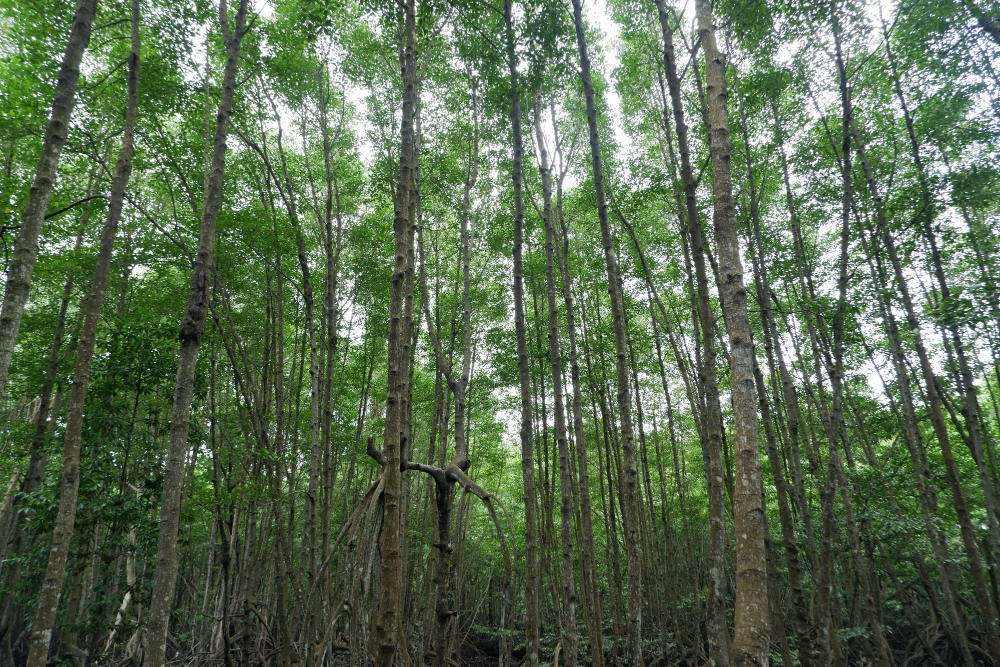
Water molecules stick to each other strongly, through hydrogen bonding. That cohesion means a column of water in a narrow tube can be pulled from the top without breaking, behaving less like a liquid being sucked and more like a rope being hauled.
So the tree is not pushing water up. It is pulling it up, and the water column is under tension – actual negative pressure, below zero, which is a state most people are not aware liquids can occupy at all.
The tensions involved are substantial. In a tall tree the water in the upper trunk can be at pressures equivalent to many atmospheres of pull, and measurements in some plants under drought have recorded far more extreme values.
This is the cohesion-tension mechanism, proposed at the end of the nineteenth century, and it remains the accepted explanation. It also has an obvious problem, which occupied plant physiologists for a century: water under that much tension is metastable. It should not stay liquid. It is, in a strict sense, being held together by nothing but the attraction of its own molecules, in a state where the slightest disturbance should cause it to flash into vapour.
And Sometimes It Does Break
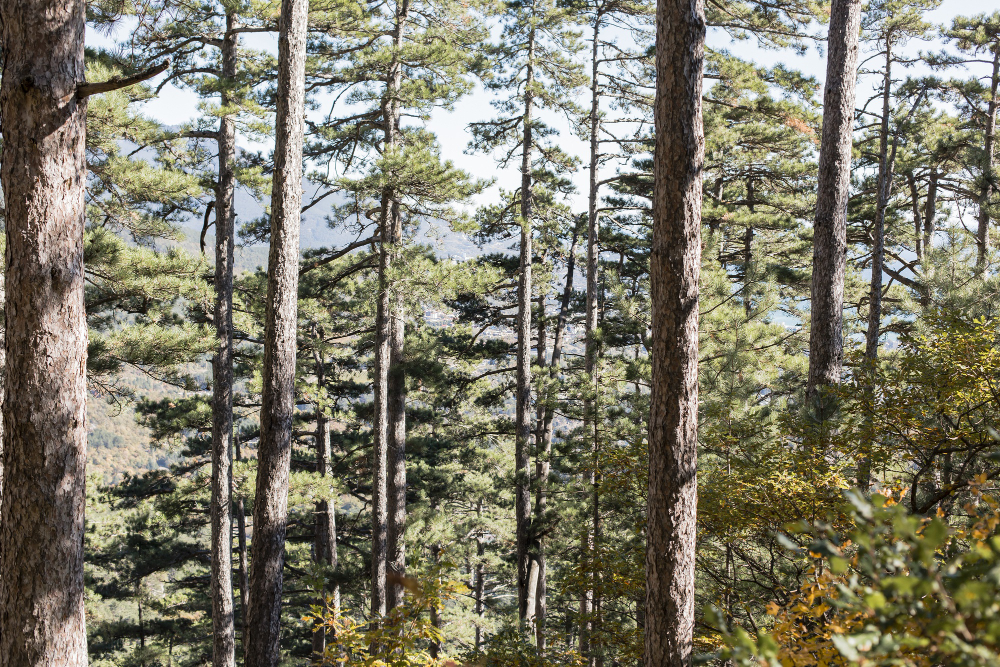
It does break, routinely, and the tree is built around the assumption that it will.
When the column fails, a bubble forms and expands instantly, filling the conducting tube with vapour. This is cavitation, and it is the same phenomenon that erodes ship propellers and destroys pumps. A cavitated tube stops conducting entirely.
It is audible. Attach a sensitive detector to a trunk in dry conditions and you can record the acoustic clicks of individual tubes failing, and the rate climbs as the tree comes under water stress.
The design response is redundancy. Water does not travel up a tree in one pipe; it travels through millions of narrow conducting cells, each a few tens of micrometres across, connected side to side through pits in their walls. Lose one to a bubble and the flow diverts around it through its neighbours.
The pit connections are the safety feature. They are small enough that a gas bubble cannot easily pass through from a failed cell into a working one – surface tension across the tiny opening blocks it – so failures stay contained rather than propagating through the whole system.
There is a trade here that shapes whole forests. Wide conducting tubes move far more water for a given effort, but they are more vulnerable to cavitation. Narrow tubes are safer and slower. Trees from wet environments tend toward wide and fast; trees from dry or freezing environments tend toward narrow and cautious. Freezing is particularly dangerous, because dissolved air comes out of solution as ice forms and seeds bubbles on thawing, which is part of why many trees in cold climates have narrow conduits or drop their leaves and shut the system down for winter.
This Is Why There Is a Maximum Tree Height
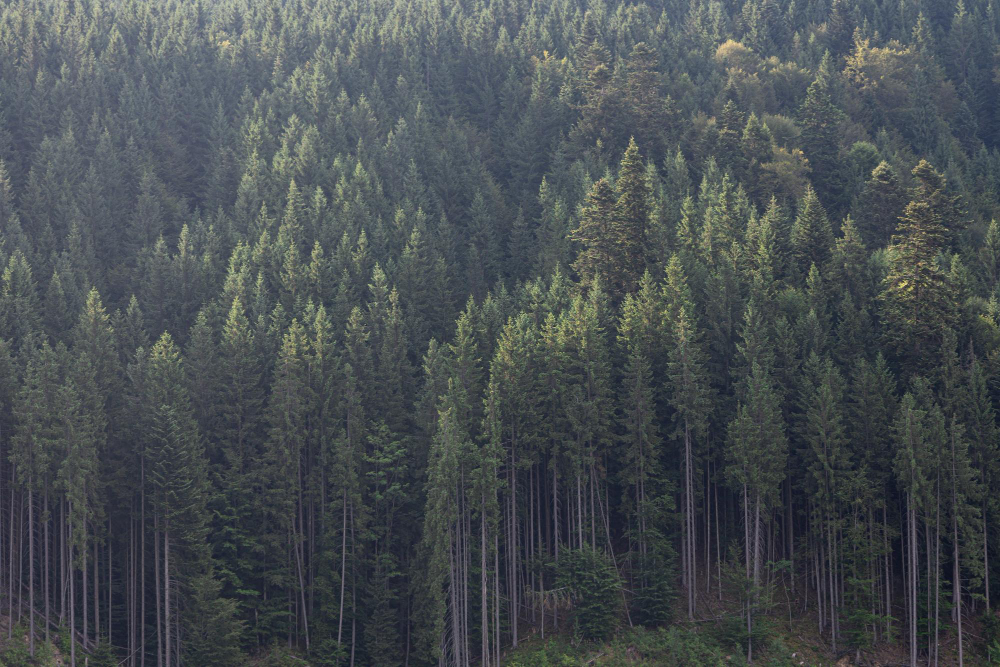
The mechanism has a cost that accumulates with height, and it sets a limit.
Every metre of additional height adds to the tension required, both to support the weight of the water column and to overcome friction in the conduits. As tension rises, the risk of cavitation rises with it.
The leaves at the top of a very tall tree are therefore working under the most extreme water stress in the organism. Measurements in the tallest redwoods show that upper leaves are smaller, stiffer and more crowded than lower ones, and that their capacity for photosynthesis is reduced because they cannot keep their pores open as freely without risking the column.
That produces a diminishing return. Adding height adds leaves that work less well, under greater risk, at greater cost. The current estimate is that the mechanism sets a ceiling somewhere around a hundred and twenty to a hundred and thirty metres, which is not far above the tallest trees ever measured.
It is a satisfying result. The height of the largest organisms on Earth appears to be limited not by the strength of wood, not by the weight of the structure and not by wind, but by how hard water can be pulled before it tears.
How Anybody Proved It
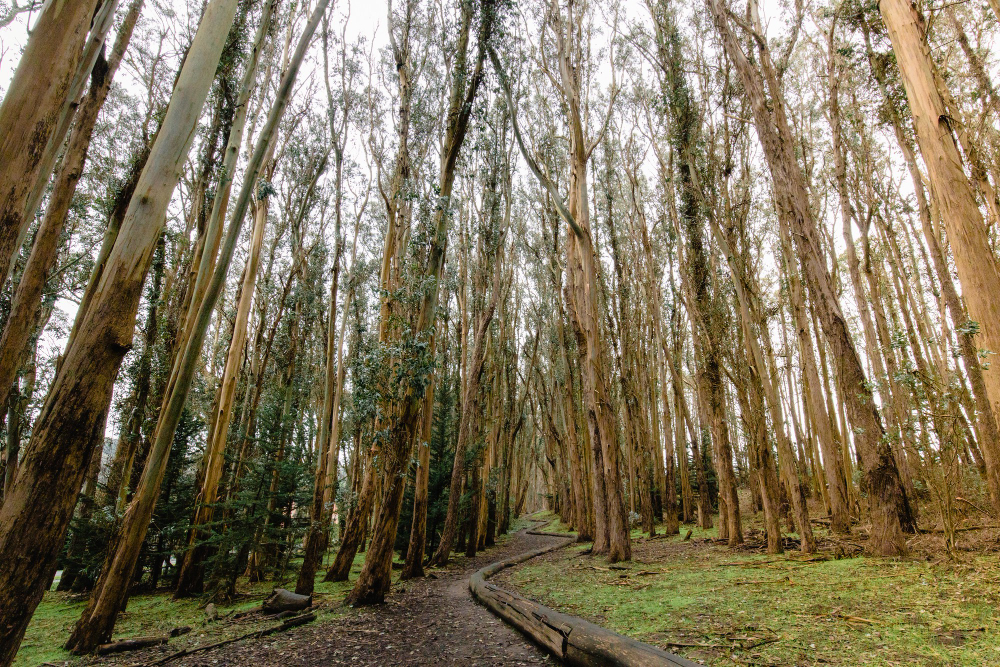
A theory requiring water to sit at negative pressure inside a living organism is not easy to test, and the experimental history is part of why it took so long to be accepted.
The first useful instrument was blunt and effective. A leafy shoot is cut from a tree and sealed into a chamber with the cut end protruding, and the chamber is pressurised until sap just appears at the cut surface. The pressure required to push the water back to the cut is a measure of how hard it was being pulled before the shoot was severed. It is an indirect measurement and it works, and it is still in routine use.
Direct measurement came later and was harder. Instruments fine enough to be inserted into a single conducting cell eventually confirmed negative pressures, and there was a long and bitter dispute in the 1990s when one technique produced values far lower than the theory predicted, which was taken by some as evidence the whole mechanism was wrong. That was ultimately traced to an artefact of the measurement rather than a flaw in the theory, and the disagreement is now regarded as settled in the theory’s favour.
The other confirmation is acoustic, and it is the most direct. If the mechanism is correct, columns under excessive tension should fail audibly. They do, and the clicks can be counted, and their rate tracks water stress exactly as predicted. A theory that predicts a specific noise, and then that noise is found, is a theory in reasonable shape.
A Machine With No Moving Parts
What makes this worth sitting with is how little the tree is doing.
There is no pump. There is no valve, no piston, no contracting tissue, and no energy spent on lifting – the metabolic cost of moving water upward is essentially zero. The tree opens pores in its leaves, water evaporates because the air is drier than the leaf, and the resulting pull is transmitted down an unbroken column of water held together by the attraction between its own molecules.
The sun does the work. The tree provides the plumbing and decides, by opening and closing its pores, how much to let happen.
Which means a forest on a summer day is lifting an enormous tonnage of water a hundred metres into the air, continuously, using a mechanism that would be dismissed as impossible if it were proposed as an engineering design, and running it on a liquid that is being stretched past the point where it should hold together at all.
Like our content? Follow us for more.
