

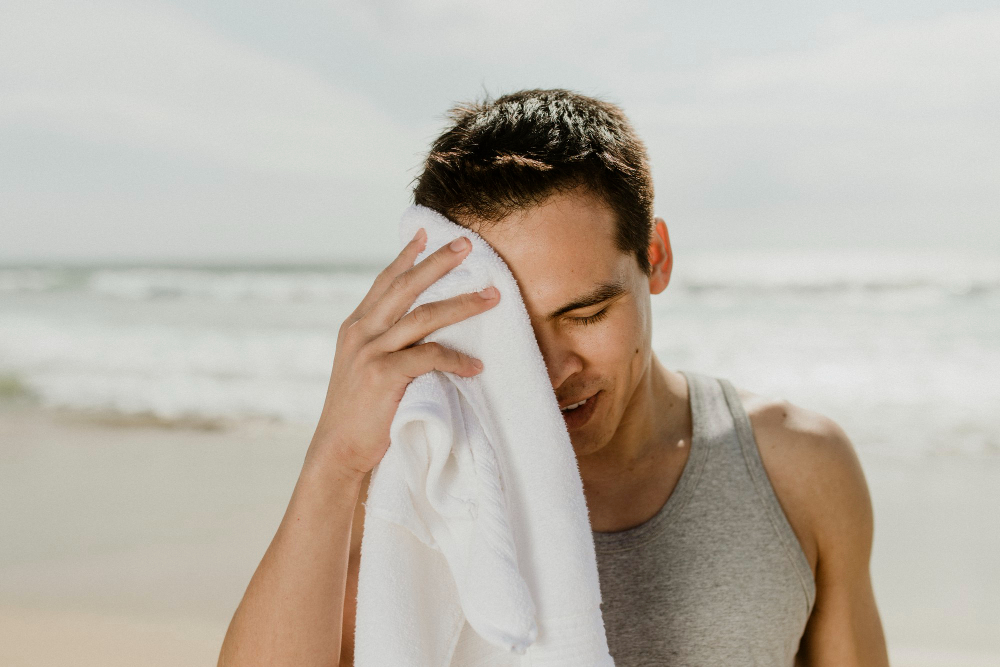
Sweating has a poor reputation, being treated as an embarrassment to be suppressed with products. It is, biologically, one of the more remarkable things about the human body, and among large mammals it is close to unique. Most animals that overheat have to stop. We do not have to stop, and the whole arrangement is built around that one capability.
Sweat Does Not Cool You. Evaporation Does
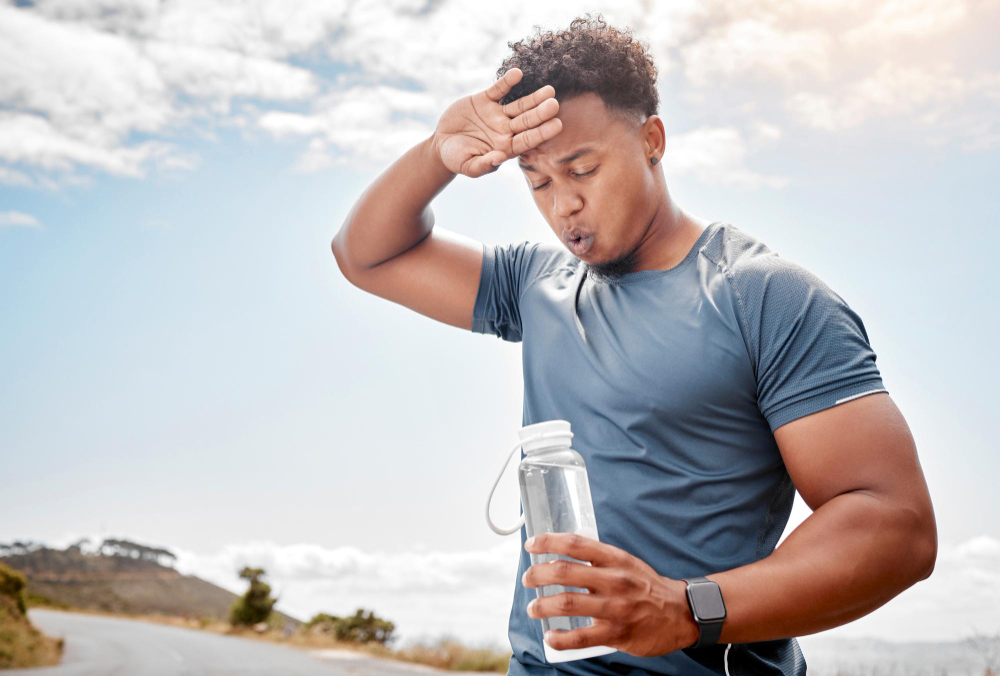
This is the point everything else follows from, and it is why a humid day is so much worse than a dry one at the same temperature.
Liquid water sitting on skin removes almost no heat. What removes heat is the change of state from liquid to vapour, because converting water to vapour requires a substantial amount of energy, and that energy is taken from the skin it is leaving. Evaporating a litre of sweat removes roughly enough heat to cool a person meaningfully, and it does it without needing the air to be cooler than the body.
That last part is the real advantage. Every other route for shedding heat depends on the surroundings being cooler than you are: radiating to cool air, conducting to cool ground, convecting into moving air. Once the air is hotter than your skin, all of those stop working or actively heat you up. Evaporation does not care. It works in air hotter than body temperature, which is why a human can function at air temperatures that exceed their own body temperature and most large mammals cannot.
The cost is water, and the requirement is that the air can accept more vapour. In humid air it cannot, the sweat stays liquid, and the system fails while soaking the person. Sweat running off you is sweat that did no cooling at all.
Like our content? Follow us for more.
Two Kinds of Gland, Doing Different Jobs
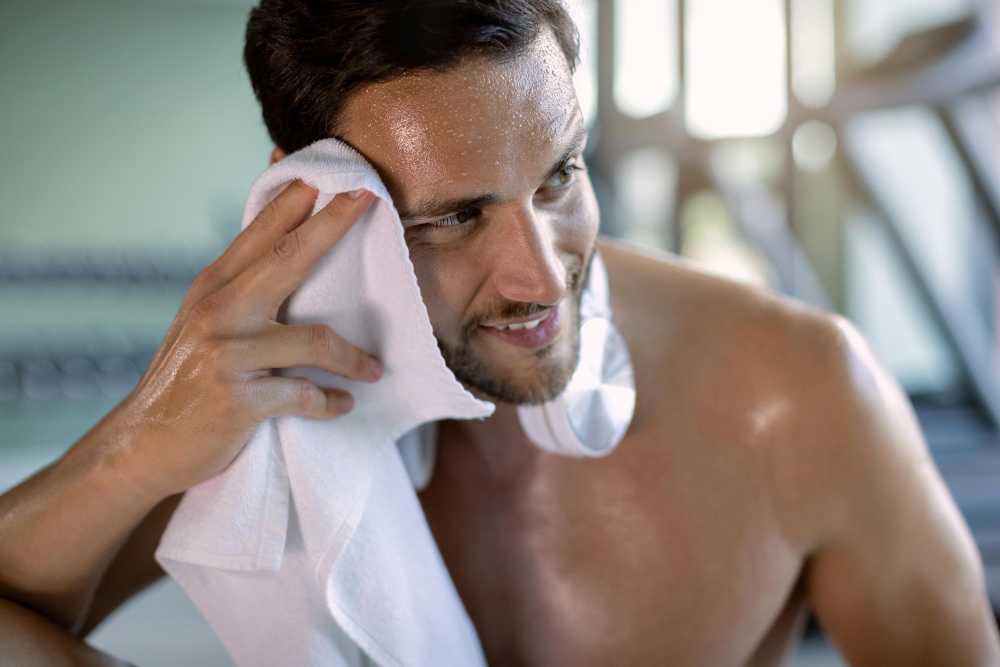
Humans have two sweat gland types and conflating them causes most of the confusion about sweat.
Eccrine glands are the cooling system. There are somewhere in the region of two to four million of them, distributed over effectively the whole body surface, and they are densest on the palms and soles. They produce a thin, watery secretion that is mostly water with some salt, and it is close to odourless when it arrives at the skin.
Apocrine glands are the other kind, concentrated in the armpits and groin, and they are not primarily about temperature. They produce a thicker, protein- and lipid-rich secretion, they become active at puberty, and they appear to be scent glands rather than cooling glands.
Body odour comes almost entirely from the second group, and even then not directly. The secretion itself has little smell. The smell is produced by skin bacteria metabolising the compounds in it. This is why odour is concentrated in particular places rather than everywhere a person is sweating, and why the smell develops over time rather than appearing instantly.
The whole-body eccrine system at this density is the unusual feature. Other mammals have eccrine glands, but in most of them they are largely restricted to the paws, which is why a dog’s paw prints are damp on a hot day and why panting rather than sweating is the standard mammalian answer to overheating.
Panting Versus Sweating
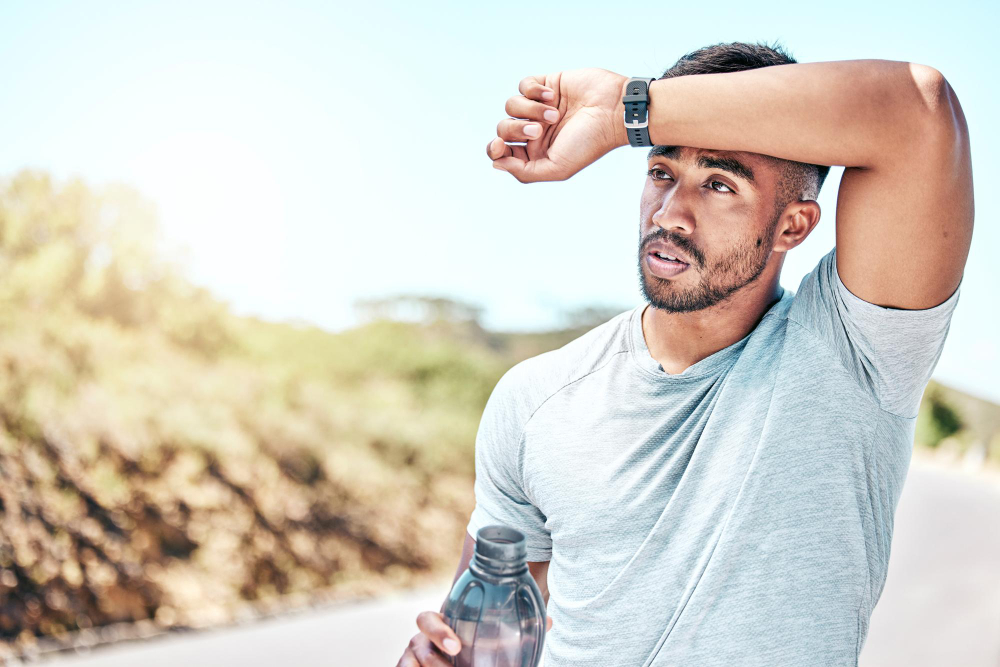
Panting works by the same physics and is limited in a way sweating is not.
An animal that pants evaporates water from the surfaces of its mouth, tongue and airways by moving air rapidly across them. The cooling is real and the water cost is comparable. The limitation is the available surface area: an airway is a small evaporating surface compared with an entire body.
Panting also interferes with breathing, because rapid shallow breaths for cooling are not the breathing pattern that supplies oxygen to working muscles. An animal running hard needs to breathe for oxygen; an animal overheating needs to breathe for cooling; and it cannot fully do both. For a quadruped whose gait is mechanically coupled to its breathing, the conflict is worse still.
A sweating human has no such conflict. Cooling happens on the skin and breathing happens in the lungs, and the two systems do not compete. You can run and cool at the same time, indefinitely, as long as the water holds out.
Which Is Why We Can Outlast Faster Animals

Put the pieces together and you get the persistence hunting argument, which is one of the more compelling stories in human evolution and worth stating with its appropriate uncertainty.
Most fast animals are sprinters. They generate heat far faster than they can shed it, so they run, build up a heat load, and then must stop and dissipate it. Their top speed is not the constraint on a long chase; their cooling is.
A human is slow by comparison and can keep going. The proposal is that early humans could pursue a faster animal at a steady pace, repeatedly pushing it back into a gallop before it had cooled, until it was unable to continue. The hunter’s advantage is not speed or strength. It is thermoregulation.
The supporting anatomy is substantial and not seriously disputed: bare skin rather than a dense coat, so evaporation happens at the skin surface rather than in fur; eccrine glands over the whole body; an upright posture that reduces the body surface exposed to overhead sun while increasing exposure to moving air; long legs and tendons that store and return energy; and a network of veins that helps cool blood returning to the head.
Whether early humans actually hunted this way as a regular strategy is less settled. It has been documented among some modern hunting peoples, which proves it is possible, but how common or how important it was in human evolution remains debated. The physiology is clear; the prehistory is inference.
The cooling advantage also explains something less dramatic and more certain: humans spread into and worked in hot open environments that are hard for large mammals, and they did it before any technology beyond water containers.
The System Has to Be Trained
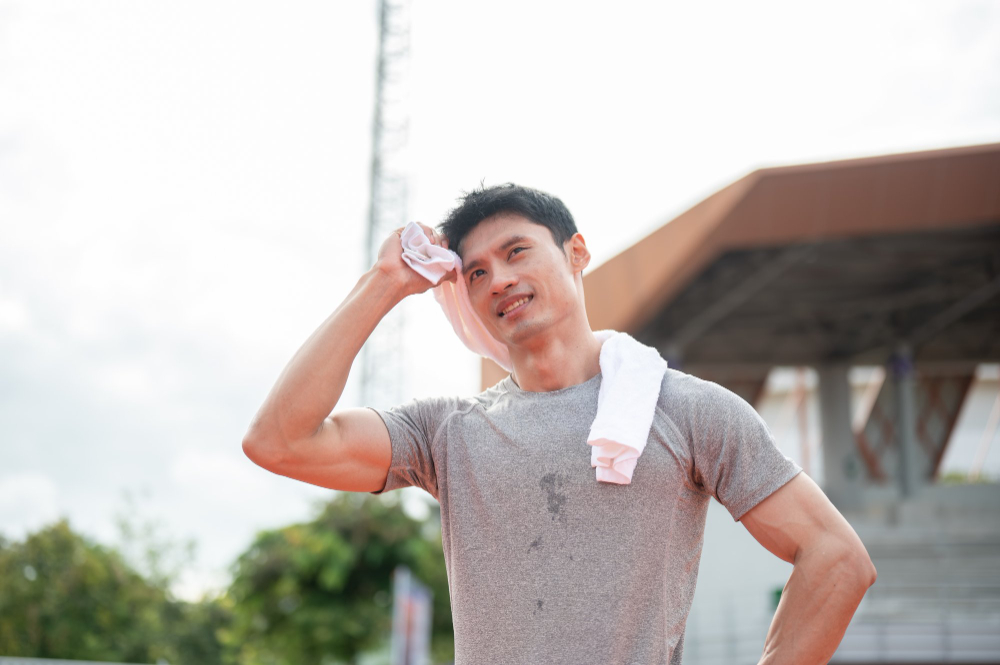
Sweating capacity is not fixed. It adapts, in weeks, and the adaptation is substantial enough to be a serious factor in athletic performance and in occupational health.
On repeated exposure to heat and exertion, several things change. Sweating begins at a lower core temperature, so cooling starts earlier. Total sweat rate rises, sometimes to double the unacclimatised figure. Sweat becomes more dilute, because the glands reabsorb more salt before the fluid reaches the surface, which conserves electrolytes. Blood plasma volume increases, supporting both sweating and circulation.
Most of this happens within one to two weeks of regular heat exposure and is lost again over a similar period without it. It is why the first hot day of a year feels disproportionately bad, why athletes train in heat before competing in it, and why people who have lived somewhere hot for a season cope with it visibly better than visitors.
It also means a well-adapted person loses more water, not less. The efficient system is the thirsty one.
Where It Breaks Down
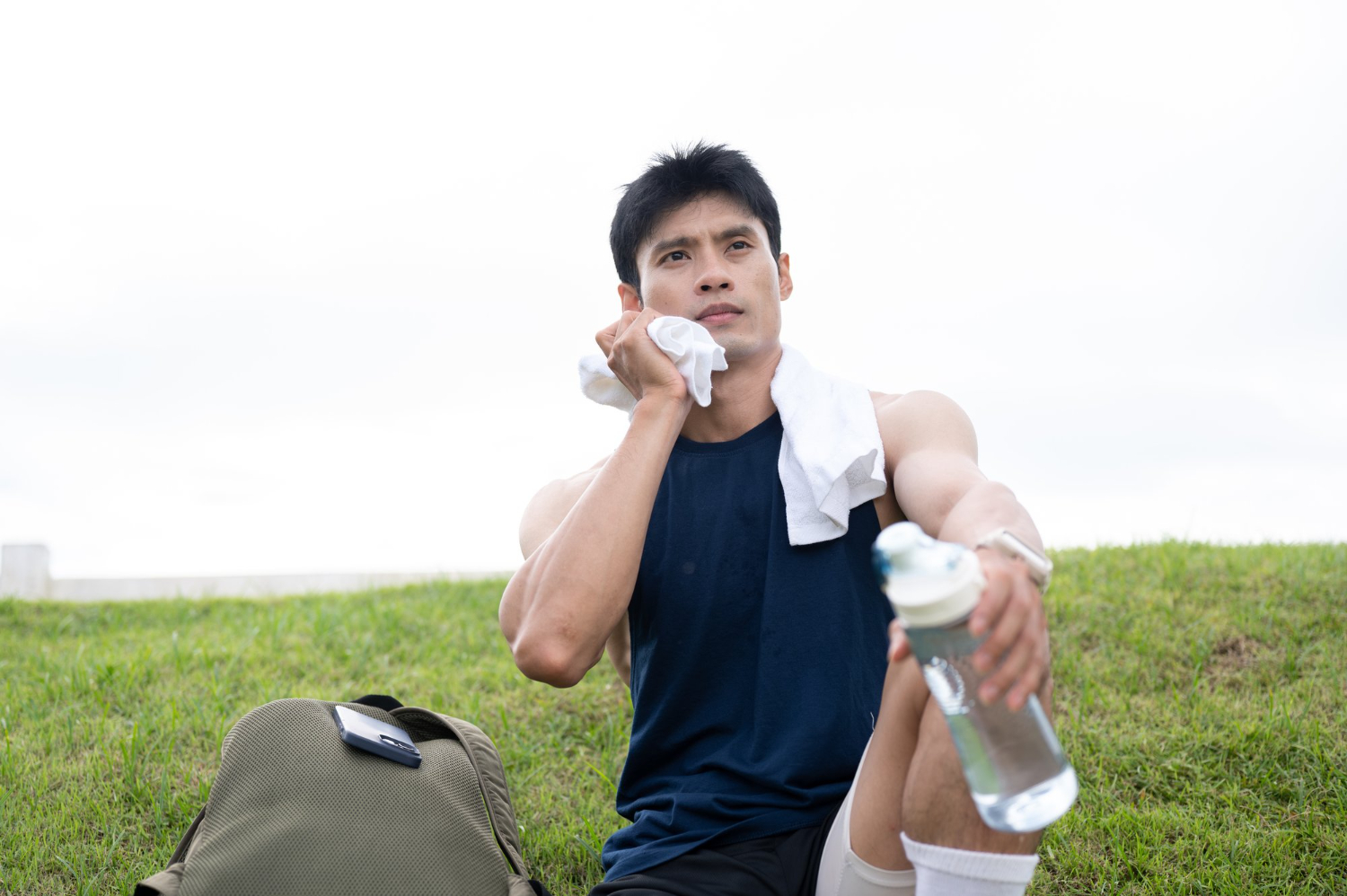
A cooling system dependent on evaporating water has two clear failure modes, and both are worth understanding as physics rather than as warnings.
The first is running out of water. Sweat rates during hard work in heat can exceed a litre an hour, sustained, and the body has no meaningful water reserve. Because thirst tends to lag behind actual loss, a person working hard can fall progressively behind without feeling proportionally thirsty.
The second is the air refusing to take the vapour. As humidity rises, the evaporation rate falls, and above a certain combination of heat and humidity, sweat cannot evaporate fast enough to shed metabolic heat at all. At that point core temperature rises regardless of how much a person sweats, and no amount of additional sweating helps. This is why combined heat-and-humidity measures describe survivable conditions far better than temperature alone, and why still, humid heat is more dangerous than hotter dry heat.
Moving air makes a large difference, because it clears saturated air away from the skin and replaces it with air that can accept more vapour. A fan does not cool the air. It removes the layer of humid air sitting against you, which is why a fan feels effective and why it stops feeling effective when the air is already close to body temperature and saturated.
This is a general explanation of the physiology and not medical or safety advice; anyone working or exercising in serious heat should be following proper guidance for it.
An Unglamorous Piece of Engineering
What is worth appreciating here is the elegance of the trade. Fur is useful, and losing it costs insulation and protection. Humans gave that up, and in exchange got a whole-body evaporative surface that works in air hotter than the body itself.
Everything else about how a human moves fits that decision. The bare skin, the gland density, the upright stance, the long tendons and the ability to drink and carry water combine into an animal optimised not for speed or power but for continuing to operate when the alternative is stopping.
So the thing that ruins a shirt on a warm day is the reason a person can walk across open ground in the middle of the afternoon while most of the animals around them are lying in shade waiting for the heat to pass.
Like our content? Follow us for more.
