

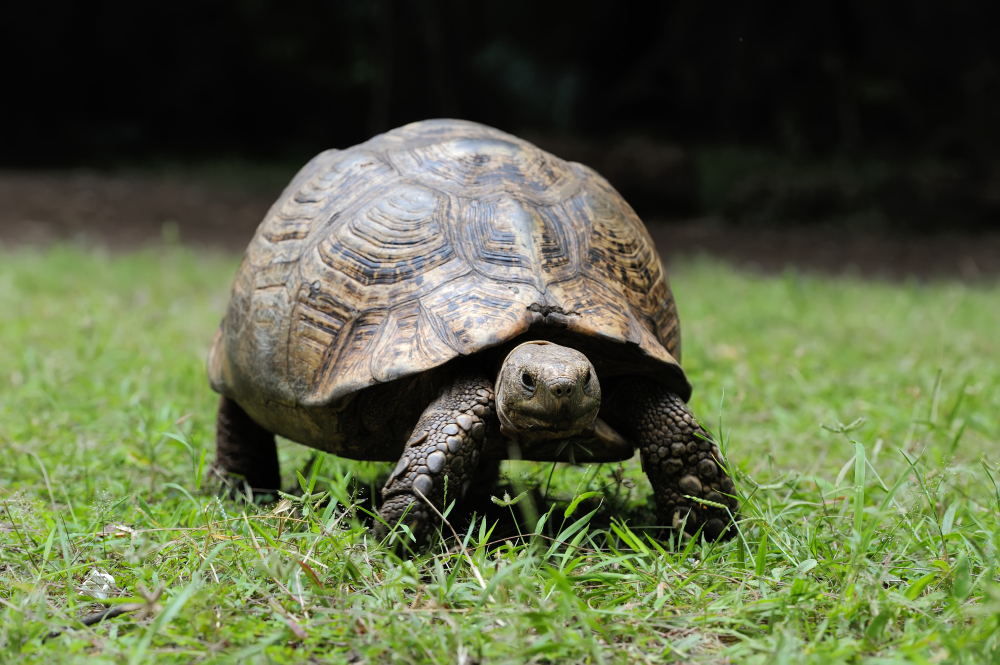
Almost every popular depiction of a turtle gets this wrong in the same way, treating the shell as a portable house. The reality is stranger, because building a box out of your own ribcage creates a series of problems that no other vertebrate has to solve – starting with how to breathe once your chest can no longer move.
What the Shell Is Made Of
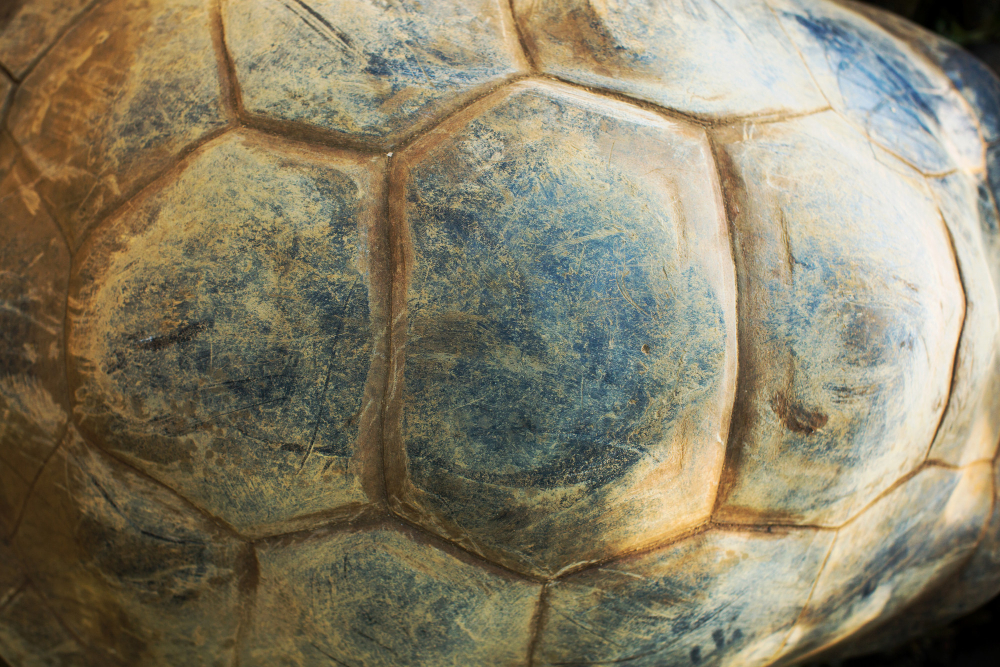
Look at a turtle skeleton and the shell is not a separate item sitting beside it. It is the skeleton.
The upper part, the carapace, is built from the vertebrae of the spine fused along the midline, the ribs flattened into broad plates and fused edge to edge, and additional bony elements formed in the skin. All of that is joined into one rigid unit.
The lower part, the plastron, is derived largely from elements of the shoulder girdle and from bones of the belly wall, and in most species it is connected to the carapace along each side by a bony bridge.
Over the bone is a layer of scutes, plates of keratin – the same material as fingernails and hair – which is what you actually see and touch. Beneath the keratin is living bone with a blood supply and nerves, which is why shell damage is an injury rather than a cosmetic problem, and why a turtle can feel its shell being touched.
The scutes and the bony plates underneath do not line up. The seams between the keratin plates sit over the middle of the bones rather than over the joins, which is the same overlapping arrangement used in plywood and brickwork, and it makes the whole structure far stronger than either layer alone.
Like our content? Follow us for more.
The Ribs Are on the Outside of the Shoulders
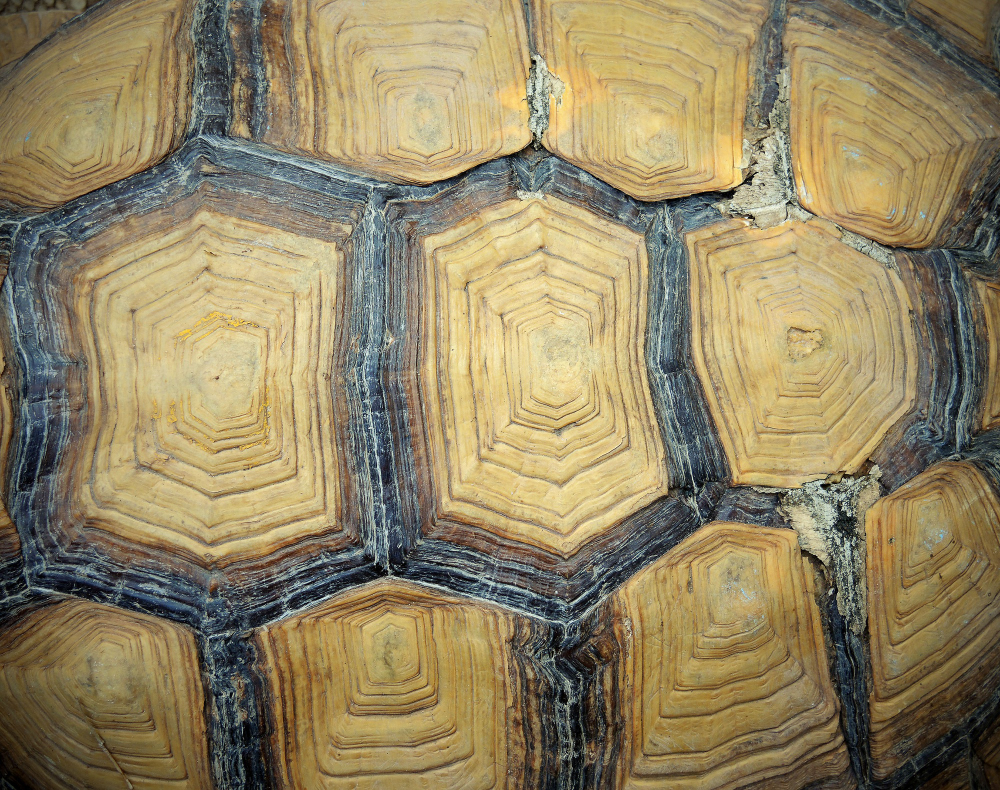
This is the detail that makes turtles peculiar among vertebrates, and it took a long time to explain.
In every other four-limbed animal, the shoulder blade sits outside the ribcage, on the surface, with muscles running between them. In a turtle, the shoulder girdle is inside the ribcage.
That is not a small rearrangement. It means the developing embryo has to fold the body wall in a way nothing else does, and it means the shoulder joint operates within a rigid bony box rather than against a flexible chest.
How this happened was unclear until fossils were found showing intermediate stages – early forms with broadened ribs and a partial shell, in which the transition can be traced. The current understanding is that the ribs broadened first, which stiffened the trunk, and the full box came later.
There is a cost, and it is the reason the arrangement is worth remarking on. Broadened, fused ribs stiffen the trunk completely, and a stiff trunk cannot bend from side to side. Most reptiles run by flexing the body, so turtles gave up that entire mode of locomotion, which is a large part of why they move as they do.
So It Cannot Breathe the Way Anything Else Does
Here is the problem the shell creates. Every other reptile, and every mammal, breathes by changing the volume of the chest – moving the ribs, or moving a diaphragm, or both. A turtle’s ribs are fused into a box and cannot move at all.
The solution is a set of muscles attached to the inside of the shell and to sheets of tissue around the lungs, which pull the internal organs away from the lungs to draw air in and push them back to force it out. A turtle breathes by moving its viscera inside a fixed container, using muscles that exist for no other purpose.
This has consequences that are easy to observe. The limb pockets bulge and retract as a turtle breathes, because the limbs occupy the space the organs are being moved into. A turtle pulling its head and legs fully in has to accommodate all of that within a volume that cannot expand, which limits how long it can stay sealed.
And in aquatic species it means the animal cannot simply hold more air by expanding its chest. Buoyancy control is managed by how much air is in the lungs, and since the container is fixed, the amount is limited.
Some aquatic turtles solve part of the problem by taking oxygen directly from water across thin, well-supplied tissues, which allows extended periods submerged in cold water without surfacing at all. It is not gill breathing, and it works only when metabolism is low.
It Grows With the Animal, From the Edges
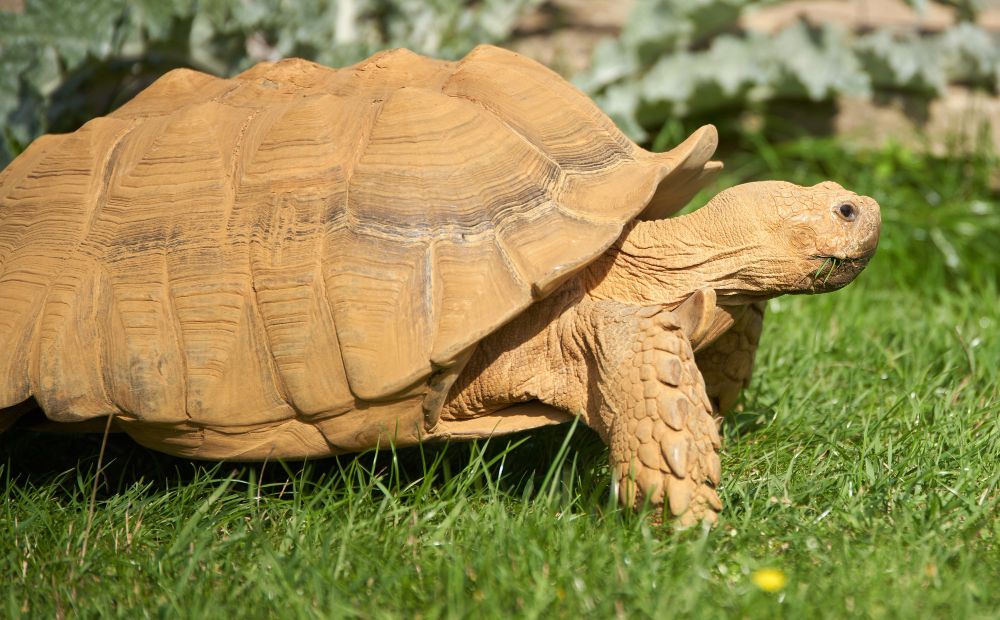
A rigid box presents an obvious difficulty for something that has to get bigger, and the shell solves it differently from an insect’s exoskeleton.
An insect cannot enlarge its covering and has to shed it entirely and grow a new one, which is the vulnerable business of moulting. A turtle does not moult its shell, because the shell is bone and bone can be remodelled from within while also being added to at its margins.
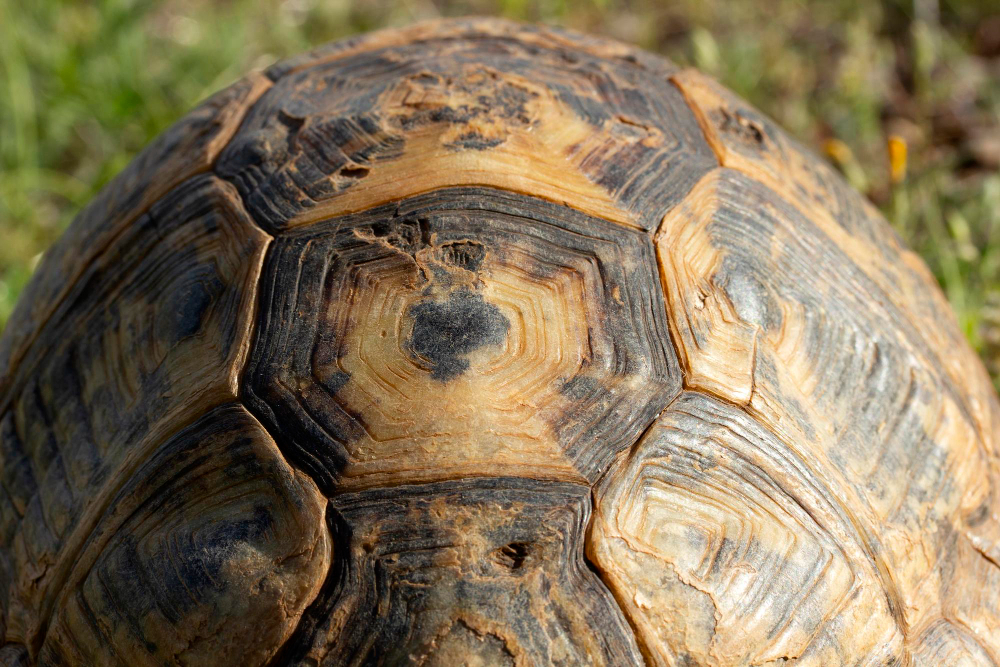
The keratin scutes on the outside do renew. In many species new keratin is laid down beneath the existing plate, producing the concentric rings visible on a scute. Those rings are often described as annual growth rings, and they are laid down in response to growth rate rather than to the calendar, so counting them gives a rough indication at best and is unreliable in animals that grow irregularly or live where conditions do not vary seasonally.
Aquatic species commonly shed whole scutes as flat translucent plates, which is normal, while many land tortoises retain theirs and accumulate visible layers instead.
The Shell Is Not Always a Box
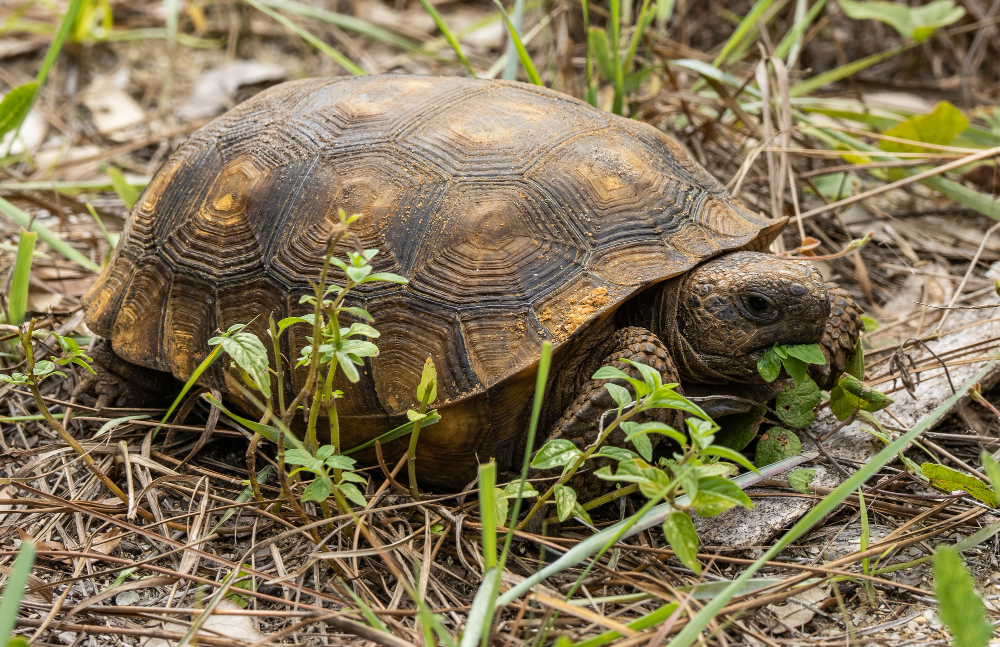
Once you know what the shell is, the variation across species starts to make sense as a set of trade-offs.
Heavily domed shells belong to land tortoises, where the shape resists being crushed and the animal has no need to move quickly. A very high dome is difficult for a predator’s jaws to get around at all.
Flattened, streamlined shells belong to aquatic species, where drag matters and protection is traded for speed in water.
Softshell turtles have reduced the bony plates substantially and have a leathery covering instead, gaining flexibility and speed and losing armour. The leatherback sea turtle has gone furthest, with the bony shell reduced to a mosaic of small elements in a thick oily layer of skin, which is part of how it tolerates depth and cold.
Some species can close up completely, with a hinge across the plastron allowing the front to be drawn shut like a door once the head is withdrawn. Others cannot withdraw fully at all.
And the two main groups of living turtles differ in how they retract the neck: one folds it back in a vertical S-curve, the other tucks it sideways under the front edge of the shell. That is a deep division in the group’s history, and it is visible in any turtle that pulls its head in.
The Sex of the Hatchling Is Decided by the Temperature of the Sand
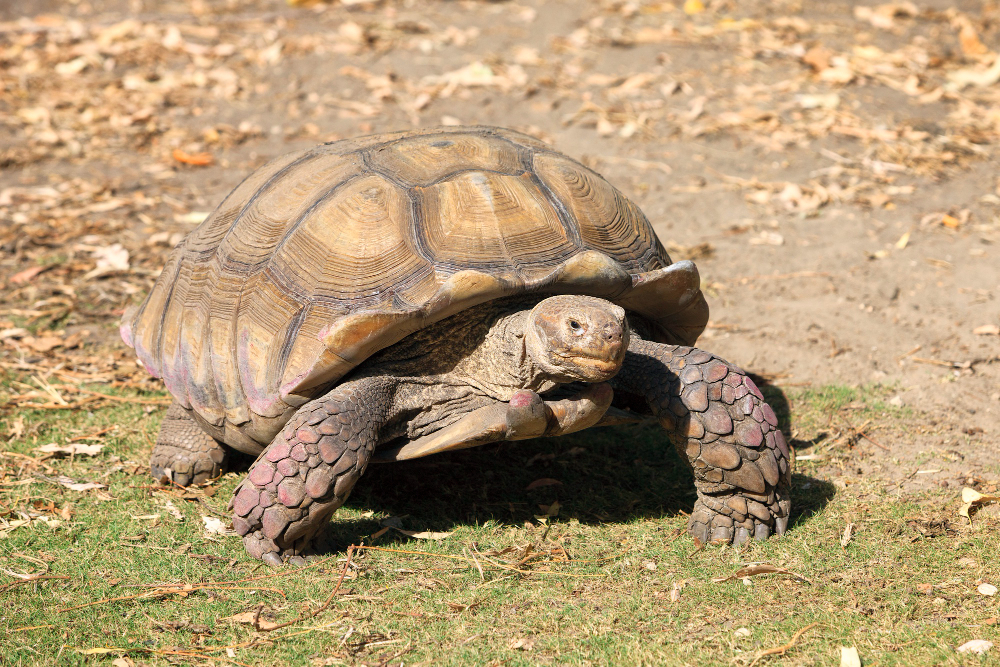
One further consequence of the whole arrangement is worth setting out, because it follows from the eggs rather than from the shell and it is the part most people find hardest to believe.
In most turtles there are no sex chromosomes doing the deciding. Whether an egg becomes male or female is determined by the temperature it experiences during a particular window partway through incubation. Warmer nests produce one sex and cooler nests the other, and the switch between them happens across a narrow band of a couple of degrees.
This means the sex ratio of a clutch is set by where the female dug and what the weather did afterwards. A nest on open sand and a nest in shade a few metres away can produce entirely different outcomes, and a single nest can produce both, because the top of the clutch is warmer than the bottom.
Females appear to influence it through where and how deep they nest rather than through anything physiological, and the arrangement is ancient and shared with crocodilians.
It also makes the group unusually exposed to sustained temperature change in a way that has nothing to do with the shell. A population whose sex ratio is set by sand temperature has no internal mechanism to correct a persistent shift in it, and with a generation time measured in decades there is very little scope to adapt quickly. The shell solved predation extremely well and left this entirely untouched.
What It Bought Them
Turtles are old. The group substantially predates the dinosaurs’ extinction and has changed remarkably little in general layout for a very long time, while a great many better-equipped lineages have disappeared.
The shell appears to be much of the reason. It removes the animal from most predation once adult size is reached, which is an unusually complete defence, and it goes with a set of traits that follow from it: slow movement, slow metabolism, late maturity and long life, all viable precisely because being eaten is improbable.
The weakness is the other end. Eggs and hatchlings have no shell worth the name, and mortality before the shell hardens is enormous, which is why the reproductive strategy is to lay many eggs and lose almost all of them.
That is also why the arrangement copes badly with modern pressures. A strategy built on adults being effectively invulnerable collapses if adults start dying from something the shell does not stop, because the species has no capacity to breed quickly enough to compensate.
So the shell is a remarkable piece of anatomy and a commitment. It cost them the ability to run, the ability to breathe with their ribs, and any prospect of a fast life, and in exchange it gave them a hundred million years of being extremely difficult to eat.
Like our content? Follow us for more.
