

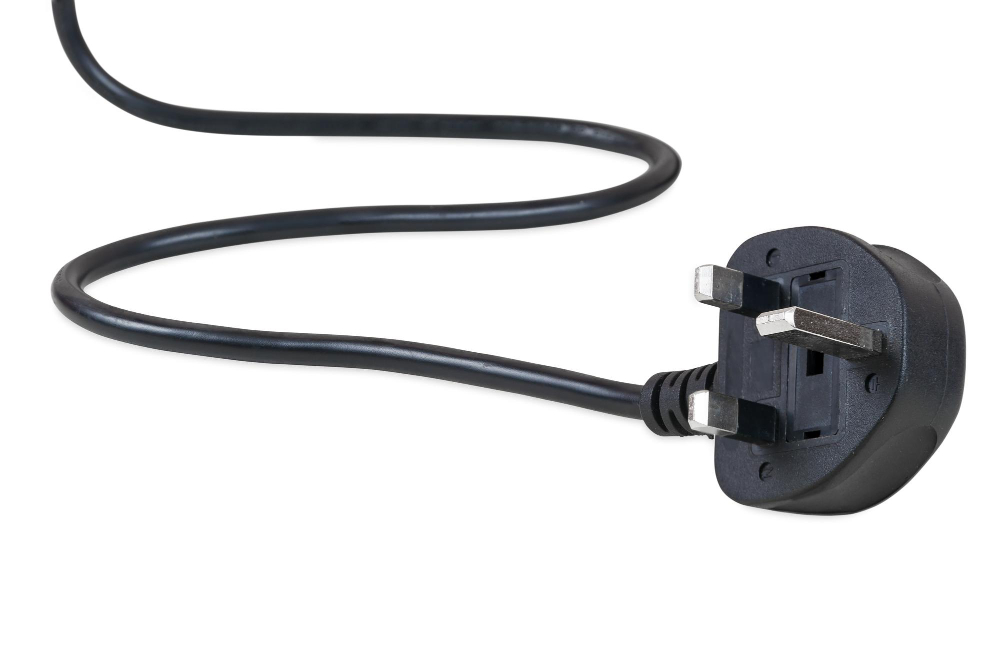
Three Pins, Three Completely Different Jobs
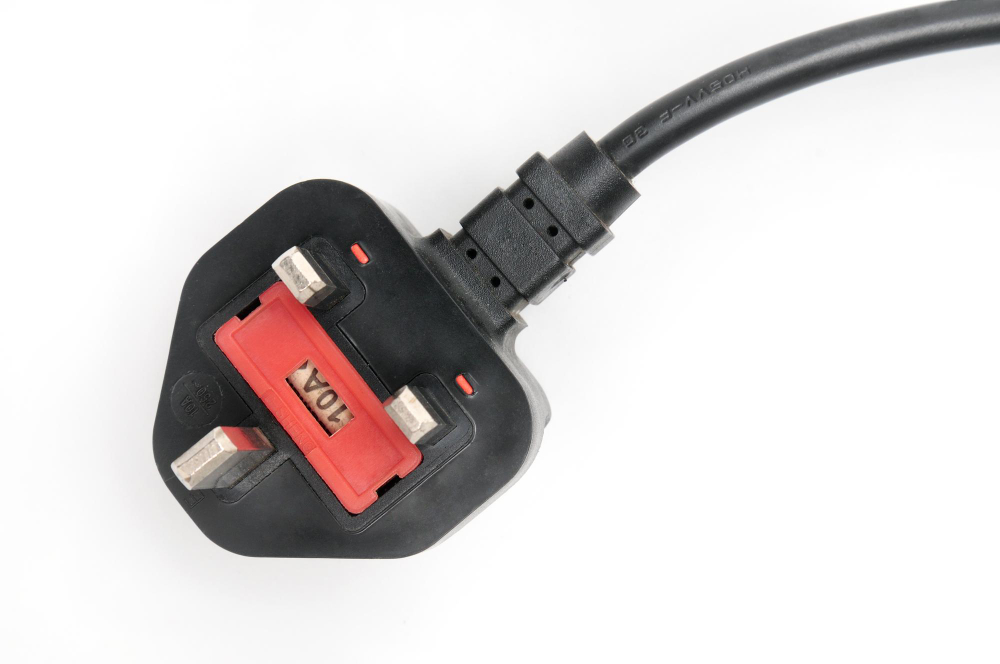
It looks like a symmetrical arrangement of three identical things, and it is nothing of the kind. The three pins are doing three unrelated jobs and only two of them carry any electricity in normal use.
One pin delivers the supply. One provides the return path so the current has somewhere to go. Those two are the circuit, and an appliance works perfectly well with only those two connected, which is why so much equipment has a two-pin lead.
The third pin does nothing at all, for years at a time. It is connected to the metal body of the appliance and, at the other end, to the ground. Its entire purpose is to be ready for a fault that may never occur: if a live wire inside the appliance ever comes loose and touches the casing, the casing would otherwise become live and the next person to touch it would become the path to earth. The third pin gives the fault a much easier path than a human being, and the resulting surge of current is large enough to blow the fuse or trip the protection and disconnect the whole thing in a fraction of a second.
So the pin that spends its life doing nothing is the one that decides whether a fault is an inconvenience or a fatality. Everything else described here follows from the fact that the designers took that pin and gave it four more jobs.
Like our content? Follow us for more.
It Is Longer So It Connects First and Leaves Last
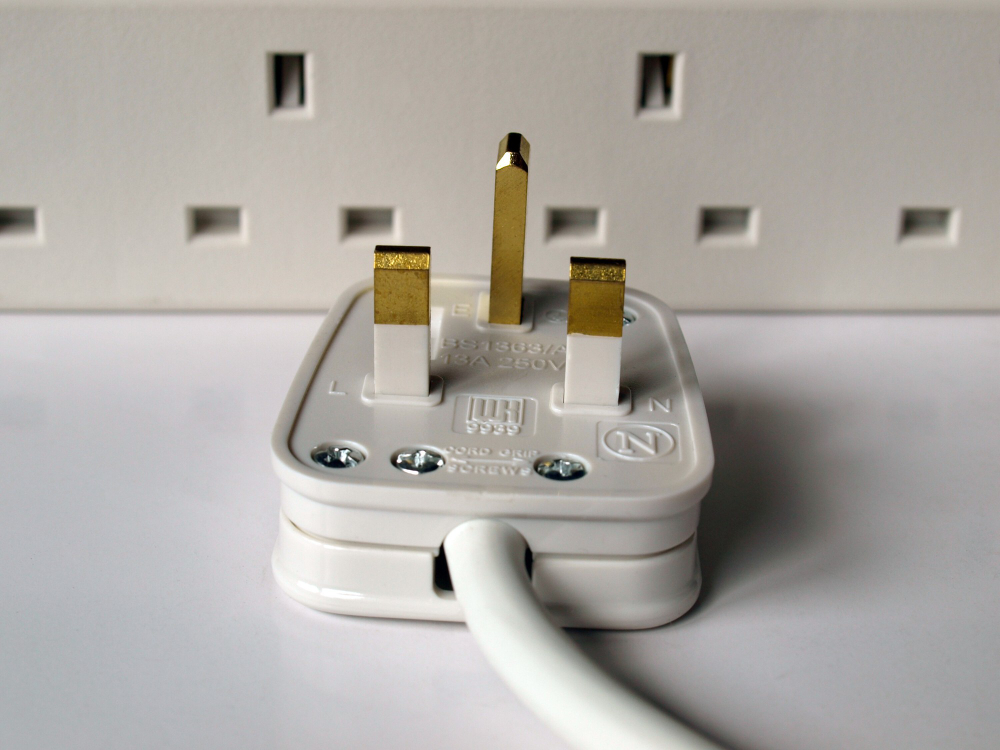
The earth pin projects noticeably further than the other two, and the reason is sequencing.
Pushing a plug in is not an instantaneous event. There is a period of a few tenths of a second during which some pins have made contact and others have not, and the order in which that happens matters. A longer earth pin means the protective connection is established before either of the current-carrying pins touches anything.
Pulling the plug out reverses it. The earth is the last connection to break, so the appliance remains earthed until after it has been disconnected from the supply. At no point in either operation is the appliance energised without being earthed.
This is a general principle in electrical design and it appears wherever connectors are made and broken by hand. The protective conductor is always arranged to be first on and last off, and in this plug the arrangement is achieved by nothing more sophisticated than making one pin longer than the others.
Most people who know anything about the plug know this much. It is the part that gets mentioned. It is also, as the title says, the least interesting of the things that pin is doing.
It Is Also a Key
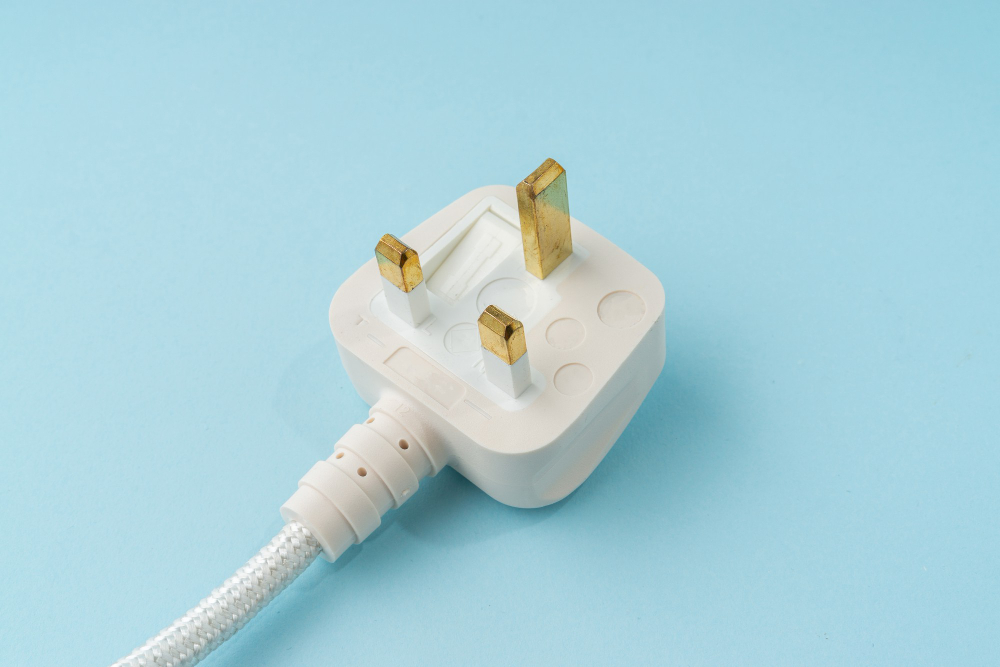
Here is the part almost nobody knows. The earth pin is not only longer, it is thicker and of a different cross-section, and it is positioned apart from the other two. That combination makes it a unique shape that nothing else will imitate.
Inside the socket, the two holes that lead to the live and neutral contacts are not open. They are covered by a shutter mechanism, and that mechanism is held closed by a spring. It cannot be opened from the front by pushing anything into those two holes.
It is opened by the earth pin. The longer pin enters its own hole first and operates a lever or cam that withdraws the shutters from the other two, and only then do the shorter pins reach contacts that are live.
The consequence is the thing worth pausing on. A child pushing a hairpin, a fork, a screwdriver or a finger at the two obvious holes in the socket cannot reach anything, because those holes are mechanically blocked and the only thing that will unblock them is an object of the right shape in a third hole that leads nowhere dangerous.
That is an extraordinarily elegant piece of design. It provides child protection as a structural property of the connector rather than as an accessory, it requires no action by anybody, it cannot be forgotten, and it adds nothing to the cost beyond the shape of a piece of brass.
The Sleeves Are the Other Half of the Same Idea
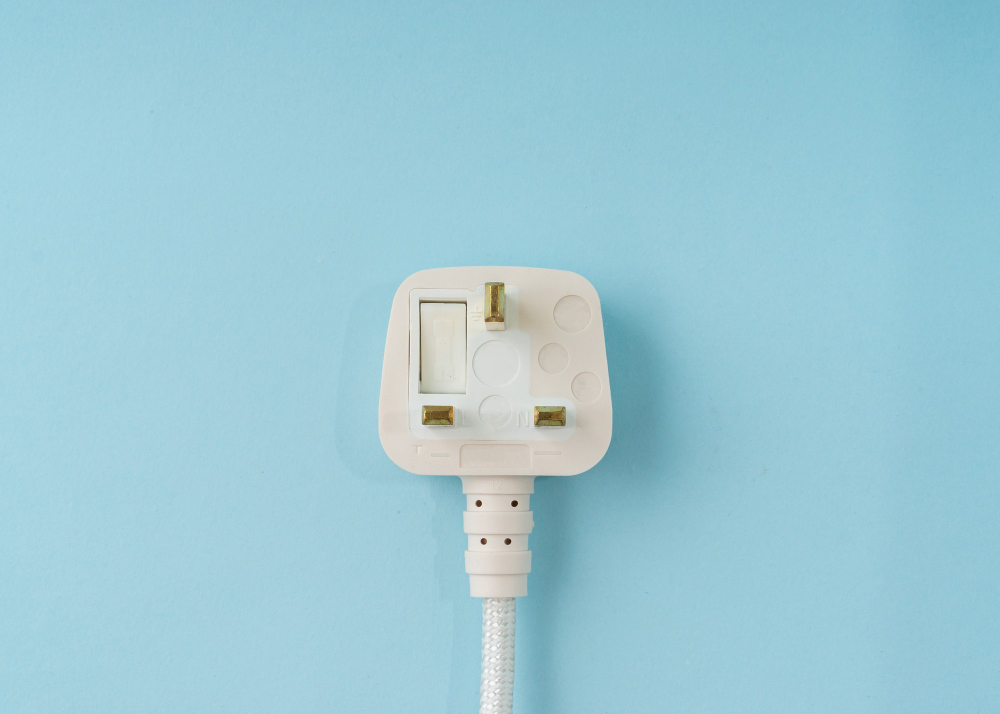
Look at the two shorter pins and you will see that the half nearest the plug body is not metal. It is insulating material, moulded around the base of each pin.
The reason is the moment when a plug is partly withdrawn. A plug hanging half out of a socket, which happens constantly behind furniture and under desks, exposes some of each pin. Without the sleeves, the exposed portion would be live metal at finger height.
With them, the part that is accessible while the plug is still making contact is insulated, and by the time bare metal is exposed the pins have left the contacts. It closes the gap that the shutters do not cover, which is the plug being half in rather than fully out.
The two features together mean that there is no configuration of plug and socket, at any stage of insertion or withdrawal, in which a person can touch live metal or get anything into a live hole. That is not a happy accident. It is a specification that somebody wrote down and then designed backwards from.
The Fuse Is in the Plug, Which Is Unusual
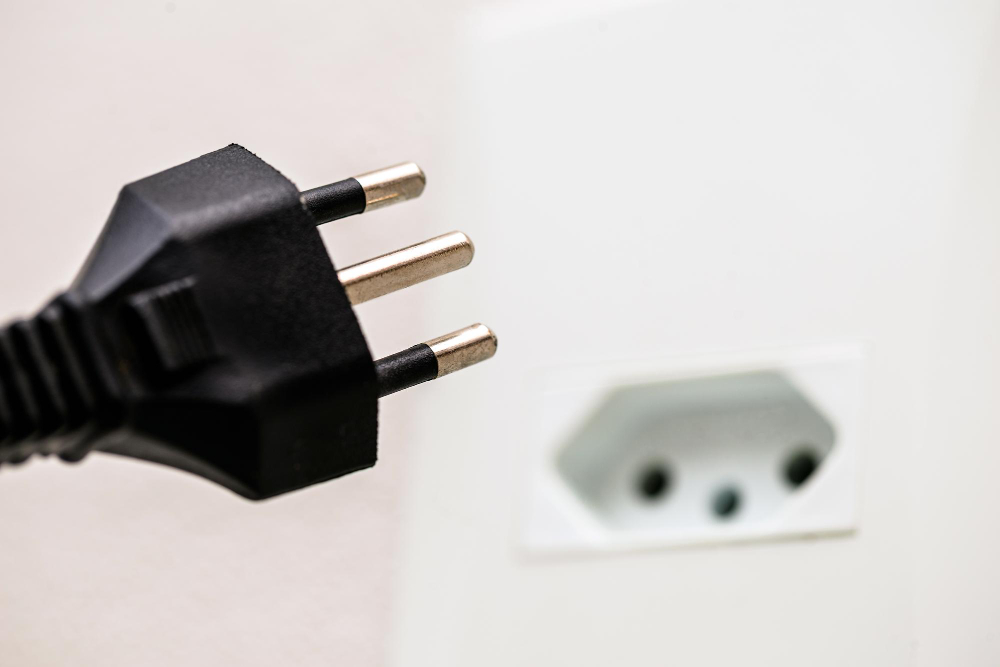
Most of the world does not put a fuse in the plug. In this design there is one, sitting in a holder inside the body, and it is there for a reason that has nothing to do with protecting the appliance.
The arrangement exists because of how the supply is wired in the buildings these plugs were designed for. Rather than running a separate circuit to each socket, a single substantial cable runs in a loop around a floor and every socket connects to it. That loop is protected at the distribution board by a device rated for the whole loop, which is a large rating.
The problem is the flex. A thin cable running to a table lamp is not capable of carrying anything like the current the loop’s protection would permit. If that flex were damaged and developed a fault drawing somewhat more than the lamp needs but far less than the loop’s rating, nothing upstream would notice and the flex would overheat.
The fuse in the plug solves that. It is chosen for the cable, not the appliance, and its job is to disconnect before a thin flex can get hot enough to cause a fire. It is protecting the eighteen inches of wire between the wall and the thing on the table, which nothing else in the installation is in a position to protect.
Which is why the plug is the size it is. A great deal of the bulk exists to house a cartridge fuse and its holder, and the whole design is a consequence of a decision about how to wire a building that was taken long before.
The Cord Grip Does More Than the Terminals
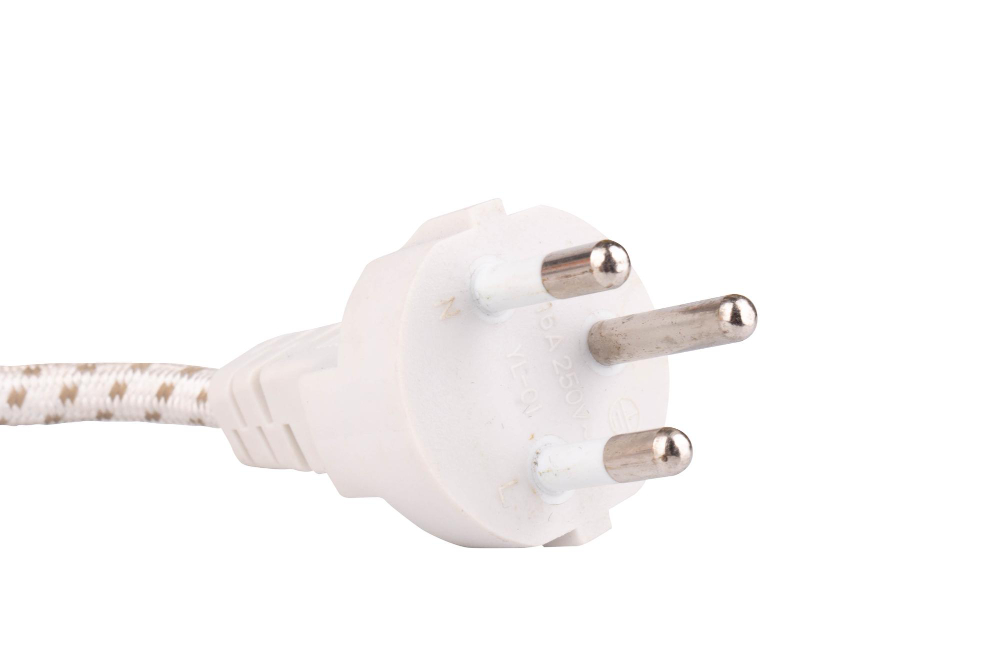
Inside the body, where the flex enters, there is a clamp that grips the outer sheath of the cable. It is the single most important component in the plug and it is routinely the one that is fitted badly.
Everything that pulls on a mains lead, which is to say somebody tripping over it, moving the appliance, or yanking it out by the cable, applies force to the plug. If that force reaches the three terminal screws, the conductors will eventually work loose, and the one that matters is the earth.
The grip takes the strain on the outer sheath so that none of it reaches the conductors. The internal wires are deliberately cut to slightly different lengths, so that if the grip ever did fail and the cable pulled through, the live conductor would part company first and the earth last. Even the failure mode is sequenced.
That detail is a good illustration of the whole object. It is not one safety feature; it is a stack of them, each covering the case where the previous one has already been defeated.
Why It Lands Pins Upward
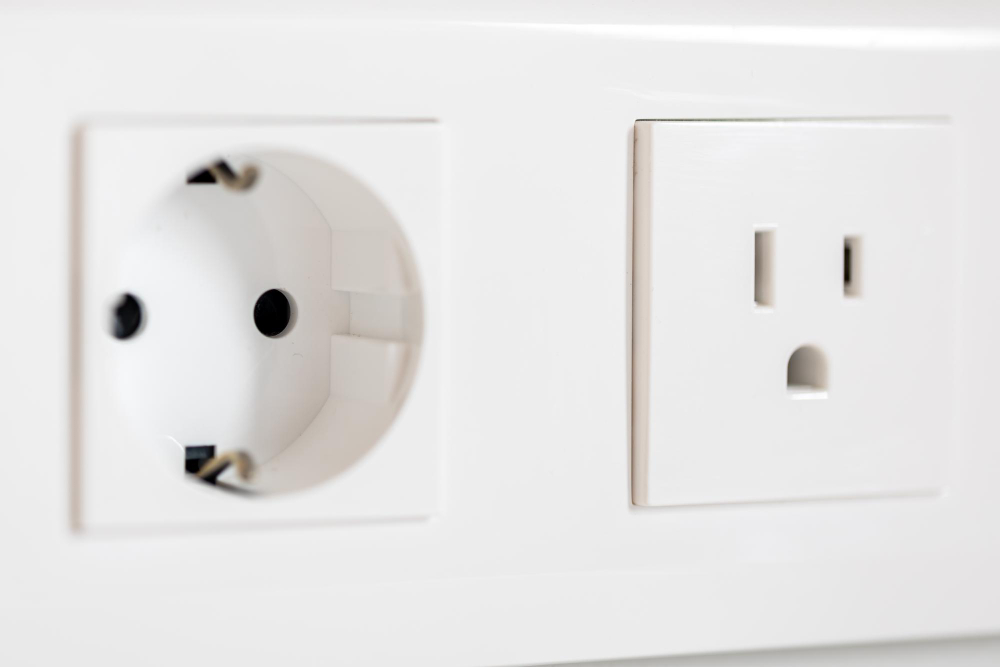
The design is heavy, and there is a well-known and entirely unavoidable property of it: dropped or left on the floor, it has a marked tendency to come to rest with the pins pointing up, which is extremely unpleasant to stand on.
This is not perversity. It follows from the mass distribution. The bulk of the weight is in the body, which contains the fuse, the terminals and a substantial amount of moulded material, while the pins are relatively light. A shape with a heavy flat base and three light prongs on one face is stable resting on the base, and the base is the side opposite the pins.
The same properties that make the plug robust, well-insulated and capable of housing a fuse are the ones that make it land that way. It is a direct trade: a smaller, lighter plug would be far less painful to tread on and would have nowhere to put the fuse and far less insulating material around the terminals.
It is worth stating because it is the single most common complaint about the design, and the answer is that the complaint and the safety record have the same cause.
Why Everybody Does It Differently
There are a dozen or so incompatible mains plug designs in use around the world, and the usual assumption is that this is a historical accident nobody got round to fixing. It is more interesting than that.
The differences follow from different decisions about voltage, about how buildings are wired, and about when the standard was fixed. A system running at a lower voltage draws roughly twice the current for the same power, which changes the pin sizes required. A system that runs a separate protected circuit to each socket has no need of a fuse in the plug. A standard settled early is stuck with the assumptions of its era, and a standard settled late could incorporate shutters and sleeves from the outset.
So the variation is a record of decisions taken at different times under different constraints, and the designs are not straightforwardly better or worse than one another. They are solutions to differently specified problems.
What is unusual about the three-pin arrangement described here is how much of its safety is mechanical and automatic. The shutters cannot be left open, the sleeves cannot be removed, the sequencing cannot be reordered and the fuse cannot be omitted without the plug falling apart. The design assumes that nobody will do anything correctly and arranges for that not to matter, which is the most reliable kind of engineering there is and the reason an object everybody treats as a lump of plastic is worth a second look.
Like our content? Follow us for more.
