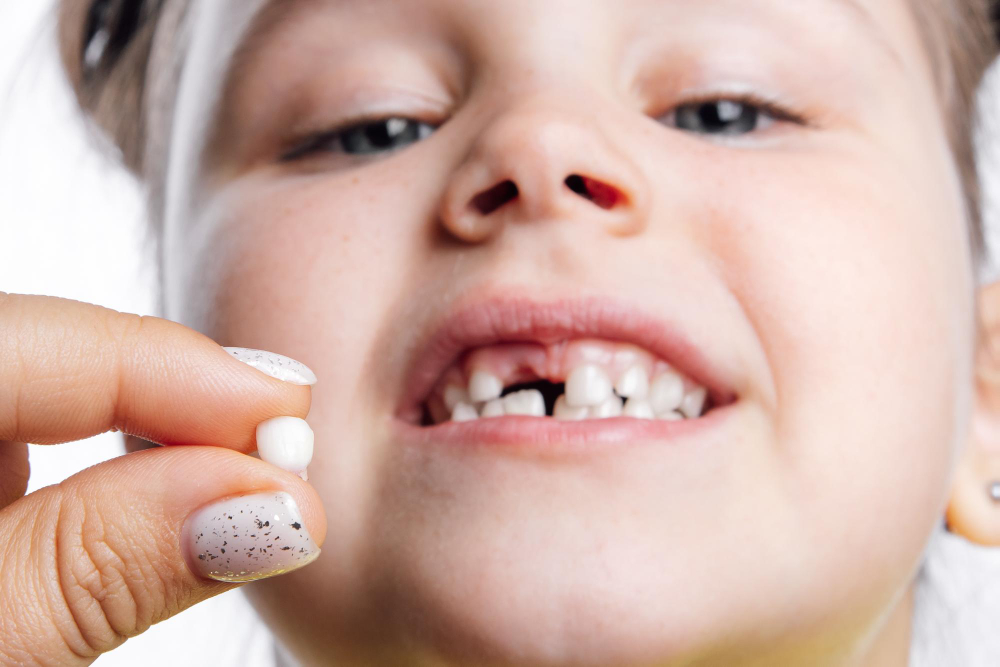
Losing teeth as a child is so universal that nobody asks why it happens. Bones lengthen, muscles enlarge, feet go up several sizes, and none of that requires demolishing anything. Teeth are the exception, and the reason is a property of the material they are made from.
Enamel Is Finished and Then Abandoned
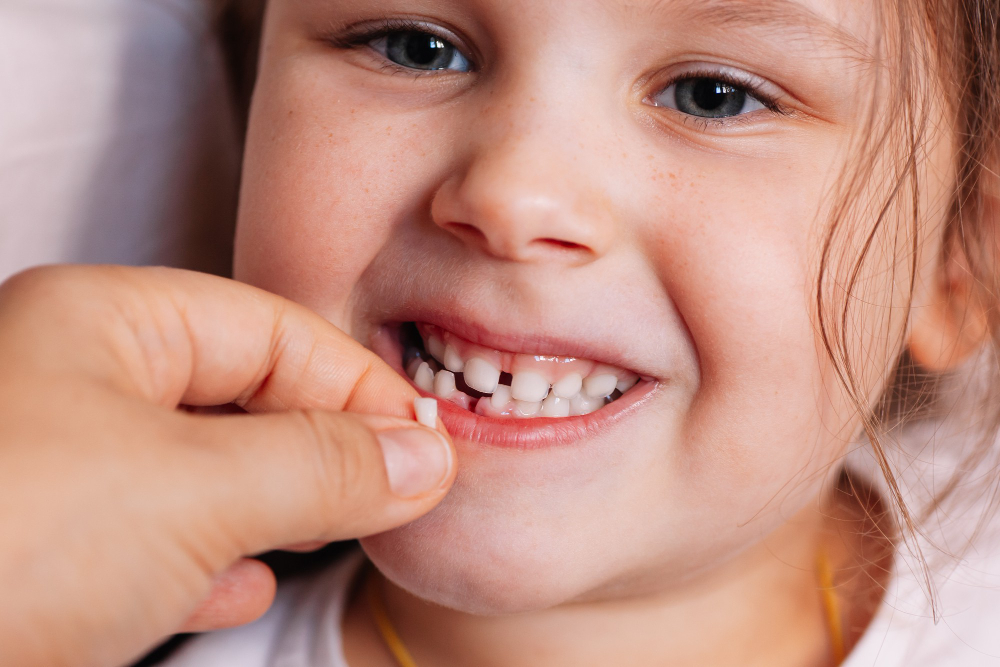
Almost every tissue in the body contains living cells that can add material, replace what wears away and repair damage. Enamel does not.
Enamel is produced by a layer of specialised cells that lay it down before the tooth ever appears in the mouth. Once the job is complete, those cells are lost as the tooth erupts. Nothing is left behind that can make more.
That is why enamel is the hardest substance the body produces and also the only one with no repair mechanism whatsoever. A chip in a tooth is permanent. A cavity does not heal. Minerals can be redeposited into a surface that has begun to soften, but a hole that has formed stays a hole, and every filling that has ever been placed exists because of this.
And it means a tooth cannot be enlarged. There is no way to add to the crown of a tooth that is already in the mouth, so a tooth that fits a five-year-old’s jaw will still be that size in a jaw twice as wide.
Like our content? Follow us for more.
So the Jaw Outgrows the Set

A small child’s jaw is very small, and it can hold about twenty teeth at a workable size. An adult jaw holds thirty-two, and each of them is substantially larger.
You cannot get from one to the other by growing the teeth, and you cannot simply add more, because there is no room in the child’s jaw for adult-sized teeth and no way to enlarge a tooth already present.
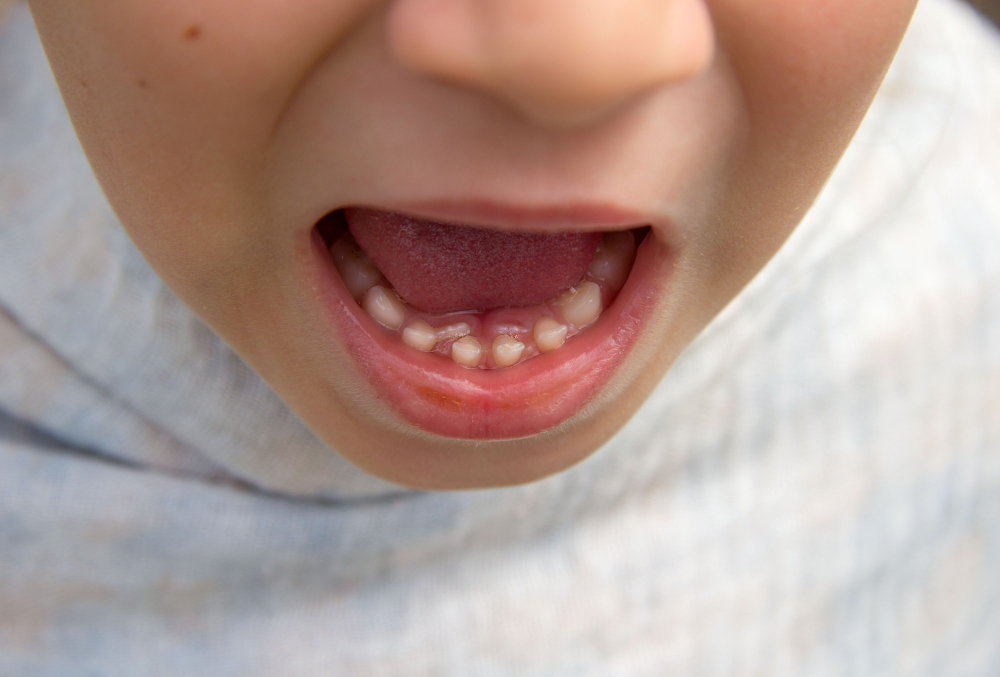
The solution is to run two sets. The first is built to the scale of a small jaw and is fully functional for roughly six to twelve years. Underneath it, the second set is forming in the bone the entire time, growing quietly in crypts above and below the roots of the teeth being used.
So a six-year-old is carrying two complete dentitions simultaneously: one in service, one under construction. An X-ray of a child’s jaw at that age shows the permanent teeth stacked in the bone like a second row waiting to come forward, which is an unsettling image the first time anybody sees it.
The Baby Tooth Is Demolished, Not Pushed Out
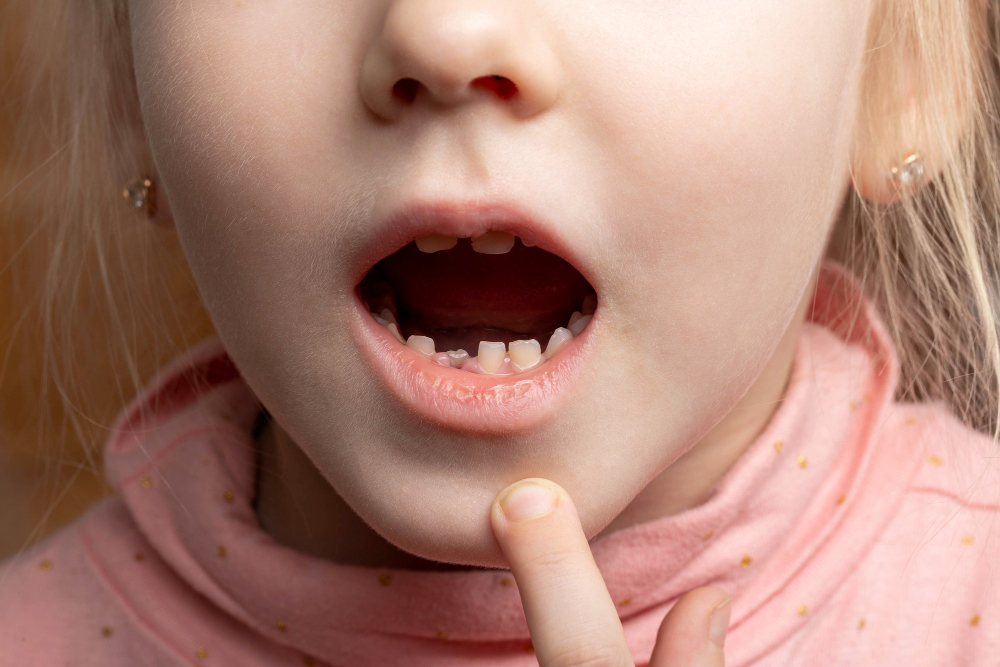
The usual description is that the adult tooth pushes the baby tooth out from below. That is not what happens, and the real process is more deliberate.
As the permanent tooth develops and begins to move, the pressure and the signals it generates recruit cells called odontoclasts to the root of the baby tooth above it. These cells dissolve the root, working upward, in exactly the way bone-resorbing cells dismantle bone.
The root is progressively eaten away until almost nothing is left. What remains is a crown sitting in the gum with essentially no anchorage, held by a small amount of soft tissue.
This is why a baby tooth wobbles for weeks, why it eventually comes out with very little blood and very little pain, and why the tooth a child puts under a pillow is a hollow-looking crown with no proper root on it. The root was removed by the body, in advance, on purpose.
It is also why an adult tooth knocked out is a serious matter while a baby tooth falling out is not. One has its full root attached and has been torn from its socket; the other was released from a socket that had already been dismantled around it.
The Two Sets Are Not Just Different Sizes

It is tempting to picture the permanent set as the baby set enlarged, but they differ in ways that go beyond scale, and the differences are informative about what each set is for.
Baby teeth are whiter, and noticeably so when the first permanent tooth arrives beside one and looks yellow by comparison. The colour difference is structural: the layer of dentine beneath the enamel is more yellow than the enamel above it, and permanent enamel is slightly more translucent, so more of that colour shows through. Parents regularly assume the new tooth is discoloured or decayed when it is simply an adult tooth in a mouth full of children’s ones.
Baby enamel is also thinner, roughly half the thickness, which is one reason decay progresses faster through a child’s tooth than through an adult’s. The pulp chamber inside is proportionally larger too, so there is less hard material between the outside of the tooth and the nerve.
And the roots are shaped differently. The roots of baby molars splay outward, spreading wide to make room for the permanent tooth developing in the space between them. The successor is not sitting beneath the baby tooth so much as inside the arms of it.
The number differs as well, and not only at the back. A child has no premolars at all; the teeth that occupy that position in a child’s mouth are molars, and they are replaced by premolars, which are smaller. The permanent molars that arrive behind them are additions rather than replacements, which is why the arch gets longer rather than simply denser.
The Order Is Not Random

Teeth arrive in a sequence that is broadly consistent, and the sequence has a logic.
The first permanent teeth usually appear at about six, and they are not replacements for anything. They are the first molars, and they erupt behind the existing baby teeth, in space at the back of the jaw that has become available as it lengthened. A great many parents assume these are baby teeth and do not realise a permanent tooth has arrived.
The front teeth are replaced next, then the teeth further back, over roughly six years. The wisdom teeth, when they come, arrive much later, typically in the late teens or twenties, and frequently find no room at all.
The timing varies widely between individuals and is largely genetic. What is more consistent is the order, and dentists use eruption stages as a rough indicator of developmental age.
Why the Small Set Matters More Than It Looks
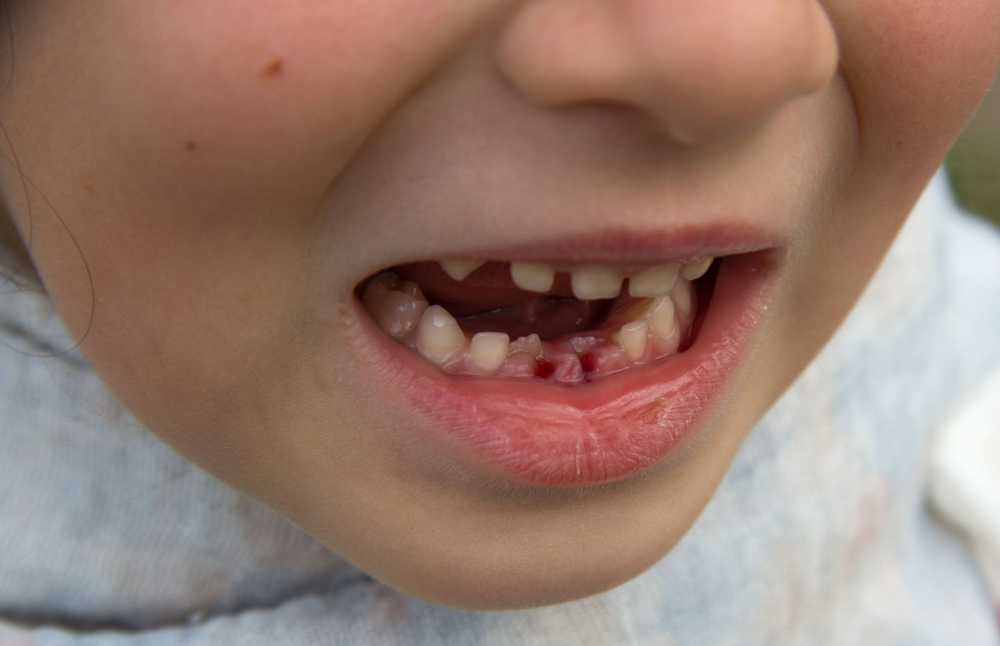
Baby teeth are often treated as disposable on the grounds that they are going to fall out anyway. The structural argument says otherwise.
Each baby tooth is holding a space in the arch for the permanent tooth beneath it. If one is lost early, the teeth on either side drift into the gap, and the tooth that was meant to come up there arrives to find the space partly closed. Crowding and misalignment follow, and the work needed to correct that is considerably more involved than the work that would have preserved the tooth.
The baby tooth also guides its replacement. The permanent tooth erupting beneath it follows the path the resorbing root opens up, and that path is part of what puts it in the right place.
This is a description of how the system works rather than dental advice, and any question about a specific child’s teeth belongs with a dentist.
Other Animals Solve It Differently
Two sets of teeth is not the only available answer, and the alternatives make the human arrangement look like the compromise it is.
Sharks replace teeth continuously throughout life, with rows moving forward like a conveyor, so a tooth lost is replaced within days and wear is simply irrelevant. This works because the teeth are not set into a socket in bone but anchored in soft tissue and shed constantly.
Elephants take a different route. They also cannot grow a tooth, and they wear their molars down through an enormous lifetime of grinding vegetation, so they replace them serially, with a new molar moving forward from the back of the jaw as the worn one is pushed out at the front. This happens around six times, and when the last set is gone, no more arrive. An old elephant’s life is limited by the wear on its final molars.
Rodents took the other option entirely. Their incisors never stop growing, which means wear no longer matters, at the cost of having to grind them against each other constantly to stop them overgrowing.
Continuous replacement, serial replacement, continuous growth or two fixed sets. Mammals that chew with precisely interlocking surfaces cannot easily use the first three, because those interlocking surfaces have to stay aligned, and a tooth that is constantly growing or being replaced cannot be relied upon to match its opposite number.
A Permanent Solution to a Temporary Problem
The two-set system is a good answer to a problem the body created for itself by making teeth out of something it cannot repair.
A child needs working teeth from the first year of life, and needs them scaled to a jaw that will roughly double in size. Making teeth adjustable would mean making them from something living and remodellable, which would mean making them softer, which would defeat the purpose of a tooth. So instead the body builds a disposable set, uses it for a decade, dismantles it from the root upward and installs the permanent one.
And the permanent set really is permanent. That is the part worth holding onto. The set that arrives at seven is the last one there will ever be, it cannot repair itself, it cannot grow, and it has to last another seventy or eighty years – a working life the system was never really designed around, since for most of human history very few people needed their teeth to last that long.
Like our content? Follow us for more.