

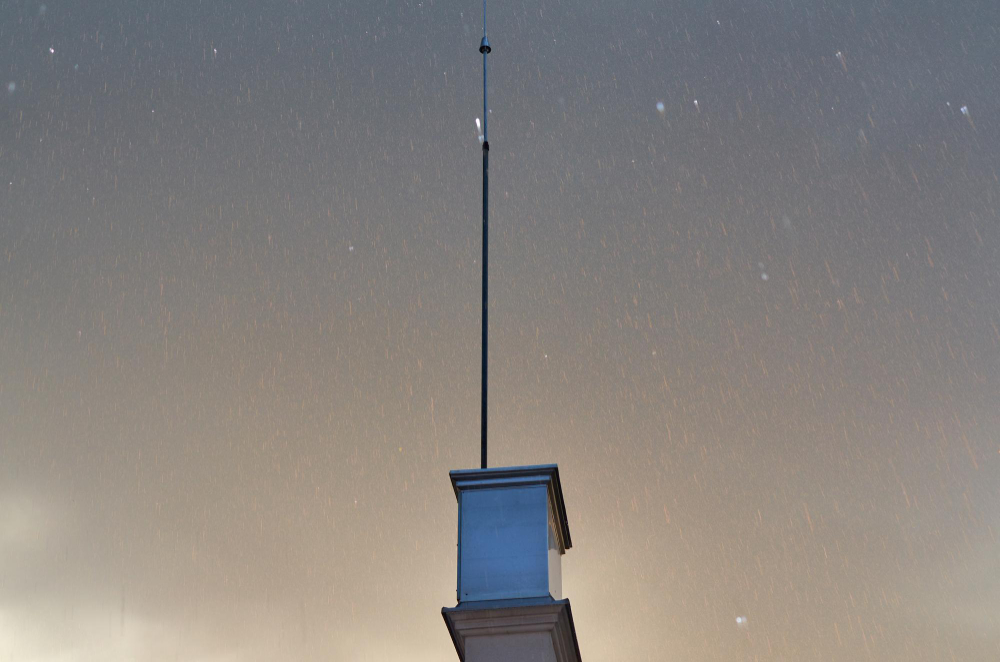
The Name Has Been Misleading People for Two Centuries
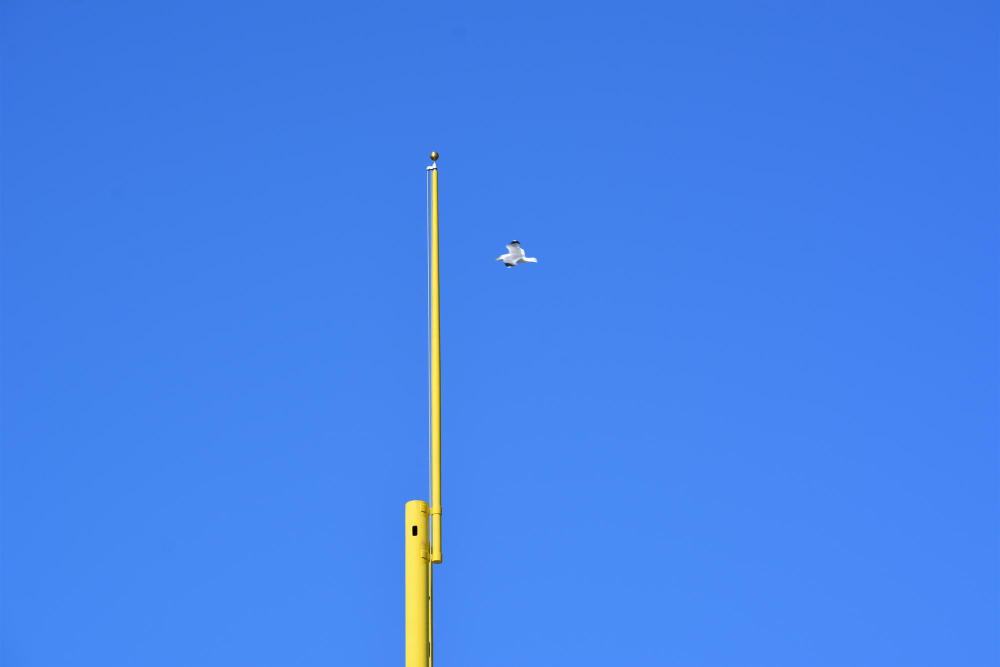
Almost everybody believes a lightning rod attracts lightning. It is an easy belief to hold, because the thing is pointed, it is at the top of the building, and it is undeniably associated with being struck. The conclusion follows naturally and it is still wrong.
A lightning rod does not reach up and pull a strike towards a building that would otherwise have been left alone. Over the enormous distances involved, the presence of a few metres of metal on a roof makes almost no difference to whether that patch of ground is going to be struck at all. What the rod changes is what happens if it is.
The actual function is to provide a path of very low resistance from the highest point of a structure to the earth beneath it, so that if a strike does arrive, the current travels down that path rather than through the building’s masonry, timber, plumbing, wiring or occupants. It is not a repellent and it is not a magnet. It is a route.
That distinction sounds pedantic until you consider what it implies. If a rod were really attracting strikes, then installing one would be a gamble: you would be trading a lower chance of being hit for a safer outcome if you were. Because it is not, there is no trade. The building’s exposure is essentially unchanged and only the consequences are altered. Every sensible decision about these systems follows from getting that the right way round.
There is a long-running technical argument about whether a sharp point very slightly influences where a strike terminates within a small radius, and under some conditions it probably does. But that is a question about metres, not about whether a house is at greater risk for having one.
Like our content? Follow us for more.
Franklin Thought It Worked a Completely Different Way
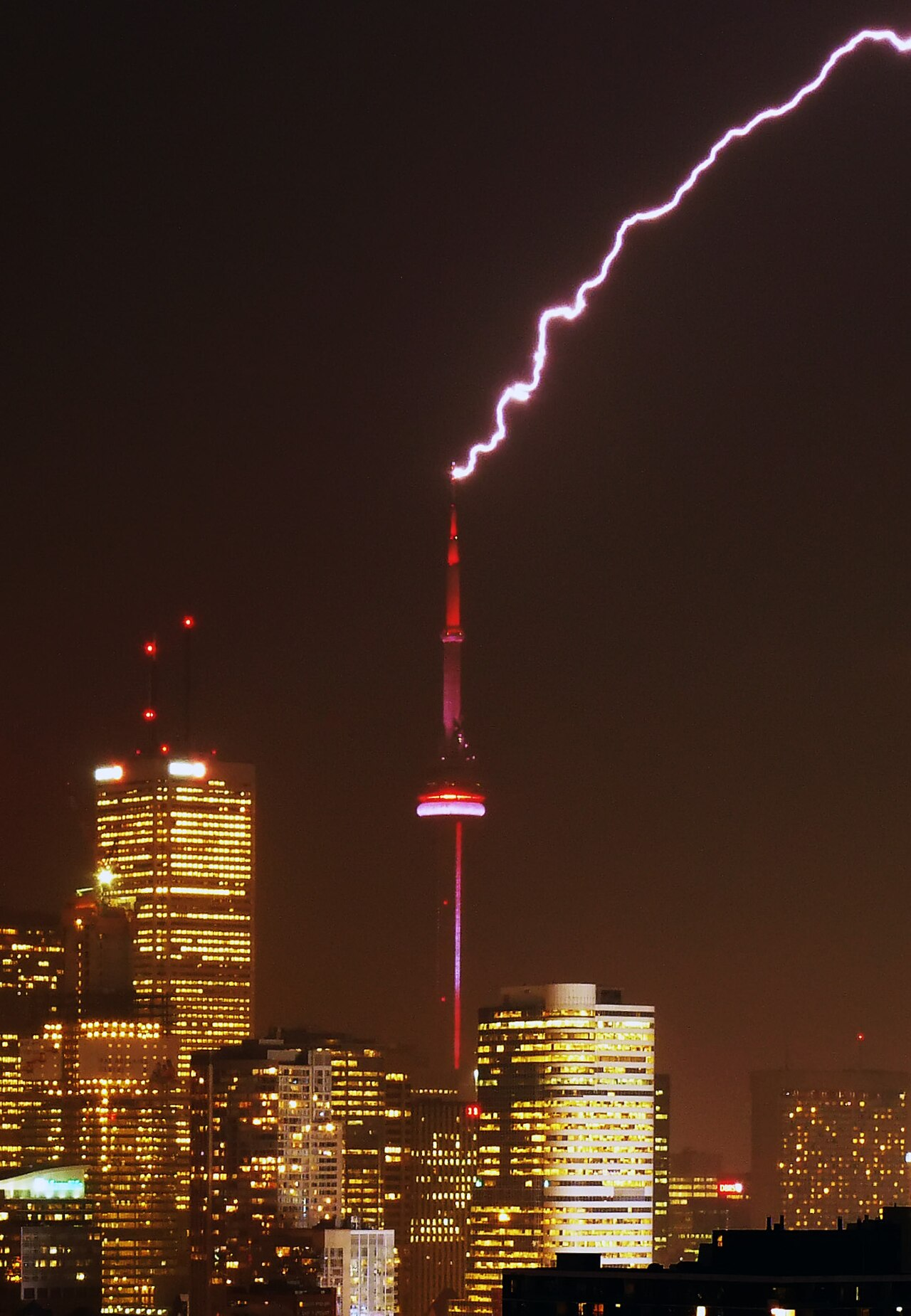
The idea’s originator proposed something more ambitious than a drainage route, and for a while he thought it might prevent strikes altogether.
The reasoning was that a sharp conductor connected to the ground would quietly bleed charge away from the air above a building, continuously and harmlessly, so that the difference in charge never built up far enough for a strike to occur. On this account the rod was a release valve rather than a route, and a building equipped with one would simply never be hit.
This is not a foolish idea. Sharp points connected to earth do discharge into the surrounding air, and the effect can be measured. The problem is one of quantity. The amount of charge a rod can dissipate in this way is minuscule compared with what is involved in a thunderstorm, and the rate at which a storm separates charge overwhelms it completely. The valve exists; it is simply far too small to matter.
So the mechanism everybody now relies on is the secondary one, and the primary one that was originally proposed turned out to be real but negligible. This is an unusually clean example of a correct invention justified by an explanation that did not survive. The device worked, buildings stopped burning down, and the reason it worked was not the reason given.
The lineage of that original idea has never quite died. Devices claiming to prevent strikes by dissipating charge have been marketed repeatedly over the following two centuries, and independent assessments have consistently failed to find that they do anything a conventional rod does not.
The Argument About Whether the Tip Should Be Sharp
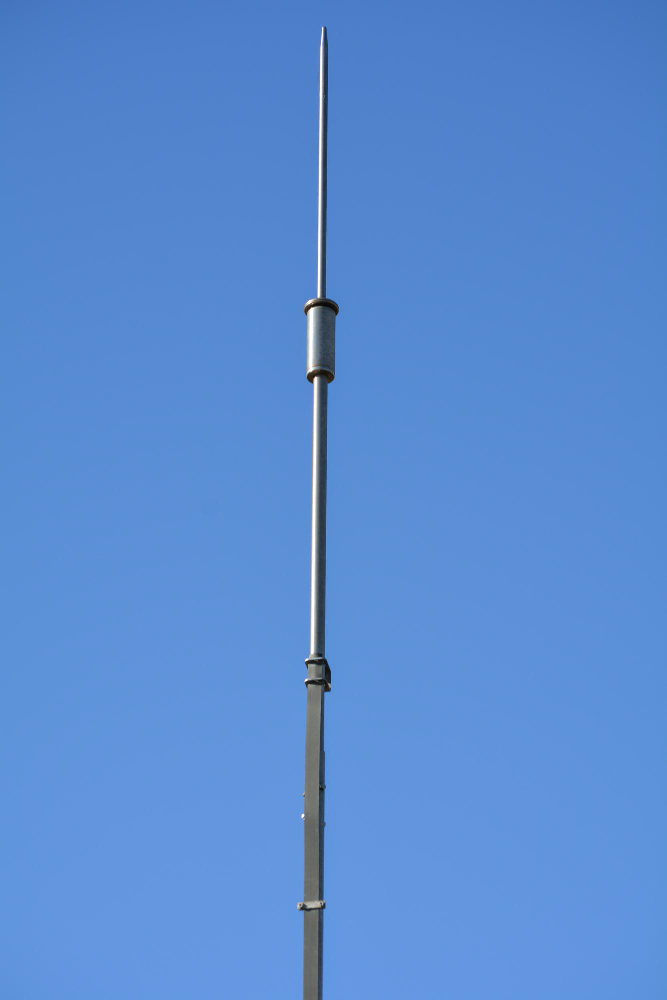
One of the stranger disputes in the history of the subject concerned whether the top of a rod should be pointed or rounded, and it became unusually heated for a question about the shape of a piece of metal.
The case for a point rested on the discharge idea: a sharper tip produces a stronger local field and discharges more readily. The case for a blunt or rounded end rested on the observation that if the job is to be the preferred termination point for a strike, a larger rounded surface may in fact be more reliably selected than a very fine spike, and a fine spike also erodes.
The dispute was not settled quickly, and it picked up a political dimension in the late eighteenth century that had nothing to do with physics and everything to do with who had proposed what, which is a recurring feature of the history of technology.
Experimental work in the twentieth century eventually suggested that moderately blunt terminations are at least as effective as very sharp ones, and possibly better. In practice the question is now treated as largely secondary, because the geometry of the whole system matters far more than the shape of one end of it. Which brings us to the part of the installation that actually determines whether it works.
The Cable Is the System
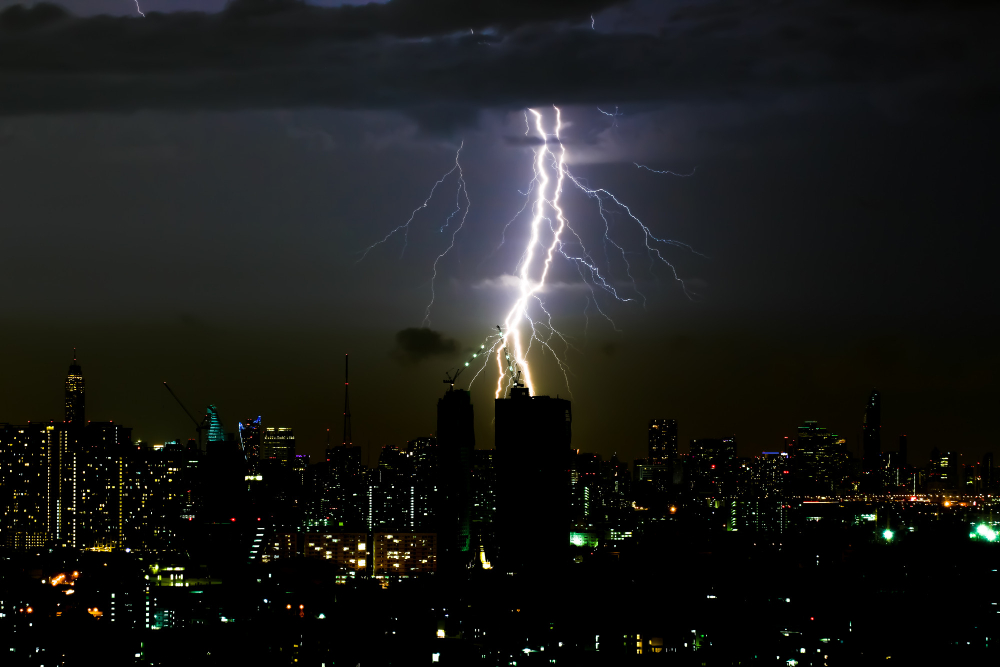
If the spike is the part that gets looked at, the conductor is the part that does the job. Its requirements are unglamorous and absolutely decisive.
It has to be large enough in cross-section to carry an extremely large current for a very short time without melting. It has to run as directly as possible, because a lightning current is not a steady flow and does not behave like household electricity: it changes extremely rapidly, and a rapidly changing current strongly resists being made to go round tight bends. A conductor with a sharp loop in it presents an obstacle, and current that meets an obstacle looks for an alternative, which may be the building.
It has to be continuous, with joints that will not degrade, because a single poor joint anywhere along its length turns the whole path into a high-resistance one.
And there usually has to be more than one of them. A single conductor on one side of a building leaves current with a long way to travel; several, distributed around the structure, divide the current between them and shorten every path. On large buildings there may be many, and on a metal-framed building the frame itself can serve, which is why modern tall buildings often need no visible rods at all.
All of this means a lightning protection system is best thought of as a cage rather than a spike: a set of connected conductors enclosing the structure, with terminations at the top and connections at the bottom. The pointed bit is simply where the cage reaches highest.
And the Earth Connection Is the Whole Point
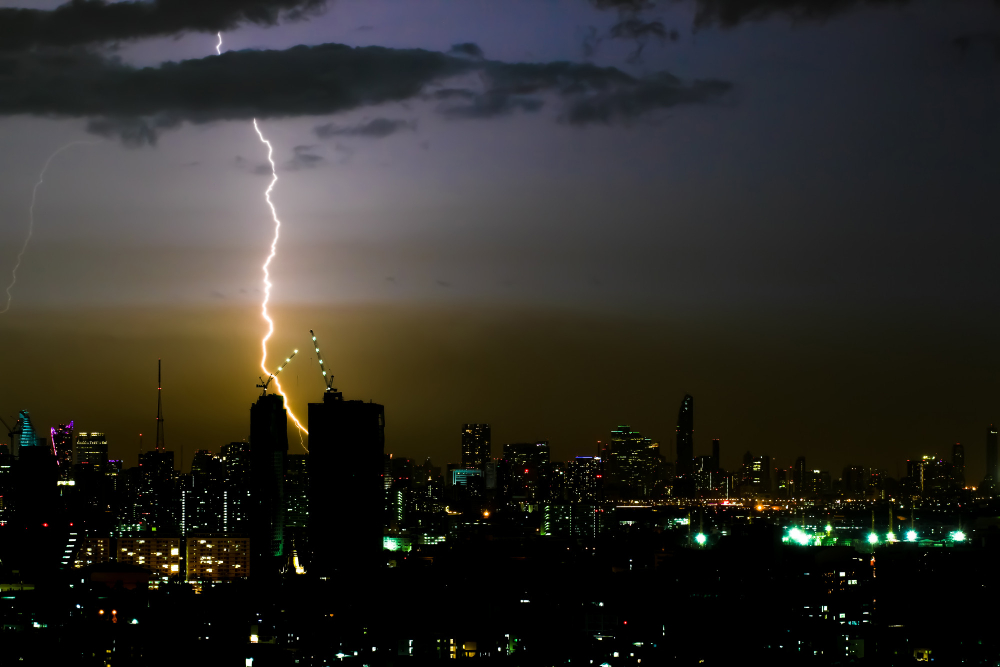
Everything above depends on the current having somewhere to go once it arrives at the bottom. If it does not, it will find somewhere, and that somewhere will be whatever is nearby: water pipes, wiring, reinforcement in concrete, damp masonry.
So the earth connection is where a system succeeds or fails. It has to make contact with the ground over a large enough area, at a sufficient depth, in soil of adequate conductivity. Dry sand and solid rock are poor; damp clay is good. Where the local ground is unhelpful, far more extensive arrangements are needed, which is why the invisible part of an installation can be larger than the visible part.
This is also why these systems need periodic checking and why the thing being checked is almost never the rod. The spike on the roof is a piece of metal in the open air and generally fine for decades. The connection in the soil is in a corrosive environment, out of sight, and is the component most likely to have quietly stopped working.
A building with an immaculate rod, a neat cable and a failed earth connection is in a worse position than a building with nothing, because the system has gathered a strike’s current, brought it all the way down to ground level, and then released it inside the structure. The failure mode of a badly earthed system is to deliver the problem somewhere worse.
Side Flash, and Why Everything Metal Has to Be Joined Together
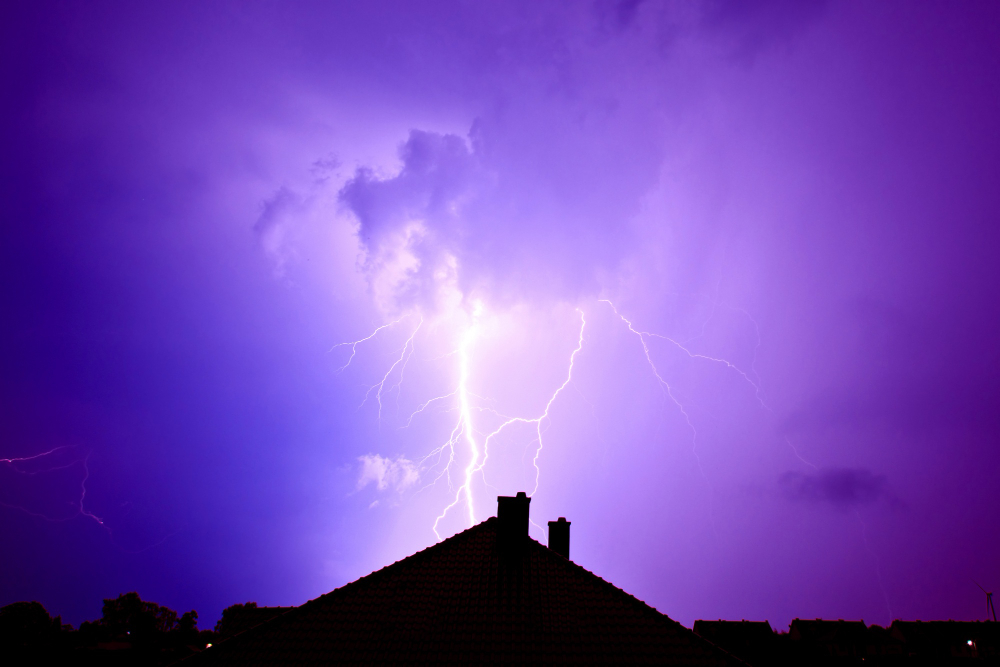
There is a second failure mode and it is less obvious. When an enormous current passes down a conductor, the conductor is briefly at a very high voltage relative to everything around it. If something else metallic is close by and connected to earth by a different route, the voltage difference between them can be large enough for the current to jump across the gap.
That jump is called a side flash, and it is how a strike that was properly captured still ends up inside a building. It can occur to plumbing, to a handrail, to structural metal, to electrical installations, to anything conductive that happens to pass near the down conductor.
The remedy is counter-intuitive and is the reason these installations involve so much more work than the visible hardware suggests. Rather than separating the conductor from everything else, the major metalwork of the building is deliberately joined to it, so that during a strike everything rises in voltage together and there is no difference between them to jump across. Instead of insulating, you connect.
This principle of bonding everything to a common reference is one of the foundations of electrical safety generally, and the fact that it applies to lightning protection is the single most frequently missed point about how these systems work. The aim is not to keep the current away from the building’s metal. It is to make sure the building’s metal and the conductor are electrically the same thing at the moment it matters.
What a Strike Does to a Building, With and Without
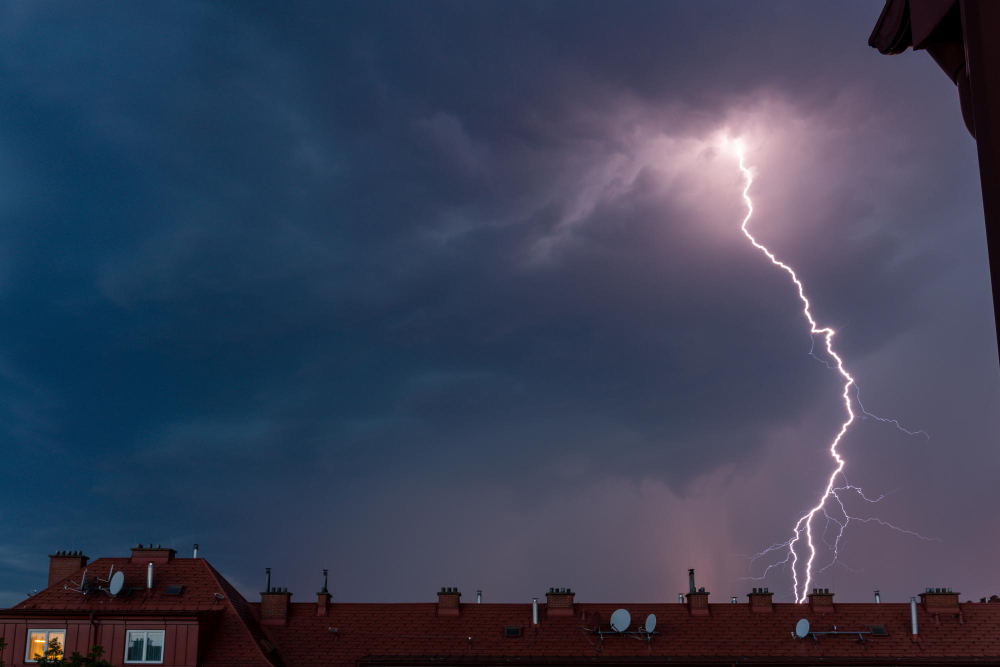
The reason any of this was developed is that a lightning current passing through a non-conductor is destructive in a specific and violent way.
Stone, brick and timber are poor conductors, but they contain moisture. A very large current passing through them heats that moisture far faster than it can escape as vapour, and the resulting expansion is mechanical. Masonry is not burned so much as blown apart from inside. Timber behaves similarly and then ignites. A strike to an unprotected tall structure can dislodge stonework and start a fire in the roof space simultaneously, and historically this is precisely what happened to the tallest buildings in any settlement, which were almost always towers and spires.
The secondary effect is electrical. Even a strike that does no structural damage induces very large brief voltages in any wiring nearby, which is why electrical and electronic damage can occur in buildings that were not struck at all but were merely close to something that was. Protecting a structure from physical damage and protecting the equipment inside it are related but separate problems, and a conventional rod and cable addresses the first without necessarily addressing the second.
When the system works, the current arrives at a termination, travels down several bonded conductors, enters the ground over a wide area and is gone in a tiny fraction of a second, having passed down the outside of the structure rather than through it. The building is not protected because the strike was avoided. It is protected because the strike was given somewhere better to be.
Why Ships, Trees and Aircraft Are Different Problems
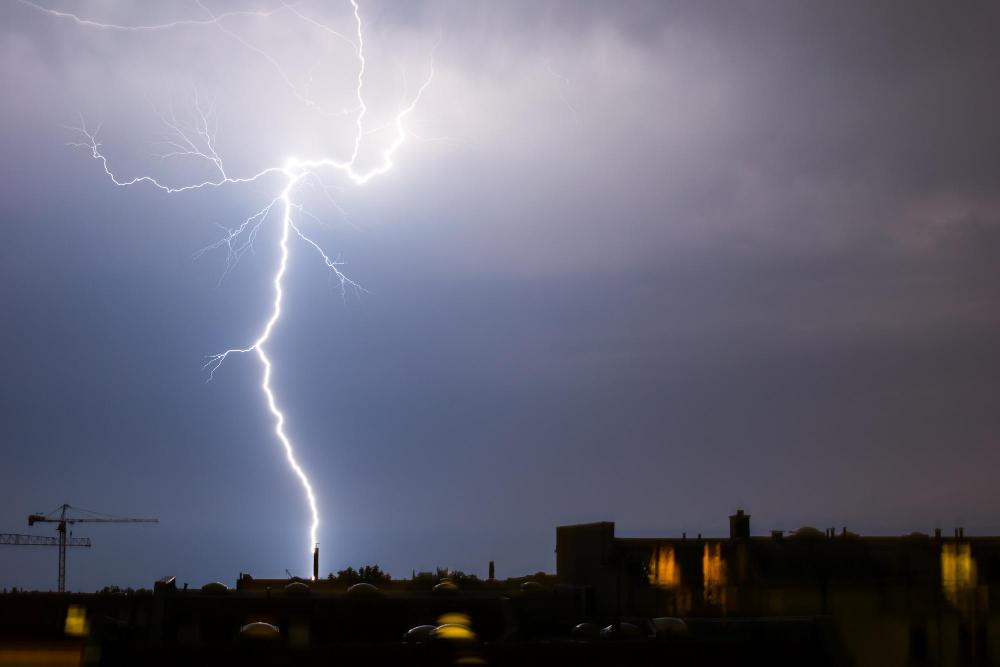
A rod and an earth connection work because the ground is available. Where it is not, the problem changes shape.
A vessel at sea cannot be earthed to the land, but the water around it is a conductor, so a conducting path from the masthead to a point in contact with the water performs the same function. The destination changes and the principle does not.
An aircraft has no earth at all. It is handled by making the aircraft itself a continuous conducting shell, with every panel bonded to its neighbours, so that a strike travels over the outside and leaves from a trailing edge without passing through the interior. Deliberate discharge points are fitted at the extremities for the current to exit from. It is the cage idea with the ground connection removed entirely.
Trees have none of this and are a useful illustration of what happens without it. A tree is a poor conductor full of water, which is exactly the combination that produces mechanical destruction, and a struck tree frequently has bark blown off in a long strip or is split outright. The sap and moisture in the trunk flash to steam and the trunk fails along its weakest line.
So lightning protection is really one principle applied to different destinations: provide a continuous conducting route to somewhere the current can spread out, and bond everything along the way to that route so nothing has a reason to jump. What varies between a cathedral, a ship and an aeroplane is where the current is being sent, not what is being done.
A Route, Not a Shield
The device that everybody pictures as a spike catching lightning is better understood as a drain. It does not stop a strike, it does not invite one, and it does not protect by being pointed. It works by being continuous, by being connected to earth over a large area, and by being bonded to everything metallic it passes.
The original explanation for why it worked was wrong, the argument about the shape of the tip went on for a century and turned out to be nearly irrelevant, and the component that fails is the one nobody can see. Which makes it a reasonable candidate for the most widely recognised and least correctly understood object on any roof.
Like our content? Follow us for more.
