

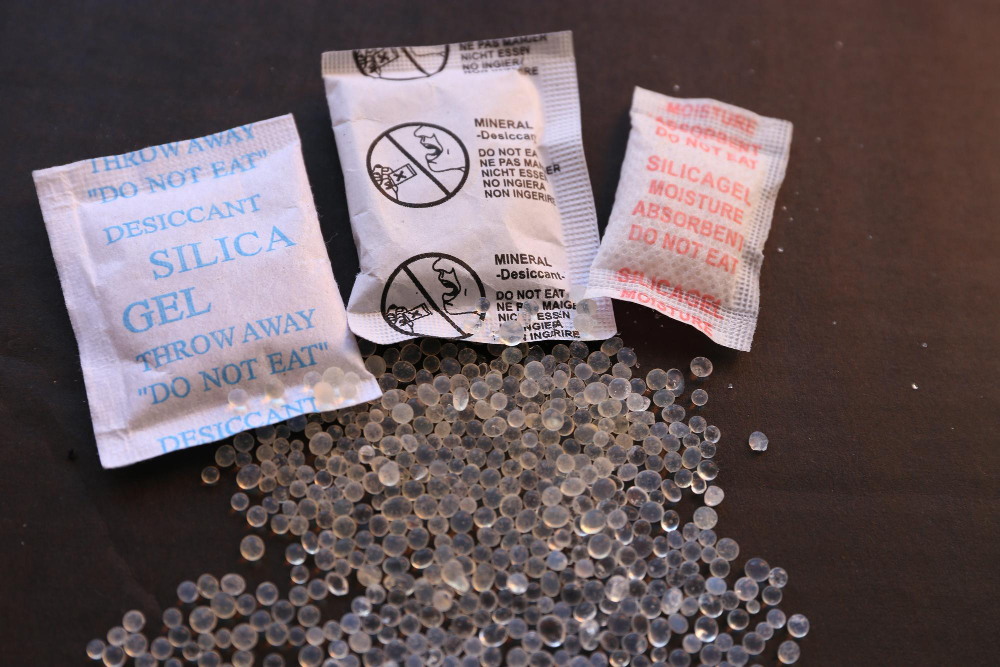
Every box of shoes, every new handbag, every electronic device arrives with a small paper packet of beads marked with instructions not to eat it, and almost all of them go straight in the bin.
The packet is not poisonous. The warning is there for a different reason. And the contents are a genuinely useful material that can be recharged and used indefinitely, which makes throwing them away a small, universal, entirely avoidable waste.
What It Actually Is
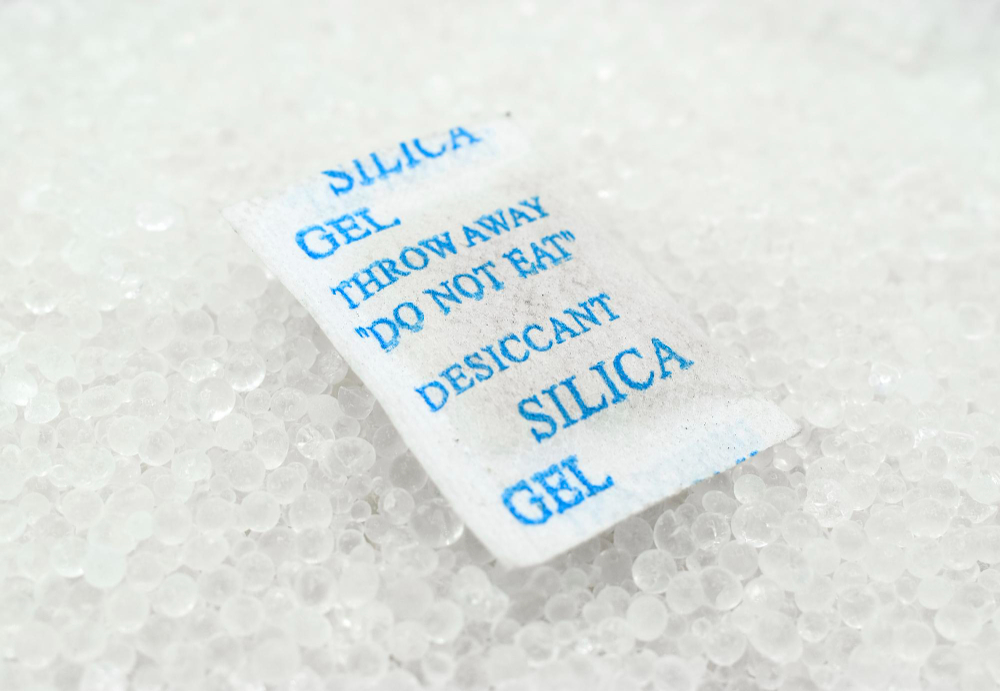
Silica gel is silicon dioxide – chemically, the same substance as sand and the main component of glass – processed into beads that are riddled with an enormous network of microscopic pores.
That pore structure is the whole point. A single gram of it has an internal surface area measured in hundreds of square metres, because all those tiny channels add up. Water molecules in the air stick to that surface by physical adsorption, which is a different thing from absorption – the water is not soaked up into the material, it clings to the inside of the pores.
A packet will hold a substantial fraction of its own weight in water before it stops working, and it does it without changing shape, dissolving, swelling or leaking. It sits there as dry hard beads whether it is empty or saturated.
It is not a chemical that reacts with anything. It is a sponge with an absurd amount of surface area, made of glass.
Like our content? Follow us for more.
So Why Does It Say Do Not Eat
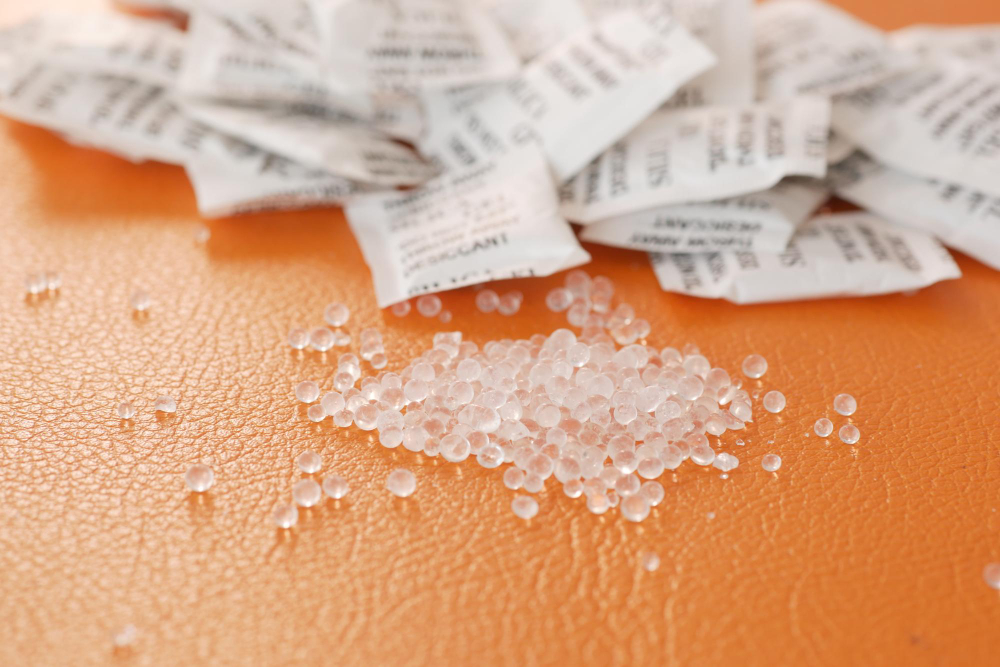
Several reasons, none of which is that the contents are toxic.
Plain silica gel is not digested, is not absorbed, and is essentially inert. Swallowing a small quantity is not a poisoning event, and it is treated as a choking and obstruction concern rather than a toxicity one – which is the main actual risk, particularly for a small child, because it is a packet of hard beads.
The warning is also a labelling requirement applied to anything in a food-adjacent package that is not food. A sachet of beads sitting in a box of dried goods or a vitamin bottle looks exactly like a sachet of something edible, and the label exists to prevent the confusion rather than to describe a hazard.
And some silica gel is not plain. Certain types include a moisture indicator that changes colour as the material saturates, and some of the older indicator chemistries used compounds that genuinely are a concern – which is one reason the blanket warning persists even as the indicators have been reformulated.
So: not poison, do not eat it anyway, keep them away from small children, and the label is doing regulatory work rather than toxicological work.
They Recharge in an Oven
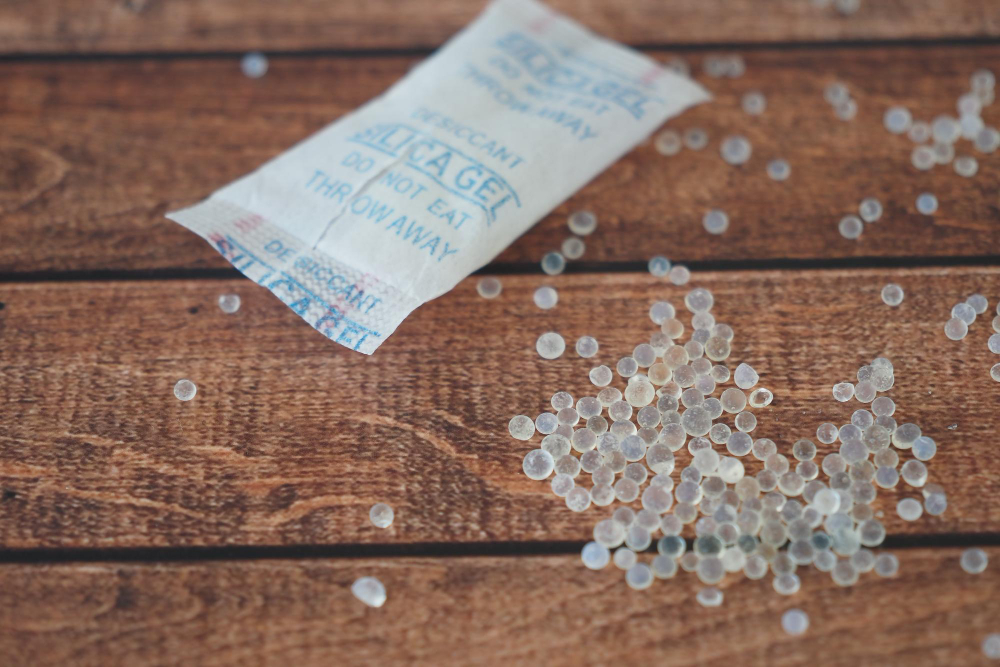
The useful part. Because the water is held physically rather than chemically, heating the beads drives it off and the material returns to full capacity. This can be done indefinitely – the beads do not wear out from being dried.
A low oven for a couple of hours does it. The temperature matters: too hot and the packet’s paper envelope scorches or the indicator chemistry is damaged, and there is no benefit to going higher because the water leaves perfectly well at modest heat. Loose beads can be spread on a tray; packets can be dried whole provided the paper tolerates it.
They are then as good as new, and the cycle can be repeated for years.
Which means every one of those packets is a reusable dehumidifier that arrived free with something you bought, and the overwhelming majority of them are thrown away unused after absorbing the small amount of moisture present in a sealed box.
The Other Packets Are Not the Same Thing
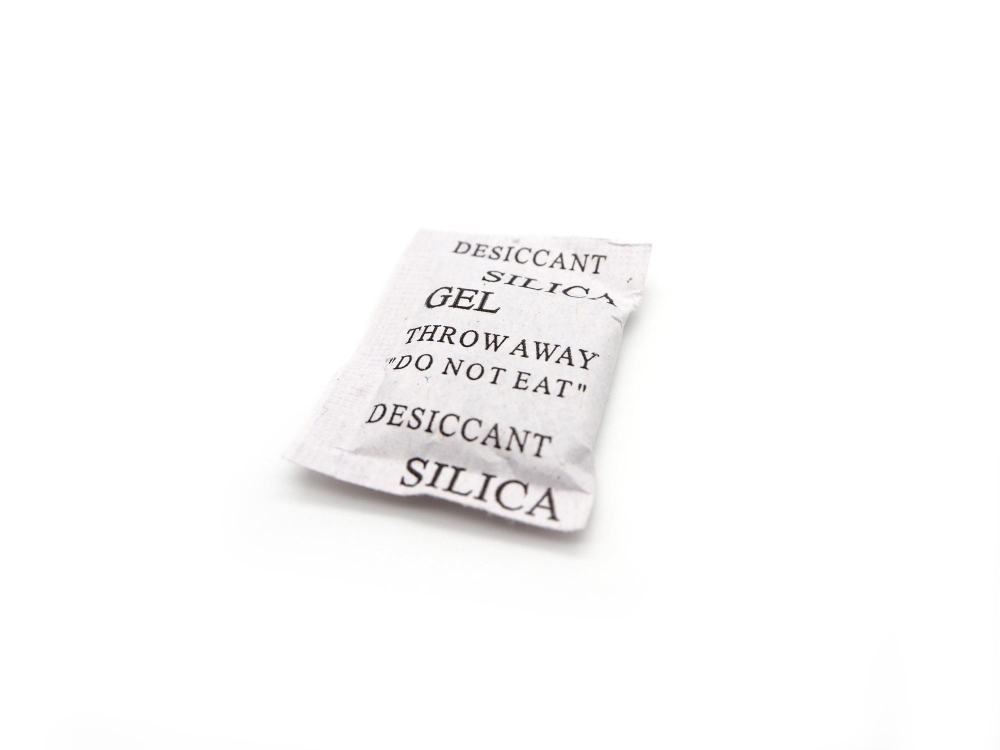
A box frequently contains more than one kind of sachet, and they do different jobs, which matters if you are collecting them.
Oxygen absorbers look similar and are not similar. They contain iron powder that rusts deliberately, consuming the oxygen in a sealed package to stop food going rancid or discolouring. They are chemically consumed rather than physically loaded, which means they cannot be recharged – once the iron has oxidised, the sachet is finished. They also get warm in use, which is the quickest way to tell them apart if you open a package and find one working.
Clay desiccants are another variety, performing the same job as silica gel at lower cost with somewhat less capacity, and they can generally be dried out in the same way.
And some sachets are neither – mould inhibitors, ethylene absorbers in fruit packaging, scent sachets – which have nothing to do with moisture at all.
The practical rule for anybody keeping them: if it is hard translucent beads, it is silica gel and it recharges. If it is a soft grey or black powder in a small opaque sachet, it is probably an oxygen absorber and it does not. When in doubt, dry it anyway – nothing bad happens, it simply may not have been worth the trouble.
What They Are Genuinely Good For
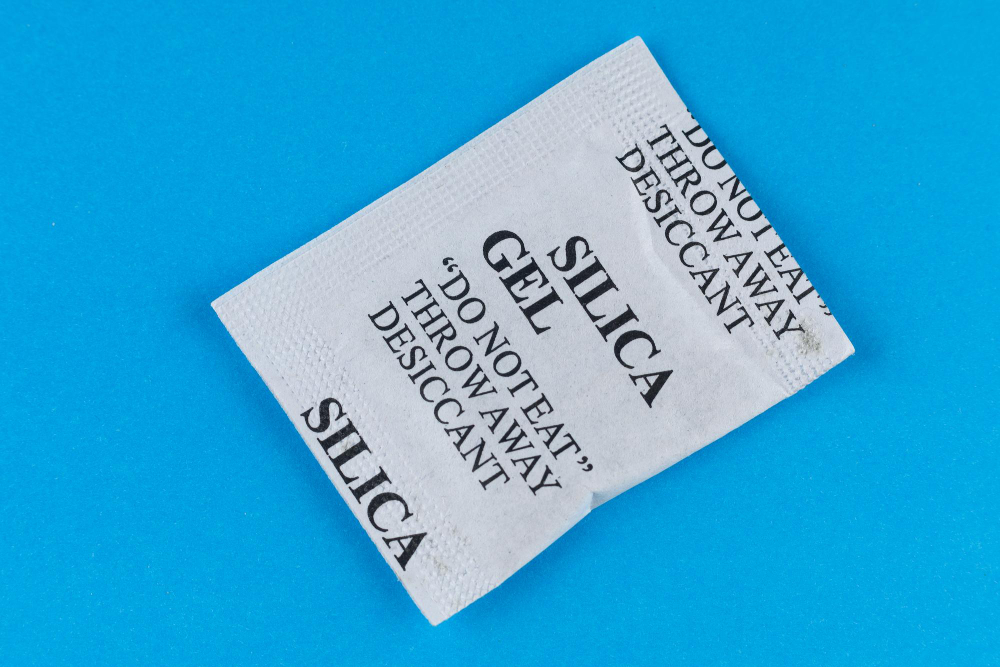
Collected and recharged, they solve several small problems well.
Anything stored in a damp place benefits: a toolbox where rust is the enemy, a camera bag, a box of documents or photographs, a case of anything with electronics in it. The packets go in the container, not loose in the room – they work on the air inside an enclosed space, and in an open room the quantity involved is meaningless against the volume of air.
That last point is the most common misunderstanding. A handful of sachets will do nothing measurable to a damp room. The same handful inside a sealed box will keep that box dry for months. The material is extremely effective in a small closed volume and irrelevant in a large open one.
Seed storage, musical instrument cases, stored seasonal clothing, anything metal in a garage, and the inside of a safe are all good uses. The one widely repeated use that does not work as advertised is reviving a soaked phone – it is better than nothing and considerably worse than people think, because the water inside a device is not mostly in the air and the damage is frequently done before anything dries.
The Colour-Changing Ones Are Telling You Something
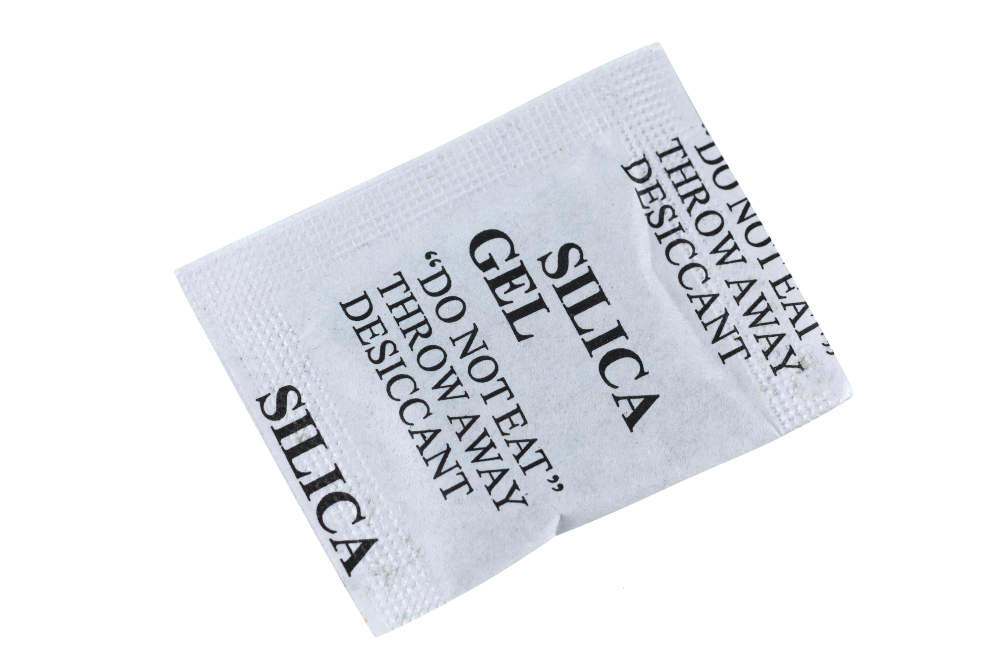
Some packets contain a proportion of beads that change colour, and they are more useful than they look.
The indicator beads shift from one colour to another as the material takes up moisture, which means a glance tells you whether the packet still has capacity or is saturated and doing nothing. Without an indicator there is no way to tell – a fully loaded packet looks and feels identical to a fresh one, which is why people leave exhausted sachets in boxes for years assuming they are still working.
The colours vary between products, and this matters for anybody collecting them, because the convention is not universal. Older indicator systems used one pair of colours and newer ones, reformulated after concerns about the older chemistry, use different pairs. A packet whose indicator you cannot interpret is a packet you should simply recharge on a schedule rather than guess at.
The useful habit is to buy one small quantity of indicating beads and keep them in whatever container matters most, using the free non-indicating sachets everywhere else. One visible gauge tells you when the whole collection is due for drying, and the rest of the packets cost nothing.
It is a small thing. It is also the difference between a box that is being protected and a box that contains a sachet.
Why They Are in the Box in the First Place
It is worth knowing what the manufacturer was protecting against, because it explains why the packets turn up in the products they do.
Leather and fabric grow mould in humid conditions, which is why shoes and bags get them. Electronics suffer from condensation and corrosion on contacts. Metal tools rust. Powders cake. Vitamins and medicines degrade. Camera lenses grow fungus on the internal glass surfaces, which is as bad as it sounds and essentially unrepairable.
The common thread is that none of those processes need liquid water. Humid air is sufficient, and a product sealed in a box with humid air inside it will sit in that air for the entire period between manufacture and sale – which can be a year or more, through transport in a ship’s hold, through warehousing in whatever climate, through a shop.
So the packet is not protecting the product from the customer’s house. It is protecting it from its own packaging during a long journey, which is a problem that ends the moment the box is opened.
Which is exactly why the packet is still almost completely fresh when you find it, and exactly why throwing it away is a waste.
Start a jar. Every packet that comes into the house goes in it.
Dry the jar’s contents in a low oven twice a year and you will never need to buy a dehumidifier for a toolbox again.
And if you want a sense of how effective the material is, put a recharged packet into a sealed container with something that has been slightly damp for years – a box of old photographs, a tin of fasteners that have begun to spot – and come back in a month. The difference is not subtle, it cost nothing, and it was achieved with something that arrived in a shoebox and was designed to be discarded.
Like our content? Follow us for more.
