

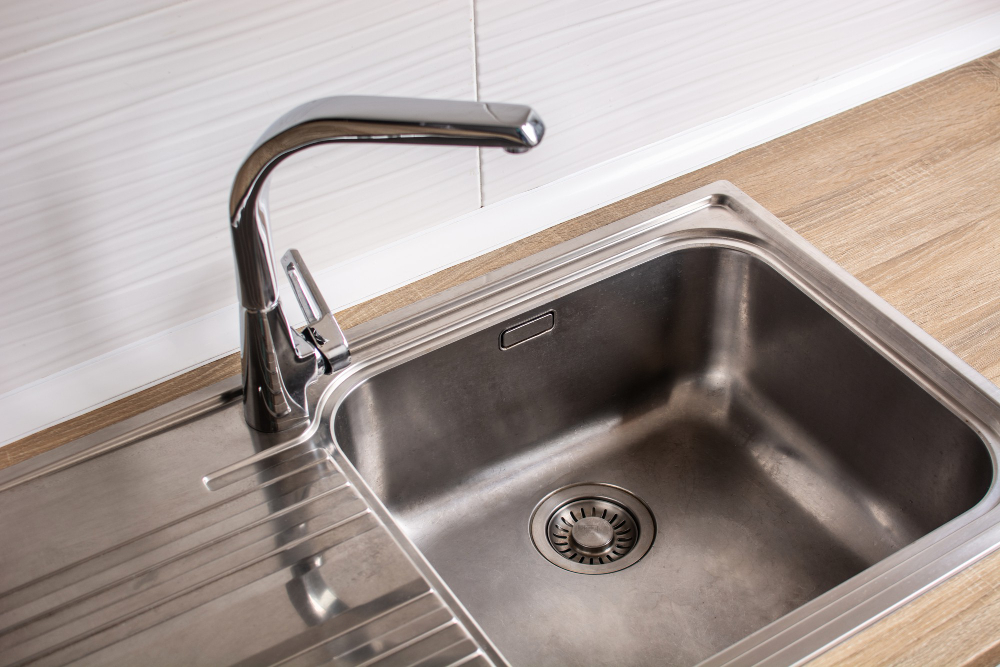
Near the top of most washbasins, and inside most baths, there is a second opening – a slot or a round hole with a chrome cover on it.
Everybody knows it is the overflow. Rather fewer people know that preventing overflow is arguably its secondary function, and that its main day-to-day job is admitting air to the drain so the basin empties properly.
Why Draining Needs Air
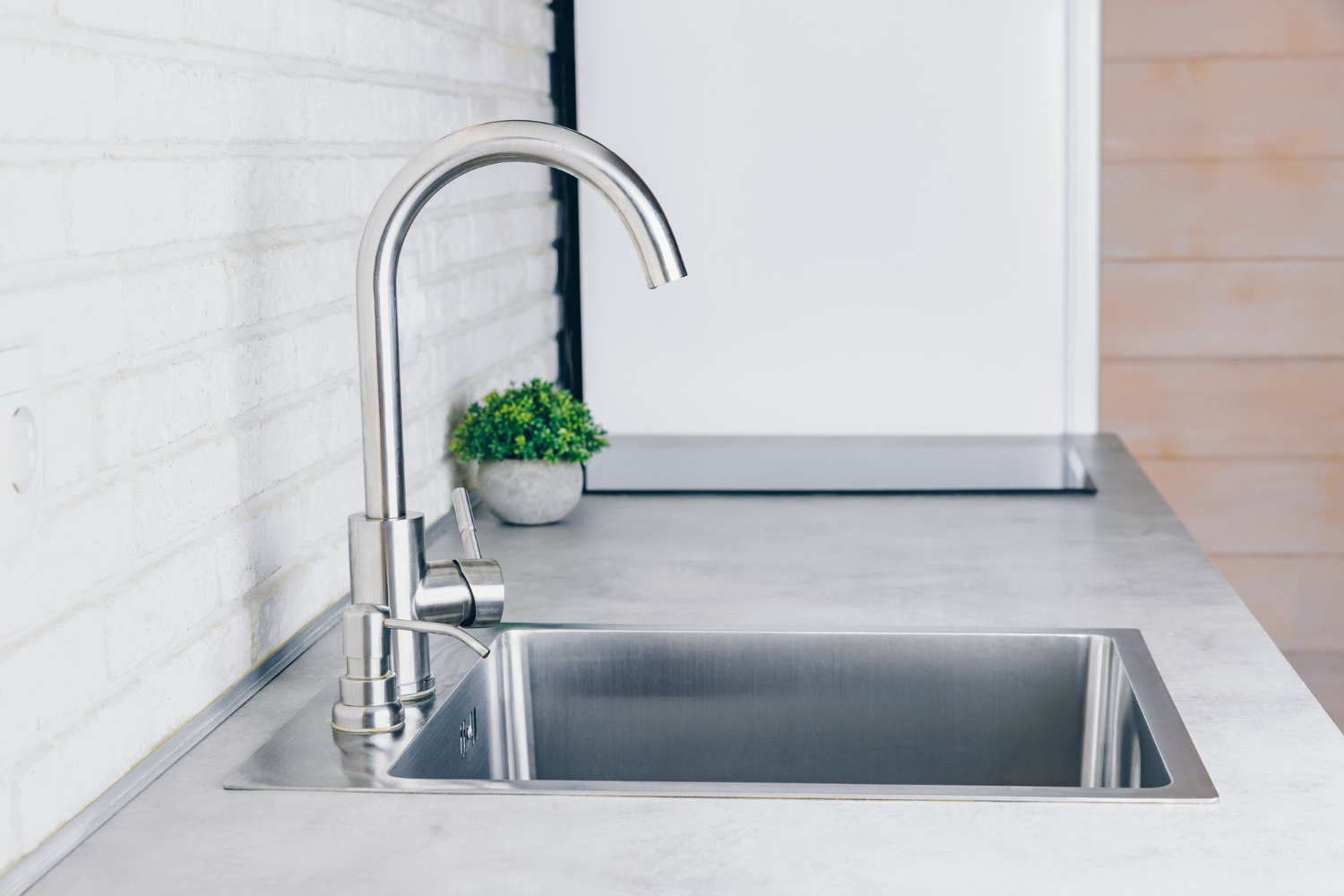
Water leaving a basin through a plughole has to be replaced by something, and that something is air.
If the plughole is completely covered by water and the pipe below is running full, air cannot get down past the water, so it has to come from somewhere else or the flow is restricted. Without a supply, the draining water pulls a partial vacuum behind it, which slows the flow and produces the characteristic gurgling as air is drawn through in bursts against the water.
The overflow is a second channel that connects the basin to the waste pipe below the plughole, bypassing the water. When the basin is full and the plug is pulled, air enters through the overflow, travels down the channel, and joins the pipe below the restriction.
That is why a full basin with a working overflow drains steadily and quietly, and why one with a blocked overflow glugs, pulses and takes noticeably longer.
The effect is far more pronounced on a bath, where the volume of water is large and the pipe run is longer, which is why bath overflows are generously sized and are connected into the waste rather than being decorative.
Like our content? Follow us for more.
The Overflow Protection Is Real and Is Limited
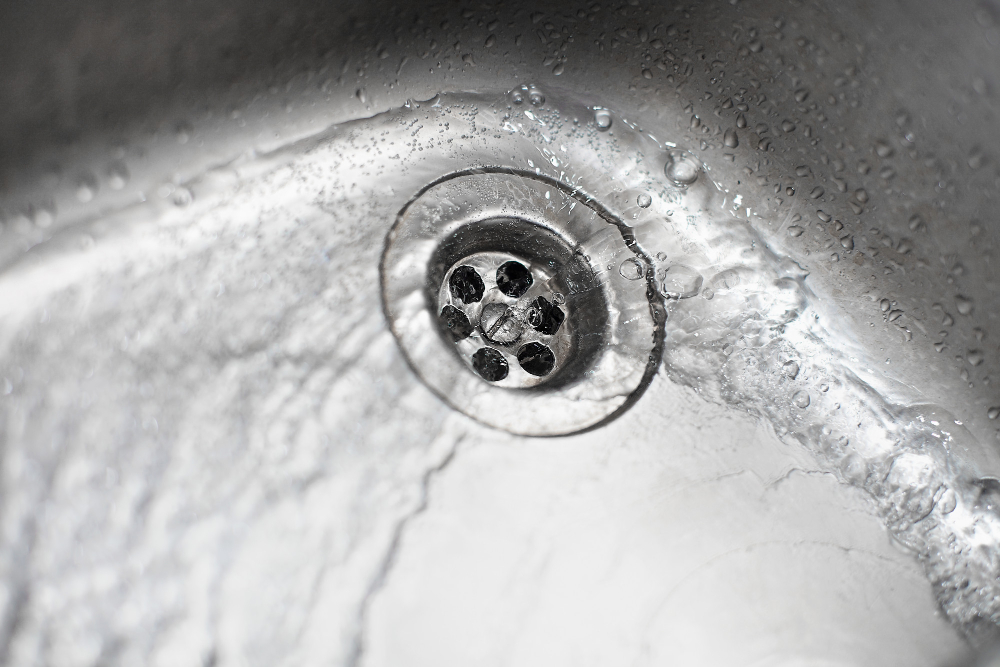
It genuinely does prevent overflow, within limits that are worth understanding.
An overflow is sized to carry away the flow from a tap running at a normal rate, and that is the design case. A tap left running will fill the basin to the overflow level and then stabilise, with water leaving through the overflow at roughly the rate it arrives.
What it will not do is cope with a flow substantially greater than that, with a partially blocked overflow, or with a basin whose waste pipe is blocked at the same time, because the overflow discharges into the same waste pipe and a blockage downstream defeats both.
That last point is the one people get wrong. The overflow is not an independent route to the drain. It joins the same pipe, usually just below the plughole, so anything blocking the pipe blocks both paths at once.
So it protects against the common scenario – a tap left running – and does not protect against the scenario where something has already gone wrong further down.
It Is Also the Dirtiest Part of the Bathroom
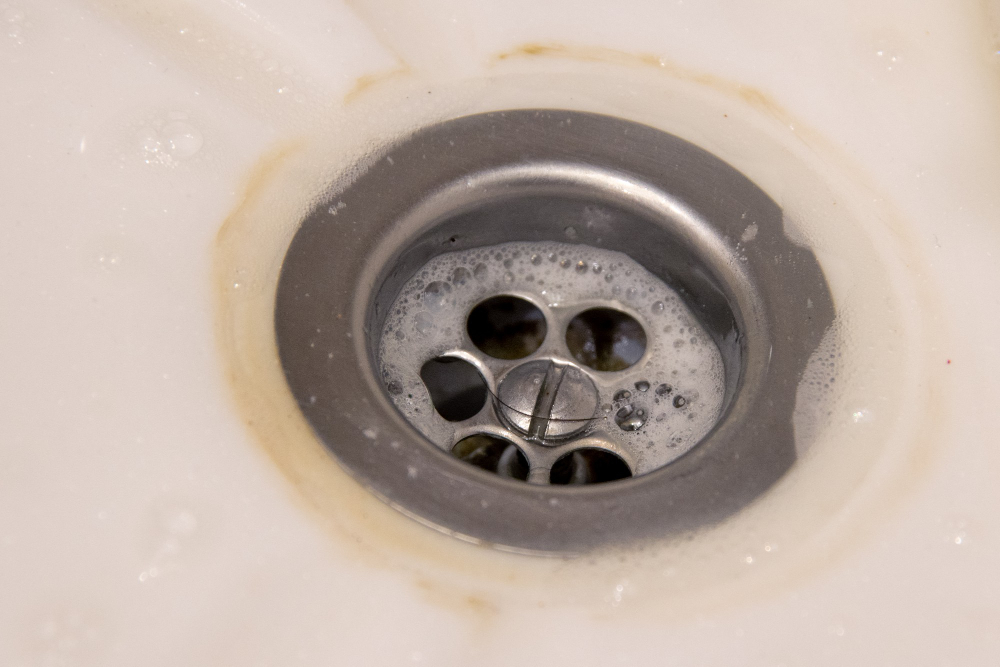
The overflow channel is a dark, permanently damp, never-cleaned, poorly ventilated cavity connected to the waste pipe, and it is lined with exactly the biofilm you would expect.
Soap residue, skin, hair and dust wash into it continuously, and nothing ever flushes it properly because water only passes through it when the basin is filled to the brim, which for most basins is almost never.
The results are a persistent smell from a basin that otherwise seems clean, visible black deposit around the opening, and in warm weather small flies, which breed in exactly this kind of damp organic film and emerge through the hole.
Cleaning it is awkward by design, because the channel is cast into the body of the basin and cannot be reached. The practical methods are flushing with a cleaning solution poured directly into the opening, a flexible brush made for the purpose, or filling the basin above the overflow level occasionally so that water actually runs through the channel at volume.
That last one is free, takes a minute, and almost nobody does it – which is precisely why the problem is as common as it is.
Why the Overflow Is Always Near the Top and Never at the Top
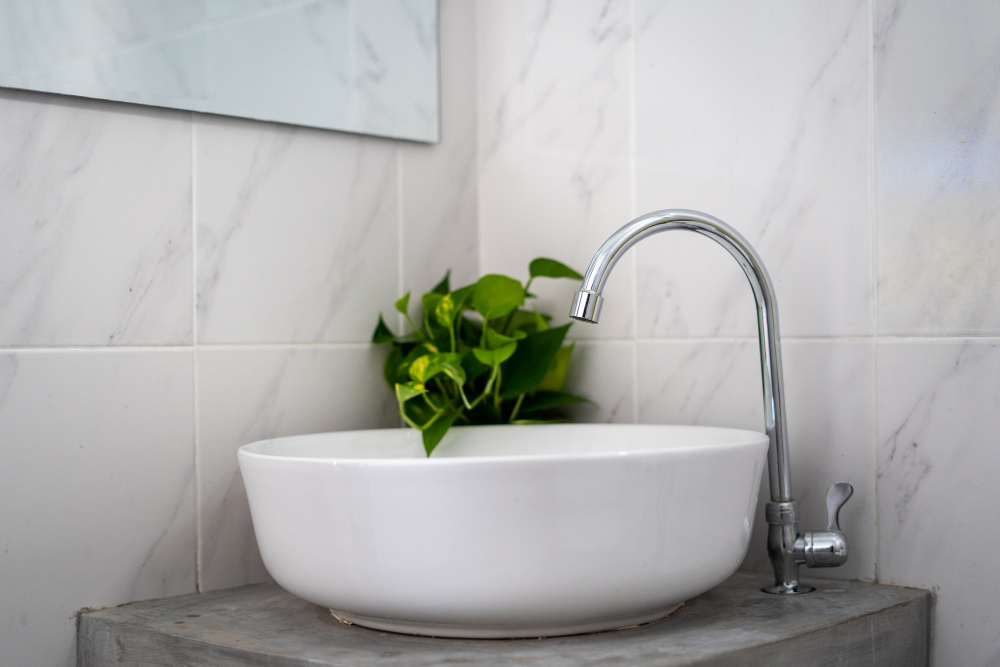
The position of the opening looks obvious and is actually a compromise that somebody had to settle.
Put the overflow too high and the basin can be filled almost to the rim, which is what users want, and the margin before water reaches the edge becomes very small – so a tap running hard, or somebody putting a large object into a full basin, puts water on the floor before the overflow can cope.
Put it too low and the usable capacity of the basin is reduced, which users notice immediately and complain about, because the basin they bought holds less water than it looks like it should.
The compromise sits a few centimetres below the rim, which gives enough freeboard for the overflow to do its work at the flow rates it was designed for, while losing an acceptable amount of capacity.
The same reasoning sets the position in a bath, where the stakes are higher in both directions – a bath overflowing is a serious domestic flood, and a bath that cannot be filled deep enough is the commonest complaint about any bathroom.
And it explains something people notice and find irritating: an overflow positioned where the water level sits when somebody is actually in the bath, so that a bath filled to a comfortable depth with a person in it drains continuously through the overflow for as long as they stay in it. That is not a fault. It is the overflow doing exactly what it was positioned to do, against a use case that was not quite what the designer had in mind.
Some Basins Do Not Have One at All
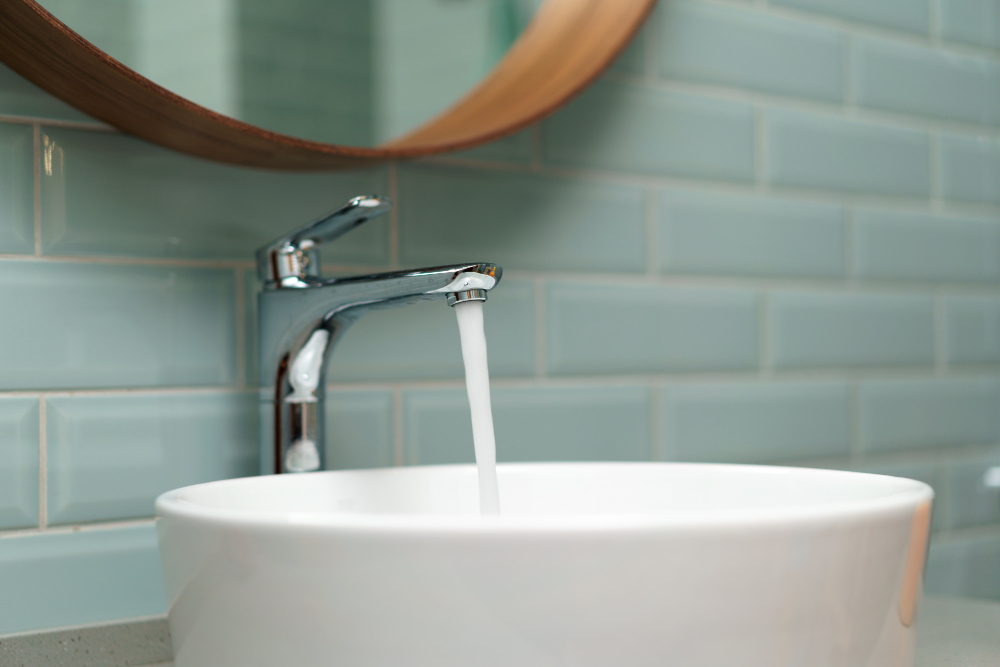
An increasing number of basins, particularly the shallow bowl styles that sit on top of a counter, have no overflow.
Those require a different waste fitting – one designed for an unslotted basin, with no opening at the side to connect to a channel that does not exist. Fitting the wrong type is a common error: a slotted waste in a basin without an overflow leaves an opening into the pipe that does nothing useful, and an unslotted waste in a basin with an overflow seals off the channel entirely, which disables both the air supply and the overflow protection.
A basin with no overflow and a correctly matched waste works perfectly well, drains a little differently, and relies entirely on the user not leaving the tap running.
It is worth knowing which type you have before buying a replacement waste, because the two look almost identical in a box and the consequences of the wrong one are not obvious until the basin is full.
The Same Logic Runs Through the Whole System
The overflow is one instance of a principle that governs all household drainage: water cannot leave unless air can get in, and most plumbing problems that present as drainage problems are actually ventilation problems.
The vent pipe that runs up through the roof exists for this reason. Without it, water draining from an upper floor would pull air through the nearest available opening, which is the water seal in somebody’s trap, and emptying a trap lets drain gas into the room. The vent gives the system a supply of air so the seals stay intact.
The trap itself – the bend under every fixture holding a plug of water – is the barrier that makes the whole arrangement work, and it survives only because the system is vented.
So a gurgling basin, a smell from a rarely used shower, a trap that empties when somebody flushes elsewhere in the house: these are usually not blockages. They are the system struggling to get air, and the overflow in the basin is the smallest and most visible part of the same arrangement.
Which makes a hole near the rim of a washbasin a surprisingly good entry point into understanding why the plumbing in a building is designed the way it is.
The other thing it explains is why nothing in a bathroom should be sealed up or boxed in without thought. Access panels, gaps behind units and the space under a bath are all there so that the pipework can be reached and so that air can move around it, and the enthusiasm for tiling everything flush has produced a great many bathrooms where a simple fault requires breaking something to reach.
Fill your basin to the brim once and let it drain. If the overflow is clear you will hear the difference.
And if nothing comes out of it at all, that explains the smell.
It also explains a thing people find baffling in an otherwise clean bathroom: the smell that comes and goes, is worse in warm weather, and has no visible source anywhere you can reach. A cavity that is permanently wet, never flushed and connected to the waste is going to smell, and the reason nobody finds it is that there is nothing to find – the problem is the one part of the basin that was built to be impossible to look inside.
Like our content? Follow us for more.
