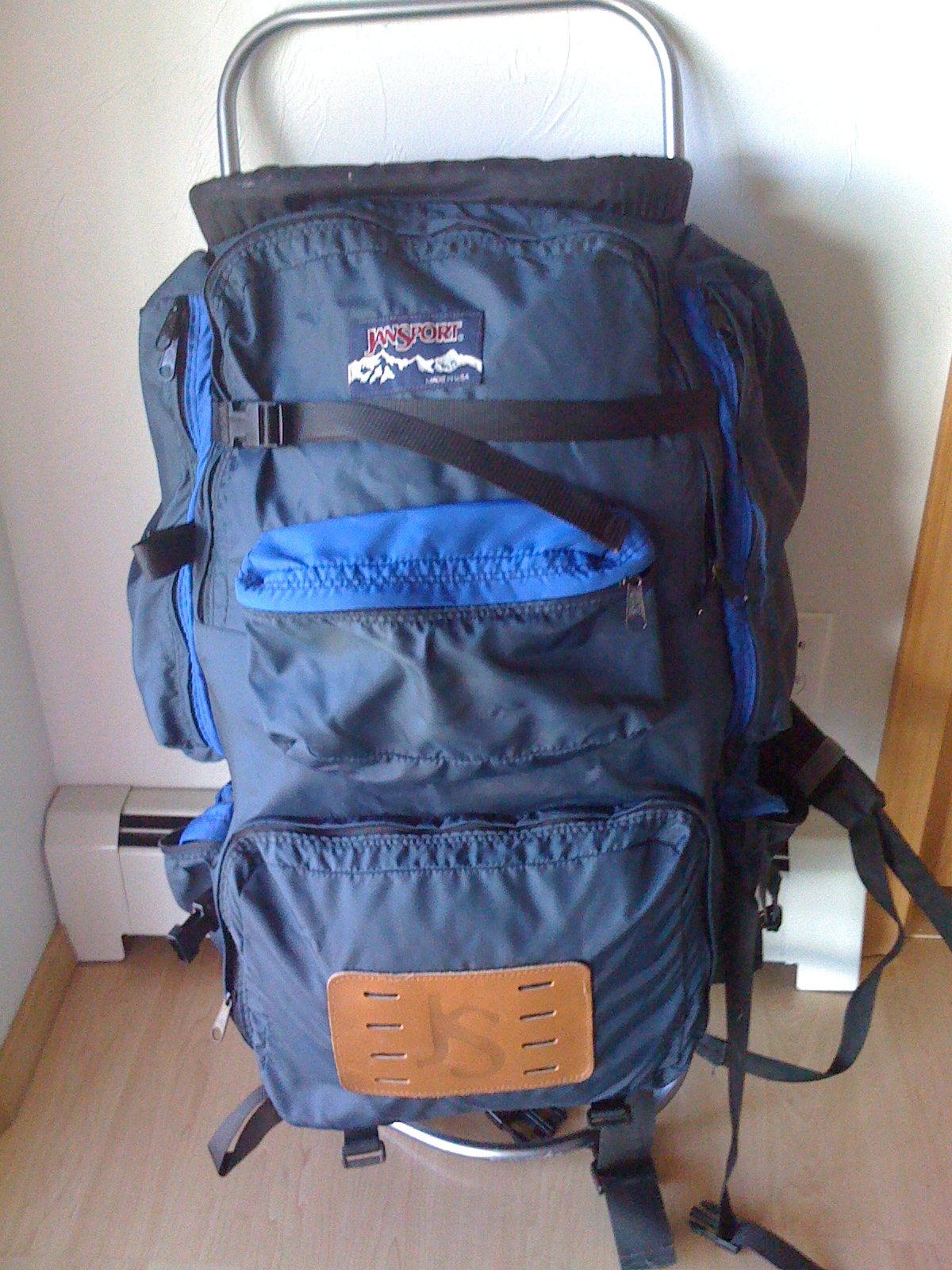
On the front of an enormous number of backpacks there is a small diamond or rectangle of leather or synthetic material, stitched at its corners, with two parallel slits cut into it.
It is called a lash tab, and it is a mounting point. Thread a cord or a strap through the two slits and you have an anchor on the outside of the pack for carrying something that will not go inside it.
What it was designed to carry is the interesting part, and so is the reason it is still being stitched onto bags that will never go anywhere near the thing.
It Was for an Axe
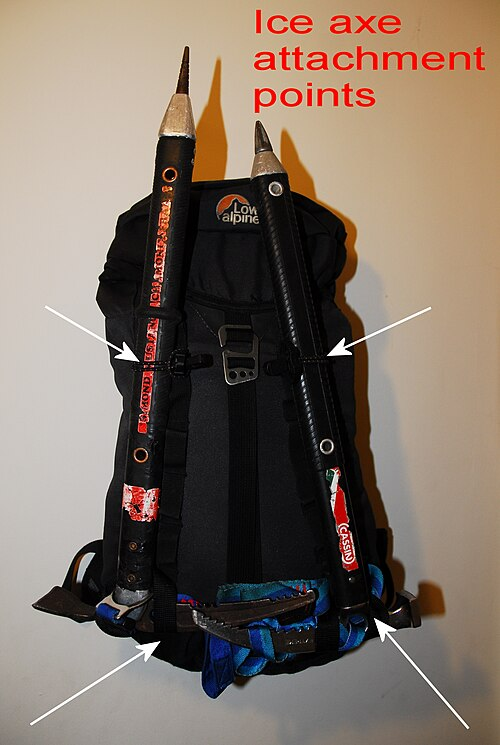
The original purpose was carrying an ice axe, and on some designs a hatchet or a crampon.
An ice axe is long, has a sharp pick and adze at one end and a spike at the other, and cannot go inside a pack without damaging the contents or the pack. It also needs to be reachable quickly, because the situation in which you want it is not a situation in which you stop and unpack.
So the solution was to carry it outside, head down, shaft up, held against the pack. The head sits below the tab in a loop at the base of the pack, the shaft is passed up against the back panel, and a cord or strap through the lash tab holds the shaft against the pack so it cannot swing.
That is the complete system, and the tab is the top half of it. On a proper mountaineering pack the loop at the bottom is still there too, and the two work together.
The patch is reinforced and made of something tough because it takes a point load from a heavy swinging object, repeatedly, in bad conditions, and a plain fabric panel would tear.
Like our content? Follow us for more.
Why It Is on Bags That Will Never Carry One
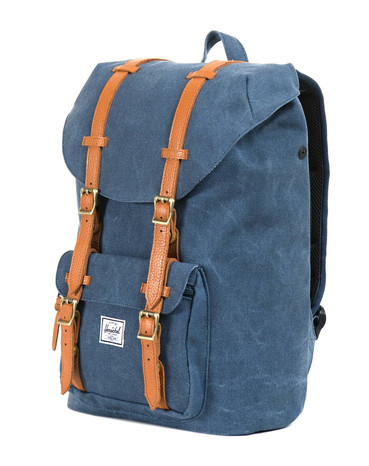
The style of pack that carried an axe became fashionable far beyond mountaineering, in the same way that sailing shirts and military jackets did, and the lash tab came with it.
At that point the economics took over. The tab costs very little – a small piece of material and a few seconds of stitching – and it is instantly recognisable as a signifier of the outdoor style the bag is referencing. Removing it saves almost nothing and makes the bag look less like what it is trying to look like.
So it stayed, and it is now on day packs, school bags, laptop bags and fashion items in enormous numbers, as a visual quotation of a function none of them will ever perform.
The tab on a cheap bag is frequently not even functional – stitched through one layer of fabric with no reinforcement behind it, so that using it as intended would pull it straight out. It is a picture of a lash tab rather than a lash tab, which is a further step away again.
What You Can Actually Do With One
If yours is properly attached – and you can tell by whether there is reinforcement behind it and whether the stitching goes through a structural seam – it is genuinely useful for things other than axes.
Anything long and awkward that you want outside the bag can be lashed to it: a rolled mat, a tripod leg, a folding chair, walking poles, a wet umbrella you do not want inside, a bicycle lock.
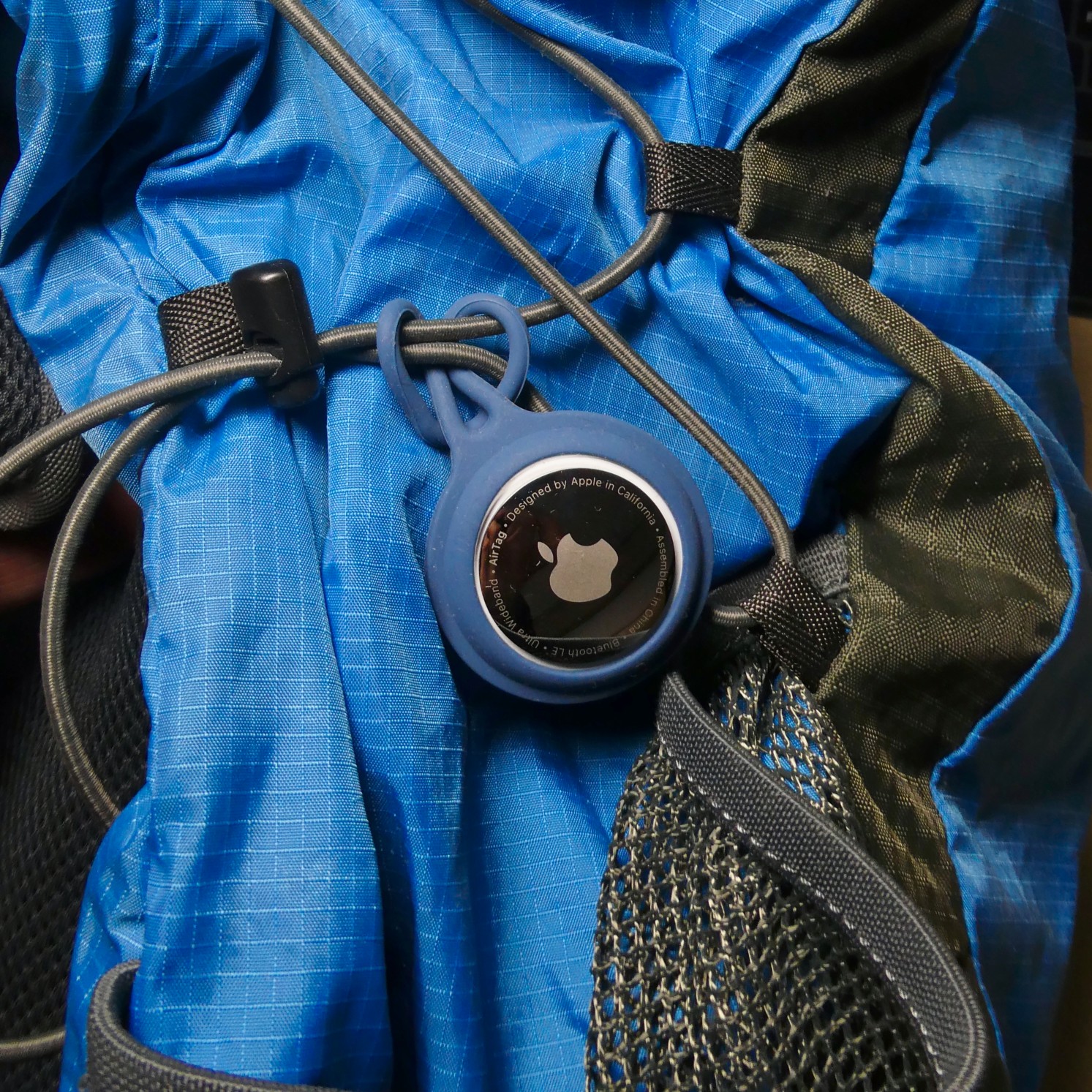
A short length of cord threaded through and left permanently in place turns it into a quick attachment point, and a small carabiner through one of the slits gives you somewhere to clip keys, a light, a helmet or a bag of something unpleasant you are carrying out.
The limitation is that it is a single point, so anything hung from it alone will swing. The original system used two anchors – the tab and the bottom loop – for exactly that reason, and anything you attach is more secure if you can find a second point lower down.
The other limitation is the obvious one: on a bag where the tab is decorative, do not load it. The failure is not graceful, and it takes a piece of the bag with it – a tab that tears out does not come away cleanly, it opens a slit in the panel it was stitched to, and on a bag with a single main compartment that slit is directly into the contents.
Why It Is Diamond-Shaped
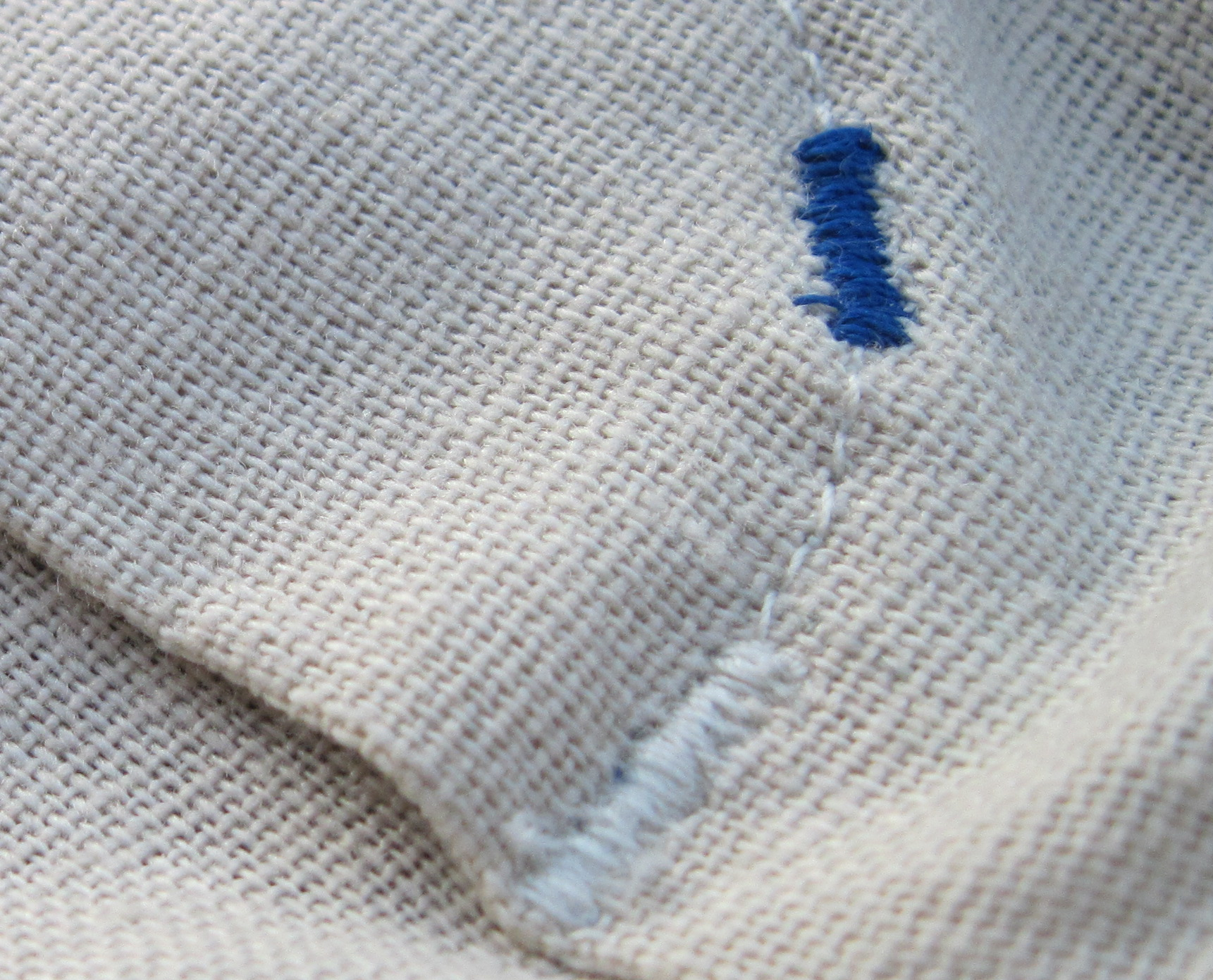
The shape is not styling, and it is the same reason a sail has a reinforced corner and a tent has a triangular patch at every guy point.
A patch stitched to fabric concentrates load at its edges, and the worst place to concentrate load is along a straight line, because a straight stitched edge acts as a tear line – pull hard enough and the fabric parts along it like a perforation.
Rotating the patch forty-five degrees so it sits as a diamond means no stitched edge runs parallel to the weave of the fabric behind it. The load is distributed across threads running in both directions rather than along a single line of them, and the corners spread it outward into the surrounding material rather than concentrating it.
That is why reinforcement patches on load-bearing fabric are so consistently diamonds, triangles or rounded shapes, and why a square patch stitched square is the amateur version.
The same thinking is why the corners of pockets on workwear are bar-tacked, why climbing harnesses have no sharp-cornered stitched panels, and why a tent’s guy point is a triangle of webbing rather than a tab.
So the lash tab’s shape tells you it was designed by somebody who expected it to be pulled hard – which makes the decorative diamonds on bags that cannot take any load a reasonably precise imitation of a structural decision nobody making them was thinking about.
The Rest of the Pack Is Full of These
Once you start looking, a backpack is covered in vestigial and semi-vestigial features from specialised equipment.
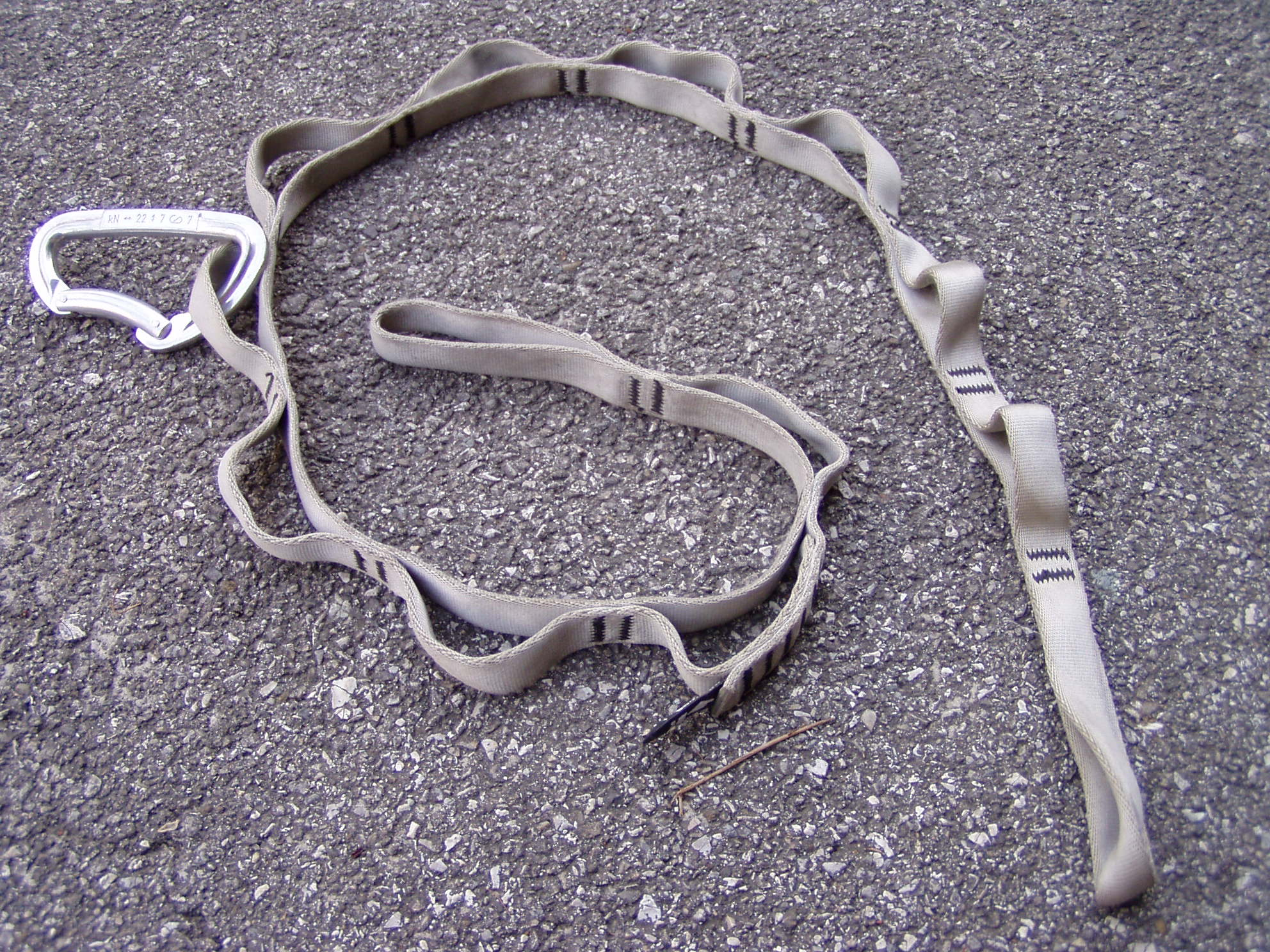
The compression straps along the sides exist to pull the load tight against the back so it does not shift while moving, which matters enormously with a heavy pack and not at all with a laptop. The daisy chain – the row of loops stitched down the front – is a grid of attachment points for gear, and on most bags carries nothing. The drainage grommets in the base are for a pack that has been in a river. The ice axe loop at the bottom is the other half of the tab. The hydration port is a hole for a drinking tube. The sternum strap and hip belt transfer load from the shoulders, which is critical above a certain weight and decorative below it.
Some of those are genuinely useful on an ordinary bag and some are purely cosmetic, and the proportion tells you quite accurately what kind of bag you are holding.
A bag with all of them and no reinforcement anywhere is referencing equipment rather than being it. A bag with three of them, all properly anchored, was designed by somebody who thought about what the bag was for.
Why This Happens to Equipment Generally
The lash tab belongs to a pattern that applies well beyond bags.
Equipment designed for a demanding specialised use tends to look purposeful, and looking purposeful is desirable in itself. So the appearance migrates into general products, carrying the features that created it, detached from the requirements that justified them.
It happens to watches, with rotating bezels on desk watches and depth ratings on things that will never be submerged. It happens to vehicles, with roof rails that carry nothing and skid plates made of plastic. It happens to clothing, with technical fastenings on garments that will never be rained on. And it happens to bags.
None of this is dishonest in itself – people are entitled to like how something looks, and a reference to a function is not a claim to it.
It becomes a problem only at the point where somebody relies on it: loads the decorative tab, trusts the depth rating, puts weight on the plastic. The feature looks identical and is not, and there is frequently no way to tell from the outside without knowing what to check.
Which is the actually useful skill, and it is the same test every time. Is it anchored to the structure, or is it stitched to the surface?
Find the tab on your own bag and pull it gently. If it moves independently of everything around it, it is a decoration.
If it does not move at all, somebody built it to carry an axe.
And if you are buying a bag for anything demanding, that test is worth running on every feature it has before you hand over any money, because the bag that is referencing equipment and the bag that is equipment cost broadly similar amounts and only one of them will still be working in five years.
Like our content? Follow us for more.