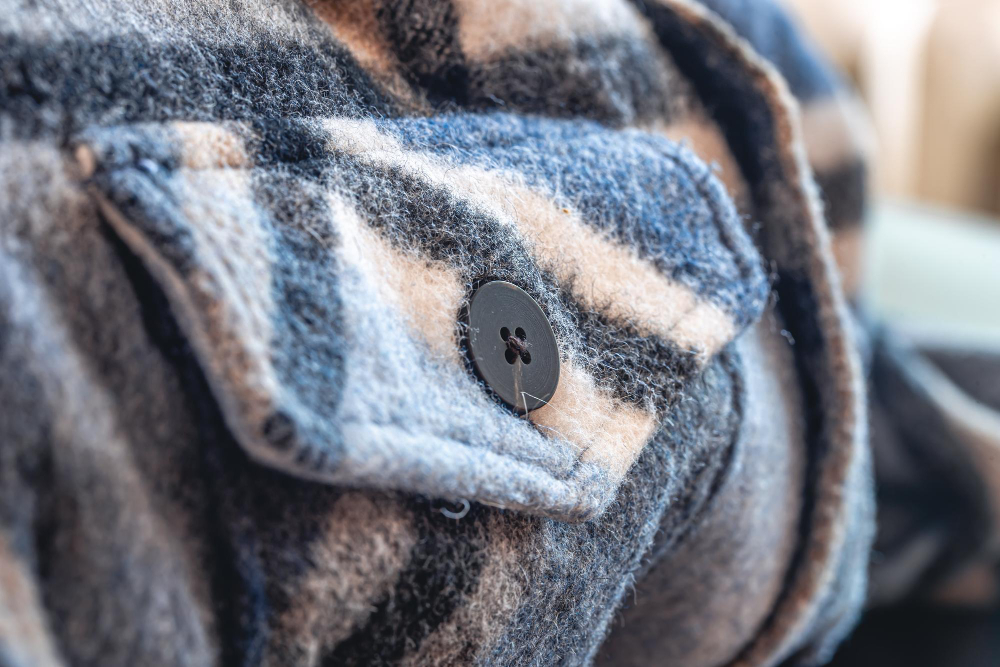
A new garment frequently arrives with a small packet containing a spare button, a length of thread, and sometimes a square of the fabric it is made from.
The button is obviously a replacement. The fabric square is widely assumed to be a patch, and it is not – it is far too small to repair anything and the wrong shape for it.
It is a test piece, and the reason it exists is more useful than the button.
What the Fabric Square Is Actually For
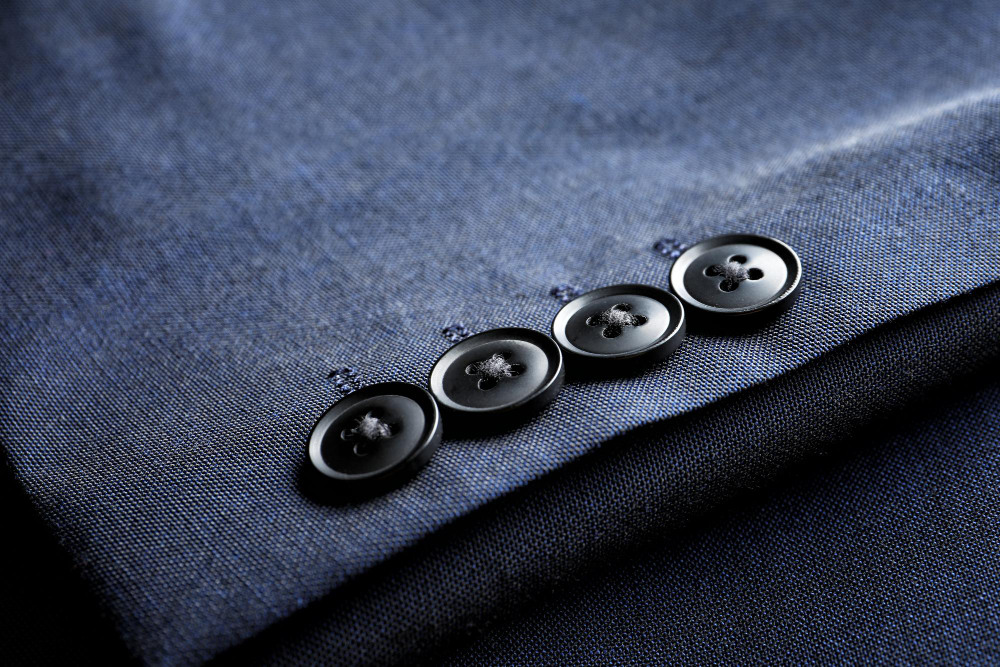
The swatch is there so that you can do something to it before you do it to the garment.
Try a stain remover on it and see whether the colour holds. Wash it at a temperature you are not sure about. Iron it and find out whether the fibre shines, scorches or melts. Test whether a solvent affects the finish.
Every one of those is a destructive test that tells you something you need to know, and the whole point is that the swatch is expendable and the garment is not.
That is a genuinely thoughtful piece of provision, and it is almost completely unknown. The overwhelming majority of swatches go in a drawer with the button, or in the bin with the packaging, and the garments they came with get treated on a guess.
The second function is colour matching. If the garment needs a repair, an alteration or a replacement part, the swatch is a sample of the exact fabric from the exact dye lot, which is the only reliable way to match it – and dye lots differ enough that matching from memory, or from another garment of the same product, frequently does not work.
Like our content? Follow us for more.
Why the Button Is Supplied and Not Just Sold
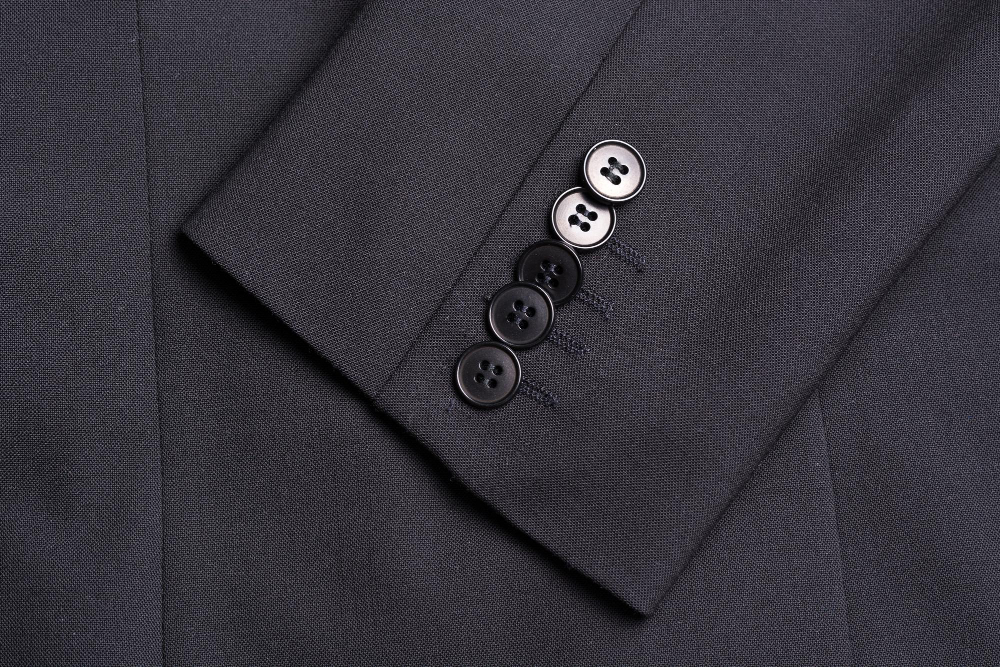
The spare button looks like generosity and is mostly economics.
Buttons are bought by the manufacturer in batches, and a batch has a specific colour, finish and dimension. Once that batch is used the garment’s buttons are effectively unobtainable, because the next batch differs slightly, the supplier may change, and the garment itself is out of production within a season.
So a customer who loses a button has a garment they cannot repair, and a complaint that cannot be resolved. Supplying one spare at manufacture costs a fraction of a penny, is attached before the garment leaves the factory, and eliminates the whole category of problem.
It is the same logic as the window envelope and the lash tab: cheaper to design out than to deal with afterwards.
The thread supplied with it is there for the same reason – sewing a button on with thread of a visibly different colour is nearly as bad as not having the button, and matching thread is as hard to find as matching buttons.
The Spare Button Is Frequently Not Where You Think
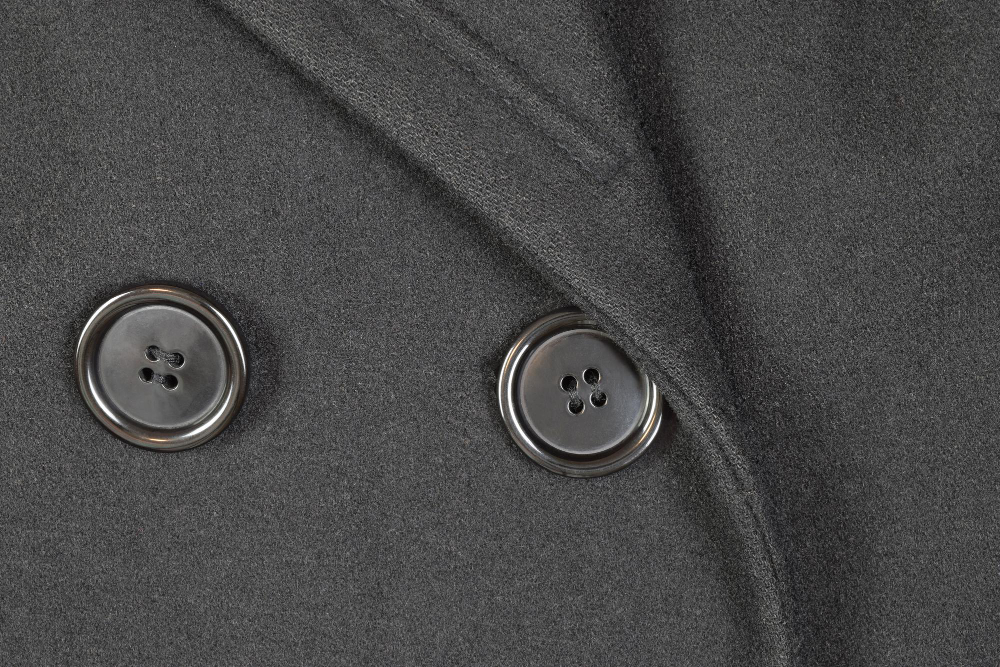
On a great many garments the spare is not in a packet at all. It is sewn onto the garment, usually on an inside seam, at the bottom of the side seam of a shirt or inside the lining of a jacket.
This is deliberate, and it is a better system. A button in a packet is separated from the garment within a day and is unfindable years later when it is needed. A button sewn to the inside seam travels with the garment for its entire life and is in the one place anybody would think to look.
Worth checking your own clothes for, because a considerable number of people have thrown away packets while owning garments with the spare attached inside, and do not know it is there.
Some makers also supply a spare of a different kind – a length of the trim, a reel of matching thread wound onto a card, a replacement cord tip – and these are attached the same way and go unnoticed for the same reason.
On knitwear the equivalent is a small ball or length of the actual yarn, which is the most valuable of all of them, because matching a yarn by eye for a repair is close to impossible and a hole in a jumper mended with the wrong wool is more conspicuous than the hole was.
Sewing One On Is the Skill Nobody Has Now
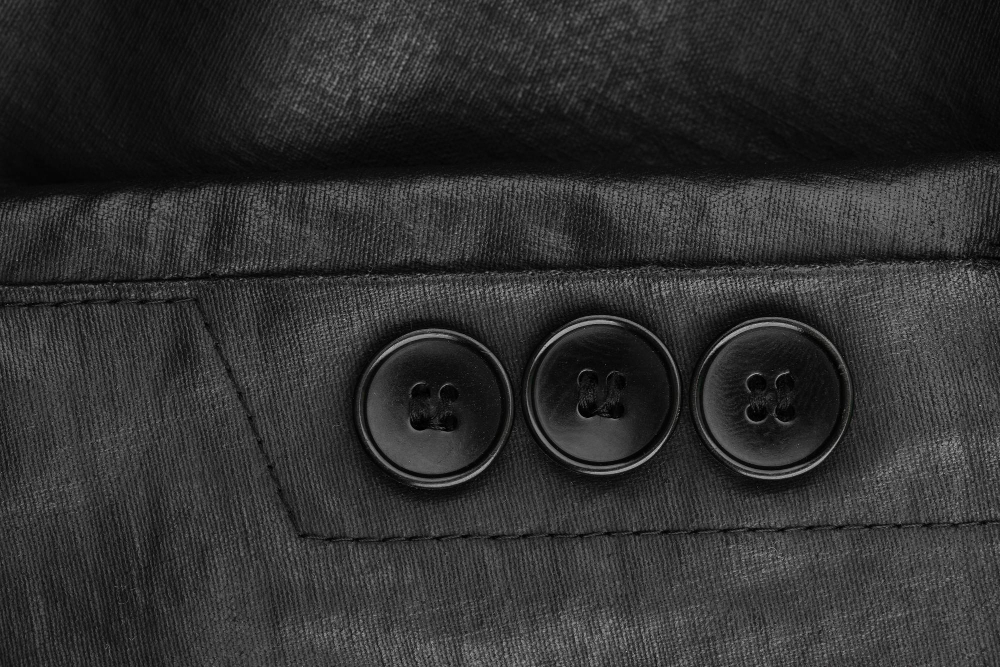
The provision assumes somebody can use it, and that assumption has worn through.
Attaching a button is genuinely simple – a few passes through the holes, a short shank wound underneath so the button sits proud of the cloth and the buttonhole has somewhere to go, and a knot. It takes about three minutes and the only equipment is a needle.
The shank is the part that gets missed. A button sewn flat against the fabric leaves no room for the thickness of the layer it has to fasten through, so the buttonhole strains, the garment pulls and the button is torn off again within weeks. Winding the thread around the stitches underneath to create a small stem solves it entirely and is the difference between a repair that lasts and one that does not.
That was general knowledge within living memory, taught in schools to everybody, and is now a specialist skill that a large proportion of adults have never performed.
Which is the real reason so many garments are discarded over a missing button. Not the button, which was supplied, and not the thread, which was supplied with it – but the three minutes and the knowledge, neither of which comes in the packet.
The Care Label Is Part of the Same System
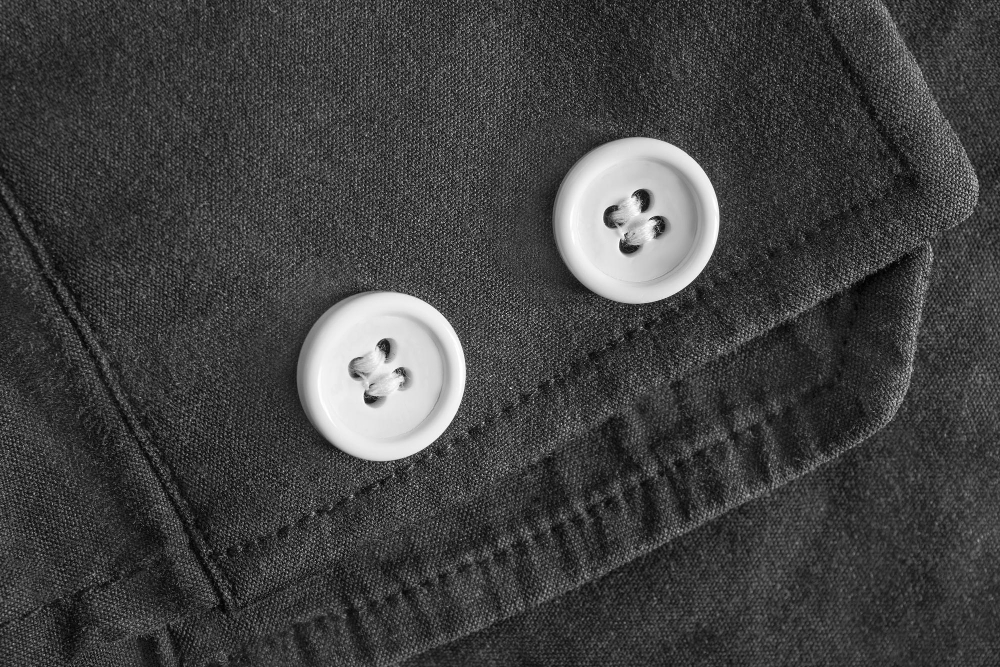
All of this belongs together as a set of provisions for the garment’s later life, and the care label is the part of it everybody does see and mostly does not read.
The label states what the maker is prepared to guarantee under what treatment. The swatch lets you test anything the label does not cover. The button and thread let you repair the commonest failure. Together they amount to a small kit for keeping the garment going.
That kit implies an expectation – that the garment will be owned for years, cleaned many times, occasionally repaired, and kept. It is a provision for durability.
Which sits oddly against a great deal of modern clothing, where the expected life is short, the construction does not support repair, and the kit is supplied anyway because it is a convention. A swatch and a spare button on a garment that will not survive a year is a vestigial feature in the same way as a non-functioning cuff button – the provision outlasting the assumption it was made under.
It is worth reading the kit as evidence, though, because it is reasonably informative. A garment supplied with a real swatch, a matching thread and a spare sewn into the seam was made by somebody expecting it to be kept. One with a single loose button in a bag stapled to the label was made by somebody meeting a convention. The difference costs the manufacturer very little and tells you something about what they thought they were selling.
The Useful Habit Is a Box
The practical conclusion is unglamorous and works.
Keep one container for all of it. Every spare button, swatch, thread card and trim offcut that comes with anything goes in, with no attempt at organising it. It takes a second and costs nothing.
The value is not in any individual item. It is that when something needs a button in five years, the box is the only place in the house where a matching one could possibly be, and the probability that it is in there is considerably higher than zero.
The same box takes the spare screws and fixings that come with furniture, the extra tiles from a job, the offcut of carpet, the touch-up paint. All of them are supplied for the same reason, all of them are discarded for the same reason, and all of them are irreplaceable at the moment they are wanted.
It is the lowest-effort useful habit available in a house, which is presumably why so few people have it – there is no moment at which it feels worth doing, and the payoff arrives years later and feels like luck.
The one refinement worth bothering with is to put the swatch and the button for a given garment in the same small bag, because a swatch with no button is only half useful and a button with no swatch cannot be matched to anything. Everything else can go in loose.
Check the inside seam of your shirts for a button you did not know you had.
And next time a swatch comes with something, test the stain remover on that rather than on the sleeve.
It is the one piece of advice here that costs nothing, takes ten seconds, and prevents the specific disaster of finding out that a garment reacts badly to something at the exact moment you are trying to rescue it from a stain – which is how a recoverable mark becomes a ruined piece of clothing.
Like our content? Follow us for more.