

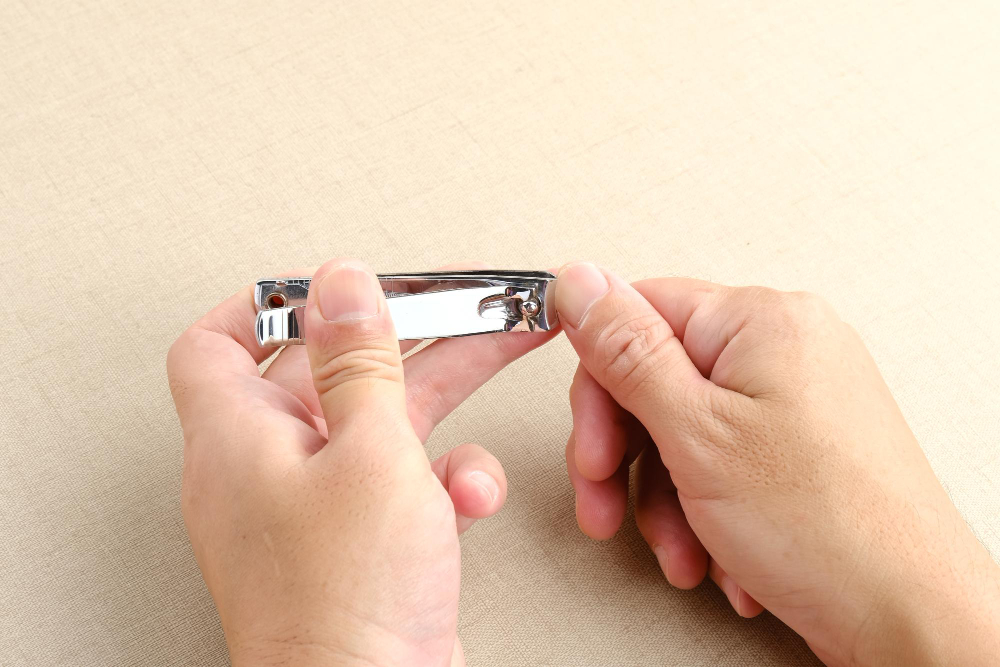
The flat metal arm that swings out of the top of a pair of nail clippers does two jobs, and most people only ever use one of them.
It is the lever – you swing it out, turn it over and press it to close the jaws. Everybody uses it for that.
Turn it over and look at the underside. On the great majority of clippers it is textured, cross-hatched or ridged, because it is also a file.
Why the File Matters More Than It Sounds
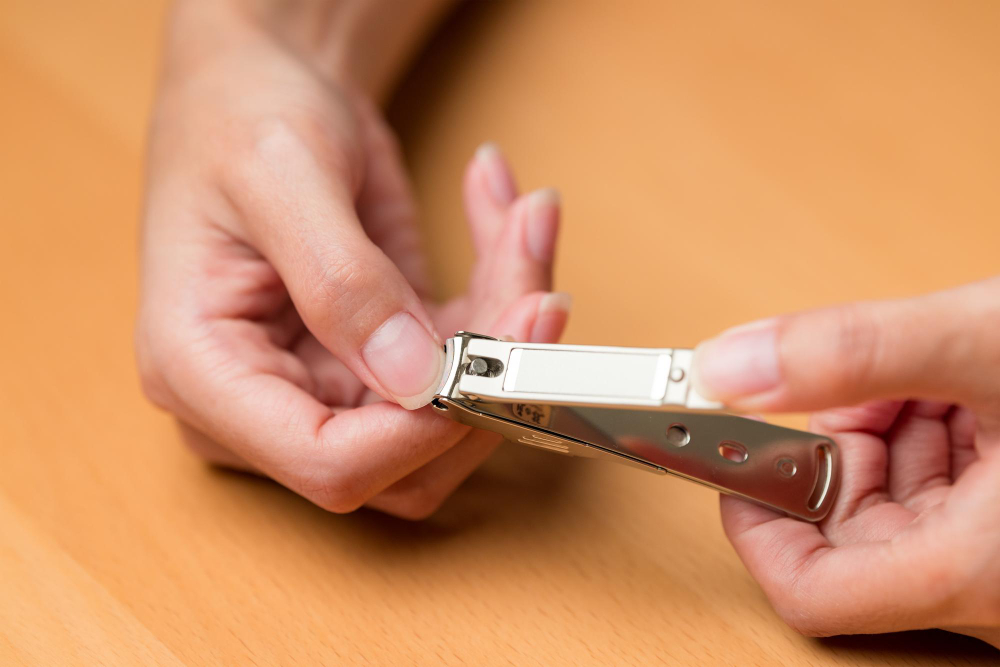
Cutting a nail with clippers leaves an edge. The jaws shear the nail rather than slicing it cleanly, which means the cut edge has microscopic steps and splits along it, and the corners left behind are sharp and square.
A sharp square corner on a nail is what catches on fabric, tears, and on toenails grows into the surrounding skin.
So the file is not a cosmetic afterthought. It is the second half of the operation: cut to length with the jaws, then smooth the edge and round the corners with the file. The tool was designed as a two-step device and is almost universally used as a one-step one.
That is why a great many people find that nails snag, split or tear within a day or two of being cut, and conclude that their nails are weak. Frequently the nails are fine and the edge was never finished.
Like our content? Follow us for more.
The File on the Clipper Is a Poor File and Still Worth Using
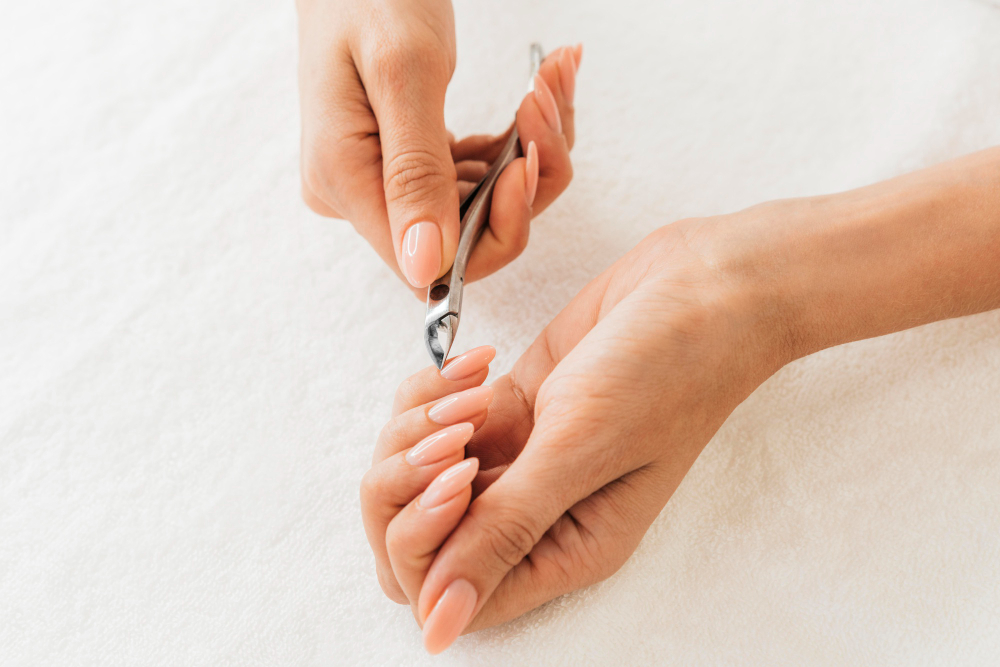
Being honest about the limitation: the integrated file is small, coarse, made of the same soft metal as the rest of the tool, and wears smooth quite quickly. A proper file – glass, crystal or a decent emery board – does the job considerably better and lasts longer.
What the clipper file has is proximity. It is attached to the thing you just used, at the moment you need it, which means it gets used and the better file in a drawer somewhere does not.
That trade – a worse tool that is present against a better tool that is absent – is the same calculation as the hole in the pasta spoon or the markings on a measuring jug, and it resolves the same way. Something adequate and immediate beats something excellent and elsewhere.
Direction matters more than the file does, incidentally. Filing in one direction along the edge rather than sawing back and forth is gentler on the layered structure of the nail, and the sawing motion is what causes the splitting that people then blame on the file.
The Jaws Are Curved for a Reason and It Is the Wrong Reason for Toenails
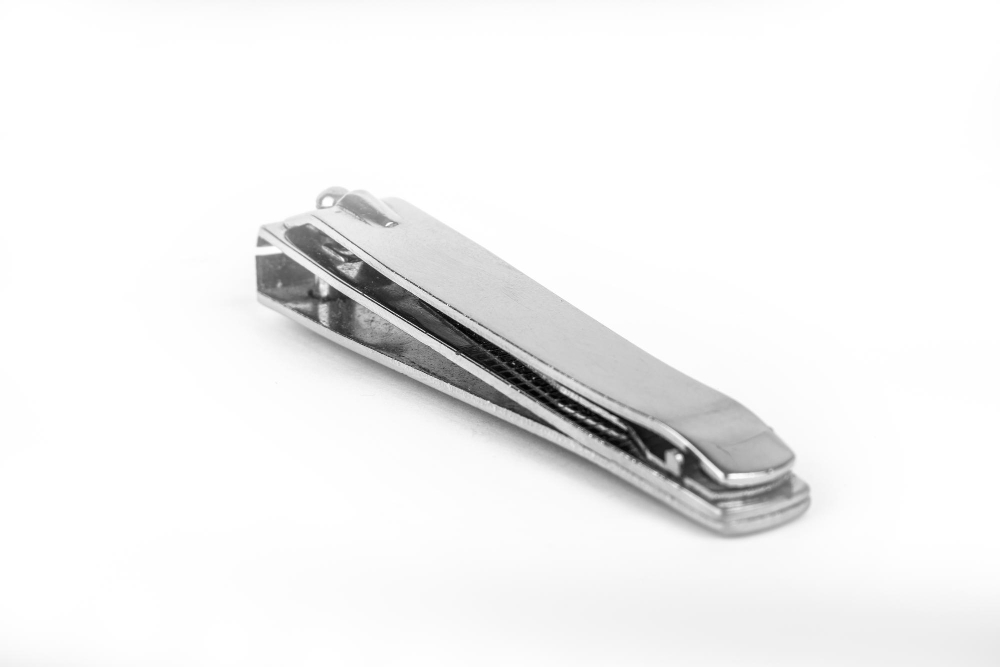
Most clippers have curved jaws, which match the curve of a fingernail and remove it in one or two cuts following the natural shape.
On toenails that curve is actively unhelpful. Standard guidance for toenails is to cut straight across rather than following the curve, because rounding the corners down into the sides is what allows the nail to grow into the skin – and a curved jaw encourages exactly that shape.
This is why clippers intended for toenails have straight jaws, are larger, and have a longer lever, and why using fingernail clippers on toenails is a bad combination of a tool that is too small and a shape that is wrong.
Anybody with a recurring problem of that kind should raise it with a healthcare professional rather than with an article, and the general point stands: the two tools are different shapes because they are for two different jobs, and most households own only the one.
The Catcher Is the Other Thing Nobody Uses
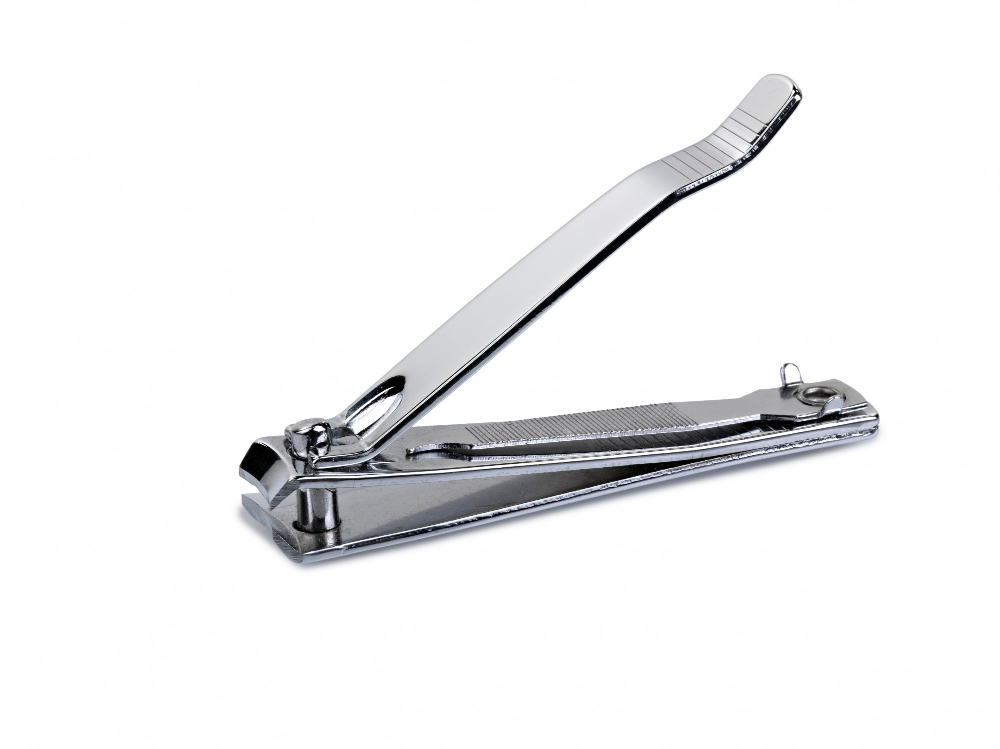
A good proportion of clippers have a small curved cover or a hinged plate over the jaws, and it is there to catch the clipping.
Cut nails travel. The jaws store energy as they close, the nail fails suddenly rather than gradually, and the piece leaves at a surprising speed in an unpredictable direction – which is why clippings turn up across a room and behind furniture.
A catcher stops that, holds several clippings, and is emptied by sliding it off or opening it. It is a complete solution to the one genuinely irritating thing about the tool.
It is also the first feature people break or discard, because it makes the clipper slightly bulkier, it obscures the view of what you are cutting, and on cheap tools it is a flimsy piece of plastic that snaps off within weeks.
That pattern is worth noticing on its own: a feature that solves a real problem but imposes a small constant cost on every use will lose to one that does nothing, every time, unless the problem it solves is felt in the moment. The clipping lands on the floor several seconds after the inconvenience of the catcher was experienced, which is long enough for the two never to be connected.
Everything About the Tool Is a Compromise With Being Cheap
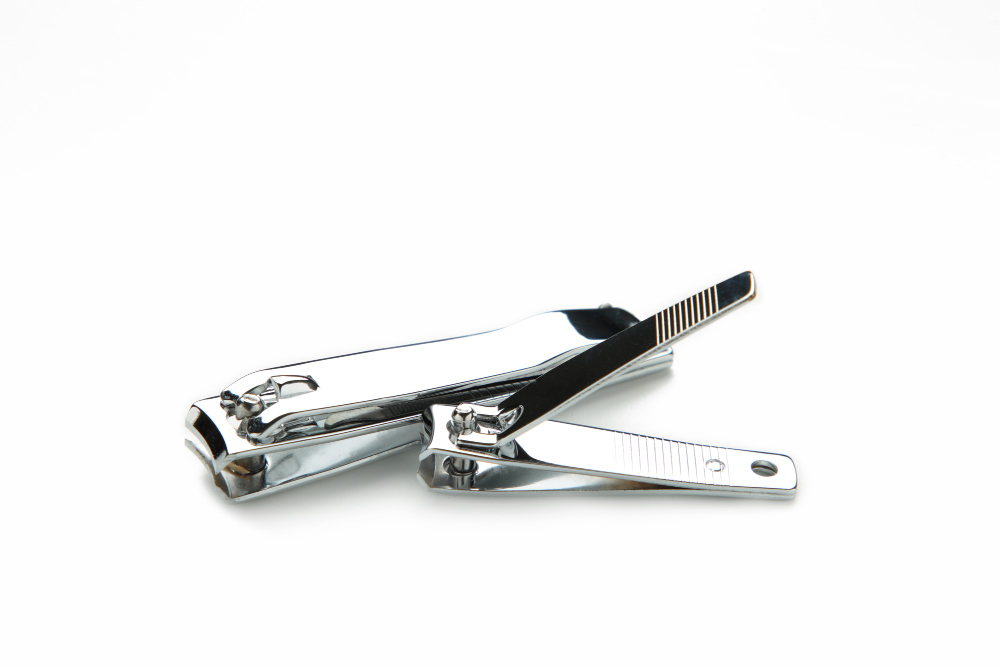
A nail clipper is a lever acting on two jaws, stamped from steel strip, assembled with a single pin, costing almost nothing.
The jaws are formed by stamping and then ground to meet. How precisely they meet is the entire difference between a clipper that cuts cleanly and one that crushes and tears, and it is the first thing that goes wrong in a cheap one – the jaws are slightly misaligned from the start, or they spring apart under load because the metal is too thin.
The pivot is the other failure. A loose pin lets the jaws move sideways, and jaws that move sideways cannot shear.
Both of those are invisible in a shop and obvious within a week, which is why nail clippers are an object where paying a small amount more produces a noticeably better result, and where the expensive ones are not noticeably better than the moderate ones.
The test for a good one is simple and can be done through the packaging: hold it closed up to a light and look for a gap between the jaws. There should be none, anywhere along their length.
The Two Jaw Shapes Are Not Interchangeable
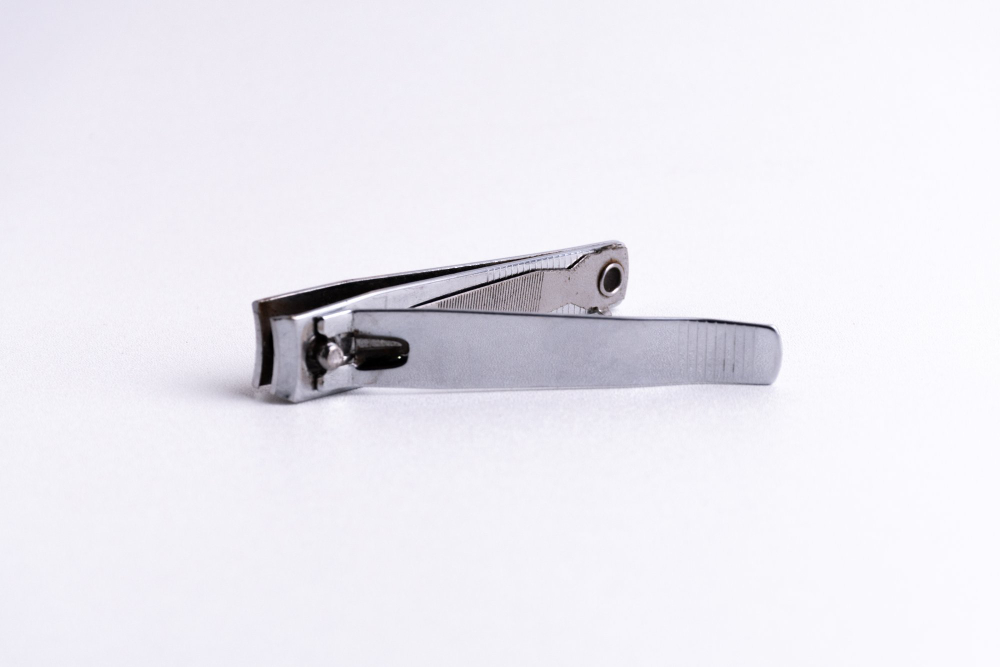
Since the curve has come up, it is worth separating the two tools properly, because most households own one and use it for everything.
A fingernail clipper has a concave curved cutting edge, is small, and has a short lever. The curve exists because a fingernail is cut across a curved free edge and following that curve removes it in one or two bites, leaving a shape that matches the finger.
A toenail clipper has a straight or very slightly curved edge, is substantially larger, has thicker jaws and a longer lever. All of those differences follow from the material: toenails are considerably thicker and harder, which needs more force and more jaw, and the straight edge produces the straight-across cut that is standard guidance.
Using the small curved one on a thick nail asks a tool to do something outside its design: the jaws spread under load, the cut crushes rather than shears, and the clipper itself wears quickly at the pivot.
The two cost almost the same and most people own only the first, which is a reasonable example of a household buying the wrong tool because the right one looks like an identical object in a slightly bigger size.
Anybody with a particular difficulty here should raise it with a healthcare professional; the point being made is about tool design rather than about anybody’s feet.
Why This Tool Has Not Changed
The clipper in your bathroom is essentially identical to one from a century ago, and the design has resisted improvement in a way that is worth noticing.
Electric trimmers, grinders and various rotating devices have all been offered. They are slower, noisier, need power, cost more and are not better at the thing.
The lever clipper is fast, silent, needs nothing, works wet, fits in a pocket, costs very little, lasts years, requires no instruction and is operated identically by everybody. That is a strong position, and the only genuine criticism of it – that it leaves an unfinished edge – was answered by the manufacturer stamping a file into the lever, for nothing, in the 1800s.
So the tool is complete, and has been for a very long time, and the only thing missing is that nobody turns the lever over.
Which is the shortest possible summary of this entire category of object: the design problem was solved properly, the solution is on the thing, in your hand, and the information never arrived.
Turn the lever over on your own pair and look at it.
Then finish the edge after you cut, and see whether your nails still snag.
It adds about fifteen seconds to something you do a couple of times a month, using a part of the tool you already own and have been folding away unused for years.
Like our content? Follow us for more.
