

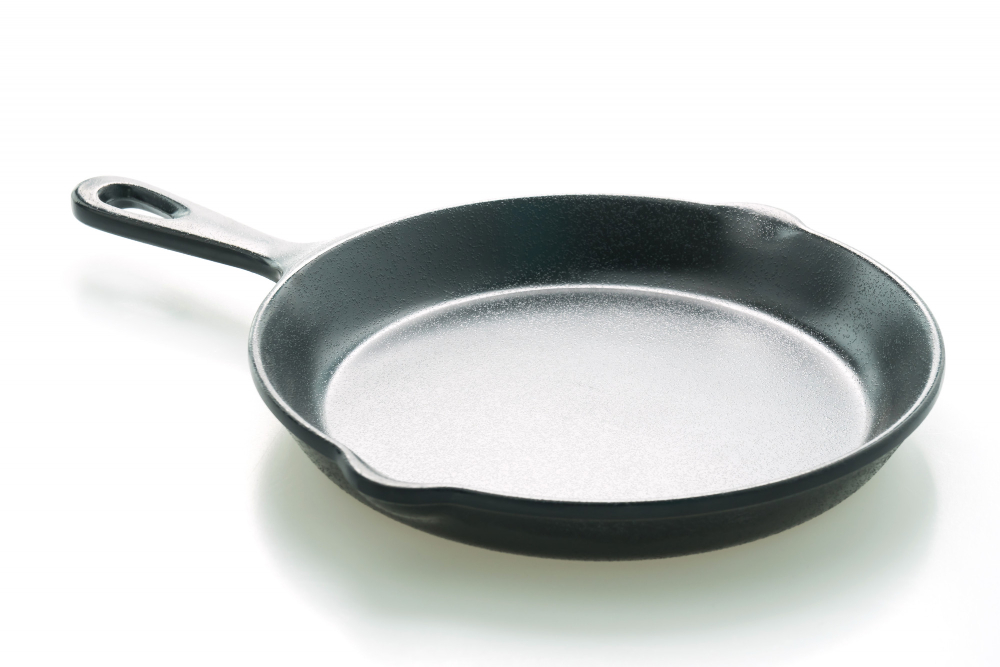
There is a hole in the end of almost every frying pan handle, and the obvious explanation is hanging it up.
That is one of its functions and it is the least significant of three. The hole is also doing something thermal, and on a metal-handled pan that is the job that decides whether you can pick the thing up.
Heat Travels Along a Handle and a Hole Interrupts It
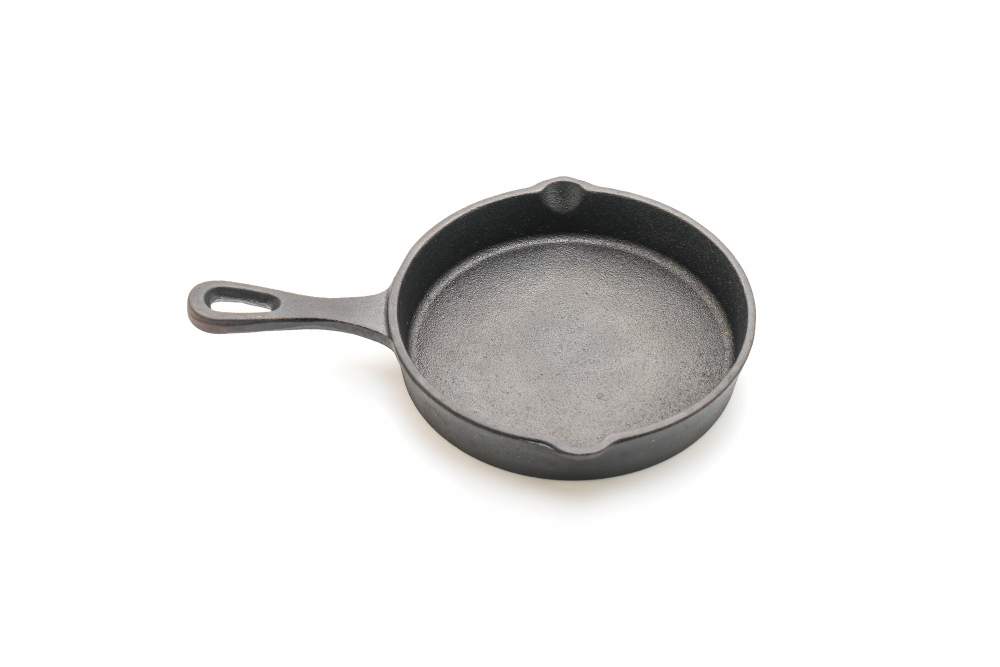
A metal handle is a conductor attached to a very hot object, and heat moves along it towards your hand continuously while the pan is on the heat.
Two things slow that down. One is reducing the cross-section, because the rate heat flows along a bar depends on how much metal is available to carry it – which is why handles are frequently flattened, narrowed or hollowed rather than being solid bars.
The other is increasing the surface area, because a handle also loses heat to the air along its whole length, and the more surface it presents the more it sheds before the heat arrives at the end.
A hole does both. It removes metal at a point, narrowing the conduction path, and it adds the whole internal surface of the hole to the area losing heat to the room.
It is not dramatic and it is not nothing, and on a pan designed to go in an oven – where a wooden or plastic handle is not an option – it is one of the few tools available.
The length of the handle is doing the same job on a much larger scale, which is why pans with metal handles tend to have longer ones than pans with insulated handles. The distance is the insulation.
Like our content? Follow us for more.
The Second Grip Is the One Nobody Notices
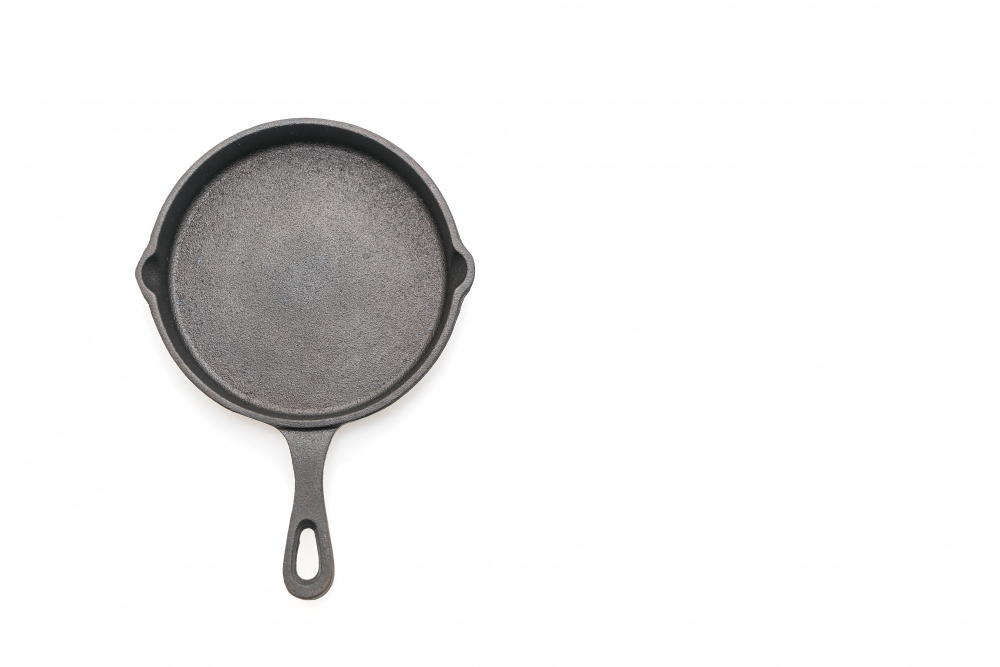
A full frying pan is heavy, the weight is all at the far end, and lifting it one-handed from the end of the handle means holding a substantial load at the end of a long lever.
The hole gives you a second place to apply force. A finger through it, or a cloth threaded through it, lets the other hand assist from behind, turning a one-handed lift of an awkward load into a two-handed one with the second hand doing the holding and the first doing the steering.
That matters most when tipping a pan to pour, which is the moment a heavy pan is most likely to be dropped, and it matters enormously with a large pan of hot liquid.
Most people arrive at some version of this without thinking about it, which is why the feature goes unremarked – it is used constantly and never consciously.
Hanging Was Once the Primary Function
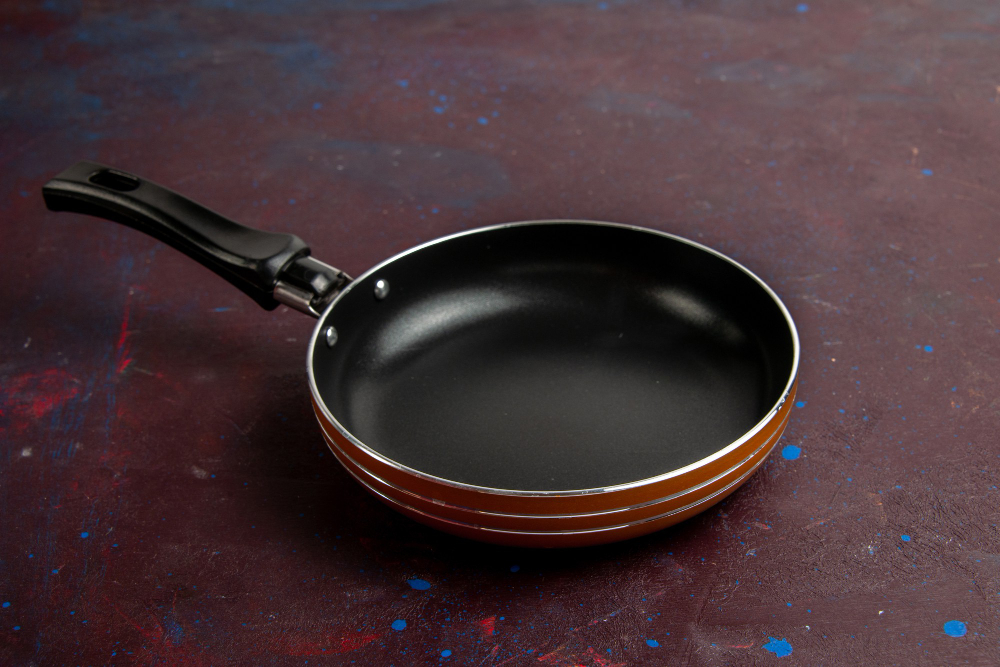
The hanging use is genuine and it was once the main one, because kitchens did not have the storage they have now.
A pan hung from a rail or a hook above the range was immediately available, dried properly between uses rather than sitting wet in a cupboard, and took up no cupboard space in a room that had very little.
That is still a good arrangement and it has fallen out of use mostly because fitted kitchens provided cupboards, and a hanging pan looks like clutter in a room designed to have flat surfaces and closed doors.
The hole stayed because it costs nothing, performs the other two jobs, and because a feature that everybody expects is not removed from a product for a saving of nothing.
Why Some Pans Have a Second Short Handle
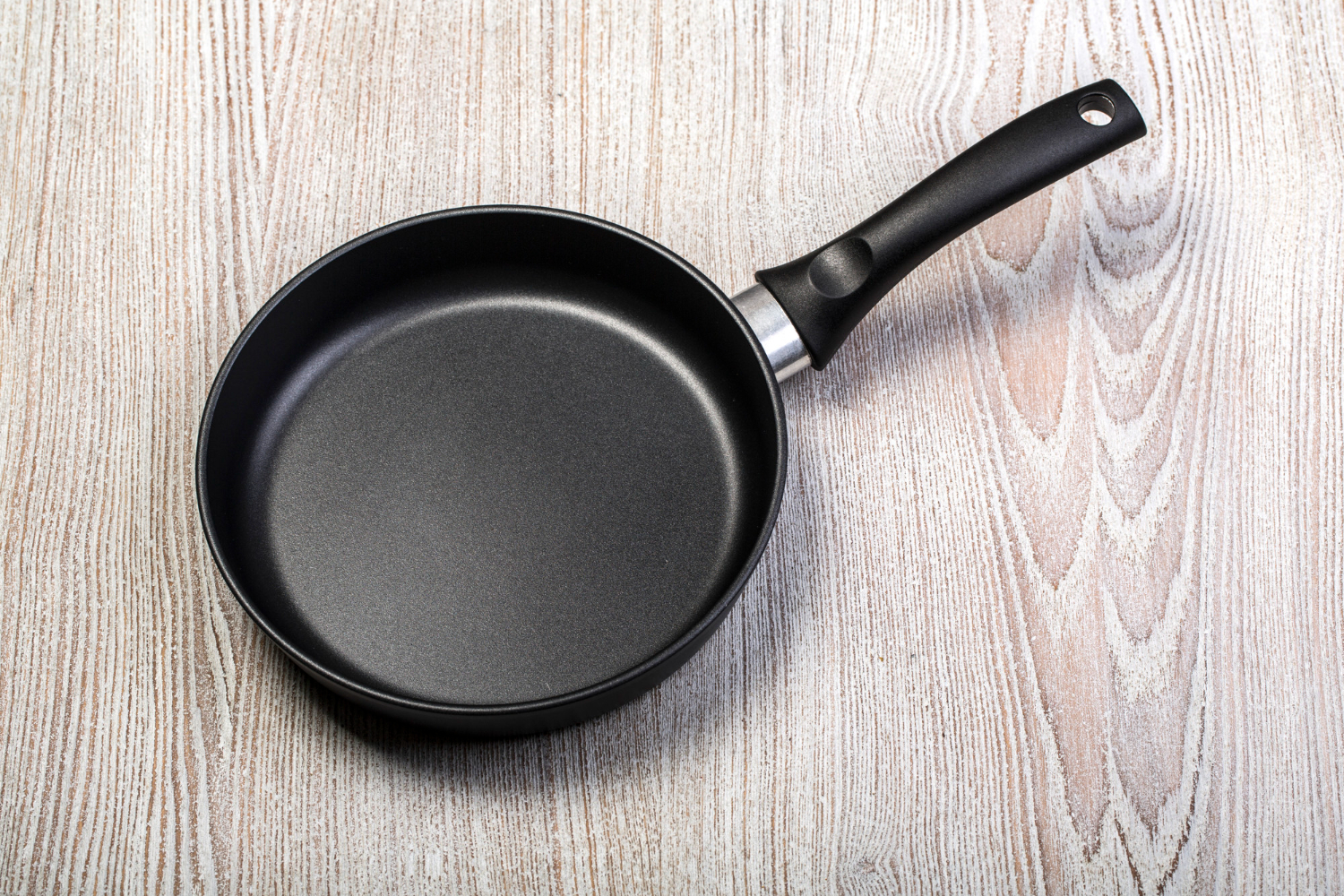
Large pans frequently carry a small loop or stub handle on the opposite side from the main one, and it is there for the same reason the hole is.
A heavy pan lifted by one long handle is a cantilever: all the weight is at one end and all the support is at the other, and the hand at the end of the lever is carrying a load multiplied by the length. That is manageable with an empty frying pan and difficult with a large full one.
A second handle on the far side turns it into a two-point lift, with the weight shared and the pan under control rather than swinging. It also makes the pan liftable out of an oven, where there is no room to use a long handle at all and where it has to come out level.
The helper handle is why large saute pans, casseroles and stockpots have one, and why anybody who has tried to move a full one without it knows immediately what it is for.
It is also the detail that most clearly separates a pan designed for cooking from a pan designed for a shelf display, because it costs money, adds a second joint to make and spoils the clean line of the product – and it is only ever added by somebody thinking about the pan being full.
The Handle Is the Hardest Part of the Pan to Design
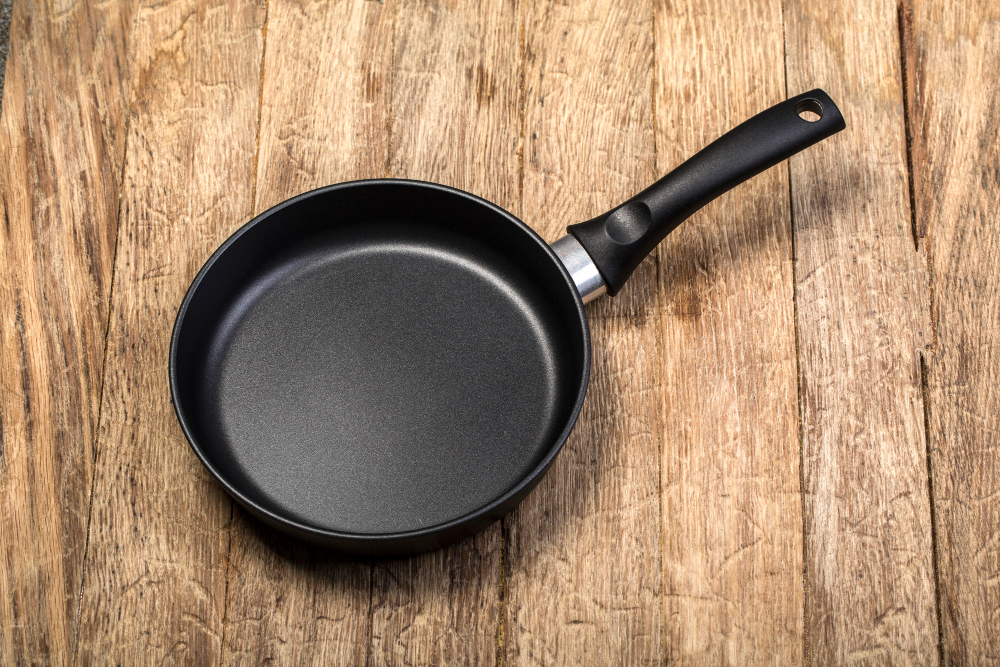
Worth stepping back, because the handle is where most of the engineering compromise in a pan sits and the cooking surface is comparatively simple.
It has to stay cool enough to hold while attached to something at frying temperature. It has to survive an oven if the pan is oven-safe, which rules out most materials that would insulate well. It has to be attached strongly enough to carry a heavy pan full of hot liquid, through a joint that does not create a crevice food can get into, and that does not transmit too much heat.
Riveted handles are strong and leave rivet heads inside the pan, which collect residue. Welded handles leave a clean interior and are harder to make strong. Screwed handles can be replaced and work loose over years.
Hollow and tubular handles stay cooler because the metal path is thin and the air inside is an insulator. Cast handles are strong and conduct well, which is the wrong direction. Wood and phenolic stay cool and cannot go in a hot oven.
Every pan you own represents somebody choosing a different point in that set of trade-offs, and the handle is where you can read the choice rather than anywhere on the cooking surface.
The Hole Also Tells You How the Pan Was Made
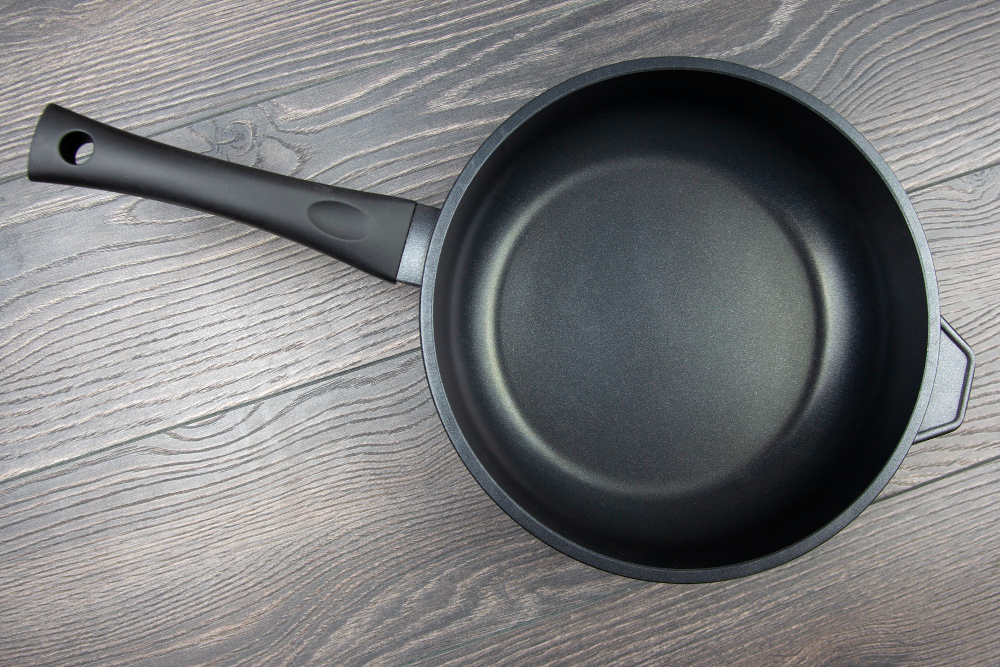
There is a quick diagnostic available from looking at the end of the handle, and it takes a second.
On a pan whose handle is pressed or stamped from sheet, the hole is punched, and the edge of it will be slightly rounded on one face and slightly sharp on the other, because that is what punching does to sheet metal – the material is pushed through and tears on the exit side.
On a cast handle the hole is formed in the mould, so both faces are the same and the edges are softened in the same way as every other edge on the casting.
On a tubular handle the hole is usually in a separate flattened end piece, welded or crimped on, and you can see the join.
None of that tells you whether a pan is good. It tells you how it was made, which is a different and more interesting question, and it is one of the few places on a finished product where the manufacturing process is still visible after everything has been polished.
Most consumer goods are finished specifically to hide this. A pan handle is one of the places where nobody bothered, because nobody looks at the end of it.
Why the Hole Is Nearly Always the Same Shape
One last detail, which is that the hole is usually an elongated slot rather than a round hole, and usually oriented along the handle rather than across it.
A slot along the handle removes metal from the middle of the section while leaving material on both sides, which keeps the handle stiff in the direction it is loaded – a handle bends downward under the weight of the pan, and the strength that resists that comes from the top and bottom edges rather than the centre.
A round hole, or a slot across the handle, would remove material from exactly the places that are carrying the bending load.
So the shape is a structural decision and the orientation is a structural decision, and both of them are invisible unless you know what a beam in bending is doing.
Which makes the hole in a pan handle a surprisingly complete little piece of design: thermal management, a second grip, storage, and a slot shaped and aligned so that removing the metal costs almost nothing in strength.
Look at the handles in your own kitchen and compare a cheap pan with a good one.
The slot will be a different shape, and it will not be an accident.
And if you have a pan whose handle gets too hot to hold, look at whether it is solid or hollow and how wide the metal is where it meets the pan body. That junction is where the heat is coming through, and it is the one dimension that separates a handle you can grab from one you need a cloth for.
Like our content? Follow us for more.
