

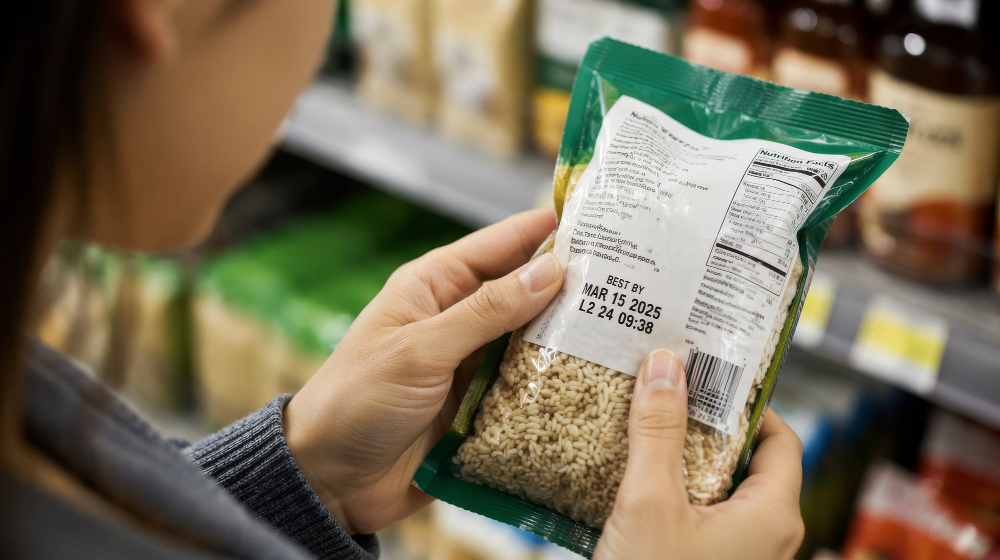
There are two different kinds of date printed on food, they mean entirely different things, and the difference is not intuitive from the wording.
One is a manufacturer’s estimate of how long the product stays at its best. The other is a safety limit set because the food can become dangerous in a way you cannot detect.
Conflating them costs households a great deal of money and produces an enormous quantity of waste, and it also means that the date that genuinely matters gets treated with the same casualness as the one that does not.
The Quality Date Is an Opinion
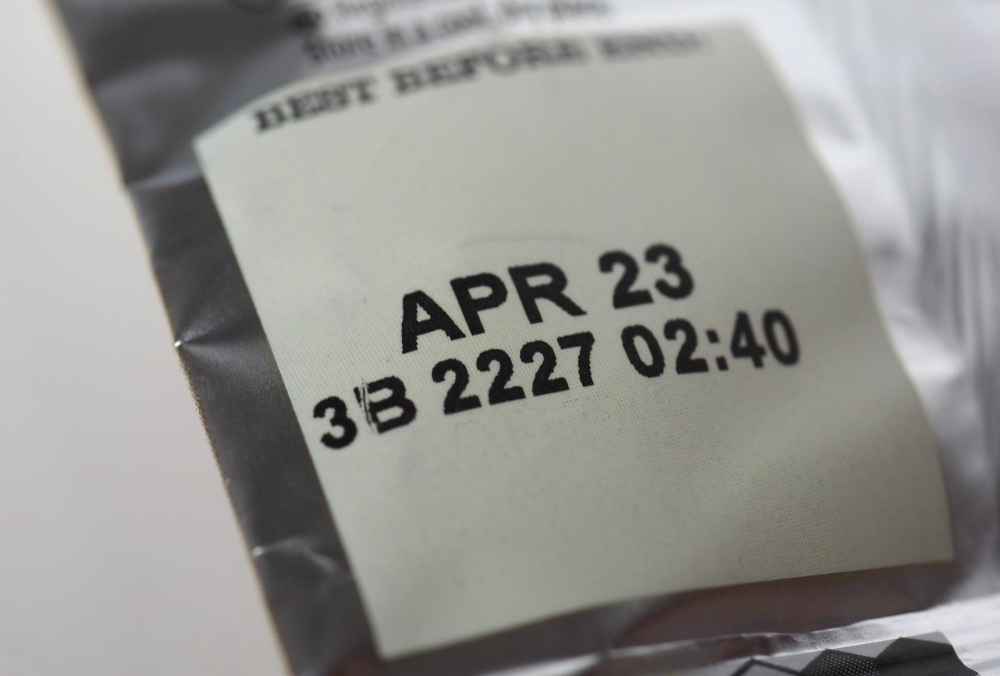
A best-before type date is the manufacturer’s assessment of how long the product keeps its intended texture, flavour, colour and nutritional content when stored as directed.
It is not a safety threshold and nothing happens on that day. A product past it may be slightly staler, softer, less crisp, duller in colour, or entirely indistinguishable from the same product the day before.
It is also an estimate with commercial incentives attached. A manufacturer who sets it too far out risks customers encountering a disappointing product and blaming the brand; one who sets it too close loses shelf life and sales. The resulting date tends to be conservative, because the cost of a disappointed customer is higher than the cost of a short date, and because the manufacturer has no way of knowing how any individual household stores anything.
Dried pasta, rice, tinned goods, flour, sugar, dried pulses, honey, vinegar and a great many other staples carry these dates and remain perfectly good long past them. For most of them the limiting factor is not spoilage at all but gradual loss of quality – stale, flat, less fragrant – and your own senses are a better guide than the printing.
Like our content? Follow us for more.
The Safety Date Is Not an Opinion
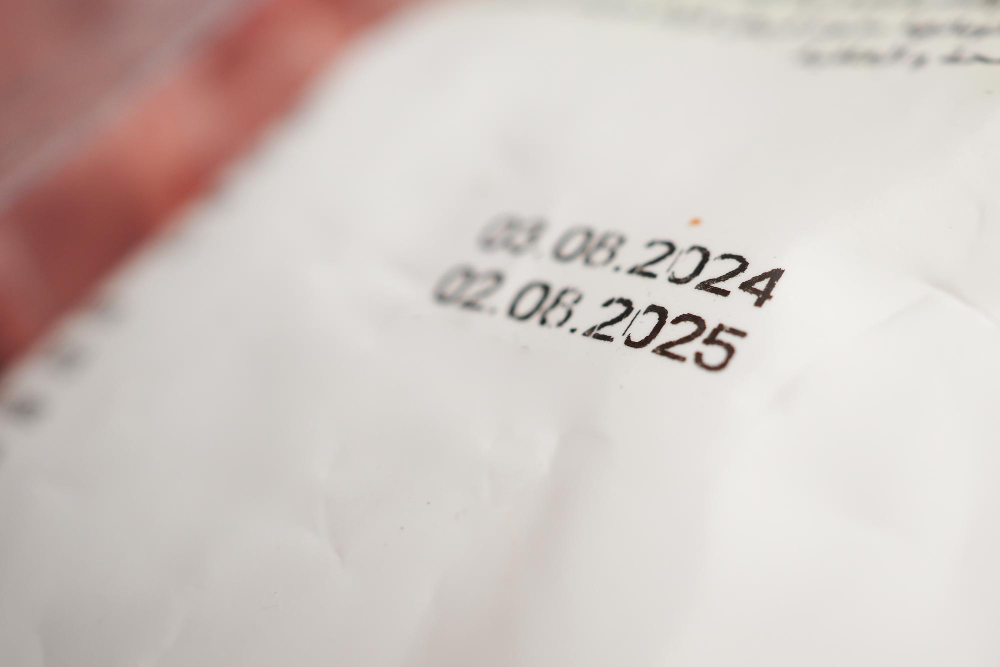
A use-by type date is a different thing entirely, applied to foods that support the growth of organisms capable of making you ill.
The critical point, and the one that makes the whole distinction necessary, is that this kind of spoilage is frequently undetectable. Food carrying a dangerous level of certain bacteria can look normal, smell normal and taste normal. The senses that work perfectly well for telling you that bread has gone stale or that milk has turned do not work here, and that is precisely why a date exists instead.
So the usual household method – look at it, smell it, make a judgement – is sound for quality dates and unsound for safety dates, and it fails in the one case where failure matters.
Chilled ready-to-eat foods, cooked meats, prepared salads, soft cheeses, fish and similar items carry these dates. The storage instruction printed alongside is part of the date rather than separate from it: the date assumes the product has been kept at the stated temperature throughout, and a product that spent an afternoon in a warm car has had its date invalidated regardless of what is printed.
Freezing is the one thing that genuinely stops the clock, and it has to be done before the date rather than after.
Why the Wording Varies and Why That Is a Problem

The two categories are reasonably well defined. The wording used to express them is not consistent, and that is the source of most of the confusion.
Different places use different terms, and some retailers have added their own phrasings – sell-by and display-until dates, for instance, which are stock rotation instructions aimed at the shop rather than information for the customer, and which have been removed from a great deal of packaging precisely because people were reading them as consumption deadlines.
The result is a customer facing several date formats with no reliable way to tell from the wording alone which type they are looking at. The genuinely useful heuristic is the food itself rather than the label: if it is a dry, tinned, preserved or frozen product, the date is almost certainly about quality. If it is a chilled, fresh, ready-to-eat product that would be unpleasant to leave out of a refrigerator, treat the date as a limit.
That heuristic is imperfect and it is considerably better than reading the words, which vary.
There is a second signal worth using, which is where the product was sitting in the shop. Anything that was in a chilled cabinet is in the safety category by definition – the refrigeration is not a convenience, it is part of how the product is kept within its date. Anything that was on an ambient shelf and is sold sealed is almost certainly in the quality category. That rule costs nothing to apply and is right far more often than the printed wording is clear.
The Date Assumes an Unopened Package
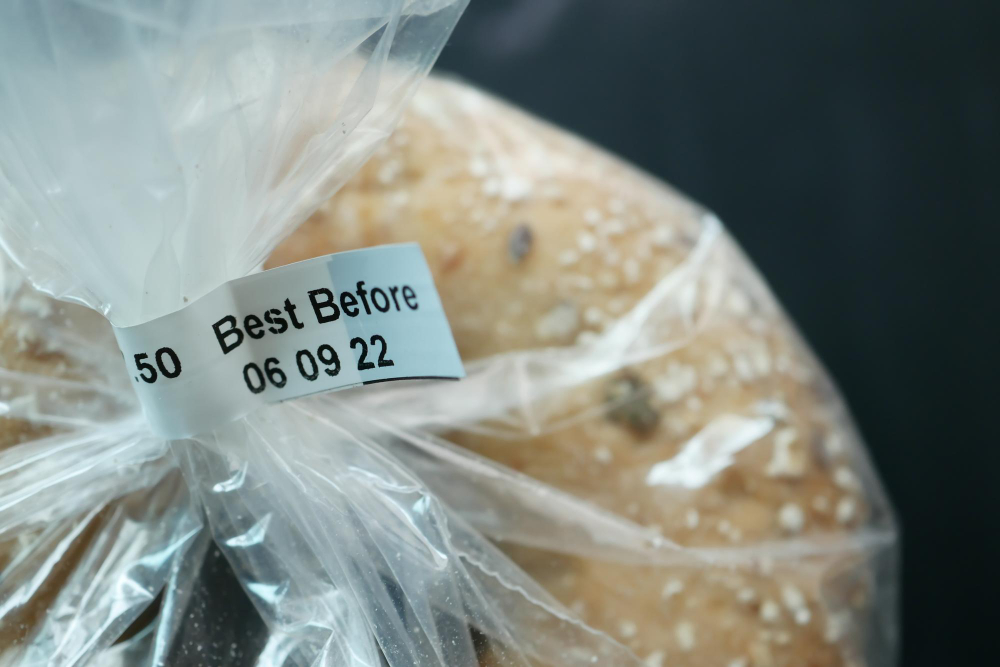
The single most important qualification on any printed date is one that almost no package states clearly: it applies to the product as sealed.
Once a container is opened, the date printed on it stops being the controlling figure. Air, moisture and whatever is on the spoon or the knife have been introduced, and the manufacturer’s estimate was never about that condition. What governs from then on is the separate instruction, usually in much smaller type, saying to consume within a given period after opening and to keep it refrigerated.
That after-opening instruction is the one people ignore most consistently, and it is the one that matters most. A jar with a distant printed date that has been open in a fridge for two months is governed by the smaller instruction, not the large one, and the large one is reassuring precisely when it should not be.
The same applies in reverse to packaging damage. A tin with a dent on a seam, a vacuum pack that has lost its vacuum, a pouch with a puncture – in each case the seal that the date depended on has gone, and the date goes with it.
So the hierarchy is: condition of the seal first, after-opening instruction second, printed date third. Most people run that list exactly backwards, reading the biggest number on the package and stopping there.
The Waste Is Enormous and It Is Mostly the Wrong Date
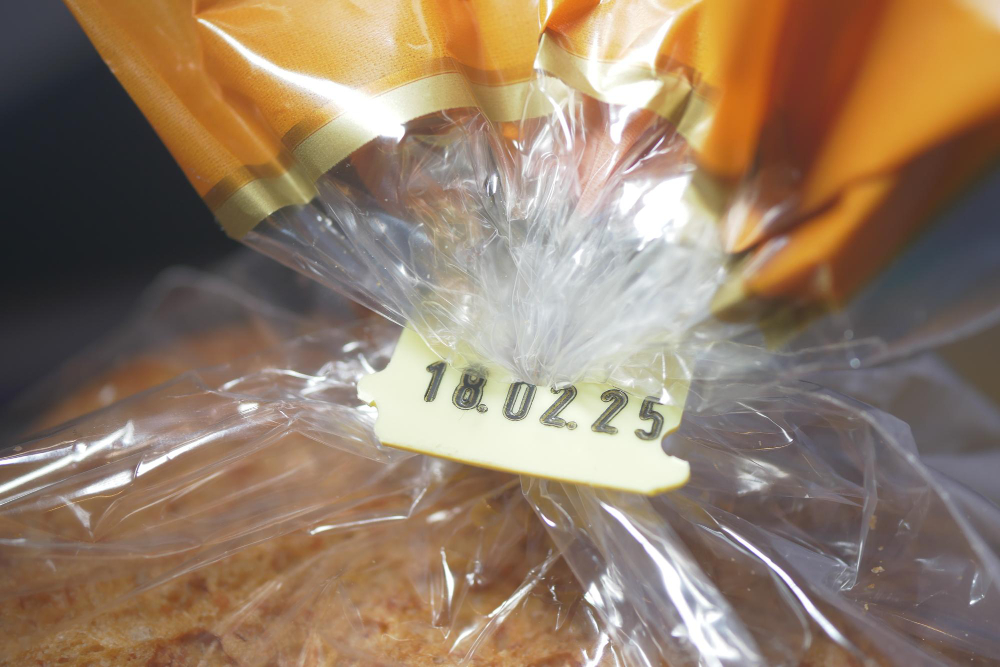
Household food waste is substantial everywhere it has been measured, and date confusion is a significant and well-documented contributor to it.
The pattern is consistent: people discard quality-dated staples that were entirely fine, while being no more careful than before with safety-dated chilled items. The caution is applied to the wrong category, which is the worst possible outcome – the waste happens and the risk is not reduced.
Several food businesses have responded by removing quality dates from products where they add nothing, particularly fresh produce, on the explicit reasoning that a date on a potato encourages people to throw away potatoes that are visibly fine. That change has been contested, not unreasonably, by people who find the date a useful stock-management prompt at home.
What is not contested is the underlying finding: a significant fraction of discarded food is discarded on the strength of a printed date rather than on the condition of the food, and most of those dates were never about safety.
What to Actually Do With This
The practical version is short.
For dry, tinned and preserved goods, treat the date as advisory and judge the food. Most of it is good well beyond, and the failure mode is disappointing rather than dangerous. Store things properly and they last longer than the printing suggests.
For chilled ready-to-eat items, treat the date as a limit, respect the storage instruction as part of it, and do not rely on smelling or looking at it, because that method does not detect the thing the date exists for.
For anything you are not going to get through in time, the freezer resolves it, provided you freeze it before the date rather than after. Almost everything freezes, including a great many things people assume do not – bread, milk, cheese, cooked rice, raw eggs out of the shell, and most leftovers – and the quality cost is usually smaller than the alternative of throwing it out.
And for anything where you are genuinely unsure, the honest answer is that a general article is not the place to resolve it – guidance from a food safety authority is specific, free and written for exactly that question, and the categories above are a framework for thinking rather than a substitute for it.
The one thing worth carrying away: your nose is a good instrument for staleness and a useless one for the hazard the safety date exists to prevent.
That is the entire difference between the two dates.
And the practical consequence is counterintuitive: being more relaxed about one category and more rigid about the other would, for most households, simultaneously reduce waste and reduce risk. Those two goals usually pull against each other. Here they point the same way, because the caution almost everybody applies is being spent on the wrong half of the cupboard.
Like our content? Follow us for more.


