

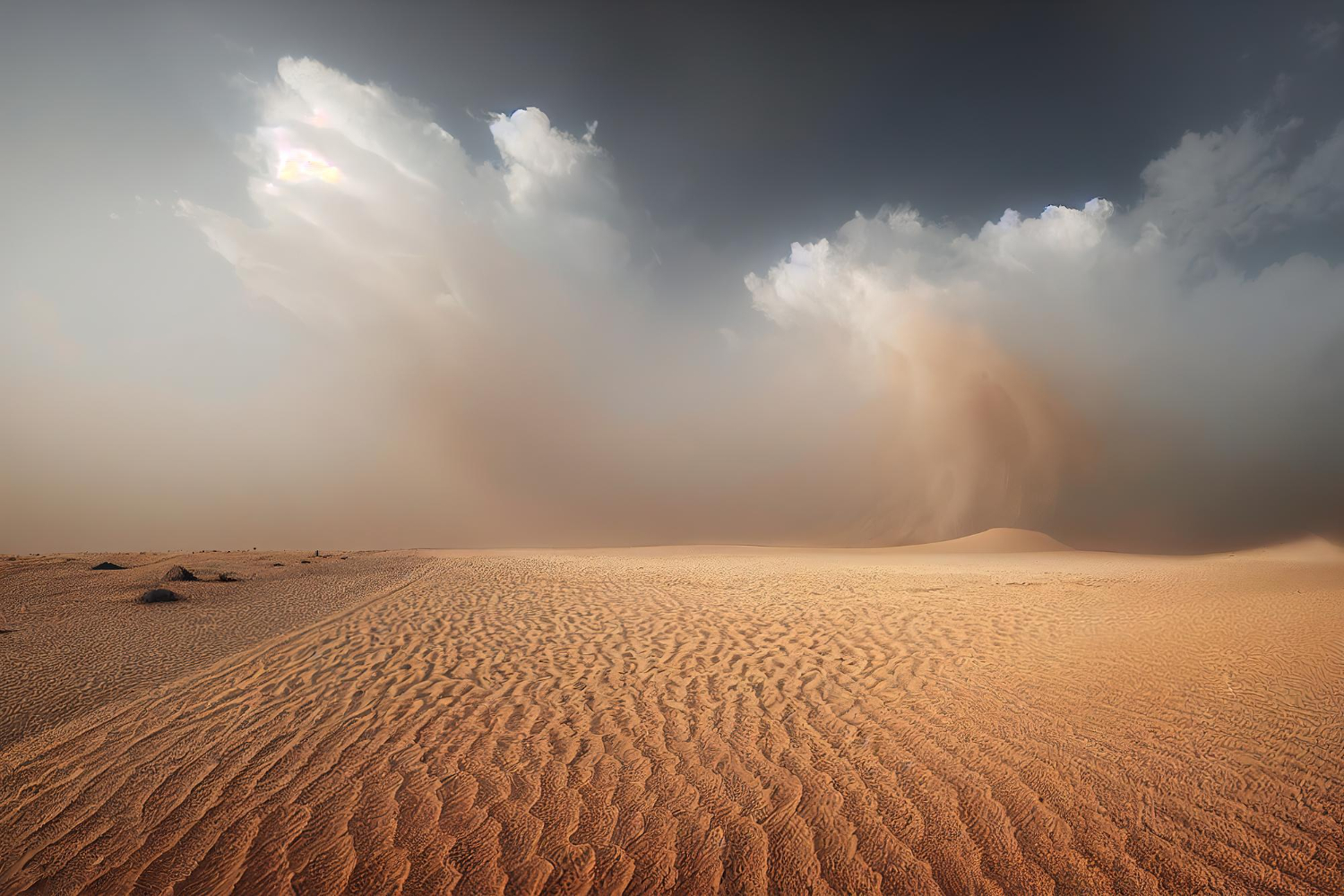
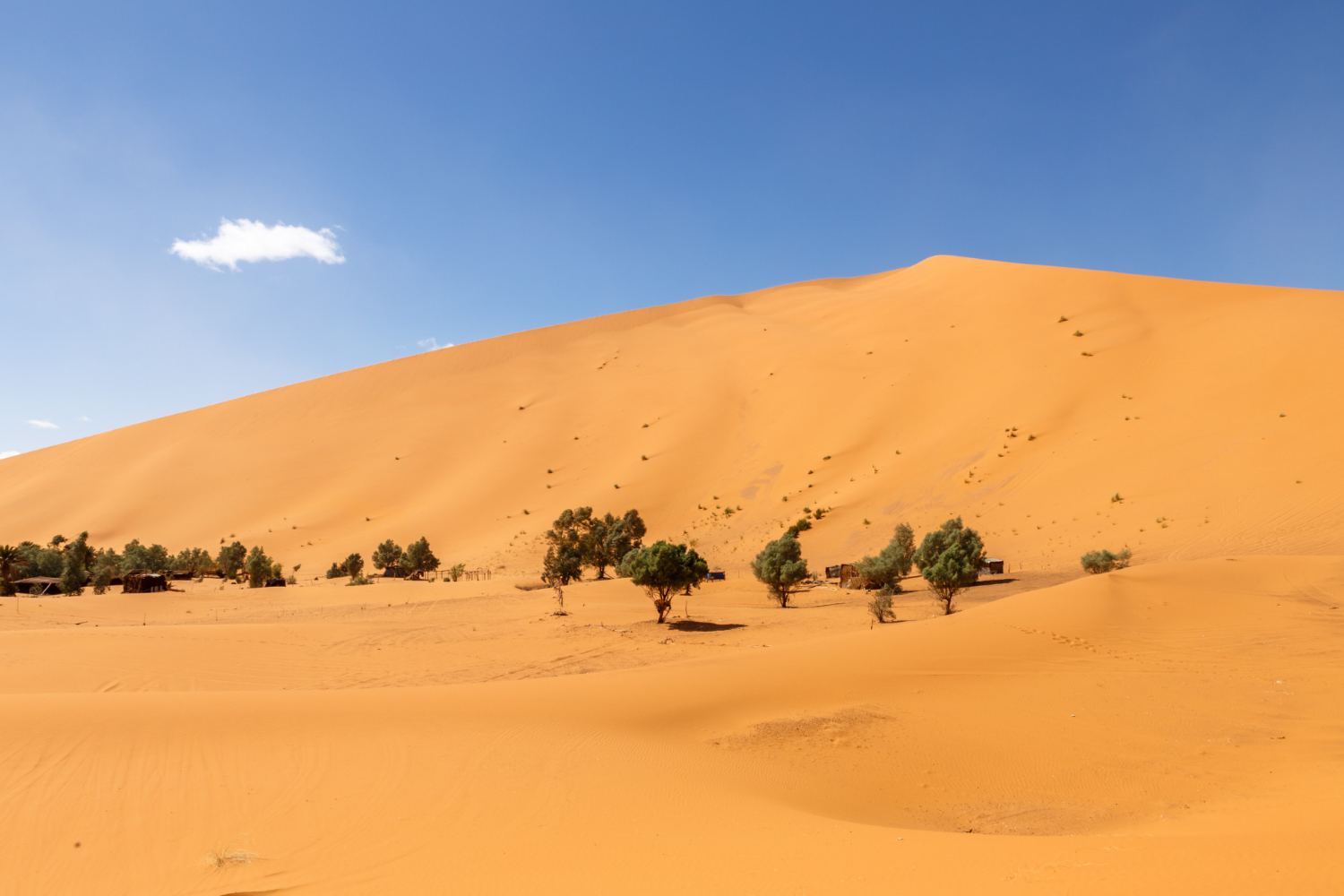
Picture the two places side by side. On one side of the Atlantic, the Sahara: the largest hot desert on the planet, stretching across the northern third of Africa, defined by the absence of water. On the other side, the Amazon: the most biologically productive rainforest on Earth, a dense green mass covering much of northeastern South America, defined by an abundance of it. Two landscapes with, apparently, nothing in common and no connection.
They are, in fact, linked by a river of dust that has been blowing across the ocean for thousands of years. Every year, somewhere between 180 and 200 million tons of fine particulate matter is lifted off the Sahara by the trade winds and carried west at altitude. A portion of it, roughly 27.7 million tons, falls out over the Amazon basin. And within that dust is a quantity of phosphorus that turns out to match, almost exactly, the amount the rainforest loses each year to rain and flooding. Here is the story of one of the more satisfying discoveries in Earth science, and of how scientists finally managed to measure a river made of dust.
The Rainforest’s Hidden Problem
The starting point is a fact about the Amazon that surprises most people: its soil is poor. Extremely poor. The lushness above ground disguises the fact that Amazonian soils are ancient, deeply weathered, and chronically short of the nutrients that plants need.
The reason is the rain itself. The nutrients in the system are not sitting in the soil, waiting to be used; they are locked up in the living plants. When leaves and organic matter fall and decompose, the nutrients they release are absorbed almost immediately by the roots around them, in a tight, fast, closed loop. But that loop leaks. Heavy rainfall continuously washes some of those nutrients out of the soil and into streams and rivers, which carry them out of the basin altogether and eventually into the Atlantic. One description compares it to a slowly leaking bathtub.
The nutrient that matters most in this leak is phosphorus. It is essential for plant proteins, growth, and photosynthesis, and the productivity of the Amazon is limited by phosphorus more than by any other element. Which sets up a real puzzle: if the rainforest has been losing phosphorus to its rivers for millions of years, and its soils were never rich in it to begin with, why has its productivity not simply wound down? Something has to be replacing it.
Like our content? Follow us for more.
A Suspicion That Went Back Centuries
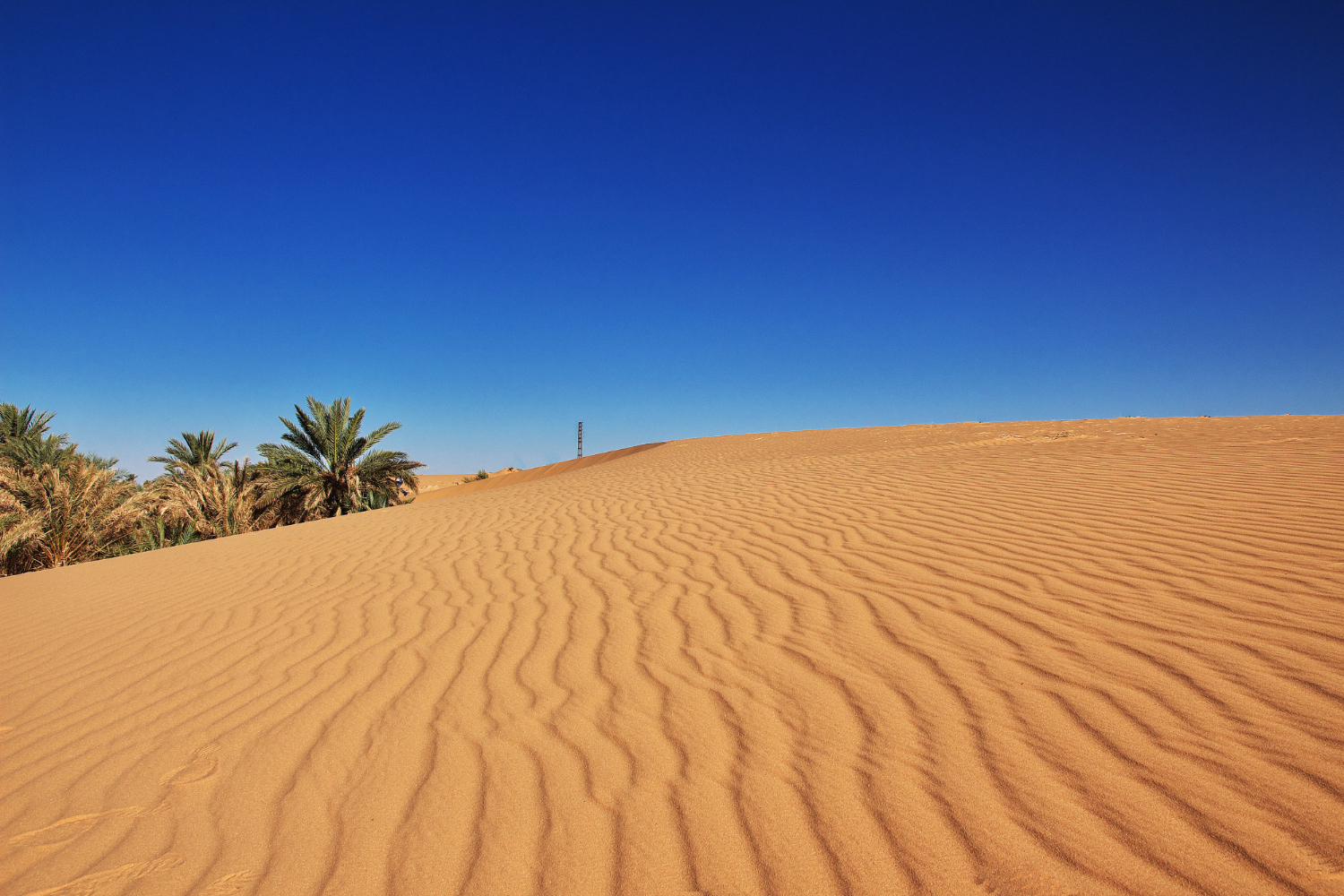
The idea that African dust reaches the Americas is not new. Sailors crossing the mid-Atlantic reported reddish haze in the air for generations. Charles Darwin, aboard the Beagle in 1833, collected dust that fell on the ship hundreds of kilometers from any land and took an interest in where it had come from.
So the phenomenon itself was known. What nobody could do was measure it. Dust is a truly difficult thing to quantify at scale. It is diffuse rather than concentrated, it travels at multiple altitudes simultaneously, it disappears into cloud cover, and it spreads across thousands of miles of open ocean where nobody is standing with instruments. Ground stations, like those operating in Barbados and elsewhere, can catch what happens to fall near them, which tells you something but not the total. For decades the trans-Atlantic dust transport was understood in principle and unmeasured in practice, which meant its actual significance for the Amazon was guesswork.
Measuring a River of Dust
The breakthrough came from orbit, using an instrument called CALIPSO, a joint mission between NASA and the French space agency. Rather than photographing dust from above as a flat image, CALIPSO could measure it in three dimensions, profiling the entire vertical column of the atmosphere and detecting where dust was, at what altitude, and in what quantity.
The resulting numbers turned a vague phenomenon into a specific accounting. An average of roughly 182 million tons of dust leaves the African continent each year. It travels around 1,600 miles across the Atlantic, losing material along the way as some drops out or is washed down by rain. By the time the plume reaches the longitude of eastern South America, around 132 million tons remain airborne. Of that, approximately 27.7 million tons falls to the surface over the Amazon basin, a quantity the research team illustrated as being enough to fill more than a hundred thousand semi trucks. The dust does not stop there either; roughly 43 million tons continues on to settle over the Caribbean Sea. This is the largest transport of dust anywhere on the planet.
The atmospheric feature that carries it has a name, the Saharan Air Layer, a mass of dry, dusty air that forms over the desert and rides west across the ocean.
The Number That Made the Story
The measurement that made this famous was not the dust total. It was the phosphorus.
Working from chemical analyses of dust collected at the source and at ground stations, researchers calculated how much phosphorus is contained in the material reaching the Amazon. The answer came to roughly 22,000 tons per year. That is a tiny fraction of the total dust mass, about 0.08 percent, which sounds negligible until you set it against the other side of the ledger.
The Amazon loses phosphorus to runoff and flooding at a rate that current estimates place very close to the same figure: around 22,000 tons per year. As the study’s lead author put it, the phosphorus arriving from Saharan dust is about the same amount as that lost from rain and flooding. The books balance. A rainforest bleeding phosphorus into its rivers is topped back up, annually, by dust from a desert on the far side of an ocean. It is the kind of closed account that Earth scientists rarely get: a specific desert, a specific wind pattern, a specific satellite, and a specific rainforest, connected by a single matching number.
Where the Dust Comes From
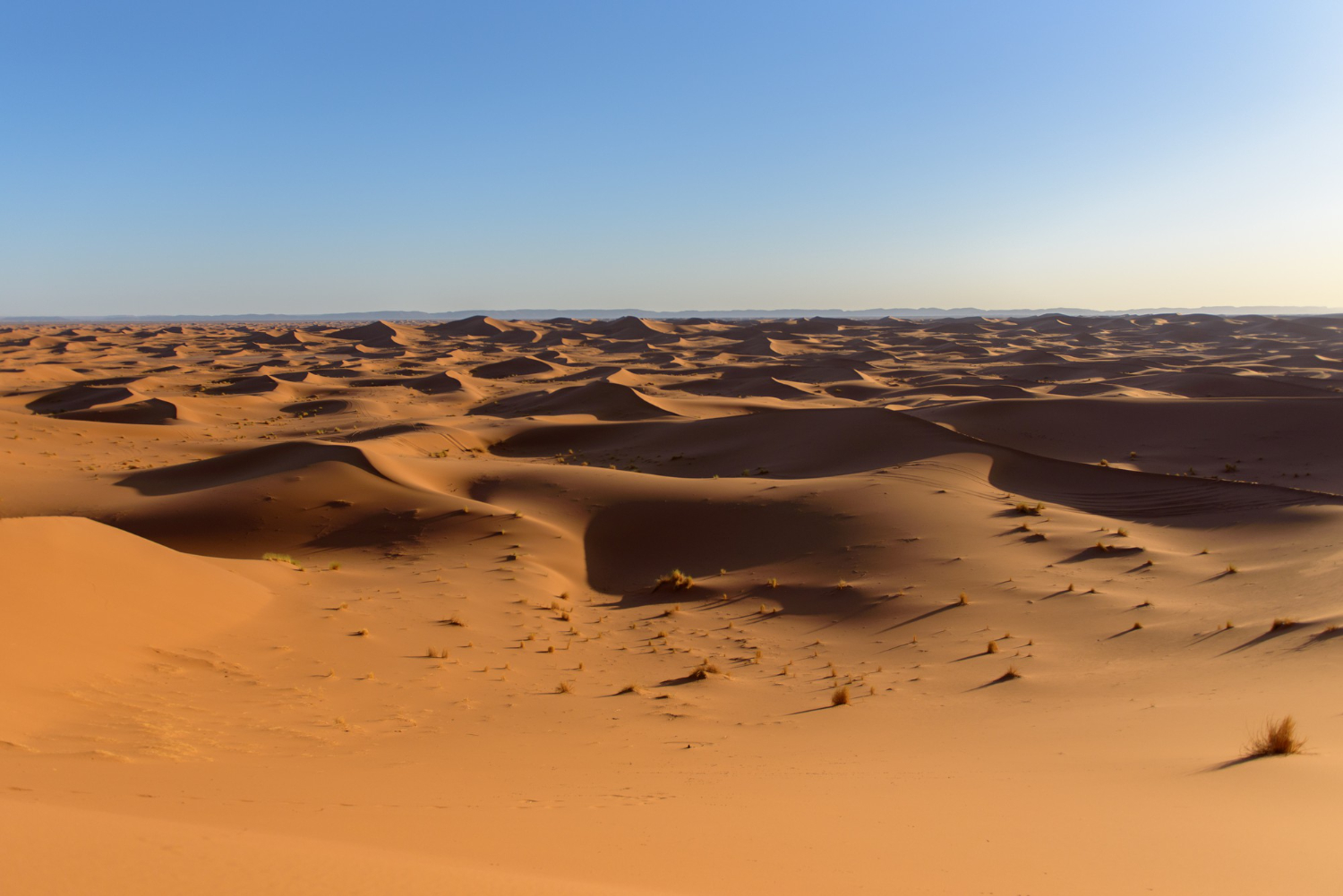
The phosphorus in this dust does not come from sand. Sand is largely silica and nutritionally uninteresting. It comes from biological sediment, and tracing its origin leads to one of the more evocative details in the whole story.
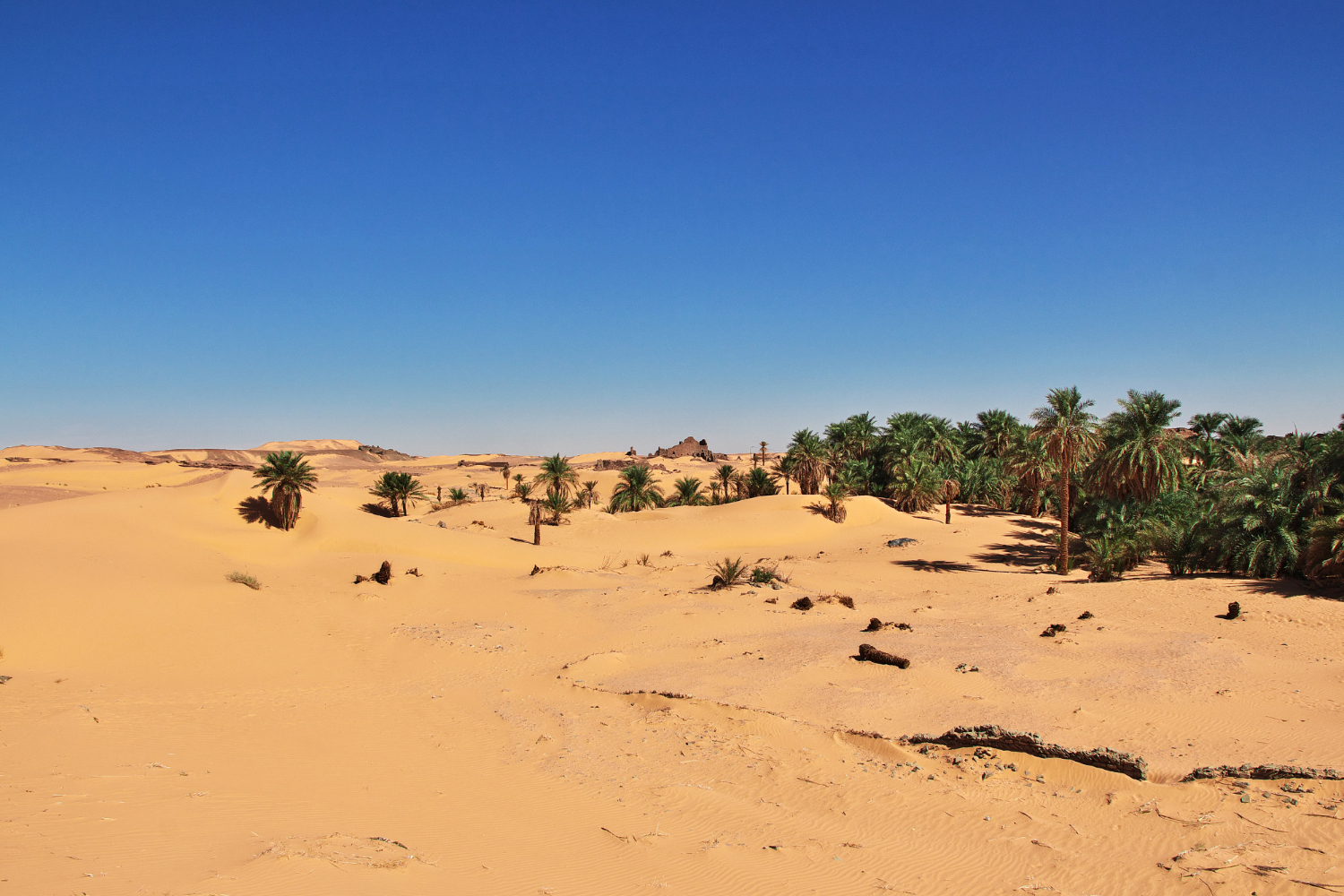
Much attention has focused on the Bodélé Depression, a dried-up lake bed in northern Chad on the southern edge of the Sahara. Around 8,000 years ago this was the floor of Lake Mega-Chad, an enormous inland sea that existed during the period when the Sahara was green, covered in savannah, wetlands and lakes. That lake teemed with diatoms, single-celled algae with silicate shells, and other phosphorus-rich microorganisms. As they died, their bodies settled to the lake bed and accumulated over centuries into thick layers of phosphorus-rich sediment. When the lake dried, that sediment was left exposed as a fine, pale powder called diatomite. Trade winds funnel between two mountain ranges and accelerate across the exposed bed, lofting the powder kilometers into the air.
So the fertilizer reaching the Amazon is, quite literally, the remains of algae that lived in an African lake during the last green phase of the Sahara.
One important caveat belongs here. A 2006 analysis estimated that the Bodélé, despite being roughly half a percent of the Sahara’s area, supplied around half the mineral dust reaching the Amazon, and that framing dominated coverage for about fifteen years. Later work has challenged it, with a 2020 paper arguing directly against the Bodélé being the primary source of the fertilizing dust. What is not disputed is that the Bodélé is the single most productive dust source on the planet. Its exact share of the Amazon’s supply is an open question.
Why This Changes How You Picture the World
The satisfying thing about this research is not just the numbers; it is what the numbers do to your mental image of how the planet works.
We tend to picture ecosystems the way textbook diagrams present them: as bounded units, each one a self-contained system with its own inputs and outputs. The Amazon in that framing is a South American rainforest, sustained by South American rain falling on South American soil. The measurement of the dust flux says otherwise. The Amazon is partly a Saharan forest, held together by a nutrient stream that originates on another continent, crosses an ocean, and has probably been doing so for at least several thousand years and quite possibly far longer.
It is worth adding that this work was never really about dust and the Amazon alone. It is part of a broader effort to understand the role of dust in the Earth system as a whole, since airborne dust influences temperature, cloud formation, and ocean chemistry in ways researchers are still quantifying.
But the image is what stays with you. A wind picks up powdered algae from the floor of a lake that dried out thousands of years ago in Chad, lifts it into the upper atmosphere, and carries it 1,600 miles across open ocean to fall as fertilizer on the most productive forest on Earth, in an amount that happens to match what that forest loses each year. Nobody designed it. It simply is the case, and it has been running steadily for longer than there have been people to notice.
Like our content? Follow us for more.
