In the Southern Hemisphere summer of 1997, a team from the National Oceanic and Atmospheric Administration was doing routine work: monitoring an array of underwater microphones, or hydrophones, positioned to listen for seafloor volcanoes and earthquakes in the South Pacific. The equipment was a legacy of Cold War submarine detection, repurposed for science, and the researchers knew the ordinary catalogue of ocean noise well.
What they recorded that summer was not in the catalogue. An enormous ultra-low-frequency sound, picked up off the southern coast of South America, powerful enough that two hydrophones separated by nearly 3,000 miles both detected it clearly. Sped up for human ears it produced a rising, sliding tone, and someone gave it the informal name that stuck: the Bloop.
It became, for a while, the loudest unidentified sound ever recorded underwater, and it took eight years to explain. In the interval, the vacuum filled with speculation ranging from military exercises to an enormous undiscovered creature, and the Bloop acquired a cultural life well beyond oceanography. Here is what it actually was.
What Made It So Strange
Two features of the recording made it a real puzzle rather than a routine unknown.
The first was volume. Sound travels efficiently through water, but for a signal to be picked up clearly by instruments 3,000 miles apart, it must be extraordinarily loud at the source. That immediately ruled out the obvious biological candidates. A blue whale, the largest animal that has ever lived, produces calls audible over perhaps a few hundred miles. The Bloop was heard across thousands. Any animal producing it would have to be many times larger than anything known to science.
The second was character. Ocean scientists are familiar with what geological events sound like: earthquakes, underwater volcanic activity, and the movement of the seafloor all have recognizable acoustic profiles. The Bloop did not match them. It undulated in frequency in a way that was faintly reminiscent of whale vocalizations, giving it what researchers described as an oddly lifelike quality.
That combination, too loud for any animal, too organic-sounding for standard geology, is exactly the kind of thing that generates decades of speculation.
Like our content? Follow us for more.
Eight Years of Theories
With no confirmed explanation, the field of candidates stayed wide open, and researchers themselves worked through a long list. Was it secret military exercises? Ship engines? A fishing vessel’s winch? A giant squid? An unknown whale species? Something else entirely?
The public conversation went further and faster. The statistic that roughly 95 percent of the ocean remains unexplored was cited frequently, and not unreasonably: if we have surveyed so little of it, the argument ran, how confident can we be about what lives down there? Enthusiasts calculated the approximate size an animal would need to be in order to produce the Bloop, and the resulting figure was enormous.
The speculation acquired a literary dimension too. Listeners noted that the Bloop’s approximate origin point was not enormously far from the fictional location of a sunken city in a well-known work of early twentieth-century weird fiction, home to a tentacled monster of cosmic proportions. This was always offered as a joke, but it was an irresistible one, and it did a great deal to cement the Bloop’s reputation as the ocean’s spookiest recording.
It is worth being fair to the scientists here. NOAA researchers were not chasing monsters; they were studying seafloor seismic activity and had an anomalous recording they could not yet place. The monster framing came from outside, though the agency’s own inability to rule it out definitively for several years gave it room to breathe.
Following the Sound South
The resolution came through persistence rather than a single breakthrough. Researchers at NOAA’s Pacific Marine Environmental Laboratory continued deploying hydrophones over the following years, gradually extending coverage closer and closer to Antarctica as part of ongoing seafloor monitoring.
As those instruments went in, they began recording sounds that looked remarkably like the Bloop. Not similar in a general way, but matching in acoustic fingerprint, with spectrograms, the visual representations of how a sound’s frequencies change over time, that closely resembled the 1997 recording. And these new sounds had an identifiable source.
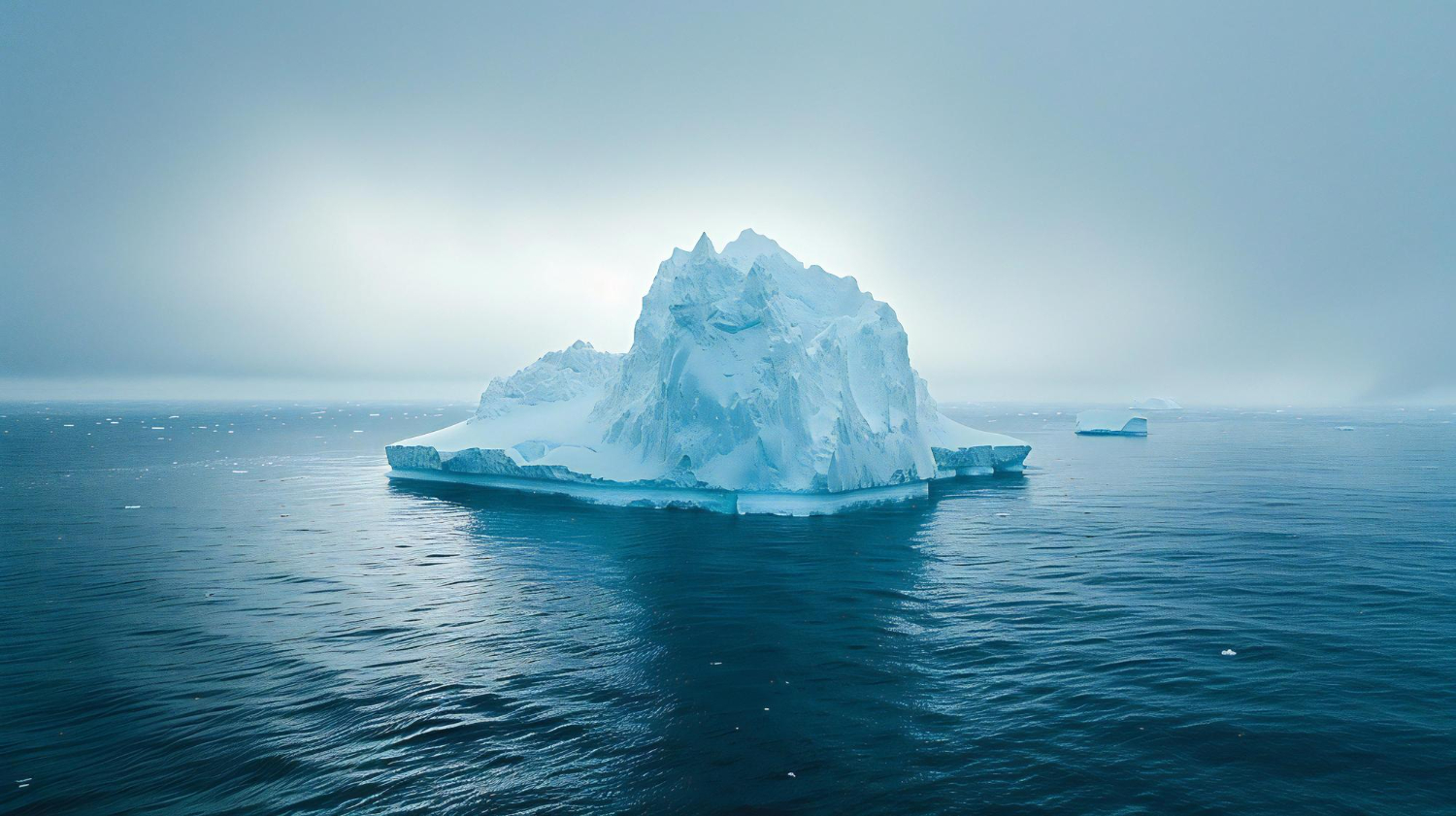
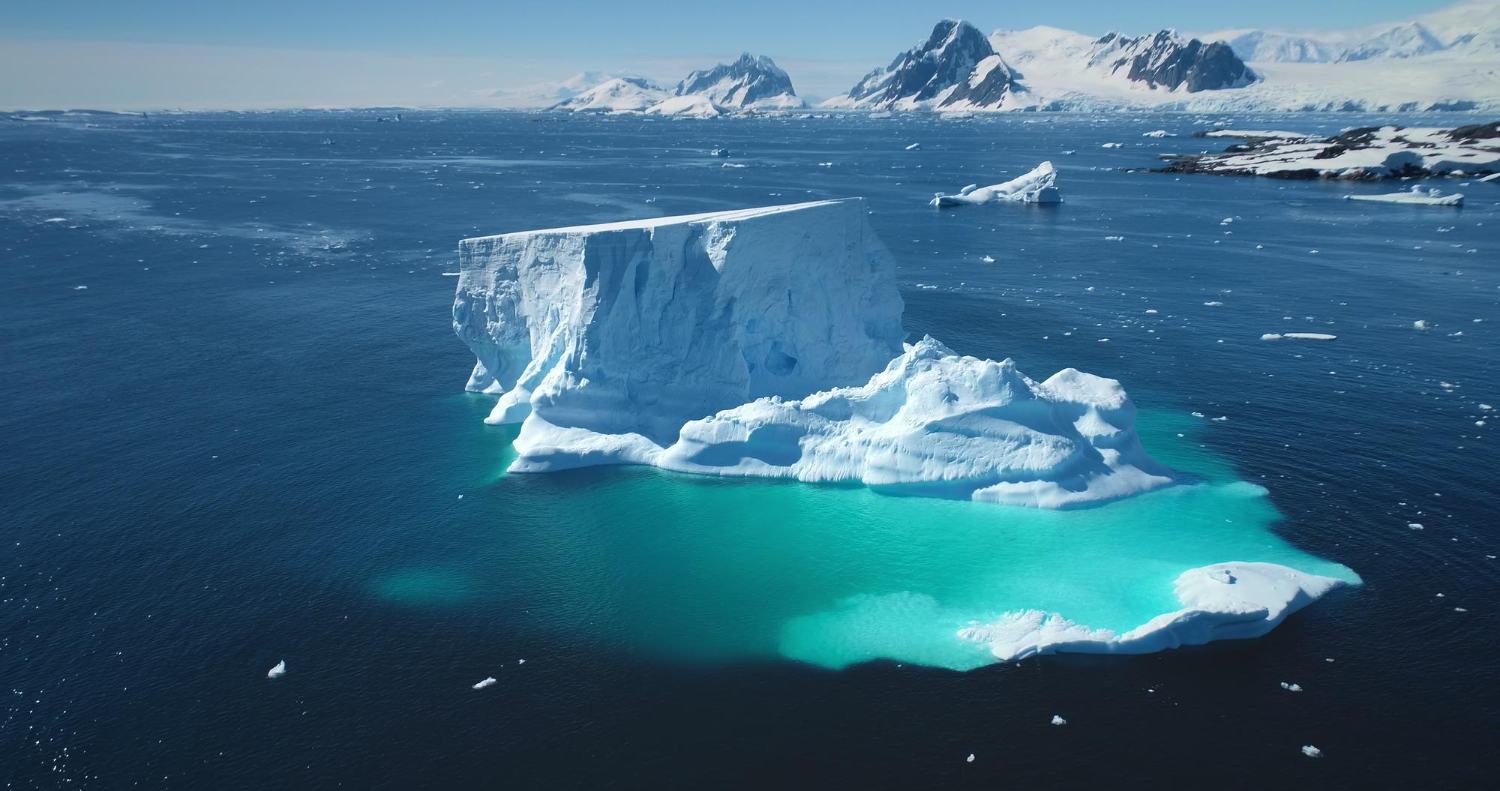
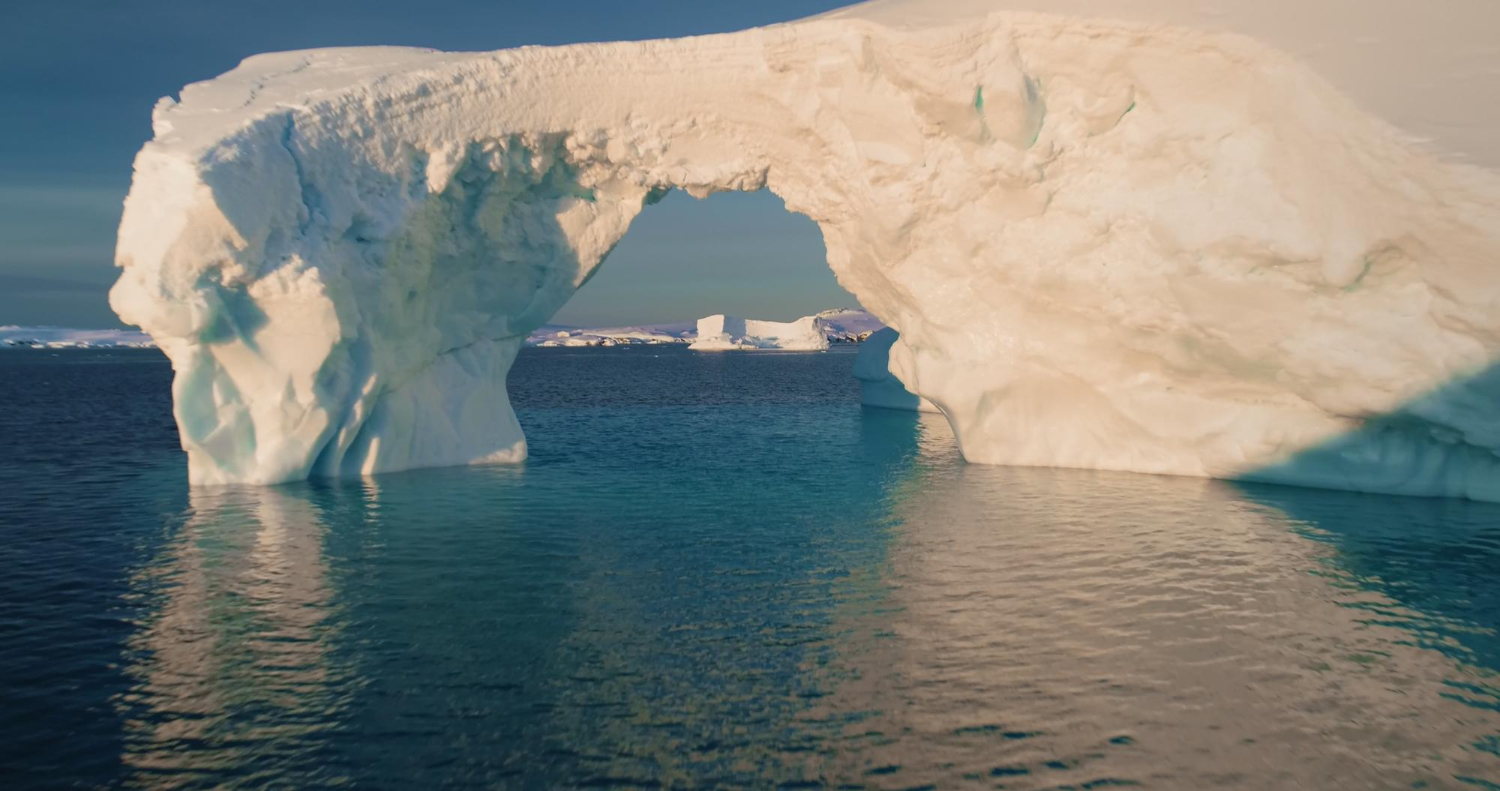
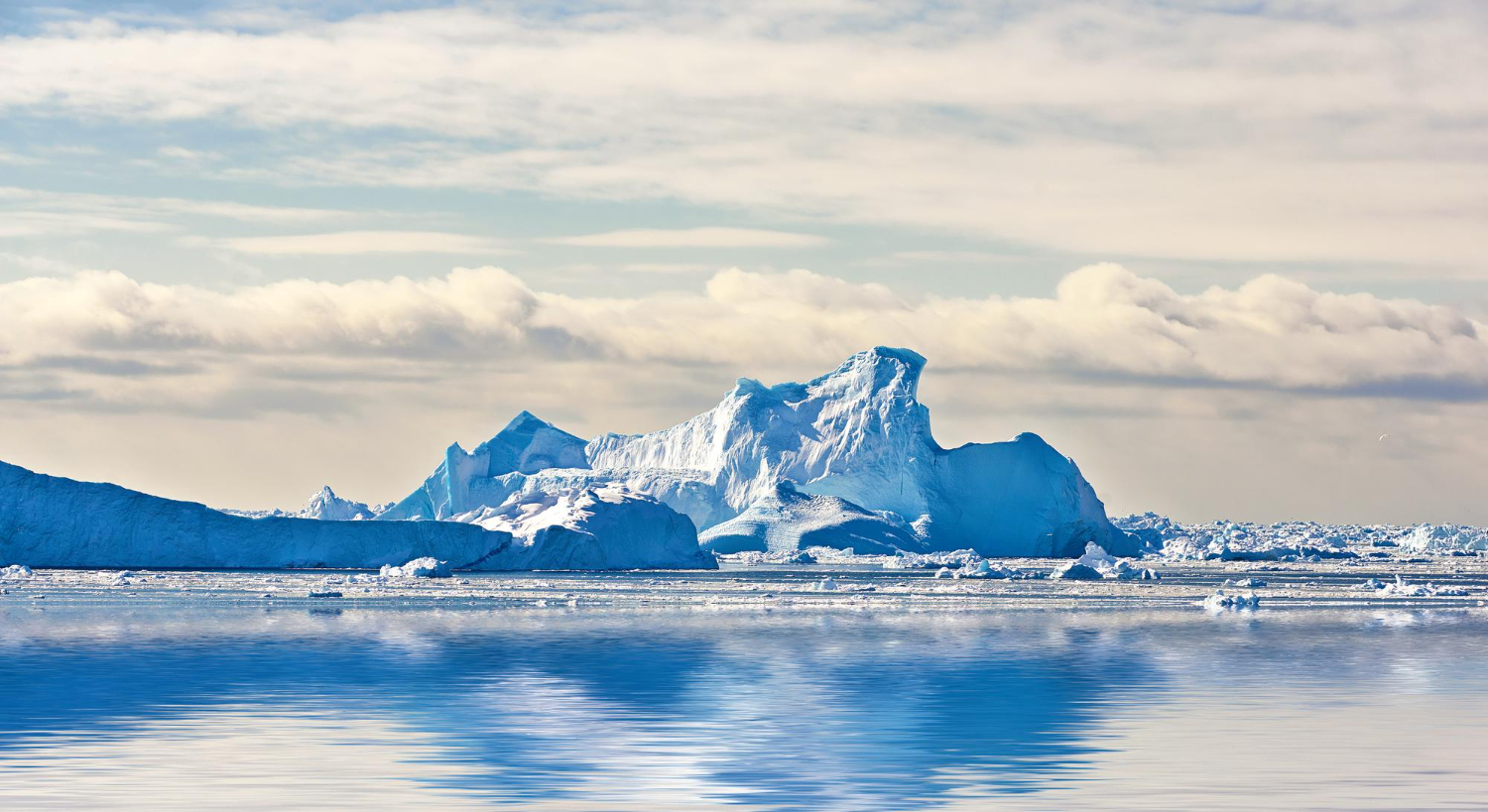
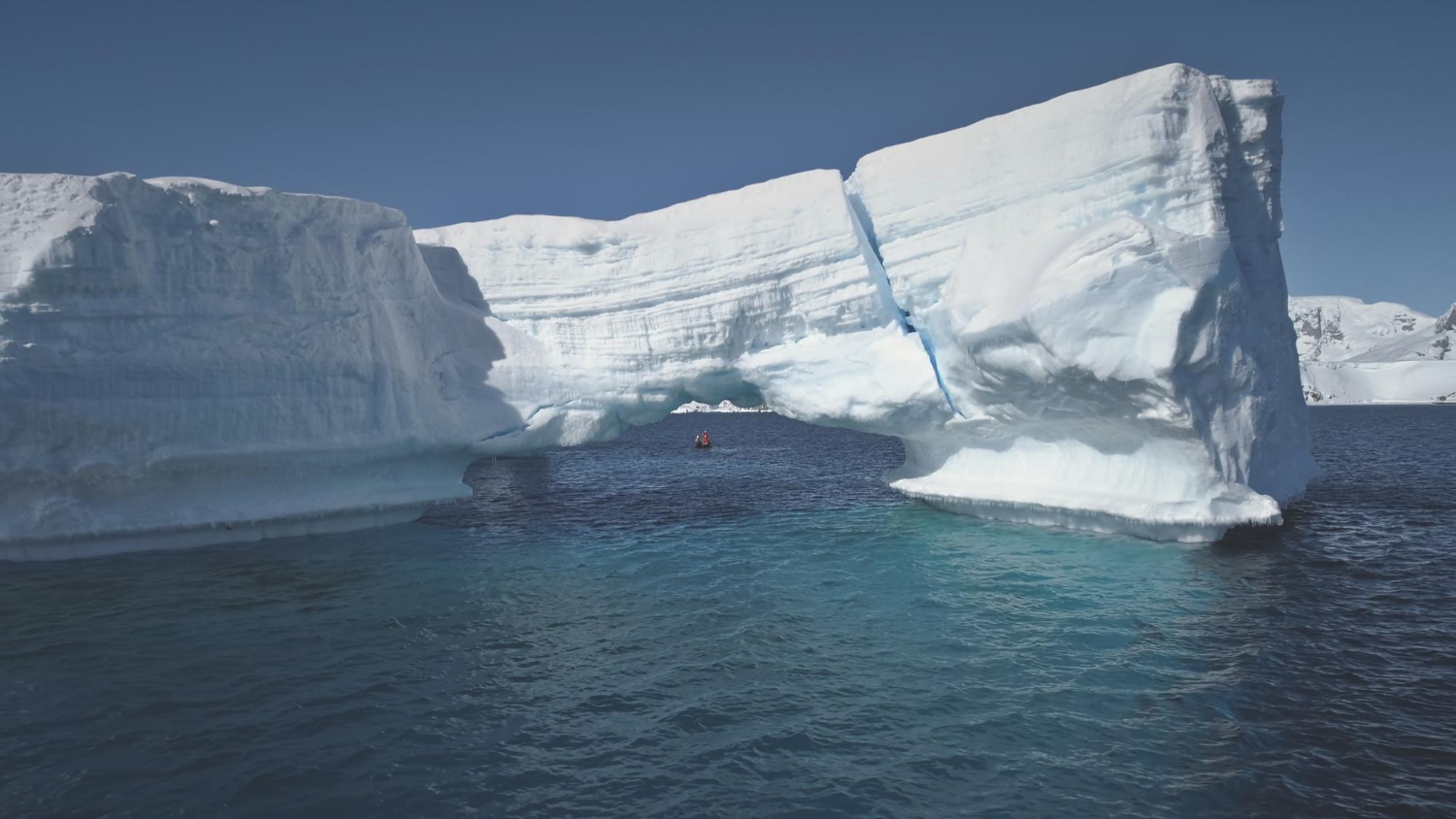
In 2005, NOAA concluded that the Bloop was consistent with an icequake: the sound of a large iceberg cracking and fracturing as it breaks away from an Antarctic glacier. The agency’s own summary is direct about where the answer was found: it was on Earth’s southernmost landmass that they finally located the source of those thunderous rumbles from the deep.
How You Listen to an Ocean
The instruments that caught the Bloop deserve a note of their own, because they explain how a sound from Antarctica was recorded off South America in the first place.
Sound behaves very differently in water than in air. It travels roughly four times faster, and low frequencies in particular can propagate for enormous distances with little loss of energy. The ocean also contains a layer, at a certain depth, where temperature and pressure combine to channel sound waves horizontally rather than letting them disperse, effectively forming a natural waveguide that can carry a signal across an entire ocean basin.
The hydrophone arrays that exploit this were not built for marine science. They originated in Cold War systems designed to track submarines across vast distances, and when they became available for civilian research, oceanographers inherited an extraordinary listening capability. NOAA used them to monitor undersea earthquakes and volcanic activity, which is precisely the work that was underway in 1997.
So the Bloop was recorded by equipment designed for another purpose entirely, exploiting a quirk of ocean physics, and the resulting puzzle occupied researchers for the better part of a decade.
Why Ice Sounds Like That
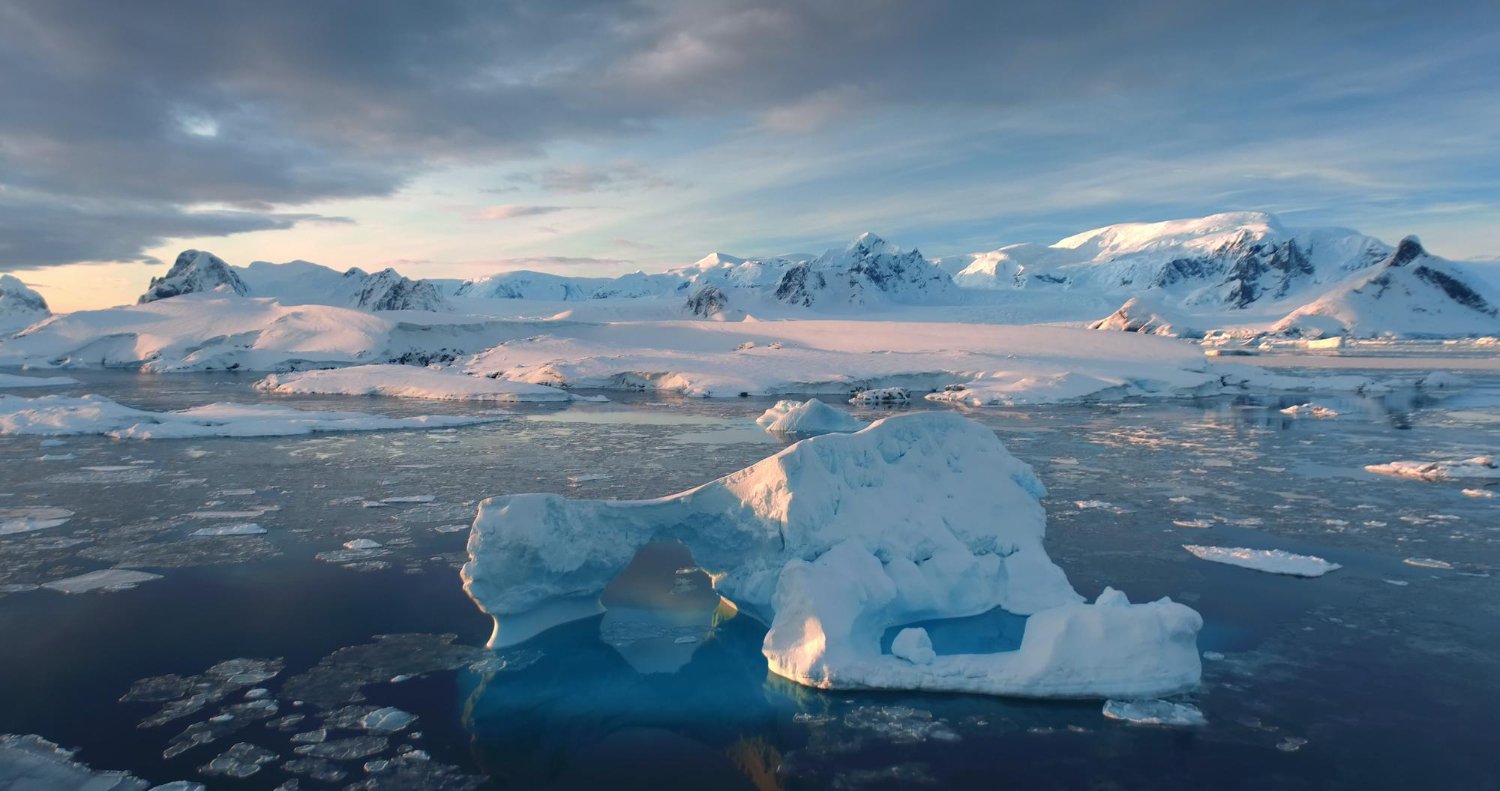
The explanation is more satisfying once you understand what is physically happening. An iceberg is an enormous mass of ice under immense stress. When it fractures and calves from a glacier, that stress releases suddenly, and the event radiates low-frequency sound waves that travel exceptionally well through water, which is why they can be detected thousands of miles away.
The scale of the event explains the volume that ruled out biology. This is not an animal calling; it is a structure the size of a small city breaking apart.
The lifelike quality turns out to be partly an artifact of presentation. The famous “bloop” that people know is the recording played back at 16 times its actual speed, which is necessary to bring an ultra-low-frequency sound into human hearing range. At its true speed it is far less like a creature’s call and much more like rolling thunder. The organic character that made it eerie is substantially a product of the speed-up.
Confirmation continued to accumulate after 2005. Hydrophones deployed in the Scotia Sea between roughly 2007 and 2008 recorded numerous icequakes with spectrograms nearly identical to the Bloop, and those signals allowed researchers to acoustically track the calving of a specific large iceberg near South Georgia. Similar sounds have since been recorded in the southern ocean and the Atlantic. The Bloop also has siblings in the catalogue of odd ocean recordings: another sound, nicknamed Julia, is likewise attributed to ice, in that case an iceberg thought to have run aground on the seafloor.
One further point of fairness to the early speculation: an oceanographer at NOAA suggested as early as 2001, in press interviews, that the Bloop was likely ice calving in Antarctica. He turned out to be right four years before the confirming data arrived.
The Disappointment, and Why It’s Misplaced
When the answer was announced, the reaction was not universal delight. A recurring note in online discussion has been mild deflation: people rather enjoyed the possibility of an unknown giant in the deep, and an iceberg felt like a letdown.
That reaction is understandable and, on reflection, backwards. Consider what actually happened. A sound was generated by ice fracturing off the coast of Antarctica. It traveled through the ocean for thousands of miles, retaining enough energy to be recorded clearly by instruments off South America. Scientists then spent eight years methodically working the problem, moved their equipment progressively closer to the suspected source region, matched the acoustic signature, and identified not just the mechanism but eventually the calving of specific icebergs.
That is a better story than a monster. It also reveals something about how much of the planet’s activity is happening constantly, at frequencies below human hearing, in places nobody is watching. NOAA data indicate that tens of thousands of glacial earthquakes occur each year as ice cracks and breaks apart. The ocean is not quiet; it is full of sound we are not equipped to hear.
And the honest scientific position retains a small opening. Researchers never directly observed the 1997 event; they matched its signature to a well-characterized phenomenon, which is strong evidence but not eyewitness proof. That is how most conclusions in Earth science are reached, and it is entirely sound, but it is not the same as having watched it happen.
The deep ocean does remain largely unexplored, and it certainly still holds things we have not catalogued. The Bloop simply is not one of them. It was ice, doing what ice does, at a volume that carried it across an ocean and into the popular imagination for the better part of a decade.
Like our content? Follow us for more.