It came in a moulded plastic case with a hinged lid, lined in foam, with a slot for the handle and two slots for the blades.
It was a wedding present, or a Christmas present, and in a great many households it came out twice a year, made an extraordinary noise for ninety seconds, and went back in the case for six months.
The Mechanism Was Genuinely Clever
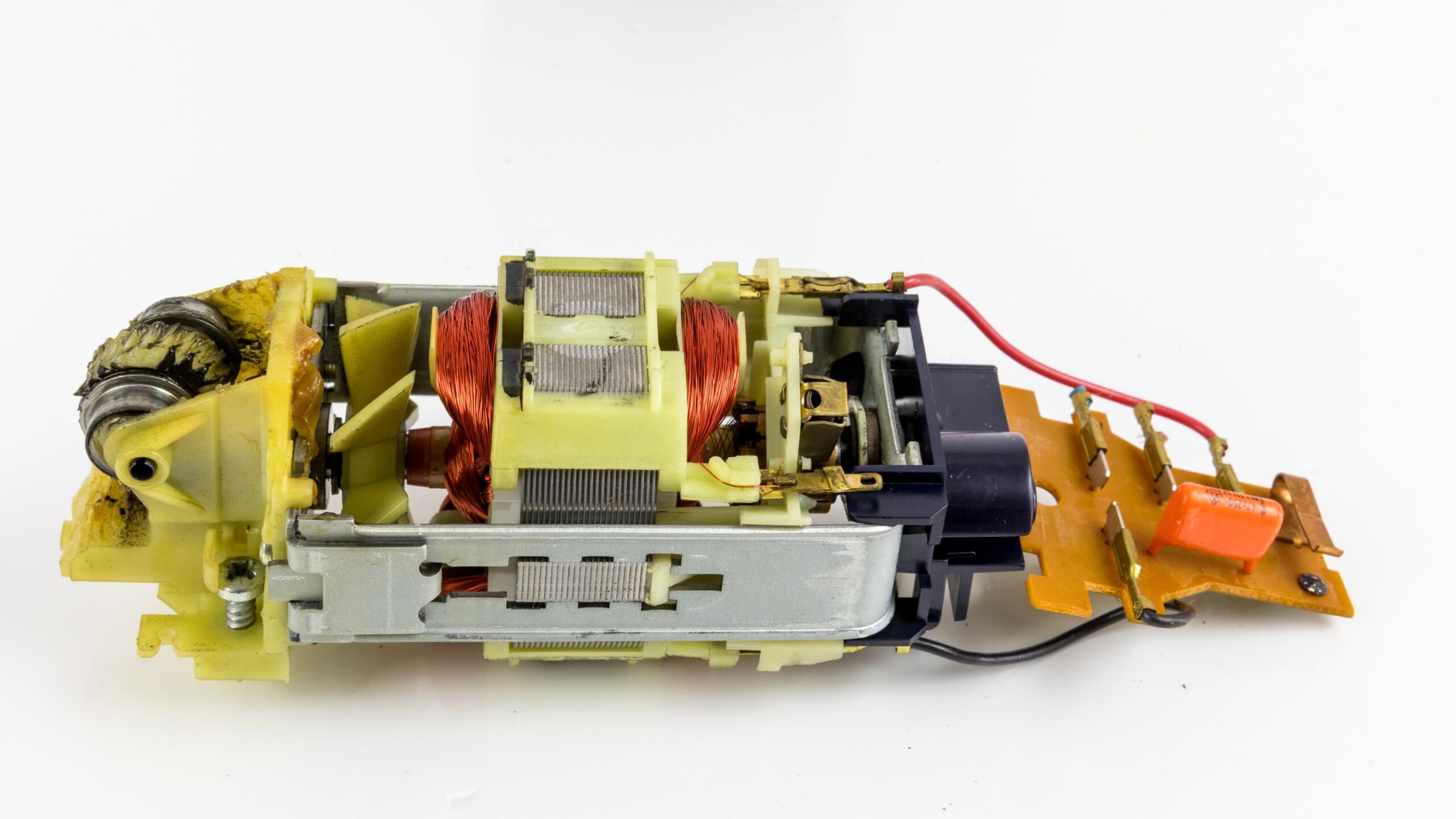
Two blades, not one. That is the whole idea and it is worth understanding, because it is better engineering than the object’s reputation suggests.
The blades are serrated and sit flat against each other, and the motor drives them in opposite directions along their length – as one moves forward, the other moves back. The serrations therefore pass each other continuously, and anything caught between them is cut by a shearing action rather than pushed by a single edge.
This solves a specific problem. A conventional knife cuts by being pressed down and drawn across, which means the food is being compressed at the same time as it is being cut. On anything soft or layered – a sandwich loaf, a sponge cake, a cooked bird – the compression is what ruins the cut.
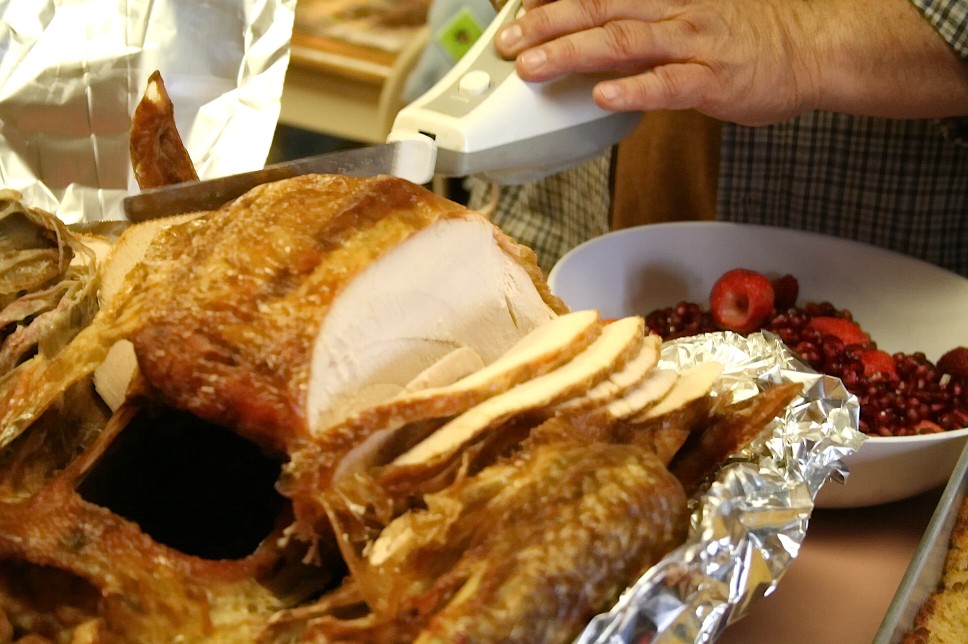
Twin reciprocating blades do not press. They advance by cutting rather than by force, so the thing being cut holds its shape. That is why the appliance produced such thin even slices of bread and why it went through a roast without tearing the surface.
Like our content? Follow us for more.
It Was Sold as a Solution to Carving, Which Is Half the Problem
The marketing was aimed squarely at one scene: a man at the head of a table, carving a large roast in front of guests, badly.
Carving is a skill, it is performed publicly, it goes wrong visibly, and a great many people who were expected to do it had never been taught. The appliance offered to remove the skill requirement entirely – press a button and produce even slices without knowing anything.
That is a real promise and it largely delivered. The slices were even, the host did not have to saw, and nobody had to watch a joint being dismantled by somebody out of their depth.
What the advertising did not say is that most of the difficulty it was solving came from a blunt knife. A properly sharp carving knife, correctly used, does the job well – and the reason household carving was so often a struggle is that almost nobody sharpened anything. The electric knife was, in large part, an engineering workaround for a maintenance failure.
It Only Had Two Occasions a Year
The fundamental problem was the use case, and no amount of design could fix it.
A carving knife is for a large roast joint or bird, which in most American households meant two or three meals a year. The rest of the time there is nothing in the kitchen that needs it, because a loaf is sliced with a bread knife and everything else is cut with a chef’s knife.
So the appliance sat in its case. And an appliance that is used twice a year has a specific failure mode: by the time you need it, the cord is tangled behind something, somebody has to find it, and nobody is certain it still works. A great many of these were given as gifts, used once for the novelty, and then used at Thanksgiving until the household quietly stopped bothering.
The Noise Was Worse Than Anybody Admits
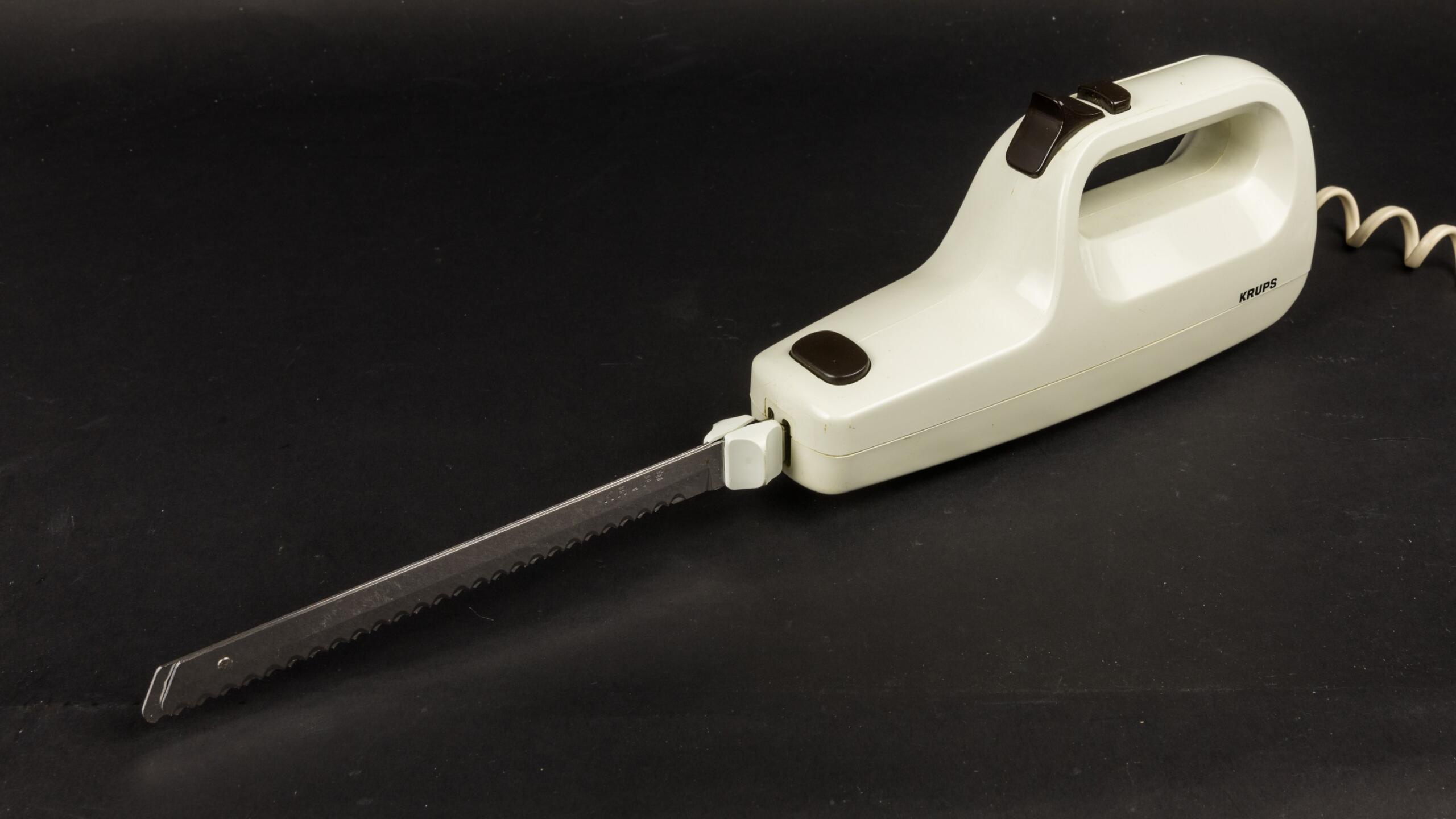
A small universal motor driving two steel blades against each other produces a loud, high, buzzing clatter, and it does it directly above a table of seated people.
The sound is frequently described as dental, and the comparison is fair: it has the same pitch and the same mechanical insistence. Carving at the table had previously been a quiet ceremonial moment with conversation over it, and the appliance replaced that with ninety seconds in which nobody could hear anybody.
Which is a small thing and it mattered. The occasions when this device came out were exactly the occasions built around people talking to each other, and it stopped them doing it.
It Came With Attachments Nobody Used
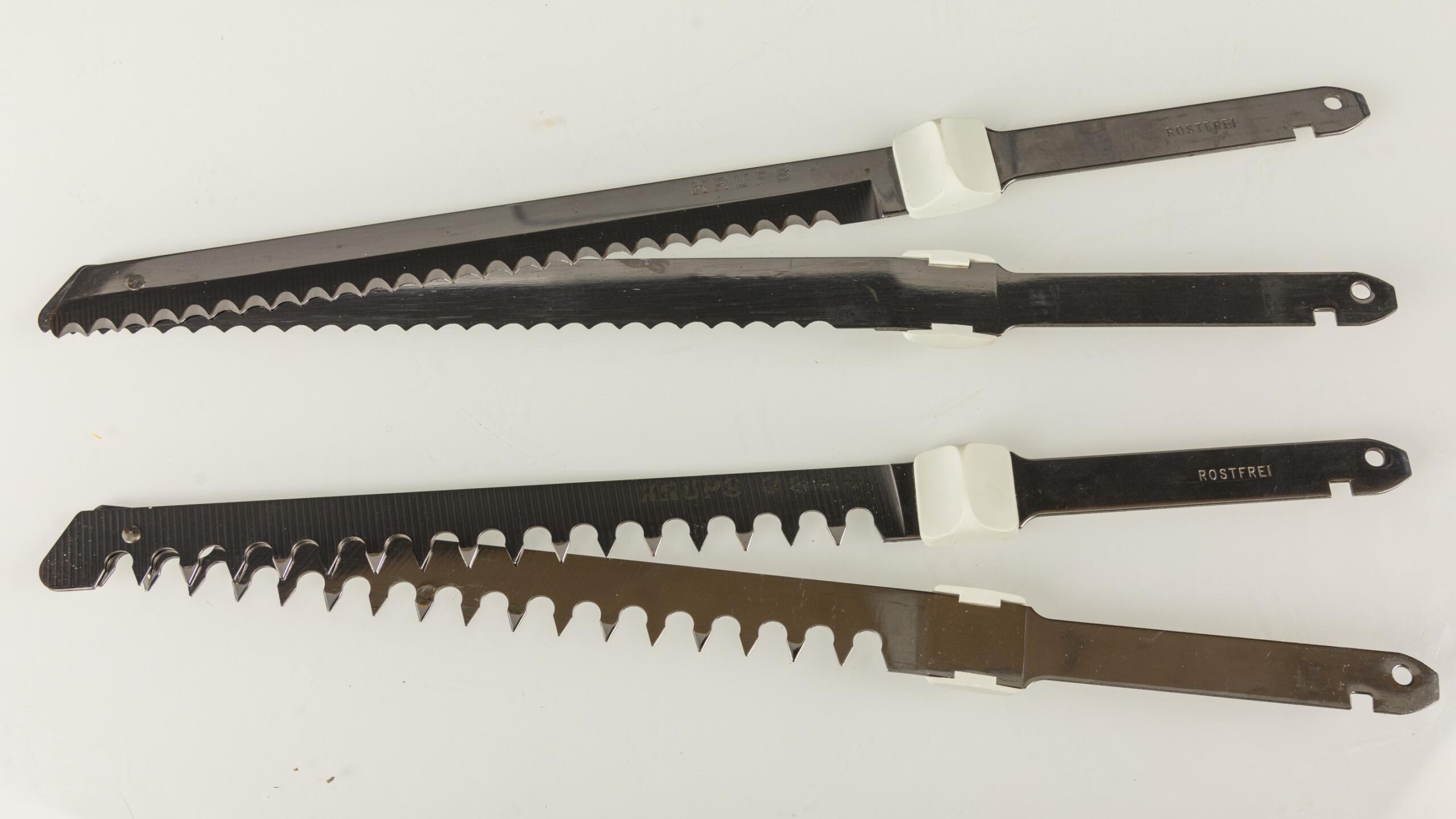
The case frequently held more than one pair of blades, and the accessories are a good index of how hard this thing was being sold.
There was a bread blade and a carving blade, differing in length and in the coarseness of the serration. There was sometimes a fillet pair, longer and more flexible, for fish. Some sets included a frozen-food blade with aggressive teeth, which was there because solidly frozen blocks of food were a genuine domestic problem in a decade when a chest freezer was a new thing in a lot of houses.
Then came the stands. A charging base, so the handle could live on the counter rather than in a cupboard, which immediately reintroduced the storage problem it was meant to solve. A rotating carving platter with a spiked centre to hold a joint. A fork with a guard on it. A wall bracket.
None of it addressed the actual limitation, which was that there were two occasions a year. The attachments broadened the appliance’s theoretical range without changing the number of times anybody reached for it, and the frozen-food blade in particular is a small monument to a problem that better freezer packaging quietly solved.
It Belonged to a Whole Category That Has Gone
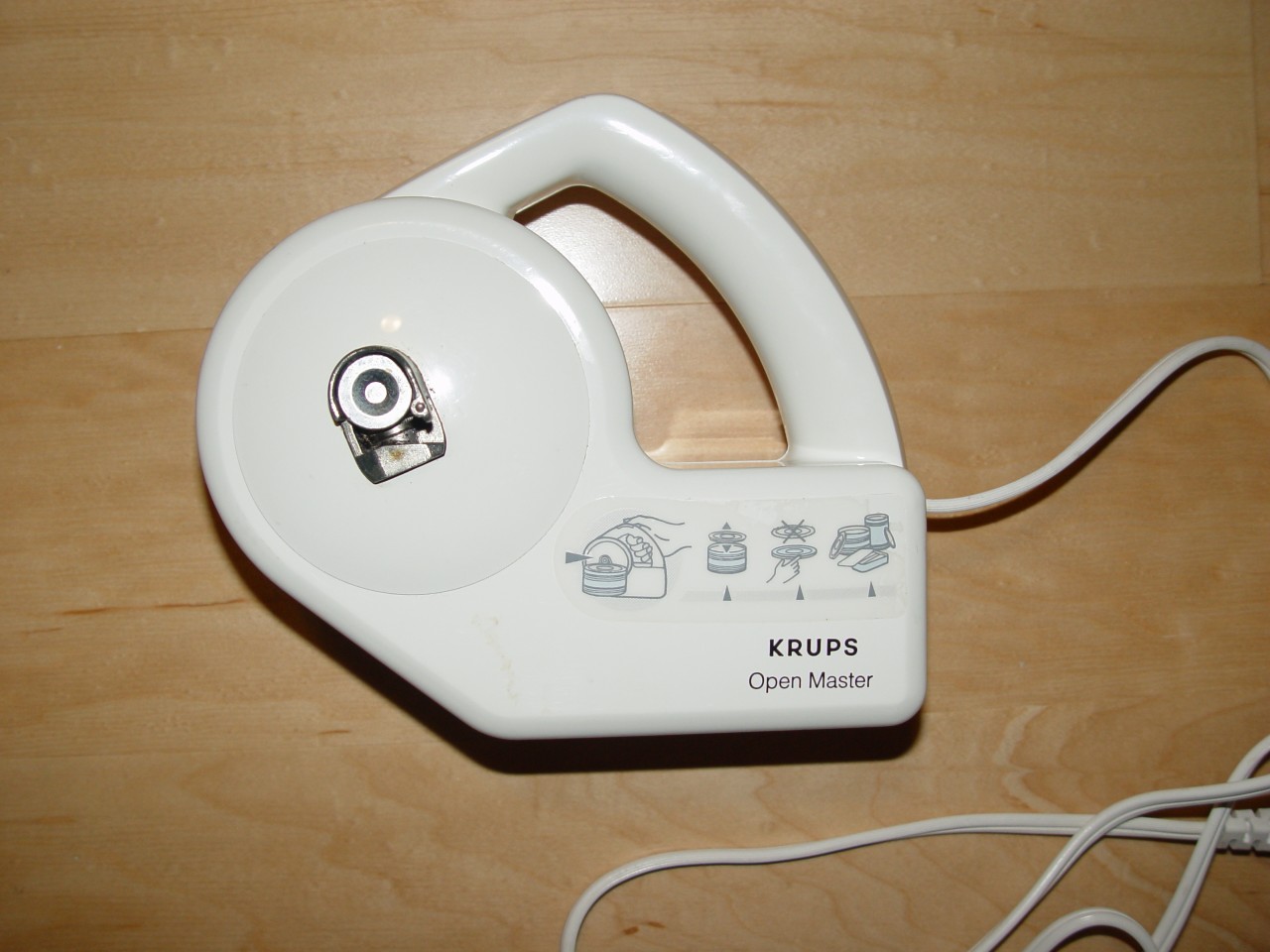
The electric knife was one of a family of gift appliances that American households accumulated between roughly 1960 and 1980, and it is worth naming the category because the whole family shared a fate.
They were single-purpose, corded, cased, and bought by somebody other than the person who would use them – a wedding gift, a Christmas gift, a retirement gift. They were priced to be a respectable present rather than to be the cheapest way of doing anything. And they were sold on the promise that a task currently done by hand, with skill, could be done by a machine, without.
The others in the family are recognisable from the same lofts. The hot tray. The electric can opener. The crepe maker. The hamburger press. The electric wok. The ice crusher. The knife sharpener, which is a particularly good joke in this context, since owning one would have removed the reason for owning the knife.
What they have in common is that each one occupied the full footprint of a dedicated object in order to perform a task occasionally. A kitchen can support perhaps six of those before it runs out of cupboard, and the ones that survived the cull are the ones used weekly rather than annually.
The electric knife was never going to win that competition. It was a good machine with a calendar problem.
Three Things Finished It as a Kitchen Appliance
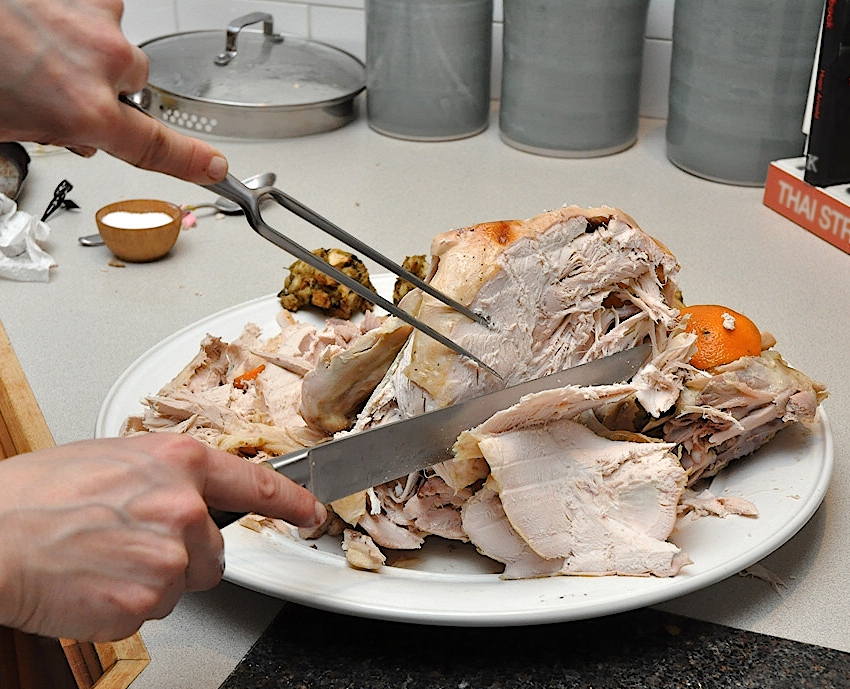
Carving in front of guests stopped being the standard. Meals got less formal, the large presented joint became less common, and a great deal of meat arrived at the table already portioned in the kitchen – which removes the whole scene the appliance was designed for.
Knife culture improved. Better knives became affordable, sharpening services and simple pull-through sharpeners became common, and the underlying problem the appliance worked around got solved directly and better.
And storage. A corded appliance in a hard case, used twice a year, loses the argument for cupboard space to almost anything else – which is why so many were given away, boxed up, or found decades later in a loft with the foam insert intact and the blades unmarked.
The Twist: It Is Still the Right Tool, for Something Else Entirely
Electric knives are still manufactured and sold in quantity, and a large share of them are not bought for food.
They are bought for foam.
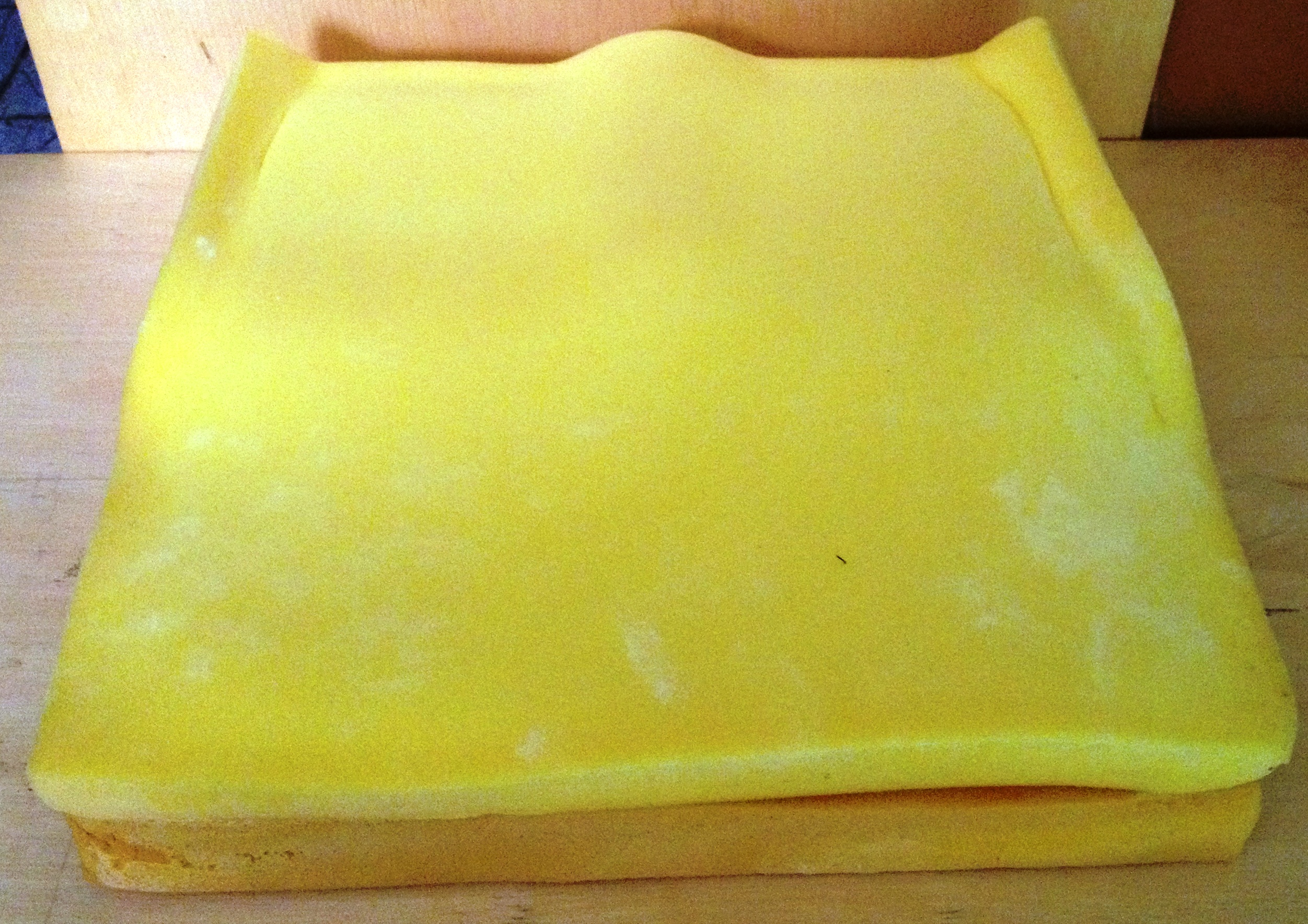
Cutting upholstery foam, mattress foam, packing foam and insulation board is genuinely difficult. The material compresses under any blade, so a conventional knife pushes it out of the way and then cuts somewhere other than where you aimed, and the result is a sloping, ragged edge. A hot wire works but needs equipment. A saw tears it.
Twin reciprocating serrated blades are close to the ideal solution, for exactly the reason they worked on a sponge cake: they advance by shearing rather than by pressure, so the foam does not compress and the cut goes where the blade goes. Upholsterers, cushion makers, campervan converters and people cutting a mattress to fit a bed frame all use them, and it is the standard recommendation.
So the appliance is not obsolete. It is a good tool that was sold, hard, for the wrong job.
It was designed to solve a social problem – a host carving badly in front of guests – that was really a maintenance problem, on an occasion that happened twice a year. Meanwhile the thing it is actually best at, cutting soft compressible material cleanly, was never advertised at all, because nobody in 1968 was selling a kitchen gift on the strength of its performance in upholstery.
The ones in lofts still work. They are simply in the wrong room.
Like our content? Follow us for more.