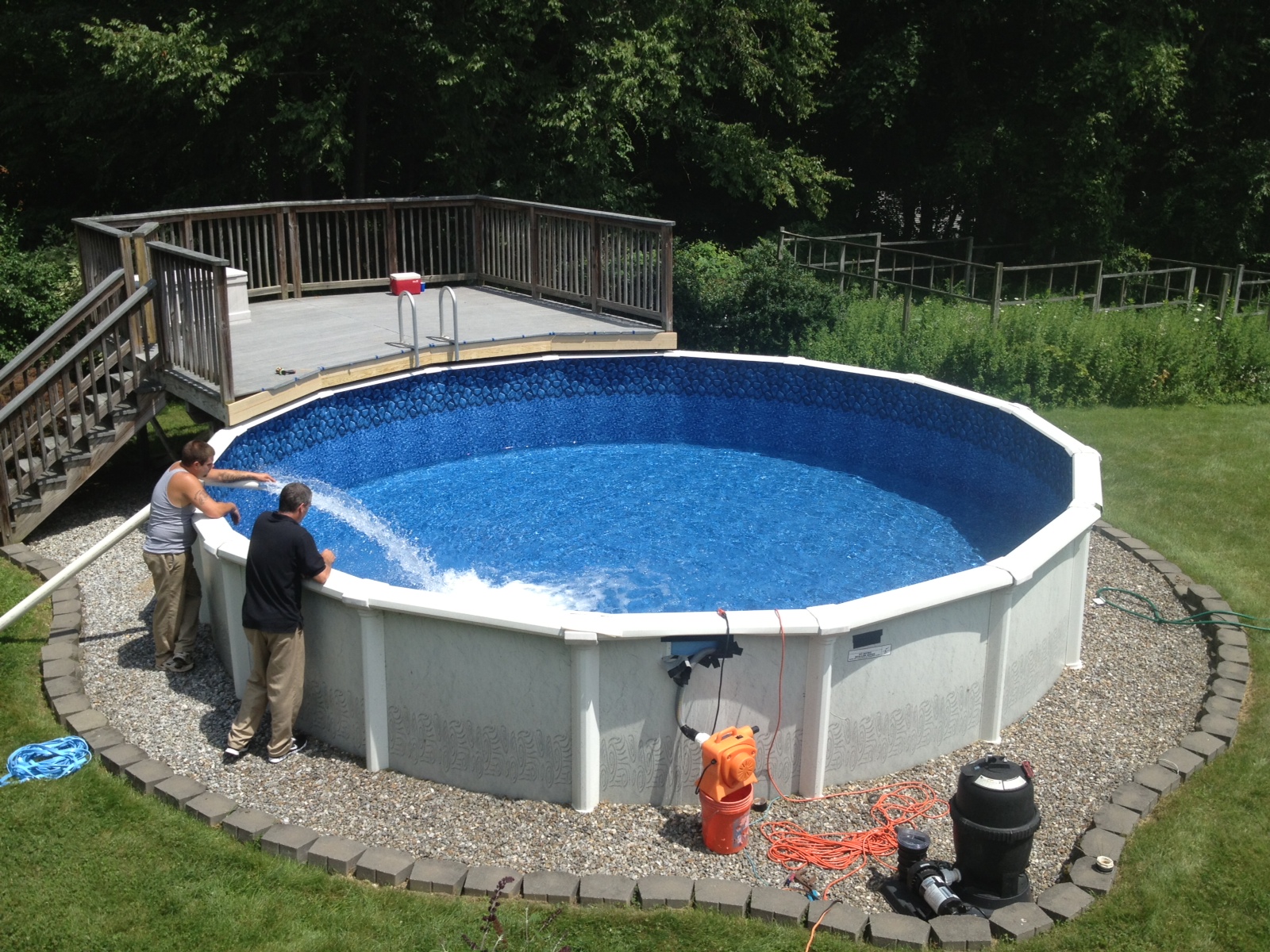
It arrived flat, on a truck, in boxes. A rolled sheet of corrugated steel, a bag of bolts, a folded vinyl liner, a bundle of uprights, a filter in a carton, and a page of instructions.
Four people and a weekend later there was a round pool eighteen feet across in the back yard, with a ladder on one side and a pump humming on the other, and for the rest of that summer your house was the house.
What It Actually Was, Structurally
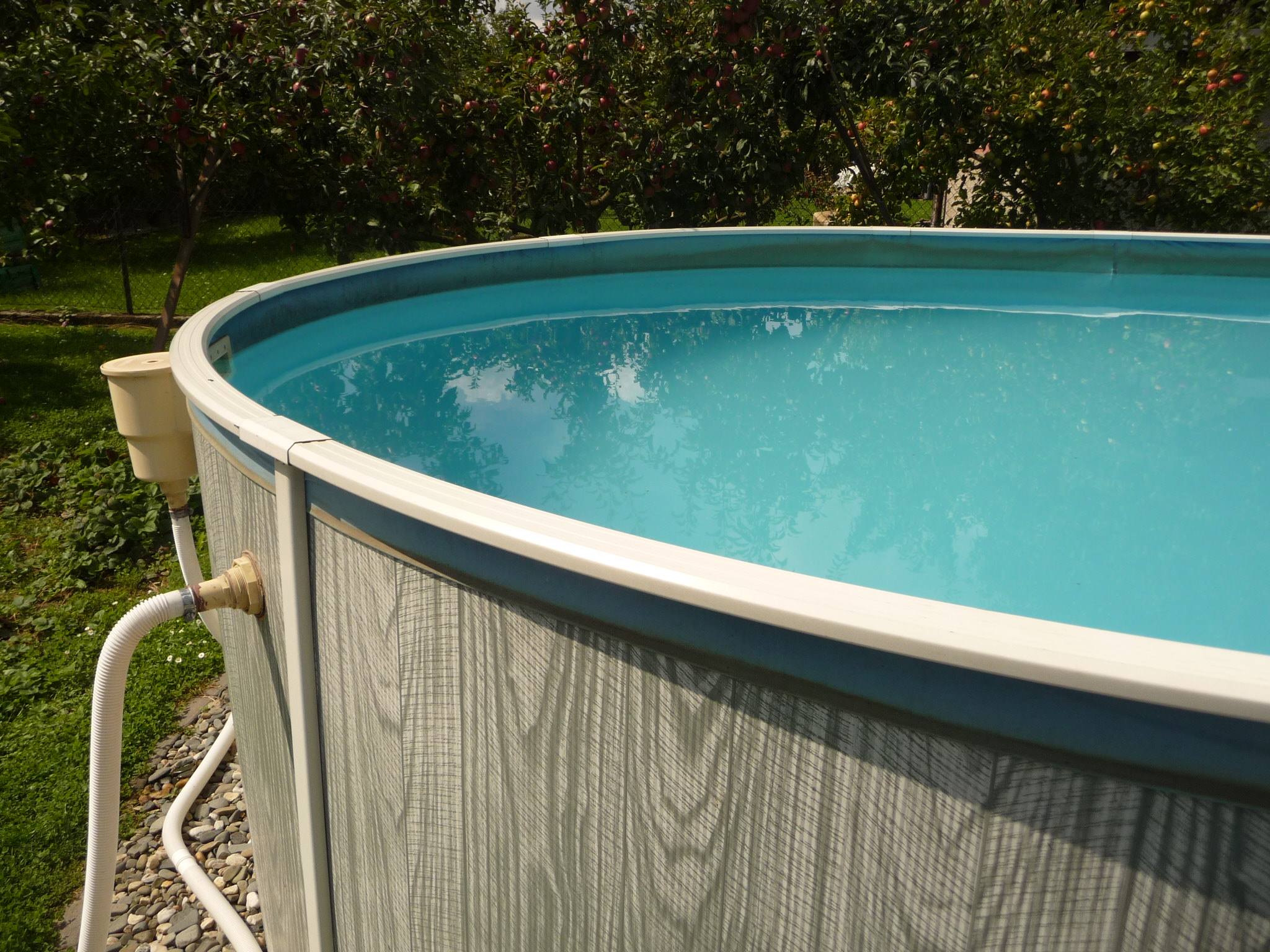
The engineering is more interesting than the object’s reputation suggests, because an above-ground pool is held up by the water it contains.
The wall is a single long sheet of rolled steel, corrugated for stiffness, bolted into a ring and set in a channel. Vertical uprights around the outside are connected by a top rail, which forms a hoop. The wall on its own is flimsy – you could push it over empty – and it becomes rigid only when filled.
That is because water pressure acts outwards against the wall at every point, and the top rail and the bottom channel resist the hoop stress that creates. A cylinder in tension is extremely strong, which is why a thin steel sheet can hold back several thousand gallons.
The liner is a separate vinyl bag that holds the water and touches the steel but does no structural work. The steel takes the load; the vinyl keeps it in. Understanding that division explains every failure mode the pool had.
Like our content? Follow us for more.
Filling It Took a Day and Somebody Watched the Whole Time
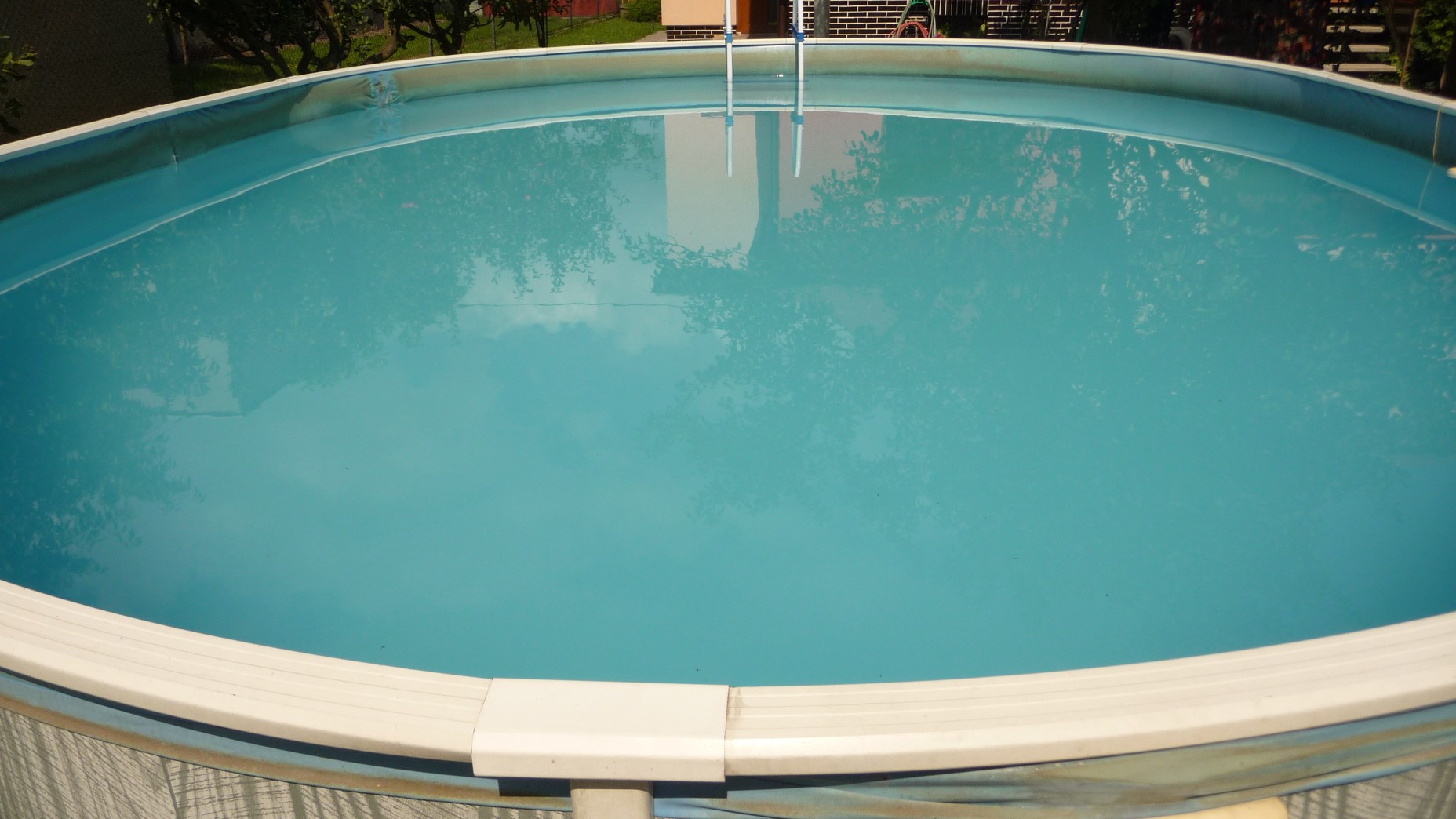
An eighteen-foot round pool at four feet of depth holds somewhere around seven thousand gallons. A garden hose delivers that over the better part of a day, and in a lot of households over two.
The filling was supervised, because the first few inches are the critical period. The liner has to be positioned and smoothed as the water comes in, since a wrinkle set under load stays there permanently and becomes a wear point. So somebody was in the pool, barefoot, in a few inches of cold water, pushing wrinkles outward with their feet while the hose ran.
And the ground underneath mattered more than anybody was told. The base had to be level to within a very small tolerance, raked free of stones, and frequently given a layer of sand. A pool set up on ground that was slightly off would sit with the waterline visibly crooked for its entire life, and anybody who has owned one can tell you which side was low.
The Running Costs Were the Part Nobody Calculated
The purchase price was the smallest number in the whole exercise.
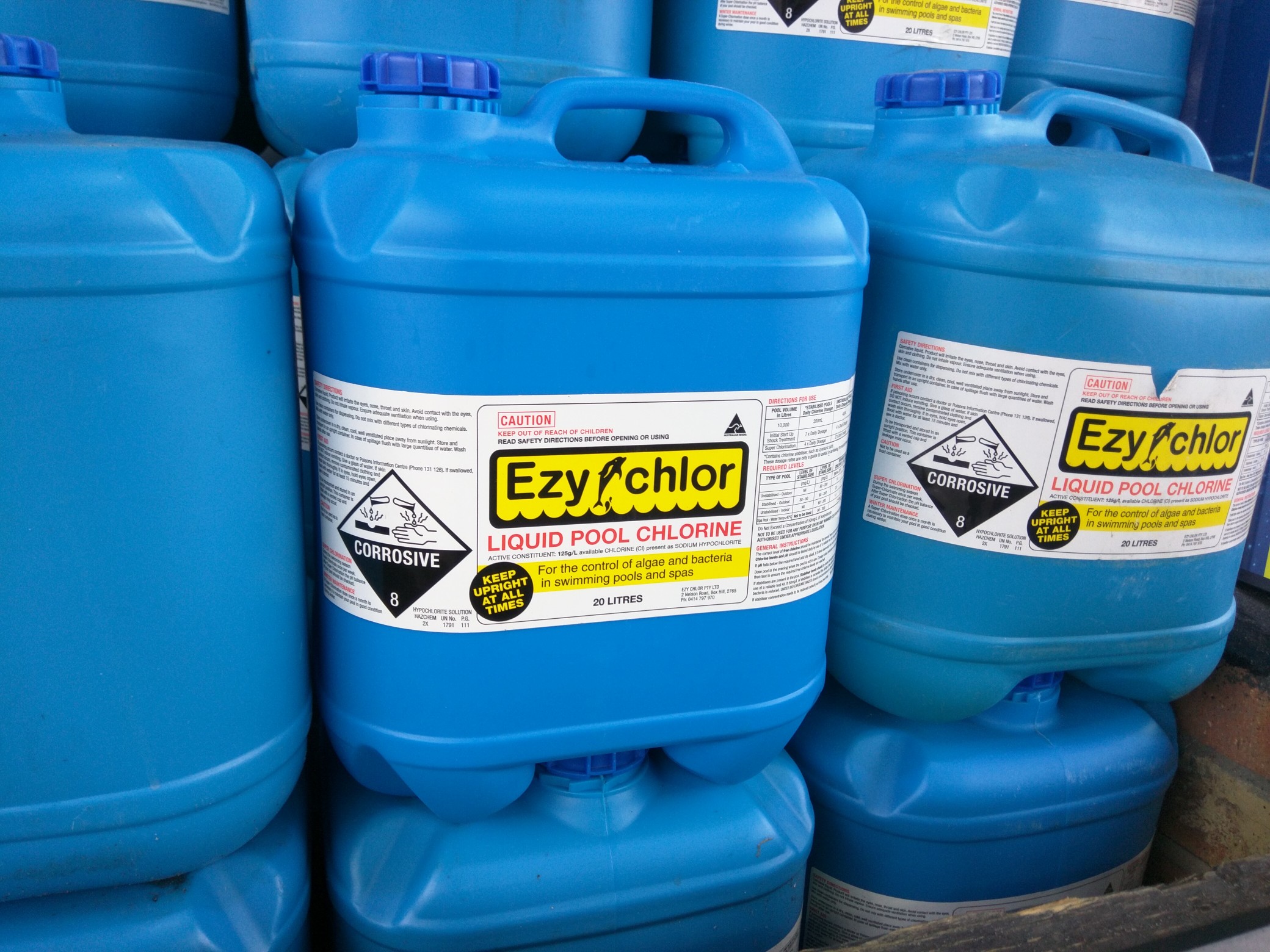
There was a pump and filter running for hours a day through the season, on a household electricity supply. There was chemistry – chlorine in some form, something to manage pH, something for algae – bought through the summer in quantities that surprised people. There was water, both to fill and to top up against evaporation and splash-out. There was a winter cover and the work of fitting it. And there was the liner, which is a consumable.
The liner is the item that decided the pool’s fate in most households. Vinyl in sunlight and chlorinated water hardens, loses flexibility and eventually splits, usually somewhere along a seam or at a crease, generally between about six and twelve years. Replacing it means draining the pool completely, dismantling the top rail, fitting a new bag and refilling – which is a significant job and a significant cost, arriving at exactly the point when the children it was bought for have grown up.
It Made Your House the Neighbourhood House

The social effect was out of all proportion to the object, and it was the actual reason people bought them.
One pool served a street. Children who did not have one came to the one that existed, continuously, all summer, and the household that owned it acquired a role: the back door was open, there were always extra children in the yard, and somebody’s mother was the adult who was effectively supervising half the neighbourhood from a kitchen window.
That was understood as a straightforward good thing and also as a burden, and both are in the accounts. Being the pool house meant knowing every child on the street, and it meant never having a quiet afternoon between June and September, and it meant a degree of responsibility that nobody had formally agreed to.
The Reason It Became Expensive Is a Code
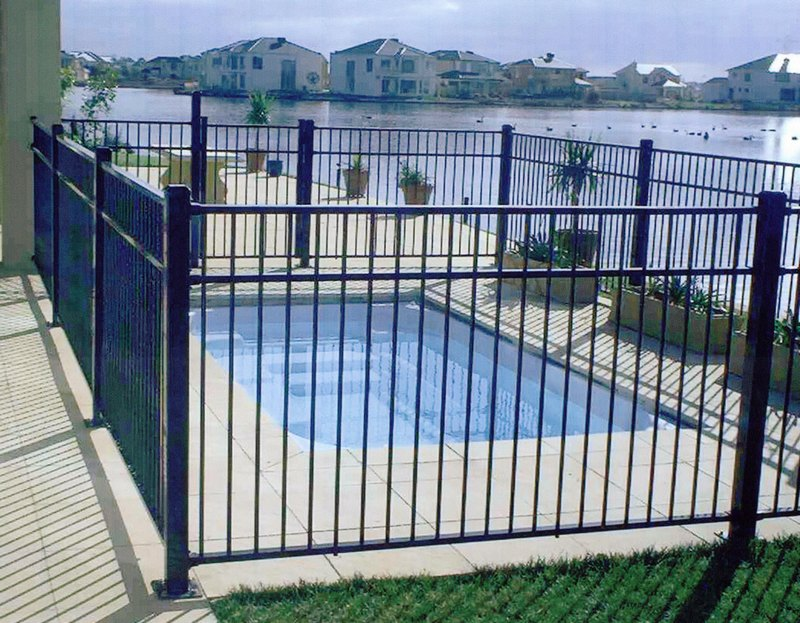
Here is the part that actually explains the decline, and it is not fashion.
A pool full of water in a residential yard, accessible by a ladder, in a neighbourhood full of small children, is a serious hazard, and through the 1970s and 1980s the evidence on that became impossible to ignore. Drowning in residential pools was a recognised cause of death among very young children, the mechanism was understood – unsupervised access by a child too young to be in the water at all – and the response was regulatory.
Barrier requirements followed. The specifics vary by jurisdiction and have tightened repeatedly, but the general shape is consistent: a pool must be enclosed by a barrier of a specified height, with no footholds on the outside, with gates that are self-closing and self-latching above a child’s reach, and with the access ladder removable or lockable. Many places added alarms, specified gate hardware, and required inspection and a permit.
Every one of those requirements is well founded and the reason for each is a child who died. None of that is in dispute.
But the cumulative effect on the economics is dramatic. A compliant barrier, self-latching gate hardware, a permit, an inspection and in some places an alarm can easily exceed the price of the pool itself – which means the cheap summer pool stopped being cheap. The object that cost a few hundred dollars now sits inside a thousand dollars of fence, and the household deciding whether to bother is doing a completely different sum from the one their parents did in 1974.
Closing It Down Was an Annual Ritual With a Specific Dread
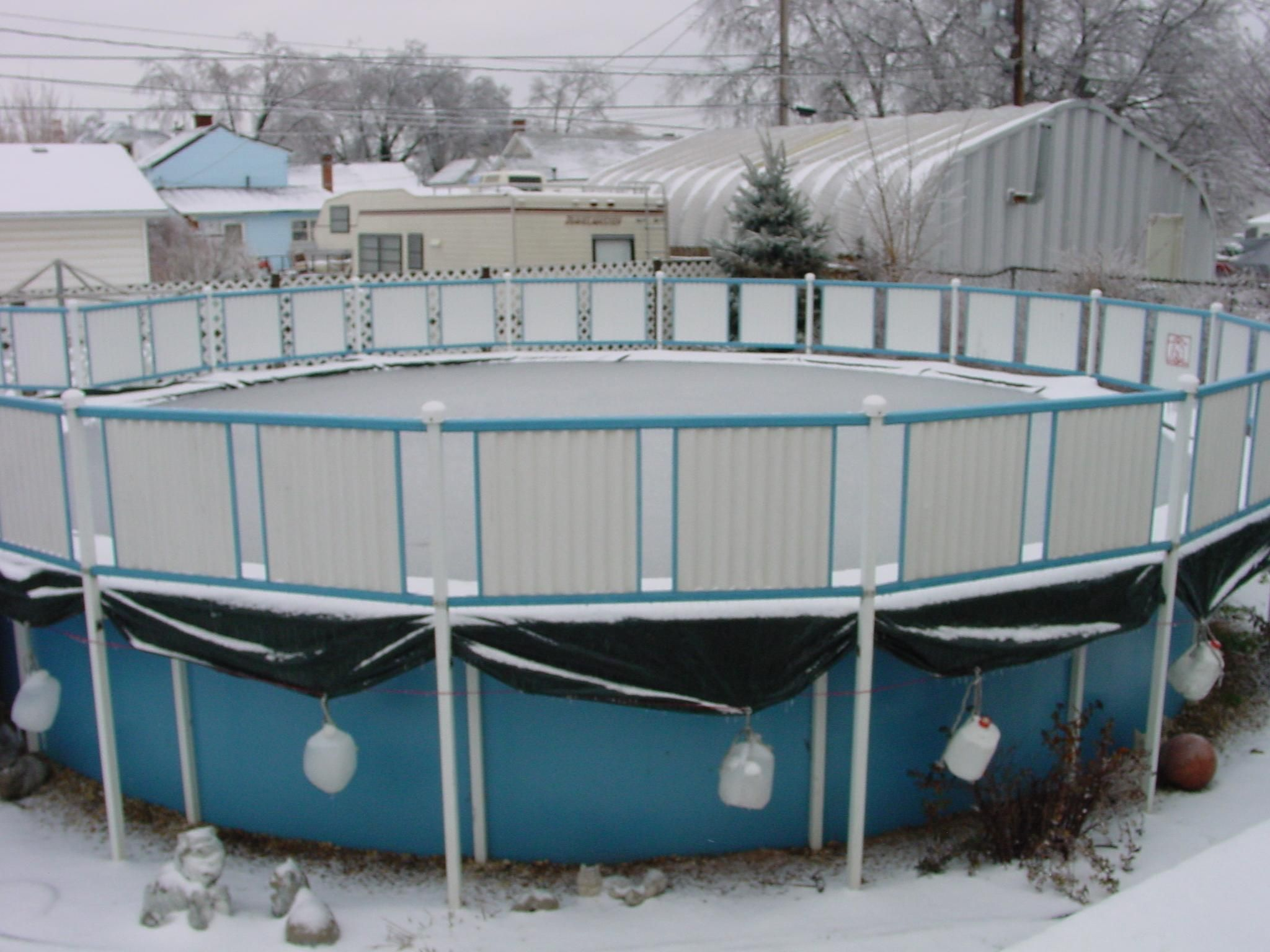
The season had two ends and the second one was work.
Winterising meant lowering the water below the skimmer, draining and storing the pump and filter, blowing out or plugging the lines so nothing froze and split, adding a chemical treatment to the standing water, and fitting a cover over the whole thing and securing it round the top rail with a cable.
Then the pool sat under that cover from October until May, and what accumulated on top of it was the problem. Rain pooled in the middle and froze. Leaves came down and rotted. A cover that sagged took on several hundred pounds of water and ice, and a cover that tore let all of it into the pool.
So the uncovering in spring was approached with genuine apprehension, because what came off the cover and what was underneath it determined how much of May you were going to spend fixing things. Everybody who owned one of these remembers at least one year when the answer was most of it.
Insurance Noticed as Well
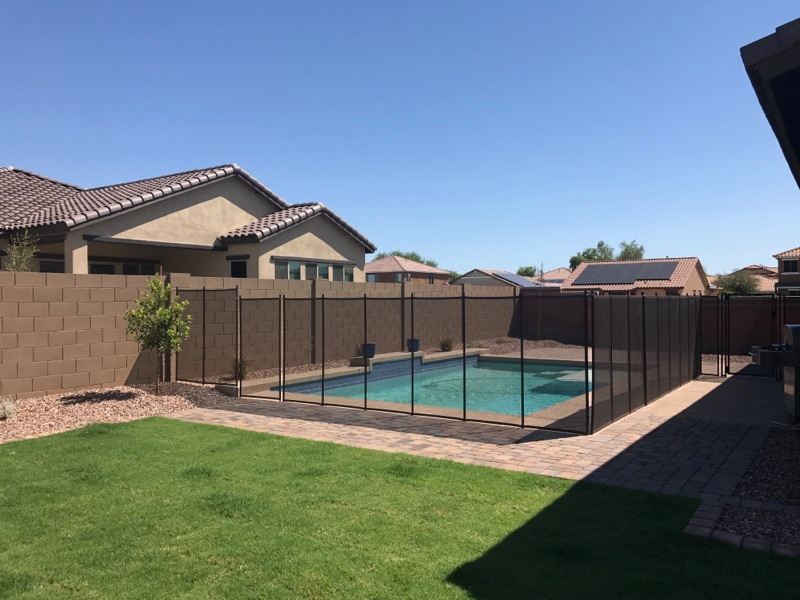
Alongside the codes came the other cost, which is that a pool changes what a house is from an insurer’s point of view.
Homeowners’ policies treat a pool as an attractive nuisance – a hazard on private property that is foreseeably attractive to children who have no permission to be there – and that affects liability coverage, premiums and in some cases whether a policy is offered at all. Households were advised to carry higher liability limits, and some discovered the implications only when they told their insurer what they had just put up.
That is a rational response to a real risk, and it is also a second running cost stacked on top of the chemicals and the electricity and the liner.
The Twist: They Never Went Away, the Neighbourhood Did
The standard version of this story is that above-ground pools disappeared, and it is not true. They are manufactured and sold in large numbers, in better materials, with better filtration, and a cheap soft-sided version has made a shallow pool available to almost anybody.
What disappeared is the thing that made the 1974 version matter.
The pool’s value was never really the water. It was that one pool in a street produced a gathering point – a place children walked to unaccompanied, let themselves into, and stayed at all day, with a loose adult presence somewhere in the house. That arrangement required children to be at liberty in a neighbourhood, able to turn up without being driven, with nobody signing anything.
Everything about that changed, and not because of the pool. Unsupervised neighbourhood roaming declined sharply. Liability consciousness rose, so taking responsibility for other people’s children became something you thought about rather than something you did. Summer became more structured and more programmed. And the barrier rules, correctly, made access deliberate rather than casual – a locked gate is the opposite of a back yard a child wanders into.
So the pool survived and the institution around it did not. A household can still buy the same object, fill it with the same hose, and swim in it all summer.
It just will not be anybody else’s summer, which is the part people are actually remembering.
Like our content? Follow us for more.