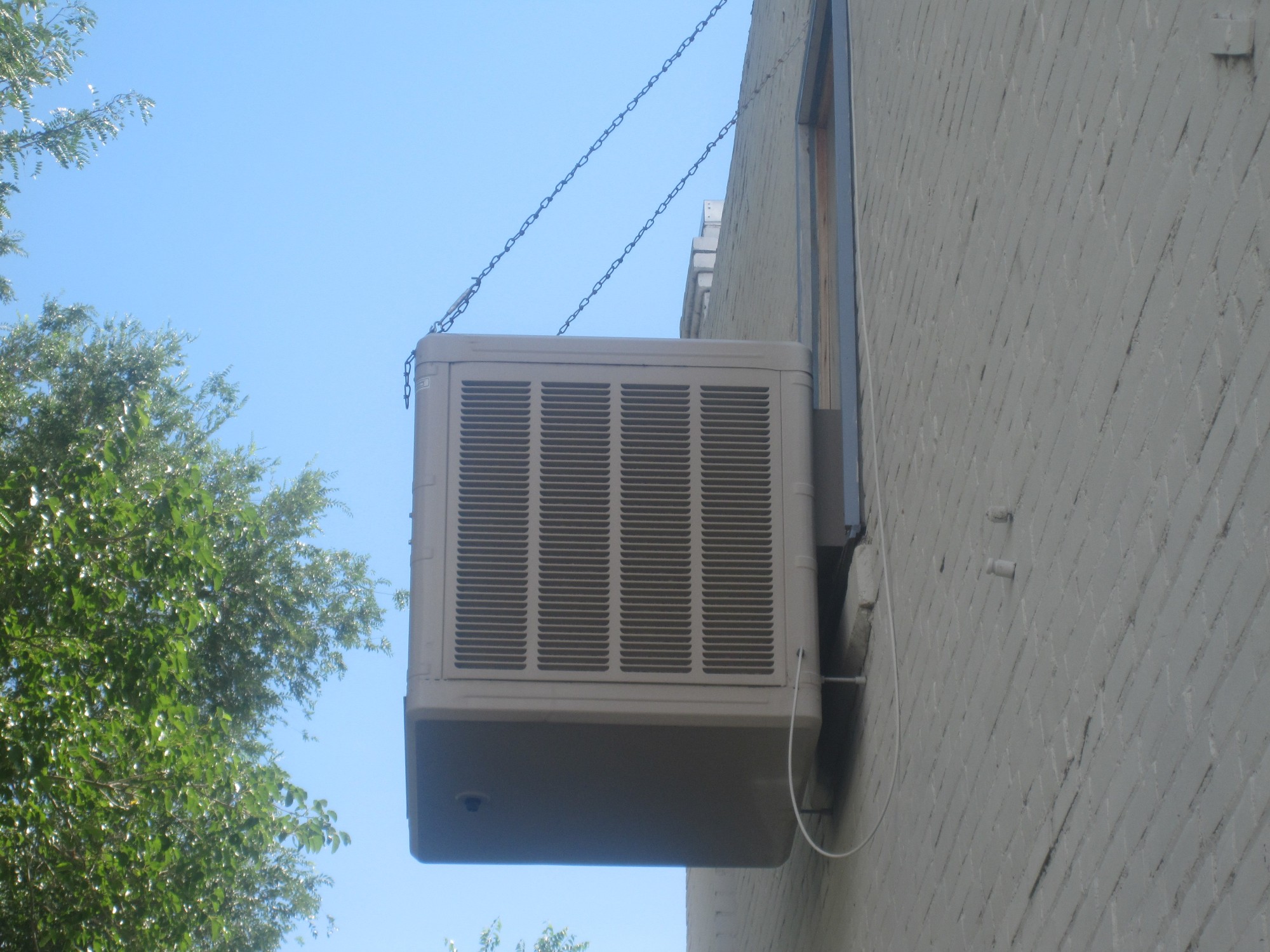
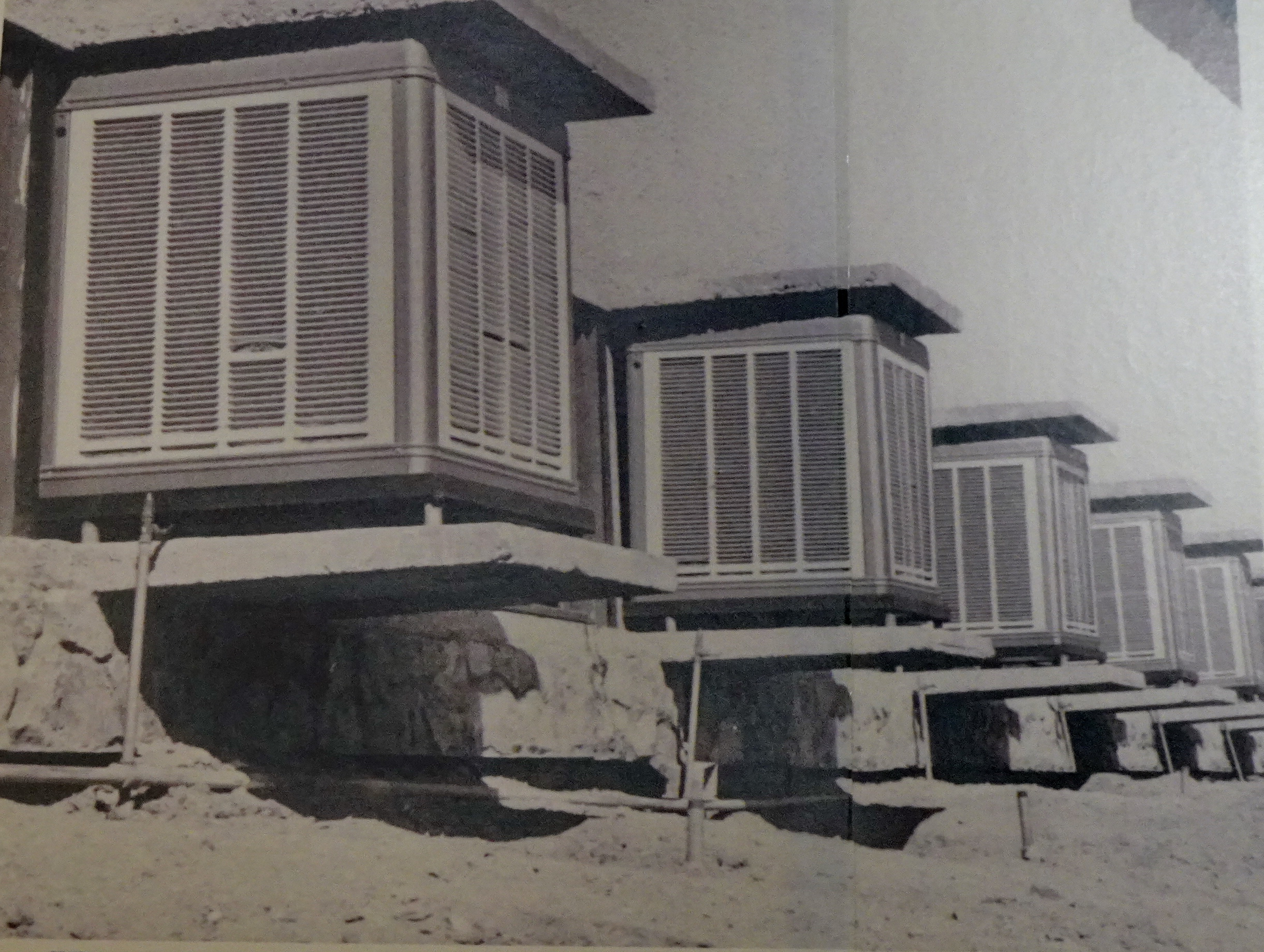
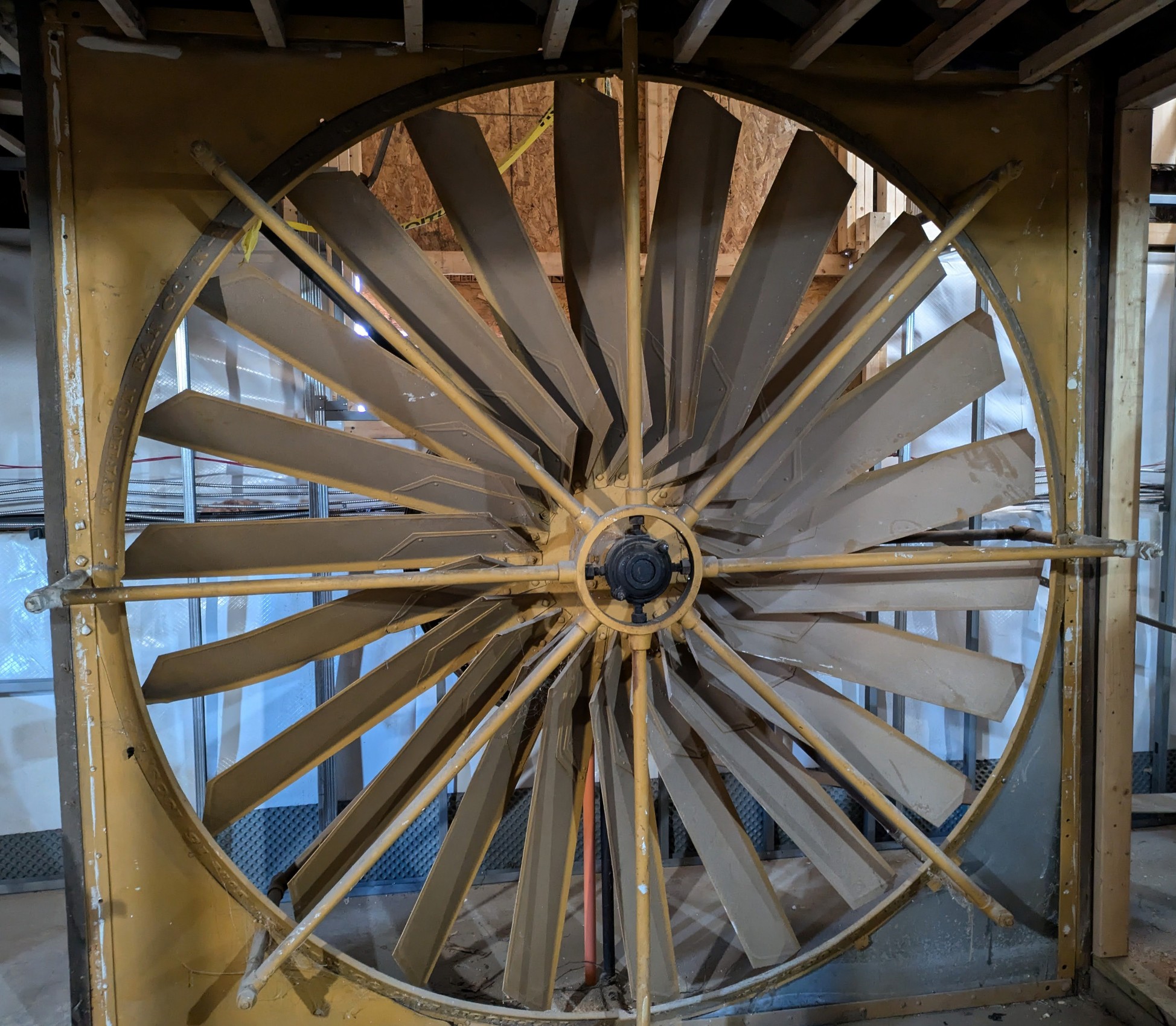
It sat on the roof – a galvanised box about the size of a chest freezer, with louvred panels on three sides and a duct going down through the ceiling into a hallway.
When it ran, the house smelled faintly of wet straw and the windows had to be open, and on a July afternoon at a hundred and five degrees outside it brought the hallway down to something a person could live in.
The Physics Is the Whole Device
Evaporative cooling works on a single principle, and the principle is the reason the machine is so simple.
Water cannot evaporate without energy. To turn liquid water into vapour you have to supply the latent heat of vaporisation, and it is a substantial amount – which means evaporating water takes heat out of whatever is nearby. That is why sweat cools a body, why a wet towel in a breeze goes cold, and why an unglazed water jar keeps its contents cool in a desert.
The cooler simply industrialises it. A blower pulls hot dry outside air through thick pads kept continuously wet by a small pump, water evaporates into the airstream, the heat required comes out of the air itself, and what comes out the other side is cooler and wetter than what went in.
There are four moving parts in the whole machine: a blower, a small water pump, a float valve to keep the reservoir filled, and a motor to drive the first two. No compressor, no refrigerant, no high-pressure circuit, no sealed system.
Like our content? Follow us for more.
Which Is Why It Only Works in a Desert
The limitation is in the physics rather than the engineering, and it is absolute.
Air can only hold so much water vapour, and how much depends on its temperature. Air that is already nearly saturated cannot accept much more, so very little will evaporate, so very little heat is removed.
The measure of how much cooling is available is the difference between the dry-bulb temperature – what a thermometer reads – and the wet-bulb temperature, which is what a thermometer reads with a wet cloth around it. In dry desert air that gap is enormous, and a good cooler captures most of it. On a humid day the gap narrows, and the machine’s output narrows with it.
Which produces the defining experience of owning one. In Phoenix or Albuquerque in June, at single-figure humidity, an evaporative cooler is a revelation – a twenty or twenty-five degree drop, for pennies. In the same city in August, when the monsoon moisture arrives, the identical machine produces a hallway that is barely cooler than outside and considerably stickier, and there is nothing to be done about it.
You Had to Leave the Windows Open, Which Nobody Expected
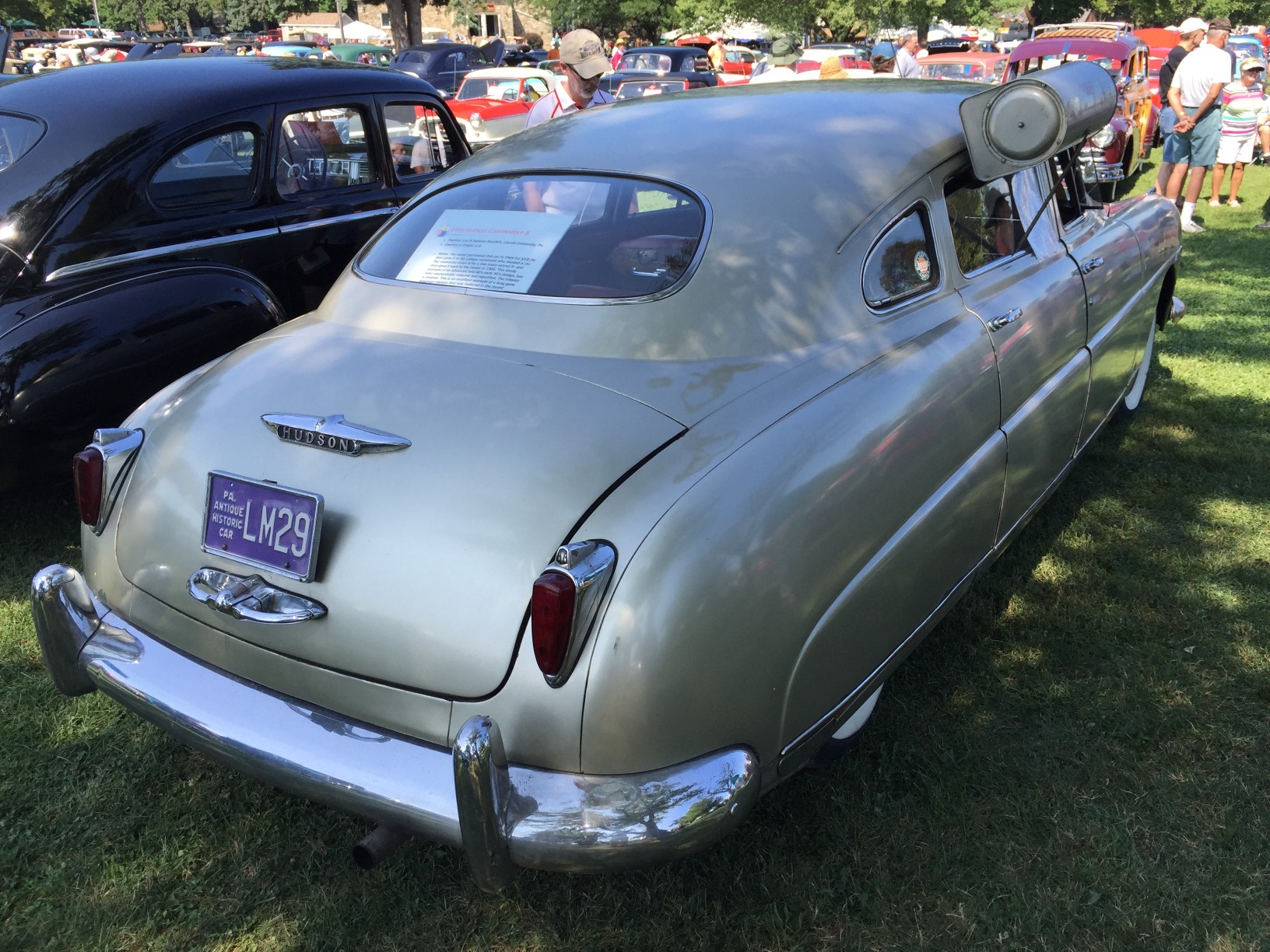
This is the operational fact that most surprises anybody raised with refrigerated air.
A compressor-based system recirculates the same air round a sealed house. An evaporative cooler does the opposite: it is a once-through machine that is continuously pushing outside air into the building, and that air has to go somewhere.
So windows had to be open – and not randomly, but strategically. You opened the windows in the rooms you wanted cooled, and closed them elsewhere, which is how you steered the airflow. A household effectively programmed its cooling by deciding which windows were up that afternoon.
Close the house up and the cooler stops working almost entirely, because it cannot push air into a sealed box. Which means every instinct a modern person has about air conditioning – shut the doors, seal the gaps, keep the cold in – is exactly wrong here, and a great many people who inherited an old cooler with a house broke it by using it correctly for the wrong machine.
The Pads Were Aspen Fibre and They Had to Be Changed
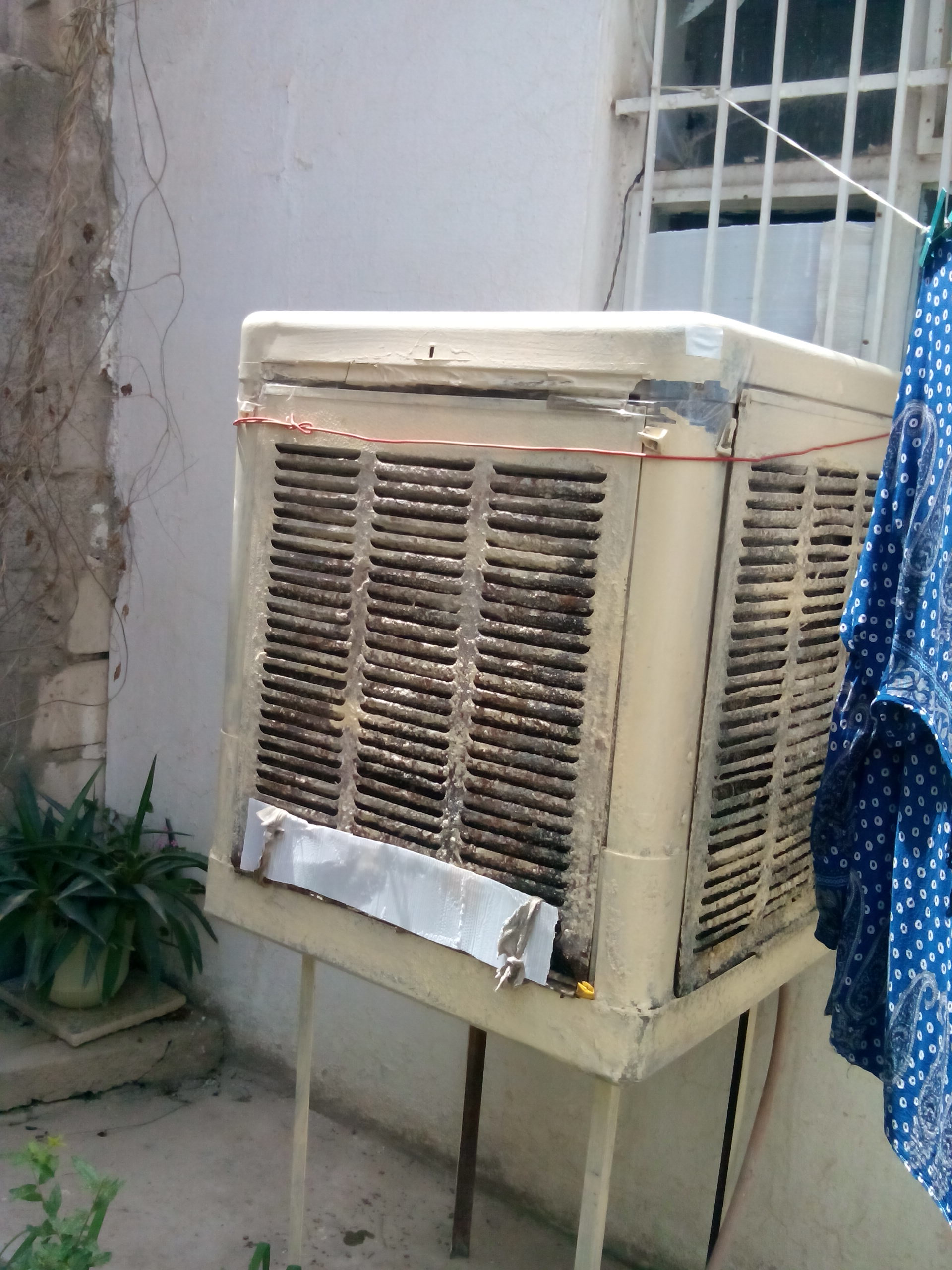
The consumable was a pad of shredded aspen wood fibre held in a frame, and it did two jobs: it held a large surface area of water in the airstream, and it filtered some of the dust.
Aspen was used because it is cheap, absorbent, holds its loft when wet and does not rot immediately. It also degrades, compacts, and accumulates mineral scale from the water – and a compacted scaled pad passes less air and evaporates less water, so performance declines across a season.
Changing them was an annual job on a roof, and it came with the rest of the maintenance: draining and cleaning the reservoir, descaling, checking the float, oiling the blower bearings, replacing a belt, and winterising the whole thing so the water lines did not freeze.
That is a real recurring obligation involving a ladder, and it is one of the two things that eventually beat the machine.
The Water Was the Other Cost Nobody Counted
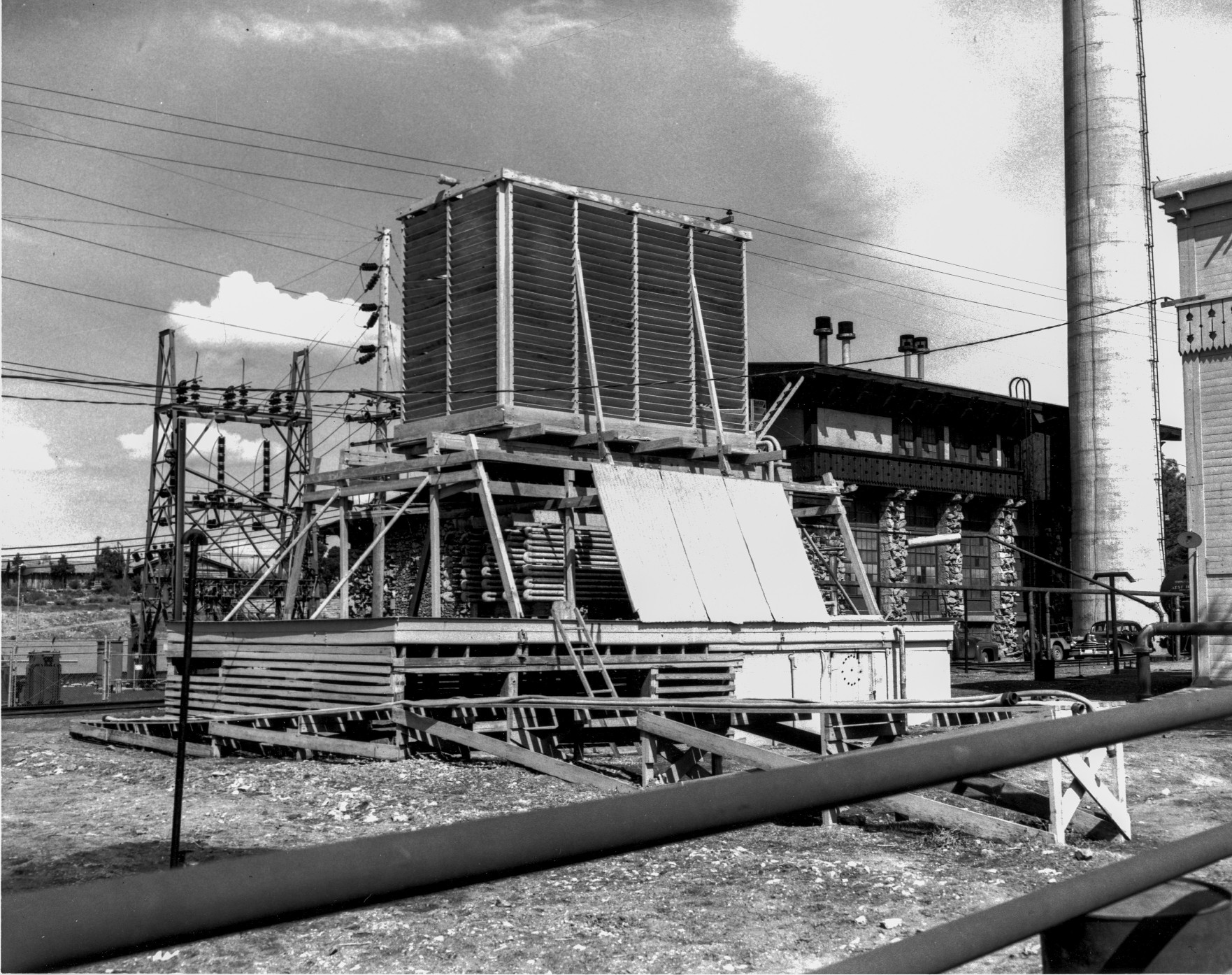
An evaporative cooler consumes water, continuously, by design. The whole mechanism is the conversion of liquid water into vapour, and the vapour goes into the house and out of the windows.
A domestic unit running through a desert summer uses a substantial quantity – and it uses it in exactly the places where water is most constrained. There is also a bleed-off or a periodic dump, because water evaporating out of a reservoir leaves its dissolved minerals behind and the remainder gets progressively more concentrated until it scales everything.
Which gives the device an awkward position in any honest accounting. It uses a fraction of the electricity of refrigerated air, in regions where summer electricity demand is the grid’s central problem. It also uses water, in regions where water is the other central problem.
Nobody weighed that in 1974 because electricity was cheap and nobody was asking.
What Beat It Was Comfort, Not Efficiency
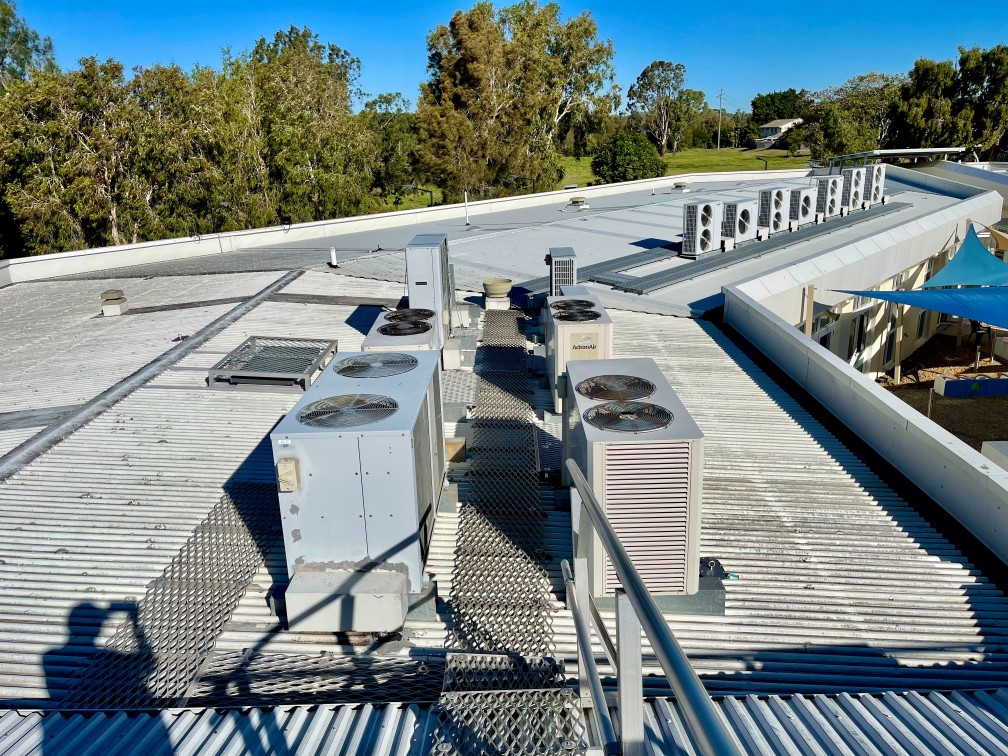
Refrigerated air conditioning won across the American Southwest through the 1970s and 1980s, and it did not win on running cost – it lost on running cost, comprehensively, and still won.
It won because it does things the cooler cannot. It works at any humidity, including the weeks when a cooler is useless. It dehumidifies rather than humidifying, which matters for comfort and for everything in the house that does not like damp. It runs in a closed building, which means no open windows, no street noise, no dust and no insects. It holds a set temperature rather than delivering whatever the wet-bulb allows. It needs no annual roof work. And it does not put moisture into a structure.
Set against a machine that is cheap to run but unreliable in August, noisy, humid, requires open windows and needs a ladder every spring, the compressor wins on everything a household actually experiences.
And as the real cost of equipment and electricity fell, the cooler’s single advantage shrank to the point where it stopped being decisive.
The Sound and the Smell Were Half the Experience
Anybody who lived with one describes the same two things before they describe the cooling.
The sound was a steady roar. A squirrel-cage blower pushing a large volume of air through a duct into a hallway is loud, it was mounted on a roof directly above the house, and the duct carried the noise down into the middle of the building. Conversation in that hallway happened at a raised voice. Televisions were turned up. People slept through it and then noticed the silence when it was switched off in October.
The smell is the detail nobody who grew up with refrigerated air can be made to understand. Wet aspen fibre in a warm airstream has a specific sweet vegetal smell, faintly like damp straw or a greenhouse, and it was the smell of the whole house from May to September. It changed character as pads aged, going from fresh to slightly musty across a season, which is how a household knew it was time to change them.
And the air itself felt different. Air from a compressor is dry, cold and flat. Air from a cooler is cool, moving, slightly damp and smells of outside – because it is outside, three seconds ago, with the heat taken out of it.
The Twist: Evaporative Cooling Never Lost on the Merits
Here is the part that makes this more than a nostalgia piece.
The physics that the swamp cooler used is still the most energy-efficient way to remove heat from dry air that anybody has ever found, and it is used today, at enormous scale, by the most cost-sensitive heat-rejection customers in the world.
Data centres use evaporative cooling. Large commercial and industrial buildings use it. Power stations reject heat through evaporative cooling towers. Anywhere that somebody is removing a very large amount of heat in dry air and paying the electricity bill, the same principle is doing the work – because a compressor has to be powered and evaporation does not.
And it is returning to houses, in better forms. Indirect evaporative systems cool air through a heat exchanger so the moisture never enters the building, which removes the humidity objection entirely. Two-stage systems pre-cool the air before the pad, which widens the humidity range the machine can handle. Both are sold in the dry Southwest as a serious alternative, and both exist specifically because the efficiency gap against a compressor never closed.
So the swamp cooler on the roof did not lose an argument about thermodynamics. It lost an argument about open windows, August humidity, and a ladder in April – which are arguments about living in a house rather than about cooling air.
Nobody is nostalgic for the maintenance. But the smell of wet aspen in a hallway in June, and a machine that cost almost nothing to run doing something that felt like a miracle, is a specific memory of the American desert that the sealed cooled house does not produce.
Like our content? Follow us for more.