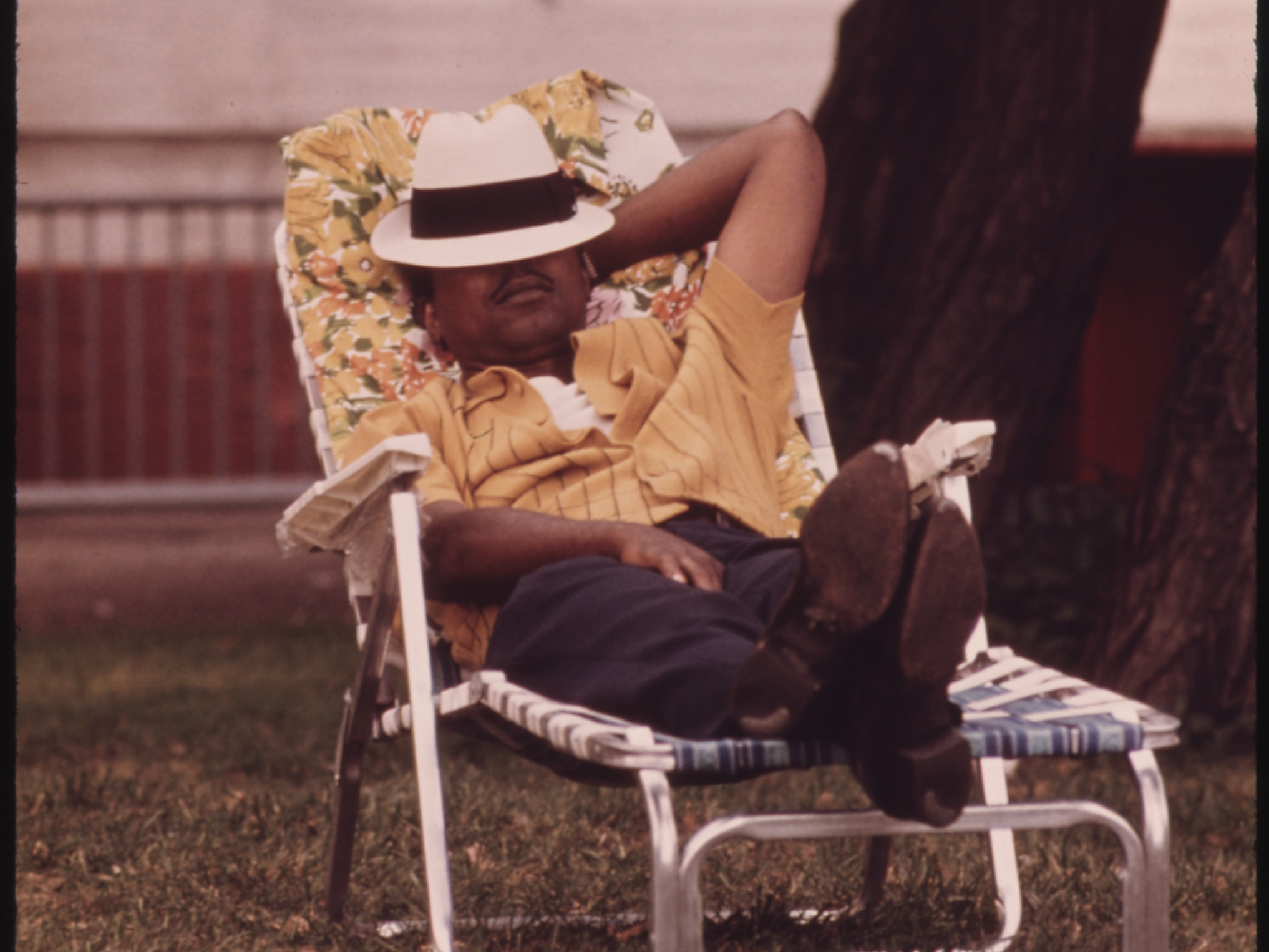
In 1974 every American household had a stack of them against the garage wall: bent aluminum tube, woven plastic strapping in two colors, folding flat to a couple of inches, light enough for a child to carry two.
They went in the trunk and came out at parades, ball games, campgrounds, drive-ins and the sidelines of every children’s game in the country. They got painfully hot, they pinched fingers, they printed a waffle pattern on the backs of your legs, and the seats sagged for years before they finally let go.
And when they did let go, you re-webbed them with a roll from the hardware store. Here are fifteen things every American family knew about them.
1. The Frame Was Tubular Aluminum and Weighed Almost Nothing
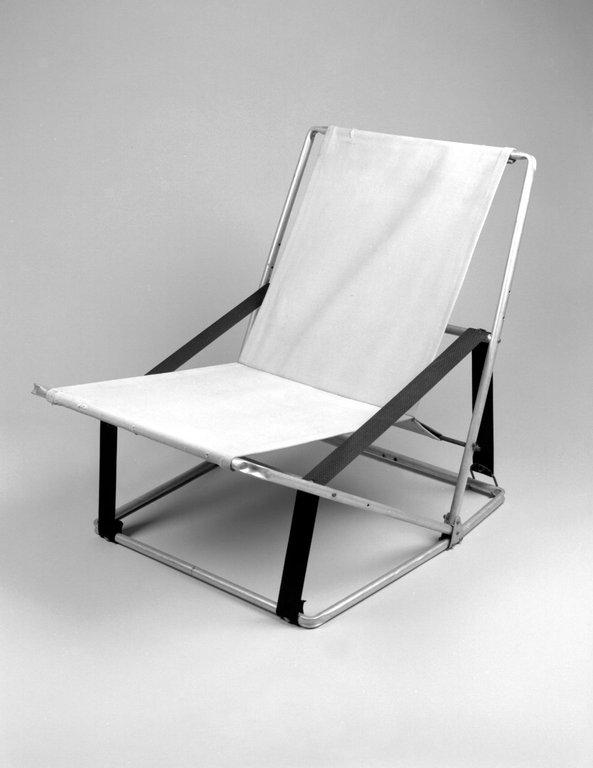
The whole chair was bent hollow aluminum tube, riveted and bolted at the joints, light enough that a child could carry two of them at once in one hand.
Frames of thin steel rod or aluminum in the folding bag chair, generally heavier per chair than the old tube frames despite being smaller – because a bag chair needs a frame that collapses in two directions rather than one.
The lightness is the reason the whole category existed. A chair that a person can pick up, carry across a yard, put in a trunk and take out again without thinking about it is a fundamentally different object from a chair, and aluminum tube is what made that possible at a price households would pay.
Like our content? Follow us for more.
2. The Seat Was Woven Plastic Strapping, Not Fabric
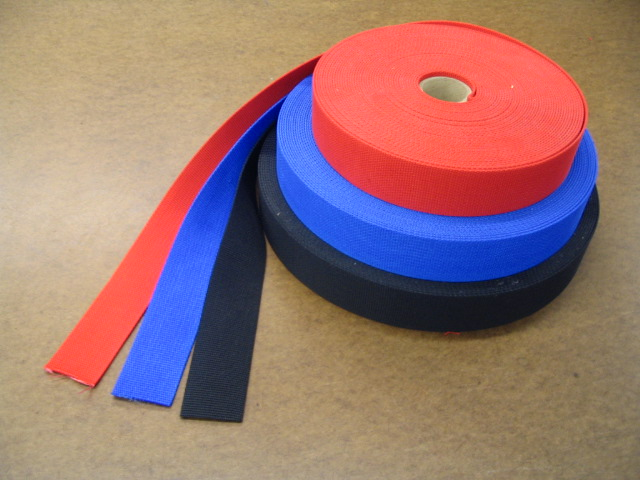
The seat and back were made of flat plastic strips about two inches wide, woven over and under each other in a basket pattern – not a sheet of material, not canvas, not cushioning.
Stretched polyester fabric panels, sewn, which are more comfortable, dry faster, pack smaller and cannot be repaired at home by anybody.
The weave was doing structural work. Individual straps in tension carry a load perfectly well, and interlacing them at right angles stops any one strap from going slack – which gives a seat that supports weight with almost no material and no frame beneath it at all.
3. The Straps Were Separate Pieces and That Mattered
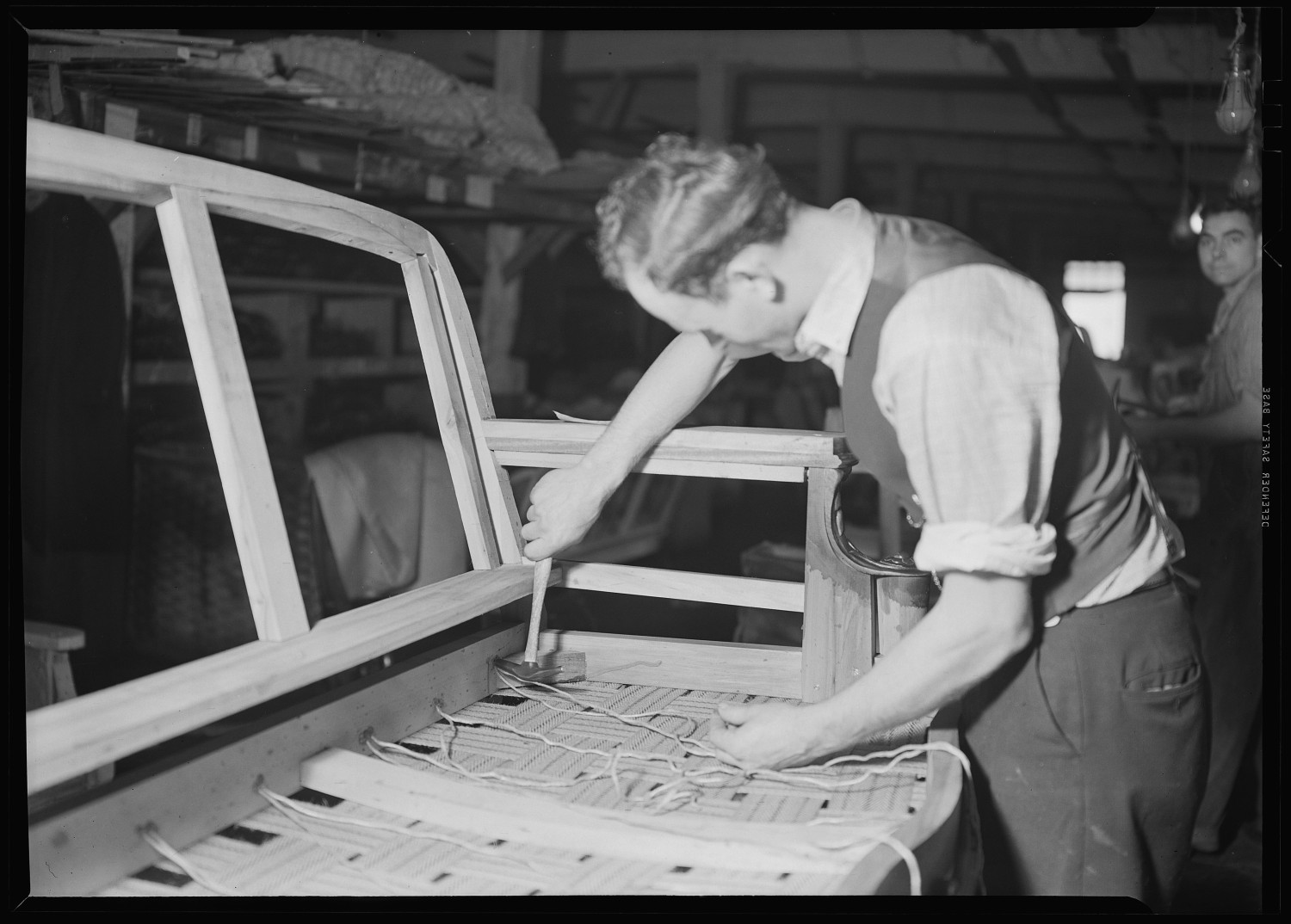
Each strap ran from one side of the frame to the other and was fixed at both ends independently, which means a chair was assembled from maybe twenty discrete components rather than from one piece of material.
A single sewn panel per surface. When it tears, the panel is the chair, and the chair is finished.
This is the detail that everything else follows from. A failure in a woven chair is one strap, in one place, and the other nineteen are fine – so the chair is not broken, it has a broken part. The whole repair culture around these chairs exists because of that single design decision.
4. You Could Re-Web It, and the Hardware Store Sold the Kit
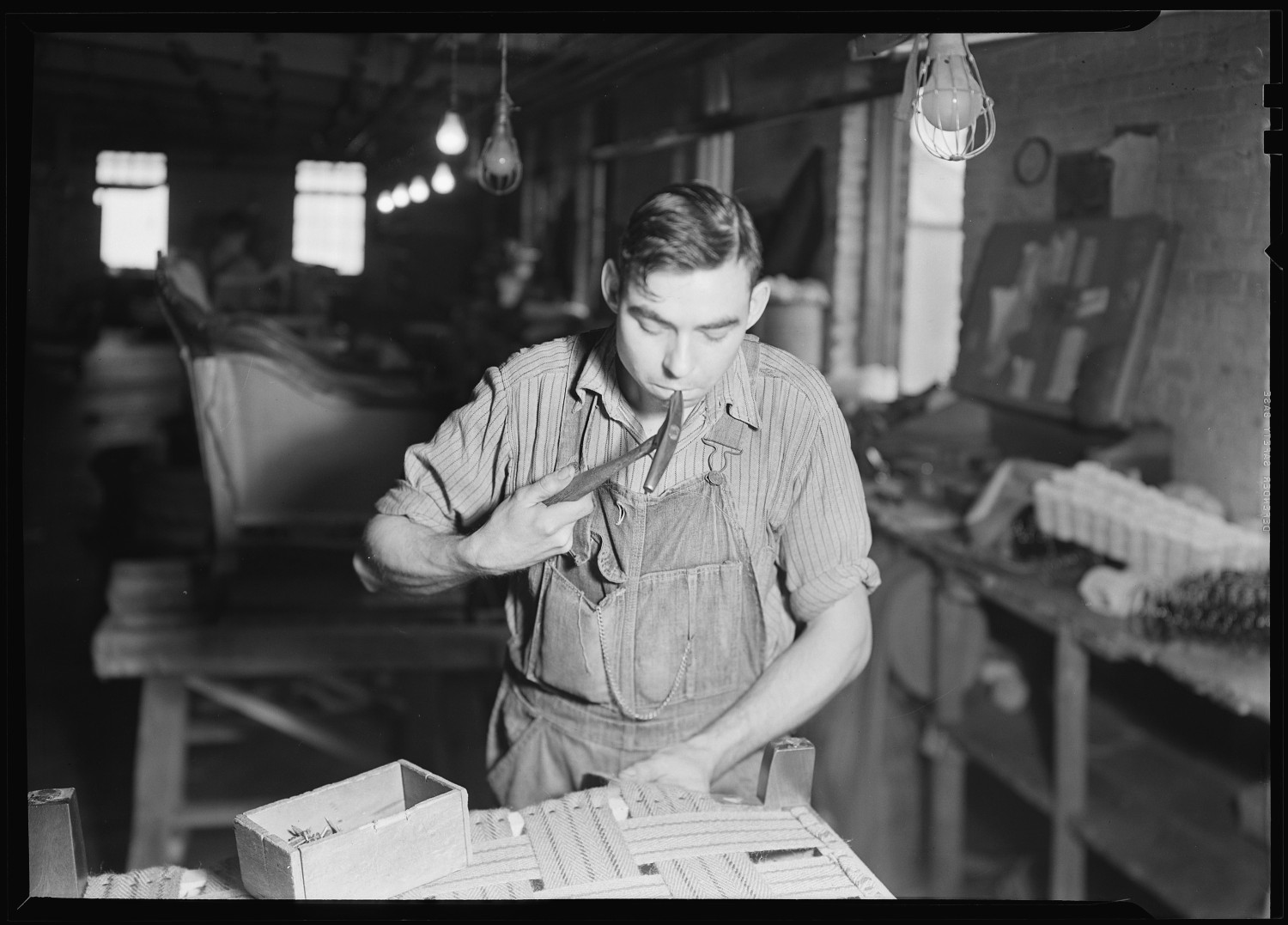
Hardware stores and dime stores stocked lawn chair webbing by the roll in assorted colors, with the screws and clips, as an ordinary shelf item that households bought routinely.
Nothing. There is no repair kit for a bag chair, no shelf space for one, and no expectation on anybody’s part that a broken one will be anything other than discarded.
And people genuinely did it. Re-webbing a chair was a Saturday job requiring a screwdriver and some patience, it cost a fraction of a new chair, and it was common enough that the materials were a staple of hardware retail rather than a specialty order. A household could keep a set of six chairs running indefinitely.
5. The Ends Were Folded Over and Screwed Through
Each strap end was doubled back on itself and fastened to the frame with a short screw through both thicknesses, or held in a clip under the tube – which is a joint anybody can undo and redo.
Sewn seams and welded or riveted fabric attachments, which are stronger, faster to manufacture, and permanent in the sense that they cannot be reversed.
The screw is the whole argument in miniature. A screw is slower and more expensive to install at the factory than a sewn seam, and it is the only reason the chair had a second life. Replacing it with a seam made the chair better and made it disposable in the same stroke.
6. It Folded Flat and Lived Somewhere Specific
The chair collapsed on a scissor action into something a couple of inches thick, and a household’s set lived stacked against a garage wall, on hooks, behind a basement door or flat in a car trunk.
The bag chair in its own bag, stood in a corner or left in the vehicle permanently – smaller, tidier, and genuinely a better solution to the storage problem.
Flat and thin is a different shape from small and cylindrical, and it determined where the chairs went. A stack of six folded chairs against a garage wall takes almost no floor area, which is why nearly every American garage of the period had exactly that stack in exactly that place.
7. It Pinched, and Everybody Had Been Pinched
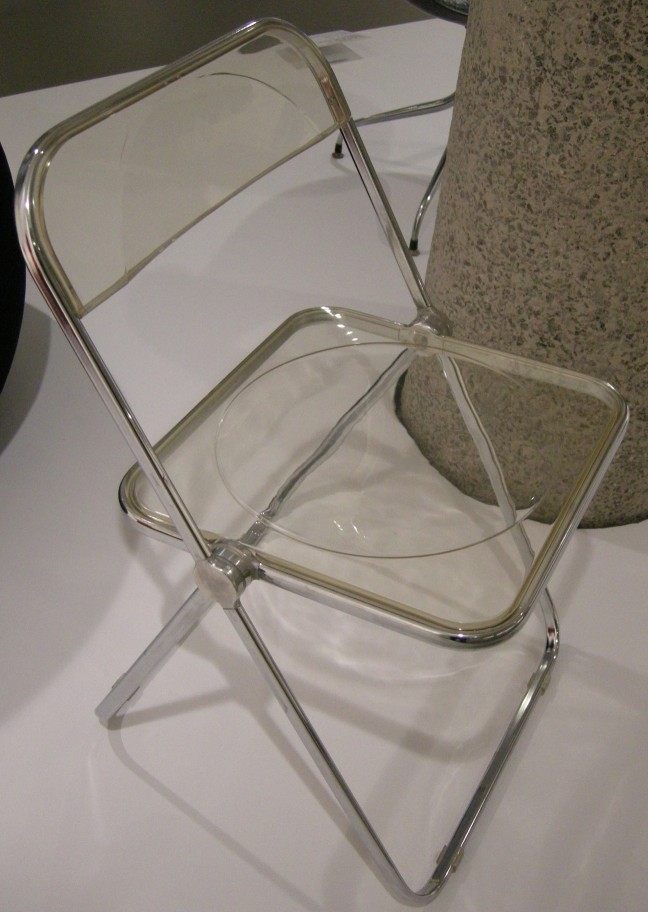
The folding action brought aluminum tubes past each other with no guard of any kind, and a hand in the wrong place while opening or closing one got caught – hard enough to bruise and occasionally to break skin.
Pinch points still exist on folding furniture and are generally better shrouded, with warning labels and designed-in clearances that did not appear on the old chairs at all.
It happened to everybody and it was treated as unremarkable. A child was told once how to open a chair and then expected to manage, and the general view was that getting pinched was how you learned. That is a fair description of the whole period’s approach to minor domestic hazards.
8. It Got Hot, and It Printed You
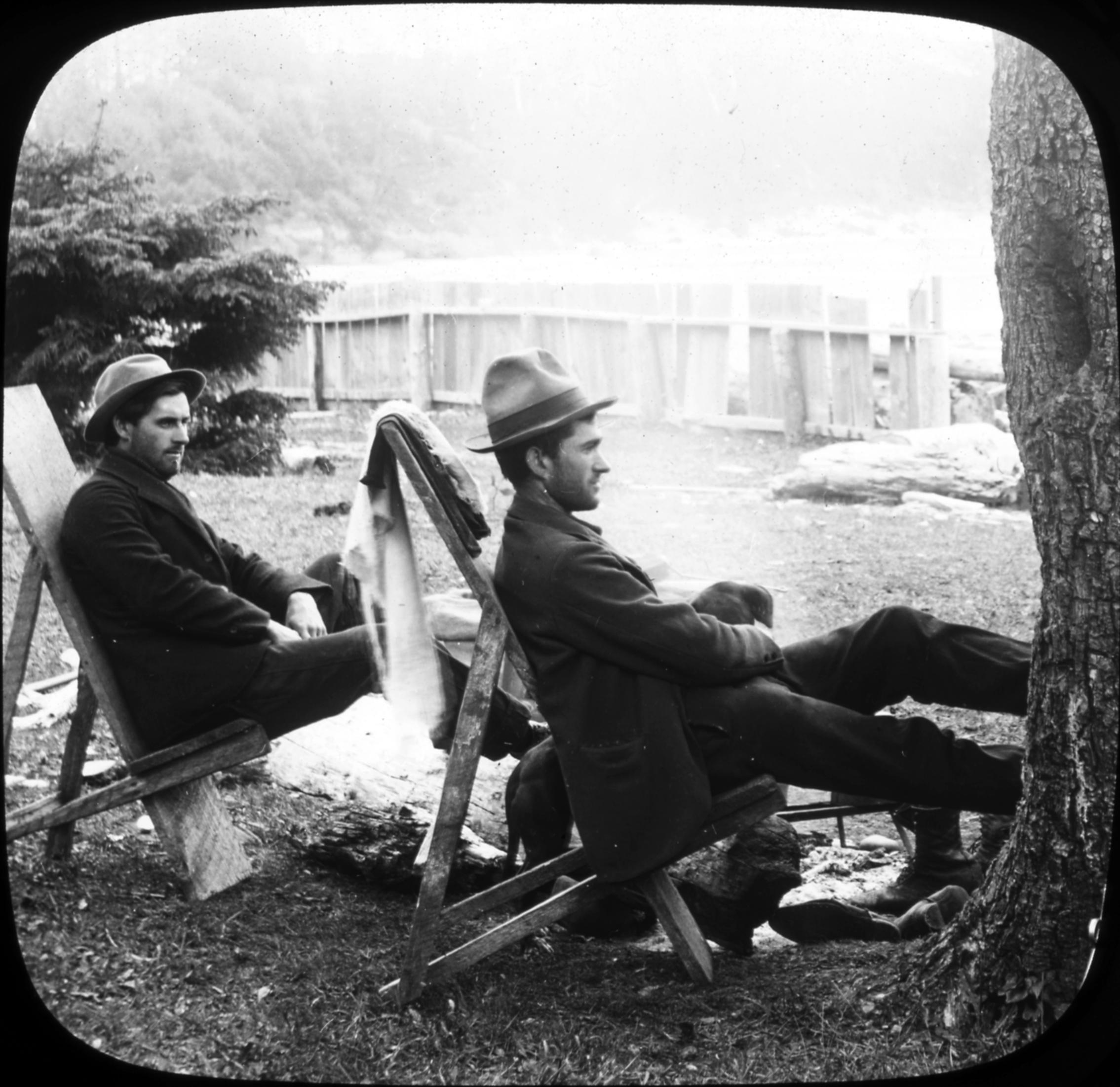
Dark webbing in direct sun reached a temperature that was genuinely painful on the backs of the legs – and after twenty minutes of sitting, the weave left a clear waffle pattern pressed into your skin.
Mesh and fabric that heat far less, breathe better and leave no impression – which removes a universally shared sensory memory and replaces it with nothing.
Both effects came from the same source. Plastic strapping in sun absorbs heat and holds it, and a two-inch strap under body weight concentrates pressure along its edges, so the pattern is the gaps rather than the straps. Everybody who sat in one on a hot afternoon stood up marked.
9. The Webbing Stretched and Then Let Go in the Middle
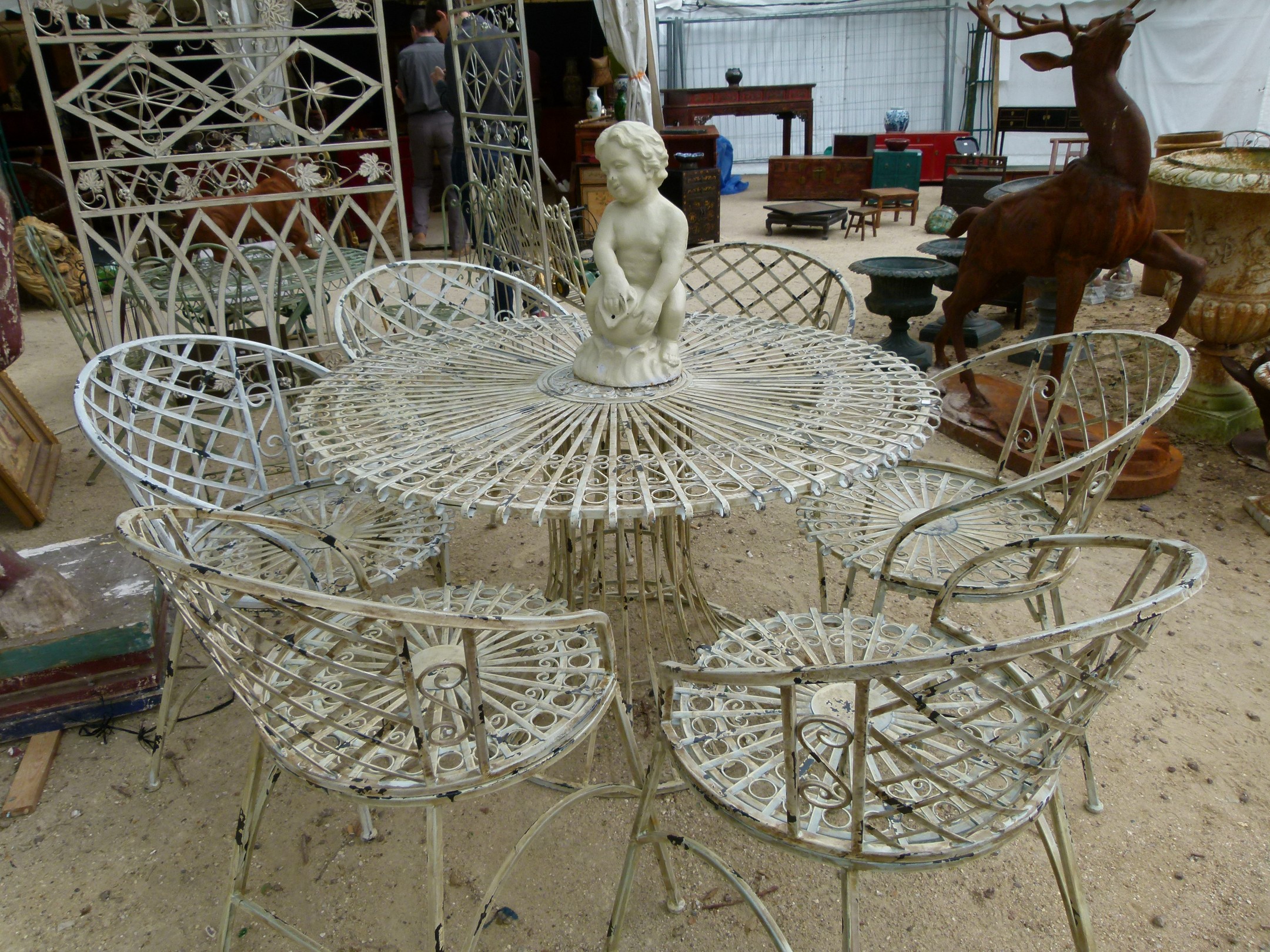
The straps gradually loosened with use and sun exposure until the seat sagged to the point of touching the ground – and then one strap, usually a middle one, parted and the rest followed quickly.
Fabric that fades and eventually tears, generally at a seam or a stress point, with the same practical result and no intermediate sagging stage.
The sagging phase lasted years and was tolerated well past the point of comfort. A chair whose seat had dropped six inches was still a chair, and households kept using them, which is why so many people remember sitting nearly on the ground in a chair that was technically still functioning.
10. There Was a Long Version That Reclined
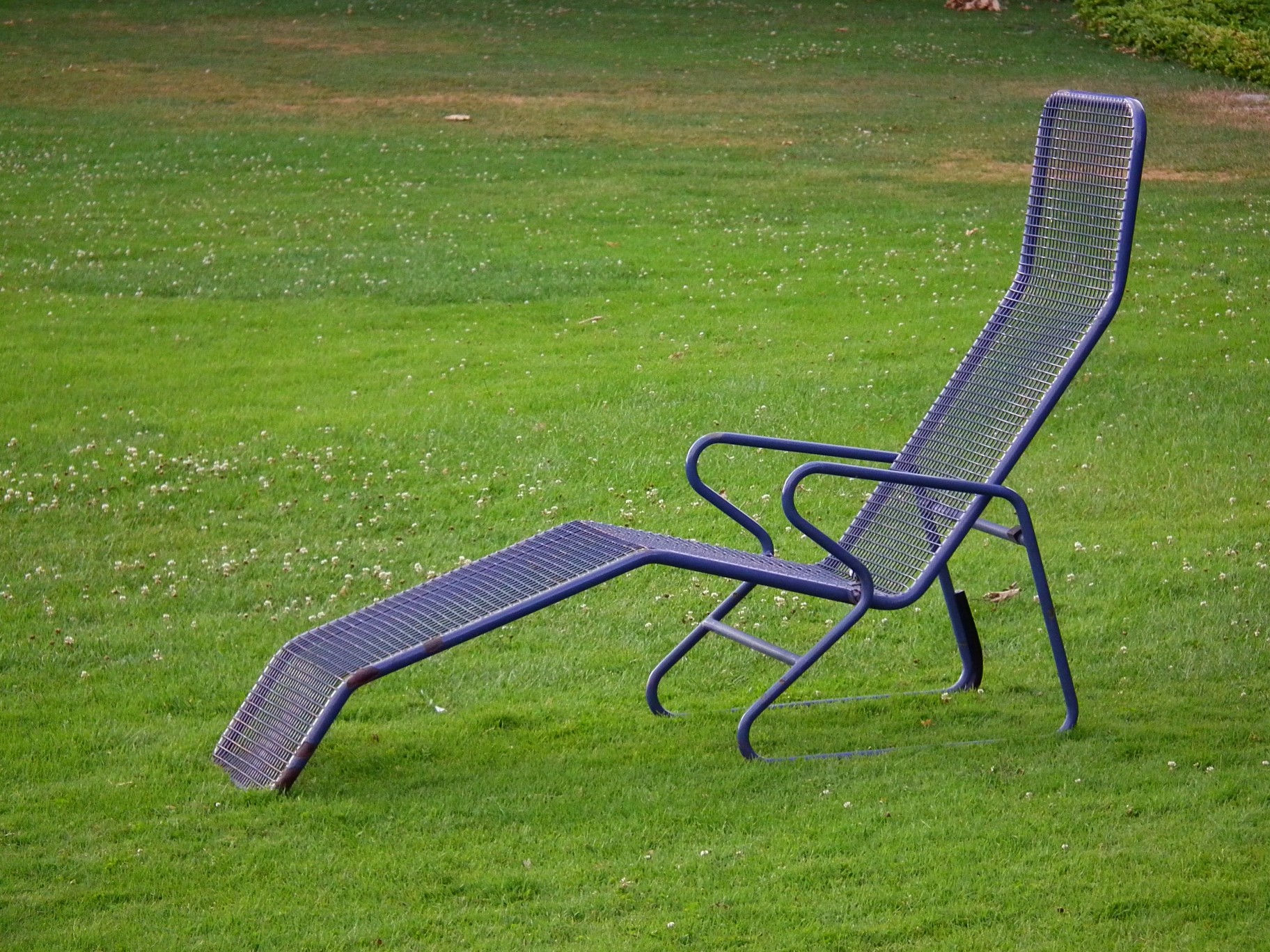
Alongside the upright chair was a full-length chaise on the same tube-and-webbing principle, with a back that ratcheted through several positions on a notched bar and a wheeled end on some models.
Loungers of the same general type, now mostly in fabric sling or padded form, and considerably less common relative to the folding chair than the chaise once was.
The notched adjuster is the part people remember, because it was the only mechanism on the chair and it was imperfect. It slipped under load, it dropped a notch without warning, and setting it required leaning forward at an angle that mostly defeated the point of lying down.
11. You Took It Everywhere, and That Was the Real Point

The chair went in the trunk and came out at a parade, a ball game, a fireworks display, a campground, a drive-in, a swim meet, a county fair and the sidelines of every children’s sporting event in the country.
Exactly the same behavior with a different chair, which is the clearest evidence that the object succeeded completely. The bag chair inherited the entire social function intact.
This was genuinely new in the middle of the century and it is easy to miss how new. Before cheap portable seating, attending an outdoor public event meant standing, sitting on the ground, or using whatever the venue provided. A light folding chair in every trunk meant Americans could sit down anywhere, and a great deal of outdoor public life reorganized itself around that.
12. The Colors Date a Chair to Within Five Years
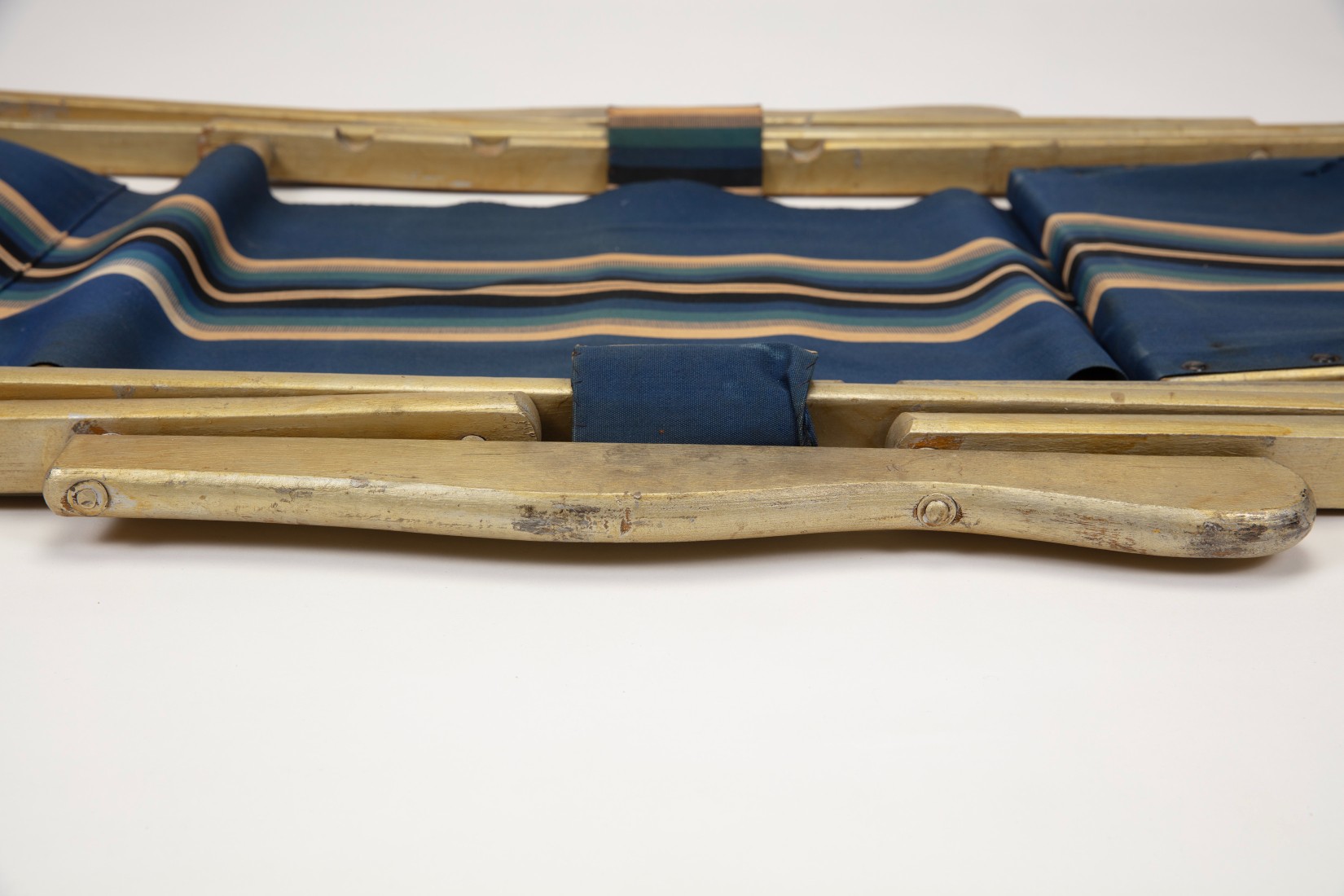
The webbing came in combinations that were specific to their moment – turquoise and white, yellow and green, orange and brown, red and white – woven in alternating stripes that were the chair’s only decoration.
A much narrower palette dominated by dark neutrals and team colors, with pattern as printing rather than as weave structure.
The striping was a consequence of the construction rather than a styling choice. If a seat is made of twenty separate straps, alternating two colors costs nothing and is the obvious thing to do – so the chair’s decoration came directly out of how it was assembled.
13. The Armrests Were Bare Metal in the Sun
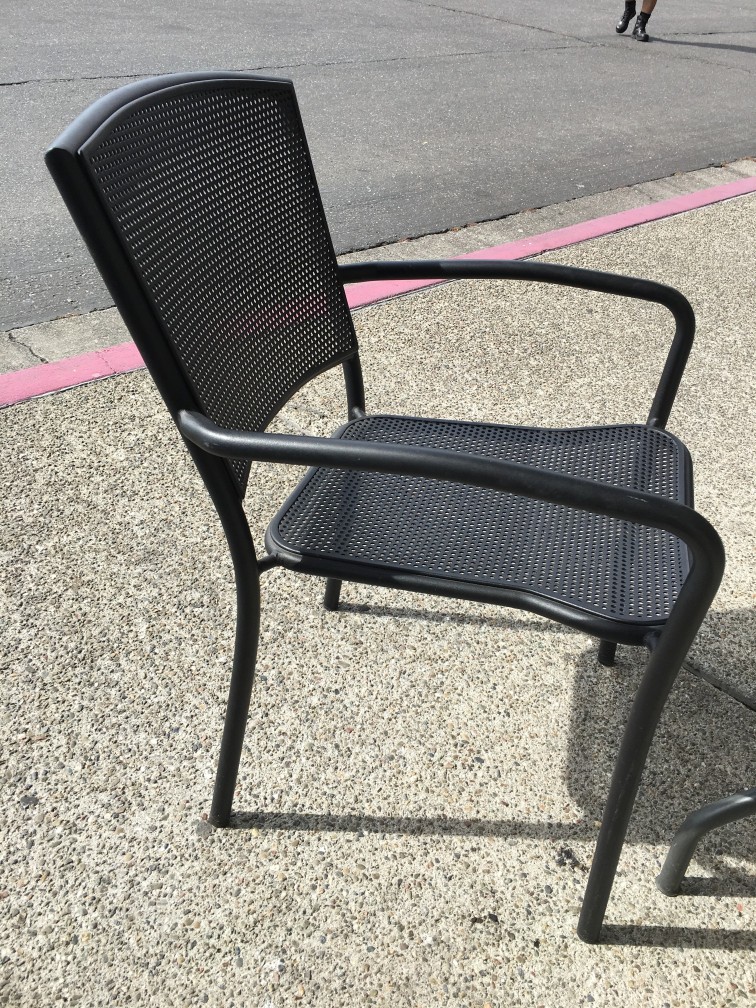
The arms were the same aluminum tube as the frame, uncovered on cheaper chairs and sleeved in a plastic or vinyl cover on better ones – and bare aluminum in August sun was hot enough to make you lift your arm off it.
Plastic or fabric arms as standard, with bare metal in a hand or arm position now unusual on outdoor furniture of any kind.
The plastic arm sleeves are the component that aged worst. They went brittle, cracked lengthwise, slid off and were lost, so a great many surviving chairs have one arm covered and one bare – which is the most reliable visual marker of a chair that has been in use for decades.
14. Six of Them Cost Very Little and Lasted Ten Years
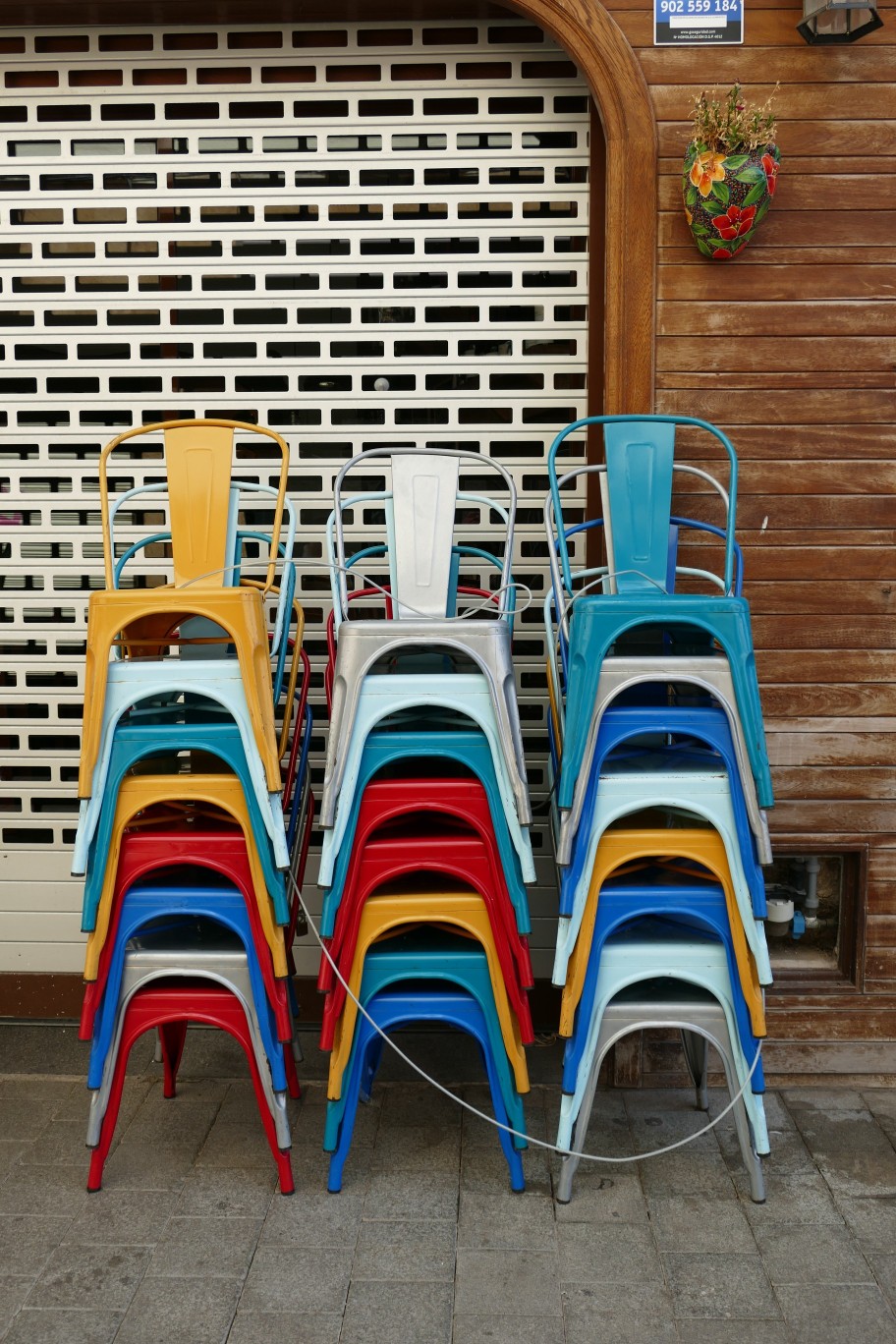
The chairs were cheap enough that a household bought a set rather than a chair, and durable enough – once the webbing problem is treated as maintenance rather than failure – that the same set served a decade or more.
Chairs that cost about the same in real terms, weigh less, pack smaller and are generally expected to last a few seasons rather than a decade.
That combination is unusual and worth naming. Cheap and long-lived normally do not go together, and they did here for one reason: the only part that wore out was the only part designed to be replaced. The frame did not fail, so the chair did not fail.
15. Then the Repairable Part Stopped Being a Part
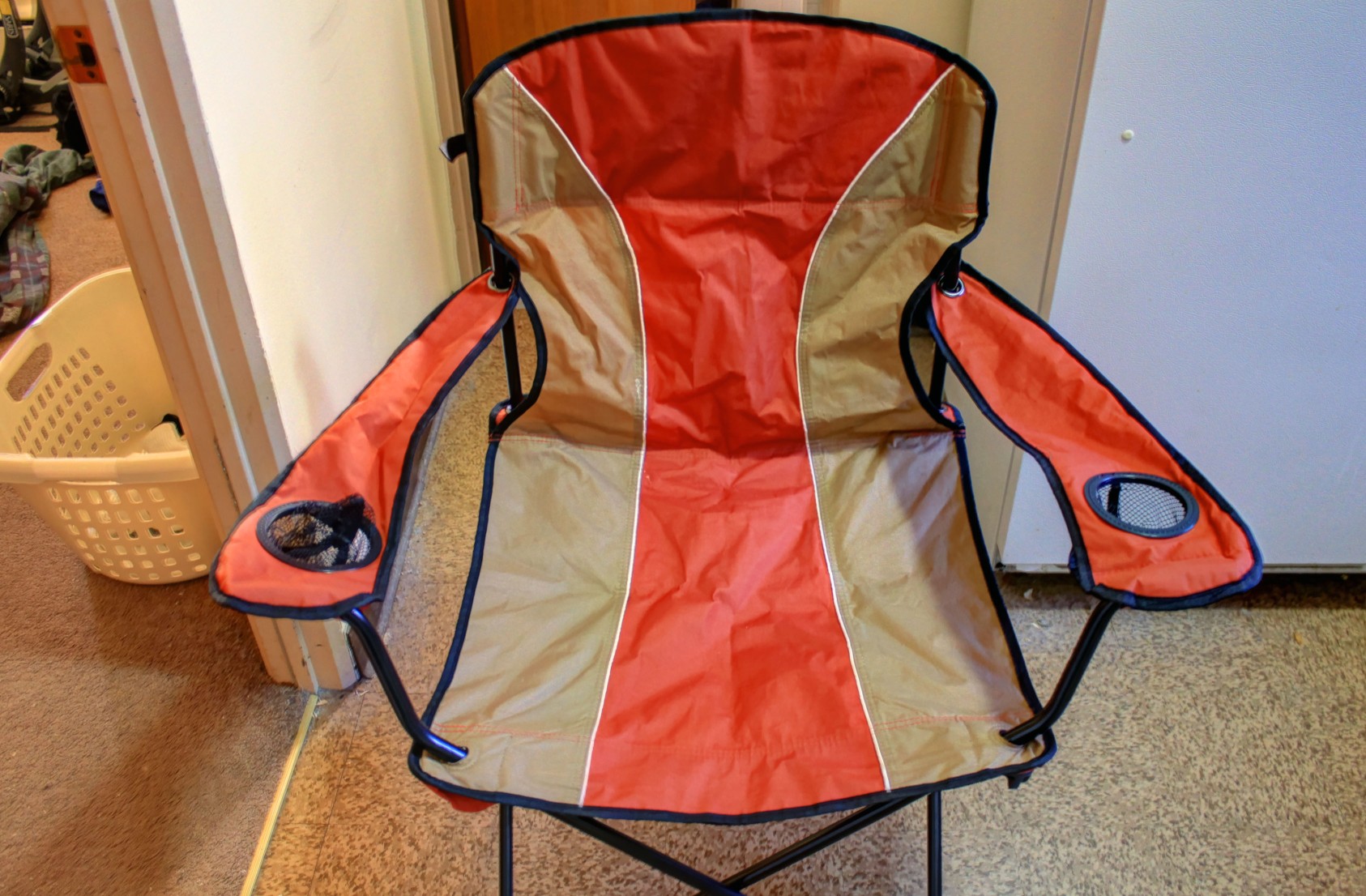
The chair was a light aluminum frame with twenty replaceable plastic straps screwed to it, bought as a set, carried everywhere, re-webbed on a Saturday with a roll from the hardware store, and kept for a decade or more.
A better chair in nearly every respect – lighter, smaller packed, more comfortable, with a cupholder and a shoulder bag – and one with no replaceable components, no repair kit and no expectation of lasting.
The successor won on every axis except one, and the one it lost is not nostalgia. It is that a failure in the old chair was a part, and a failure in the new one is the chair. That difference is the whole distance between a repair culture and a replacement culture, and it comes down to a design decision as small as using a screw instead of a seam. The aluminum frames are still out there in enormous numbers, in garages and at curbsides, almost all of them perfectly sound and almost none of them with webbing – which tells you exactly which part was built to last and exactly which part everybody stopped being able to buy.
The Screw Instead of the Seam
The folding bag chair is better. That needs saying first, because this is not an argument that the old chair was superior.
The new one is lighter. It packs into a cylinder you can sling over a shoulder instead of a flat slab you carry under an arm. It is more comfortable, because stretched fabric conforms and woven strapping does not. It does not get hot enough to hurt. It does not pinch. It has a cupholder. It costs about the same in real terms. By every measure anybody would put in a product comparison, it wins.
It also cannot be fixed, and that is not an accident or a decline in standards. It is the direct result of one manufacturing choice.
The old chair had about twenty straps, each one a separate piece, each one doubled over at both ends and fastened to the frame with a short screw. That is slow to assemble and it costs more than the alternative. What it buys is reversibility: a screw can be undone by anybody with a screwdriver, which means every single load-bearing component on the chair is removable and replaceable by its owner.
So when a strap went – and one always did, usually in the middle of the seat, after the whole seat had been sagging for two or three summers – the chair was not broken. It had a broken part. And hardware stores sold the part, by the roll, in colors, as an ordinary shelf item next to the screws, because enough people did this often enough to make it worth the shelf space.
The new chair has a sewn panel. A seam is faster, cheaper and stronger than twenty screws, and it is permanent in the precise sense that nobody can undo it. When the panel tears, there is no part to replace, because the panel is the chair.
That is the whole story, and it is a smaller story than the usual one about things not being made like they used to be. Nobody decided to make a worse chair. Somebody made a better chair by replacing a reversible joint with a permanent one, and the repair economy that had grown up around the reversible joint simply had nothing left to attach to.
You can see the result on any American curbside in June. The aluminum frames are everywhere, in huge numbers, bent at nothing, rusted at nothing, structurally sound after fifty years – and almost none of them have webbing on them.
The part built to last, lasted. The part built to be replaced, got replaced, over and over, until one year nobody sold the roll any more.
If you had these, you know the pattern they left on the backs of your legs, and you know which arm lost its plastic cover first.
And somebody in your family re-webbed one on a Saturday, badly, and it held for another four years.
Like our content? Follow us for more.