It Was Cloth on a Stick With a Spring Inside
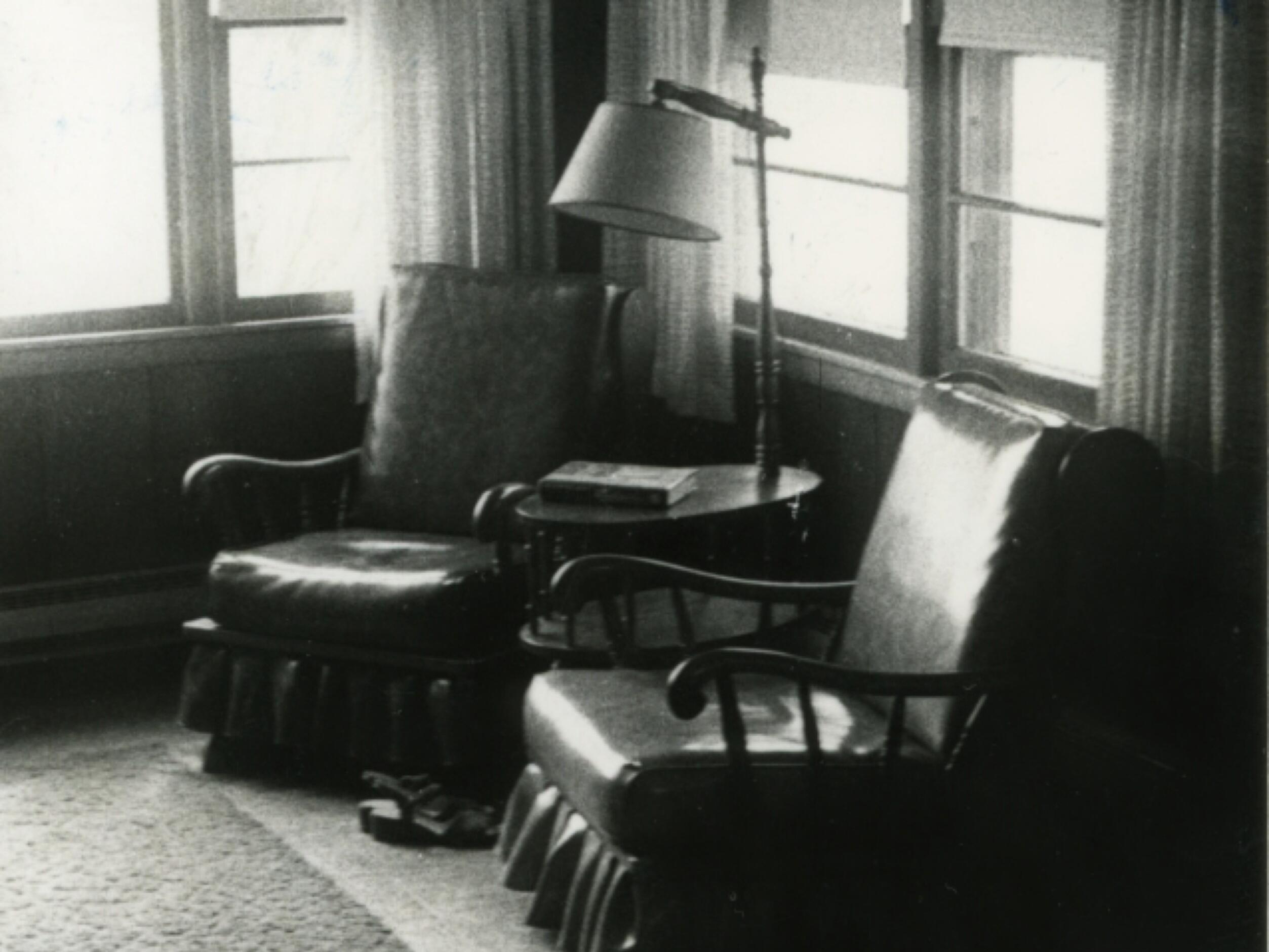
There was a wooden roller across the top of the window, and hanging from it a sheet of stiffened cloth or vinyl, cream or dark green, with a hem at the bottom and a little ring or a short cord hanging from the middle of it.
You pulled it down and it stayed. You tugged it once and it went up – sometimes smoothly, more often with a sound like a window breaking, ending in a slapping flutter as the end of the shade went round the roller several more times than it needed to.
Every window in the house had one. In a great many houses they were the only thing on the windows at all.
Like our content? Follow us for more.
The Mechanism Is Genuinely Clever and Entirely Mechanical

Inside the hollow roller there is a flat steel spring, coiled like a clock spring, anchored at one end to the roller and at the other to a fixed pin that sticks out of the end cap.
That pin does not turn. So when you pull the shade down, the roller rotates around the fixed pin, and the spring winds tighter. The further down you pull it, the more energy is stored.
The other end of the roller carries the clever part: a small pawl, which is a flat metal catch pivoted so that gravity decides which way it falls, and a pair of notches cut into the end cap.
When the roller is turning in the unwinding direction – that is, when you are pulling the shade down – the pawl is thrown clear by the motion and does nothing. The moment you stop pulling, the roller tries to turn back the other way, the pawl falls into a notch, and the whole thing locks.
To raise it you give the shade a small downward tug. That spins the roller very slightly further in the pulling direction, which flicks the pawl out of its notch, and then the spring takes over.
No cords. No pulleys. No cords to break and no mechanism to service. One spring, one pin, one catch, and a piece of cloth.
Which Is Exactly Why It Went Off Like a Gunshot
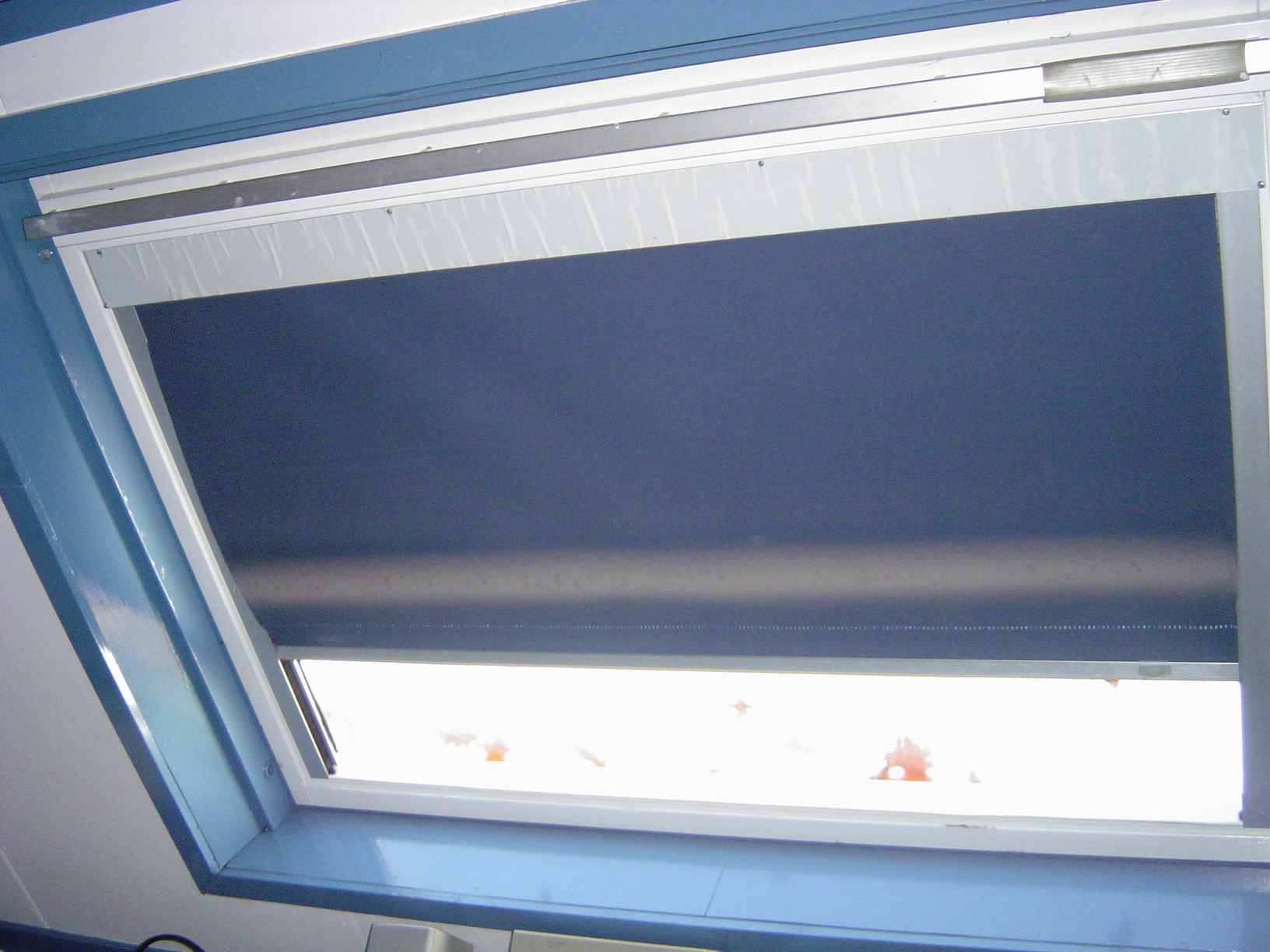
The violence had a cause, and it was not a fault.
The spring stores energy in proportion to how far the shade has been pulled down. A shade drawn all the way to the sill has a fully wound spring behind it. When the pawl lets go, there is nothing at all to slow the roller down – no brake, no governor, no friction beyond the bearing in the bracket.
So the roller accelerates for the whole length of the shade, and by the time the hem arrives at the top it is moving extremely fast. Then the hem hits the roller, the shade keeps winding, and the loose end flaps around the drum until the energy is gone.
Every household therefore learned the technique, which was to hold the ring and walk the shade up under control, releasing the catch and then letting it rise against the resistance of your hand. Children learned the opposite technique, which was to pull it down as far as it would go and let it off deliberately, for the noise.
The springs could also be adjusted. Taking the roller out of its brackets and turning it by hand against the pin either added or removed winding, which is how a shade that had gone sluggish was fixed – and how a shade that had become dangerous was calmed down.
The Ring at the Bottom Was Not Decoration
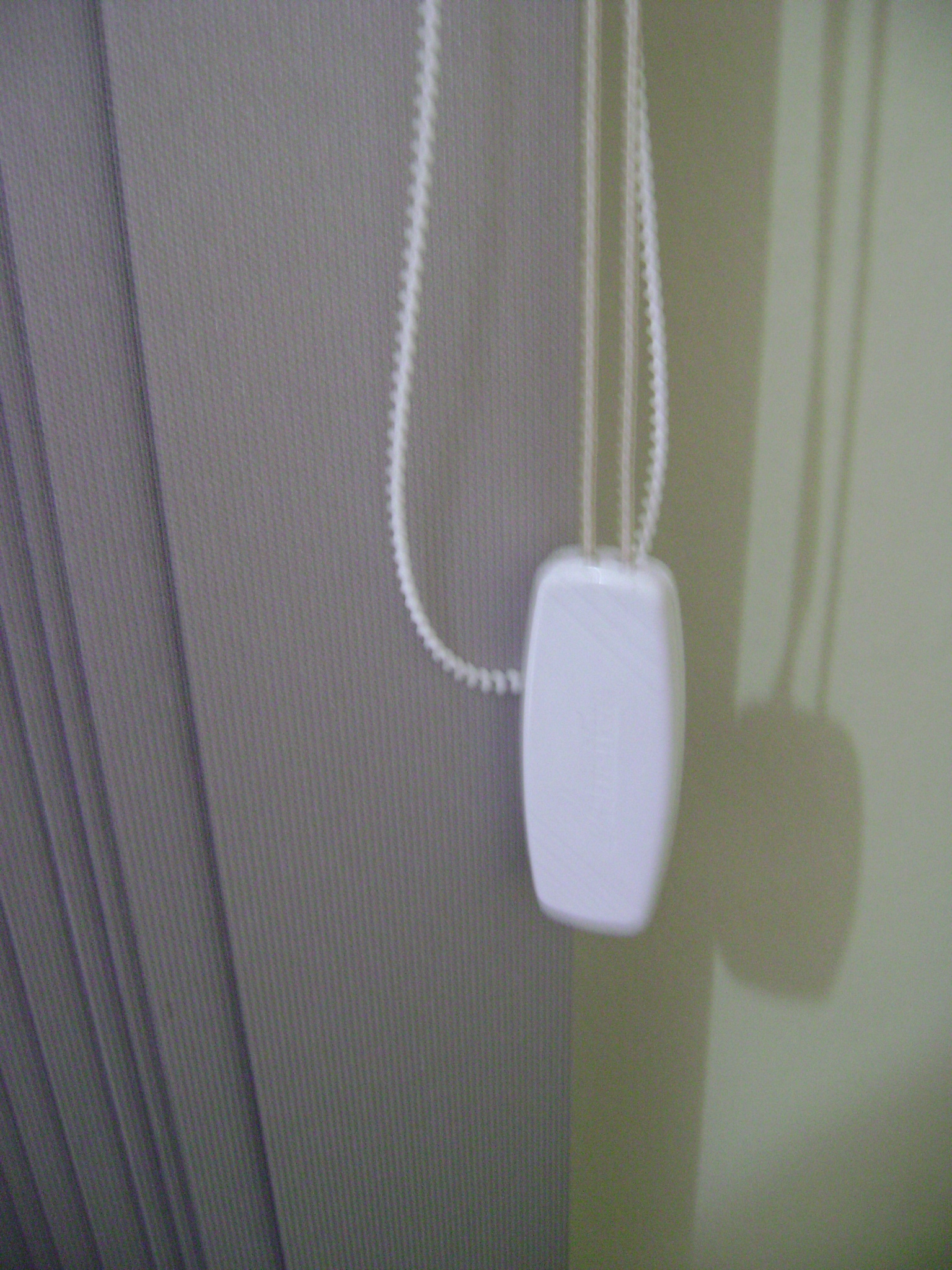
The hem of the shade carried a wooden or metal slat to keep it straight, and screwed into the middle of that slat was a small ring, a loop of cord, or on better shades a short pull with a turned wooden knob.
It existed because the shade had to be pulled from the exact centre. Pulling from one corner twists the roller, which makes one side wind faster than the other, which makes the shade run crooked and eventually walk itself off the end of the drum.
A crooked shade was one of the standing minor annoyances of the American house, and the cure was to unroll the whole thing, straighten it, and rewind it by hand.
The rings also came off, constantly, leaving a shade with a small hole in the middle of its hem and no way to work it except by pinching the fabric – which is how a great many shades ended up with a torn hem and a safety pin in them.
What It Was Actually For Was Heat
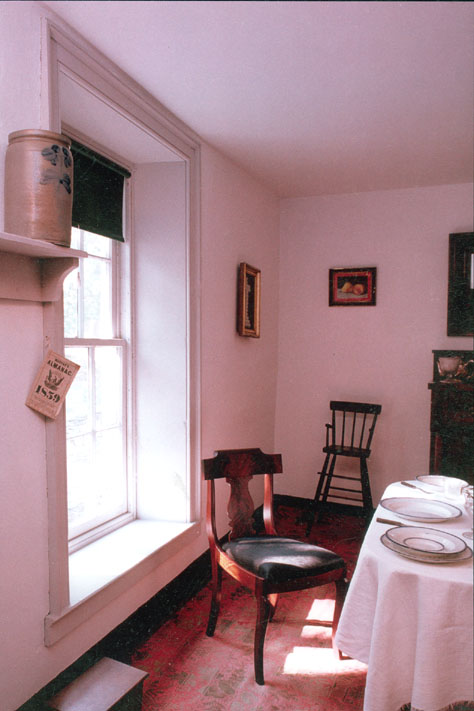
This is the part that has been lost, and it reverses the way most people understand the object.
A roller shade is usually remembered as a privacy device. It was not, primarily. It was a thermal device, and in the American house before mechanical cooling it was one of the very few available.
Consider the problem. A window admits solar radiation, which arrives as light, strikes the surfaces of a room and becomes heat inside the building, where it stays. A single pane of glass does essentially nothing to prevent this. On a July afternoon, a sunlit window is a heater running at a rate of several hundred watts per square yard.
The only cheap answer is to stop the light before it gets in, or at least to intercept it immediately at the glass. That is precisely what an opaque shade pulled down on the sunny side of the house does, and it is why shades of this period were frequently white or cream on the street side regardless of what colour they were indoors – a pale outward face reflects more and absorbs less.
So the daily routine in a house of this kind was not about being seen. It tracked the sun. Shades came down on the east side in the morning, came up as the sun moved, went down on the west side in the afternoon, and came up again in the evening when the air outside finally got cooler than the air inside.
Children in these houses were given a specific instruction, and it was not about privacy. It was to pull the shades on whichever side the sun was on.
You Bought Them Cut to Length in the Store

Shades were a fitted product sold by an unfitted trade, and the way that was solved is a good piece of small retail engineering.
Stores stocked rollers and shade cloth in a few standard widths and very long lengths. You brought in the measurement of your window, and the clerk cut both to size: the cloth to length with a blade against a straight edge, and the wooden roller to width with a small saw, after which the metal end cap and the pin were knocked back on.
That whole operation took a couple of minutes and required no skilled trade, no return visit and no appointment. A householder walked in with three numbers written on a piece of paper and walked out with three shades that fitted.
It is the same model as glass cut to size or a key cut while you wait, and it is why these things were cheap. The manufacturing was done in bulk somewhere else, and the fitting – the part that has to be specific to your house – was a two-minute job done at the counter by whoever was there.
They Failed in Four Predictable Ways
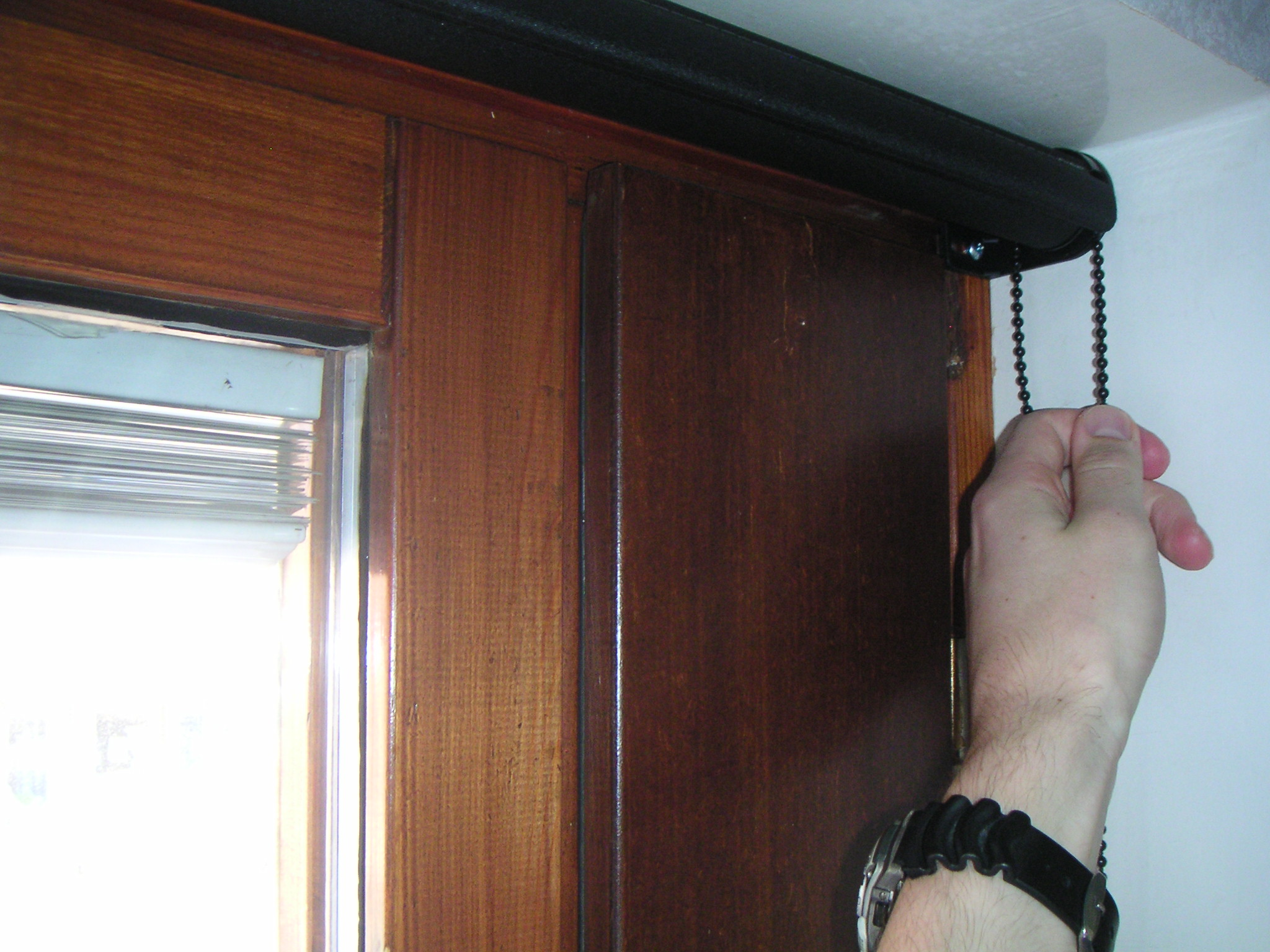
The spring weakened. A shade that had been left down for years lost tension and would no longer lift its own weight, at which point it had to be rewound by hand or lived with.
The fabric cracked. Early shades were cloth stiffened with a filler, and later ones were vinyl; both became brittle with years of sunlight, and the crease where the shade was habitually left developed a line, then a split, then a tear across the full width.
The brackets pulled out. They were small, screwed into the window casing, and taking the whole load of the roller plus every tug it had ever received – so the screws loosened and eventually came out of the wood, taking a chunk with them.
And the pawl stopped catching. A catch worn round at the corners slips out of its notch under load, which produces the worst failure of all: a shade that will not stay down, and goes up by itself, at night, in a lit room.
Three Things Replaced It and None of Them Did the Same Job
The horizontal blind came first, in metal and then in thin aluminium, and it won on a genuine advantage: it adjusts. A slatted blind can admit light while blocking the view, or admit a view while blocking the sun, which a sheet of opaque cloth cannot do at all.
Curtains and drapes came up at the same time as households got more money, and they won on appearance. A roller shade is a flat rectangle of plain material, which looks like exactly what it is.
And air conditioning finished the argument. Once a house could be cooled mechanically, the thermal function of a window covering stopped being something anybody noticed, because the building handled it. The shade’s main job became invisible, which meant the object was re-read as a privacy device – and as a privacy device it was comprehensively beaten by things that looked better.
The Twist: The Thermal Job Never Went Away, It Just Got Expensive
Here is what makes the roller shade worth taking seriously rather than merely remembering.
The physics did not change. A sunlit window is still a heater. The several hundred watts per square yard that came through a pane of glass in 1964 still come through it now, and something still has to deal with them. The difference is that the shade used to intercept that heat for nothing, and the compressor now removes it afterwards, for money, every afternoon, all summer.
Which is why the idea has come back around in a more sophisticated form. Cellular and honeycomb shades, exterior roller screens, coated and low-emissivity glass and automated shading systems are all doing precisely the job the cream-coloured shade was doing – stopping solar gain at the window instead of pumping it out of the room afterwards – and they are sold as an energy measure, correctly, at a price the old ones never approached.
So the object was not superseded. Its function was taken over by the building’s machinery, which does it later and worse, and then handed back to a premium product that does it properly again.
The one part that genuinely died is the spring. There is no mass-market window covering now that stores its own operating energy, needs no cord, no motor, no battery and no electricity, and lasts forty years on one piece of coiled steel.
It is still, on any honest accounting, the better mechanism. It was just too loud.
Like our content? Follow us for more.