
In 1974 a great many American households had no gas main and no intention of getting one. They had a white steel tank on blocks in the yard, and it belonged to the company that filled it.
It was filled to about eighty per cent and never to the top. There was a dial under a lid on the top reading in percentage, and somebody in the house walked out and looked at it without being asked to. In January it fell fast enough to be worth worrying about.
And the household knew what a gallon cost, because it had agreed the price in advance. Here are fourteen things every American family on bottled gas knew.
1. The Tank Sat in the Yard and It Was Not Yours
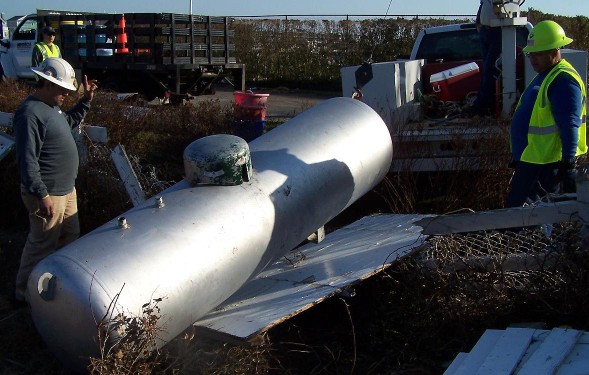
A steel tank the shape of a long capsule stood on blocks or short legs beside the house, and in most arrangements it belonged to the supplier rather than to the household – leased, installed and maintained by the company that filled it.
The same arrangement, substantially unchanged, with leased tanks remaining the normal model and owned tanks a minority choice.
The leasing is the detail that shaped the whole relationship. A household with a leased tank bought fuel from the company that owned it, which made changing supplier a matter of having a tank removed and another installed – so the tank in the yard was, in commercial terms, a contract sitting on the grass.
Like our content? Follow us for more.
2. It Was White, and the White Was Not Decoration
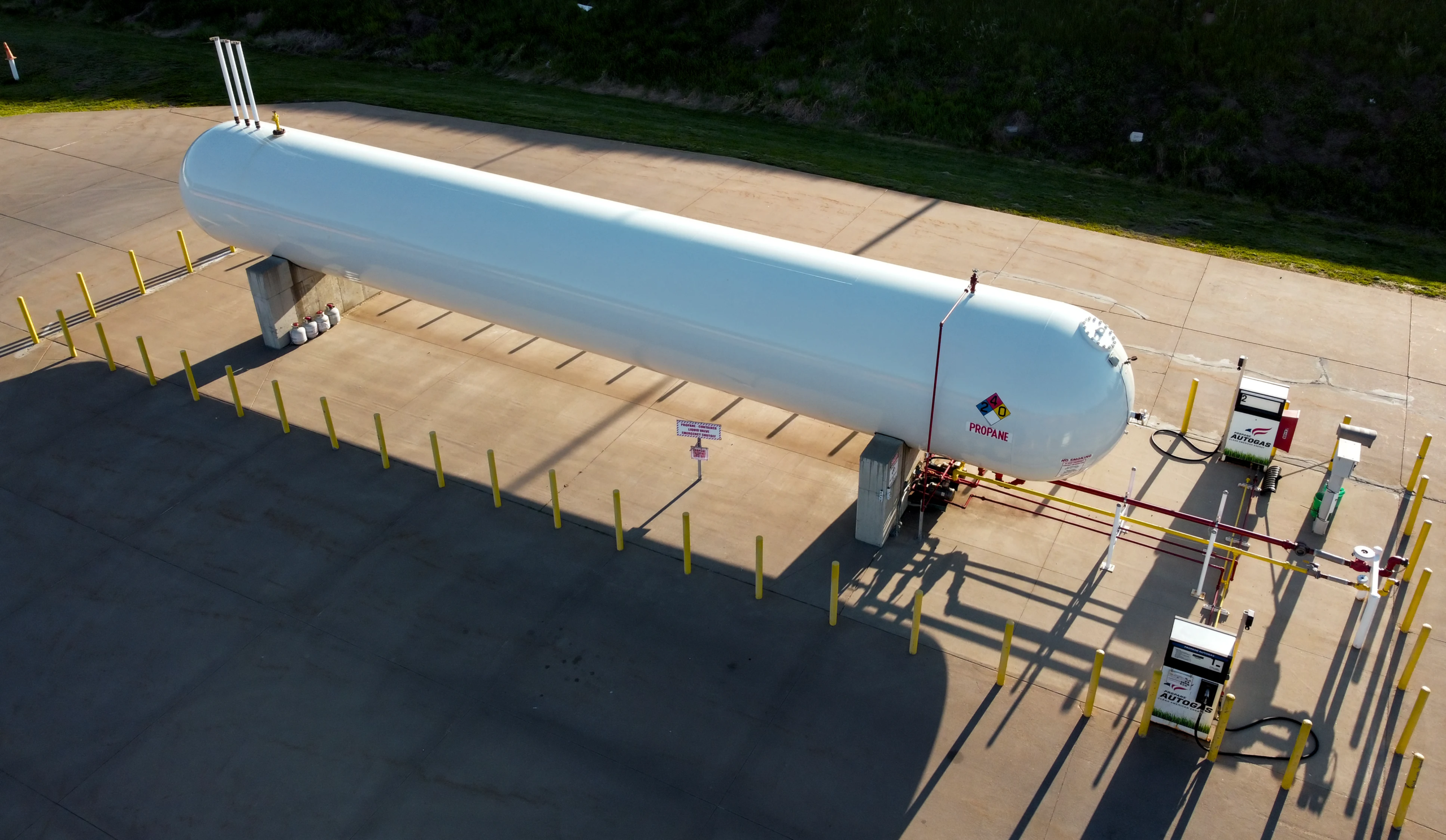
Tanks were painted white or a very light reflective colour, consistently, everywhere – and a tank that had been allowed to go rusty or had been painted a dark colour was a problem rather than an eyesore.
The same requirement, now expressed in explicit standards, with light reflective finish treated as a safety matter rather than a convention.
The reason is thermodynamic. The tank holds a liquid under its own vapour pressure, and that pressure rises with temperature – so a dark tank absorbing summer sun builds internal pressure that a white one reflecting it does not. The colour is a pressure control measure, which is why it was never a matter of taste.
3. It Was Filled to Eighty Per Cent and Never to the Top
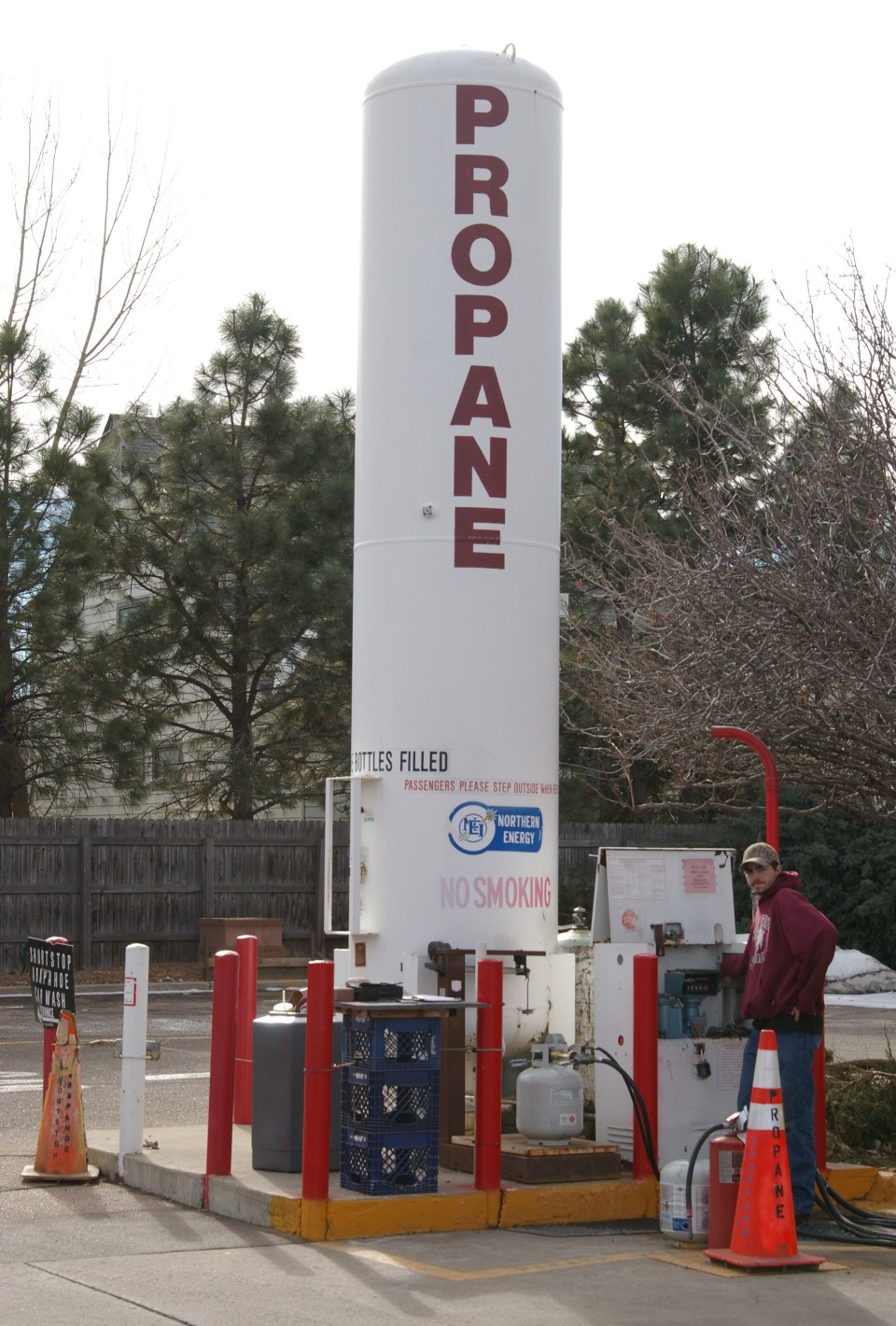
A delivery stopped well short of full – at around eighty per cent of the tank’s volume – and a household that asked for the rest was told no, every time, by every driver.
Exactly the same practice, for exactly the same reason, applied universally.
The space above the liquid is not wasted capacity; it is the entire margin for thermal expansion. The liquid expands considerably as it warms, and a tank filled to the top on a cold morning has nowhere for that expansion to go by afternoon – so the ullage is the design, and the eighty per cent figure is why a hundred-gallon tank holds eighty gallons of fuel.
4. A Dial on Top Told You How Much Was Left
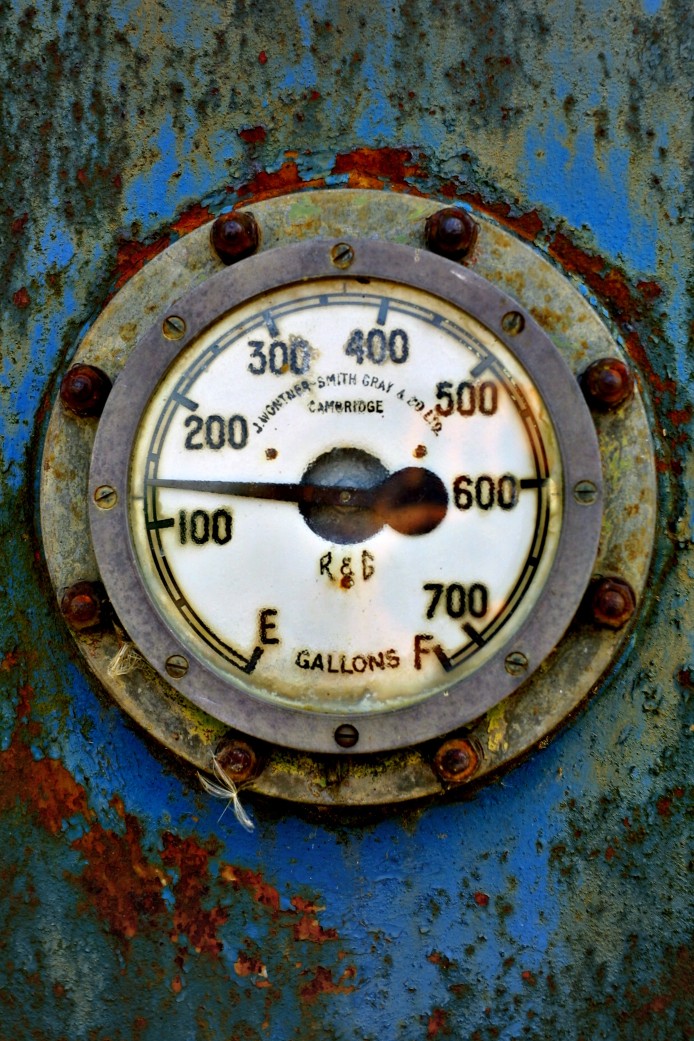
Set into the top of the tank under a lid was a round gauge reading in percentage rather than in gallons, driven by a float inside – and reading it was a household routine that somebody did without being asked.
The same float gauge on most tanks, with remote monitoring and automatic delivery scheduling now common on larger accounts.
Reading in percentage rather than volume is the thing that confuses people and it is sensible. One gauge design then works on every size of tank, and the household converts to gallons by knowing its own tank – which is a piece of information every propane family had and no metered household has any equivalent of.
5. Running Out Was an Event With a Procedure

An empty tank did not simply mean no heat. Restoring service required the supplier to attend, and a qualified person to check the system and restore the appliances – not something the household did itself.
The identical position, now set out in formal requirements, with the supplier’s attendance and a system check standard practice after any interruption.
Which is why running out was treated as a genuine failure rather than an inconvenience, and why households watched the gauge the way they did. This piece deliberately describes no part of that restoration process, because it is work for the supplier and a qualified technician and for nobody else.
6. The Gauge Was Watched Hardest in Cold Weather

Consumption rose sharply in winter, which meant the percentage fell fast – and a household that had been comfortable at forty per cent in October could be anxious at the same reading in January.
The same seasonal pattern, now managed by usage-based automatic delivery on most accounts rather than by somebody walking out to look.
There is a second cold-weather effect that rural households knew about and which is genuinely counterintuitive: a tank’s ability to deliver gas depends partly on temperature and on how much liquid is in it, so a low tank in severe cold performs worse than the same quantity would in mild weather. It is one of several reasons nobody ran a tank down to the bottom in winter.
7. The Gas Was Heavier Than Air and That Changed Every Rule
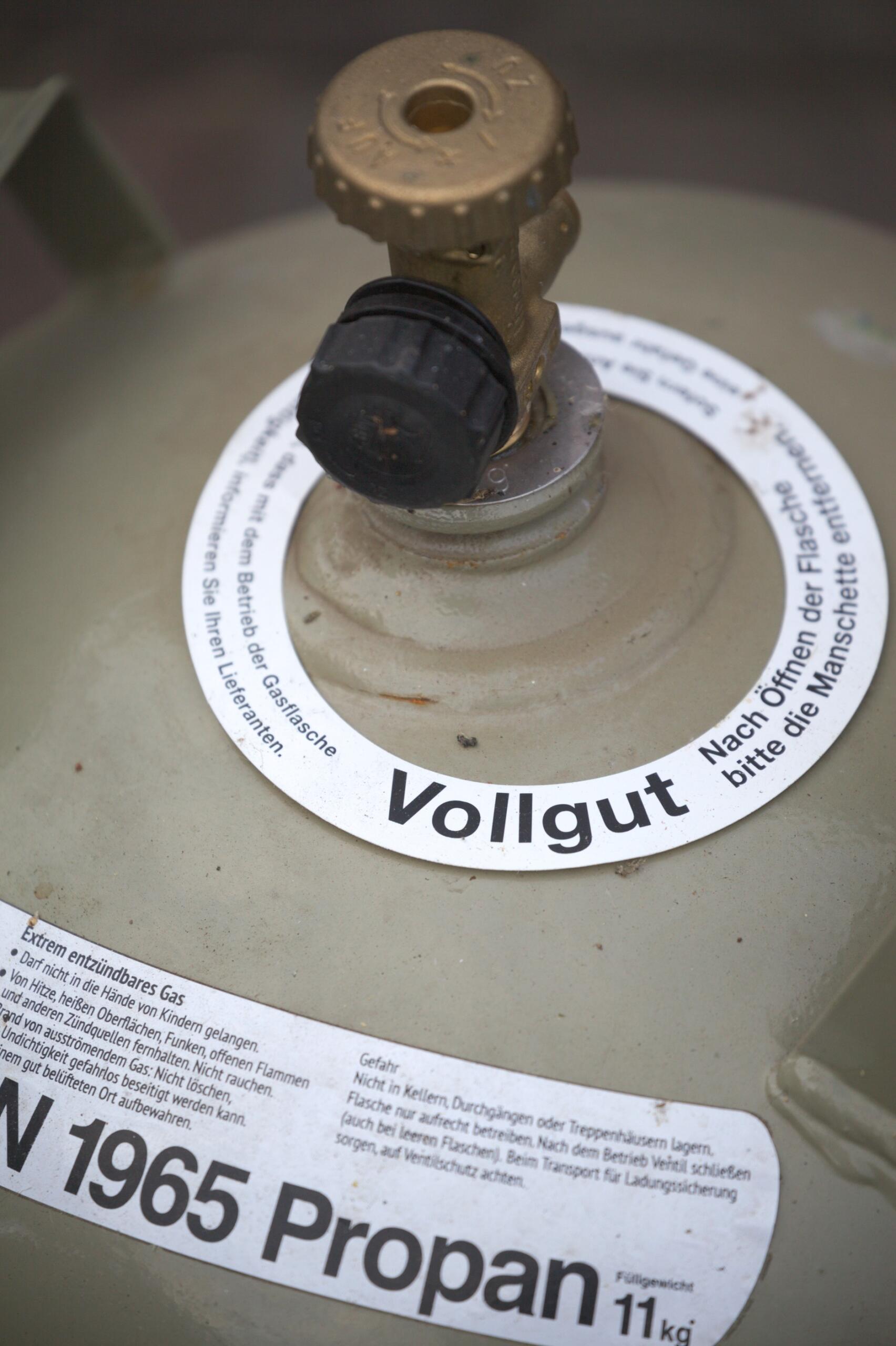
Unlike the gas supplied through city mains, this fuel’s vapour is denser than air – so any escape settles and collects at the lowest point available rather than dispersing upward.
The identical physical property, with the consequences now addressed through equipment design, installation rules and detection equipment that did not exist in 1974.
This single fact is the reason the rules governing it are different, and it is why households were told to keep the tank outside, away from openings at ground level, and away from basements and pits. The piece states the property because it explains the regulation; it gives no procedure, no detection method and no instruction of any kind, because all of that is correctly a matter for current published guidance and qualified people.
8. The Smell Was Added on Purpose
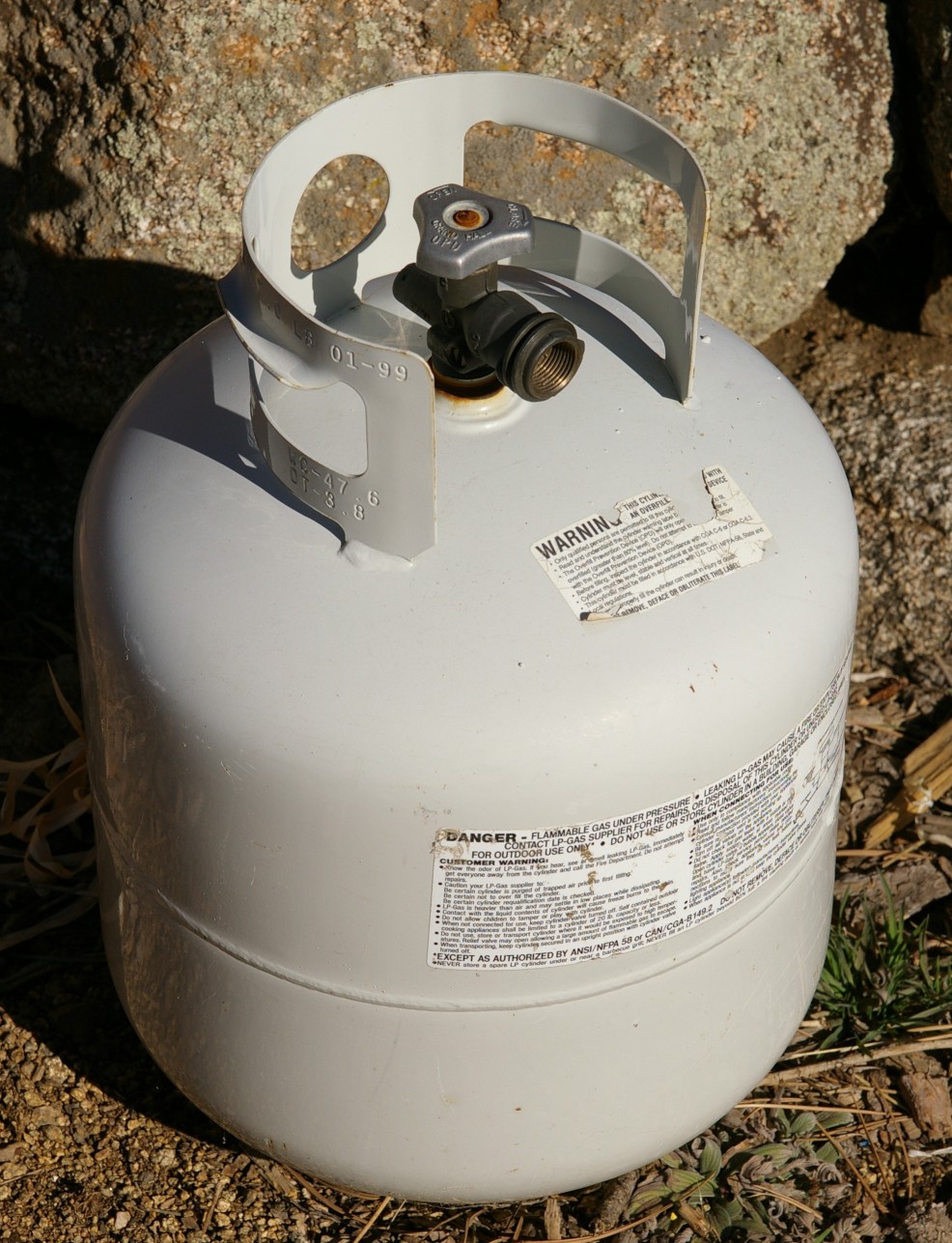
The fuel itself is close to odourless, and a strong distinctive smell is deliberately introduced so that an escape can be detected by anybody who happens to be nearby.
The same practice, universal and required, with the same purpose.
Adding a warning property to a product that lacks one is a quietly brilliant piece of safety engineering and it is worth recognising as such. The gas cannot be seen, cannot be heard and gives no warning on its own – so a smell was engineered in, specifically so that an ordinary person with no equipment and no training would notice.
9. The Appliances Were Different and Had to Be Converted

Ranges, water heaters, furnaces and refrigerators run on this fuel were not the same as mains-gas versions. The fuel burns at a different rate and pressure, so the orifices and regulators differ – and moving an appliance between the two required a conversion.
The same requirement, with conversion kits standard and the work done by qualified technicians as a matter of course.
Which created a real practical problem for rural households. An appliance bought secondhand or brought from a city house would not simply work, the difference is not visible from outside, and running one on the wrong fuel is not a performance issue – which is why the conversion was a job and not an adjustment.
10. The Driver Was a Known Person on a Route
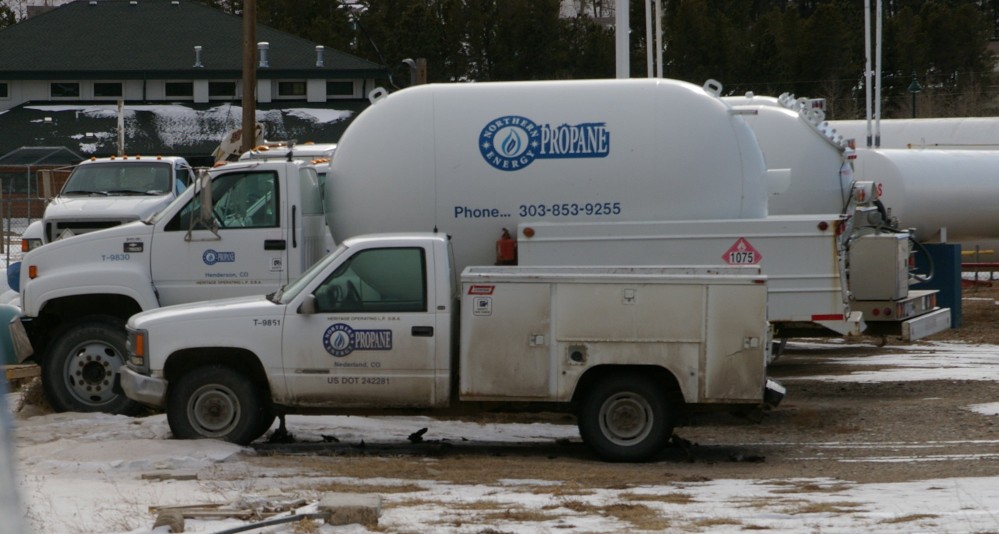
Deliveries were made by a tanker truck on a regular route, driven by the same person for years, who knew the farms, the lanes, where the dogs were, which drives flooded and which households would be short before they called.
Scheduled deliveries managed by routing software and usage data, with drivers covering larger areas and far less continuity of relationship.
The driver’s local knowledge was part of the service and it was not written into any contract. A route man who noticed that a particular household was running low and filled it without being asked was performing a judgement that no automated system attempted for decades – and in a hard winter that judgement mattered.
11. You Bought on a Plan, Not by the Tankful
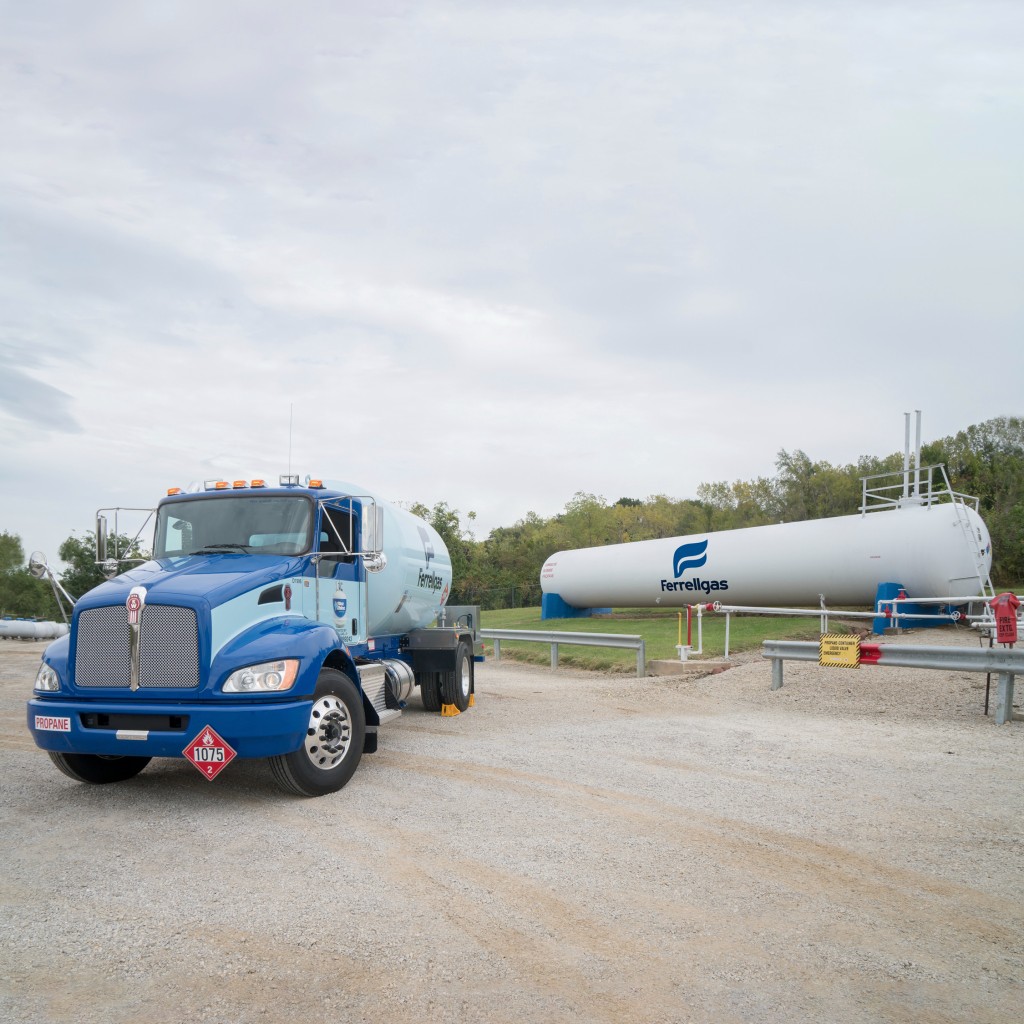
Households arranged supply in advance: a keep-full agreement under which the company delivered as it judged necessary, a budget plan spreading the annual cost into equal monthly payments, or a pre-buy locking a price for the season.
All three arrangements still offered, with pre-buy and budget plans still the standard tools for managing a volatile delivered fuel.
These are hedging instruments and that is exactly what they are for. A household buying a storable commodity at a fluctuating price has genuine exposure, so the industry developed products to manage it – which means rural American families were making decisions about fixing a price for the coming winter while metered households simply paid whatever the bill said.
12. The Price Moved and Everybody Felt It
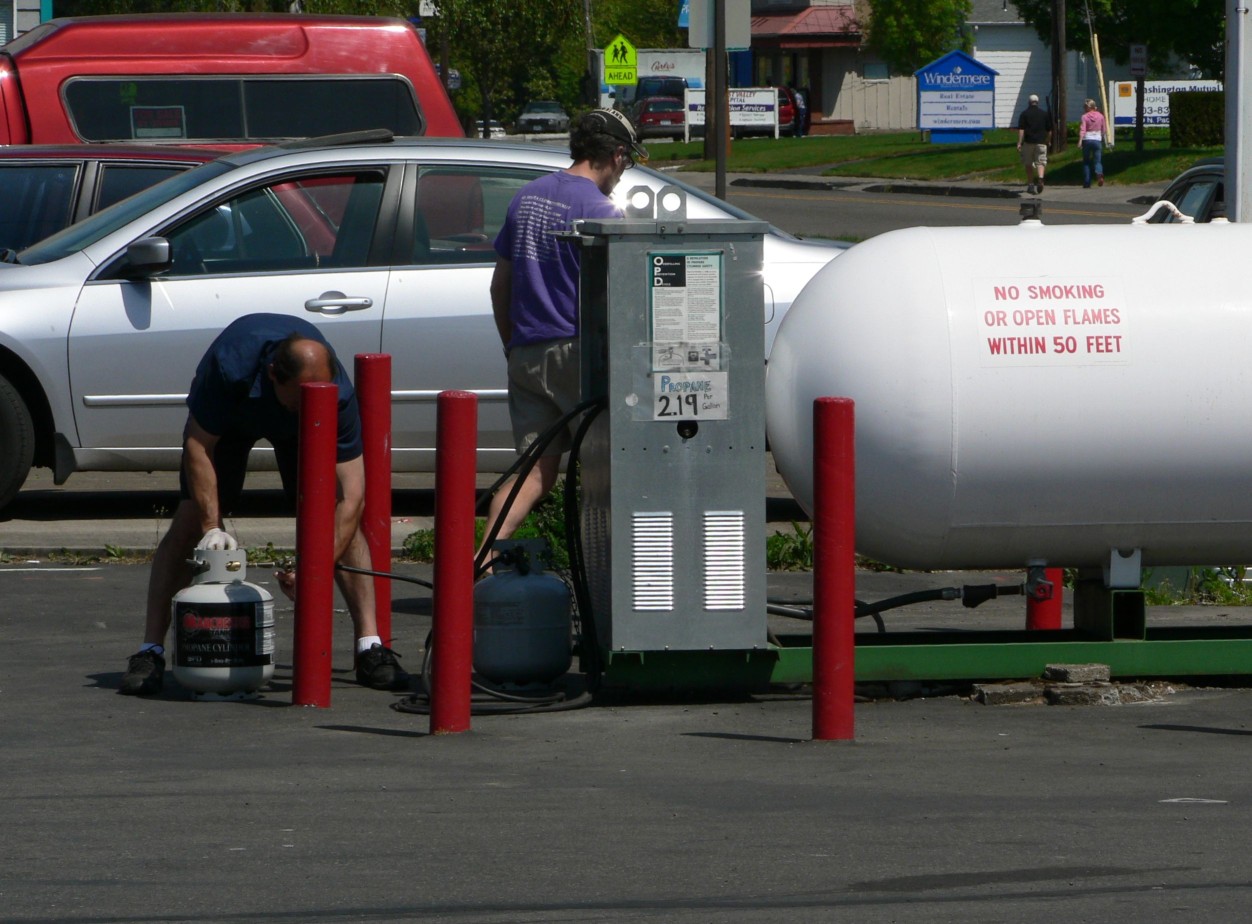
The cost per gallon varied by season, by region, by how far the truck had to come and by the commodity market – and it could change substantially between one delivery and the next.
The same volatility, more visible, with the same regional and distance components and the same seasonal pattern.
Metered households are insulated from this in a way propane households never were. A delivered fuel has a price you are quoted, at a moment, for a quantity you are buying all at once – so a rural family knew precisely what energy cost and watched it the way a farmer watches grain, which is not how anybody on a meter experiences it.
13. A Hundred-Pound Cylinder Was the Small Version
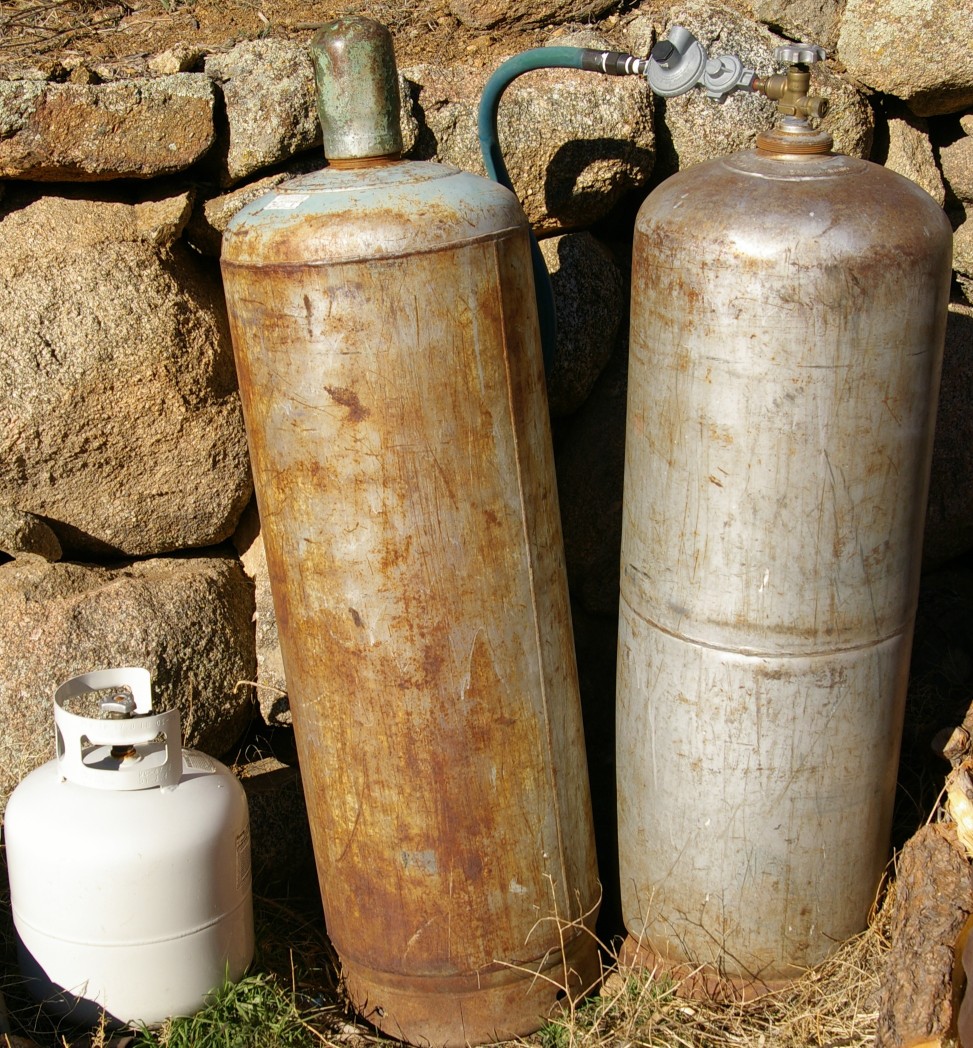
Below the yard tank sat a whole scale of portable cylinders – the twenty-pound bottle for a grill, the forty, the hundred-pound cylinder exchanged or refilled at a dealer – used for cooking, space heating, a camper or a single appliance.
The identical range of cylinders, with exchange programmes at retailers having made the smaller sizes far more widely used than they ever were.
The cylinder is why this fuel reached places nothing else did. It is a self-contained energy supply you can carry, which heats and cooks in a house with no gas main, no electricity and no road worth tanking down – and that portability is the entire reason the fuel exists as a domestic product.
14. Then Everybody Else Was Asked to Start Watching a Gauge
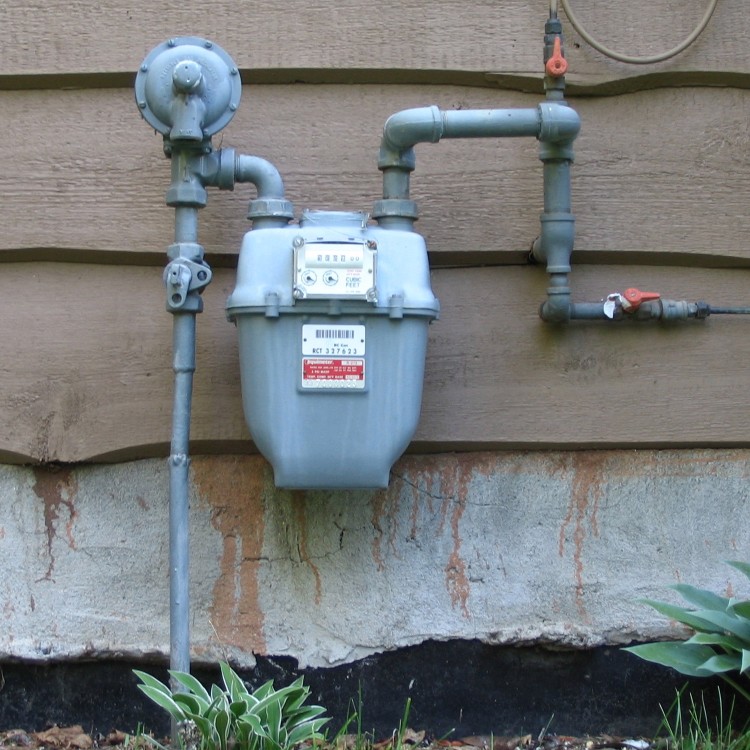
A propane household held its energy as a physical quantity in a tank it could walk out and look at: a percentage on a dial, a known conversion to gallons, a price it had agreed in advance, a visible rate of consumption and a consequence for running out.
The same arrangement, essentially unchanged – while metered households get energy as a flow with no quantity, no gauge, no inventory and no decision to make beyond paying afterwards.
And this is the part that has quietly become interesting. For fifty years the propane household looked like the backward case: an unmetered fuel, bought ahead, stored in the yard, watched on a dial, hedged with a pre-buy and rationed in a cold snap, while everybody on a main or a wire simply used what they wanted and settled up later. But as electricity supply has become more variable and more time-dependent, metered households are increasingly being asked to do precisely what propane families have always done – to think about energy as a stock rather than a flow, to pay attention to when they use it, to buy ahead where they can, to install something that stores it, and to accept that running out is a possibility rather than an impossibility. That is the propane mindset arriving in the suburbs, several decades late, with an application instead of a dial. The rural household with a white tank on blocks in the yard has known how much energy it has, what it cost and how long it will last, every day since 1974 – which is a form of literacy about one’s own consumption that the metered majority has never had and is now being encouraged to acquire.
They Were Treating Energy as a Stock the Whole Time

For fifty years the propane household was the one that looked old-fashioned.
Everybody on a city main or a utility wire had a meter. Energy arrived continuously, in unlimited quantity, from a system that could not run out, and the only interaction with it was a bill after the fact. Nobody on a meter knew how much gas or electricity was in their house, because the question is meaningless – the answer is whatever arrives.
The rural household with a tank in the yard lived in an entirely different relationship with the same idea.
It held its energy as a physical quantity. There was a measurable amount of it, in a container, on the grass, forty feet from the kitchen – and a dial on top that told you what fraction remained. The household knew its tank’s capacity, so it could convert that percentage to gallons in its head. It watched the rate of fall and knew roughly how many weeks it had. It bought ahead, frequently at a price agreed in advance for the season, because the commodity price moved. It spread the cost over the year on a budget plan, which is a hedging instrument. And in a hard cold snap it was conscious of consumption in a way nobody on a meter has ever had to be, because running out had a real consequence that the household could not fix itself.
That is a complete working understanding of one’s own energy consumption, held by ordinary families, without a single piece of technology beyond a float gauge and a thermometer.
And it was always treated as the inconvenient arrangement. Metered supply was modern; a tank in the yard was what you had because the main did not come out that far.
Now look at what metered households are being asked to do.
As electricity supply has become more variable and more dependent on when it is used, the direction of everything is toward treating energy as a stock rather than a flow. Pay attention to the time of day you use it. Shift consumption to when it is cheaper or cleaner. Fix a price in advance where you can. Install something that stores it so that you have a quantity of your own on the premises. Monitor your usage, understand your rate of consumption, and accept that supply is not simply infinite on demand.
Every single one of those is what a propane household has done since before 1974. The dial has become an application, the pre-buy has become a fixed-rate tariff, the tank has become a battery in the garage, and the cold-snap rationing has become a demand-response notification.
So the propane family was not behind. It was the only part of residential America that had ever actually been metered in the sense that matters – aware of a finite quantity, a price, a rate and a consequence.
The white tank is still on the blocks in the yard. It has not changed in half a century, and the rest of the country is now being talked into thinking the way the people standing next to it already do.
If you grew up on it, you know your tank’s capacity and you know what percentage made somebody in your house nervous.
And you know that nobody ever filled it to the top, and why.
Like our content? Follow us for more.