In 1964 going a long way in America still meant a train, and the train was a graded hotel that moved.
A redcap took your bags at the curb. A clerk priced the ticket out of a tariff book and wrote it on card stock. The conductor punched it and clipped a coloured stub above your seat so the crew knew where you were getting off. The dining car had linen, silver, patterned china and a chef, and it lost money on purpose. The sleeping car offered a dozen different rooms with trade names. On the western routes there was a glazed dome you climbed a stair to reach.
And right behind the locomotive, clerks were sorting mail at pigeonholes while the train moved. Here are sixteen things every American family knew about it.
1. There Were Dozens of Competing Companies and You Picked One
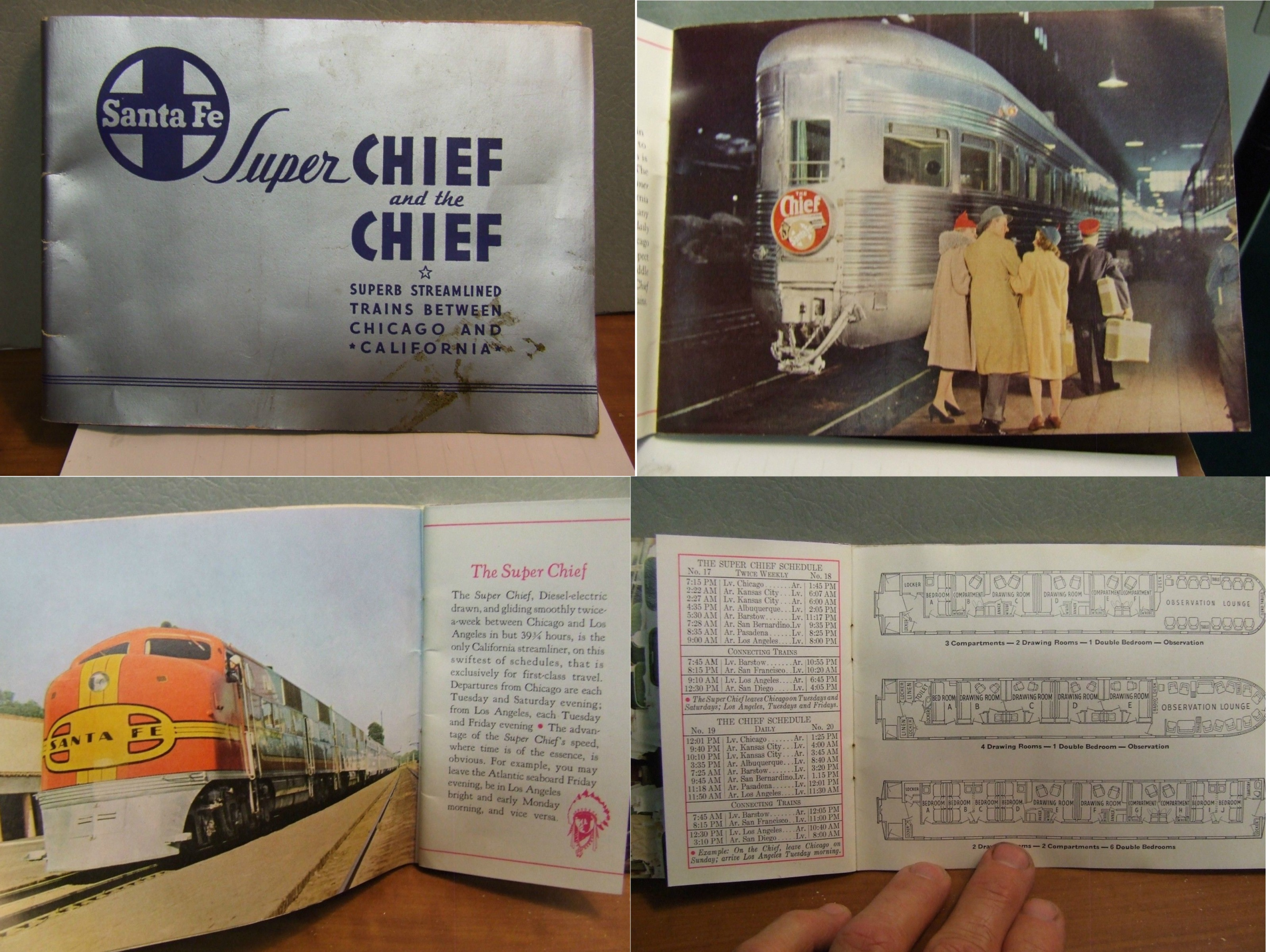
Long-distance travel was supplied by many separate private railroads, each with its own routes, its own fares, its own standards of service and its own reputation – and a traveller chose between them the way one chooses an airline.
A single national passenger operator over most of the country, with commuter authorities in major metropolitan areas and no competing long-distance alternatives on almost any route.
Competition drove everything that was good about the experience. A company whose train was slower, shabbier or worse fed than its rival’s on the same city pair lost the business, which is why dining cars were run at a loss and why the equipment was repainted, re-upholstered and re-advertised constantly.
Like our content? Follow us for more.
2. The Station Was the Best Building in Town
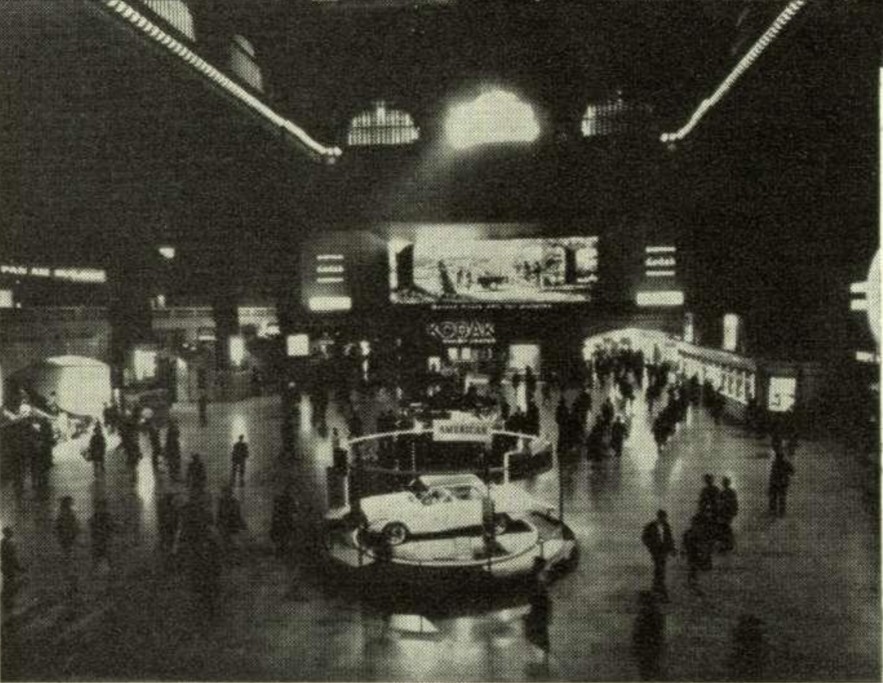
In cities of any size the passenger station was a monumental structure – vaulted concourse, stone or marble facing, a clock, benches of hardwood, a newsstand, a restaurant, a barber shop and a parcel room.
A shelter, a platform and a parking lot in most places, with the great buildings either demolished, converted to other uses or reduced to a waiting area within a larger redevelopment.
The scale reflected the traffic and the competition. A railroad’s station was its showroom in every city it served, which made it worth building in stone – and the result is that a surprising number of American towns still have one fine civic building, and it is the depot.
3. You Bought a Ticket From a Person Behind a Window
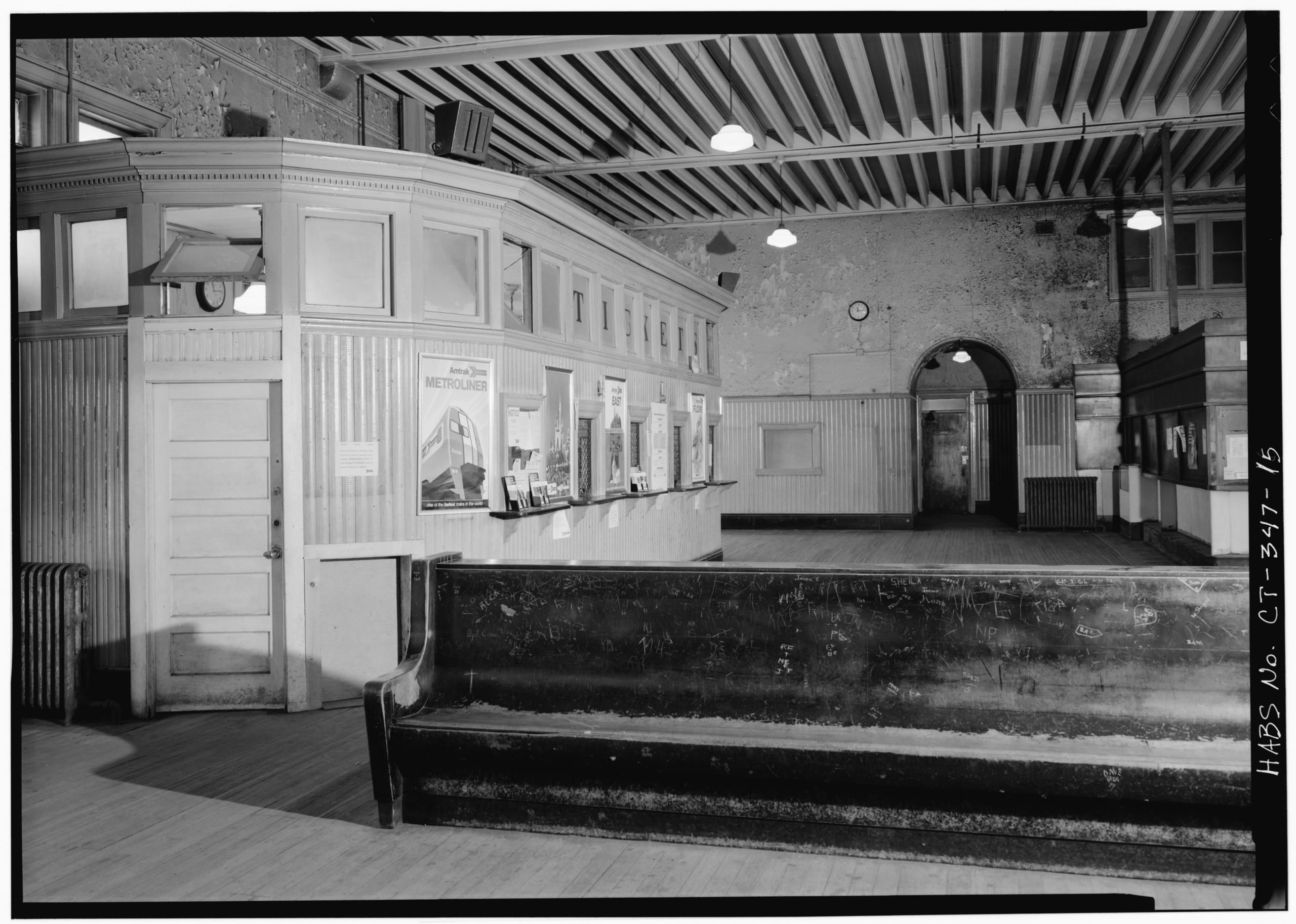
At a brass grille in the station a clerk wrote or stamped a ticket on heavy card stock, consulted printed tariff books for the fare, and handed over a document with coupons for each leg of the journey.
A reservation held in a database, bought from a screen, carried as a code on a telephone and never printed at all.
The clerk’s job required real expertise, because fares were set by distance through a published tariff and a long journey involving several railroads had to be assembled and priced leg by leg. Asking for the cheapest way to get somewhere was a question a person answered from knowledge, and the answers varied.
4. A Redcap Took Your Bags at the Curb
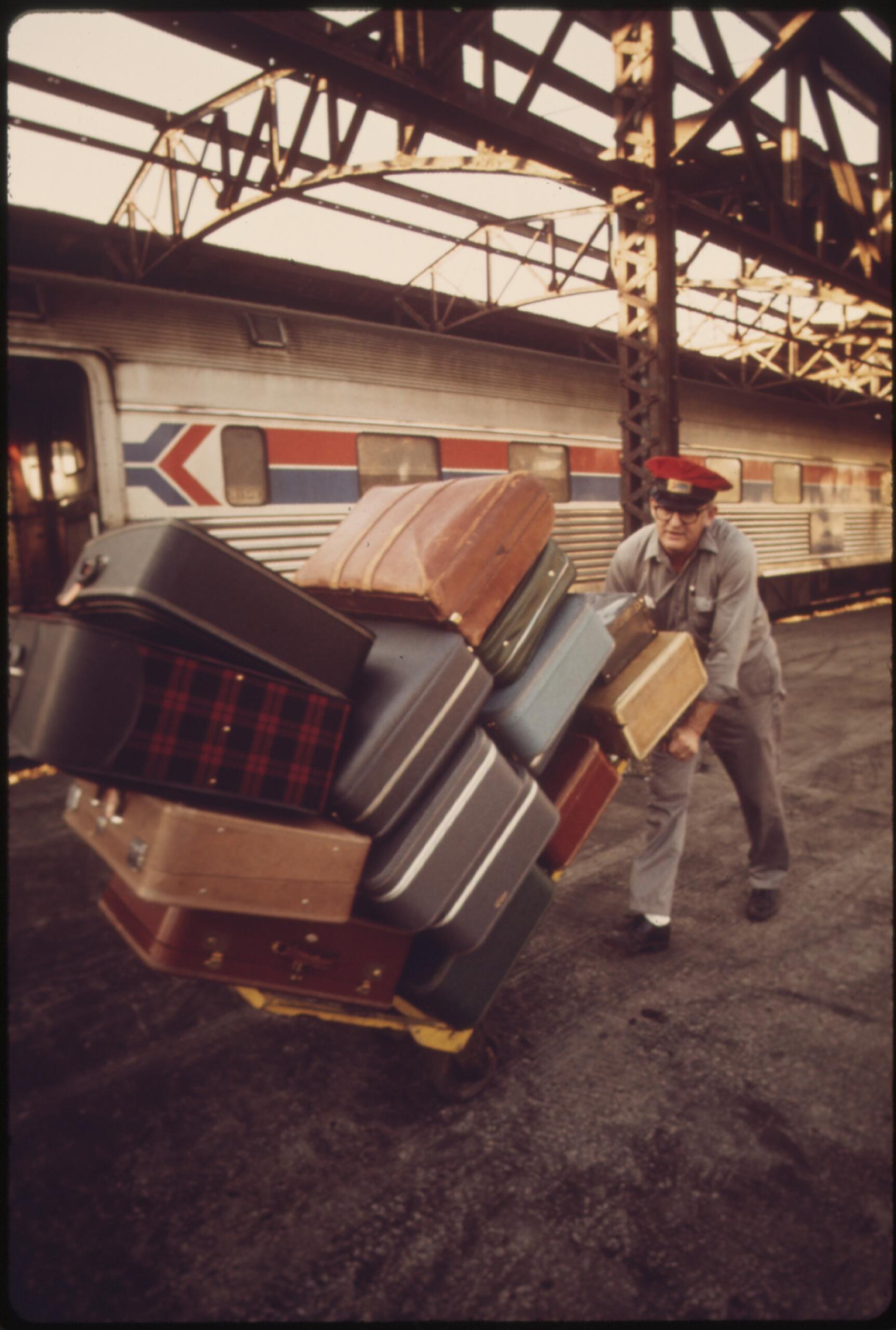
Uniformed porters met passengers at the entrance, loaded luggage onto a hand truck, carried it to the right car on the right track and handed it to the car attendant – for a tip.
Carrying your own bags, with assistance available on request in major stations and not at all in most.
The job was almost entirely held by Black men, it was one of a small number of positions open to them on the railroads, and it paid principally in tips rather than wages – which is documented labour history and part of what that uniform meant. The men who did it knew the trains, the tracks and the schedules better than most passengers ever would.
5. The Conductor Punched Your Ticket and Left a Slip Above Your Seat
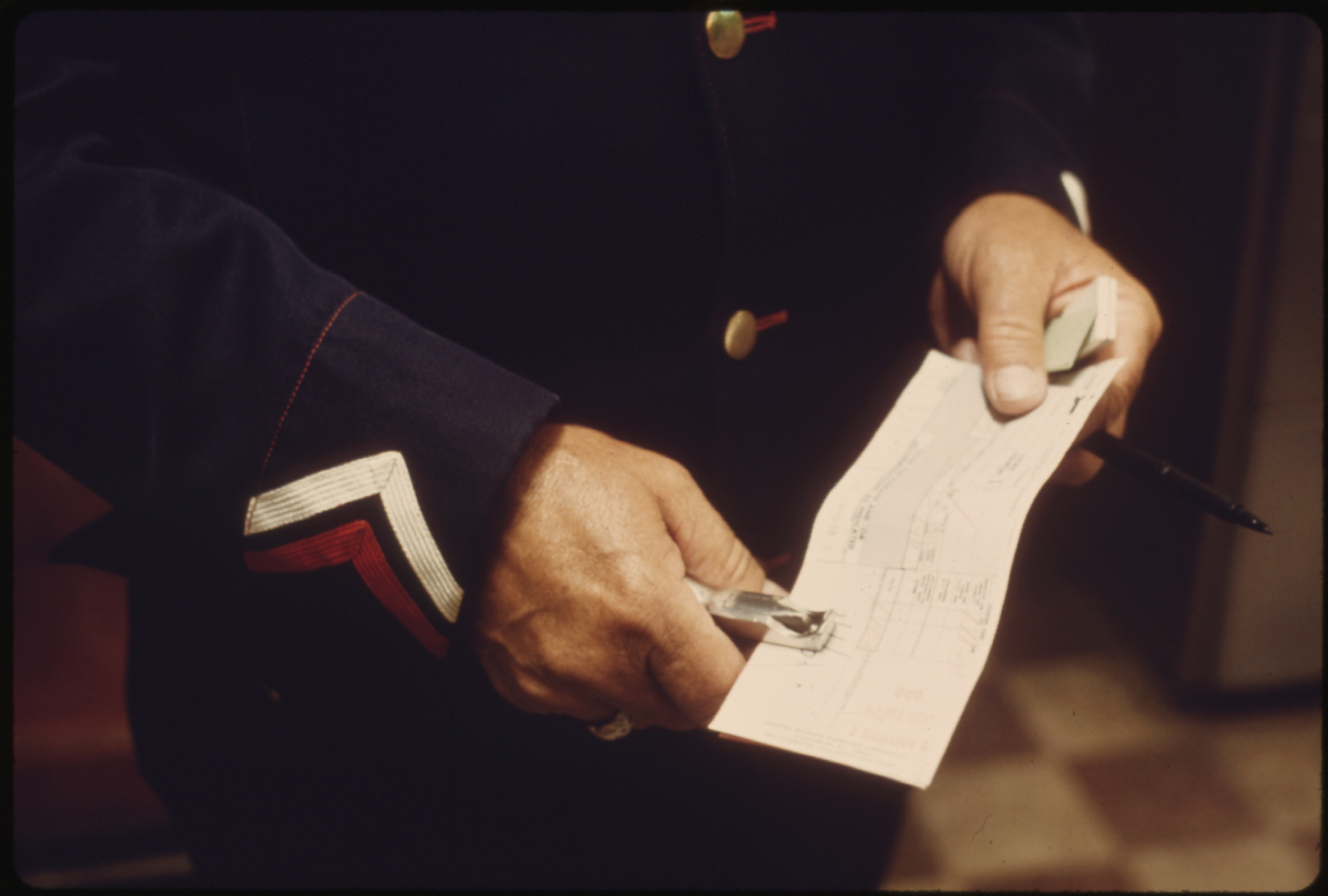
A uniformed conductor worked the train, took and punched tickets, and placed a coloured paper stub in a metal clip on the luggage rack above each passenger to record how far that person had paid to travel.
A handheld scanner reading a code, with seat assignment handled electronically and nothing placed above anybody.
The seat check is a small masterpiece of low-technology information design. Colour and shape encoded the destination, the clip put it where a conductor walking the aisle could read it at a glance without waking anybody, and it told the crew at every stop exactly who was getting off.
6. Coach Seats Reclined and Faced Each Other
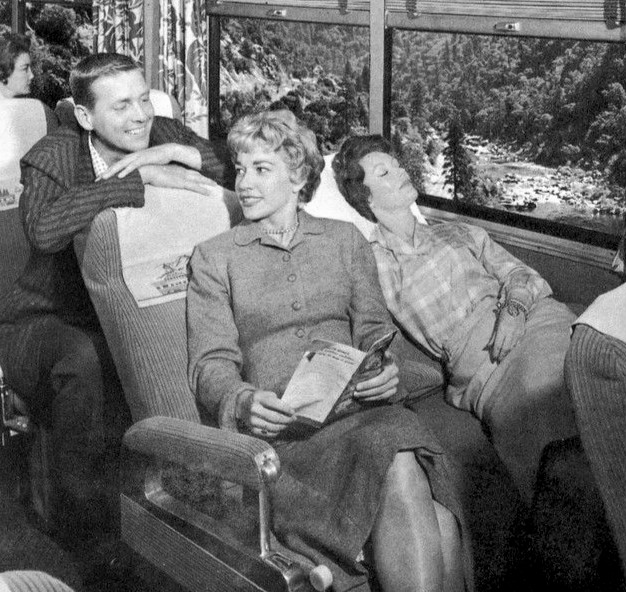
The standard long-distance coach had deep upholstered seats in pairs with high backs, a footrest, a substantial recline, and in many cars the ability to be reversed so two pairs faced each other across an open space.
Fixed forward-facing seating with a recline comparable to the period’s, in a single arrangement that cannot be altered by passengers.
The reversible seat is the piece of flexibility that has not survived. A family or a group of four could make a compartment out of ordinary coach seats in about ten seconds, which changes a twelve-hour journey completely – and the reason it is gone is that reversible mechanisms complicate the frame, the seat belt question and the cleaning.
7. The Dining Car Had Linen, Silver, China and a Chef
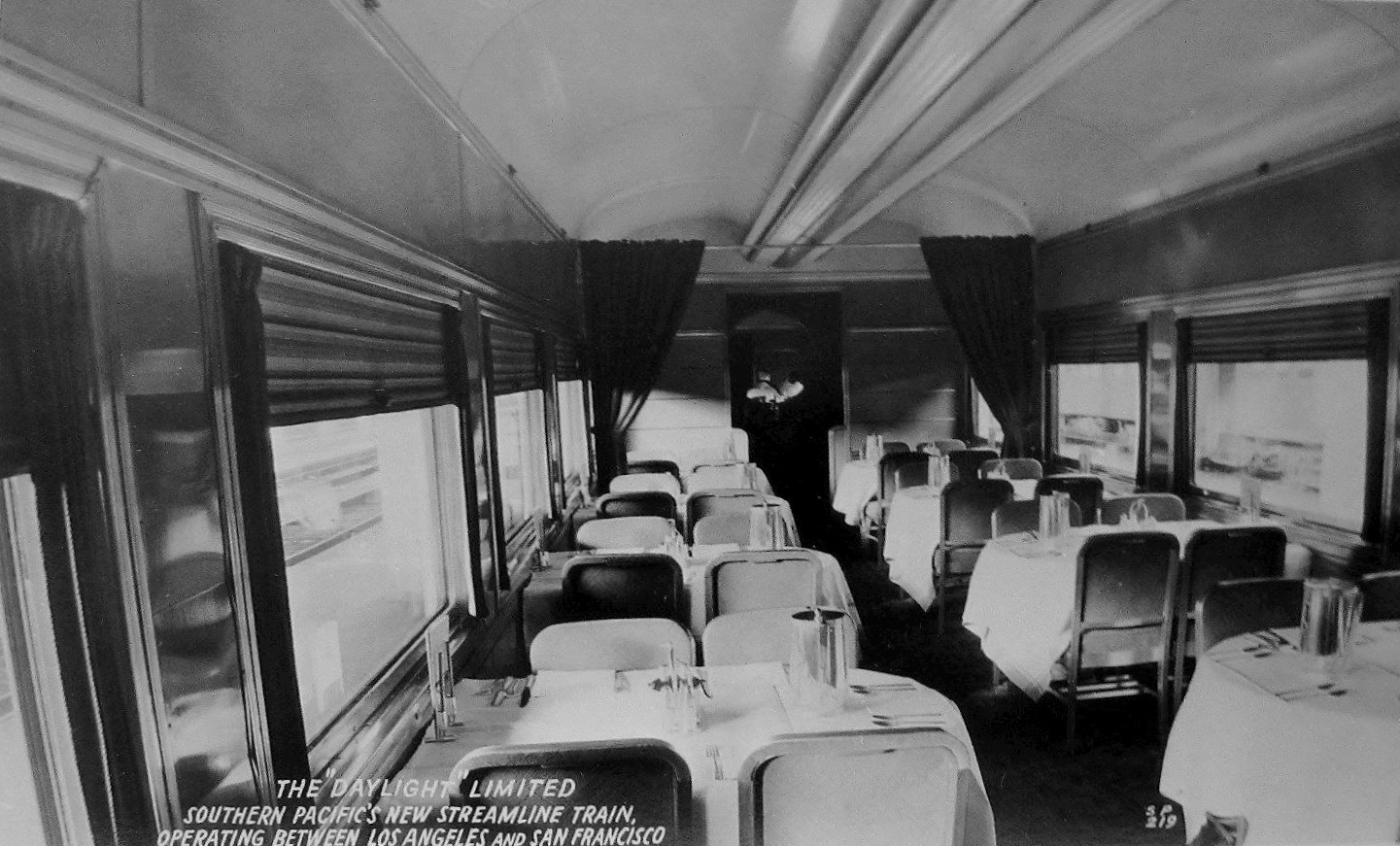
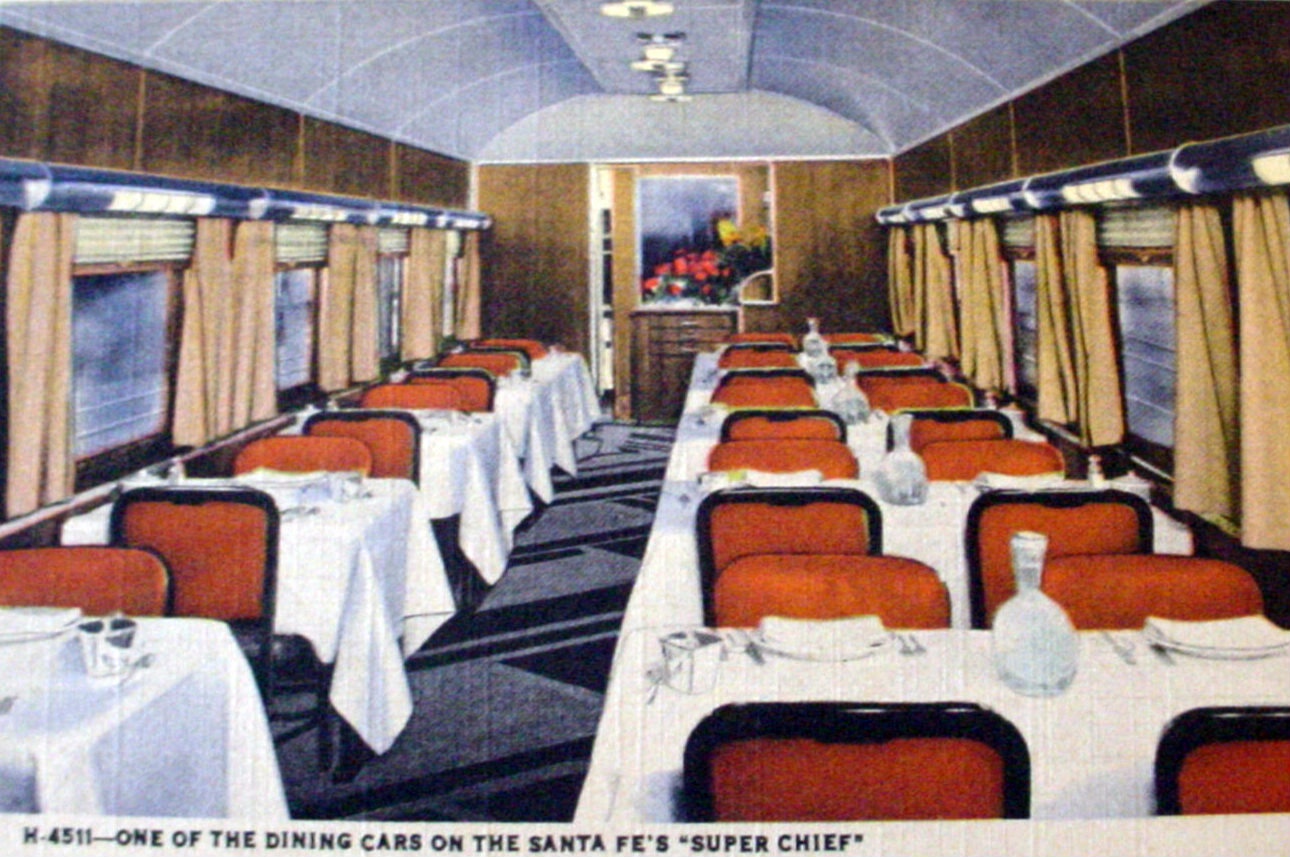
A full kitchen staffed by cooks produced meals to order, served at tables laid with cloth, heavy flatware and the railroad’s own patterned china, by stewards in white jackets, from a printed menu.
Prepared food reheated on board in most services, served at a table in the better ones, with full cooked-to-order dining surviving only on a small number of long routes.
No railroad made money on a dining car and all of them knew it. They were run at a deliberate loss as the single most effective form of advertising available, because a passenger who ate well remembered which company’s train they had been on – and the china was patterned so that they would remember the name.
8. The Sleeping Car Had a Dozen Kinds of Room and They All Had Names
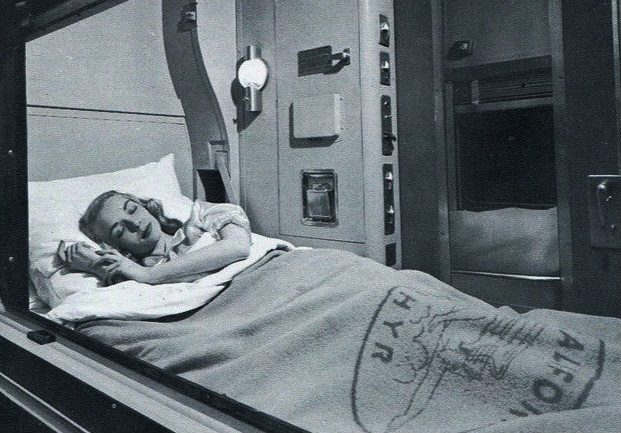
Overnight accommodation came in a graded range – an open berth behind a curtain, a small single room, a larger single, a room for two, a room with its own facilities, a suite, and several configurations in between – each with a trade name.
Two or three standard room types on the services that still carry them, uniformly configured, with no graded ladder of a dozen options.
The range existed because the market was genuinely stratified and the railroads chased every part of it. A travelling salesman took the cheapest berth, a family took connecting rooms, and an executive took the suite at the end of the car – all on the same train, on the same night, at prices separated by a factor of five.
9. The Observation Car Had a Dome
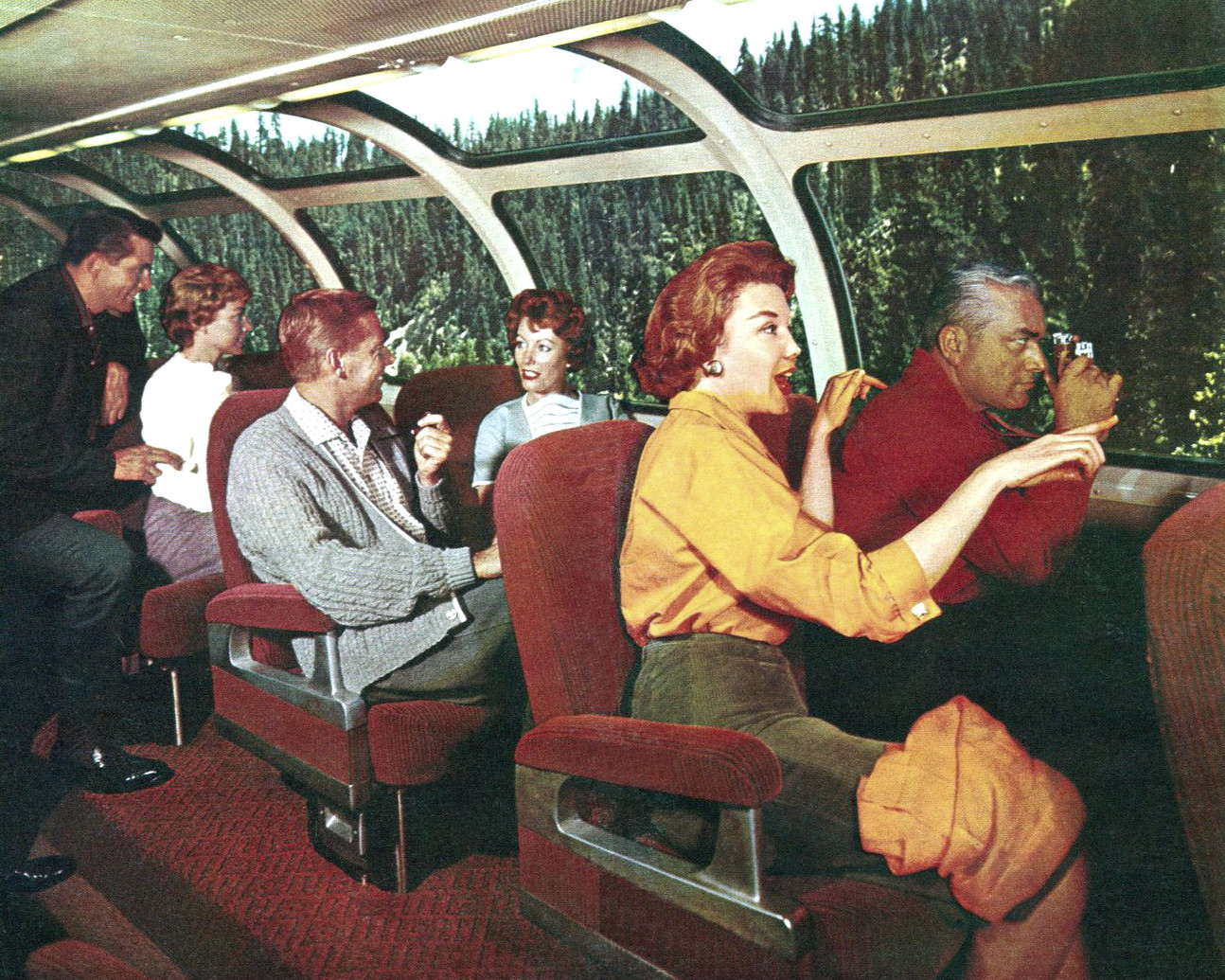
On many western routes the train carried a car with a raised glazed section above roof level, reached by a short stair, with seats facing outward in all directions – and at the rear a lounge with windows curved around the end of the train.
Sightseeing lounges on a small number of scenic routes, generally with large side windows rather than a raised glazed dome, and almost nothing with a view backwards along the track.
The dome car was a straightforward competitive weapon and it worked. A railroad crossing genuinely spectacular country could sell the scenery itself, so it built a car whose only purpose was looking out of – and the rear lounge gave a passenger the one view no other form of travel offers, which is where you have just been.
10. The Porter Made Your Bed and Shined Your Shoes
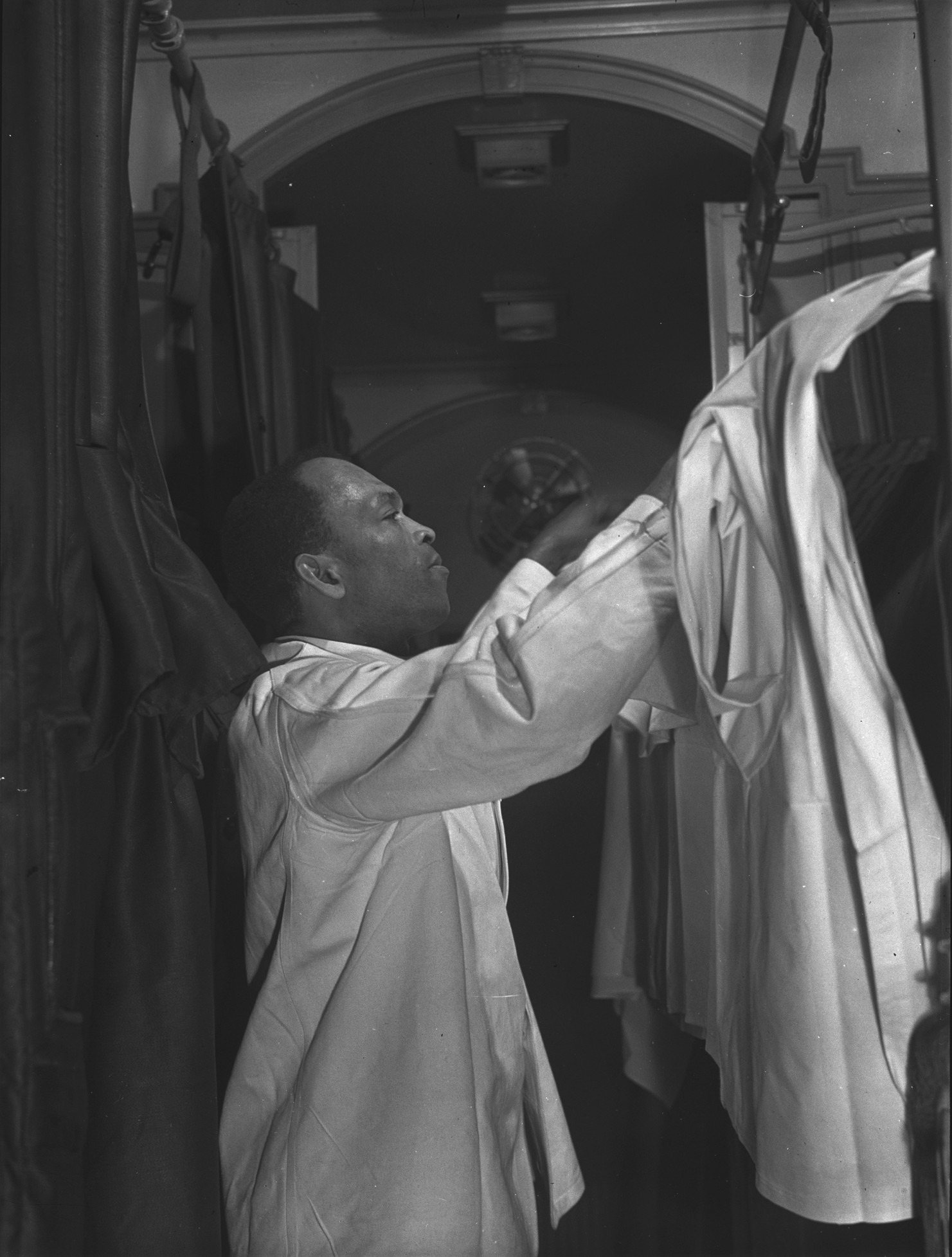
Each sleeping car had an attendant who converted seats to berths and back, supplied bedding, brought ice and drinks, woke passengers at requested times, and collected shoes at night to return them polished.
A single attendant covering a sleeping car with bedding and a wake-up call, and no valet service of any kind.
This work too was performed almost entirely by Black men, in a role that was for decades among the most widely available positions on the railroads – and the organisation those workers eventually built to bargain collectively was one of the significant institutions in twentieth-century American labour history. The service was real and so was the arrangement that produced it.
11. You Checked Your Baggage Through and Forgot About It
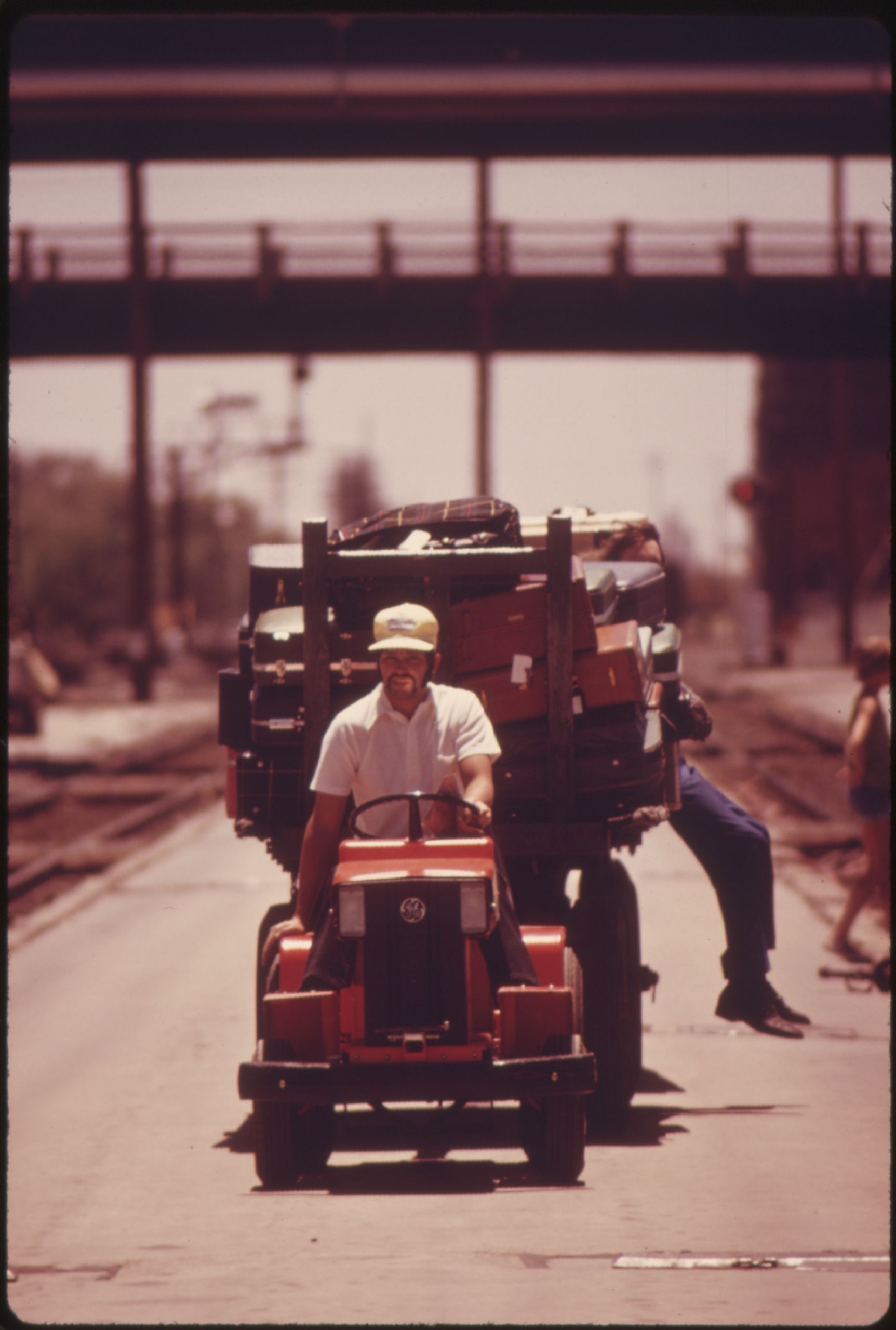
Trunks and heavy cases were handed in at the origin station, tagged, loaded into a baggage car, transferred between railroads if necessary, and collected at the destination counter on production of a stub.
Checked baggage on some services and none at all on many, with most passengers carrying everything themselves.
The system handled volumes that now sound unreasonable. A family moving house, a student going to college with a trunk, a salesman with sample cases – all of it went in the baggage car as a matter of course, because the alternative was freight and the train was going there anyway.
12. The Trains Had Names and the Name Was the Product
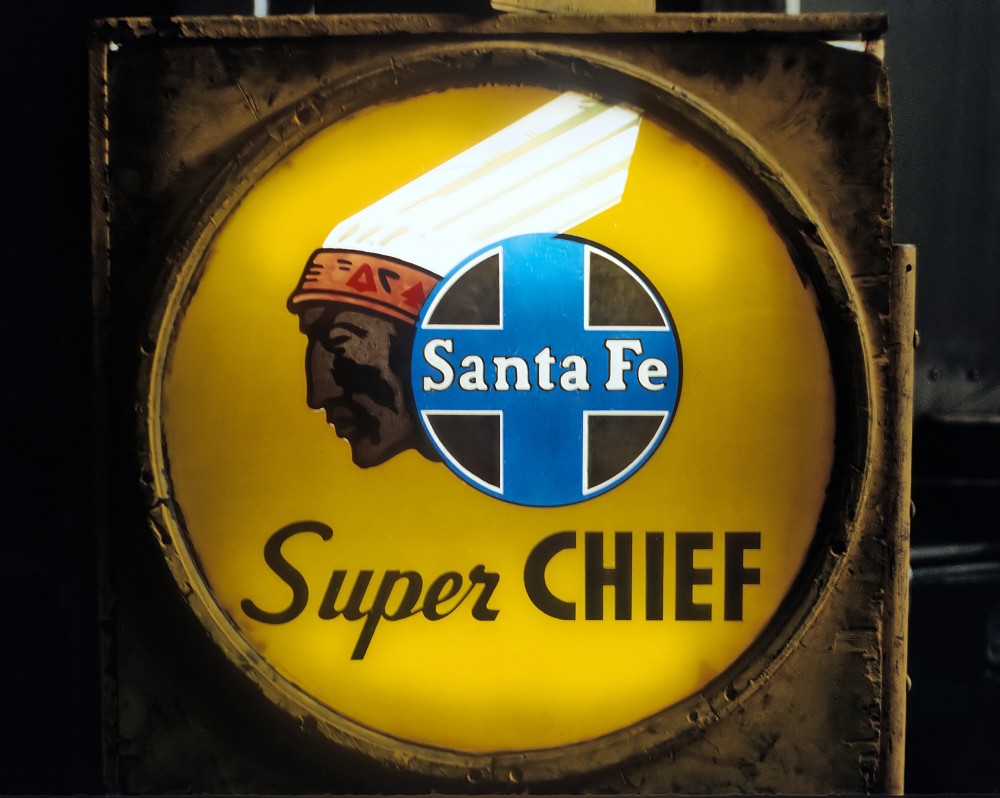
Individual trains were named, advertised, timetabled and remembered by name – and the name appeared on the equipment, on the china, on the timetable folder, in magazine advertising and on an illuminated tail sign on the last car.
Numbered services with a small number of named long-distance routes, where the name identifies the route rather than a specific advertised train.
Naming a train is a branding decision and it tells you how the business worked. A railroad did not sell transportation between two cities; it sold a particular train, leaving at a particular hour, with particular equipment and a particular reputation – and a traveller who liked one would ask for it by name.
13. The Timetable Was a Public Document People Read for Pleasure
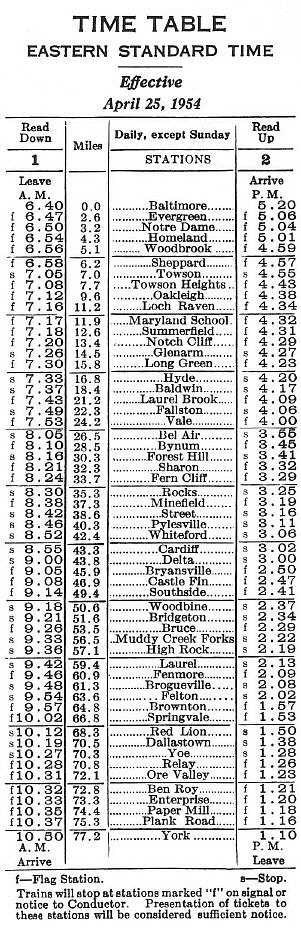
Each railroad published a folded timetable, free at any station, showing every train, every stop, every connection and the equipment carried on each – and a national guide collected them all into a single thick monthly volume.
Schedules on a screen, searched by origin, destination and date, with no browsable overview of a network and nothing in print.
People read these the way people read maps. A timetable laid out the whole system at once, so a reader could see that a train leaving at four could be met by another at a junction at nine, and could plan a journey nobody had suggested to them – which is a kind of competence the search box has quietly removed.
14. Mail and Express Rode in the Same Train
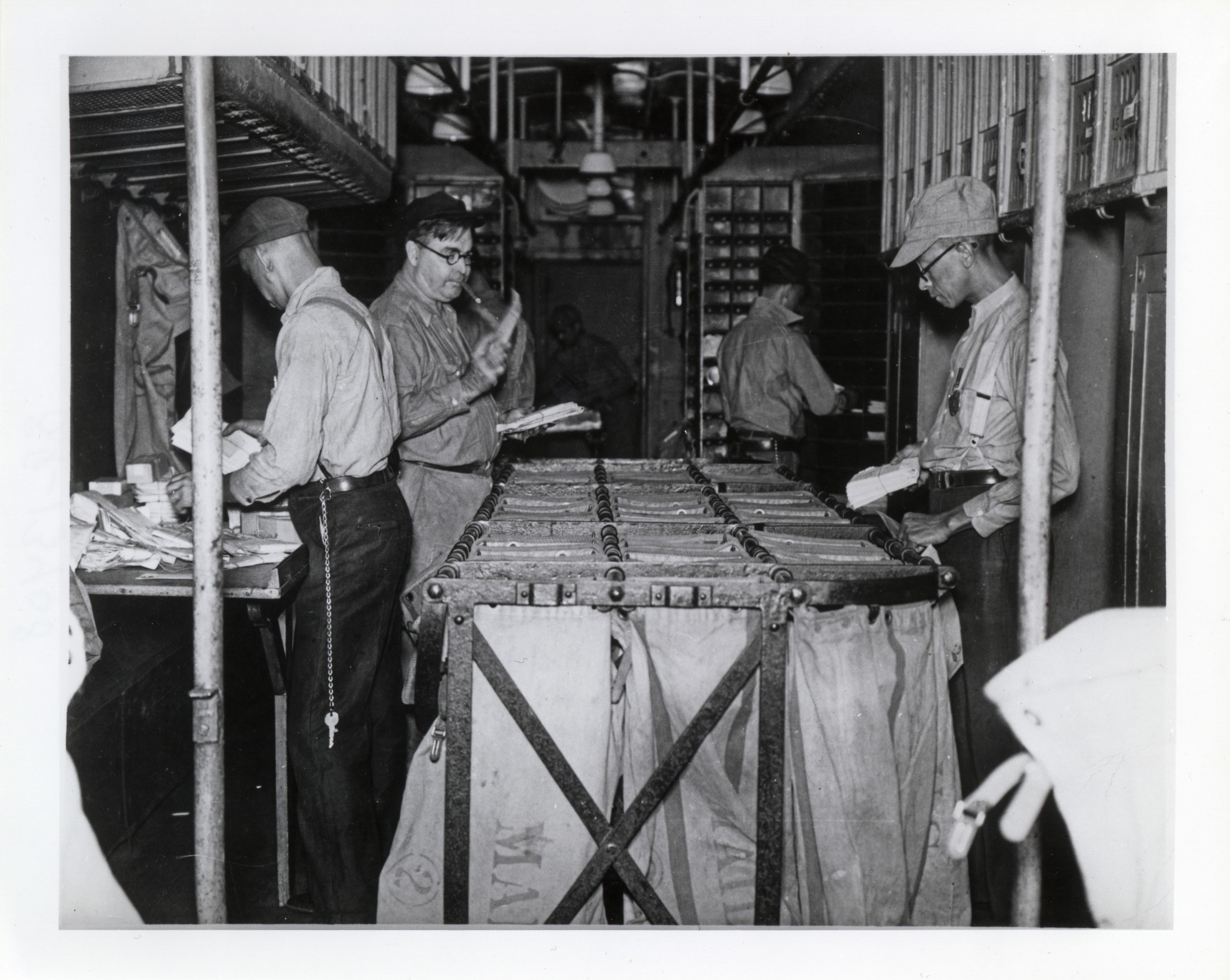
Immediately behind the locomotive came cars that carried no passengers: a railway post office in which clerks sorted mail while the train moved, and express cars carrying parcels, newspapers, milk cans and small freight.
Passenger trains carrying passengers only, with mail and parcels moved entirely by road and air.
The sorting-while-moving arrangement was genuinely ingenious. A letter posted in one city was sorted en route by clerks working at pigeonholes in a moving car and was ready for local delivery the moment the train arrived – which is why a letter could cross several states overnight in 1950 in a way it frequently cannot now.
15. Smoking Had Its Own Car and So Did Drinking
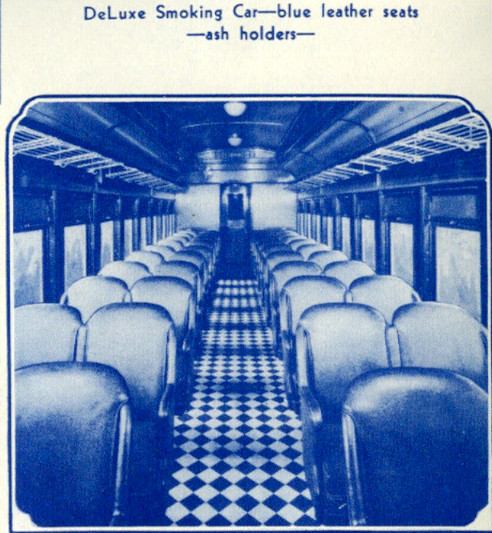
Tobacco use was confined to a designated smoking car or a smoking lounge, and alcohol was served in a club or lounge car with its own staff – both of them separate spaces that a passenger moved to deliberately.
No smoking anywhere on any train, and a cafe car selling drinks in a single shared space.
The separation is the point rather than the substances. A long-distance train was organised as a sequence of rooms with different purposes – sit here, eat there, smoke there, drink there, sleep there – and moving between them was most of what there was to do on a two-day journey.
16. Then the Post Office Took the Mail Off the Train
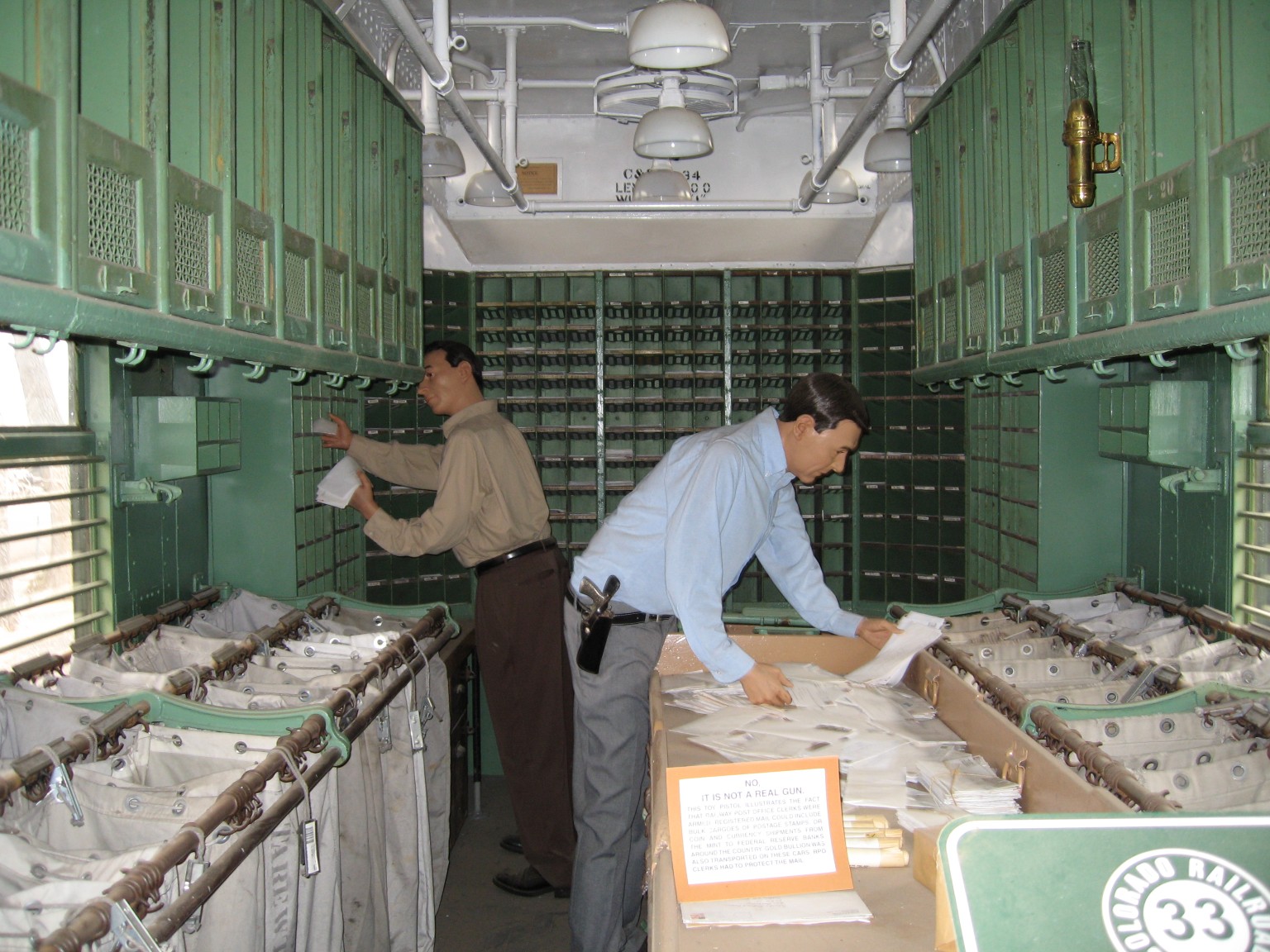
The long-distance passenger train was a graded hotel on wheels – named, advertised, competitively run, with cooked meals at linen tables, a dozen classes of room, a glazed dome, attendants, checked baggage and a published timetable of the whole network.
A small national network on a limited number of routes, with reheated food, two room types, no competition and nothing in print – plus commuter services that work extremely well and are an entirely different business.
And the thing that broke it is almost never named, because the obvious answers are the car and the airplane and both are only half right. Passenger service in America was never profitable on passengers. It was cross-subsidised, heavily and reliably, by the mail: the railroads held large government contracts to carry and sort it, those contracts paid per train rather than per passenger, and they underwrote the whole operation – which is precisely why dining cars could be run at a loss and dome cars built for scenery. Through the late 1950s and the 1960s the Post Office moved that traffic to trucks and planes, and the contracts went. Within a few years trains that had been marginal became hopeless, and the companies began applying to discontinue them as fast as the regulators would allow. The car and the plane took the passengers, certainly. But what actually killed the American passenger train was losing the letters.
It Was Paid For by the Letters
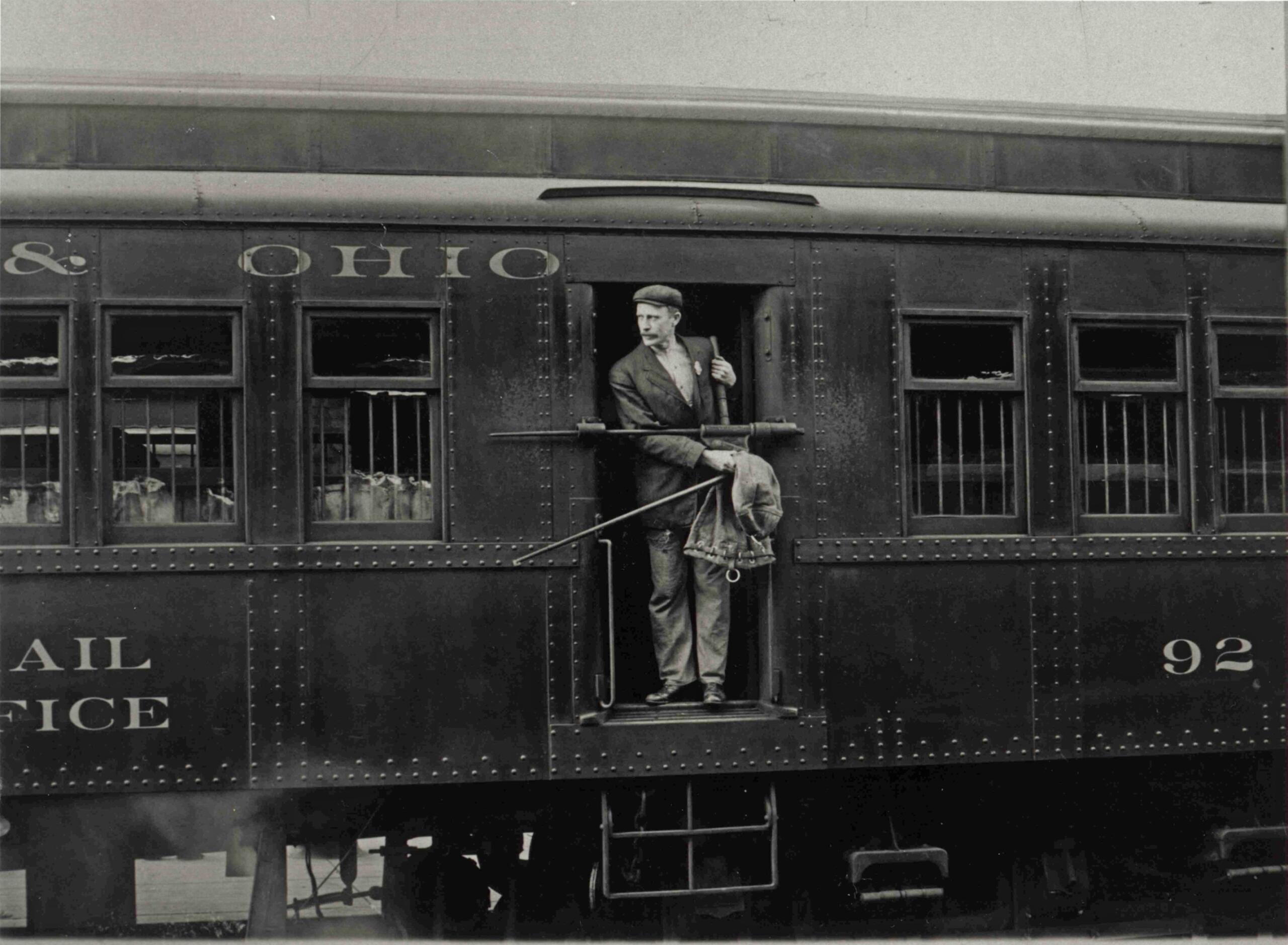
The standard explanation for the end of the American passenger train is the interstate highway and the jet airliner. Both are real, both took enormous volumes of traffic, and neither is the answer.
The answer is that passenger service in the United States was never profitable on passengers, and almost nobody says so.
Work through what has already been described. Dining cars with a full kitchen, cooks, stewards, linen, silverware and custom-patterned china, serving cooked-to-order meals at prices that could not possibly cover the cost. Sleeping cars with an attendant per car who made beds, brought ice and polished shoes overnight. Observation cars with a glazed dome whose only function was looking out of a window. Baggage cars moving a family’s trunks across the country. Stations built in stone as showrooms. Named trains advertised in magazines.
That is not a business operating on fares. It is a business with another source of revenue, spending heavily on its shop window.
The other source was the mail. The railroads held substantial, long-standing government contracts to carry and sort it, and the arrangement was unusually favourable in one specific respect: the payment attached to running the train rather than to filling it. A train with a railway post office car in the consist earned its mail revenue whether the coaches behind were full or empty. Add the express business – parcels, newspapers, milk, small freight – riding in the same train, and the fixed cost of the whole operation was substantially covered before a single passenger bought a ticket.
Which is exactly why a dining car could run at a deliberate loss as advertising, and why competitors kept outbidding each other on comfort.
Then, through the late 1950s and the 1960s, the Post Office moved mail off the rails and onto trucks and aircraft. The sorting-in-motion arrangement ended, the railway post office cars came off, and the contracts went with them.
The effect was immediate and the arithmetic is not complicated. Remove the revenue that was paying for the train and what remains is a service that was marginal while subsidised and is hopeless without it. Railroads that had been running passenger trains as a prestige operation attached to a profitable mail contract were suddenly running them as a pure loss, and they began applying to discontinue them as quickly as the regulators would permit.
So the sequence matters. The highways and the airlines reduced the number of passengers. The Post Office removed the money. One of those is survivable and the other is not.
By the end of the 1960s the private companies were out, and what was assembled afterwards from the wreckage was a national operator on a fraction of the routes, with reheated food, two kinds of sleeping room and no competitor to be better than.
The one part of the old system that is thriving is the part nobody is nostalgic about: commuter rail into big cities, which carries more people now than it did then and does it well.
What went was the other thing entirely – a competitive luxury industry in long-distance travel, paid for by the sorting of letters in a moving car behind the engine.
If you rode them, you remember the coloured stub in the clip above your head, and you remember what the china looked like.
And somebody carried your bags to the car, and you were a child, and you had no idea whose job that was.
Like our content? Follow us for more.