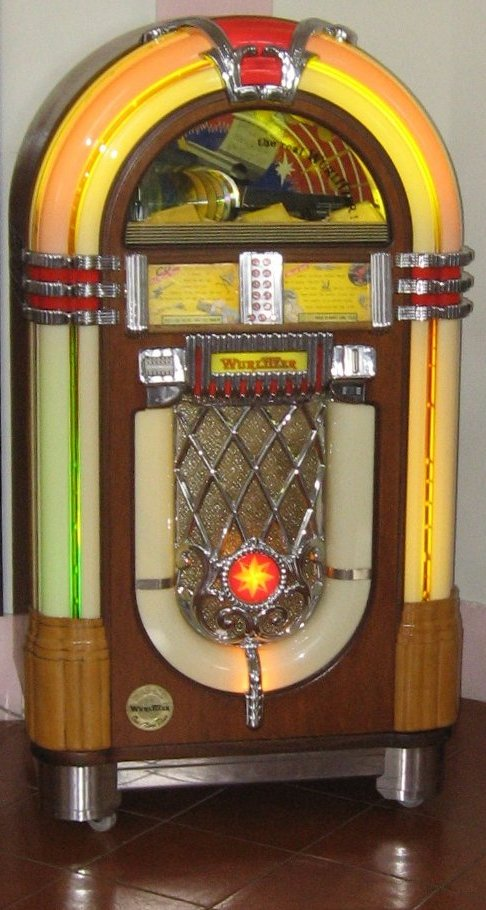
In 1964 the music in a public room came out of a lit cabinet the size of a refrigerator, and somebody had paid for every single song you heard.
Behind the glass a mechanism found one of a hundred seven-inch discs, gripped it by the edges, carried it to a turntable, played it and put it back. You chose by a letter and a number from paper strips typed by whoever serviced the machine. There was a chrome box on the wall at your booth so you never had to stand up. The volume was locked inside the cabinet. And your song was sixth in a queue you could not see.
Here are sixteen things everybody knew about it – and which parts of it never went away.
1. It Was the Size of a Refrigerator and Lit From Inside
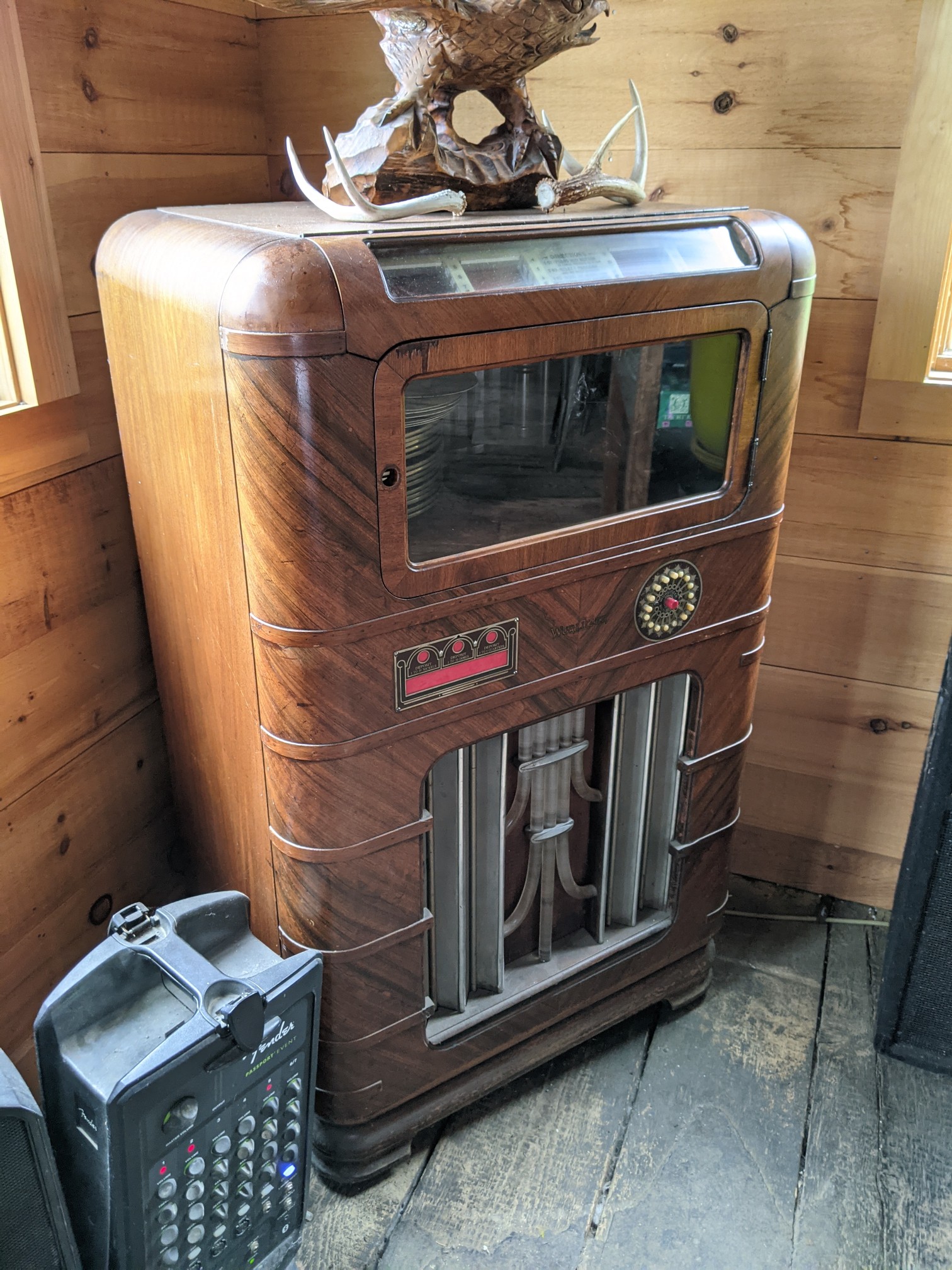
The machine stood against a wall, four or five feet high, in a curved cabinet of wood, chrome and coloured plastic, lit from within so that the whole front glowed – and in the better models with tubes of bubbling coloured liquid running up the sides.
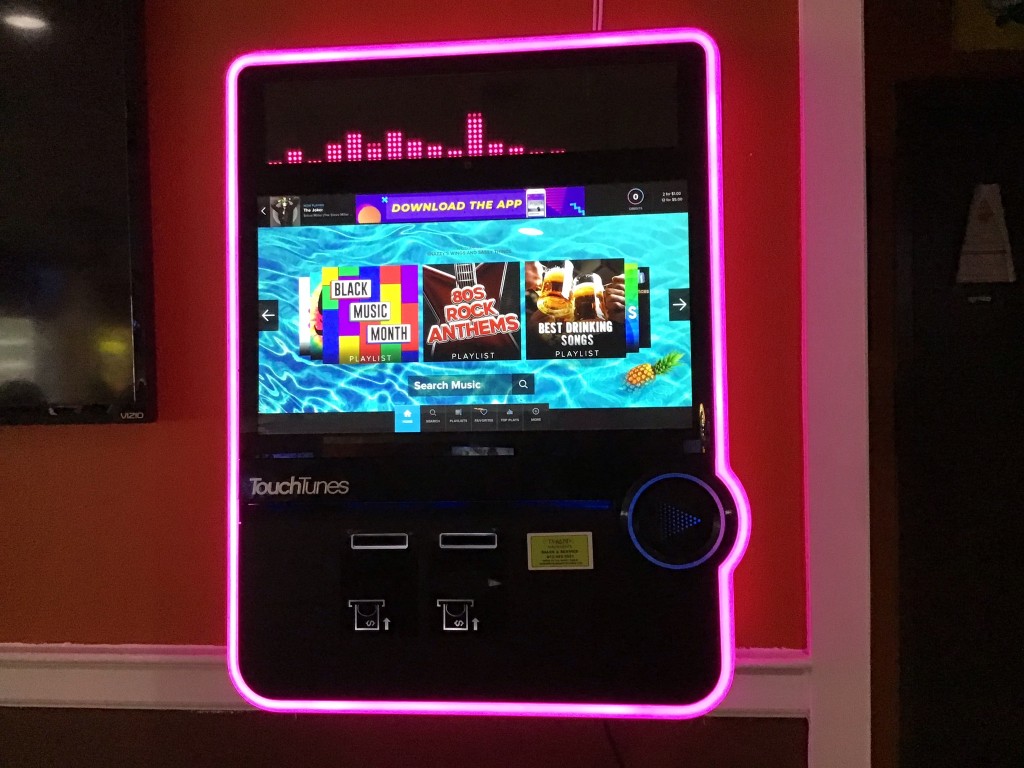
A wall-mounted screen, or nothing at all, with music supplied from a phone over a system nobody can see.
The glow was doing commercial work. A machine that costs money to use has to be noticed from across a crowded room and has to look worth a coin, so the cabinet was designed as a lit object first and a sound reproducer second – and the operators chose models on exactly that basis.
Like our content? Follow us for more.
2. A Mechanism Inside Picked the Record and Put It Back
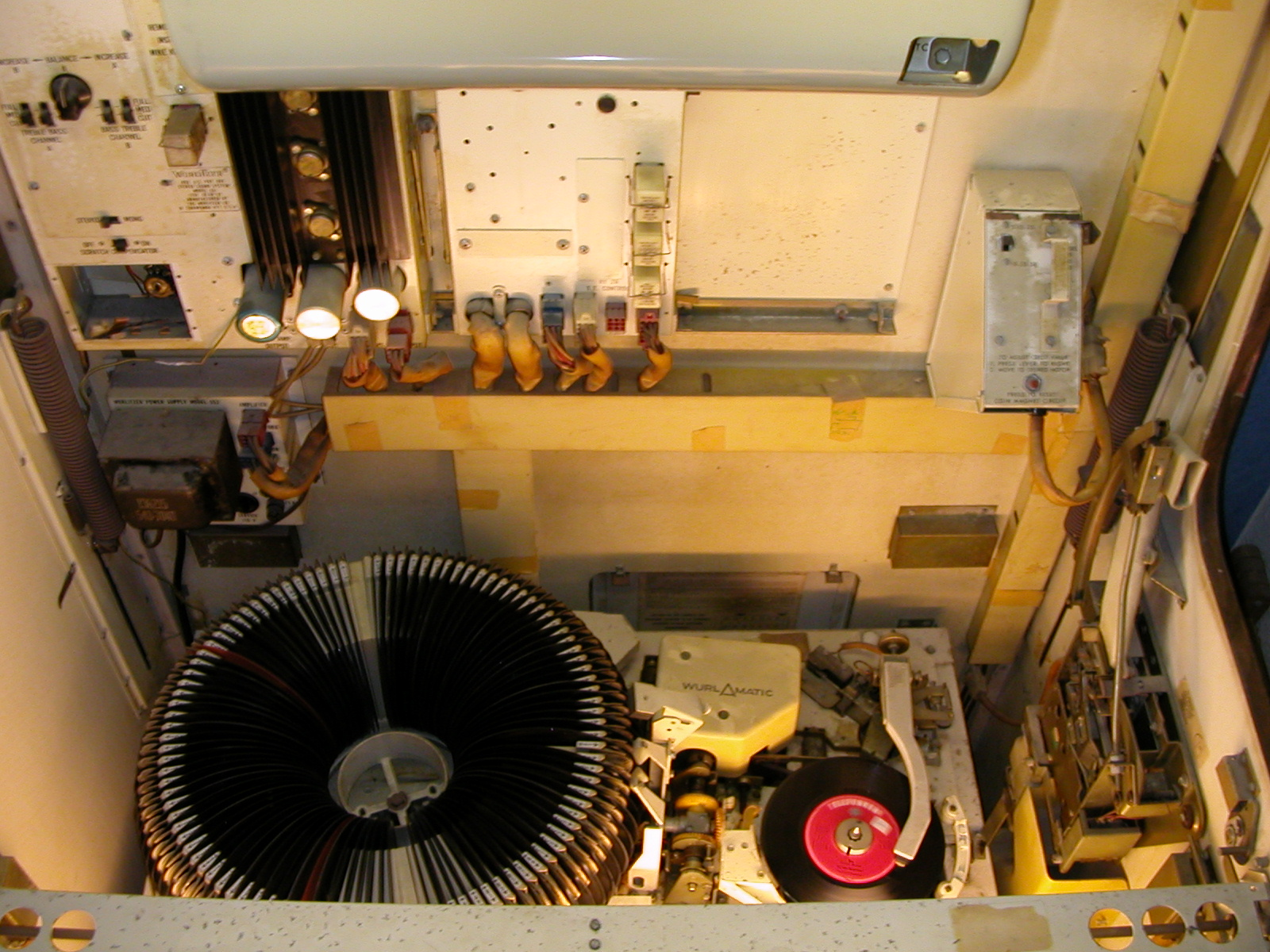
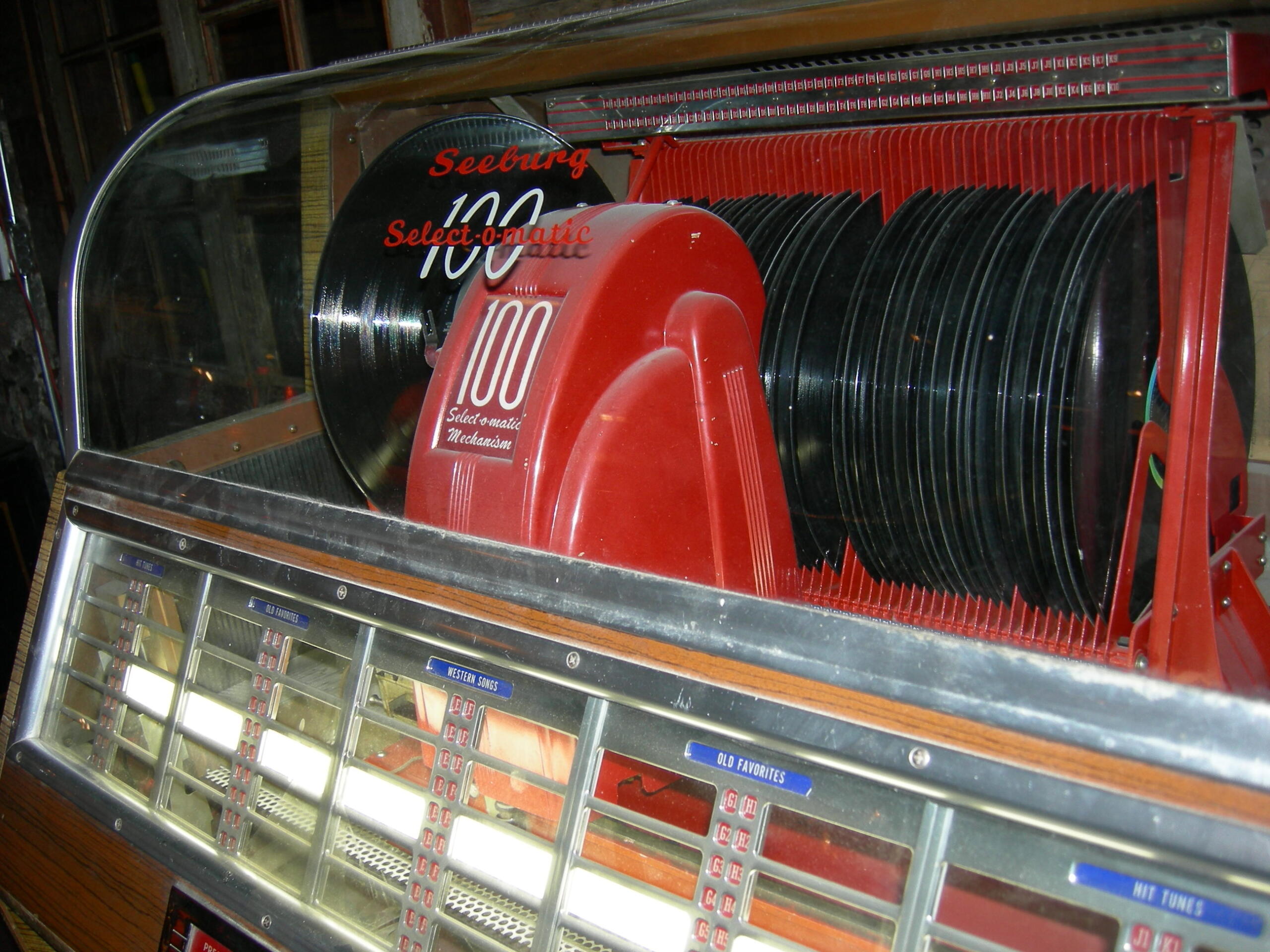
Behind the glass was a magazine holding fifty, eighty or a hundred discs on edge, and a mechanism that located the chosen one, drew it out, carried it to a turntable, lowered a pickup onto it, played it, and returned it to its slot.
A database query and a file, with no moving part anywhere in the process and no physical object corresponding to a song.
Watching it work was a substantial part of the appeal and the cabinets were glazed for precisely that reason. A visible machine performing a complicated sequence of movements to fetch a specific object, in response to a coin and two buttons, is genuinely satisfying to look at – and people chose where to stand so they could see it happen.
3. The Mechanism Is the Cleverest Part and Nobody Thinks About It
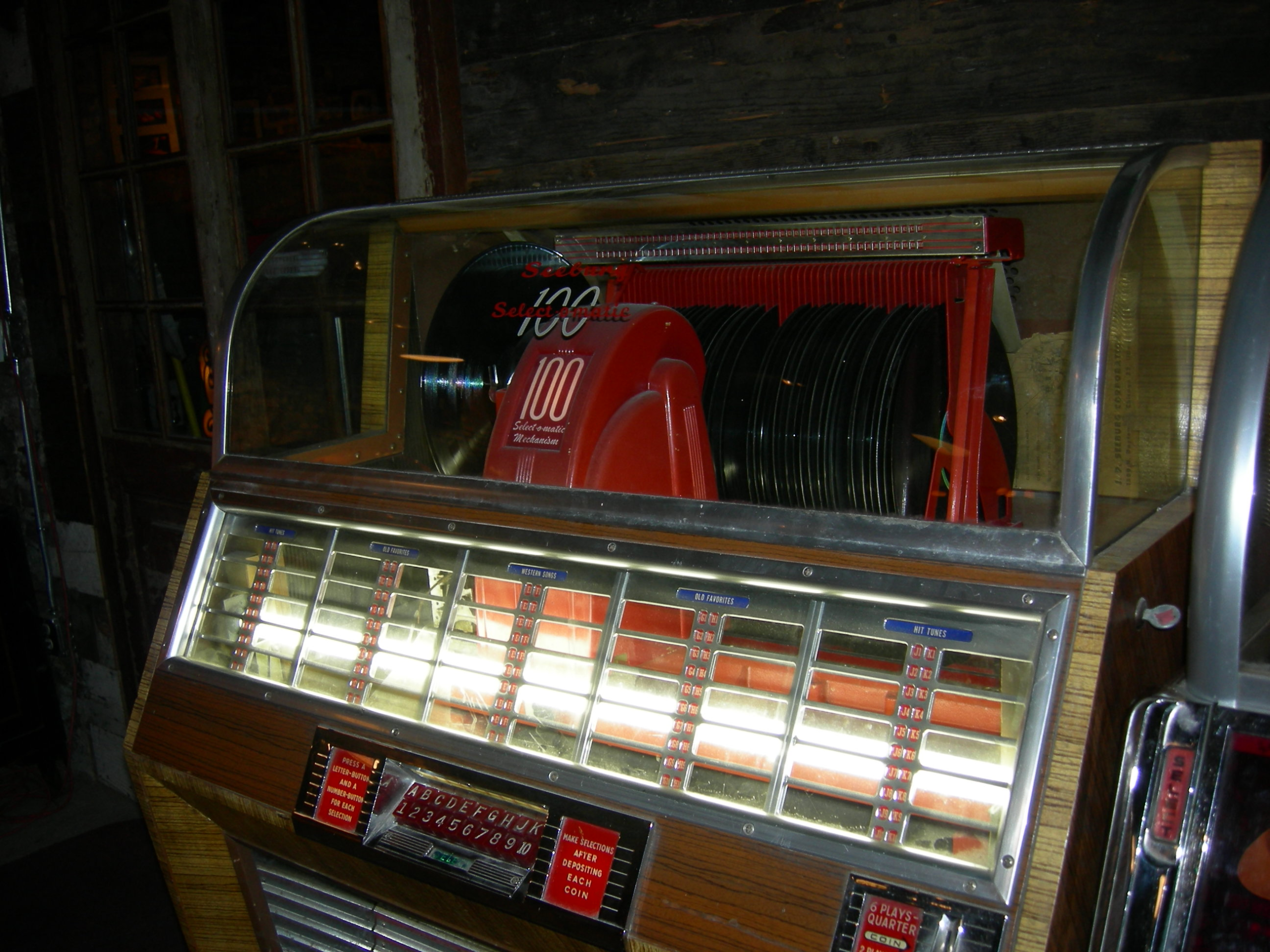
The standard arrangement rotated the whole magazine to bring the selected record to a fixed transfer position, where a gripper took it by its edges, swung it onto the platter, and after play reversed every step exactly.
Nothing, because the problem no longer exists. Selecting among a hundred physical objects, handling each without damage and returning it to the correct place is an engineering problem that software does not have.
The hard part was never the finding. It was the handling. A record is fragile, its playing surface must not be touched, it has to arrive on the platter concentric to within a fraction of a millimetre, and the whole cycle has to work ten thousand times in a row in a hot room with somebody’s elbow against the cabinet – which is why these mechanisms were built like machine tools.
4. It Played Sevens, and the Seven Existed Partly Because of It
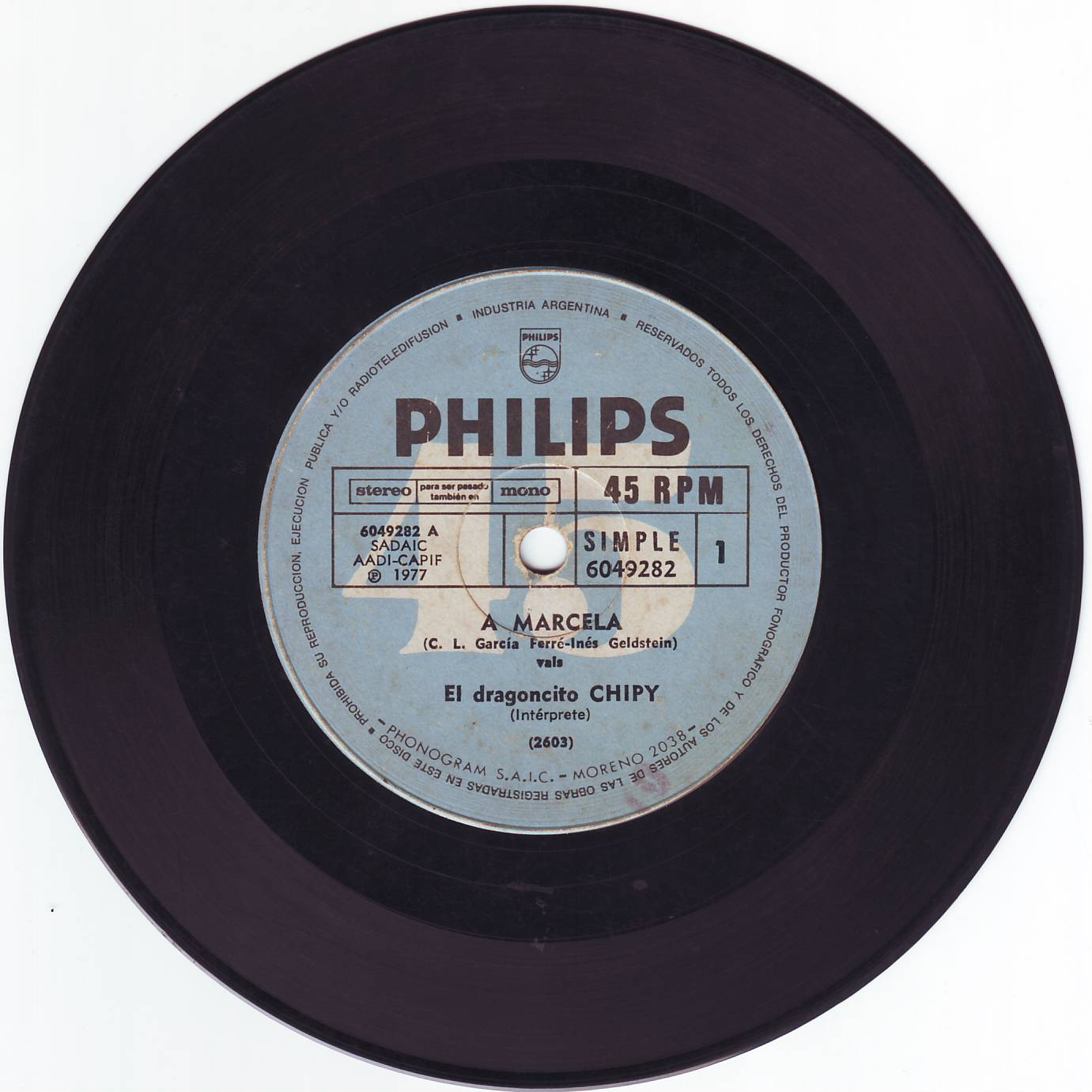
The discs were seven inches across with a large centre hole, played at forty-five revolutions a minute, carrying one song on each side – a format that is small, light, hard to damage, cheap to press and easy for a machine to handle.
Digital files with no physical dimension, no limit on length and no mechanical handling requirement of any kind.
The format and the machine developed together and each shaped the other. A disc that a mechanism must grip, carry, flip in some designs and return needs to be small and stiff; a large centre hole gives a gripper something to work with. The seven-inch single is in part a jukebox specification, and once it existed it became the way popular music was sold to everybody.
5. You Chose by a Letter and a Number
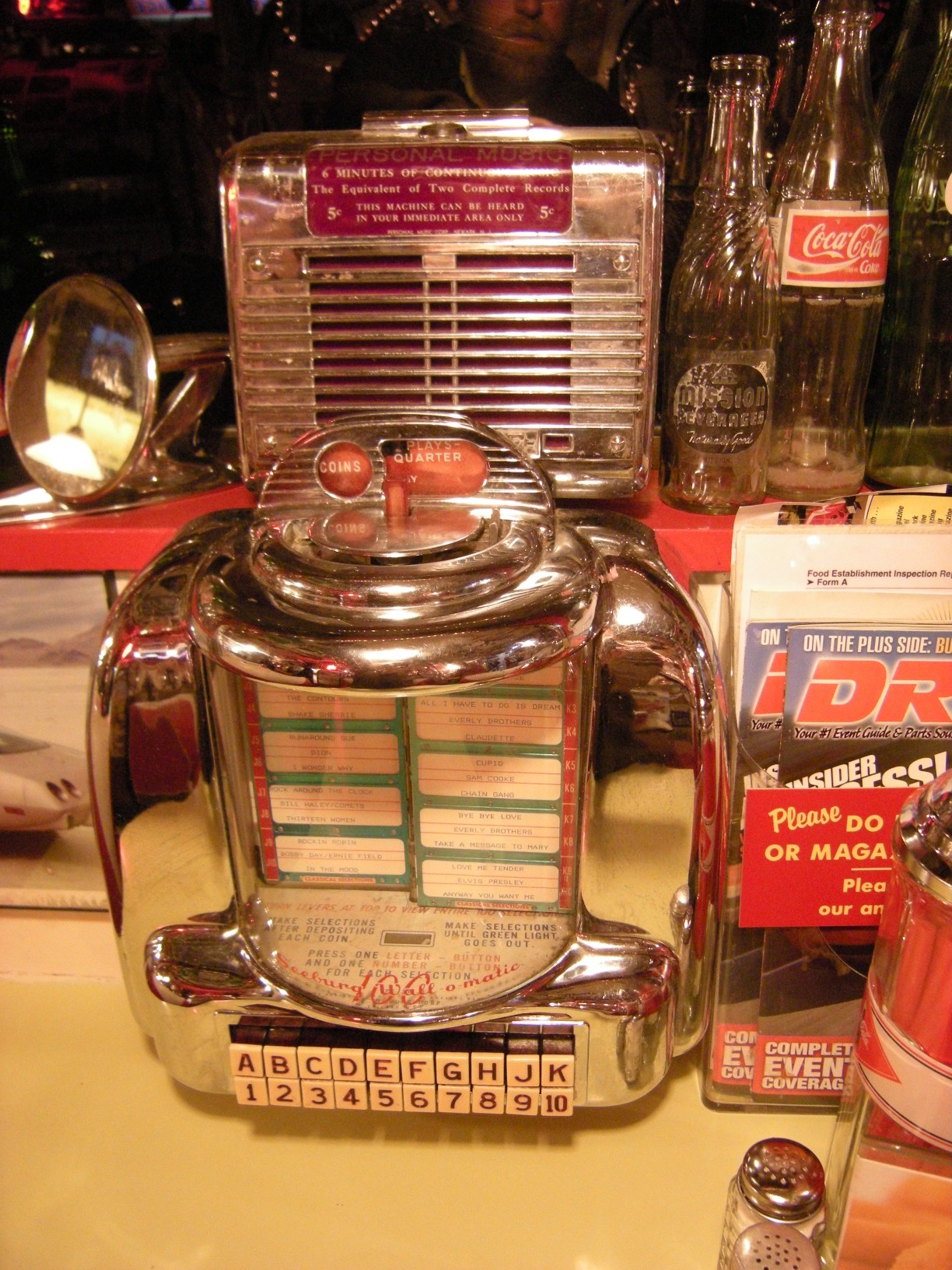
Selections were made from rows of printed title strips, each identified by a letter and a digit – A1, B7, K4 – entered on a keypad or by pressing a lettered button and a numbered one.
Searching by name, artist, album or genre, with the entire catalogue of recorded music available and no fixed set to choose from.
The coding was a genuine constraint that produced genuine knowledge. A hundred selections is small enough to learn, so regulars in a particular place knew the numbers by heart, could enter a choice without reading, and referred to songs by their code – and a machine’s numbering became local shared information.
6. There Was a Wallbox in Every Booth
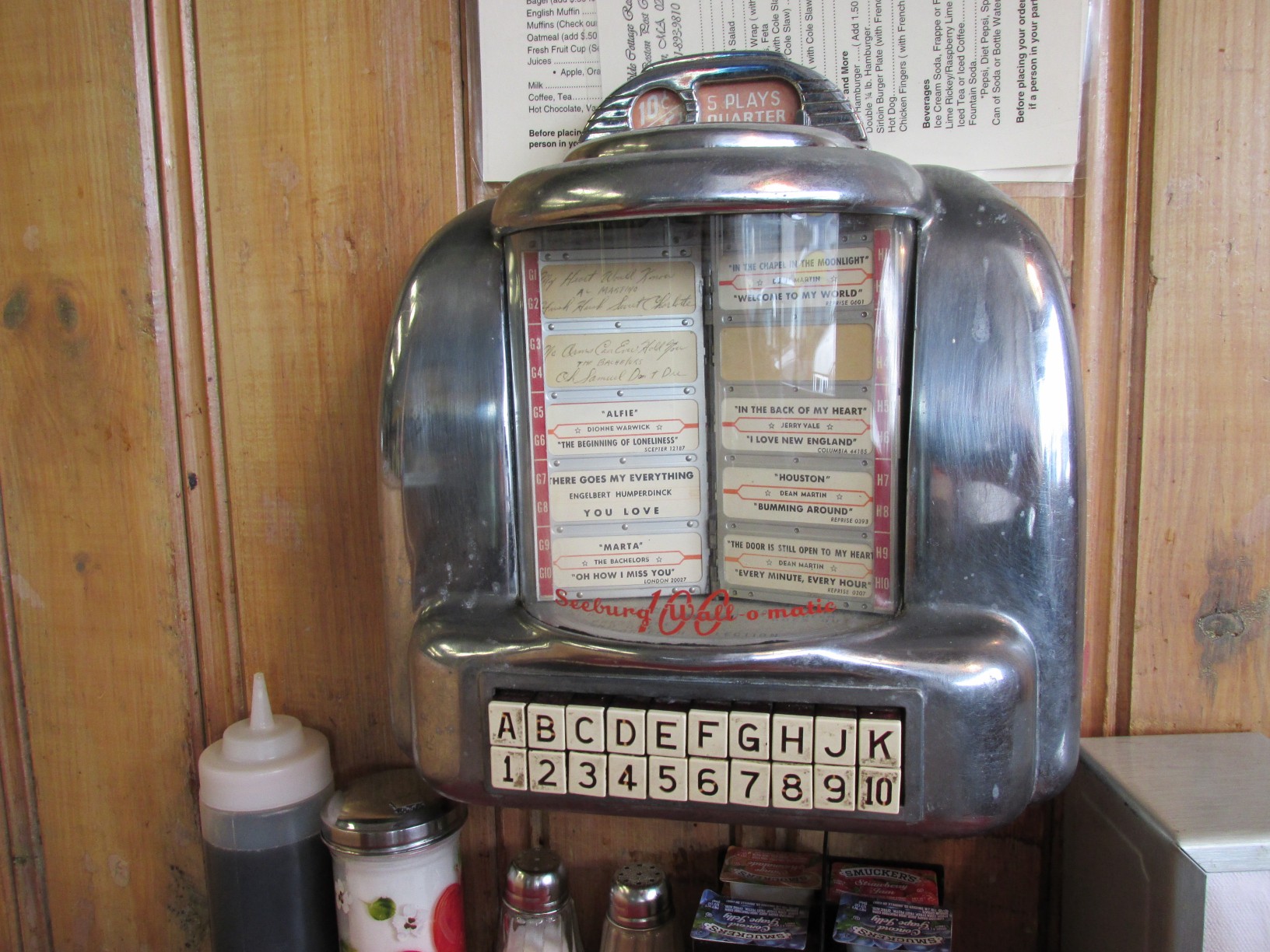
Mounted on the wall at each table or booth was a small chrome unit with the same title strips and buttons, taking coins and wired back to the main machine – so you could select, and pay, without leaving your seat.
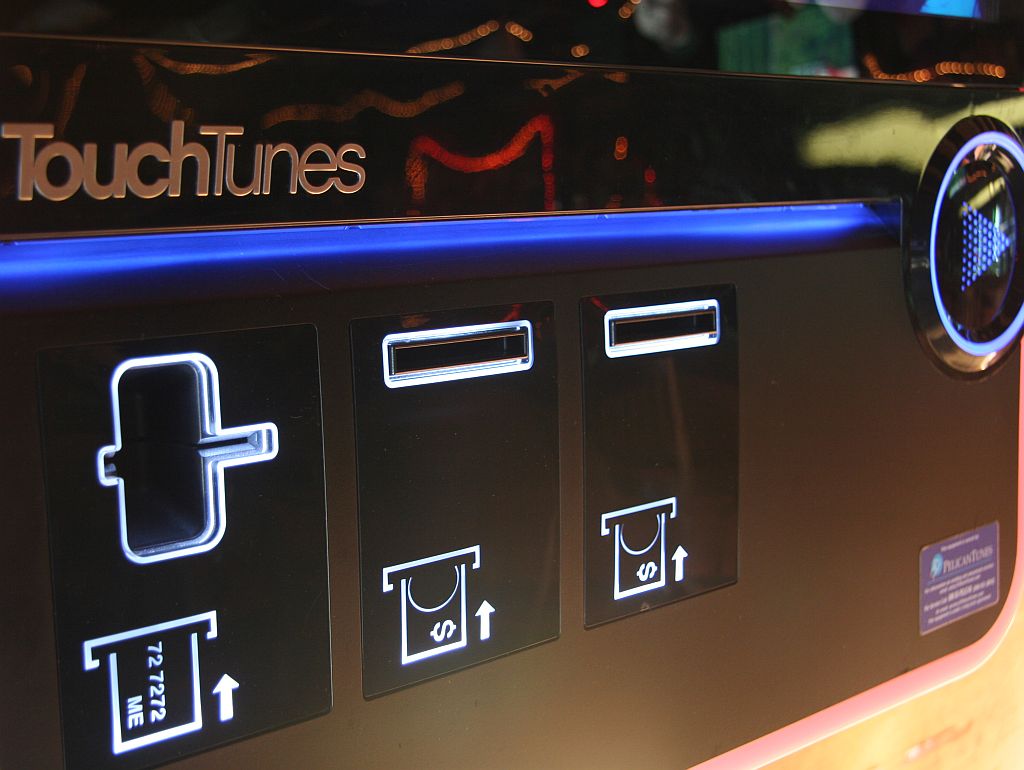
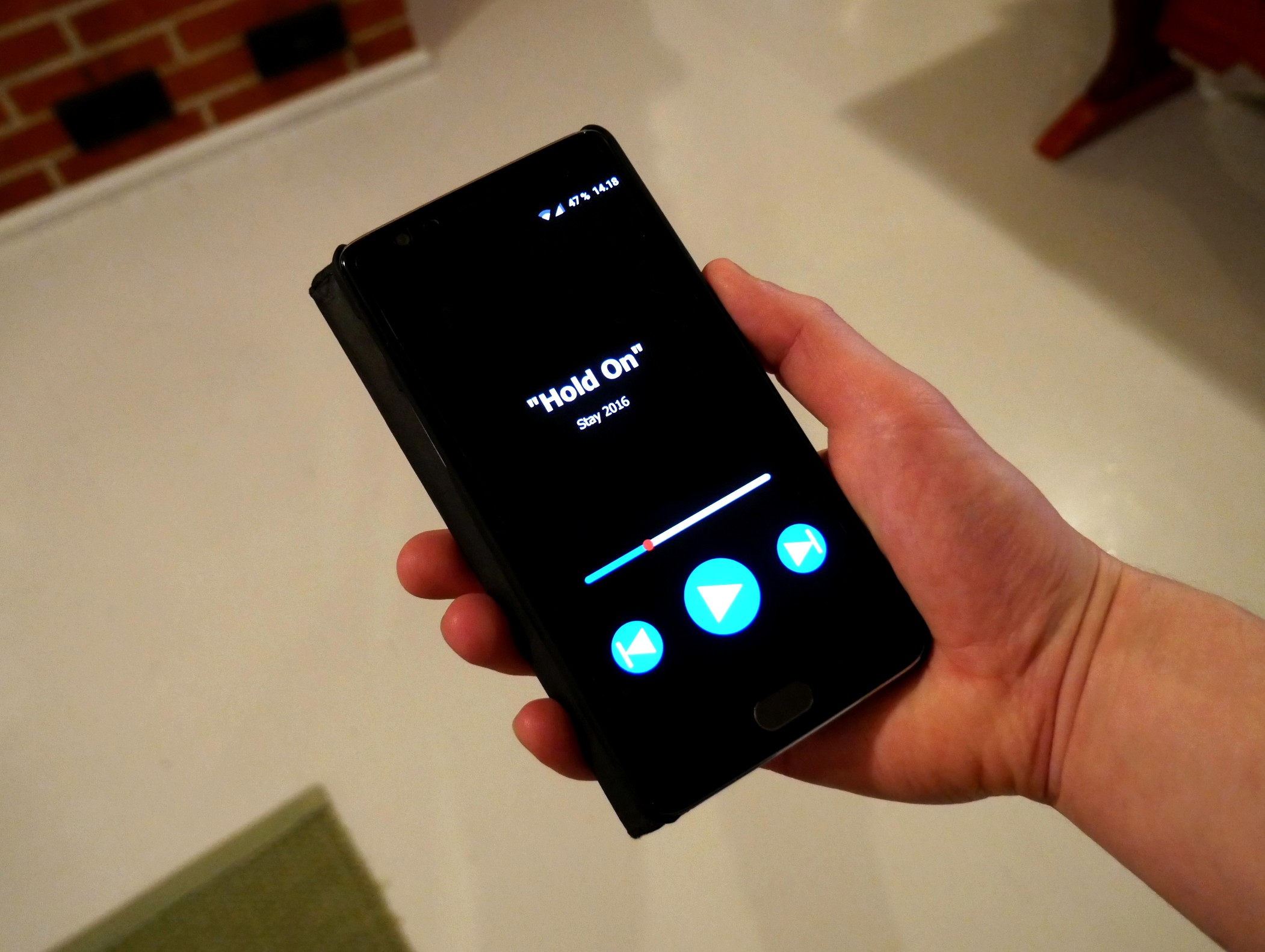
A phone application that controls the machine from anywhere in the room, which is the same idea with the wire removed.
The wallbox was the operator’s most profitable accessory and the reason is behavioural. A machine across the room requires a person to stand up, walk over and be seen choosing; a box at the table removes all three barriers – and takings per site rose substantially when they were fitted.
7. The Title Strips Were Typed and Changed by Hand
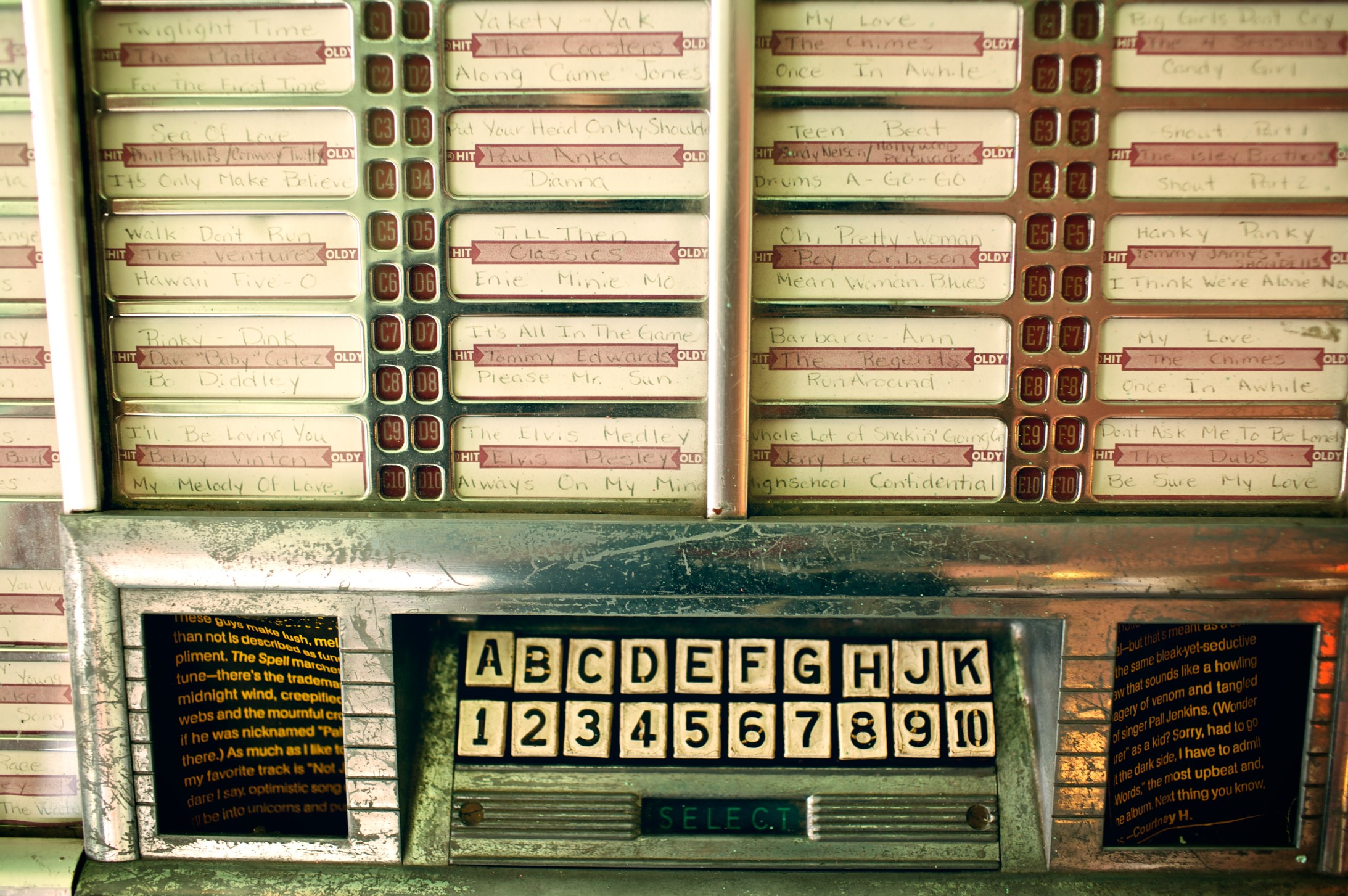
Each selection was labelled on a narrow paper strip bearing the song title and the performer, printed by the record companies, typed locally, or handwritten – slid into a holder behind the glass and replaced whenever the record was.
An on-screen list updated automatically, with artwork, and no physical labelling of anything.
The strips are where the human hand shows. Titles were abbreviated to fit, misspelled, typed crookedly, and occasionally annotated by whoever was changing them – and a machine’s strip holder is a record of who was servicing it and how much they cared.
8. The Plays-Per-Coin Ratio Was the Whole Pricing Question
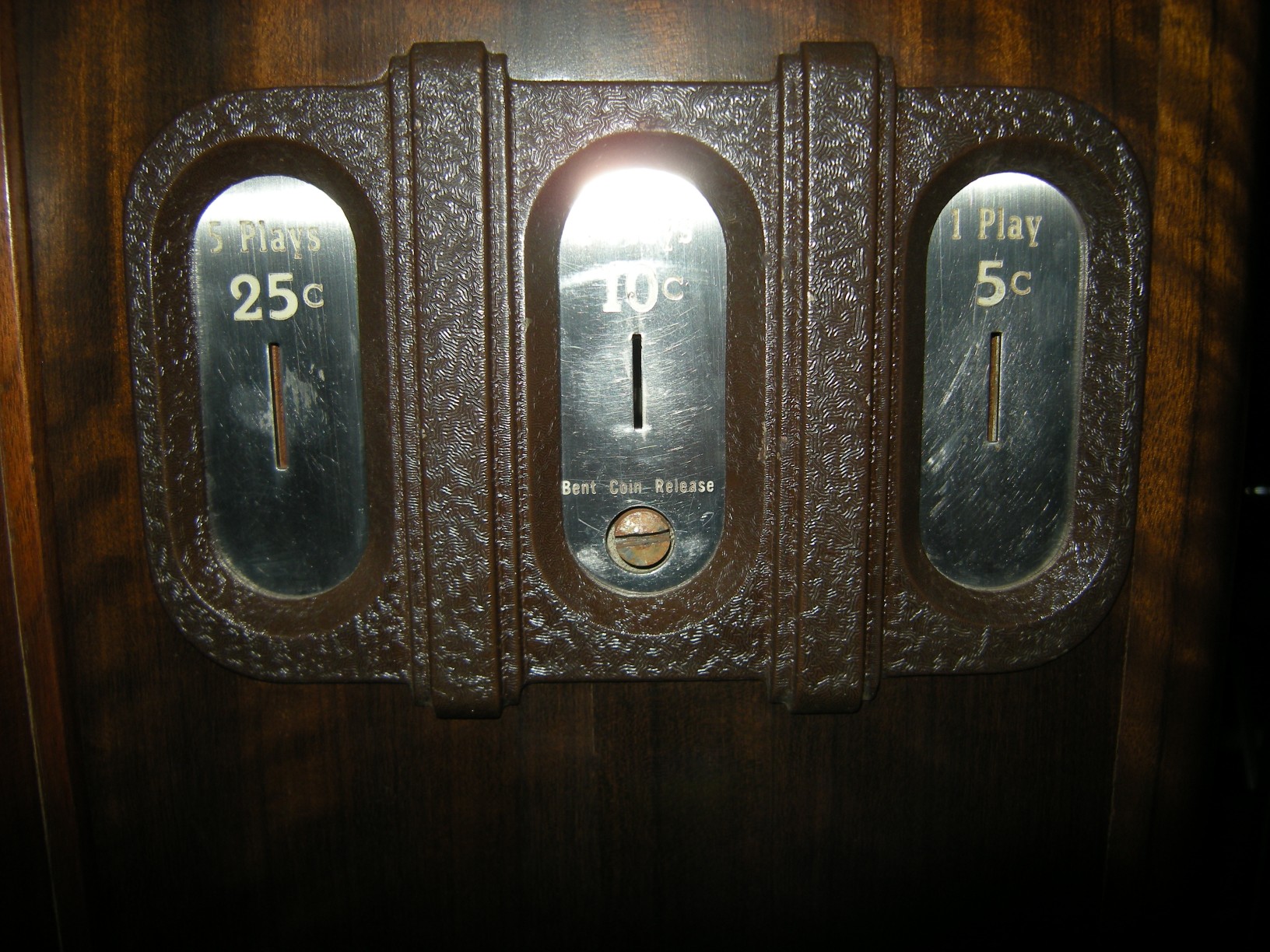
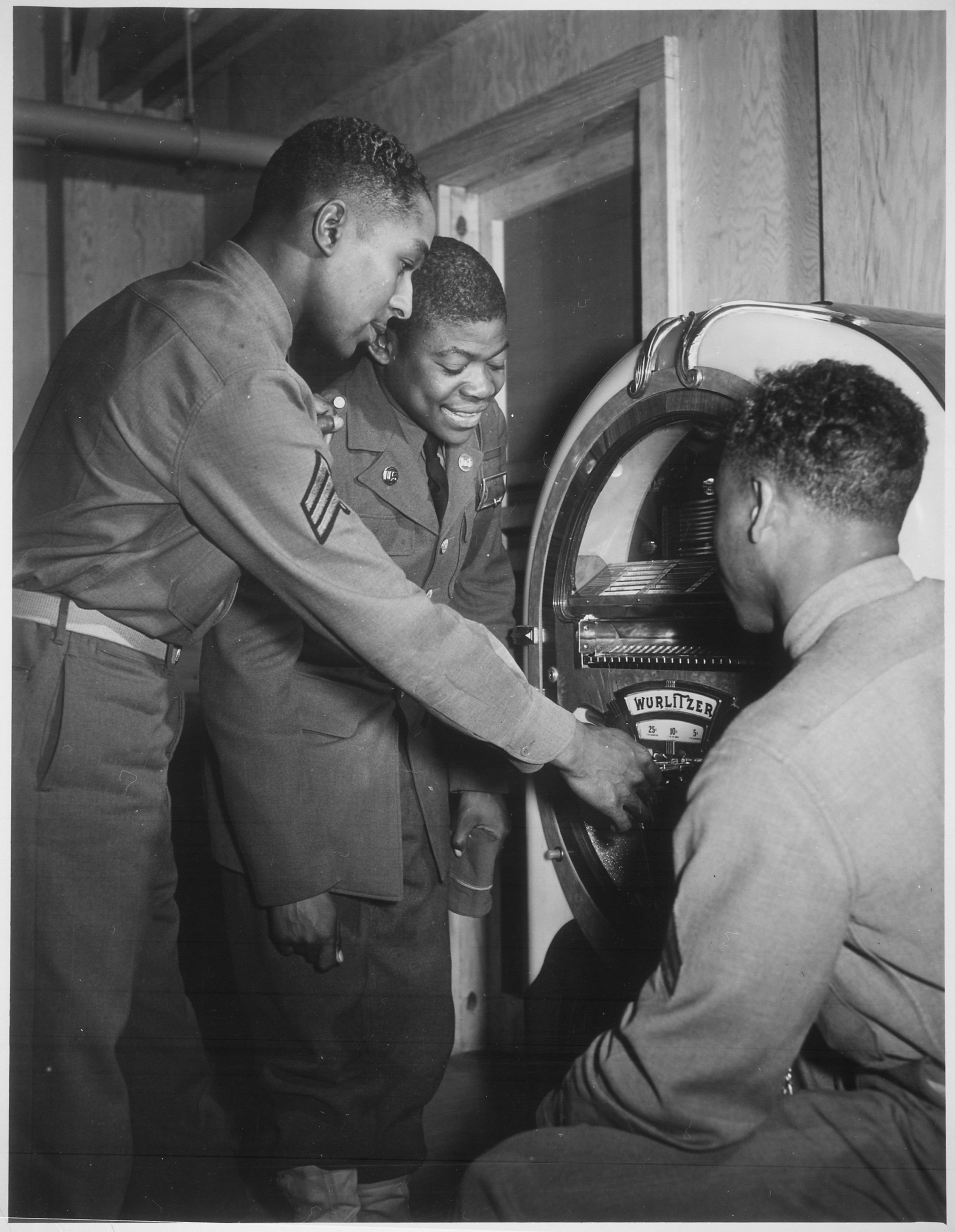
A coin bought one play, or three for a larger coin, or seven for a quarter – and the ratio was set by the operator, adjustable inside the machine, and chosen by what the site would bear.
Per-play pricing on commercial machines, and effectively free listening everywhere else through subscription.
The multi-play ratio was a deliberate behavioural lever. One play for a dime makes a person choose carefully; seven for a quarter makes them fill the machine and keeps music running for half an hour without anybody else spending anything – so the ratio was set according to whether the operator wanted turnover or continuous play.
9. Somebody Chose What Was In It, and It Was Not the Owner
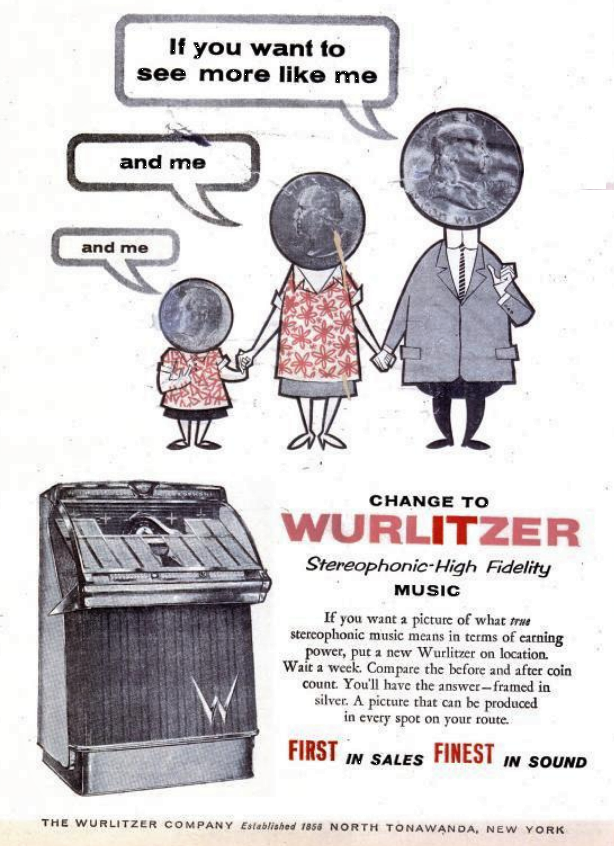
The records in the machine were selected not by the bar or diner but by the operating company that owned the machine, informed by what was selling, what the distributors were pushing, and what that particular location’s customers played.
Catalogue access to essentially everything, with the selection made in real time by whoever is paying, and no curator anywhere in the process.
Which made the operator a genuine gatekeeper. A record that got into the machines reached an audience that a record on a shop shelf did not, because the jukebox put it in front of people who had not chosen it – and getting into the boxes was understood in the industry as one of the hardest and most valuable things a new release could do.
10. The Operator Serviced It and Split the Take
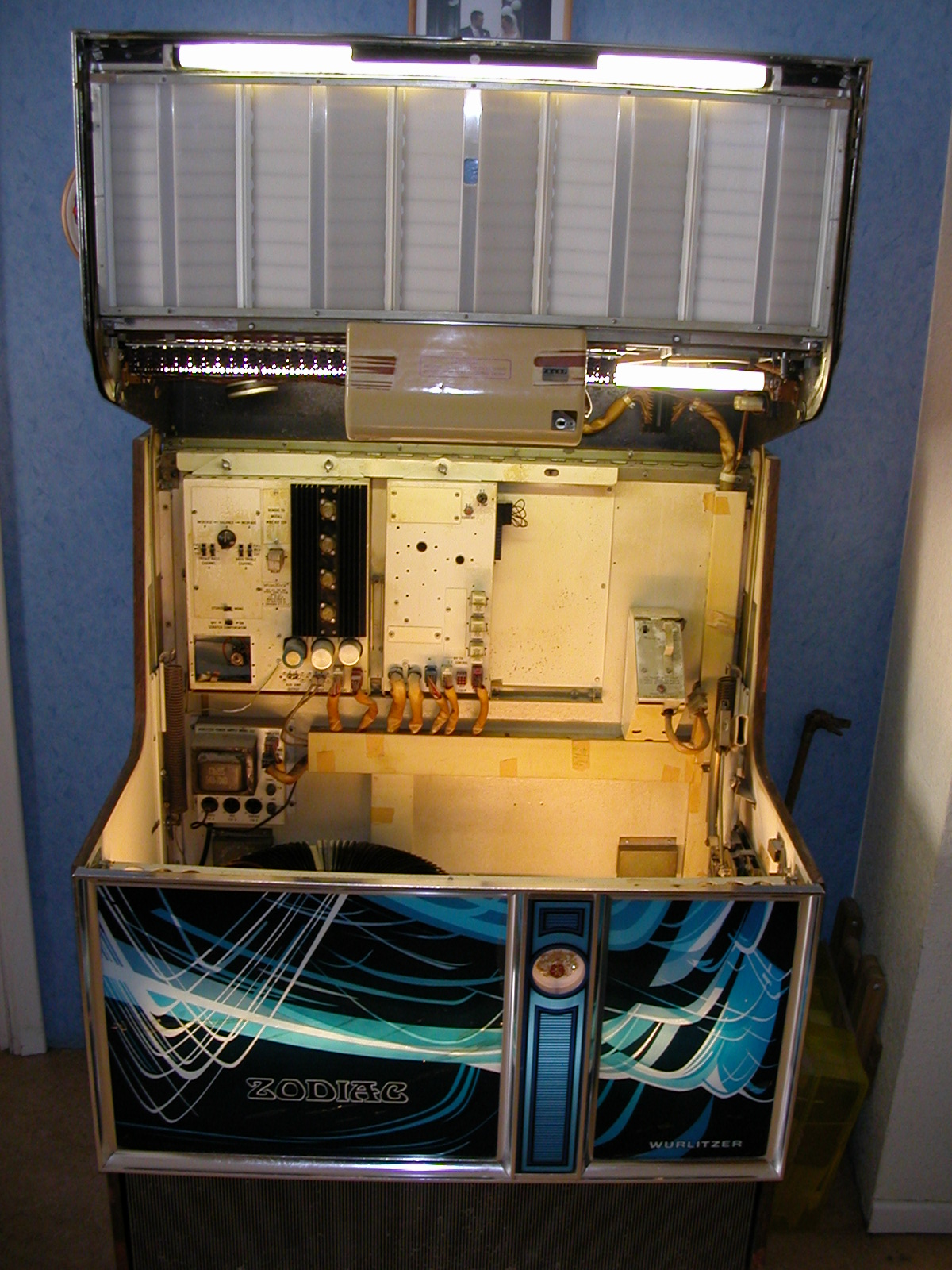
A route operator owned the machine, installed it free, visited weekly or fortnightly to change records, clean the mechanism, replace the strips and empty the coin box – and split the money with the location on an agreed percentage.
Equipment owned or leased by the venue, with licensing paid to rights organisations and no third party visiting anything.
The route business was the industry’s actual structure and it was substantial. An operator with a hundred machines across a county had a hundred weekly cash collections, a stock of records, a workshop and a van – and the economics of recorded music in America ran partly through those vans for forty years.
11. The B-Side Mattered, and the Machine Is Why
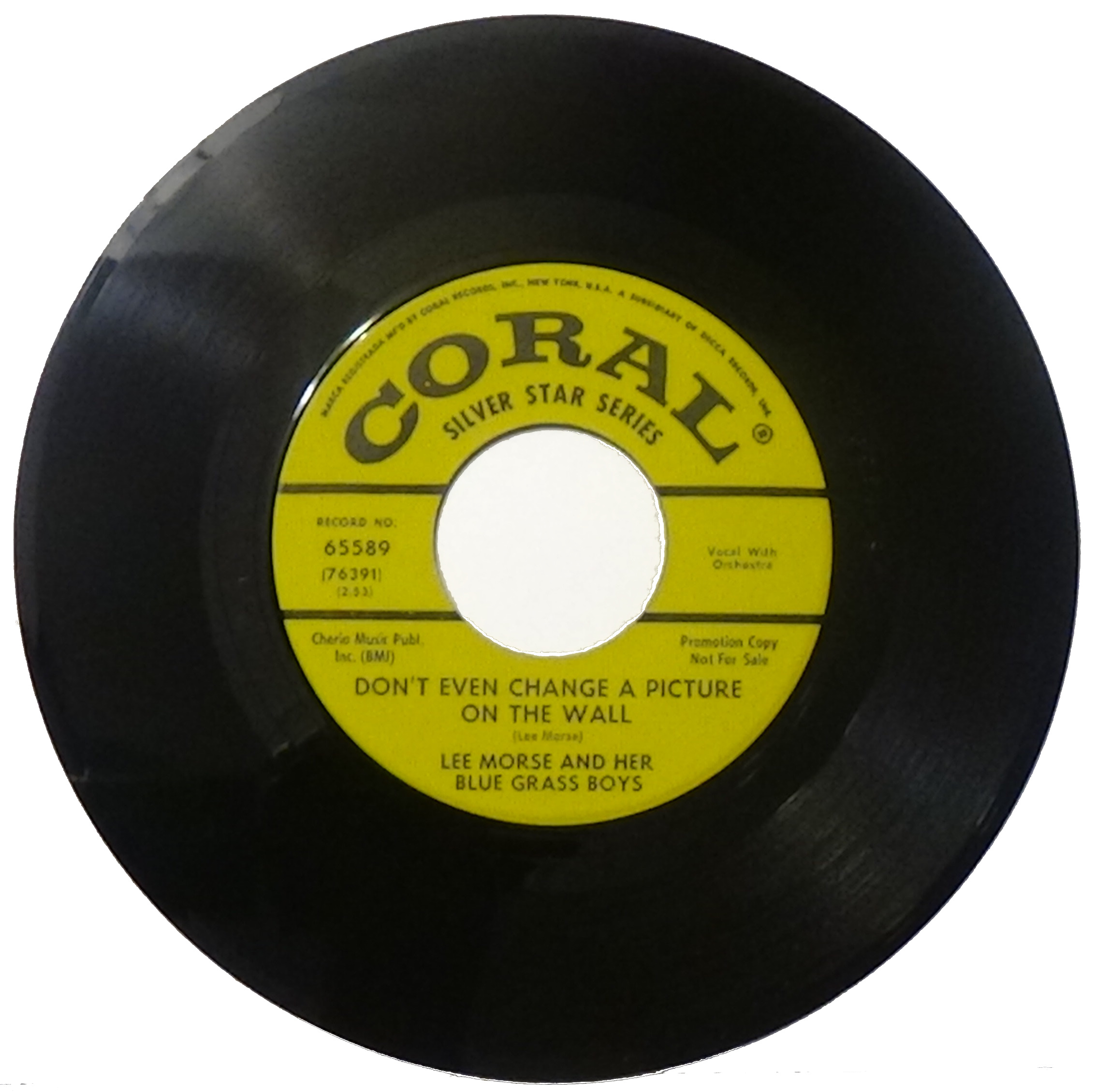
Every disc carried a second song on the reverse, and in many machines both sides were available as separate selections – which meant the back of a record could be chosen, played and counted on its own.
No concept of a reverse side, since a file has no physical sides and every track is equally accessible.
This had real consequences. A B-side that people selected could outperform the side the company had promoted, and more than a few records became known for their reverse – and because operators reported what was being played, the machine supplied evidence that could overturn a label’s own judgement about its own release.
12. It Was Loud, and the Volume Was Locked
The machine could dominate a room, and the volume control was inside the locked cabinet – set by the operator, not by the customers, and frequently not by the owner either.
Volume controlled by venue staff from behind a counter, or by whoever has the application, with no lock on anything.
Locking the volume was not arbitrary. A machine turned down earns less because nobody hears it from the door; a machine turned up drives customers out and gets the operator thrown off the site – so the setting was a commercial judgement made by the person whose money depended on it, and taking it out of everybody else’s hands was deliberate.
13. Your Song Was Sixth and You Waited
Selections played in the order they were entered, so a busy machine ran a queue – and a person who had just paid might wait twenty minutes to hear what they had chosen, with no way to see the queue or to know where they were in it.
Queues that are visible, re-orderable and sometimes vote-based, with everybody able to see what is coming.
The invisible queue created the room’s whole social dynamic around the machine. People knew roughly what they had put in and listened for it, somebody always claimed a song that was not theirs, and the pleasure of hearing your selection arrive out of somebody else’s run of choices is the specific experience that no playlist reproduces.
14. People Played One Song Repeatedly on Purpose
Because a quarter bought several plays, a determined person could select the same record five or seven times consecutively – and this was done, frequently, to make a point to somebody in the room.
Possible in principle and almost never done, since it imposes nothing on anybody and nobody else is listening on the same system.
It is worth recording as the clearest illustration of what the machine actually was. A jukebox is a device by which one person, for a small sum, imposes their choice on everybody present for three minutes – or twenty-one. That is a social act, with a target and an audience, and it is the single feature that private listening has completely abolished.
15. The Glass, the Chrome and the Colour Were the Product
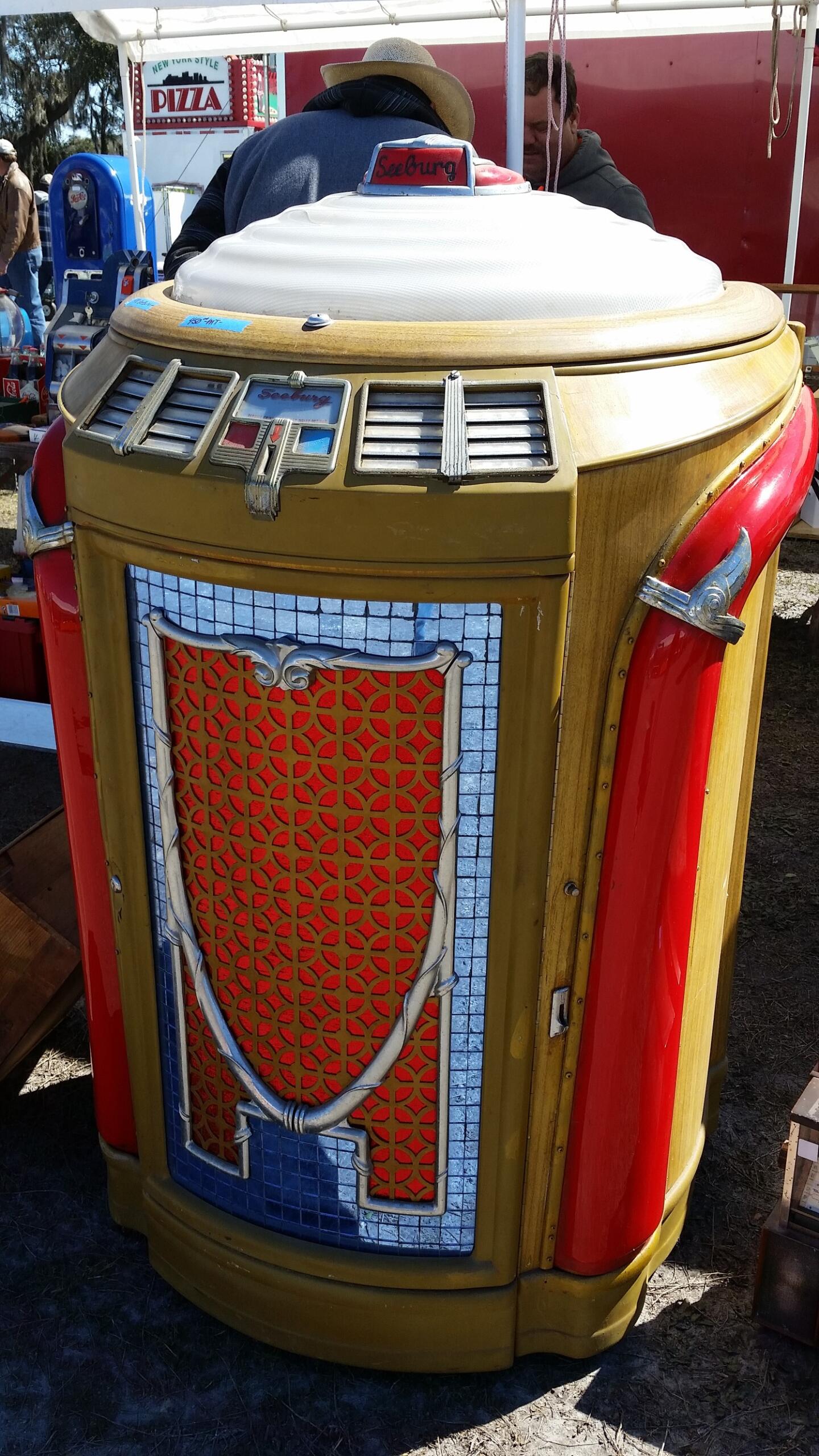
Cabinets were styled aggressively – curved glass, chrome trim, mirrored panels, animated lighting, rotating colour drums and the bubble tubes – with the visual design updated annually in the manner of cars.
Equipment designed to be visually unobtrusive, in black, mounted high on a wall or hidden entirely.
The styling existed because the machines competed for sites. An operator chose which model to install, a location chose which operator to take, and a bar with a handsome machine looked like a better bar – so the manufacturers spent heavily on appearance and the result is that a 1946 cabinet is now a collectable object independent of whether it works.
16. Then Every Constraint It Imposed Became Permanent
The machine was a lit cabinet holding a hundred seven-inch discs, selected by letter and number for a coin, played in an invisible queue, loud, in a public room, from a set chosen by a route operator who serviced it weekly and split the take.
Streaming services with unlimited catalogues, private listening, free selection, visible queues, no coins, no operator and no machine.
And yet the constraints the jukebox imposed on music itself are still operating, which is the part worth noticing. A seven-inch disc at that speed holds roughly two and a half to three minutes, so popular songs were written to that length – and they still are, because that is now simply what a song is. A paying customer standing in front of a machine had to be convinced immediately, so the strong opening and the early hook became obligatory – and they remain obligatory on streaming, for the identical reason, because a listener who skips in ten seconds does not count as a play. Both sides of a disc being separately selectable gave the industry its first direct measure of what people chose rather than what they were sold, and the operators’ reports became genuine chart data – which is the ancestor of counting plays rather than counting sales, now the basis of the entire business. The cabinet, the coins, the queue and the route van are all gone. The length of a song, the position of its hook and the counting of plays are the jukebox, still running.
The Cabinet Went and the Rules Stayed
There is a straightforward way to tell this story: a beautiful machine, superseded by something infinitely more capable, now collected as an object. True, and it misses the interesting part entirely.
The jukebox imposed a set of hard physical constraints on popular music, and every one of those constraints is still in force – decades after the thing that caused them stopped existing.
Start with length. A seven-inch disc turning at forty-five revolutions a minute holds somewhere between two and a half and three minutes per side before the groove runs out of room. That is not an aesthetic judgement; it is geometry. Popular songs were written to fit it, for years, because a record that would not fit could not be a single – and then the length stopped being a constraint and simply became what a song is. Ask anybody now how long a song should be and they will give you a figure that came off a disc.
Then the opening. A person standing at a machine has put money in and is waiting. A bar full of people who did not choose this record will give it a few seconds before they stop listening. So the strong opening, the hook arriving early, the first ten seconds carrying the whole weight – all of that is jukebox engineering, developed because of who was standing in front of the machine.
And that constraint did not relax. It tightened. A streaming service counts a play only once a listener stays past a threshold of a few seconds, which means a track that fails to catch immediately is not merely unloved but literally uncounted – so the pressure to put the hook at the front is now stronger than it was in 1964, enforced by a payment rule rather than by a customer’s patience.
Finally, measurement. Every other way of selling music counted purchases: somebody bought a disc and what they did with it afterwards was invisible. The jukebox counted plays. Operators reported what their machines were actually playing, those reports fed the earliest national popularity charts, and for the first time the industry had evidence of what people chose to hear repeatedly rather than what they had been persuaded to buy once.
That distinction – plays rather than sales – was a curiosity of the coin-operated trade for fifty years. It is now the basis of the entire music business. Everything is counted in plays, royalties are paid per play, and success is measured in exactly the unit the route operator was reporting from his van.
So the honest accounting looks like this. Gone: the cabinet, the mechanism, the coins, the title strips, the wallbox, the locked volume, the hundred-record limit, the route operator, and the social fact that one person could spend a quarter and impose their choice on a whole room for twenty minutes. That last one is a genuine loss and nothing has replaced it.
Still running: the length of a song, the position of its hook, and the counting of plays.
The machine was in the corner of the room glowing. The rules it wrote are in your headphones.
If you used one, you remember waiting for your song to come up out of somebody else’s selections.
And you remember somebody playing the same record five times in a row to make a point, and everybody in the room knowing exactly who it was aimed at.
Like our content? Follow us for more.