There Was a Tank in the Yard and Nobody Could See It
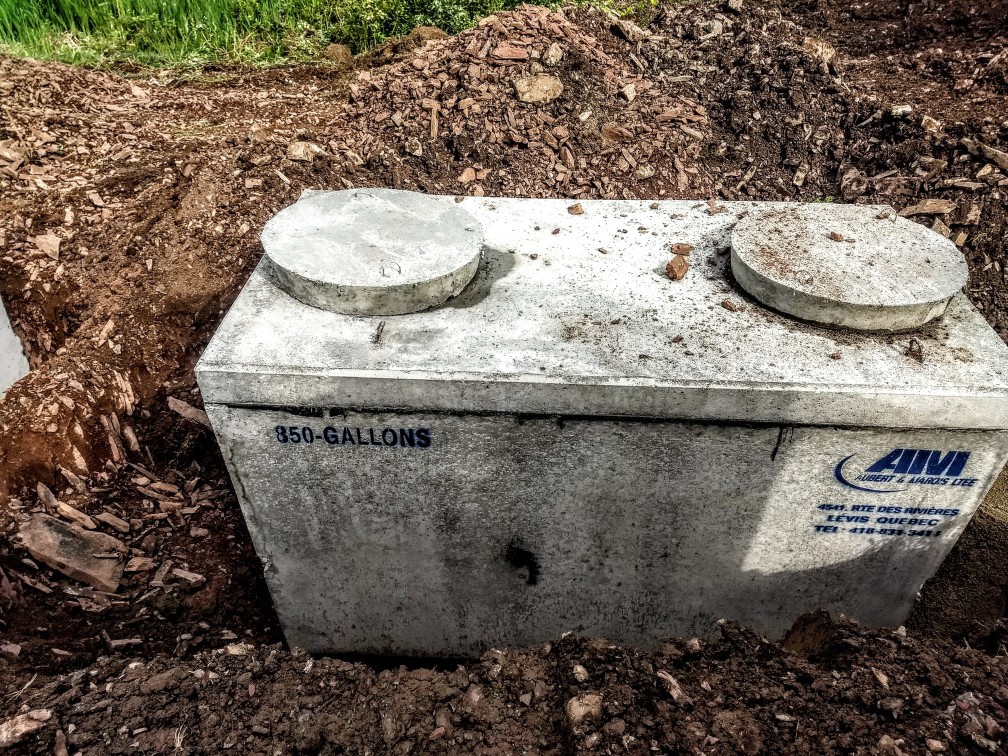
Somewhere out from the house, under the grass, was a buried concrete box the size of a small car, with two or three cast lids at ground level or a foot under it. From the far end of it, a pipe ran to a set of parallel trenches spread across the lowest convenient part of the yard.
You knew where it was because the grass over the trenches grew differently – greener in a dry summer, and the lines were visible from an upstairs window.
And in the ordinary course of things, nobody thought about any of it, for years at a time, which is both the system’s great virtue and the reason it so often went wrong.
Like our content? Follow us for more.
The Tank Does Almost No Treating
This is the fact that almost everybody has backwards, and everything else follows from it.
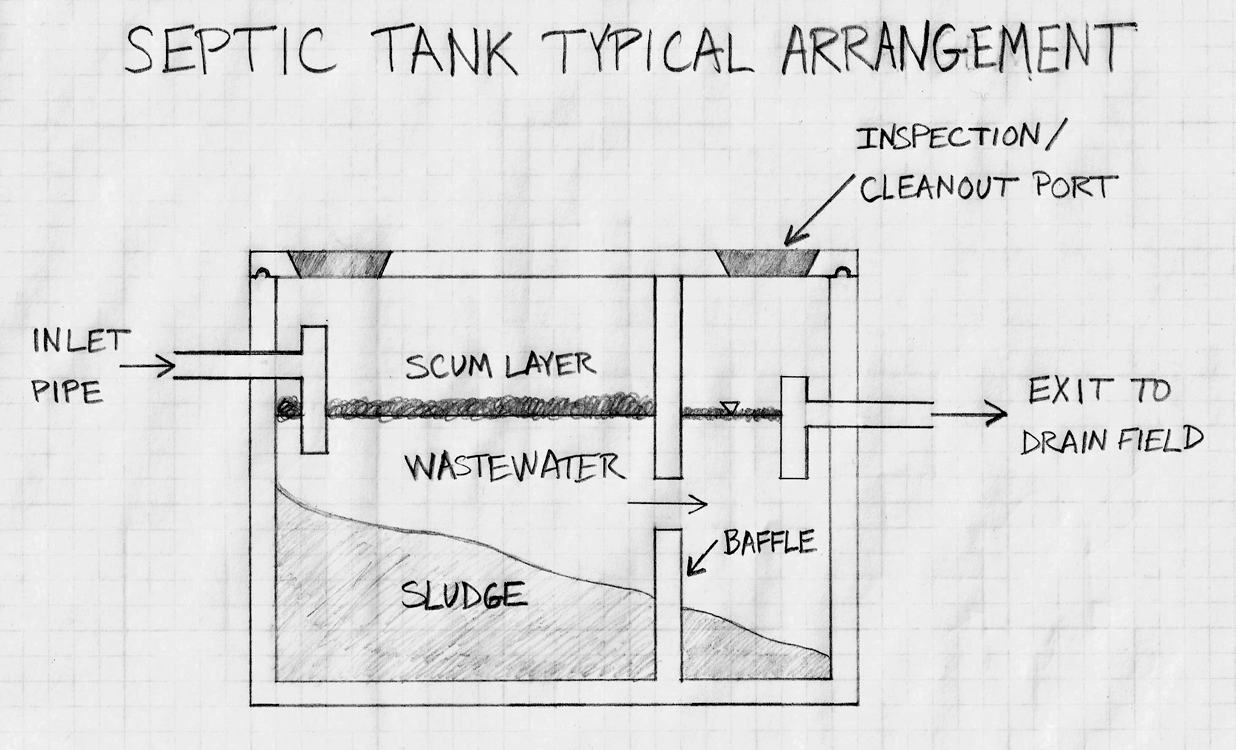
A septic tank is not a treatment device. It is a settling chamber. Everything from the house flows in at one end, and the tank’s entire job is to hold it still for long enough that it separates into three layers.
Solids heavier than water sink and accumulate on the bottom as sludge. Grease, fat and anything lighter than water floats to the top as a scum layer. And in the middle sits a relatively clear liquid, which is what leaves the tank.
That is it. Some biological breakdown of the sludge happens because the tank is full of organisms with nothing else to do, but the tank is not designed around it and does not depend on it. The tank’s purpose is to send out liquid and keep solids in – because solids are what destroys the next part of the system.
The Baffles Are the Whole Design
Inside the tank are two simple obstructions, and they are the entire engineering.
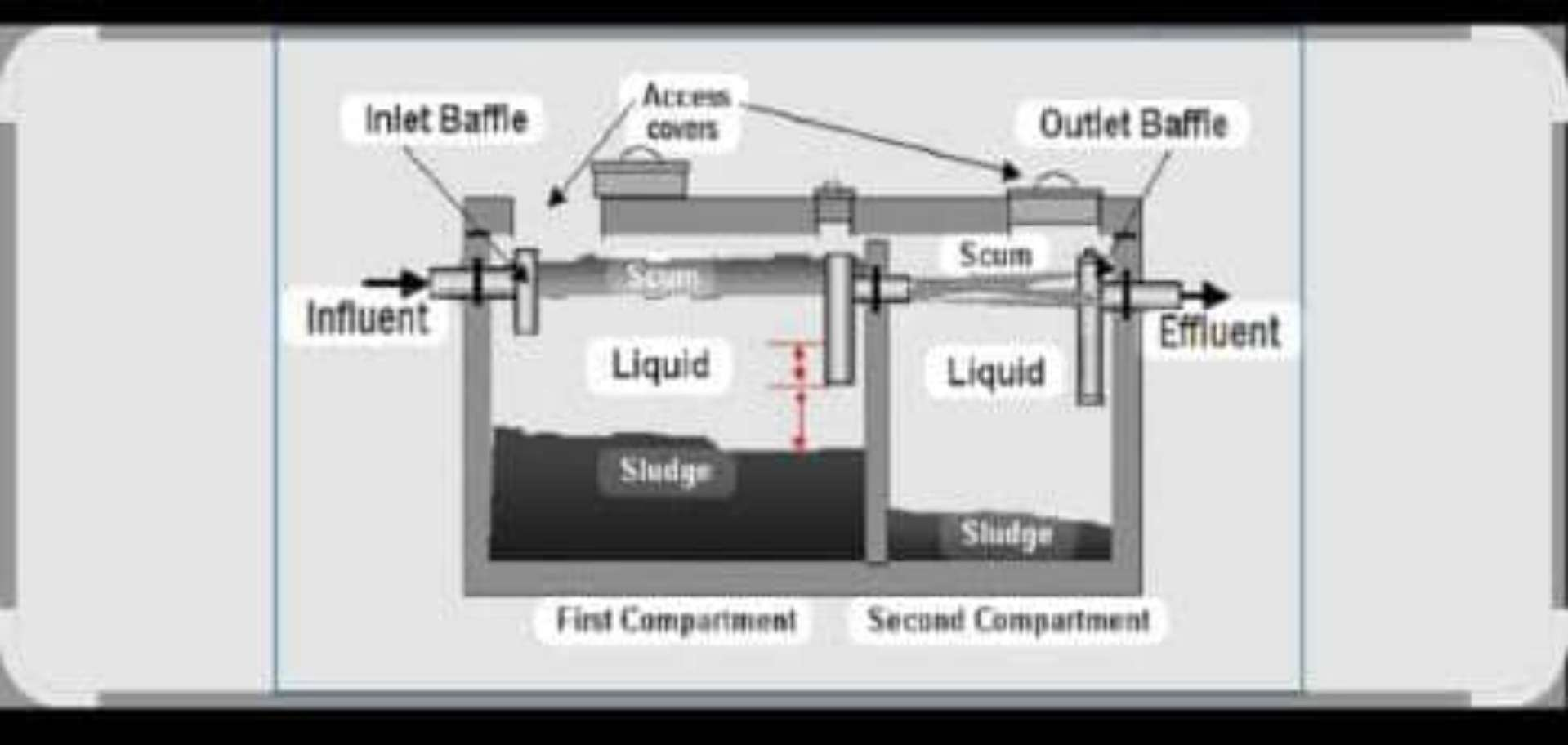
At the inlet, a baffle directs the incoming flow downward rather than straight across, so that a flush does not push a wave of liquid directly to the outlet and carry the floating layer with it.
At the outlet, a baffle or a tee extends downward below the liquid surface, so that what leaves is drawn from the middle of the tank rather than from the top. Which means the scum layer cannot go out, and the settled sludge at the bottom is below the outlet and does not either.
Two pieces of concrete or plastic in the right places, with no moving parts, no power and nothing to adjust, doing the whole separation. It is one of the more elegant pieces of domestic engineering anybody has installed and buried in a lawn.
It Has to Be Pumped Out Because the Sludge Accumulates
The consequence of the design is unavoidable: solids go in and do not come out, so they build up.
As the sludge layer rises from the bottom and the scum layer thickens from the top, the clear middle zone gets thinner. Eventually there is not enough still liquid between them, incoming flow disturbs what is there, and solids begin leaving with the outflow.
That is the moment the system starts destroying itself, and it happens silently with no sign inside the house at all.
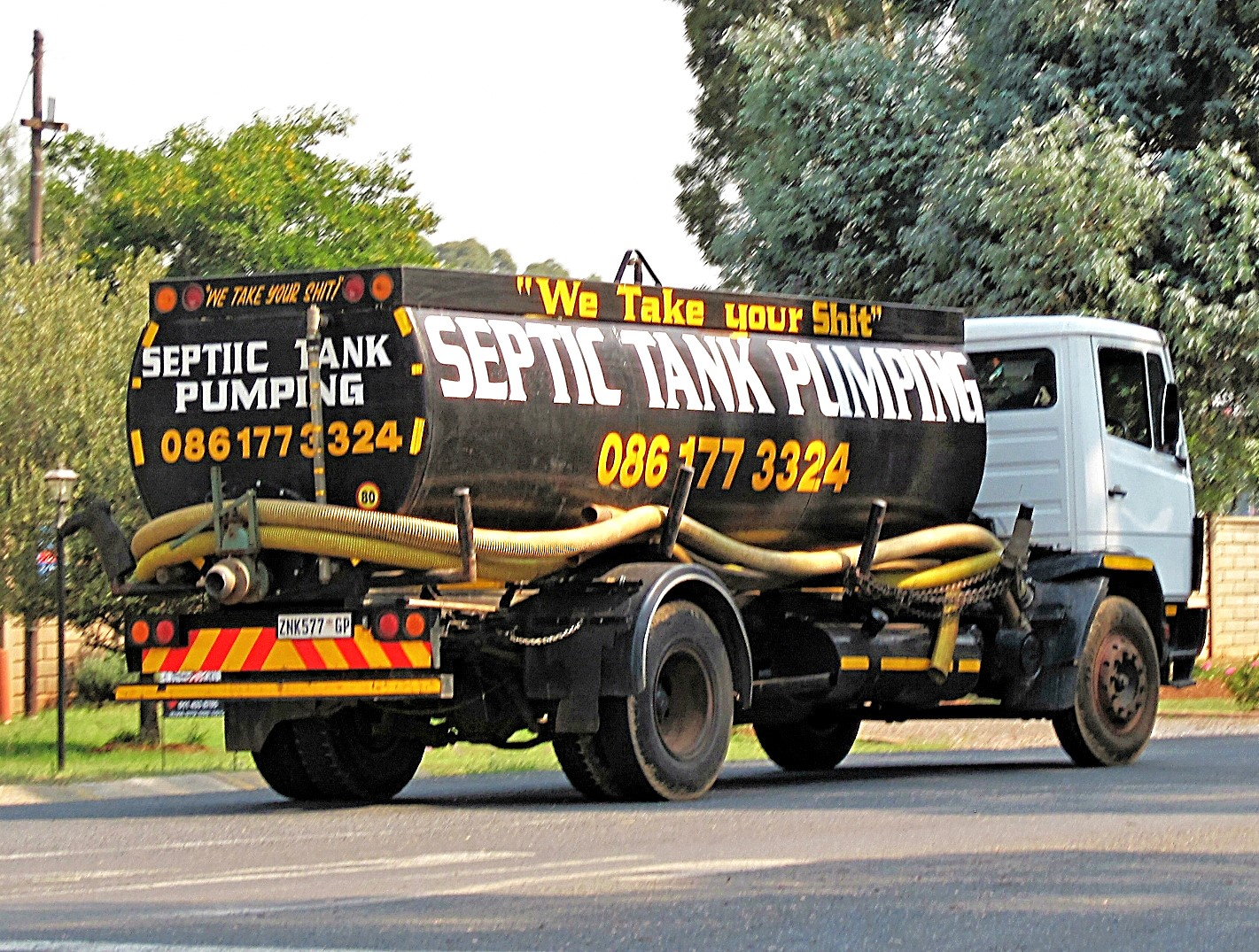
Which is why these tanks are pumped on a schedule rather than when something goes wrong – and why a household that has never had it done has not saved money, it has simply not yet received the bill. The intervals, the inspection and the work are all properly matters for a licensed contractor and for current published guidance, and this piece gives no figures and no procedure.
The Treatment Happens in the Soil
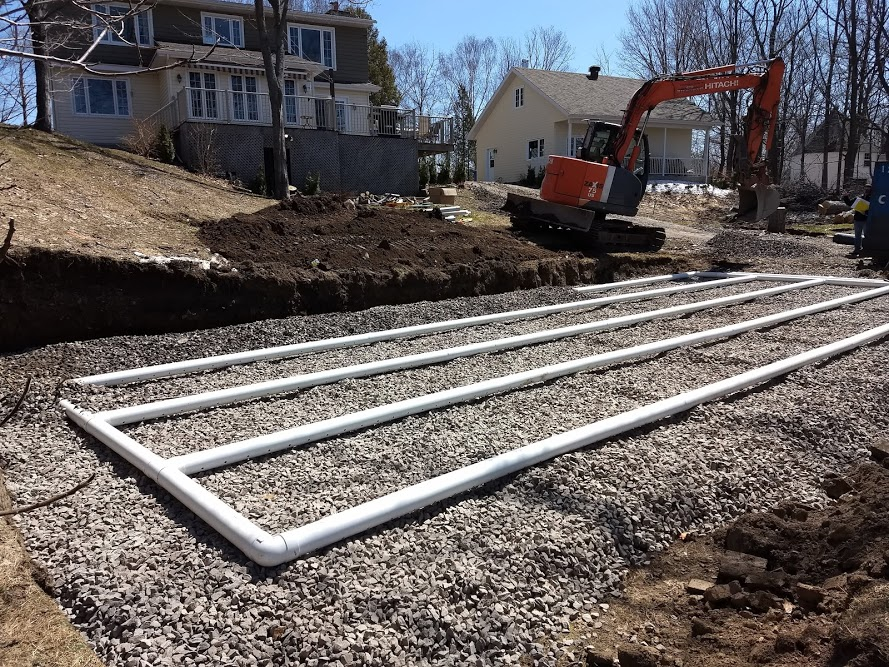
The second half of the system is where the actual work is done, and it is doing something considerably more sophisticated than the tank.
Liquid leaving the tank runs to a distribution point and then into trenches – perforated pipe laid in a bed of gravel, covered with a barrier and then with soil, spread out over a large area of the yard.
The liquid seeps out of the perforations, trickles down through the gravel, and enters the soil. And in the soil it meets an enormous population of bacteria, filtration by the soil particles themselves, and – the decisive factor – oxygen, which the tank did not have.
That combination is what treats the water. Organic matter is consumed, pathogens are removed or die off as the water passes slowly through the soil column, and what eventually reaches the groundwater below is substantially cleaner than what left the tank.
So the tank separates and the ground treats. The yard is the treatment plant.
There Is a Living Layer Doing the Work and It Also Kills the Field
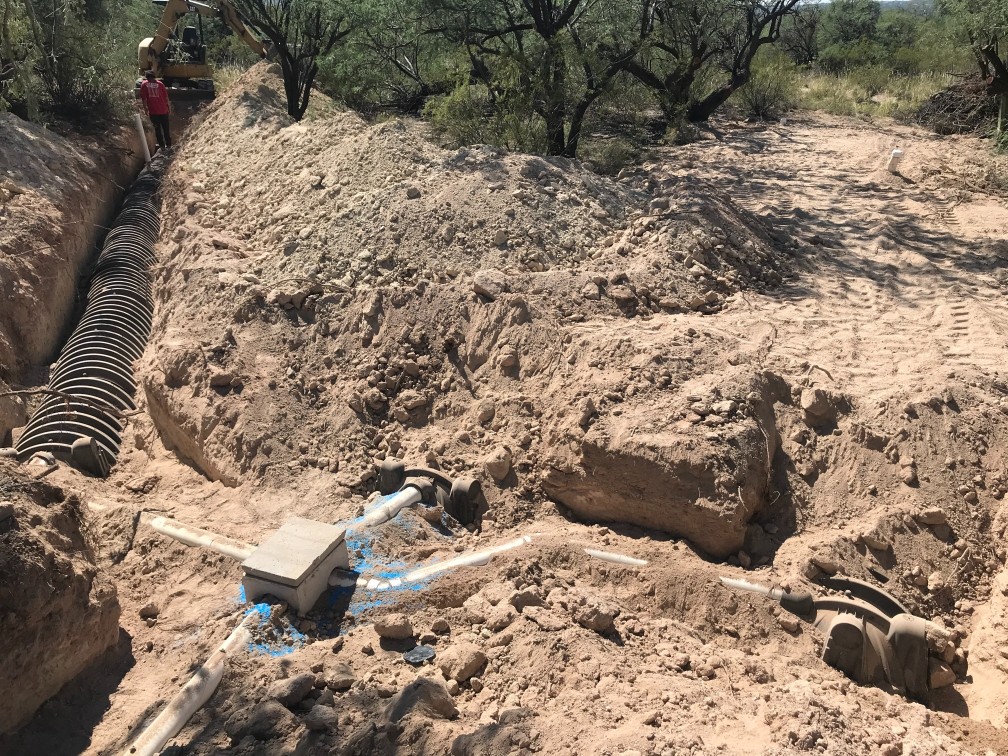
Here is the part that is genuinely interesting and that explains why these systems have a finite life.
At the interface between the gravel and the soil, a biological layer develops – a dense mat of microorganisms and their by-products that forms wherever the effluent meets the ground.
That layer is not a problem. It is the most important part of the treatment, because it is biologically active and it slows the water down, which is exactly what is needed: liquid that races through soil is barely treated at all, and liquid held in contact with soil and organisms is treated well.
But it thickens over time, and as it thickens it becomes progressively less permeable. Eventually it seals the interface, the soil can no longer accept liquid at the rate the house produces it, and the field fails – liquid backs up, or surfaces.
Which is the central fact about these systems and the one that most surprises people. The thing that performs the treatment is the same thing that eventually clogs the field. A drain field has a working life, it was always going to have one, and it ends not through neglect but through doing its job.
Whether a Site Can Have One at All Depends on the Dirt
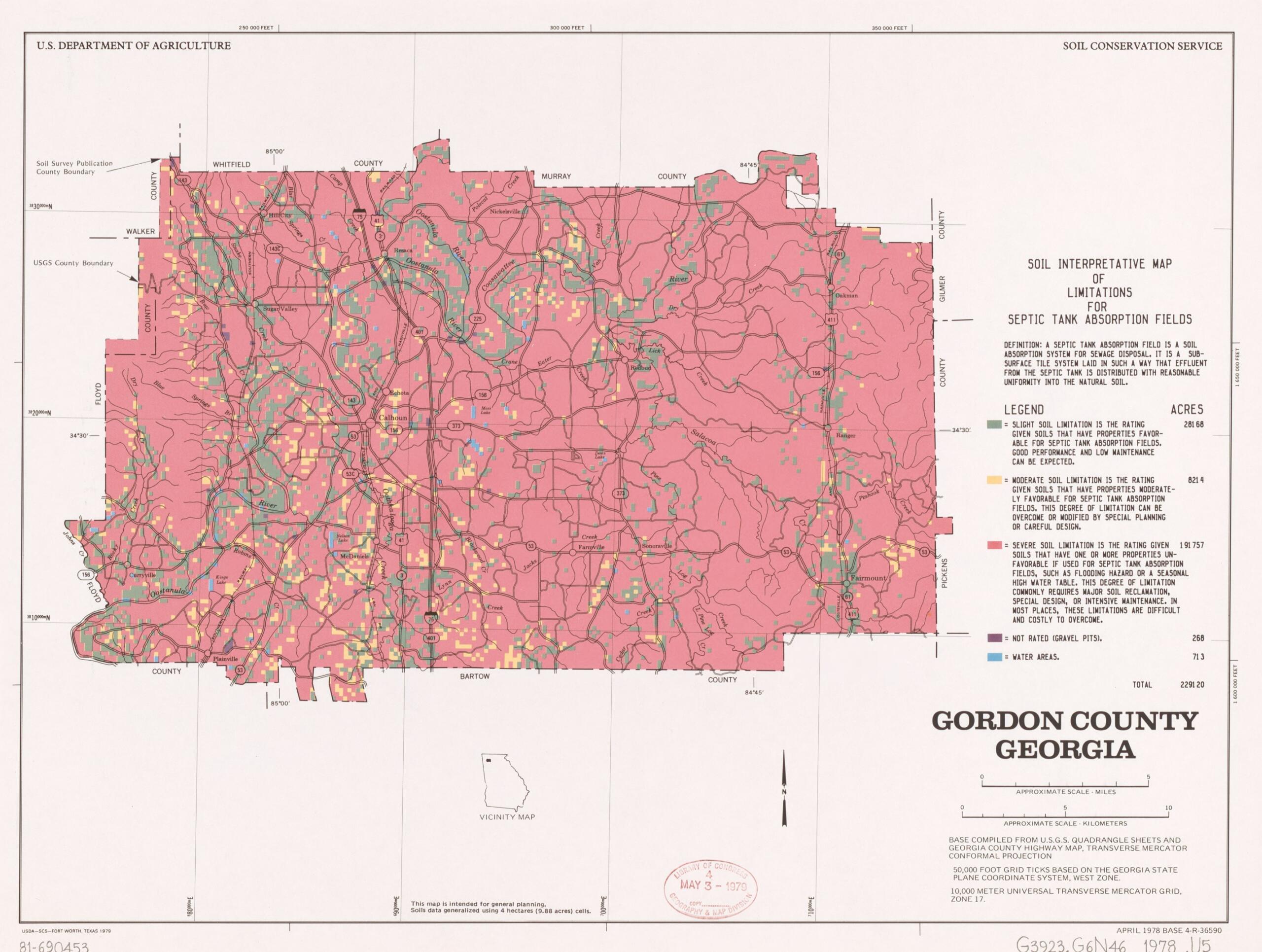
Not every piece of ground will take a septic system, and that is determined before anything is built.
The test is how fast water moves through the soil. Too slow – heavy clay, hardpan, rock close to the surface – and the ground cannot accept the liquid, so the trenches flood and the field fails immediately. Too fast – coarse sand or gravel, fractured rock – and the liquid races down to the water table without spending enough time in the soil to be treated, which is a contamination problem rather than a drainage one.
There is a usable range in the middle, and a site also has to have enough depth of suitable soil above the water table and above bedrock, enough area for a field of the required size, and enough separation from any well.
All of which is why land was tested before it was sold for houses, why some perfectly pleasant building sites could not be used, and why the person who came out with an auger and a stopwatch had more power over a subdivision than almost anybody else involved.
What Went Down the Drain Mattered
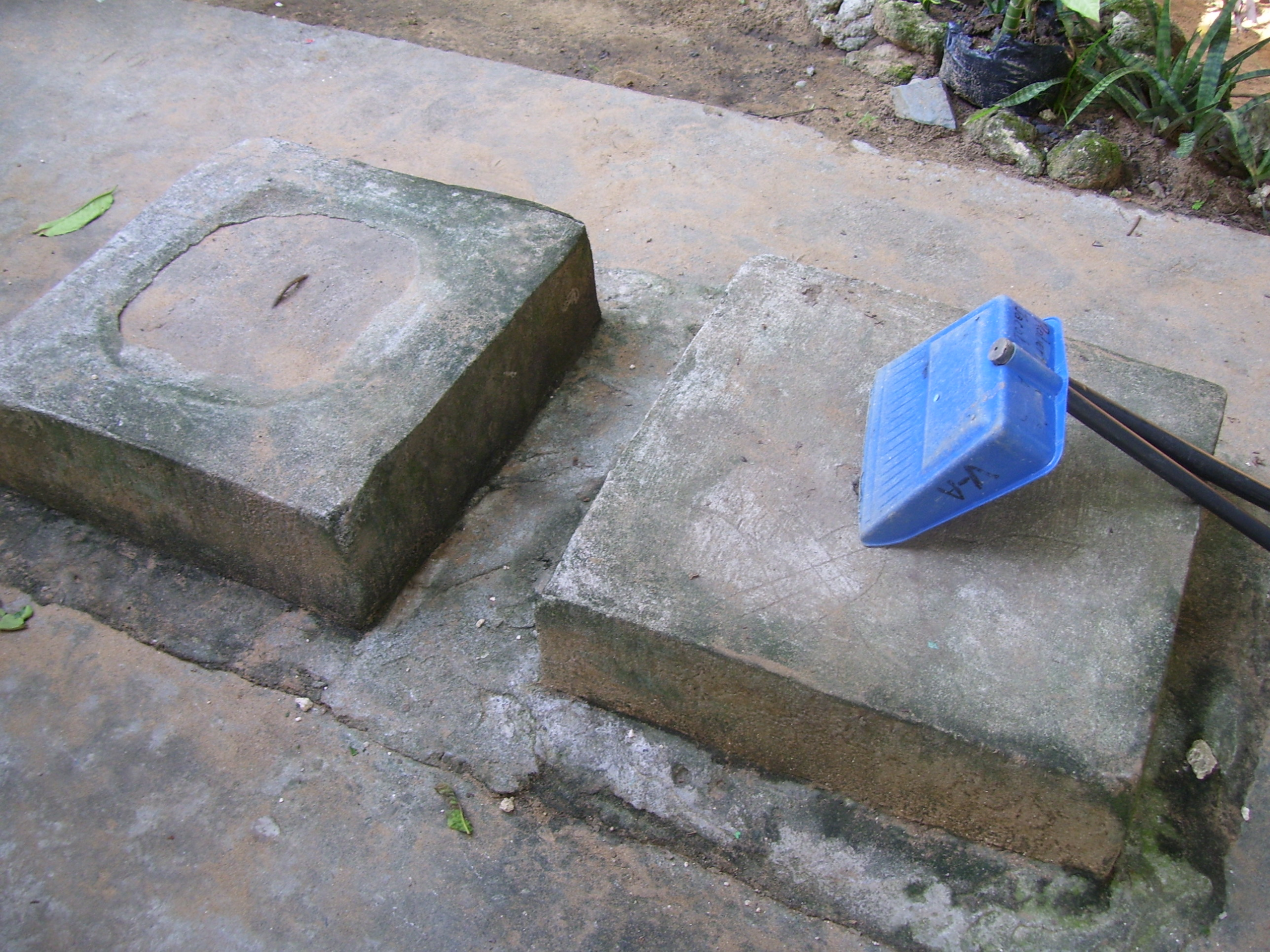
Households on a septic system knew a set of rules, and every one of them traces back to the mechanics above.
Grease was the main one, because it floats, builds the scum layer, and if it gets into the field it coats soil particles and seals them. Anything that does not break down was another – it goes to the bottom and stays there, taking up volume that the clear zone needs.
Water volume mattered independently of what was in it, because a field can only accept liquid at a certain rate, and a day of heavy use pushes liquid through faster than the soil can take it.
And vehicles mattered, which surprises people. Driving or parking over a drain field compacts the soil and crushes the pipe, and compacted soil does not percolate – so the field was a part of the yard that was mown and nothing else.
The Twist: This Buried Box Is Why American Suburbs Exist
Septic systems are the least glamorous piece of infrastructure in the country and they are among the most consequential, which is a sentence worth earning.
Think about what a new house on the edge of a metropolitan area needs before anybody can live in it. Water in, and waste out. Both of those, historically, came from the municipality – a water main and a sewer in the street, laid by a public authority, paid for collectively, and extended outward only as far and as fast as that authority chose to go.
Which means that for most of urban history, the physical limit of a city was the end of its pipes. You could not build houses where there was no main and no sewer, because there was no way to supply the first or dispose of the second.
Two technologies removed that limit, and they removed it together.
The drilled well with an electric pump solved the water. And the septic tank with a drain field solved the waste – on the lot, at the developer’s cost, with no public investment, no authority’s permission to extend anything, and no connection to anything at all.
A subdivision could therefore be built ten or twenty miles beyond the end of the sewer, on cheap agricultural land, with each house generating and treating its own supply and disposal on its own quarter-acre. The economics of that are transformative: the single largest barrier to low-density development on a metropolitan fringe simply stopped existing.
So when people discuss why American cities spread the way they did, the usual answers are the car, the highway, cheap land, mortgage policy and zoning – all of which are real and all of which are necessary. But none of them would have been sufficient on their own, because a house needs a drain, and the thing that gave millions of houses a drain where there was no sewer was a concrete box with two baffles in it, buried in a lawn.
It is the most important piece of American infrastructure that nobody has ever argued about, largely because it is invisible and because the only time anybody thinks about it is the week it stops working.
The grass over the trenches is still greener in August. On a dry year you can see the whole layout from an upstairs window, which is the only time most households ever see their own treatment plant.
Like our content? Follow us for more.